Missing (ミッシング, Keisuke Yoshida, 2024)

Why is it that we rush to judgement rather than empathy? When a little girl disappears during a short walk from a local park to her home, less than helpful members of the public are quick to turn on the parents while news media, eager for ratings and clicks, is only too happy to give the people what they want casting aside ethical concerns in their exploitation of the parents’ pain all while the little girl remains missing.

In this society, it’s quite normal culturally for children of Miu’s age, six, to walk short distances alone and be left unsupervised at home at for short periods of time. Nevertheless, the public is quick to blame the mother, Saori (Satomi Ishihara), because she had gone to a concert that night and didn’t notice frantic calls from her husband worried because Miu was not at home when he got back from work at 7pm. Soari too blames herself, as is perhaps natural, but it’s unreasonable to expect anyone to never go out for an evening again after having children. Her husband comes in for less scrutiny, which might be surprising, though her brother, Keigo (Yusaku Mori), soon finds himself the prime suspect having been the last to see Miu and allowed her to walk home alone though he would previously have walked her back.

The family find themselves under scrutiny with their every move judged by an unforgiving society. When they dare to buy fancy pastries, online trolls suggest they can’t be all that bothered about Miu after all and are living the high life with the extra money they no longer need to spend on her. Given all that, it might be surprising that they turn to the media for help but in their desperation to find Miu they will leave no stone unturned. Idealistic reporter Sunada (Tomoya Nakamura) seems to want to help them, but is constantly undermined by his bosses who pressure him to take the story into more sensational territory. Though he wanted to write a human interest piece supporting the parents and raising awareness about Miu’s disappearance, he ends up placing them in the firing line for even more trolling and particularly of Saori’s brother Keigo who is an introverted, awkward man not suited to appearing on television. 

Sunada says he wants to help, but it’s undeniable that the media is exploiting the parents’ desperation raising serious ethical concerns as to how they safeguard sources and subjects while shaping the narrative around sensitive issues. Sunada takes a producer to task for placing images of a cement mixer and the sea into the ident for the piece as if it were hinting at what might have happened to Miu but really what the station is most interested in is digging up dirt on the family rather than drawing out new information on the case. A fellow journalist is having great success with a salacious story about the mayor’s son committing fraud, but his piece is less crusading investigative journalism than gossip inviting judgement. Disliking his flippant attitude, Sunada reminds him their job’s not to make people laugh, but his colleague gets a fancy promotion to head office while Sunada is stuck doing random feel good stories about seals.

Their treatment at the hands of the media also exposes a divide within the couple with Saori often frustrated by her husband’s attitude, feeling as if he isn’t invested enough. Yutaka (Munetaka Aoki) suggests simply not reading the online comments and ignoring the trolls while Saori feels compelled to defend herself. He is also warier of pranks and scammers, unwilling to simply jump on every lead out of desperation when so many people seem intent on causing them further pain. Perhaps it makes people feel more in control of their lives to blame the parents, as if something like this couldn’t happen to them because they make what they feel to be better choices, rather than accept that life is random and unfair and little girls can disappear into thin air mere steps from their own door. Unable to find her own daughter, Saori begins defending other people’s children getting a job as a crossing guard to ensure they reach home safely while simultaneously frantic and afraid, handing out fliers to a largely disinterested populace ever hungry for novelty and excitement and embarrassed by her pain even as they continue to feed on it.


Missing screened as part of this year’s Toronto Japanese Film Festival.

Original trailer (English subtitles)

Ribbon (Non, 2022)

What is the place of art amid a global crisis? A young student finds herself wrestling with her sense of purpose uncertain if art is more necessary than ever before or a completely worthless waste of time that could be better used dealing with the situation on a more practical level. Written, directed, and edited by actress/singer Non, Ribbon is a response to pandemic anxiety but also a meta drama about an artist reclaiming a sense of confidence in their work along with their right to make it even if not widely understood. 

As the film opens, art student Itsuka (Non) is lugging a series of paintings and art equipment back to her university for the upcoming graduation exhibition, only the exhibition has just been cancelled because the university will be closing its doors the following day due to the COVID-19 pandemic. Itsuka has to cart all her stuff home again, but she’s luckier than some she witnesses who are left with no choice other than to destroy the precious works of art into which they’ve poured four years of their lives because they can’t store them and neither can the university. 

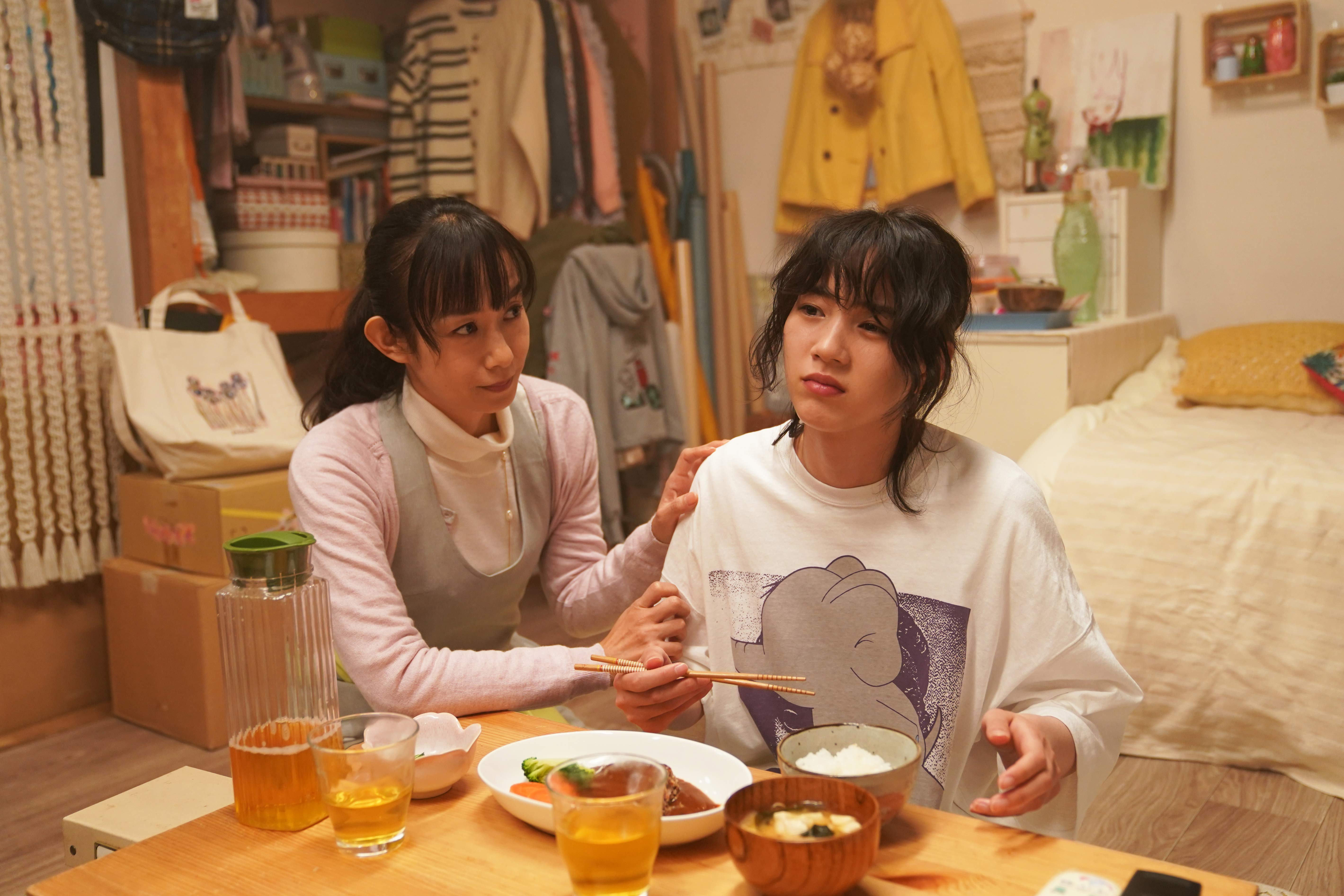
Watching her fellow students in tears as they crush, tear, and bludgeon their projects Itsuka can’t help but wonder what separates her painting from “trash”, seeing these precious pieces dismembered and left out for the binmen. The feeling is compounded when her mother (Misayo Haruki) pays her a visit, clad in a homemade hazmat suit, and throws the painting out justifying herself that as it had stuff stuck on it she thought it was just something she’d made messing around, more like a child’s collage than a serious piece of “art”. Unable to accept her mistake, Itsuka’s mother defensively doubles down leading to a climactic argument and the visits of other family members including her father (Daikichi Sugawara) who arrives with a social distancing pole and her sister (Karin Ono) who now dresses like an assassin each armed with passive aggressive peace offerings but ultimately seeking validations that her mother was right to dismiss her incomprehensible art. 

While her friend Hirai (Rio Yamashita) is later caught sneaking into uni to work on her much more conventional piece, a large canvas painting featuring a young girl in a forest with giraffes and leopards, Itsuka has been unable to find the desire to paint. The painting, a mixed media portrait of a young woman surrounded by ribbons, sits looking down on her taped to the wall but she can’t get away from the idea that perhaps her work really is “trash” and she’s just been wasting her time on something meaningless that other people don’t understand or care about. The feeling is compounded when she’s informed that the job offer she had from a design firm for after graduation has been rescinded due to COVID uncertainty. Only when she accidentally reconnects with a middle-school classmate (Daichi Watanabe) who had praised her work does she begin to rediscover its value not least in allowing her to vent her frustrations not only with the pandemic-era society and its isolating anxieties, but the conservative ideas embodied by her mother’s constant complaints about her “attitude” reminding her she’ll never get married if she carries on as she is.  

“This is what our frustration looks like” she explains incorporating her friend’s fractured painting to turn her formerly chaotic apartment into an installation covered in the ribbons which had previously swarmed around her. Opening with scenes of the deserted university peopled with broken statues, headless mannequins, and crude drawings on walls, Non captures a sense of the lonely despair of the early days of the pandemic allowing these now empty places to seem almost haunted by an eerie sense of absence. There is an unavoidable absurdity in the constant masking, obsession with social distance, and spraying anything and everything with sanitiser but also a care beneath the anxiety in the concern for others’ safety as well as one’s own. “Heavy” is how Itsuka frequently describes her situation not only the physical weight of her work but its spiritual burden along with her despair and anxiety for her uncertain future, but learning to bear it allows her to rediscover a purpose and value in art not despite but because of the times in which she lives. Quirky and heartwarming, Non’s accomplished directorial debut is not only a snapshot of ordinary life in a pandemic, but a meta tale of a young woman reclaiming her right to create and vent her frustrations towards a sometimes restrictive society. 


Ribbon screened as part of this year’s New York Asian Film Festival.

Original trailer (English subtitles)
Images: ©︎”Ribbon” Film Partners

Infinite Foundation (無限ファンデーション, Akira Osaki, 2018)

Sometimes the music finds you when you need it most. So it is for the heroine of Akira Osaki’s wistful coming-of-age drama Infinite Foundation (無限ファンデーション, Mugen Foundation). To better capture the teen experience with an immediate naturalism, Osaki’s cast was provided with no script only a vague outline inspired by the songs of singer-songwriter Cosame Nishiyama and asked to improvise each individual scene. What results is suitably intense tale of complicated teenage female friendships, frustrated ambitions, and fear for the future in which a shy, introverted young woman gradually finds the courage to chase her dreams with the help of an ethereal songstress and unexpected solidarity. 

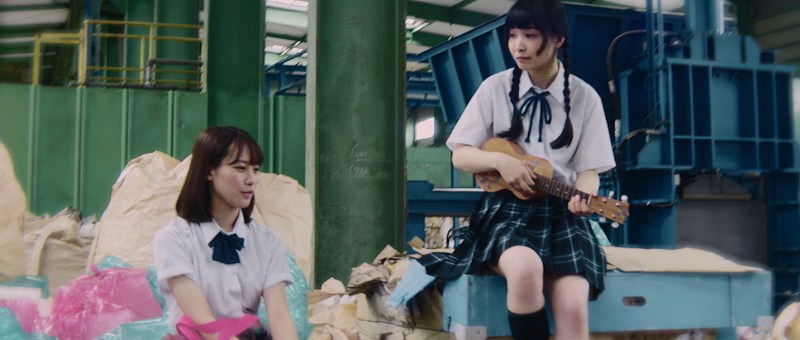
Mirai (Sara Minami), whose name literally means “future”, is a dreamy young girl who thinks she’s not much use for anything so usually idles away her time in school drawing dress designs in her sketchbook when the teacher’s not looking. In fact, she’s technically in summer school catch up, but every time the teacher returns to check on her he notices that she still hasn’t got round to filling in the answers on her maths test. Wandering home one day she hears the gentle strains of a ukulele coming from a nearby recycling plant and strikes up a friendship with a strange girl, Cosame (Cosame Nishiyama), with her hair in long plaits and dressed in a school uniform. Meanwhile, she’s also unexpectedly approached by the stylish Nanoko (Nanoka Hara) who, taken with her beautiful designs, insists that she join the drama club to help them come up with costumes for their imminent production of Cinderella. 

Perhaps Mirai will be going to the ball after all. Before that however she’s still contending with a sense of insecurity while her cheerful and supportive mother (Reiko Kataoka) tries to encourage her to pay more attention to her studies. Pushed towards conventional academic success, Mirai had been a little embarrassed about her love of drawing, particularly as it’s something as “frivoulous” as dress designs which she can’t believe anyone else would value. Rather than hanging out with friends, she spends most of her time sewing in her room, retreating into comfortable fantasy but also lonely and a little bit lost. So when Nanoko is so enthusiastic about her artwork it gives her a much needed confidence boost showing her that someone at least thinks her drawings have value and are not silly or embarrassing wastes of time. 

The drama club, however, is something of a baptism of fire for someone who feels themselves not good with people and at sea with interpersonal relationships. Mirai sticks fast to Nanoko, but Nanoko’s longterm bestfriend Yuri predictably doesn’t like it that she’s abruptly dragged this other person into their shared activity while the other members of the group struggle to relate to her, describing her as difficult to talk to and leaving her sitting in the corner doing her own thing while they get on with rehearsing. The main drama occurs when Nanoko makes a surprising announcement that puts the show in peril. She has a big audition lined up in Tokyo for a part in a film which makes it impossible for her to also star in the play. Nanoko asks for understanding, but does so with a degree of entitlement and superiority that cannot help but annoy her friends. She implies that she’s in this because she’s a real actress, while they’re only messing around in a school play. Mirai isn’t sure where to put herself, her new friend has just betrayed her and now she doesn’t know if they were ever friends at all or she was just using her to increase her hold over the drama club. 

The message that Mirai begins to get is that she may have real talent, but it’s up to her to achieve her dreams. She begins to feel that everything she’s been doing with her life has been superficial and incomplete because she never had the confidence to follow through, living in her own tiny bubble alone in her room for fear of getting hurt out in the big wide world. While the mysterious ukulele player sings her inspirational songs about living with loneliness, Mirai begins to build her infinite foundations towards a more confident future as a young woman determined to fight for her dreams.


Infinite Foundation streamed as part of this year’s online Nippon Connection Film Festival.

Original trailer (no subtitles)

The Chef of South Polar (南極料理人, Shuichi Okita, 2009)

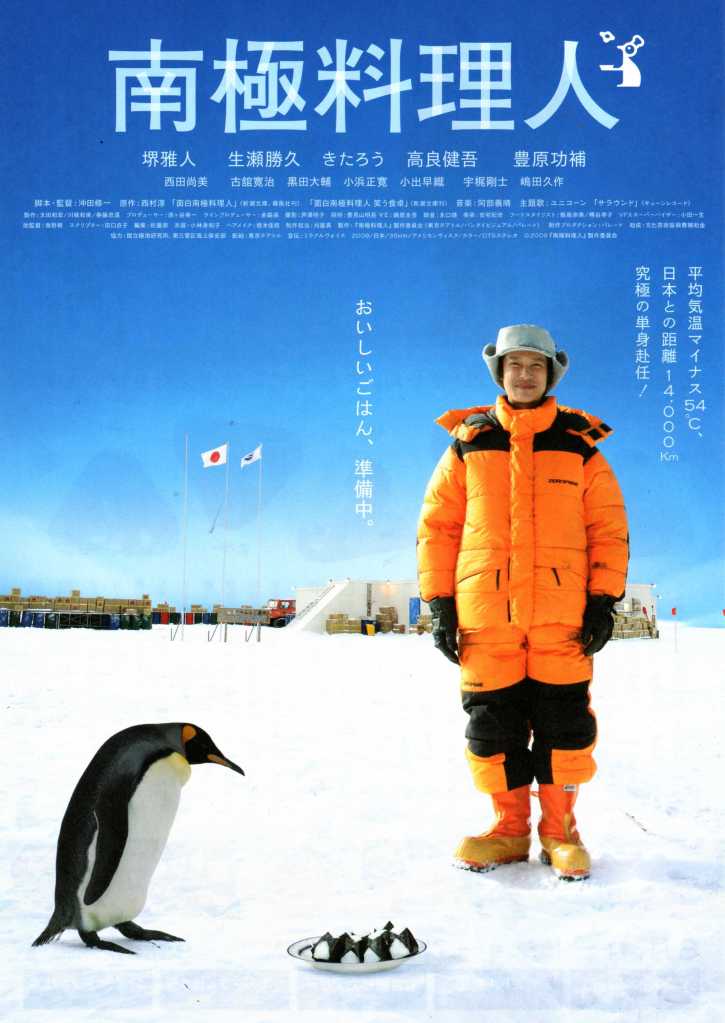
If there’s one thing which unites the universes present in the films of Shuichi Okita, aside from their warm and humorous atmosphere, it’s their tendency to take a generally genial, calm and laid-back protagonist and throw them into an inhospitable environment which they don’t quite understand. When it comes to “inhospitable”, the hero of The Chef of South Polar (南極料理人, Nankyoku Ryourinin) couldn’t have it much worse, unfairly transferred to a polar research station where the air temperature is so cold nothing, not even bacteria, can survive outside. Still, like all of Okita’s laid-back guys, he handles his difficult circumstances with a kind of stoical resignation until, of course, the situation can be handled no more.

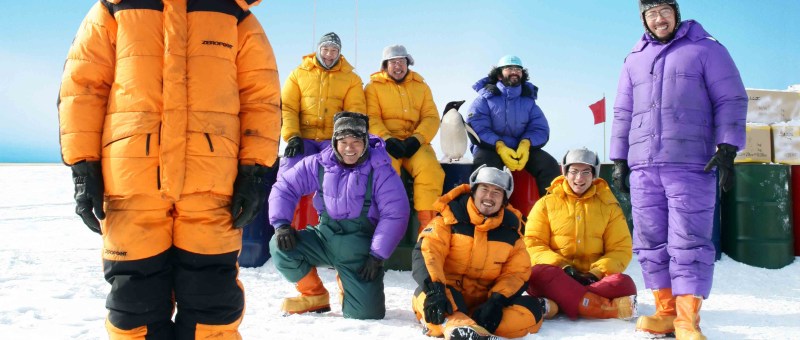
Separated from his wife and children, Jun Nishimura (Masato Sakai) previously worked for the Japanese coastguard but has now been transferred (not altogether of his own volition) to a polar research station where he is responsible for all the culinary needs of the seven men who will be working together during the expedition which is intended to last one year. Each of the other men has his own part to play in the scientific endeavours but cooped up as they are, the greater issue is downtime as the guys revert to a kind of high school camp mentality, divided into various groups and activities from the “Chinese Research Club” to a bar being run by the doctor who is also training for a triathlon. 365 days in the freezing cold does eventually begin to take its toll but all of the crazy only serves to remind people how important it is that they all get on and make it through this together.

Based on the autobiographical writings of the real Jun Nishimura, Okita’s isolation experiment has a pleasantly authentic feeling as the titular chef laments the difficulties of the conditions but continues to churn out beautifully presented culinary treats despite the hostile environment. Resources are also strictly limited as the original provisions are intended to last the entire expedition, hence why most of the foodstuffs are canned, vacuum packed or frozen but there are a few luxuries on offer including some prize shrimp apparently left behind, uneaten, by a previous team which proves an additional occasion for celebration just as despair is beginning to set it in. Seeing as the men are all here for more than a year, celebratory occasions do present themselves with regularity from birthdays to “mid winter holiday” and even a good go at the Japanese festival of Setsubun with peanuts instead of beans.

Despite these brief moments of respite, being completely cut off from the outside world for such a long time with little natural light and hardly anything to do outside of research places its own kind of pressure on the minds of these top scientists. As their hair gets shaggier and their beards progressively less kempt, sanity also begins to slip. Each of the guys has their own particular marker, something they’re missing that’s playing on their minds until they eventually break completely. For some this could be realising they’ve eaten all of the ramen which exists in their tiny world and now have nothing left to live for, missing their kids, or realising that their girlfriend might have met someone else while they’ve been busy devoting themselves to science, but this being an Okita film even if an axe is raised it rarely falls where intended and the only cure for mass hysteria is guilt ridden kindness and a willingness to work together to put everything right again.

Of course, the other thing the guys have to put up with is the attitude of the outside world as everyone is very keen to ask them about the cute penguins and seals which they are sure must be everywhere at the South Pole, only to have to explain that it’s just too cold for cuteness though it does lead them to the epiphany that they are the only living creatures in this desolate place and so share a special kind of kinship. Filled with Okita’s usual brand of off the wall humour and gentle humanity, The Chef of South Polar is another warm and friendly tale of nice people triumphing over adversity through cooperation, mutual understanding and sustained belief in the healing power of ramen.


Original trailer (no subtitles)

https://www.youtube.com/watch?v=BJpBexuuSWU