Blue Period (ブルーピリオド, Kentaro Hagiwara, 2024)

An ennui-ridden teen finds the world opening up to him after he discovers the power of art yet fears he can’t live up to his new epiphany in Kentaro Hagiwara’s adaptation of the manga by Tsubasa Yamaguchi, Blue Period (ブルーピリオド). Less about art itself, the film presents its hero with the cowardice of conformity, challenging him above all to know himself and wield his selfhood like a weapon in a world that can at times be unforgiving.

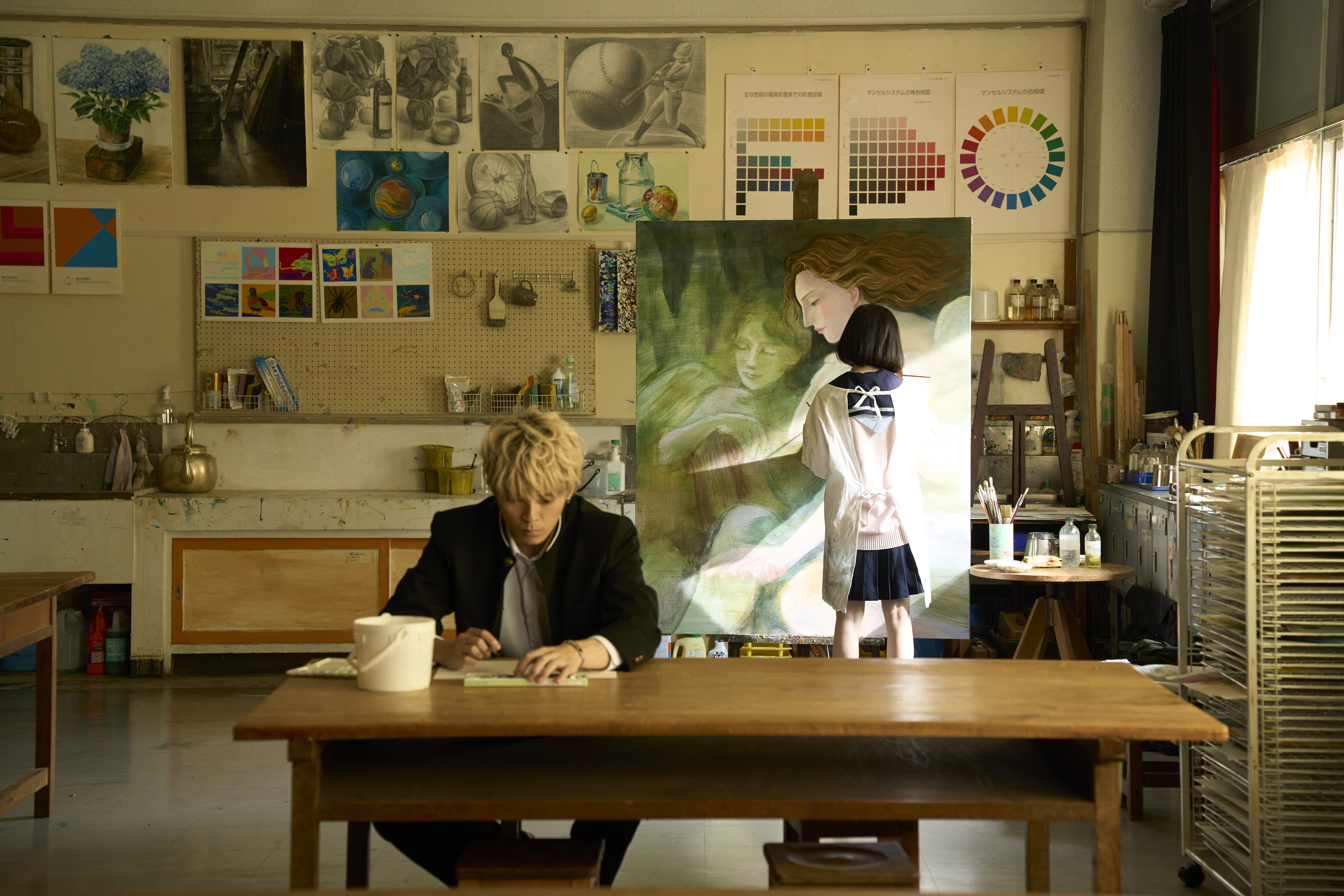
Even so, Yatora (Gordon Maeda) is a model student who gets good grades and is known for being well-mannered but secretly he’s filled with emptiness and has largely been just going through the motions. In his opening voice over, he relates that he does what he has to do, but declares himself unfulfilled and directionless. Unexpectedly captivated by a fellow student’s painting, he’s confronted by the power of art and the freedom it offers vowing to get into prestigious art school Tokyo University of the Arts.

The constraints he feels are partly economic in that his parents can’t afford a private university so he has to do his best to get into a public arts school while his mother seems dead against the idea of him going into the arts because it doesn’t put food on the table. Yatora parrots back similar lines describing art school as a pointless waste of time but is quickly taken to task by fellow student Yuka (Fumiya Takahashi) who challenges his tendency towards conformity and needles him into independent thoughts and action.

Yuka is also contrained by conservative social codes in that she dresses in a female uniform though many still call her by her male name, Ryuji. Though the pair have a rather spiky relationship, it’s Yuka’s attempts to challenge him that bounce Yatora towards discovering his true self which as it happens is done through embracing his least palatable elements. As Yuki correctly observes, his good boy persona and tendency towards hard work are just masks for his inner insecurity.

Yet as he’s also told, art isn’t just about talent but requires passion and tenacity which in its way makes it a perfect fit for Yatora’s hard-working nature as he buckles down to become a promising artist in the run up to his high school exams. As he later reflects, others may be more talented than him but they can’t make the things that he makes because the point is they come from himself. His early pieces are criticied for their superficiality, that he only sees what’s directly in front him rather than learning to see the world in other, more unique ways and engage with it on an individual level but through his artistic journey he discovers new ways of seeing along with his true self in all its complexity. 

His newfound desire to follow his heart places him at odds with prevailing social codes which favour the sensible though it also spurs others on to do the same, one of his best friends deciding to become a pastry chef rather than get a regular salaryman job hinting at a greater desire for personal fulfilment among the young. Often poetic in his imagery such the sparks that fly from Yatora’s nascent artwork or the comforting blue of the Shibuya twilight that becomes his safe space, Hagiwara sometimes paints Yatora’s quest like a shonen manga with a series of bosses to beat in Yatora’s various rivals and challenges most which teach him something about himself that spurs him on to continue chasing his artistic dreams while the exams themselves are also mental exercises of strategy and thinking outside the box to unlock a particular kind of self-expression. There is something quite refreshing, however, in the fact that Yatora’s only real rival is himself in his ongoing quest for skills and self-knowledge, earnestly applying himself to master his craft eager only for the places his artistry will take him both mentally and physically and no longer so dissatisfied with the world around him but filled with a new curiosity and the confidence in himself to continue exploring it.


Blue Period screened in New York as part of this year’s JAPAN CUTS.

Original trailer (English subtitles)

Love Will Tear Us Apart (ラヴ・ウィル・テア・アス・アパート, Kenichi Ugana, 2023)

“This film depicts a pure and genuine love between an awkward boy and a girl with a pure heart,” according to a pop idol starring in a film called “garbage love”, but it’s a true enough description of Kenichi Ugana’s genre-crossing slasher romance, Love Will Tear Us Apart (ラヴ・ウィル・テア・アス・アパート). Co-scripted by Hirobumi Watanabe, the film has a deadpan, surreal sensibility but has a lot to say about entrenched patriarchy and a bullying culture. 

As the film begins, Wakaba is a cheerful little girl who has an all encompassing obsession with a handsome pop idol, but is secretly enduring an oppressive atmosphere of domestic violence in her family home at the hands of her cruel and violent father. In this she might have found a kindred spirit in classmate Koki who is enduring physical abuse at the hands of his mother who openly tells him how much happier she’d be if only he’d never been born. Koki is also being bullied by a pair of mean kids at school and meekly takes it, unable to stand up for himself. When Wakaba steps up and tries to help him, the bullies turn on her too and their teacher (Atsuko Maeda) seemingly does nothing. After the pair bond through a screaming session at a local river, the bullies mysteriously fall out of a window which Koki is then seen ominously staring out of. 

The film jumps on seven years to a teenage Wakaba (Sayu Kubota) who discovers the world is not a safe place for women, repeatedly encountering a series of skeevy guys beginning with her favourite pop band who lure her to a cabin in the woods where they openly talk about getting her drunk to take advantage of her or spiking her drinks. One of the chief victimisers is another woman, Moeka, whose apparent “job” it is to recruit girls for the guys to have fun with. Wakaba’s friend Kanna (Riko) wants to leave, sensing that there’s something not quite right but Wakaba is naive and unable to see the danger. A similar thing happens when she visits Tokyo alone and has a meet cute with a guy who spills coffee on her shirt and offers to buy her a new one, then to show her around, takes her for sushi, declares his love and makes a proposal of marriage. 

As might be expected, many of these men end up dead at the hands of a vicious, chainsaw-wielding serial killer in a white hazmat suit, gas mask, and goggles. You can’t quite blame him for his crimes because everyone he kills is so irrediambly awful while it really does seem that he might be trying to protect Wakaba in some way from the hidden dangers she remains unable to see because of her pure heartedness. While her own father had been cruel and violent, she discovers that Moeka’s, police detective Kamiyama (Mitsuru Fukikoshi), is the opposite but worse in his unsettling obsession with his daughter, whom he believed to “pure and earnest” little knowing that she had been procuring young girls to serve up to the sleazy band members.

In a strange way, the serial killer turns out to be Wakaba’s healthiest relationship even if he’s basically stalking her not to mention murdering people with chainsaws because they threatened her happiness. The film runs through a series of genres from the cute childhood romance that soon turns ominous and the cabin in the woods slasher movie complete with creepy monkey and trainset, to martial arts epic as Wakaba abandons her life to train with a YouTube serial killer catching guru in a tropical resort town but retains its sense of anarchic innocence and internal integrity. As the pop star had implied, it really is a tale of genuine love between an awkward boy and a pure hearted girl in which they gradually realise that they each have a right to be happy and can be so together despite all violence and mayhem around them which includes killing a guy by shoving a grapefruit blender on his head. Strange and absurd the film nevertheless has a heartwarming romantic sensibility along with a desire for a less destructive world defined more by kindness and compassion than bullying and violence. 


Love Will Tear Us Apart screened as part of this year’s Camera Japan.

International trailer (English subtitles)

5 Million Dollar Life (五億円のじんせい, Moon Sung-ho, 2019)

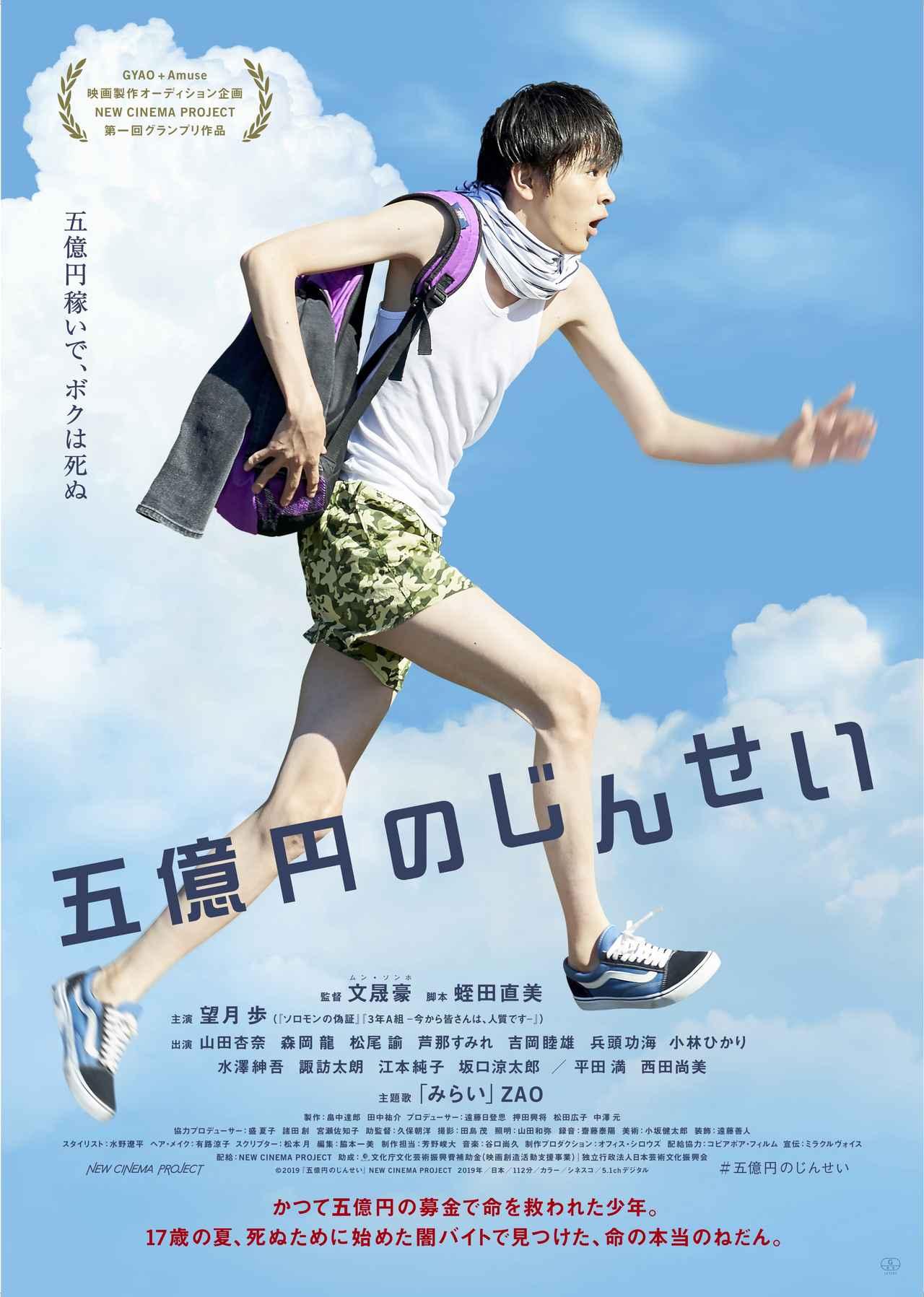
5 Million Dollar Life posterIs it possible to live a life without “debts” of one kind or another or are we all just living on loans? The hero of Moon Sung-ho’s 5 Million Dollar Life (五億円のじんせい, Gooku Yen no Jinsei) wants to find out, not least because he feels himself indebted to those who have helped him in the past and struggles with the pressure of living up to their expectation. An unexpected source provides some helpful advice in pointing out that “value” in one sense at least is not something you’re free to decide for yourself but is defined by others. Then again, not being certain of your own worth makes it impossible to claim your rightful place in society as someone as worthy of love and respect as any other.

When Mirai (Ayumu Mochizuki) was six, his family found out he had a congenital heart defect and would need to go abroad for a transplant. His community rallied around him and raised five million dollars so he could go to America for treatment. The heartwarming story also made him the star of an ongoing documentary in which he’s interviewed on television every year so those who contributed to saving his life can find out how he’s getting on. Becoming a local celebrity and an accidental TV star is obviously a lot of pressure for any young man, but Mirai feels acutely burdened by the responsibility of “repaying” the kindness that was offered to him. He doesn’t feel his life was worth five million dollars and knows he is unlikely to repay their “investment”. He is after all just “ordinary”. He won’t win a Nobel prize or cure cancer, all he can do is live his life in the normal way but that’s hard when it feels like everyone is secretly looking over his shoulder and waiting for him to make a mistake.

Meanwhile he’s also become a role model to the suicidal Chiharu (Hikari Kobayashi) who doesn’t “see the value in life”  and feels that “death is glorious” because people can hate you while you’re alive, but they’ll love you when you’re gone. Mirai gets where she’s coming from. He longs for an ending too, if only to reject the responsibility he feels towards those who saved his life. Attacked by a troll online, he takes up the challenge to make the five million dollars back and then kill himself to bring an end to the whole affair but quickly discovers that it’s a lot harder to make five million dollars than he thought.

Neatly taking place during the last summer of high school, Mirai’s odyssey sends him on an odd trek across working class Japan as he finds himself alone and without money or means to support himself. At only 17, he can’t even stay in a hotel on his own and so he winds up becoming homeless but is taken in by a nice old man who claims he decided to help him because he bought an umbrella with his last pennies rather than pinching someone else’s. Though he is often exploited and betrayed by those who take advantage of his goodness, that same quality finds an answer in others who, sometimes despite themselves, want to help him because he seems like the sort of person who needs help.

This idea finds encapsulation in the surprisingly astute words of wisdom Mirai receives from a petty gangster he meets after getting involved with sex work. The gangster, who starts off by telling him that he’s making a mistake selling himself short when it’s the customer who decides what his “value” is, later explains that it’s not so much that the world is divided into people who are nice and people who aren’t, but that some people are “worth” being nice to and Mirai, for one reason or another, is one such person who thrives on kindness.

Mirai’s desire to quantify his life by putting a price on it may be mistaken, as proved by the sad case of a family committing suicide because of monetary debt, but what he realises is that people help because they want to and they don’t necessarily expect anything in return other than kindness. If he wants to find a way to repay them, he’ll have to figure it out on his own terms first, but all they really wanted they wanted from him was that he live his life as happily as possible. 5 Million Dollar Life goes to some pretty dark places, but always maintains a healthy cheerfulness as Mirai goes on his strange odyssey looking for the “value” in being alive and discovering that it largely lies shared kindnesses and unselfish connection.


5 Million Dollar Life screens on 11th July as part of the 2019 New York Asian Film Festival.

Original trailer (no subtitles)