
The Curse (ザ・カース, Kenichi Ugana, 2025)

Could it be fair to say that sometimes we curse ourselves, or perhaps more accurately that the only true curse is morbid curiosity? Those at the centre of Kenichi Ugana’s J-horror inspired The Curse (ザ・カース) have the option to simply stay off social media, but they find themselves unable to do so. Be careful what you post about yourself online, the film seems to say, as if an Instagram profile were basically opening a portal to your soul through which any evil entity pass.

But at the same time, a priest cautions that one may do harm to others without even realising it and it transpires that even the most innocuous of posts can be enough to push someone over the edge. The versions of their lives that people post online are obviously idealised or perhaps aspirational, but they can still provoke a sense of jealousy or envy to the extent that saying “I am having a lovely day” can upset someone who is not and perhaps has not for a long time but continues to hate follow these kinds of accounts. This in itself is a kind of curse, the film argues, as a deepening sense of self-loathing is projected outward towards those apparently living better lives the unhappy obsessive feels they may not deserve.

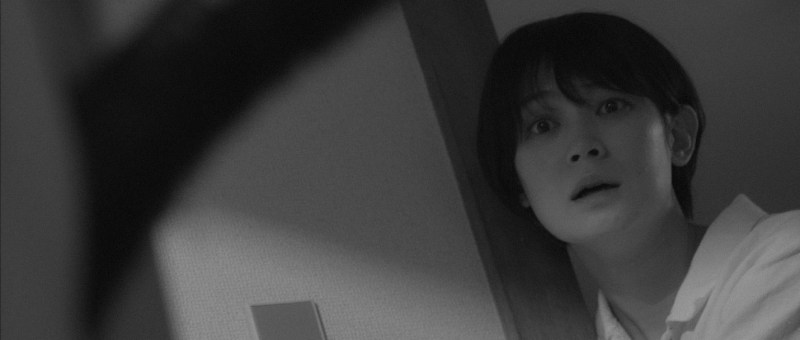
Still, there is an extent to which the curse is also “real”. When Riko (Yukino Kaizu) spots a creepy photo posted by a friend, Shufen, which is accompanied by the caption “Drop dead already, all of you” and seems to contain the image of a malevolent entity, she is of course immediately concerned. Her anxiety is compounded by the fact that her friend is Taiwanese and posts in Mandarin, so she uses the auto translate feature but has no way of knowing if the translation is accurate. When Shufen fails to reply to messages, Riko decides to get over her sense of awkwardness and contact her ex in Taiwan, a mutual friend. Confused, Jiahao (Yan Yu Teng) tells her Shufen died six months previously in circumstances so strange and disturbing her family preferred to keep it quiet. “Curses are very real, in Taiwan at least,” he tells her. People die from them. 

Riko then faces another barrier in trying to navigate her away around the ritual beliefs of another culture. When her friend Airi began exhibiting strange symptoms after watching a video online, she took her to a doctor who was unable to help. After her Taiwanese friends recommend an exorcism, she begins to feel guilty. Perhaps if she’d contacted a priest instead of a doctor, she could have been more help to Airi. The Japanese-speaking priest in Taiwan isn’t necessarily that much help either, though. He demands payment up front, which reduces his credibility and opens the door to the suggestion that the rituals he provides are more placebo effect than anything else. Nevertheless, it seems he really does have the power to intervene with spirits, only this one is a little beyond his capabilities.  

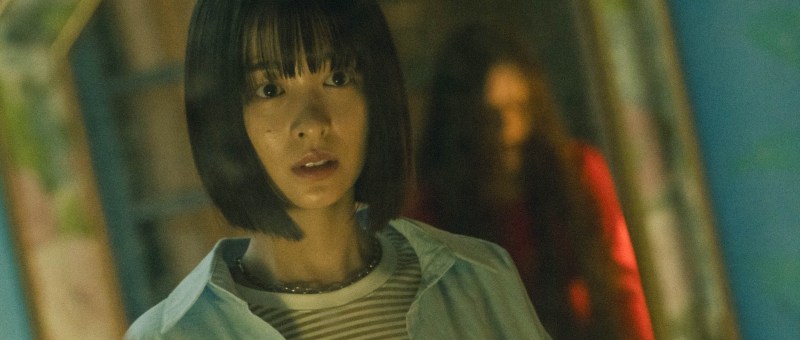
There’s an essential irony in the fact that Riko is only able to detect the ghostly presence through its reflection in images while otherwise unable to see it lurking in the shadows or under her bed. This embodiment of resentment seems to affect her offline life too as the manager of the upscale hair salon where she works begins to act strangely towards her and a homeless man he warns her about arrives to advise she deal with her ghost problem before it gets out of hand. Ugana frequently cuts back to the ranks of disembodied mannequin heads that line the salon as a kind of foreshadowing lending the place an ominous quality and perhaps playing into the anxieties of the antagonist with its elitist vibes and unwelcoming atmosphere. Perhaps the real villains are unfair female beauty standards, ageism, and lookism, or equally perhaps we’re back at the figure of a witch who doesn’t want to grow old and is cursed with vanity, resentful of those who possess a beauty she believes herself to have lost. Turning unexpectedly bloody in final moments, the film suggests that this particular curse will never be lifted in part because it has become its own reward as this this particular malevolent entity dances cheerfully in her garden, secure in the knowledge that no one is watching.


The Curse is on UK, Ireland, Australia and New Zealand digital platforms 13 July

Trailer (English subtitles)
The Gesuidouz (ザ・ゲスイドウズ, Kenichi Ugana, 2024)

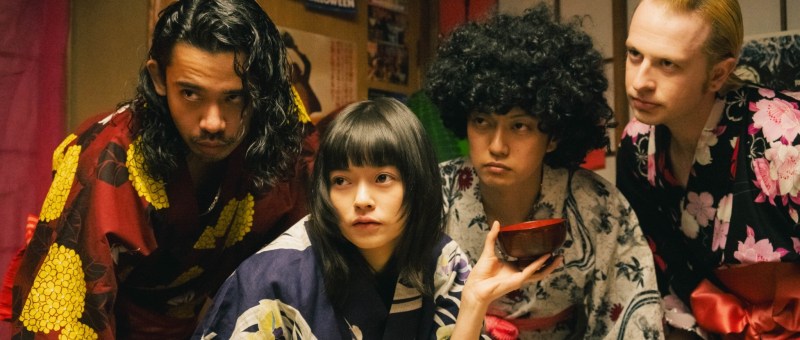
According to Hanako, vocalist of the band The Gesuidouz (ザ・ゲスイドウズ), punk is “like this miso soup”. She later describes the soup as soothing, made by her bandmate Santaro who turns out to be an unexpectedly dab hand in the kitchen, though in many ways the band’s selling point is that they aren’t very good at anything, least of all music. Even so, and quite crucially, they have one devoted, though otherwise anonymous fan who comes to all their gigs and dances wildly which just goes to prove that the old lady who becomes a kind of muse to them was right when she said there was probably someone out there to whom their music meant more than anything. 

But Hanako is writing under the shadow of death because she’s just turned 26 and is convinced she’s going to join the 27 club which means she has a very limited window to achieve her musical destiny. Perhaps in a way it’s a kind of quarter life crisis, or the sense of desperation that can be felt while young that time is already running out and you still haven’t made anything of your life. You still don’t know who you are or what you want to be and in Hanako’s case, no one has much faith her except her bandmates who stoically excuse their lack of audience under the rationale that everyone’s very busy these days and they should make sure to consult the calendar when they’re booking gigs. 

In fact, her manager’s the least supportive of all. He calls the band “rubbish” though casually admitting the may have forgotten to even release their album though it’s true that no one’s buying it. He’s the one that talks them into taking part in a government-backed scheme to encourage young people to move to the country in exchange for a stipend and place to live. But the weird thing is, unlike the indifference they felt in the city, the local community embrace their eccentricity and support their music even if they find it difficult to see what’s good about it. Despite describing the place where she lives as a “shithole”, the old lady listens patiently to Hanako’s tall tales about headlining Glastonbury while arranging gigs for them to play for such esteemed audiences as the local cows while bemused elderly resents look on stony faced but ultimately supportive. After all, as the old lady says, it’s a rare gift to create something so amazing that other people don’t understand it.

Though obsessed with horror films, darkness, and death, Hanako is strangely touched by country warmth and almost seems to tear up on the simple gift of a bunch of leeks after working in the fields. In a funny way, this village is actually quite like Glastonbury, a small rural settlement with a down-to-earth new age sensibility that suddenly erupts with music even if in this case on a much smaller scale. The old lady who becomes in a way a future echo of Hanako might be the most punk of all, joyfully living her little life in the shithole she’s never been outside of but welcoming these weird youngsters with patience, warmth, and acceptance which eventually allows Hanako to find a way back to herself and to art leading to a kind of rebirth in contrast to the death she was convinced was waiting for her. 

Of course, that all comes from a talking dog giving life advice through he medium of pithy quotes and song lyrics divined through automatic writing while practicing calligraphy. With frequent references to classic horror films, the film is an ode to the strangeness of country life but also its borderless horizons and sense of community solidarity alien to Hanako’s lonely life in Tokyo. But tellingly this is a paradise destined to be lost as the band finds success separating them from the environment that made them successful, fostering their art but also their souls with its gentle sense of acceptance. Often hilarious in its matter of factness, Kenichi Ugana’s anarchic dramedy has true punk spirit which is to say there’s nothing more punk rock than a good bowl of miso soup crafted with wholesome practicality and an altruistic desire for mutual happiness.


The Gesuidouz screens 30th November as part of this year’s London International Fantastic Film Festival (LIFFF)

Original trailer (English subtitles)

Love Will Tear Us Apart (ラヴ・ウィル・テア・アス・アパート, Kenichi Ugana, 2023)

“This film depicts a pure and genuine love between an awkward boy and a girl with a pure heart,” according to a pop idol starring in a film called “garbage love”, but it’s a true enough description of Kenichi Ugana’s genre-crossing slasher romance, Love Will Tear Us Apart (ラヴ・ウィル・テア・アス・アパート). Co-scripted by Hirobumi Watanabe, the film has a deadpan, surreal sensibility but has a lot to say about entrenched patriarchy and a bullying culture. 

As the film begins, Wakaba is a cheerful little girl who has an all encompassing obsession with a handsome pop idol, but is secretly enduring an oppressive atmosphere of domestic violence in her family home at the hands of her cruel and violent father. In this she might have found a kindred spirit in classmate Koki who is enduring physical abuse at the hands of his mother who openly tells him how much happier she’d be if only he’d never been born. Koki is also being bullied by a pair of mean kids at school and meekly takes it, unable to stand up for himself. When Wakaba steps up and tries to help him, the bullies turn on her too and their teacher (Atsuko Maeda) seemingly does nothing. After the pair bond through a screaming session at a local river, the bullies mysteriously fall out of a window which Koki is then seen ominously staring out of. 

The film jumps on seven years to a teenage Wakaba (Sayu Kubota) who discovers the world is not a safe place for women, repeatedly encountering a series of skeevy guys beginning with her favourite pop band who lure her to a cabin in the woods where they openly talk about getting her drunk to take advantage of her or spiking her drinks. One of the chief victimisers is another woman, Moeka, whose apparent “job” it is to recruit girls for the guys to have fun with. Wakaba’s friend Kanna (Riko) wants to leave, sensing that there’s something not quite right but Wakaba is naive and unable to see the danger. A similar thing happens when she visits Tokyo alone and has a meet cute with a guy who spills coffee on her shirt and offers to buy her a new one, then to show her around, takes her for sushi, declares his love and makes a proposal of marriage. 

As might be expected, many of these men end up dead at the hands of a vicious, chainsaw-wielding serial killer in a white hazmat suit, gas mask, and goggles. You can’t quite blame him for his crimes because everyone he kills is so irrediambly awful while it really does seem that he might be trying to protect Wakaba in some way from the hidden dangers she remains unable to see because of her pure heartedness. While her own father had been cruel and violent, she discovers that Moeka’s, police detective Kamiyama (Mitsuru Fukikoshi), is the opposite but worse in his unsettling obsession with his daughter, whom he believed to “pure and earnest” little knowing that she had been procuring young girls to serve up to the sleazy band members.

In a strange way, the serial killer turns out to be Wakaba’s healthiest relationship even if he’s basically stalking her not to mention murdering people with chainsaws because they threatened her happiness. The film runs through a series of genres from the cute childhood romance that soon turns ominous and the cabin in the woods slasher movie complete with creepy monkey and trainset, to martial arts epic as Wakaba abandons her life to train with a YouTube serial killer catching guru in a tropical resort town but retains its sense of anarchic innocence and internal integrity. As the pop star had implied, it really is a tale of genuine love between an awkward boy and a pure hearted girl in which they gradually realise that they each have a right to be happy and can be so together despite all violence and mayhem around them which includes killing a guy by shoving a grapefruit blender on his head. Strange and absurd the film nevertheless has a heartwarming romantic sensibility along with a desire for a less destructive world defined more by kindness and compassion than bullying and violence. 


Love Will Tear Us Apart screened as part of this year’s Camera Japan.

International trailer (English subtitles)

Extraneous Matter – Complete Edition (異物-完全版-, Kenichi Ugana, 2021)

If you suddenly encountered a weird, decidedly alien, octopus-like creature living in your wardrobe what would you do? Would it frighten or intrigue you, would you want to get rid of it as quickly as possible or look after it for the rest of your life? The presence of these strange creatures provokes different responses from each of the heroes of Kenichi Ugana’s Extraneous Matter – Complete Edition (異物-完全版-, Ibutsu – Kanzenban-), an expansion of his earlier short of the same title. Drawing inspiration from the early work of Shinya Tsukamoto, Ugana’s crisp, academy ratio black and white photography makes use of an ironic score mimicking classic Hollywood melodrama lending a mythic quality to this lowkey tale of alien sex fiend invasion and human loneliness. 

For Kaoru (Kaoru Koide), heroine of the first segment, the creature seems to signify her sexual frustration and sense of existential inertia. For her, every day is the same. She wakes up alone, makes herself a cup of coffee and eats a pastry in front of the television which always seems to be carrying news of a celebrity sex scandal, and then starts work with her friends (for some reason working at her apartment) who gossip about their various sugar daddies. Her boyfriend (Shunsuke Tanaka) apparently lives with her, but immediately disappears right after dinner and actively avoids intimacy. Were it not for later events, we might wonder if the creature is somehow a transformation of the boyfriend, Kaoru herself unsure whether it was a dream, first violated but then apparently satisfied by the alien tentacles which later begin satisfying all of her friends. 

If the “extraneous matter” of Kaoru’s life was indeed her unfulfilled desire and internalised shame, then for the barmaid (Momoka Ishida) of the second sequence it’s perhaps a lack of excitement while for the young man (Kaito Yoshimura) who brings a creature zipped into a holdall to a pub to meet his ex-girlfriend (Makoto Tanaka) it’s more a desire for familial intimacy or a sense of commitment that may previously have frightened him. He appears to want to get back together with the young woman, apologising for his past behaviour while explaining that he found the creature in his wardrobe scary to begin with but later became fond of it and is convinced he could raise it with her help, ordering a parfait to feed it because he’s discovered it has a sweet tooth and particularly likes strawberries. He swats the errant tentacles away as if shushing a naughty baby as the woman too begins to coo over it, shovelling cream from the parfait into its mouth with a spoon. 

But then, the extraneous matter of the lives of others can also present a challenge to the social order. Some wish to eliminate the alien threat, a young man working at a factory (Shuto Miyazak) charged with disposing of alien bodies eventually conflicted on discovering one alive sure that he can hear the creature begging him for help. Together with a like-minded colleague (Duncan) he determines to save it and help it return to its people, culminating in an unexpected ET moment which perhaps realigns the “alien” threat with a social other as the two compassionate employees evade the authorities to get the creature to safety despite having been betrayed by their female colleague (Mizuki Takanashi). 

So, what is the “extraneous matter” of our lives, a kind of loneliness, a sense of “alienation”, or of emptiness in an “absurd” world of infinite mundanity? Perhaps all of the above, Kaoru returning to her lonely life apparently missing the strange and unidentified creature only to re-encounter it in an unexpected place and discover it has not forgotten her. Gently ironic, Ugana’s sci-fi-inflected aesthetic begins with grim body horror before progressing into something warmer, for good or ill becoming fond of its alien invaders as compassionate humans refuse to reject them embracing in a sense these “extraneous” sides of themselves they may have previously found disturbing in search of more fulfilling lives. Elegantly composed in its classic academy ratio frame with its ironic bonsai pillow shots and continuing sense of unease, Extraneous Matter nevertheless ends on a note of hope rather than threat even as the invaders apparently lurk among us but bringing with them comfort even in the reflection of our unmet desires. 


Extraneous Matter – Complete Edition streamed as part of this year’s Nippon Connection.

Original trailer (English subtitles)