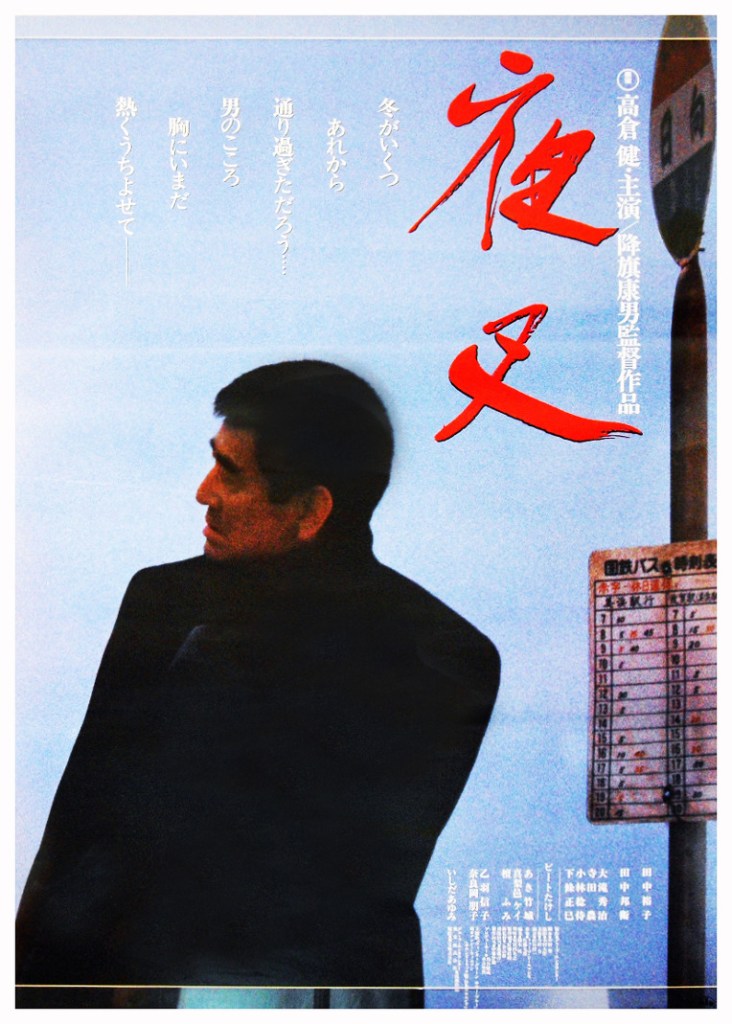
Negotiator (交渉人 真下正義, Katsuyuki Motohiro, 2005)

Beginning as a popular television drama, Bayside Shakedown developed into hugely successful franchise. Released two years after the second theatrical feature, 2005’s Negotiator (交渉人 真下正義, Koshonin: Mashita Masayoshi) is a self-contained spin-off revolving around Japan’s first specialist negotiator Mashita, whose name actually appears in the title. In Bayside Shakedown 2, he’d returned to the Wangan police department having left to pursue specialist training in the city. Though some of his former colleagues make cameo appearances and Motohiro maintains the lighthearted tone the series is known for, Negotiator essentially reverses the position of previous instalments, adopting the outsider’s perspective as Mashita finds himself implanted in the control room of the metropolitan mass transit system. 

For some reason in Japanese cinema, terrorist threats seem to arrive on Christmas Eve with alarming frequency, significantly upping the stakes for Mashita personally as he was planning to propose to fellow police officer Yukino (Miki Mizuno) after a romantic date the details of which he seems to be rather sketchy on. In any case, the crisis at hand is a rogue and unexpected train on the Tokyo subway. It quickly becomes apparent that someone has hijacked a remote-driven experimental “Spider” train designed to automatically switch gauges so that it can travel between differing lines on the complicated transit map. The hijacker will apparently only speak to Mashita, impressed or irritated by his accidental celebrity status following the Rainbow Bridge incident in Bayside Shakedown 2. One of the problems of that crisis had been the police discovering they do not actually have the power to unilaterally close a bridge because it requires the consent and co-operation of numerous other transportation officials (though actually in the end they just do it anyway). 

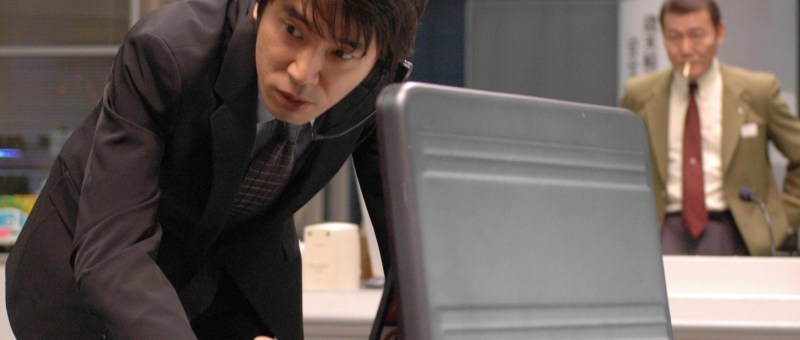
Something similar happens to Mashita when he fetches up in the control room to help. The official in charge, Kataoka (Jun Kunimura), directly tells him that they don’t require his assistance. He will just be in the way and should sit quietly in the corner while they get on with solving the crisis. In this scenario, Mashita is the outsider akin to the HQ guys descending on the Wangan police station and taking over, though as a trained negotiator he is more aware of the implications of his actions and temporarily agrees to take a back seat while his team set up shop in a meeting room only to be further embarrassed when it becomes apparent that the hijacker is intent on playing a game with him personally while thousands of ordinary passengers, not to mention railway and law enforcement officials, are placed in danger. 

Unlike previous instalments in the franchise, Negotiator is prepared to leave several questions unanswered such as the hijacker’s identity, purpose, and intentions focussing instead on the approach of the police and railways in response to the crisis. As in Bayside Shakedown 2, a solution is only possible once both sides have learned to trust each other letting go of any sense of division so that they can work together in total harmony. Meanwhile, there is also a minor criticism of institutional insularity as it becomes clear that part of Kataoka’s reluctance to cooperate is out of a sense of duty to the rail service in that he feels himself duty bound to withhold “secret” information that would help Mashita solve the case, that being the existence of tunnels and sidetracks not listed on the map because they are intended for use by the government and the military only in the event of an emergency fearing that revealing them would, ironically, present a security risk. Meanwhile, on the other side, Mashita and his team find their investigations hampered by the fact most of the data they need from HQ is stored on outdated media such as floppy disks, Jazz and Zip drives they do not immediately have the capability to open. 

Meanwhile, Mashita is engaged in a game of cat and mouse with a train obsessive who baits him with movie trivia and inevitably threatens his romance by targeting the oblivious Yukino who thinks she’s been stood up again and has no idea she’s actually in the middle of a terrorist incident. Like the previous films in the franchise, however, the central thesis is that in the end you just have to ignore all of the annoying bureaucracy and learn to work together for a common goal which is in essence what a negotiator is for, Mashita smoothing over conflict and differences of opinion with sympathetic politeness while unafraid to put on a show for the hijacker in order to get what he wants. A seasonal thriller, Negotiator is in an odd way about peace and harmony to all men and saving Christmas from the forces of disorder. 


Trailer (no subtitles)
Yasha (夜叉, Yasuo Furuhata, 1985)

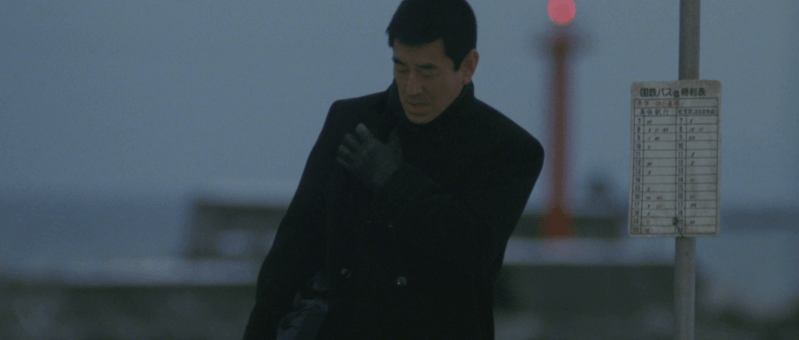
In melancholy gangster movies, the hero often dreams of leaving the city for an idealised rural paradise to start again as a righteous man redeeming himself through hard work with a good woman by his side. Usually, they don’t make it, their goodness is nothing but a weakness in the harsh post-war environment, but even if they did could they really lay their violent souls to rest and live as the rest of us do? Once again played by a manfully stoic Ken Takakura, the hero of Yasuo Furuhata’s Yasha (夜叉, AKA Demon) tries to find out, but discovers that sooner or later the past will always catch up with you. 

15 years ago, fisherman Shuji (Ken Takakura) was the notorious Osaka yakuza known as “Yasha”. A war orphan given refuge by a gangster brotherhood, two things happened to change his way of life, the first being innocent country girl Fuyuko (Ayumi Ishida) whom he met by chance and rescued on the dangerous streets of the city. The second is the death of his younger sister who had become addicted to heroin. Fiercely resistant to the traffic of drugs, Shuji quit the clan, married Fuyuko, and retreated to her fishing village home to take over her late father’s fishing business. Well respected in the community as a steady hand, he now has three children and a settled happy life though one tinged with anxiety in the need to keep his back covered lest anyone find out about his violent past. 

The violent past is brought home to him when a young woman, Keiko (Yuko Tanaka), arrives in kimono with her young son in tow to take over the local bar. Keiko is a bar hostess from Osaka hoping to make a new start far away from the city, not so much for herself it seems as her no-good boyfriend Yajima (Takeshi Kitano) who is a drug-addled thug and openly hostile to her little boy. It’s Yajima who threatens to disrupt the gentle rhythms of the town, firstly getting the fishermen hooked on all night games of mahjong which damage their daytime productivity, and then selling them heroin to keep them propped up. Unused to such urban vices as hard drugs and serious gambling, the fishermen are lambs to the slaughter, handing over their hard earned savings to the thuggish Yajima to keep their heads above the water. 

Shuji wants to keep the town clean, but he can’t exactly admit just how familiar he is with things like drink and drugs which are, as his friend Keita (Kunie Tanaka) points out, not things “normal” people should know about. After realising an old friend is the middle-man, Shuji has a quiet word with Yajima as one thug to another but it only makes the situation worse. He tries talking to Keiko instead, but her decision to get rid of the drugs has disastrous consequences for all when Yajima goes on a crazed, knife-wielding rampage through the town which only Shuji can end. During the fight Yajima slashes Shuji’s fisherman’s jumper right through to the expose the demon beneath, leaving his colourful tattoos on show for all to see. 

You’d think that Yajima’s rampage would have taught the town a lesson, shown them that they were in over their heads and Yajima was not the sort of person it was good to be associated with, but their animosity overwhelmingly turns to the demon Shuji whom they unfairly begin to blame for their many misfortunes. The fishwives begin to avoid Fuyuko, telling their kids not to hang out with her kids and suggesting that it must have been Shuji who got the guys playing mahjong. Shuji meanwhile doubts himself, drawn to Keiko as to Osaka and the sleeping demon within. Yasha reawakens and he wonders if he has the right to live here after all. 

Fuyuko’s mother tells her that it’s a good wife’s job to quell the demon, but she struggles to maintain hold on Shuji while Yasha is pulled towards the city. He makes a manly choice, attempting to redeem Yajima in redeeming himself by returning to his point of origin. The widow of his old boss warns him off, reminds him that he’s a fisherman now, and that should he move against her she will have to act in accordance with the rules of the underworld, but privately mutters to herself that he hasn’t changed at all, “stupid man”. In the end, Yasha’s manly gesture ends in futility. He cannot escape himself but neither can he solve his problems through violence as he might have before, not least because the code is no longer secure motivating those he thought he could trust towards betrayal. He still has a choice, leave with Keiko to be Yasha once again accepting the futilities of a violent life (and its inevitable end), or stay to be a peaceful fisherman with the “good wife” Fuyuko. One man cannot possess two souls, but the given the chance the demon can be subdued if there is the will to subdue it and the belief that the man himself is good enough for the world in which he wants to live.


Original trailer (no subtitles)