Floating Weeds (浮草, Yasujiro Ozu, 1959)

An oft-repeated criticism of the work of Yasujiro Ozu is that it is all the same. The similarity of the English-language titles with their ubiquitous seasonality doesn’t help, but you have to admit there is some truth in it. On closer inspection, however, it becomes clear that Ozu was not so interested in uniformity or repetition as he was in dialogue with himself. Thus Late Spring becomes Late Autumn and the abandoned father a conflicted mother, the two boys of I Was Born But… who rejected their father’s descent into corporate lackydom become arch consumerists seceding from society until their parents give them a TV set in Good Morning. Ozu refrained from remarking on the repurposing of old plots for new dramas, but did expressly regard his 1959 Floating Weeds as a “remake” of the 1934 A Story of Floating Weeds updated to the present day and filmed in the, by then, classic Ozu style. 

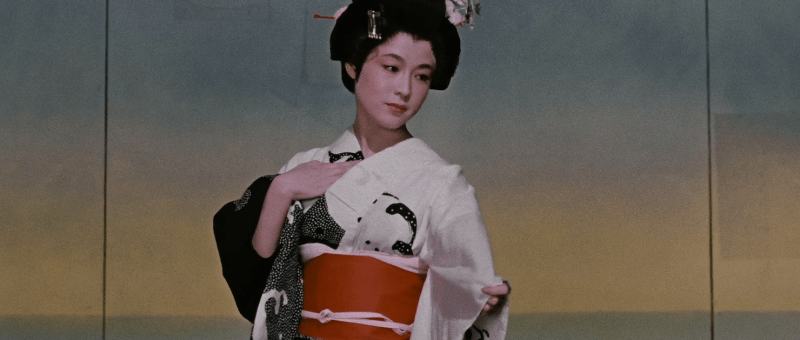
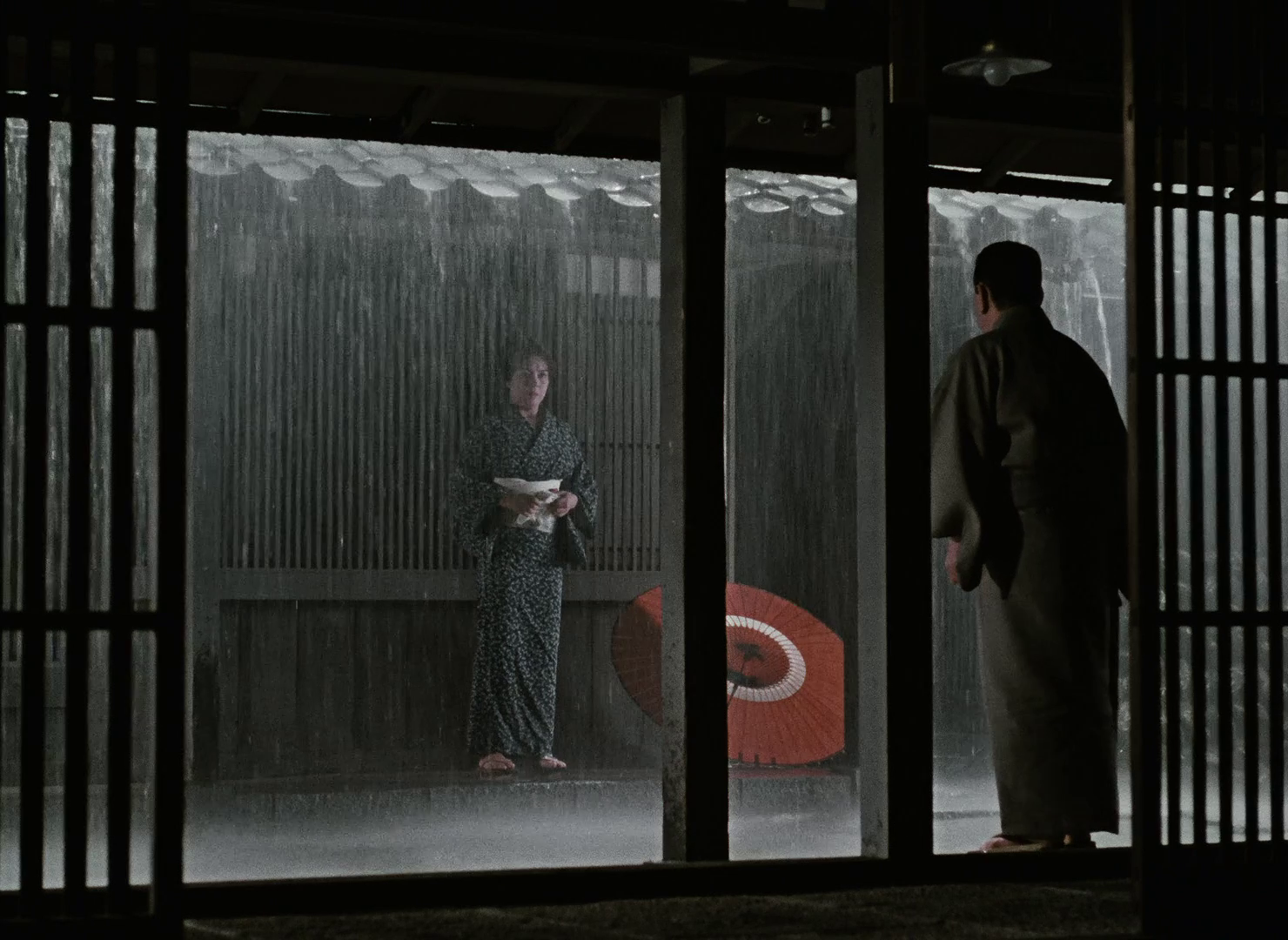
As in the 1934 version, the action centres on the arrival of a theatrical troupe to a small town which they have not visited in some years, in this case 12. This time around, the troupe is a little more exulted, performing kabuki-style narrative theatre rather than rustic entertainment, but is subject to many of the same problems. Kihachi is now Komajuro (Ganjiro Nakamura), a much older man though cheerful and energetic. He has chosen this town because it is home to an old flame, Oyoshi (Haruko Sugimura), who is the mother of his adolescent son, Kiyoshi (Hiroshi Kawaguchi). Kiyoshi thinks that Komajuro is his mother’s brother and that his father is long dead. He recognises Komajuro right away and is pleased to see him, though they evidently have not met in many years. 

The 1934 version had revolved around Kihachi’s corrupted paternity in his shame regarding the stigma of being a travelling player. By 1959 that is simply no longer so much of an issue, but whereas the financial difficulties Kihachi’s troupe faced were partly a symptom of the depression and partly of their misfortunes, those of Komajuro take on a more melancholy quality because it is obvious that this is a way of life which is coming to an end. When Kihachi says he’s going to start over, it seems futile but he is still young enough to have a credible chance. Komajuro is already “old” and it’s clear that he will struggle to support himself as a travelling actor simply because it is no longer a viable occupation. 

Thus Komajuro’s story is less one of frustrated fatherhood than of melancholy resignation to the vagaries of a lifetime. “Life is an unknown course”, he tells Oyoshi, “the only constant is change”. Like Kihachi he doesn’t want his son to see the show, though perhaps more out of embarrassment. Kiyoshi complains that the character in his play is “unrealistic” because he doesn’t relate to the modern world. Komajuro objects but explains that he is “a character from another era”, making it plain that he is talking as much about himself. Komajuro is a man left behind by time and incapable of understanding the world in which he now lives which may be one reason he seems to hang on to an intense desire to save Kiyoshi from being affected by the stigma of being the son of a travelling actor even though that is no longer something he would need saving from. 

This slight disconnect, along with Gajiro Nakamura’s cheekily comical performance, adds to the genial comedy which characterised the majority of Ozu’s colour films though this one is admittedly slightly less colourful owing to being produced by Daiei as one of a handful of films made outside Ozu’s home studio of Shochiku. Komajuro becomes a tragicomic rather than purely tragic figure, a man suddenly realising he has become old and facing the decline of his patriarchal authority. Like Kihachi he turns violence on both his mistress, Sumiko (Machiko Kyo), and the young actress Kayo (Ayako Wakao) who has fallen for his son, but it’s futile and born of desperation. A more sympathetic figure than 1934’s Otaka, Sumiko seems to genuinely like Komajuro and is hurt as well as jealous and threatened by the existence of his “secret” family. Her petty revenge is taken in response to Komajuro’s bitter claim that his son “belongs to a higher race” moments after bringing up her past as a sex worker. Rather than a simple desire for chaos and upset, she intends to pull Kiyoshi down to her level through getting him to sleep with Kayo, but Kayo falls for him for real only to worry she is perhaps ruining his bright future. 

“One can’t suddenly show up out of nowhere and assert one’s parental authority,” Komajuro eventually realises. His hopes are dashed by Kiyoshi’s relationship with Kayo not because of her proximity to the world of the travelling actor, but because he fears it means that Kiyoshi is just like him, an irresponsible womaniser. He wanted to save Kiyoshi as a means of saving himself, pushing his son into a more respectable world he had been unable to enter. Kiyoshi, however, rejects his sacrifice, describing his parents as “selfish” for keeping the secret all this time only to drop a bombshell now. He complains he’s been fine these 20 years and does not want or need a father beyond the one he already thought to be dead. Rather than the nobility Komajuro’s of paternal sacrifice, the focus is pulled back towards the son and his filial responsibility to live up to it by becoming a fine and upstanding young man while Komajuro is once again exiled back to the moribund world of the travelling actor. 

Of course, the world of 1959 was very different to that of 1934. The economy was at last improving and consumerist pleasures were very much on the horizon, meaning that for many life was comfortable at last. Japan was at peace if not completely free of political strife which removes the constant anxiety felt by those trying to survive the mid-1930s. But Ozu himself was also 25 years older and had perhaps reached that sense of resignation with the world that allowed him to sigh and laugh where before he may have trembled with fear or rage. Komajuro is as he always was, a floating weed, a man without a home, but now perhaps one of many rootless wanderers off the post-war landscape.
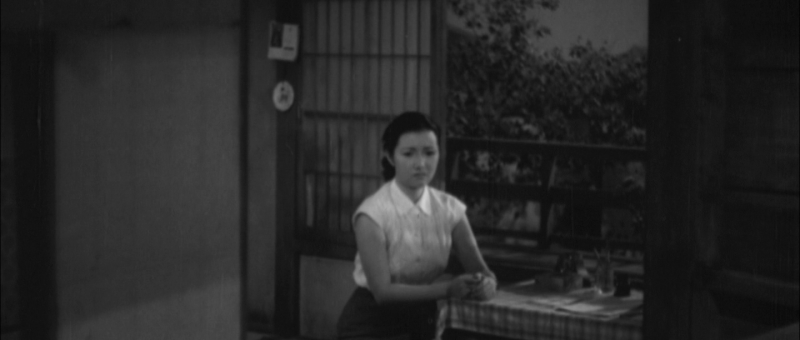

Lightning (稲妻, Mikio Naruse, 1952)

In many ways despite its matter of fact bleakness, Lightning (稲妻, Inazuma) is among the more optimistic of Mikio Naruse’s films ending on a note of cheerfulness and hope in which the storm has been broken and the heroine seems to have rediscovered a sense a faith in humanity. Yet the attitudes she displays are often contradictory and firmly at odds with the kind of Shitamachi spirit one might find in the films of a director such as Yoji Yamada in films like The Sunshine Girl released a decade later.

The qualities that most define Kiyoko (Hideko Takamine) are, as her mother Osei (Kumeko Urabe) suggests, an inner strength that eludes her older sister Mitsuko (Mitsuko Miura) and a forthrightness that sees her struggle to pursue the kind of life she wants rather than that she is expected to lead. Yet some might see her as snobbish and judgemental, at times attacking her mother for having married four times and given birth to four children each with different fathers. In this she sees a particular moral failing on the part of Osei, but perhaps also expresses a deeper distrust in her mother’s repeated attempts to find stability only through harnessing herself to a man. 

Echoing Takamine’s role in Hideko the Bus Conductor, Kiyoko has a job as a tour guide showing off the sites of bustling Ginza though explaining that this part of the city only really comes alive at night. The job gives her a sense of independence and self-sufficiency a woman in this era is not really permitted to have. Her oldest sister, Nui (Chieko Murata), asks if she contributes to the household but the meeker Mitsuko replies that she wanted to but they told her to save her money instead. In any case, it’s towards marriage that she’s pushed when Nui attempts to play matchmaker brokering an engagement with a 35-year-old baker, Goto (Eitaro Ozawa), who has aspirations of opening a love hotel into which Nui and her feckless husband Ryuzo (Kenzaburo Uemura) have invested. Of course, it turns out that Nui is herself having an affair with the baker who is oily in the extreme and disliked by most of the family though eventually manages to make his way into the beds of two of the sisters.

Kiyoko has little desire to marry and asks her mother if any of her four marriages made her happy, but her mother only says that happiness is not an important concept hinting the hardship she’s faced in her life and that a woman of her generation may have had to put up with a certain of degree dissatisfaction to keep a roof over her head and food on the table. While working on the bus, Kiyoko spots Mitsuko’s husband talking to another woman in the street but decides to say nothing only for him to suddenly die and the woman turn up with a baby asking for financial support. Kiyoko tells her sister that marriage is hell, but she smiles and says Kiyoko will be the exception in an expression of the various ways in which women enforce these arcane social codes against each other despite their own misery. Mitsuko too wants to escape but admits she doesn’t have Kiyoko’s courage which is how she too eventually falls into the clutches of Goto much to her sister’s disappointment. 

There is something undeniably poignant in Kiyoko’s frustrated defiance, looking longingly at the paintings and books of their lodger, a young woman from a more middle-class family working her way through university. Kiyoko says she wants to study too, but her mother shoots her down. She’s already 23, and it’s a little late to be picky about marriage let alone strike out for a more stereotypically middle-class life with a white collar job and nice house in the suburbs. It’s the suburbs though to which she eventually moves, without even bothering to tell any of her family. When the nice landlady asks if she has any she admits she has but also has nothing to do with them, which earns her a confused frown. She later says something similar to the pair of piano-playing siblings who live next-door in a kind of suburban utopia, quite clearly ashamed of her humble Shitamachi roots and family members she sees as common and immodest.

In any case, her admiration of the siblings and obvious attraction to the brother (Jun Negami) who is so much more sensitive and caring than her own (Osamu Maruyama) who appears to use the wartime bullets lodged inside him as an excuse not to move on with his life, suggest that she is still in the end looking for a conventional family only one she sees as more positive (or just posher). Perhaps it’s not so much marriage she rejects but dependency and subjugation, believing a marriage to a man like this might be one more of love and equality than the dissatisfying relationships experienced by her mother and sisters. The expressionistic bolt of lightning which appears during a difficult conversation with her mother is like the breaking of a storm, a kind of letting go in which her resentment begins to melt away and her mother agrees to retreat realising that unlike Mitsuko she can take care of herself and to that extent at least is an independent post-war woman. Ambivalent, but in its way warm and forgiving the film gives Kiyoko permission to embrace her aspiration, defy the social codes which constrain her and seek her own happiness, but also allows her to shed her cynicism in rediscovering a faith in humanity and re-embracing her admittedly imperfect mother all while leaving her behind. 


Kinuyo’s First Love (絹代の初恋, Hiromasa Nomura, 1940)

The changing social mores of the 1930s are played out in the fortunes of two sisters unwittingly falling for the same man in Hiromasa Nomura’s melancholy romance Kinuyo’s First Love. One of Shochiku’s most bankable directors, Nomura had one of his greatest hits with the romantic melodrama Aizen Katsura starring Kinuyo Tanaka and Ken Uehara. Tanaka was herself so popular in this period that her name was sometimes inserted into the titles of films in which she starred as it had been in earlier Nomura collaboration Kinuyo the Lady Doctor though this time she plays another stoic and self-sacrificing woman who gives up her own chance of happiness for that of her sister. 

Kinuyo (Kinuyo Tanaka) is the oldest daughter of the Miyoshi senbei shop and has been acting as a mother to her sister Michiyo (Kuniko Igawa) since their own passed away some years previously. Their father, Mr Miyoshi (Reikichi Kawamura), has a job as a doorman at a Western-style hotel, but as the opening sequence proves he’s no longer as young as he was. When Kinuyo reminds him to be careful on his way, he snaps back that he’s “not that old”, though proceeds to forgot almost everything he needs including his hat and walks off with Michiyo’s significantly smaller bento rather than his own. The bento mixup, however, enables a meet cute between Michiyo, who has a job on the trading floor of a stockbroker’s, and the boss’ ennui-ridden son Shoichiro (Shin Saburi). Meanwhile, Kinuyo ends up falling head over heels for him when he gives she and her friend his tickets for a kabuki play after his geisha girlfriend stands him up. 

The arrangements of the Miyoshi family are perhaps odd for the time in that Kinuyo seems to be supporting the family well enough with the senbei store alone even though she keeps giving half the stock away to a little girl who comes every morning. She desperately wants her father to retire and evidently feels their finances wouldn’t suffer without his wages. When he’s eventually fired for being old by the young boss who apparently “just likes everything new” and doesn’t appreciate the hotel’s history or Mr. Miyoshi’s place within it, she’s pleased rather than worried and sets about finding things for him to do at home where she can keep an eye on him and he can still feel useful. Michiyo meanwhile though she has received a good education and has managed to get a stable modern office job feels much the same secure in the knowledge that it doesn’t really matter if she gets fired because Kinuyo can go on supporting them all without her help. It’s perhaps this freedom that all own her to talk to the boss’ son like he was a regular human, something that immediately impresses him because he’s fed up of people sucking up to him or only telling him what they think he wants to hear. 

To that extent, Shoichiro maybe an example of the wastrel modern boy who is ruined by his privilege as evidenced in his lack of interest in the family business and relationships with geisha though the film is also usually sympathetic of his go-playing girlfriend Fusa (Yoshiko Tsubouchi) whom he callously throws over after falling in love with Michiyo ironically because of her seeming modernity in her willingness to be straight with him. But then, lingering feudalism continues to overshadow their romance in the obvious class difference which exists between them. Mr Miyoshi wonders if the marriage is a good thing or if they will simply be incompatible but Kinuyo, even on realising that her sister’s suitor is the man with whom she has also fallen in love, assures him social class needn’t be an issue unless they make it one while simultaneously explaining that Michiyo will need to sever ties with them to fully join Shoichiro’s social rank because they are no longer good enough to be accounted members of her family. To make her point, she begins teaching Michiyo matters of upper-class ettiequte such as the importance of kneeling down to open a shoji with the wooden kick board rather than risk damaging the paper by opening it while standing up. 

Michiyo’s forthrightness might be seen as modern, but her values are otherwise old-fashioned bringing Shoichiro back to the “right” path of honest handwork through refusing to indulge him. Meanwhile a very clear message is being sent that the older generation need to step out of the way, as Kinuyo puts it make their children capable and then let them work as Shoichiro’s father has perhaps failed to do while Mr. Miyoshi has done all too well. For a film of 1940, Kinuyo’s First Love has surprisingly little political content but is perhaps intended to send this message of industry among the young while the family’s senbei store may otherwise satisfy the censors in its presentation of a traditionally Japanese culinary craft. Having adopted the role of the mother, Kinuyo selflessly sacrifices her own happiness for that of her sister even though it will mean their separation but remains undefeated even in her heartbreak sniffling through her tears that she will go on looking for a good husband for herself refusing to “burden” her father with a responsibility which would traditionally belong to him declaring herself perhaps the most modern of them all. 


The Whale God (鯨神, Tokuzo Tanaka, 1962)

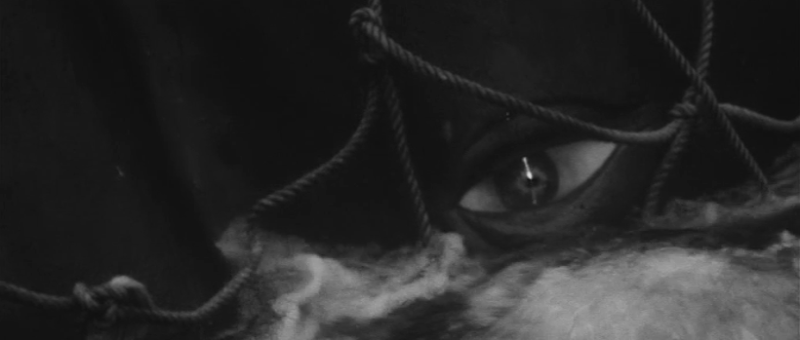
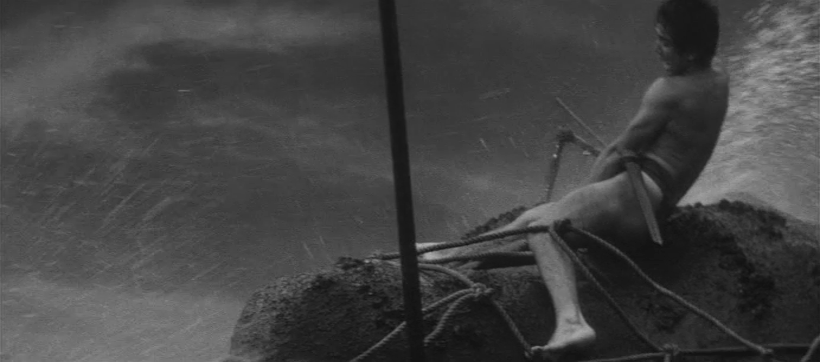
“You’re all mad” the hero of Tokuzo Tanaka’s The Whale God (鯨神, Kujiragami) finally exclaims, perhaps in a sense cured of the overwhelming mania that has defined his life but only at the cost of it. Adapted from the Akutagawa Prize-winning novel by Koichiro Uno which owes a significant debt to Moby Dick, Tanaka’s tokusatsu-adjacent drama is part haunting morality tale cautioning against the destructive absurdity of obsessive vengeance, and a kind of treatise on life in traditional village at a moment of eclipse as the burgeoning modernity of early Meiji washes up on its shores. 

Tanaka opens with a brief prologue in which an elderly man is killed attempting to destroy the “Whale God” only for his son to swear vengeance before being killed himself. The man’s mother instructs his sons to vow revenge, 10 years passing before she sends the oldest one out against the whale. He is also killed, instantly. The last of his line, young Shaki (Kojiro Hongo) is burdened with this piece of filial responsibility, forced to bear the weight of his family’s vengeance while the village elder (Takashi Shimura), a samurai, wants to ensure the Whale God’s destruction and offers up his own daughter, Toyo (Kyoko Enami), along with his lands and title to any who can bring him the snout of the whale. Shaki throws himself forward though he has little desire for the prize obsessed only with vengeance, while another challenger soon appears, Kishu (Shintaro Katsu), a uncouth drifter deciding to hang around after confirming that the offer is open to all no matter their origins. 

Origins do, however, matter. The village elder instructs Kishu to step back lest he spear his “stinking guts” for failing to know his place, a commoner with the temerity to encroach on a samurai’s personal space. The two men, Shaki and Kishu, in a sense represent two halves one whole, one resigned and contemplative and the other rough and greedy. Kishu attempts to challenge Shaki directly but is rebuffed, later settling for besting him through raping his girlfriend, Ei (Shiho Fujimura), who conceives a child as a consequence of the attack but somehow manages to keep the pregnancy entirely secret. Both the woman and the whale become a surrogate battleground for a contest of masculinity, Kishu symbolically ahead in having violated Ei while Shaki remained too consumed with vengeance to have consummated their union. 

Toyo, meanwhile, the samurai’s daughter, insists that she won’t be “the prize for a fisherman’s ambition”, rejecting the idea of becoming the wife of a lowly villager which would of course mean for her great shame. Nevertheless, she is as powerless as Shaki in her inability to shake off patriarchal authority or refuse her duty to obey her father’s orders even as he tells her it’s all a cruel joke, he doesn’t believe that any fisherman could kill the Whale God and survive. Nevertheless she develops a fascination with Shaki and is intensely offended to discover that he wants no part of her father’s bargain and has in fact married Ei claiming her child as his own. He does this in part in order to ensure that someone will exist in order to avenge his own death which he is sure is coming at the fins of the Whale God, resigned with fatalistic nihilism to the ancestral curse which has haunted him for almost all his life living only for vengeance. 

Yet he does in fact manage to kill the Whale God and live, if only for a brief time but long enough to hear Toyo echo that she must marry the man who killed the god in accordance with her father’s promise despite knowing he is already married with a child. His curse lifted, he understands that the whole village is affected by a kind of madness no longer understanding why a samurai’s daughter would agree to marry a man she didn’t love who was not her social equal. In a beatific state, he reflects on his rivalry with Kishu whom he comes to believe deliberately sacrificed himself in order to assure Shaki a survival he does not appear to want in order to ensure his own child would have a father. Discomfortingly, he asks Ei to forgive Kishu because of this fact, little acknowledging her suffering and reducing her once again to a token traded between men in their now concluded battle for masculine dominance. 

An old man having escaped the village’s madness had encouraged Shaki not to die for nothing, to live his life in rejection of his mother’s fatalistic deathbed instruction only to live until you die. In achieving his vengeance he reaches a kind of apotheosis becoming a Christ-like figure sacrificed on behalf of the village which has been liberated of the tyranny of the Whale God even if the Whale God has been exposed as merely a larger than average sea creature. Meanwhile, we can also see that modernity is hovering on the outskirts, the whale’s arrival is signalled by telegraph while Shaki’s childhood friend Kasuke (Yosuke Takemura) alone is able to see through the village’s “madness” leaving to study medicine in Nagasaki. When he returns a year later, Shaki relents and asks him to take his sister with him away from the maddening village towards a more enlightened land. 

The village is also surprisingly enough Christian, though the new religion does not seem to have eclipsed their traditional beliefs or practices. The fishermen still perform a ritual dance before a whale hunt and continue to demand vengeance against the Whale God even when cautioned against it. Shooting in intense gloominess Tanaka emphasises the sense of spiritual dread that accompanies this “ludicrous” vendetta, the village seemingly always cloaked in darkness as if awaiting its own destruction eventually hastened by the elder’s transgressive offering which in itself represents a small revolution that would make a peasant a king and therefore implode a feudal order that is already on its way out. The elder wants vengeance for glory, Kishu wants vengeance for gold, but only Shaki desires vengeance for peace and later wins it only to have nothing left to live for, ominously telling Ei to raise their son to become “a proud whaler”. Making great use of miniatures, Tanaka’s parabolic drama may park itself in the realms of tokusatsu but is in its own way stranger, and darker, yet also poetic in its examination of destructive obsession, traditional masculinity, feudalistic patriarchy, and existential futility through the story of a young man born to die for a father’s transgressive failures. 


Original trailer (no subtitles)

The Silent Duel (静かなる決闘, Akira Kurosawa, 1949)

Amid the labour strikes crippling Toho in the late ‘40s, Akira Kurosawa formed an association with other directors and film professionals and began working with different studios, the first being Daiei on a loose adaptation of a popular play in which an idealistic doctor struggles with his repressed desires while watching others wilfully embrace post-war selfishness and cynicism. Like many of Kurosawa’s films from this period, The Silent Duel (静かなる決闘, Shizukanaru Ketto) is essentially a meditation on post-war moral decline and what’s needed to correct it but also if somewhat accidentally the destructive effects of secret keeping and miscommunication. 

Kurosawa opens the film in 1944 with exhausted field medic Kyoji (Toshiro Mifune) operating on a badly wounded solider, Nakata (Kenjiro Uemura). Distracted by the constant dripping of a leaky roof, the adverse weather conditions outside, and the general stressfulness of the situation, Kyoji makes the fateful decision to remove his gloves to better accomplish the fiddly operation he is performing only to drop a scalpel and cut himself. He continues with the surgery, but realises that Nakata is likely infected with syphilis which he may have contracted through the wound on his finger. Kyoji tells Nakata, otherwise recovering well, that he should make sure to seek treatment but overhears him boasting that his injuries may soon save him from the battlefield. Kyoji continues to serve but is unable to treat the infection effectively with the limited resources available to him as a frontline medic allowing the disease to continue its progression largely unmitigated.

Taking a job at his father’s obstetrics clinic on his return to Japan, Kyoji breaks off his longstanding engagement to pre-war girlfriend Misao (Miki Sanjo) who has been waiting for him the last six years but refuses to explain to her why he cannot go through with their marriage. She assumes it must in some way be related to his war trauma, and in a way it is. The syphilis is an obvious metaphor for the corruptions of militarism. He declines to explain, he claims, because he is certain that Misao would vow to go on waiting for him until the disease is cured which would take at least three to five years assuming it can be cured at all. As she is already 27, he would be taking away Misao’s opportunity to make a happy marriage and have children with another man. In any case, he makes her decision for her which ironically conflicts with his later statement that she should be free to seek happiness on her own, not least because it seems she has been pressured into an arranged marriage by her financially troubled father. The act of childbirth is symbolically relevant though he does not seem to consider the idea of a platonic marriage perhaps uncertain that he could go on repressing his desires as a married man. So morally upright is he, that he also refuses to lie, saying nothing rather than allowing Misao to believe that he has fallen out of love with her, met someone else, or has another war-related issue that prevents his marrying her. Nor does he seem to consider telling her that he has syphilis and allowing her to come to the same conclusion as everyone else, that he contracted it through sleeping with sex workers during his military service which is most likely how Nakata became infected. 

The stigma associated with the disease adds a further dimension to Kyoji’s frustration given that he describes himself as having wilfully sublimated his physical desires in order to be able to return to a “peaceful marriage” with Misao whereas as Nakata who satisfied himself without a second thought returned home symptomless, married, and is soon to be a father. Re-encountering him by chance, Nakata who seems to have become wealthy doing something that is likely immoral if not illegal, tells Kyoji that his sickness is cured but does eventually bring his wife in for a free checkup to discover that he has passed the disease to her and to their unborn child. Yet even confronted with the truth, Nakata lies again and suggests that Kyoji has made all this up as revenge for something that happened in the war keeping the fact that he infected him from his wife. He blames Kyoji for destroying his family rather than accept his own responsibility and sees nothing wrong in his actions until directly confronted with the body of his stillborn child apparently so deformed and monstrous that they wouldn’t let the mother see it. 

The two men have clearly taken different paths, Kyoji certain that he must put others before himself and suppressing his own desires to ensure he cannot pass the disease on while Nakata buries his head in the sand and ignores it. It is a kind of metaphor for the post-war future, those like Kyoji acknowledging that the legacy of wartime trauma is something that must be acknowledged and actively healed before happiness is possible while those like Nakata simply plow on like nothing ever happened with no thought or consideration for those around them. Yet it is also Kyoji who lies by omission even in his selflessness just Nakata lied to his wife while the truth is only discovered by accident, firstly by reluctant nurse Minegishi (Noriko Sengoku) who walks in on him injecting the remedy for syphilis, she in turn then overheard by Kyoji’s father (Takashi Shimura) while Minegishi then overhears the explanation Kyoji gives him. She in a sense completes the cycle when she asks Misao to apologise to Kyoji on her behalf as she is too embarrassed to do so herself after realising that she got him wrong having resolved to turn her life around after learning of the depths of his selflessness. 

Minegishi had been a nightclub dancer who tried to take her own life after becoming pregnant by a man who abandoned her but was saved by Kyoji who gave her a job at the clinic and convinced her to raise the child. It’s this child, at first unwanted but later loved and embraced by all despite the stigma of his being born out of wedlock, that offers the clearest path towards a healthier future suggesting that the solution lies in accepting the past with a willingness to make something new out of it rather than in wilful denial and resentful self-interest. Yet Kyoji is also human and privately resentful. “If I’d known it would happen to me I would’ve done things differently” he sneers petulantly suggesting that his properness may be an affectation rather than deeply felt conviction but equally frustrated in feeling his fate is unjust and that he’s suffering for someone else’s sin. 

“Because of the blood of a shameless guy, my body became dirty without knowing any pleasure” he complains, hinting at a metaphor for his wartime contamination dragged into a conflict by forces outside of his control. The roles he plays are ironic, firstly a healer in a place of death and destruction and then as a deliverer of life at his father’s obstetrics clinic though he fears he will never have children of his own. He is in a sense trapped by his past as shown in the repeated visual metaphor of the closed gates outside the clinic on which the flowers that represent his relationship with Misao and hope for the future gradually wither. Minegishi tells him she’s in love with him and is willing to accept the risk of his disease to alleviate his desire, but he once again chooses to say nothing, immediately returning to business. As his father points out, he has (for the most part) resolved to channel his resentment into helping those less happy than himself but if he had been happy he may have become a snob, indifferent to the suffering of others. In some ways his problem is the familiar giri/ninjo conflict as he fights a silent duel within himself between his natural desires and his better nature but it’s also a battle against the slow poison of the wartime legacy through compassion and selflessness that may, like his inescapable illness, eventually drive him into madness.


The Silent Duel screens at the BFI Southbank, London on 2nd & 11th February 2023 as part of the Kurosawa season.

The Golden Bullet (黄金の弾丸, Hiroshi Innami, 1927)

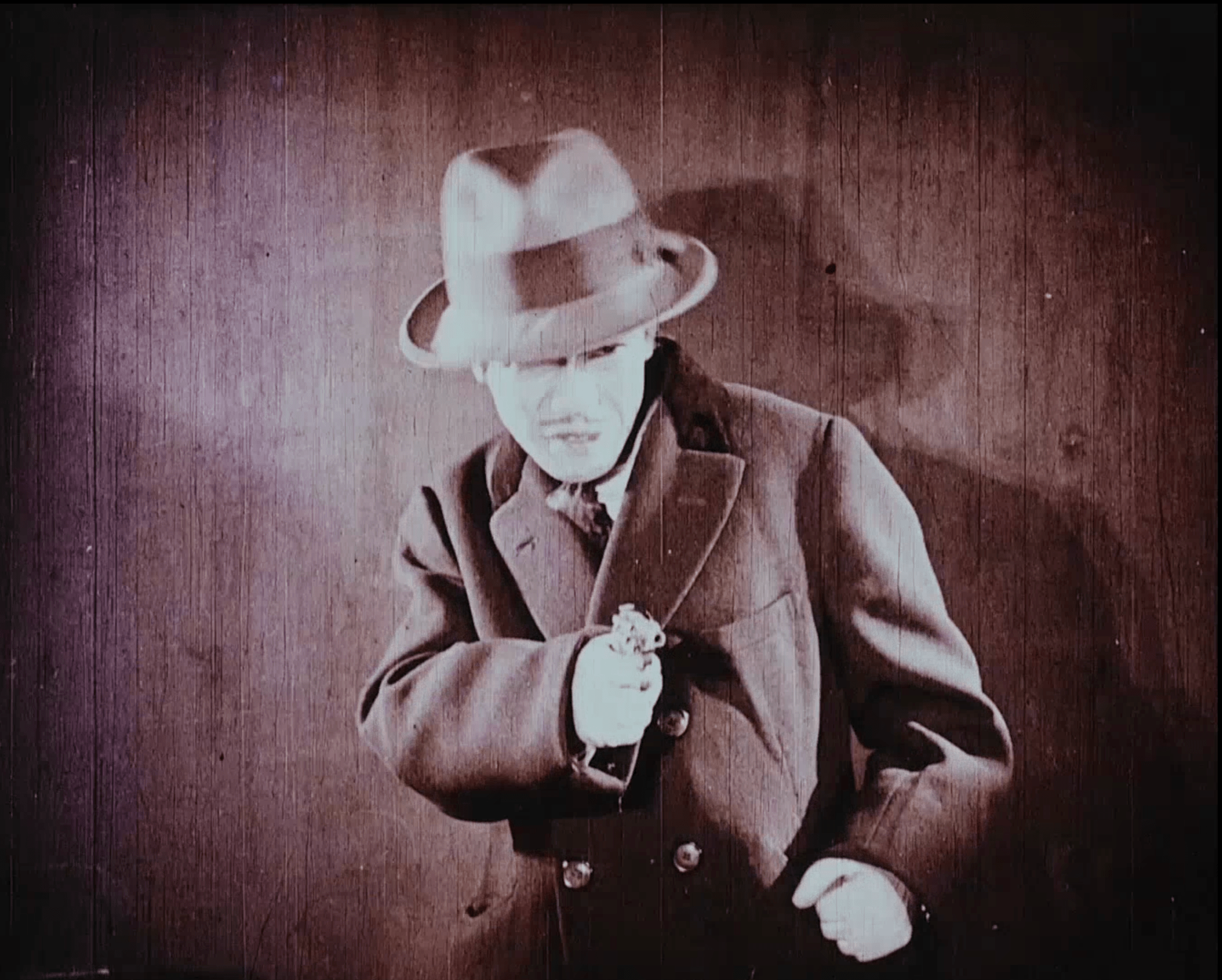
Born in 1902*, Hiroshi Innami was something of an aberration in the early days of cinema in that he first joined the industry after graduating from university and directed his first film, The Golden Bullet (黄金の弾丸, Ogon no Dangan), at Toa Cinema at just 24 years old. His career, and life, were however short as he sadly passed away from tuberculosis at the young age of 36 in September 1938. Even so he managed to produce a prodigious number of films working both as a director and screenwriter though unfortunately little of his work has survived into the present day. 

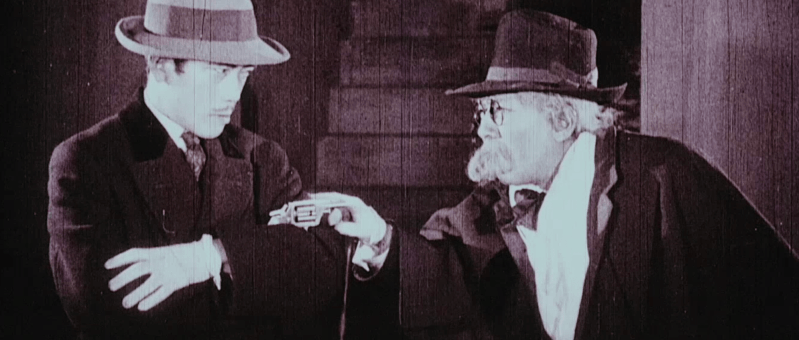
Adapted from a novel by Herman Landon, The Golden Bullet survives in incomplete form its fifth real presumed lost with the missing action conveyed through additional intertitles prepared for the restoration completed by the Kyoto Planet Film Archive. The source material is taken from a part of a series revolving around the “Benevolent Picaroon” who in the film at least is depicted as a kind of playful Robin Hood who daringly steals precious items from the homes of the wealthy and holds them to ransom promising to return what he’s stolen if only the victim donate 10% of its worth to charity. The Benevolent Picaroon is then known as a responsible criminal who prides himself on the fact he never resorts to violence in the course of his activities which is why Inspector Inomata is sure that he isn’t responsible for the murder of a mine owner found dead in his armchair having been shot with the very elitist weapon of golden bullets. Inomata also knows there was a woman at the scene, which raises his suspicion when he’s called to the home of a wealthy family who’ve received a ransom note from the Picaroon but have noticed nothing missing. With the daughter of the house acting suspiciously, Inomata calls in his “special friend” Kawanami to help who discovers the woman had been hiding something which is now missing in the false bottom of a decorative vase. 

In many ways, The Golden Bullet is surprising for the time in that it makes no real attempt to localise Landon’s mystery save for obvious changes in name presumably taken from the Japanese translation. The production design is heavily influenced by German expressionism and the buildings largely European, a plot point revolving around the Western-style fireplace and a painting that hangs next to it in the murdered man’s home. Only the home of the wealthy family appears comparable to those seen in other contemporary dramas, more a European-style country house than the angular townhouses inhabited by the victim and the old man next door who claims to have overheard the crime. The young mistress meanwhile dresses in kimono while at home and the latest flapper fashions when out, paying a visit to Kawanami assuming him to be the Picaroon in order to ask for the return of the missing item which is of course a golden bullet she picked up from the crime scene mistakenly believing her boyfriend, the nephew of the victim, had committed the murder after a heated argument with his uncle. 

Little motive is later given for the murder itself or its elaborate construction save for “gold” which perhaps hints at a discomfort with growing wealth inequality and changes in the social hierarchy as indeed does the very existence of the Picaroon who robs the rich to feed the poor while trying to force those with means to accept their communal responsibilities and give something back to the society to help the less fortunate. The Picaroon meanwhile is a chameleon Sherlock Holmes clone keen on disguises and with a strong sense of social justice, trying to help the young couple after figuring out what’s going by returning the bullet out of kindness partly for an act of compassion they once did him and partly in admiration for their love for each other because what says love better than trying to cover up murder? 

Nevertheless, the Picaroon soon finds himself on the run chased down by the dogged Inomata who at times seems either obvious or calculating almost as if he doesn’t really want to catch the Picaroon after all. Bold in style, Innami opens the film with a series of illustrated intertitle cards, even at one point playfully switching the colour tint to mimic a light turning on, and ends with a high octane chase sequence as the Picaroon makes his escape firstly on foot and then by hijacking a car while chased by horses and motorbikes passing through Kobe’s foreign concession out into the lush countryside before returning to take care of some unfinished business leading to an oddly homoerotic reunion between the detective and his “special friend”. The crime may have been solved but the key to the identity of the enigmatic Picaroon must remain a mystery if perhaps wilfully so. 


The Golden Bullet is available to stream worldwide courtesy of Kobe Planet Film Archive with either live music or benshi narration though English subtitles are provided for the intertitles only.

Trailer featuring benshi narration (no subtitles)

*There seems to be some confusion surrounding Innami’s birth year with some sources citing 1900 rather than 1902 (in which case he was 38 when he passed away).

Tokyo Chorus (東京の合唱, Yasujiro Ozu, 1931)

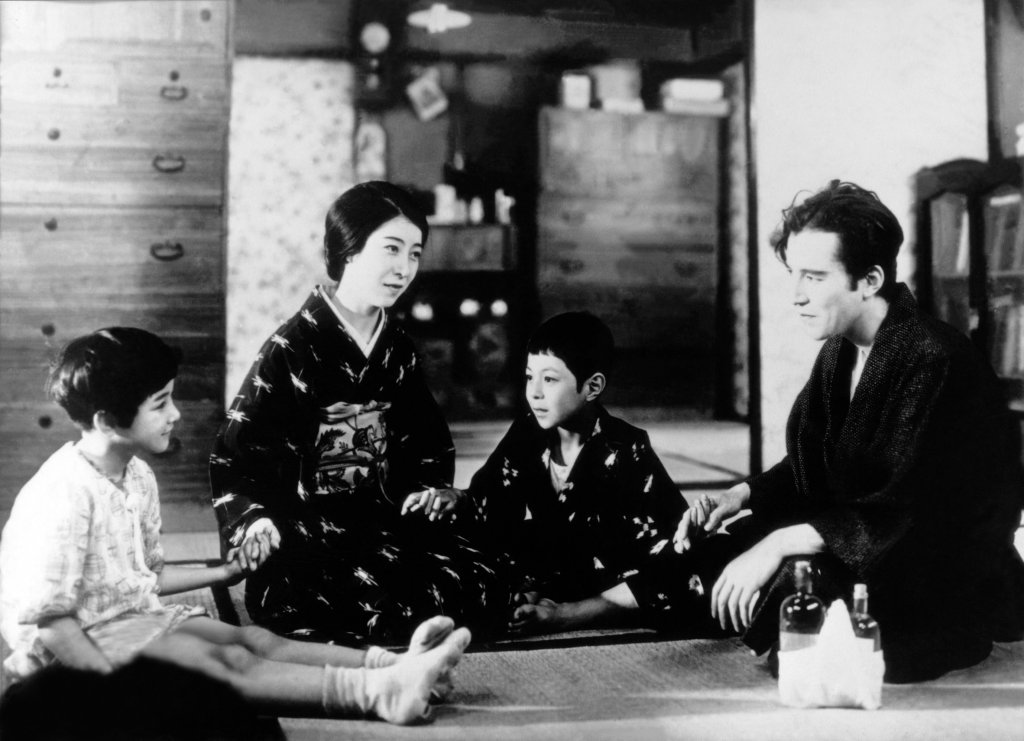
“Tokyo – city of the unemployed” runs a rather unexpected caption part way through Yasujiro Ozu’s depression-era silent comedy, Tokyo Chorus (東京の合唱, Tokyo no Chorus). Putting an unconventional spin on the reality of the contemporary capital, Ozu nevertheless retreats into his favourite themes as good people attempt to remain cheerful in the face of increasing adversity while embracing an often latent interest in class politics as the hero finds himself losing out at the hands of heartless capitalists when he alone is brave enough to stand up for a friend treated unfairly. 

Ozu opens however with an amusing prologue set some years before the main action in which the hero, Okajima (Tokihiko Okada), is a poor student goofing off during a military-style drill. While another boy arrives late to practice and is mocked for having arrived in geta, Okajima’s problem is that he didn’t want to take his jacket off because he isn’t wearing a shirt. A little less well off than some of the others, he brazens things out by ribbing the teacher, Mr. Omura (Tatsuo Saito). Flashforward some years and Okajima has become an insurance clerk, married with three children. His oldest child, a son, is desperate for a bicycle because the other kids have one and as Okajima is supposed to be getting his bonus today, the parents have decided to give in. 

Things do not, however,  go quite to plan. After picking up his pay packet, Okajima gets talking with an old timer who laments he’s just been fired. He thinks it’s because he sold some unlucky policies in which the beneficiary died shortly after signing the paperwork, but it seems obvious to Okajima that they’re firing him because they don’t want to pay his pension. He talks things over with the other employees who all agree it’s unfair, but is the only one brave enough to march into the boss’ office and say so. Unfortunately, Okajima gets nowhere and loses his own job in the proccess. Dejected, he buys his son a much cheaper scooter on the way home but the boy is unimpressed, as is his wife (Emiko Yagumo) when he hands her his notice of termination. 

It is of course a good and proper thing that Okajima stood up for colleague, but he’s lost out because of his pride, smugly explaining to his wife that he was in the right while arguing with his boss and resentfully refusing to admit the irresponsibility of his actions as a husband and a father. Pride becomes a persistent secondary concern as he tries to find another steady job in the economically straitened world of 1931. Despite telling his colleague he envied him for his job as a sandwichboard man and claiming that having a college degree makes him overqualified for casual work, Okajima struggles with himself intellectually knowing that any job will do to feed his family but embarrassed in having to resort to work he feels is beneath him. When he runs into Mr. Omura and he offers to help him with a job in the curry rice restaurant he now owns after retiring from teaching, Okajima is conflicted, telling him he won’t accept help if it’s offered out of pity but only if extended in friendship. When his wife spots him out delivering leaflets, however, she is scandalised and humiliated rather than proud or grateful, only later coming round and agreeing to help out in the Omuras’ restaurant herself. 

Meanwhile, family life is obviously strained by their ongoing financial predicament. When their daughter is taken ill and needs hospital treatment, Mrs. Okajima is upset to discover that her husband sold all her kimonos to pay the fees, their eyes aflash with anger and despair as they put on a brave face for the children but eventually brightening as they continue on with a family game of pat-a-cake. Despite her distress, Mrs. Okaijma maintains faith in her husband and the family is as happy as it can be under the circumstances. At a reunion organised for some of his former students now no longer the rambunctious young men they were at the film’s opening but wistful for the spent freedoms of their youth, Omura makes a toast hoping that everyone continues to prosper through “hard-work and self-reliance”, but it is the mutual solidarity which Okajima showed when he stood up for his mistreated colleague which eventually proves his salvation. Humbled by his experiences, no longer looking down on honest work, he gets the offer of another job which is not quite of the kind he was hoping for, but is perhaps a new start even if it means leaving Tokyo, city of the unemployed, behind for the greener pastures of provincial Tochigi and a simpler, but perhaps kinder, existence.