The Most Terrible Time in My Life (我が人生最悪の時, Kaizo Hayashi, 1994)

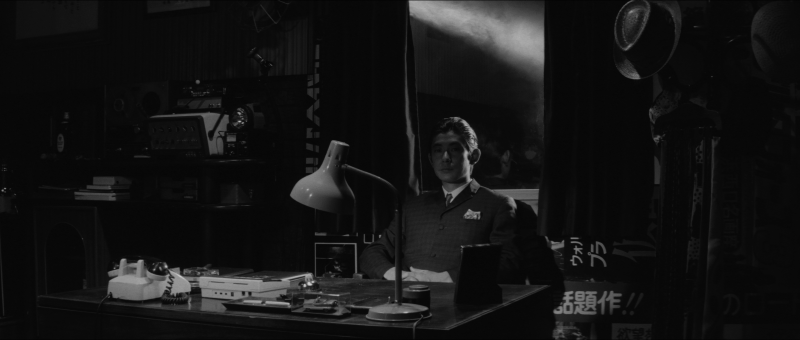
A Yokohama PI finds himself investigating a case of tragic brotherhood against the backdrop of a burgeoning gang war in Kaizo’s Hayashi’s retro crime movie The Most Terrible Time in my Life (我が人生最悪の時, Waga Jinsei Saiaku no Toki). In the first of three films featuring detective / cinema projectionist Maiku Hama (yes, that is his real name), Hayashi harks back to the Nikkatsu borderless action films of the 1960s along with classic noir while also exploring contemporary attitudes towards those not born in Japan. 

The force destabilising the local equilibrium is a gang that calls itself the “New Japs” and was founded by Zainichi Koreans who had acquired Japanese citizenship and now accepts members from other nations colonised by Japan who’ve also naturalised. The implication is that they’re agitating because the society still doesn’t fully accept them, something echoed by Maiku’s (Masatoshi Nagase) first client, a mister Kim, who says the police aren’t interested in his case because he’s a foreigner while when he actually encounters him Lieutenant Nakayama (Akaji Maro) does indeed make some quite prejudiced remarks. Hanging out in a mahjong parlour, Maiku comes to the aid of the waiter, Hai Ping (Yang Hai-Ping), newly arrived from Taiwan when he’s hassled by a racist customer noticing that the waiter’s actually carrying a knife under his shirt and might be about to ruin his life. 

Maiku loses a finger in the process (they sew it back on later), leaving Hai Ping to show up at his office with an improbably large amount of money Maiku refuses and then agrees to take when he hires him to find his brother De Jian (Hou Te-Chien) who came to Japan two years previously and has been missing ever since. Hai Ping’s relationship with De Jian speaks to Maiku because he’s also caring for his 16-year-old sister, their parents being absent from their lives just as Hai Ping and his brother were abandoned and then drifted into gang crime as a means of survival. He discovers that De Jian has married a Japanese woman of Chinese descent who like them was separated from her family which explains why she doesn’t speak any Chinese but was trotted out in a cheongsam as an exotic beauty when she was a sex worker which is how De Jian met her and got himself into trouble with gang when they ran away together. 

They are all in their way displaced people trying to get a foothold in Yokohama but finding varying degrees of success. A turf war is apparently about to break out between the Taiwanese and Hong Kong gangs, though we never actually see the one from Hong Kong only the New Japs and the Taiwanese who don’t actually fight but engage in vendettas with Hai Ping who is actually ordered to kill his own brother to prove his loyalty and atone for his crime. Maiku figures this out quite quickly and again tries to stop new his friend from making a huge mistake but not even he can prevent the fatalistic inevitability of the collision of all these competing honour codes and the implosion of a more literal kind of brotherhood in the face of that represented by the gang. 

Despite the film’s title, which in a meta touch flips around on the marquee of the cinema where Maiku has his office which is currently screening The Best Years of Our Lives, Maiku will have some far worse times in his life in subsequent films but the Yokohama we encounter here is a lived-in neighbourhood with its collection of quirky characters and strange goings on. The tone is humorous and ironic as Maiku’s friends have to chase a dog to get his finger back or Maiku’s taxi driver friend reads magazines while driving and changes hats in line with his role, but it has an underlying noirish sense of sadness for the world’s cruelty in the unfolding tragedies Maiku is powerless to prevent. Shooting in a crisp black and white, Hayashi pays tribute to Borderless action with a cameo from Jo Shishido as Maiku’s father figure while allowing Maiku to inhabit a world slightly out of time or existing only in the movies in which detectives are always hardboiled and the only way to be happy is to abandon all your hopes and dreams before the world can destroy them.


The Most Terrible Time in My Life screens 12th/18th October at Japan Society New York.

Original trailer (No subtitles)
Godzilla Minus One (ゴジラ-1.0, Takashi Yamazaki, 2023)

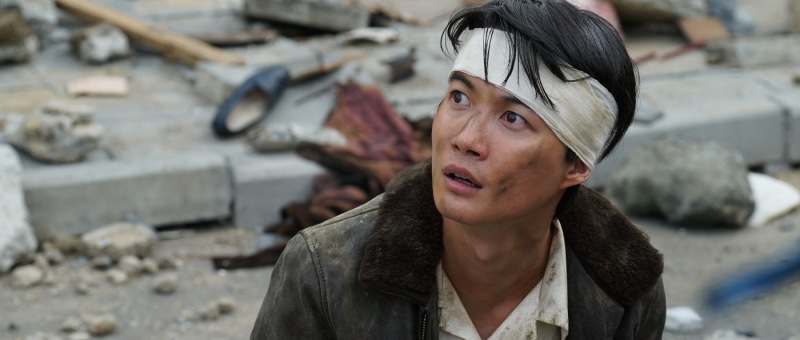
When Godzilla emerges from the waves in Takashi Yamazaki’s entry into the classic tokusatsu series Godzilla Minus One (ゴジラ-1.0), he does so as an embodiment of wartime trauma most particularly that of the hero, Koichi (Ryunosuke Kamiki), a kamikaze pilot who failed die. Some might call his actions cowardice, returning to base siting engine trouble rather than doing what others regard as his duty, though the film implies it’s simply a consequence of his natural desire to live, a desire which the tenets of militarism which in essence a death cult insisted he must suppress. 

But for Koichi as he’s fond of saying the war never ends. He’s trapped in a purgatorial cycle of survivor’s guilt and internalised shame, feeling as if he has no right to a future because of the future that was robbed from other men like him because of his refusal to sacrifice his life. When he first encounters Godzilla on a small island outpost, he is ordered back into his plane to fire its guns at him but freezes while the rest of the men, bar one, are killed. Tachibana (Munetaka Aoki), a mechanic who had already branded Koichi a treacherous coward, gives him a packet of photographs belonging to the dead men each featuring the families they were denied the opportunity to return to. Photographs on an altar become a motif for him, though he has none for his parents who were killed when their house was destroyed by the aerial bombing of Tokyo. A surviving neighbour similarly blames him, directly aligning Koichi’s act of selfish cowardice with the razing of the city.

The return of Godzilla is literal manifestation of his war trauma which he must finally confront in order to move into the new post-war future that’s built on peace and solidarity rather than acrimony and resentment for the wartime past. But then again, the film situates itself in a fantasy post-war Tokyo in which the Occupation is barely felt and the government, which mainly consisted of former militarists, is also absent. Both the US and the Japanese authorities refuse to do anything about Godzilla because of various geopolitical implications making this a problem that the people must face themselves, though they largely do so through attempting to repurpose rather than reject the militarist past. Noda (Hidetaka Yoshioka), a scientist who worked on weapons production during the war, gives a rousing speech in which he explains that this time they will not pointlessly sacrifice their lives but instead fight to live in a better world which is all very well but perhaps mere sophistry when the end result is the same. 

Called back by their old commander, many men say they will not risk their lives or abandon their families once again because they have learned their lessons but others are convinced by the message that they must face Godzilla if they’re ever to be free of their wartime past. Koichi wants vengeance against Godzilla but also to avenge himself by doing what he could not do before. The film seems to suggest that this time it’s different because he has a choice. No one has ordered him to die, and he is free to choose whether to do so or not which is also the choice of being consumed by his war trauma or overcoming it to begin a new life in the post-war Tokyo that Godzilla has just destroyed. 

Despite the desperation and acrimony he returns to, Koichi maintains his humanity bonding with a young woman, Noriko (Minami Hamabe), who agreed to take care of another woman’s child. Even the neighbour, Sumiko (Sakura Ando), who first rejected Koichi and is suspicious of Noriko, willingly gives up her own rice supply for the baby proving that in the end people are good and will help each other even if that seems somewhat naive amid the realities of life in the post-war city ridden with starvation and disease. In any case, it’s this solidarity that eventually saves them, Godzilla challenged less by a pair of large boats than a flotilla of small ones united by the desire to finally end this war. Like Yamazaki’s previous wartime dramas The Eternal Zero and The Great War of Archimedes, the film espouses a lowkey nationalism mired in a nostalgia for a mythologised Japan but as usual excels in terms of production design and visual spectacle as the iconic monster looms large over a city trapped between the wartime past and a post-war future that can only be claimed by a direct confrontation with the lingering trauma of militarist folly.


Godzilla Minus One opens in UK cinemas 15th December courtesy of All the Anime.

International trailer (English subtitles)

Fukushima 50 (フクシマ50, Setsuro Wakamatsu, 2020)

The “Fukushima 50” (フクシマ50), as the film points out, was a term coined by the international media to refer to the men and women who stayed behind to deal with the unfolding nuclear crisis at the Fukushima Daiichi Nuclear Power Plant. Loosely inspired by Ryusho Kadota’s non-fiction book On the Brink: The Inside Story of Fukushima Daiichi which featured extensive interviews with those connected to the incident, Setsuro Wakamatsu’s high production value film adaptation arrived to mark the ninth anniversary of the devastating earthquake and tsunami which occurred on 11th March, 2011 and closes with a poignant callback to the plant’s role in Japan’s post-war reconstruction as the nation once again prepares to host the (now postponed) Olympics with a torch relay beginning at Fukushima as a beacon of hope as the country continues to rebuild in the wake of the disaster. 

Though inspired by real events Wakamatsu’s dramatisation is heavily fictionalised and while surprisingly frank for a mainstream film in its criticism of the official reaction to the disaster, is also quietly nationalistic while doing its best to pay tribute to the selfless sacrifice of the plant workers who stayed behind to do what they could many of whom had little expectation of surviving. Chief among them would be Izaki (Koichi Sato), an imperfect family man and veteran section chief, and the plant’s superintendent Yoshida (Ken Watanabe) who are both local men and old friends. Local, it seems, is later key with multiple appeals to the furusato spirit as each is at pains to point out that they stay not only to prevent a catastrophic meltdown that would leave most of central Honshu including Tokyo uninhabitable, but because they feel a greater duty to protect their hometown and the people in it. 

Meanwhile, they find themselves burdened rather than assisted by official support as government bodies’ political decision making undermines their attempts to avert disaster while the boardroom of TEPCO who operate the plant reacts with business concerns in mind. A few hours in the prime minister (Shiro Sano) decides to make a visit, in political terms he can’t not national leaders who don’t visit sites of crisis are never forgiven, but his presence actively hinders the recovery efforts. Referred to only as the PM, Wakamatsu’s film presents the man leading the nation as an ignorant bully overly obsessed with his personal image. He has little understanding of nuclear matters or the implications of the disaster, refuses to abide by the regular safety procedures required at the plant, and mostly governs through shouting. Beginning to lose his temper, Yoshida does his best to remain calm but resents the constant interference from those sitting in their offices far away from immediate danger while he does his best to contend with the increasingly adverse conditions on the ground, mindful of his responsibilities firstly to his employees and secondly to those living in the immediate vicinity of the plant who will be most at risk when measures taken to prevent meltdown will lead to an inevitable radiation leak. 

Yoshida’s hero moment comes when he ignores a direct order from the government to stop using seawater to cool the reactors, knowing that he has no other remaining options. Meanwhile, the government refuse offers of help from the Americans, who eventually make a strangely heroic arrival with Operation Tomodachi, discussing plans to move their families to safety while their commander reflects on his post-war childhood on a military base near the site of the nuclear plant. Japan’s SDF also gets an especial nod, granted permission to leave by Yoshida who is beginning to think he’s running out of time but vowing to stay and do their duty in protecting civilians in need. 

In essence, the drama lies in how they coped rather than the various ways in which they didn’t. The conclusion is that the existence of the plant was in itself hubristic, they are paying the price for “underestimating the power of nature” in failing to calculate that such a devastating tsunami was possible. They thought they were safe, but they weren’t. Perhaps uncomfortably, Wakamatsu mimics the imagery of the atomic bomb to imagine a nuclear fallout in Tokyo, harking back to ironic signage which simultaneously declares that the energy of the future is atomic while the plant workers reflect on the sense of wonder they felt as young people blinded by science back in the more hopeful ‘70s as the nation pushed its way towards economic prosperity. Frank for a mainstream film but then again perhaps not frank enough, Fukushima 50 is both an urgent anti-nuclear plea and an earnest thank you letter to those who stayed when all looked hopeless, suggesting that if the sakura still bloom in Fukushima it is because of the sacrifices they made.


Fukushima 50 is available to stream in the US until July 30 as part of this year’s Japan Cuts.

International trailer (English subtitles)

The Magic Hour (ザ・マジックアワー, Koki Mitani, 2008)

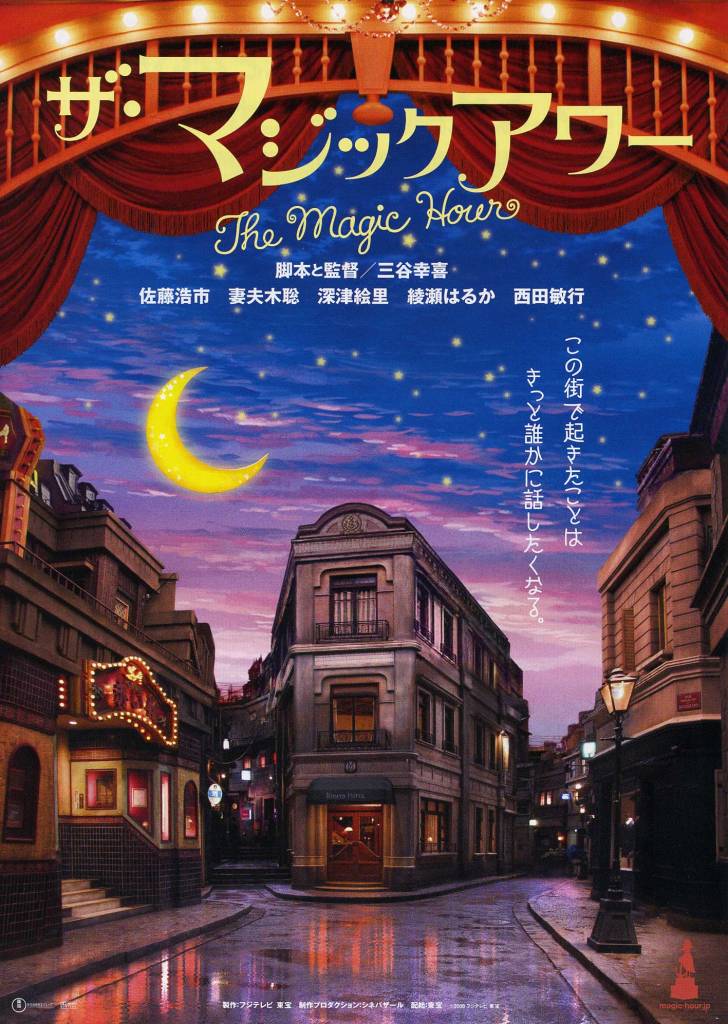
Magic Hour PosterIf there’s one thing you can say about the work of Japan’s great comedy master Koki Mitani, it’s that he knows his cinema. Nowhere is the abundant love of classic cinema tropes more apparent than in 2008’s The Magic Hour (ザ・マジックアワー) which takes the form of an absurdist meta comedy mixing everything from American ‘20s gangster flicks to film noir and screwball comedy to create the ultimate homage to the golden age of the silver screen.

In classic style the film opens with a bunch of goons chasing a scantily clad club owner out of a hotel window. Bingo (Satoshi Tsumabuki) has been hitting the jackpot with the boss’ girl, Mari (Eri Fukatsu), so the two are about to be given a new set of kicks in the latest fashion – cement. Luckily Bingo overhead some of the other guys talking about looking for another gangster, Della Togashi, so he quickly starts talking about him as if he were a long lost friend. The boss, Tessio (Toshiyuki Nishida), gives the pair a reprieve on the condition Bingo tracks down Togashi and brings him in within five days. Slight hitch – Bingo had never heard of Togashi before today and has no idea where to start. Finally, with the help  of some of his bar staff he hatches on the idea of getting a random actor to play the part, seeing as no one knows what Togashi looks like. However, the actor, Murata (Koichi Sato), plays his part a little too well and gets hired to work for the gang all the while thinking it’s just a movie! Pretty much everyone is getting a little more than they bargained for…

If you’re thinking that the oddly American looking 1920s street scene looks a little fake and everyone seems to be overacting like crazy, you wouldn’t be wrong but like everything else there’s a reason for that. What originally looks to be the primary setting for the film is a strange bubble which seems to co-exist with the modern world only its filled with people straight out of The Public Enemy or Scarface who think cement shoes is an efficient way of dealing with traitors. Murata, by contrast, is from our world and is completely oblivious to the strangeness of this movie gangster sound stage universe.

Murata is fixated on the Casablanca-esque final scene of his favourite movie in which a dyed in the wool tough guy entrusts the love of his life to a loyal friend before heading off to face certain death. His own career has not been going particularly well and even if he originally turns down Bingo’s offer as working with a first time director on a film where there’s no script sounds pretty fishy to begin with, circumstances soon find him throwing himself into the mysterious leading role with aplomb. Indulging his long held gangster dreams, Murata becomes the archetypal movie hit-man. He’s giving the performance of his life but has no idea there is no film in the camera.

The “Magic Hour” of the title refers to the twilight time near the end of the day when the light is dying but the conditions are perfect for making a movie. Mitani doesn’t fail to remind us we’re watching a film with constant exclamations of “just like a movie” or “doesn’t this look like a film set”. It’s a Barnum & Bailey world, just as phoney as it can be – but somehow it all just works despite its rather arch, meta approach. By the point we’ve hit Mari sitting on a crescent moon to give us her rendition of I’m Forever Blowing Bubbles (we’re back to The Public Enemy again) we’ve hit peak ‘20s though we scarcely mind at all.

Though he is indeed sending a lot of these classic ideas up, there’s real love here particularly for those golden age Hollywood movies with their wounded tough guys and beautiful chorus girls in need of rescue. Mitani adopts a primarily theatrical tone which meshes well with the absurdist, artificial atmosphere but always makes sure to leave us a fair few clues in the way of laughs. However, probably correctly assuming we know these films as well as he does, Mitani doesn’t give us the typical narrative that would almost write itself (or allow Bingo to write it based on his own trips to the motion picture house). The “bad” guy turns out to be not so bad, the “hero” wasn’t who we thought he was and none of our central guys winds up with a girl. Beautifully silly yet intricately constructed, The Magic Hour is another comedy masterpiece from Mitani which is filled with his characteristic warmth, mild sentimentalism and plenty of off-centre humour of the kind only Mitani can come up with.


The Japanese DVD/blu-ray release of The Magic Hour includes English subtitles.