96 Minutes (96分鐘, Hung Tzu-Hsuan, 2025)

The needs of the many outweigh the needs of the few, as the famous goes. Prioritising saving lives where you can rather than risk spreading yourself too thin and not helping anyone as a result may be a sensible decision. But what if you or a loved are among those who’ve been deprioritised? Like many things, now it’s not just theory but here right in front of you and victims are real people not just anonymous numbers, it looks quite different.

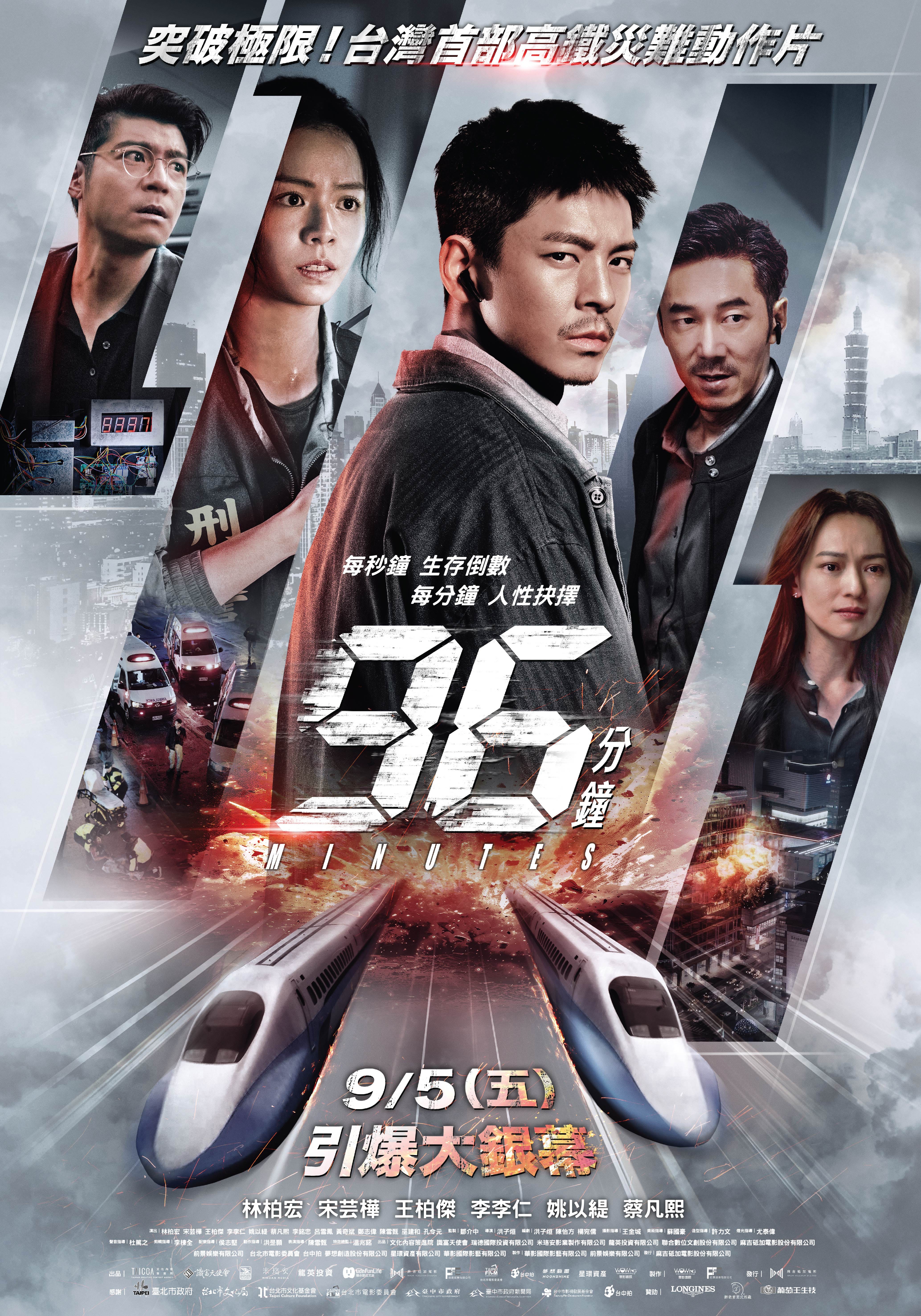
At least, that’s how it is for A-Ren (Austin Lin), a brash bomb disposal expert. Though he disarmed a bomb in a cinema, another one went off across the road in a department store. The bomber had warned them that might happen, but A-Ren’s commanding officer Liu (Wang Bo-Chieh) convinced him they were probably bluffing. They were told there were two more bombs, one located in their command centre, and the other in the department store, and given a choice. Save the people in the department store by heroically blowing themselves up, or choose to save themselves even though this time they’re in the minority. 

Three years later, A-Ren has never forgiven himself, or Liu, for the bomb going off. He’s quit the police and though he’s married fellow officer Huang Xin (Vivian Sung), they never had a wedding and still haven’t been on honeymoon. His guilt is compounded by the fact that he’s been feted as a hero even though he knows he’s directly responsible for everyone who died in the department store. He gets a shot at redemption when the train he’s travelling on returning home after a memorial service for victims of the bombing receives a bomb threat, but at the same time he fears the eventual exposure of what really happened three years ago and is too ashamed to get his mind fully on the job.

On the other hand, it’s true that, ironically, no one on the train has been able to move on from the incident. All of them are mired in their grief and confusion, while looking for someone to blame. Needing to solve the case quickly, the police named a random victim with a criminal past as the bomber rather than admit they didn’t know who did it, making the police themselves a legitimate target for the resentment of the victims’ families given their cavalier attitude to life and death. Liu reminded A-Ren that the policemen in the command centre had families too, as if the people in the department store didn’t or that having a family made their lives weigh more, while Huang Xin was there too further influencing their decision and feeding into A-Ren’s guilt wondering if he was just selfish and made a choice to save her at the expense of the lives of a large number of people he didn’t know.

The bomber essentially gives him the same choice again, putting two bombs on two trains and leaving A-Ren with a binary choice of choosing to sacrifice one or the other to see if he will make the same hypocritical decision again in opting to save the minority because he is among them. Of course, they try a number of other high-risk strategies to disarm both bombs and/or evacuate passengers, but the bomber leaves them with little choice other than to accept the fact that one of the bombs has to go off. A-Ren and Liu can either blow themselves up figuratively by admitting that they chose to sacrifice the lives of the department store victims, or they can save themselves by blowing up the other train.

During a train derailment incident, Liu had cited his greater good philosophy in prioritising passengers who remained outside the tunnel rather than those trapped in the carriages inside, but he perhaps he was wrong to do so and should either have made more of an effort to help everyone or refrained from announcing his decision to let some of the victims die live on television. But then again, the victims’ families are also torn now they are directly involved with some leaning towards saving themselves rather the passengers on the other train whom they don’t after all even know. A-Ren, meanwhile, is in a race against time to restore his sense of integrity by disarming the bombs inside his mind to cure the lingering trauma of the department store bombing as the train rockets forward with only him between it and certain destruction.


96 Minutes screened as part of this year’s LEAFF.

Trailer (Traditional Chinese / English subtitles)
Breaking and Re-entering (還錢, Wang Ding-Lin, 2024)

You go to the trouble of planning a massive heist, and then it turns out you have to put it all back again. The gang of theives at the centre of Wang Ding-Lin’s hugely entertaining crime caper Breaking and Re-entering (還錢, huán qián) brand themselves modern day Robin Hoods, pausing for a laugh when they claim to help the poor, “yeah, us”. Yet there is something a little suggestive about this particular gig as they find themselves hired for an inside job by an obnoxious bank chief who claims the most important thing in life is yourself and those around you are merely passengers to be jettisoned at will..

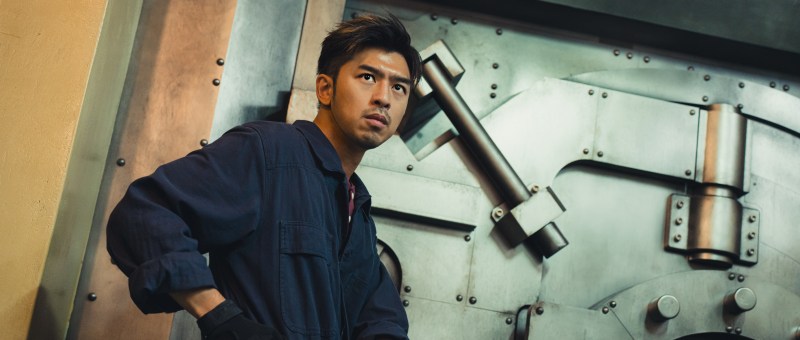
Chen (Wu Kang-ren) is a rich kid who inherited the family bank and thinks he’s hot stuff after studying abroad, speaking Mandarin like foreigner and peppering his speech with English. His big idea is a cryptocurrency called BST and his tagline is “Peace, Love, and Money” while ironically enough he is also claiming to run a charity to help the poor. It’s obvious he’s running some kind of scam and not altogether surprising that he’d plot to rob his own back and then have the thieves bumped off to keep them quiet along with the two employees he’s decided to frame for the crime. Unfortunately for everyone, one of his scapegoats, Shen Shu-wen (Cecilia Choi), is the long lost flame of chief crook Po-chun (Chen Bo-lin) who, having realised Chen plans to bump her off, comes to the conclusion his only option is to mess up Chen’s plan by putting the money back in the vault.  

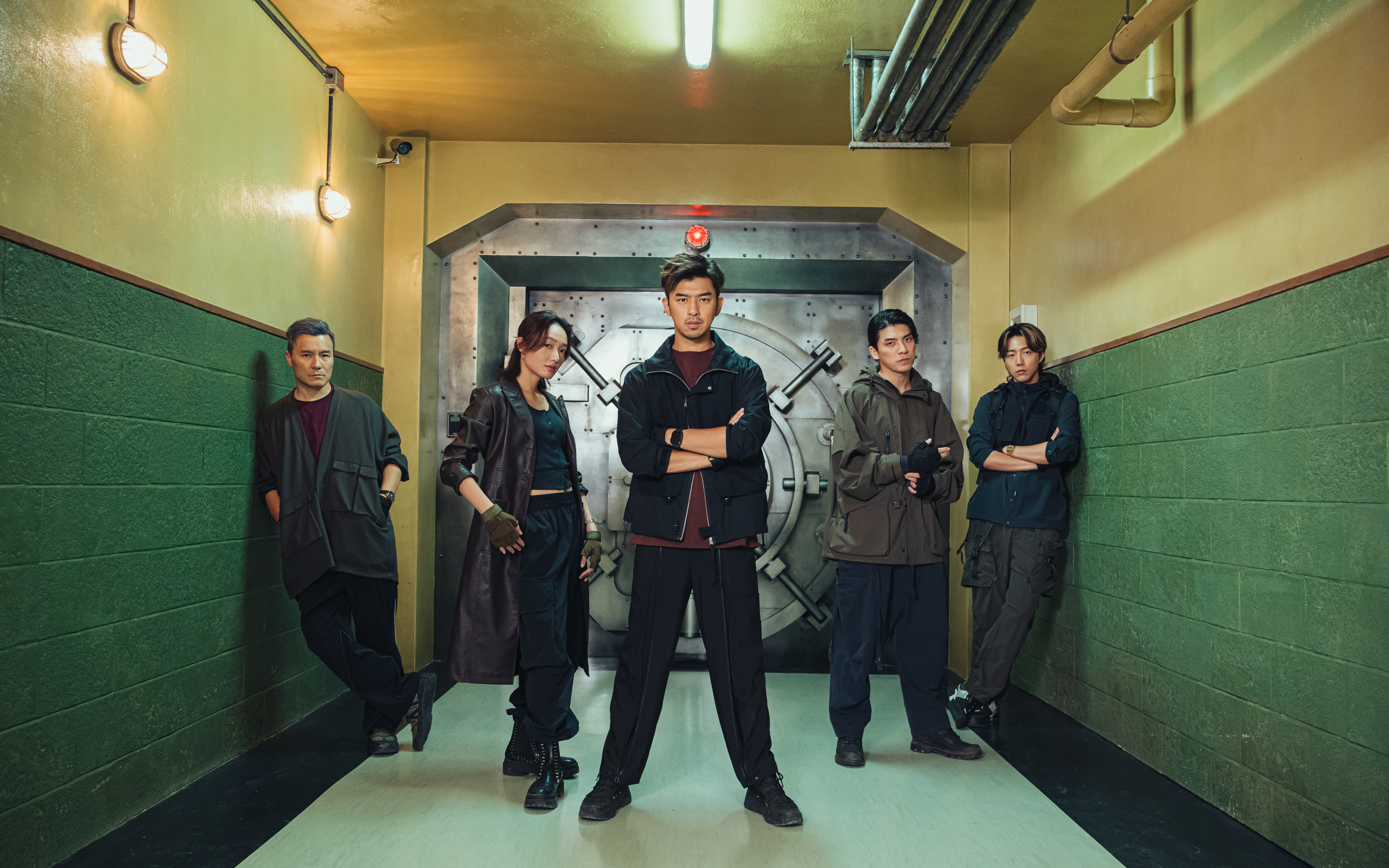
Of course, Chen is a kind of gang leader too complete with his own chief minion, Hu, though at one point he simply shoots one of his guys in the back of the head after he complains that Chen that doesn’t really value him. By contrast, Po-chun’s gang is a close-knit family, a brotherhood of thieves founded on mutual solidarity and infinite loyalty. Chen’s philosophy maybe that the individual is all, but these men live and die for each other. Nevertheless, Po-chun has a problematic hero complex that sees him, as others put it, aways trying to “take responsibility alone”, sacrificing himself for the group rather than allow his fellow gang members to shoulder some of the burden. That’s presumably one reason he (un)intentionally ghosted Shu-wen after getting arrested and going to prison, convincing himself he was doing the noble thing by avoiding getting Shu-wen mixed up with crime but perhaps also ashamed and insecure unwilling to let her know he met her as part of a heist and his cover personality wasn’t real while never giving much thought to her feelings. Shu-wen spent the last five years looking for him which was apparently a primary motivation for changing her career to work in the bank.

Po-chun’s quest is really one of maturity, to stop being the lone hero and fully integrate into the group by sharing responsibility with the others rather than jump straight to self-sacrifice. As he says through the medium of a montage sequence, their secret weapon is teamwork which is how they’re able to fight back against the well equipped Chen and his minions when the reason Chen flounders is his arrogance and the indifference of his men. That is not to say there isn’t tension in the team, such as the unrequited attraction bruiser Wen-hao has for Po-chun that is quite definitely antagonised by the resurfacing of Shu-wen who seems to have figured out the group dynamics pretty quickly in addition to seeing through Po-chun’s strong man act. 

It’s the warm-hearted, lived-in relationships between the team members that give the film it’s charm along with the quirkiness of the elaborately planned reverse heist and its mild dig at corporate tyranny along with class-based inequality. But most of all what it seems to advocate for is a collective spirit and the triumph of the intellect over the pampered authority of rich kid Chen as Po-chun strategises a way out of his grasp while ending his influence and getting the girl. Wholesome and charming, the film makes the most of its surreal humour along with some hilariously placed reality gags such the infuriating slowness of a “high end automatic door” that ironically prevents a wealthy crook from fleeing the scene.


Breaking and Re-entering screened as part of this year’s New York Asian Film Festival and is also screening as part of the Taiwan Film Festival in Australia

Original trailer (English subtitles)