All About Lily Chou-Chou (リリイ・シュシュのすべて, Shunji Iwai, 2001)

“For us the natural world is a playground. But for the things that live in it, it might be hell on earth.” a middle-aged stranger explains to a confused teenage boy elaborating on a metaphor about a strangler tree that wraps itself around its brethren and suffocates them to death. The contemporary society is indeed a hell on earth to the alienated turn of the century teens in Shunji Iwai’s plaintive youth drama All About Lily Chou-Chou (リリイ・シュシュのすべて, Lily Chou-Chou no Subete) who have found solace in “The Ether”, “a place of eternal peace” as discovered in the music of a zeitgeisty pop singer inspired by the ethereality of Mandopop star Faye Wong. 

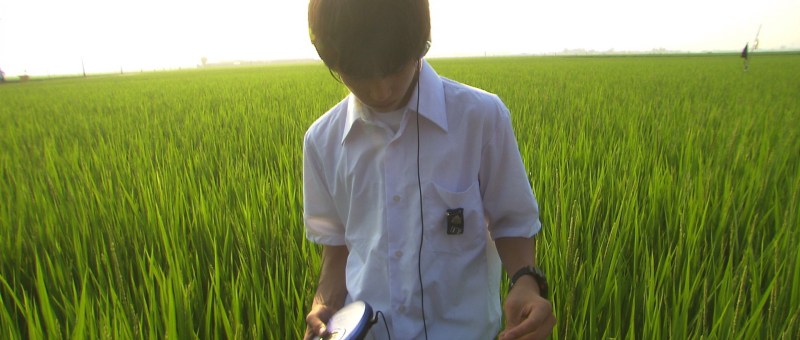
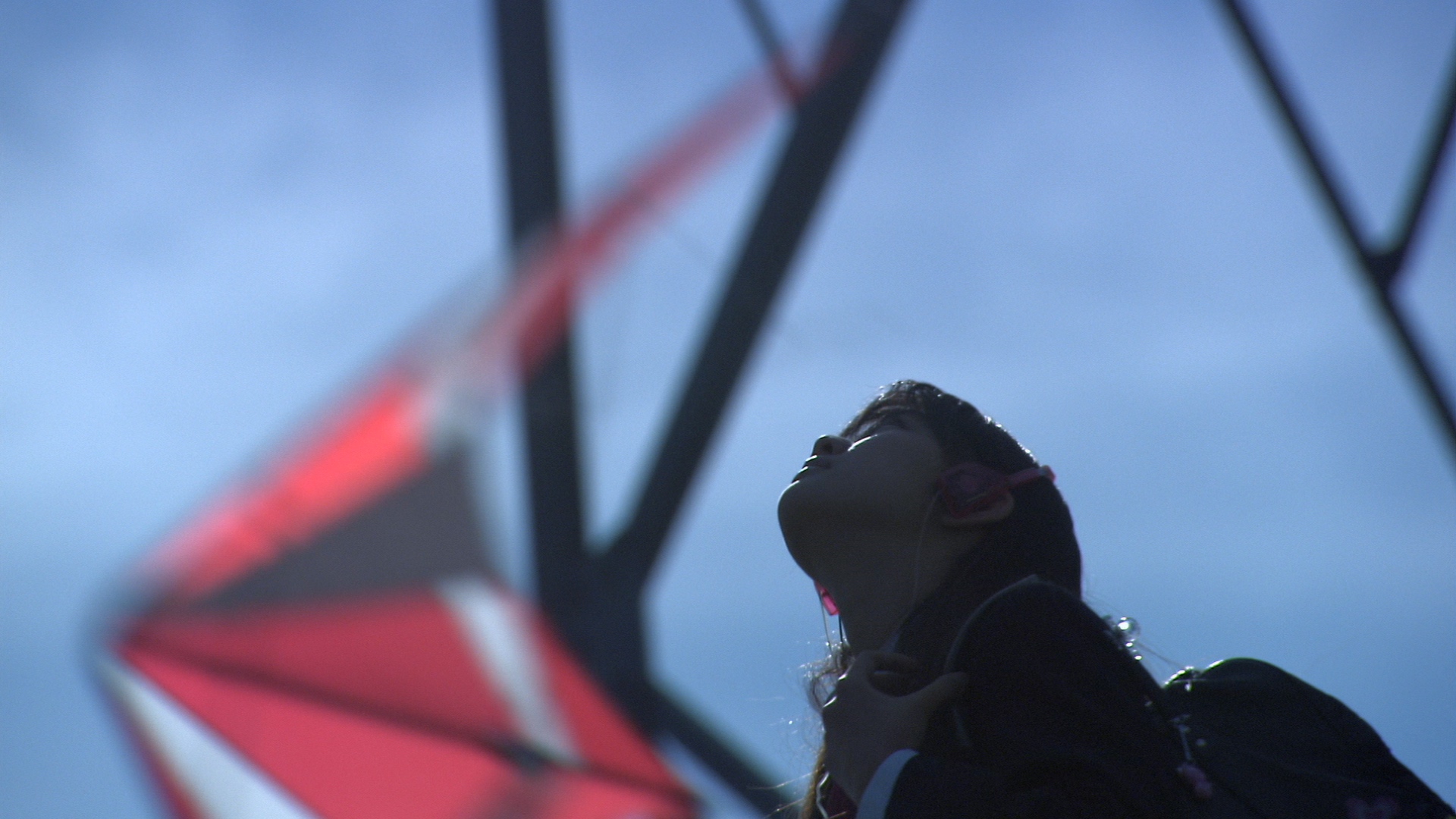
Filled with millennial anxiety, The Ether as mediated through message board chat is the only place the teens can be their authentic selves. “For me only the Ether is proof that I’m alive” one messenger types using an otherwise anonymous online handle unconnected with their real life identity. Iwai often cuts to the teens standing alone listening to music on their Discmans while surrounded by verdant green and wide open space with a bluer than blue sky above, but also at times finding that same space barren and discoloured, drained of life in, as Yuichi (Hayato Ichihara) puts it, an age of grey much like a field in winter. For Yuichi the world ended on the first day of school in September 1999 when his torment began at the hands of a previously bullied boy who decided to turn the tables after, of all things, getting hit in the head by a flying fish in Okinawa and almost drowning.  

Purchased with money stolen from some other bullies who had just stolen it from a well-off middle-aged man they were harassing in a carpark, the trip to Okinawa captured in grainy ‘90s holiday video style later subverted by the same use of contemporary technology to film a gang rape of a fellow student, is the event that finally reduces Yuichi’s world to ashes. Like the other teens he is also carrying a sense of alienation as his mother prepares to remarry while carrying his soon-to-be stepfather’s child which also dictates that Yuichi will have to change his surname lending a further degree of instability to his already shaky sense of identity. For Hoshino (Shugo Oshinari), his sometime friend, the instability seems to run a little deeper. “Nobody understands me” he tells Yuichi with broody intensity, irritated by the image others have of him as a top swat chosen to give a speech at the school’s opening ceremony and widely believed to have placed first in the exams. In truth he only placed seventh and is most annoyed that whoever really did come top probably thinks he pathetically lied about it for clout. 

We can see that Hoshino’s family appears to be wealthy, at least much more than Yuichi’s, though as we also discover they once owned a factory which has since gone bust amid the economic malaise of the ‘90s leading to the disintegration of his family unit. Like Yuichi he feels himself adrift, evidently bullied in middle school for being studious and introverted while rejected by the girls in his class who again attack him because of his model student image. Hoshino seems to have a crush on a girl who is herself bullied, Kuno (Ayumi Ito), apparently resented by the popular set for being popular with boys. “It’s amazing how women can ostracise someone like that” band leader Sasaki (Takahito Hosoyamada) reflects, one of the few willing to call her treatment what it is but finding no support from their indifferent teacher Miss Osanai (Mayuko Yoshioka), while entirely oblivious to the fact that the boys are just the same in Hoshino’s eventual reign of terror as a nihilistic bully drunk on his own illusionary power. 

Shiori (Yu Aoi), blackmailed into having sex with middle-aged men for money, questions why she and Yuichi essentially allow themselves to be manipulated by Hoshino and are unable to stand up to him even when they know they are being asked to do things that they find morally repugnant such as Yuichi’s complicity when tasked with setting Kuno up for gang rape by Hoshino’s minions with a view to videoing it for blackmail purposes. Whether or not he did in fact have a romantic crush on her, Hoshino’s orchestration of the rape signals his total transformation, forever killing the last vestiges of his humanity and innocence but for Yuichi, who can only stand by and cry, it signals the failure of his resistance that if he went along with this there is no line beyond which he will not go if Hoshino asks it. Yuichi asks Shiori why she didn’t agree to date the kindhearted Sasaki who would have been able to shield her from Hoshino but she knows it’s too late for that while suggesting Yuichi is in a sense protecting her though his inability to do so only further erodes his wounded sense of masculinity. 

Only online can the teens find the elusive Ether they dream of, ironically connected via a message board that Yuichi runs under the name Philia where the only rule is that you have to love Lily yet unknown to each other thanks to the alienating effect of their online handles. Someone has a point when they suggest all this talk of polluting the Ether sounds a bit like a cult, but does at least give the teens their safe space where they can share their pain free of judgement and find solidarity in adolescent angst. In any case all of this shame, repression, and loneliness is later channeled into nihilistic violence and cruelty provoked by millennial despair. The only way Yuichi can free himself is by killing the part of himself that hurts in an effort to quell the “noise” in his head. Broken by title cards accompanied by the reverberating sound of typing in emptiness, Iwai’s characteristic soft focus lends a trace of nostalgic melancholy to this often harrowing tale but also neatly encapsulates turn of the century teenage angst with the infinite sympathies of age. 


All About Lily Chou-Chou screens at Japan Society New York on Dec. 10 as part of Love Letters: Four Films by Shunji Iwai

Original trailer (English subtitles)

Crying Out Love, in the Center of the World (世界の中心で、愛をさけぶ, Isao Yukisada, 2004)

sekachuJust look at at that title for a second, would you? Crying Out Love, in the Center of the World, you’d be hard pressed to find a more poetically titled film even given Japan’s fairly abstract titling system. All the pain and rage and sorrow of youth seem to be penned up inside it waiting to burst forth. As you might expect, the film is part of the “Jun ai” or pure love genre and focusses on the doomed love story between an ordinary teenage boy and a dying girl. Their tragic romance may actually only occupy a few weeks, from early summer to late autumn, but its intensity casts a shadow across the rest of the boy’s life.

The story begins 17 years later, in 2004 when Sakutaro is a successful man living in the city and engaged to be married. Whilst preparing to move, his fiancée, Ritsuko, who happens to be from the same hometown, finds an old jacket of hers in a box which still has a long forgotten cassette tape hidden in the pocket. Dated 28th October 1986, the tape takes Ritsuko back to her childhood and a long forgotten, unfulfilled promise. She leaves a note for Sakutaro and heads home for a bit to think about her past while he, unknowingly, chases after her back to the place where he grew up and the memories of his lost love which he’s been unable to put to rest all these years…

In someways, Crying Out Love is your typical weepy as a young boy and girl find love only to have it cruelly snatched away from them by fate. Suddenly everything becomes so much more intense, time is running out and things which may have taken months or even years to work out have to happen in a matter of hours. In real terms, it’s just a summer when you’re 17 but then when you’re 17 everything is so much more intense anyway even when you don’t have to invite Death to the party too. Aki may have a point when suggesting that the the love the local photographer still carries for their recently deceased headmistress who married another man only lasted so long because it was unfulfilled. Perhaps Aki and Sakutaro’s love story would have been over by the end of high school in any case, but Sakutaro was never given the chance to find out and that unfinished business has continued to hover over him ever since, buzzing away in the back of his mind.

“Unfinished business” is really what the film’s about. Even so far as “pure love” goes, there comes a time where you need to move on. Perhaps the photographer might have been happier letting go of his youthful love and making a life with someone else, although, perhaps that isn’t exactly fair on the “someone else” involved. The photographer’s advice, as one who’s lived in the world a while and knows loneliness only too well, is that the only thing those who’ve been left behind can do is to tie up loose ends. Sakutaro needs to come to terms with Aki’s death so he can finally get on with the rest of his life.

There is a fair amount of melodrama which is only to be expected but largely Crying out Love skilfully avoids the maudlin and manages to stay on the right side of sickly. The performances are excellent across the board with a masterfully subtle performance from Takao Osawa as the older Sakutaro equally matched by the boyishness of a young Mirai Moriyama as his teenage counterpart. The standout performance however comes from Masami Nagasawa who plays the seemingly perfect Aki admired by all for her well rounded qualities from her sporting ability to her beauty and intelligence but also has a mischievous, playful side which brings her into contact with Sakutaro. Her decline in illness is beautifully played as she tries to put a brave face on her situation, determined not to give in and clinging to her romance with Sakutaro even though she knows that she will likely not survive. Kou Shibasaki completes the quartet of major players in a slightly smaller though hugely important role of Sakutaro’s modern day fiancée saddled with a difficult late stage monologue which she carries off with a great deal of skill.

Impressively filmed by Isao Yukisada who neatly builds the films dualities through a series of recurrent motifs, Crying Out Love, in the Center of the World is not without its melodramatic touches but largely succeeds in being a painfully moving “pure love” story. Beautiful, tragic, and just as poetic as its title, Crying Out Love, in the Center of the World is a cathartic romance that like Sakutaro’s memories of Aki is sure to linger in the memory for years to come.


The Japanese R2 DVD release of Crying Out Love, In the Center of the World includes English subtitles (Hurray!).

(Unsubbed trailer though, sorry)

http://www.youtube.com/watch?v=PrtAJ8RsaYA


Princess Jellyfish (海月姫, Taisuke Kawamura, 2014)

b7dec6a631e5ad87baf2ff601d6b4872Originating as an ongoing manga series by Akiko Higashimura which was also later adapted into a popular TV anime, Princess Jellyfish adopts a slightly unusual focus as it homes in on the sometimes underrepresented female otaku.

Tsukimi is an extremely awkward young woman who has an all encompassing obsession with jellyfish. Luckily for her, she’s managed to find a group of likeminded women of a similar age to room with. That is, they aren’t all as crazy about jellyfish as she is, but they all have their particular order of special interest, are fairly socially awkward with an extreme fear of “fashionable” women, and no formal form of employment. At the Amamizukan boarding house, the girls can all enjoy their otaku lives together (well, kind of separately) and, crucially there are no boys allowed!

However, one day Tsukimi finds herself at a crisis point when she notices one of the jellyfish she likes to visit at a nearby pet shop is in danger! The idiot shop boy has only gone and put a Moon Jelly in with a Spotted Jelly – does he just not know how dangerous that is?! Tsukimi will need to act fast to save her friend, but the guy behind the counter is a clueless pretty boy – absolutely the worst case scenario for Tsukimi. Despite her extreme anxiety she valiantly marches into the shop yet her confused mini lecture on jellyfish keeping only succeeds in convincing the shop boy that she’s some kind of nutcase. On being expelled from the shop, Tsukimi finds herself at the feet of an extremely glamorous looking woman who comes to her defence. What kind of strange parallel world is this? Tsukimi’s universe is about to undergo a sea change!

Though based on a manga and intended as a comedy, crucially, Princess Jellyfish casts its series of “different” heroines (and hero) in a favourable light – they are never the butt of the joke and sympathy is always placed with those who experience difficulty in their lives because they feel themselves to be different. Each of the girls is so deeply involved in their own particular obsession that they find it difficult to fit into the regular world and particularly to cope with conventional femininity. Tsukimi herself finds it particularly difficult to talk to men and the fact that no men are permitted at Amamizukan makes it clear that she is not alone in her fears.

This brings us to her new friend who is apparently a fashionable young woman – the sort who would never usually be seen dead talking to the likes of Tsukimi. However, this one not only acknowledges Tsukimi’s presence as another human of equal standing, but even lends her confidence and power as an attractive woman to Tsukimi’s predicament. There is, of course, more to this mysterious saviour than there might seem at first sight. In addition to being a fabulously well dressed lady, Kuronosuke is also a boy. This is something of a problem for Tsukimi as she only realises after letting him stay over at the strictly no boys allowed residence. The ruse also has to be maintained a little longer when Kuronosuke decides to stick around, eventually becoming known as “Kuroko”.

The situation intensifies as the girls’ secret haven comes under threat when a gang of ruthless developers want to buy up most of the town and redevelop the area. The group home is owned by one of the girl’s mothers who is also an otaku only her obsession is with top Korean actor Lee Byung-hun and she’s skipped off to Korea to be able to stalk him better. There’s no telling what she might do if it brings her closer to the object of her affections and things are looking a little desperate. Eventually a possible solution is found which plays to everyone’s strengths and offers the faintest glimmers of hope for the girls (and boy!) of Amamizukan.

Princess Jellyfish is the ultimate tale of acceptance, both in personal and societal terms. The residents of Amamizukan may be a little different, but that doesn’t mean they have nothing to offer the world and there’s no need for themselves to maintain a position of self imposed exile if the only reason is a belief in their own inferiority. This is a lesson taught to them by the exuberant rich boy and politician’s son with a traumatic past of his own, Kuronosuke. Truly unafraid to be who he is, Kuronosuke teaches the girl’s that almost any obstacle can be overcome with a combination of forthrightness and sincerity.

Though it runs a little long and gives in to some very over the top performances and melodramatic plotting, Princess Jellyfish is an enjoyably offbeat manga inspired tale. Very much not interested in demonising anyone other than those who seek to suppress individuality, it’s a cheerful celebration of the value to be found in difference offering plenty of laughter and warmth along the way. Perhaps not for those who prefer their cinematic experiences on the subtle side, Princess Jellyfish is nevertheless a fun filled film which carries its message of universal acceptance right into the closing credits.


The anime adaptation of this is actually really fun too.