 Written by
“Where will I go in this future?” a young man tearfully asks, unexpectedly cast adrift and handed a future he never expected to have with no one to help him navigate this new reality. Speaking from the perspective of the Handover, his confusion hints at a sense of despair falling over Hong Kong, but also echoes through the contemporary society in a place where, as he later says, nothing stays the same, though that might not necessarily be such a bad thing.
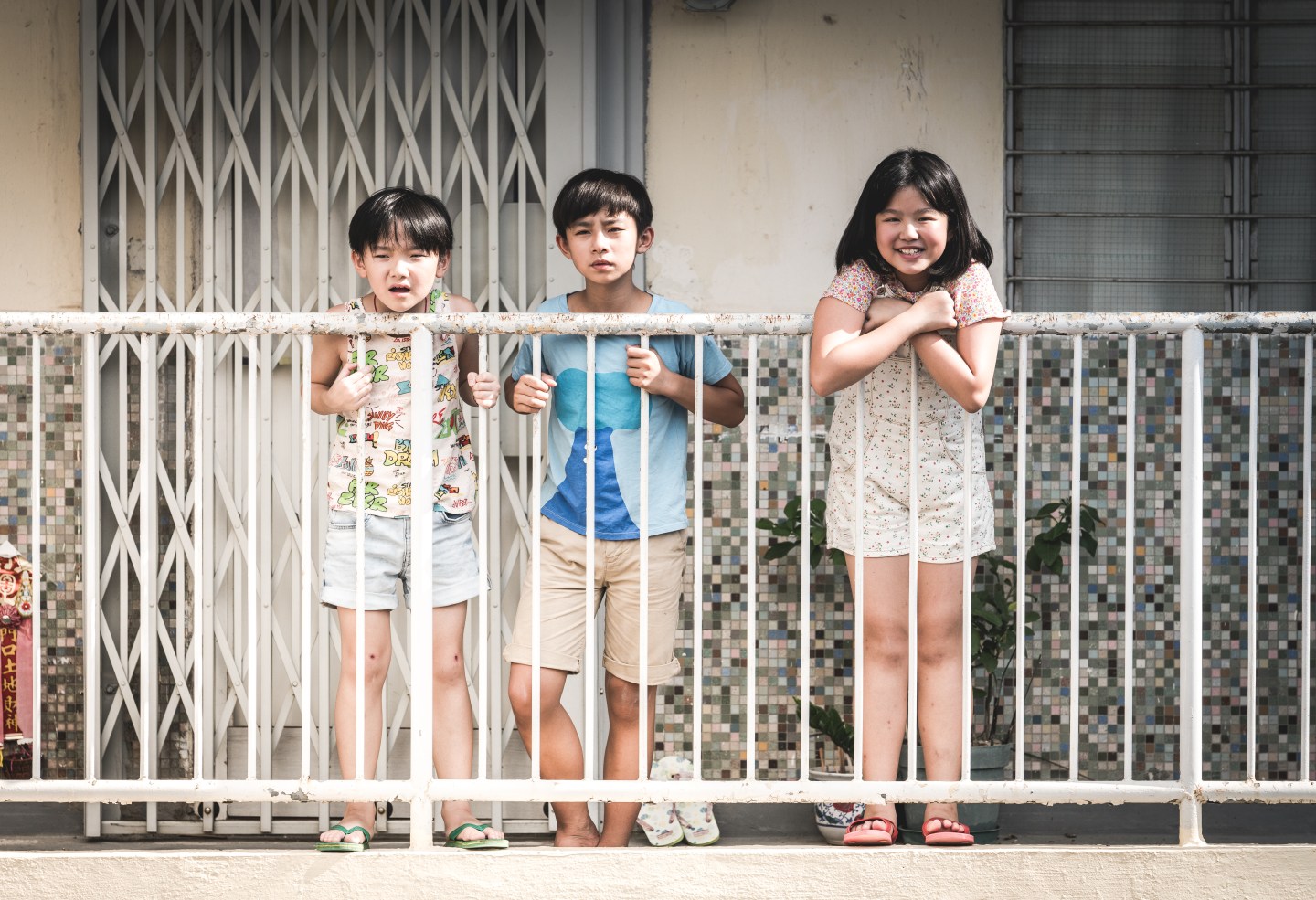
Long delayed for a wider release, Patrick Leung Pak-Kin’s Obayashi-esque drama has a potent sense of nostalgia for a lost Hong Kong of the 80s and 90s, but also a hope that, even if the past cannot be reclaimed and we cannot become who we once were, it is never too late to start again or to choose a new path that leads back to who we were really supposed to be. As children, Heem, Kin, Hoyi, and her unnamed little brother were firm friends living on the Wah Fu estate. The fact that they are no longer in touch reflects a sense of displacement amid the rapid economic growth of that later 20th century in which these kinds of apartment complexes fell out of use leaving communities scattered as the housing market escalated to the extremes of today thanks to rampant property speculation.
The children see the UFO at moment of extreme emotional despair and it gives them only a temporary respite from the terrors of a more adult world. In the mid-1990s, they have all lost their way. Kin (Chui Tien-you) once said he wanted to be an explorer like his father, but is now working several low-paying jobs such as manning a paper stand, selling vacuum cleaners, and acting as an agent of encroaching modernity by setting up home computers for first-time users. He no longer believes in aliens or the UFO, and though he reconnects with an equally melancholy former schoolmate, keeps her at arms’ length and lacks the courage to fight for what he really wants. Heem (Wong You-nam), whose childhood leukaemia has gone into remission, is working as an extra without much of a plan for the rest of his life, because he never expected to have one. He still believes in the UFO and tries to reconnect with his childhood friends amid the X-Files inspired alien obsessions of the ‘90s.
Hoyi (Charlene Choi), meanwhile, who wanted to be a joker making people laugh has been pushed onto a more conventional path as a professional accountant that appears to be making her unhappy, though she’s unable to escape it. While Kin falls victim to stock market mania and Heem Tamagotchi profiteering before joining his brother’s burgeoning real estate business, Hoyi’s straight and steady path would seem to be the winner, though perhaps there’s not so much need for accountants when everyone’s going bankrupt in the Asian financial crisis just as no has the money to buy apartments, which is something Heem’s brother didn’t seem to consider in thinking himself superior to those who got hooked on the stock market.
Several times the three’s path cross, though they do not meet each other and remain locked on their own melancholy paths. Hoyi’s free spirited “hippie” uncle teaches her a classical song written by an ancient poet that he says is about learning to find beauty in loneliness, perhaps sensing her sense of isolation as she wilfully suppresses herself to be the person that she thinks she’s supposed to be including a potential marriage to a man who’s the polar opposite of her authentic self. Austin (Joey Leung) pulls her back to earth when she’s lost in space, which is another way of saying that he crushes her dreams and desire for happiness by telling her to forget about UFOs and concentrate on being a wife and mother after their wedding.
The UFO then comes to represent a kind of nostalgia and the longing for a lost a past, but within that also finds a sense of hope that what once was can be again. It might not be the same, but it’s still there and it’s not too late to turn around and rediscover that sense of wonder in life. The childhood friends eventually reunite and find new solidarity in their shared experience that makes this new reality a little more bearable, even amid its painfulness and irony. The film ends with Hoyi’s brother (Ng Siu-hin) wearing a mask and telling us that it is April 1, 2003, which is the day that Leslie Cheung died, along with perhaps a certain vision of another Hong Kong, but also hints at the SARS crisis that would strike that year along with the more recent pandemic. Perhaps everything is a cycle, but as they say, the end of one thing is the start of another. They haven’t seen any UFOs for a long time and perhaps won’t ever see one again, but the hope remains, and with it the courage to live in this new future whatever it may hold.
Ciao UFO is in UK cinemas from 15th May courtesy of Central City Media.
Trailer (English subtitles)

