Becoming Human (ជាតិជាមនុស្សា, Polen Ly, 2025)

In a way, all cinemas are haunted spaces. They echo and replay time while becoming repositories for the thoughts and feelings of all who walk through their doors. Perhaps that’s why many of them feel so human, as if they really had a soul. Or perhaps they steal a little bit of ours and hide it away behind the screen. The cinema in Polen Ly’s Becoming Human (ជាតិជាមនុស្សា), however, really does have a spirit of its own now facing eviction as it, too, is to be torn down to make way for a new that no one may really want. 

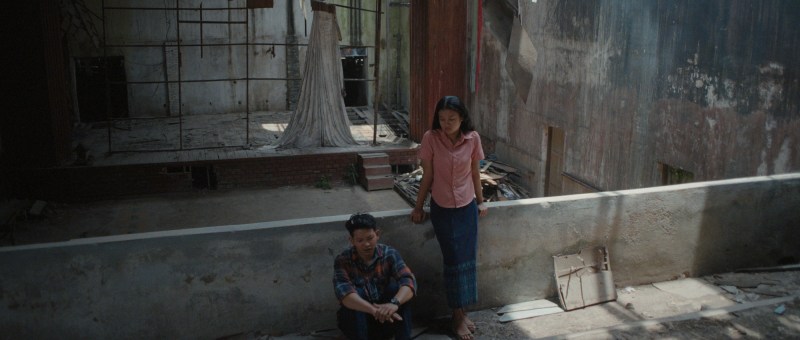
This feeling of unwilling displacement and rootlessness echoes through the film, not the least in the figure of the woman across the way cleaning out her late mother’s home. She looks lovingly at a tree on the rooftop knowing she will never see it again and this last memory of her childhood will not last much longer. Her son sarcastically asks her why she doesn’t take it with her and the house too for that matter if she likes them so much. She would if she could, she replies, with a tone that suggests she’s put out not have the option of doing so. Thida, the cinema ghost, is also in search of a tree, one that once stood outside her childhood home, though she’s no idea if either of them are still there now. She’s rooted to this place, or more precisely to a small shrine inside it that is later rather unceremoniously put out for the bin men with the rest of the demolition refuse. 

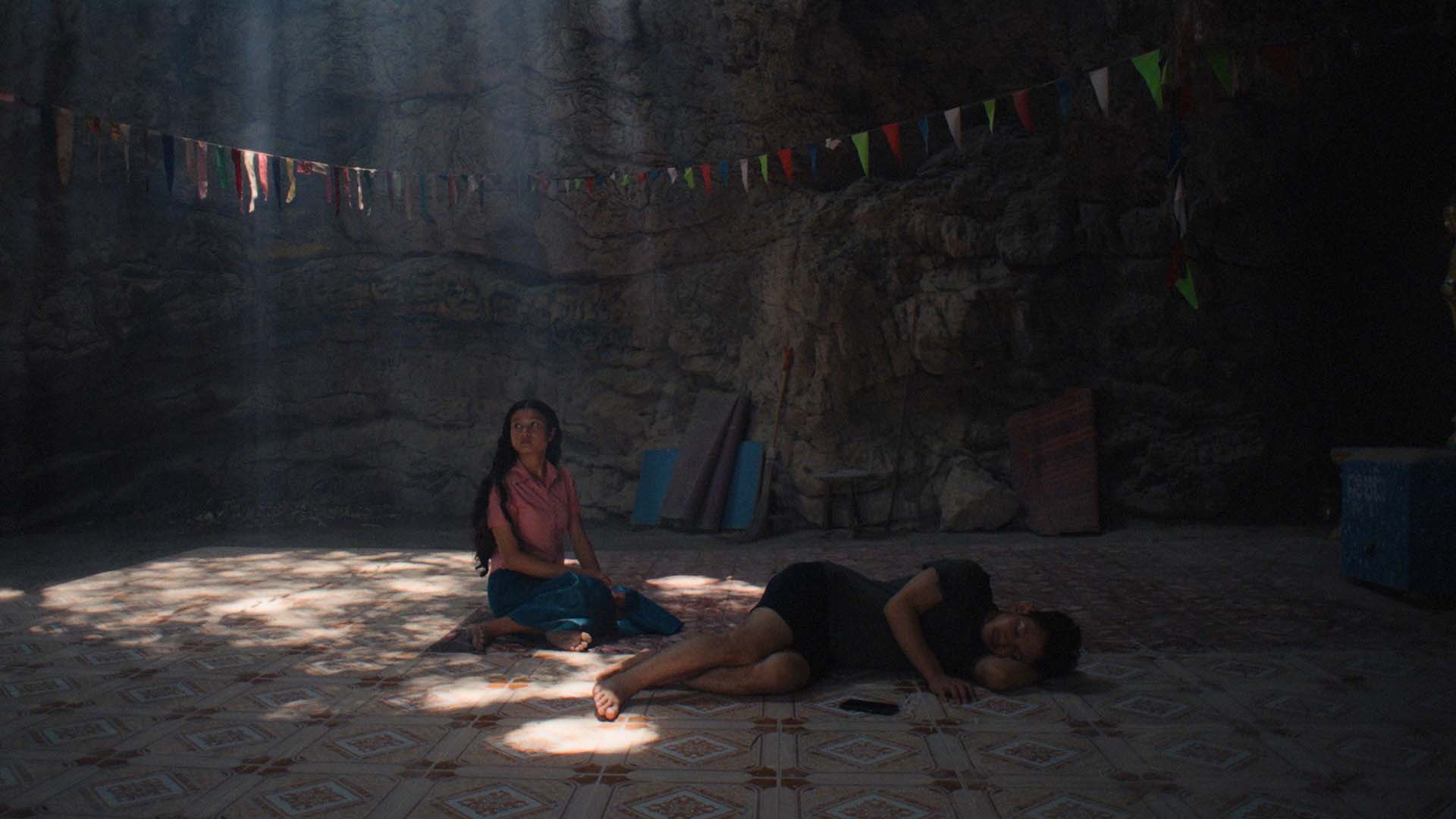
But Hai, a young photographer weary of his life as a journalist in a world in which no one wants to talk about anything serious, is also in his way haunting this space. He tells Thida that he has no home to go back to. Abandoned as a child, he took shelter in a pagoda which, when Thida breaks free and visits it, looks much like the ruined cinema with the light streaming in from above. Now the pagoda is to be torn down too, this time for a quarry which is slowly destroying the very landscape in levelling mountains to build tall buildings in other places. After being sent off for rebirth, Thida encounters a woman who used to be the guardian spirit of a lake, but has learned to live with changing times. Nevertheless, she laments that the lake was filled in to build more apartment blocks and shopping centres for the wealthy. The lake, meanwhile, was used by the poor villagers to water their crops and provided them with fish. The villagers were made into wandering ghosts too. They lost their homes, went to prison for protesting, or took their own lives because they could not find a place for themselves in this changing landscape.

Thida resisted rebirth because her suffering was too great in this life and she’s no desire to repeat it. Being a ghost’s not all that bad, she insists, but there are reasons she can’t move on and in, someways, it’s the country that’s haunting her rather than she it, much as her presence provides both comfort and melancholy for Hai who perhaps risks becoming trapped in nostalgia for a lost past he never really knew. He sings old songs in the abandoned cinema, while ironically playing a classic film for Thida on his smartphone. Perhaps in a way this demonstrates that things don’t disappear so much as merely migrate. Somewhere, the film is always playing even it’s just echoing in the ears of Thida and Hai as they look for new homes in a place where it feels as if the foundations are always been dug out from underneath them.

Still, Thida is also a temporal ghost carrying with her the lingering trauma of a war that continues to scar a landscape if only in its empty spaces. Given the ability to go anywhere, Thida realises there is nowhere to go but home. She grasps the grass where her house once was and seems to make peace with something. Nevertheless, in the end she can’t let it go, choosing to take her memories with her however painful they might be. This land is being reborn too, dying and being rebuilt, while in some respects at least forgetting itself while simultaneously unable to move on from its past.


Becoming Human screens in Amsterdam 8th, 10th, and 12th April as part of this year’s CinemAsia Film Festival.

Trailer (English subtitles)
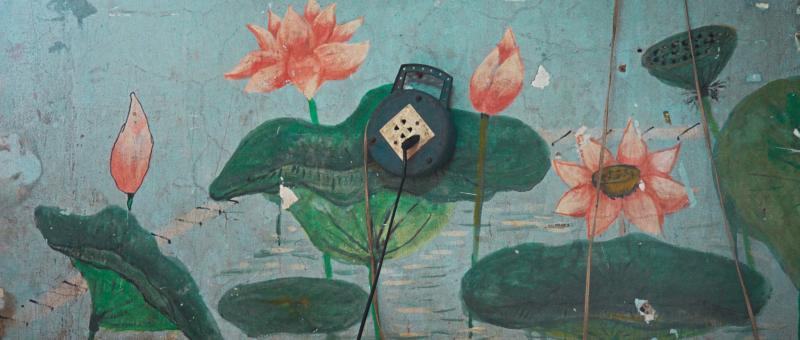
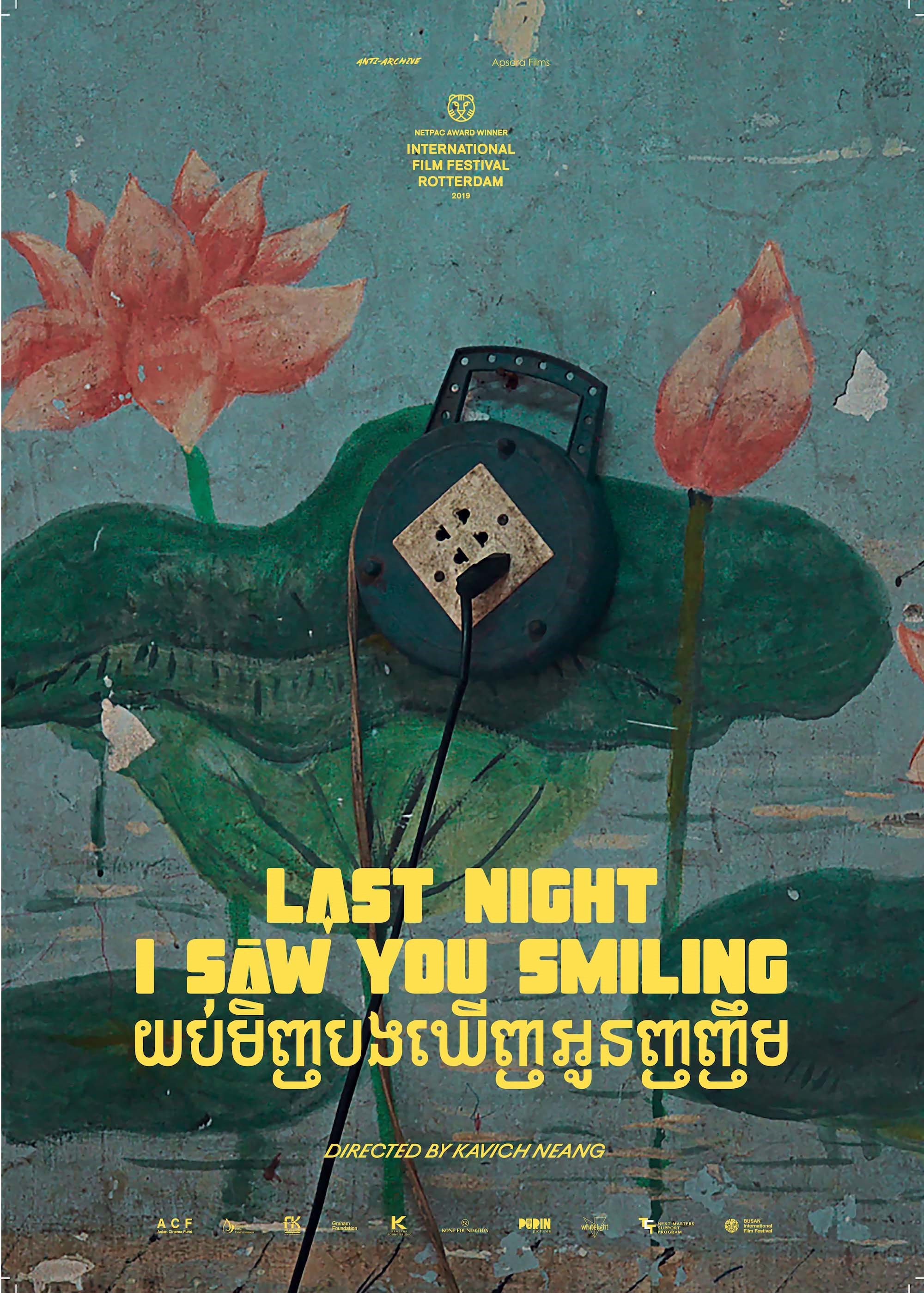
Last Night I Saw You Smiling (យប់មិញបងឃើញអូនញញឹម, Kavich Neang, 2019)

LastNightISawYouSmiling“We’re used to seeing a house for its roof, windows, and walls. But in the end, as we move out of here, it breaks my heart.” Words ironically offered by a sculptor, one who might above all have learned to fall in love with the shape of things, as he prepares to leave a place in which he has made his life. Filmmaker Kavich Neang grew up in the iconic “White Building” of Phnom Penh, Cambodia. Built in 1963, the building was a bold statement from a new nation as it threw off the colonial yoke to claim a new identity, literally extending the territory as it situated itself on reclaimed land – a well appointed complex of bright white stone amid the serenity of spacious parkland.

Intended to house those of moderate income, the White Building first fell into disrepair during the brutalising reign of the Khmer Rouge whose evacuation of the city left it empty for four years. In 1979 after the regime fell, the people began to return and the building once again became a beacon of culture in a modernising city, a vertical village home to artists and civil servants. Progress, however, began to work it against it, and by the time it was condemned in 2015 the building was regarded by many as a slum associated with drugs, crime, and sex work. Nevertheless, it was still home to 493 families, Neang’s among them, many of whom had lived there since the ‘80s and vividly recall the last time they were told they would need to vacate.

The anxieties are, of course, different, but they are there all the same. No one is marching them out by gunpoint, and they have a choice in where they go (in theory, at least), but the truth remains that people are being forced out of their homes against their will. While it is true that the building may have become unsafe and has been deemed unsalvageable despite attempts to preserve its architectural history, many worry that the promised compensation will never arrive or that, for those who lived in the smaller flats, they have been priced out of the modern Phnom Penh and will not be able to find equivalent accommodation using only the money they have been offered but have not yet received. This turns out to be more or less the case with many of the elderly residents returning to live with extended family, in some cases leaving the city entirely, while others retreat to the suburban margins. 

In this sense, Neang documents his neighbours and family “burying” the building as they slowly dismantle the history of their lives within it. At an early meeting with officials, some are keen to confirm that they will be allowed to take doors and windows with them, and so we gradually see doorframes pulled away from walls and fretwork removed from the outside to be incongruously pulled back in. Yet others struggle to bundle their personal belongings, unsure of where they’re going or what they will need in the knowledge they will never, can never return because this place will eventually cease to exist.

Indeed, taking its name from a nostalgic pop song, Last Night I Saw You Smiling (យប់មិញបងឃើញអូនញញឹម) is a funeral elegy for the spirit of a place now departing. Neang opens with a silent corridor and then fills it with life – children playing, women singing, doors open in neighbourly communion. He ends in the same place as the building breathes its last, either liberated or devoured, transitioning to bright white light as if its soul really had departed to a better place. Retro pop songs fill the air singing of lost love, not only of its immediate pain but of the incurable longing of unfulfilled desire for a world that no longer exists and lives only in the halls of memory. You can never go home again, because “home” is a moment, a feeling which is always passing and forever elusive. People give a place soul, only to for that connection to be painfully severed when they must inevitably leave it leaving a piece of themselves behind. The White Building is gone, the community scattered, but the ghost of it lives on, invisible yet ever present.


Screened as part of the 2019 Open City Documentary Festival in partnership with Day For Night who will be distributing the film in the UK.

Festival trailer (English subtitles)