
The Waves Will Carry Us (人生海海, Lau Kek-huat, 2025)

Yao explains to a wealthy couple in Taiwan how they can change their nationality to preserve their wealth, “investing” in another country in order to buy citizenship to a place that has a taxation system that is more advantageous to their circumstances. But the people he’s talking to remark on his accent and after learning he came from Malaysia jokingly tell him that he passes himself off as Taiwanese quite well with the implication being he’s deceived them in some way, while it’s ironic that someone who’s immigrated to Taiwan is helping them “emigrate” from it.

This seems to upset Yao a little bit. Just as it does when he goes to donate blood with some Taiwanese friends, but is refused because he comes from a “high-risk area”. He points out that they might not reject someone from Europe or America in the same way as someone from South East Asia, while this very denial of his blood seems to suggest that it’s not possible for him to ever be “Taiwanese” no matter no long he might have lived there. Any children he might have would not really be either. Lau Kek-huat’s The Waves Will Carry Us (人生海海, rénshēnghǎihǎi) jumps back over a hundred years to ask what really is a “homeland” and what meaning there is in this world of borders and documentation that take questions of identity and belonging out of the individual’s hands.

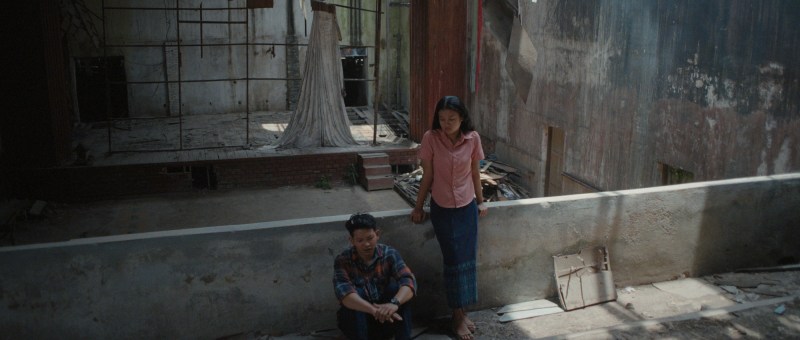
Yao came from Malaysia, but as a member of the ethnic Chinese community, he isn’t completely accepted there either. His grandfather came as a child from China, but when independence was granted, he was excluded from citizenship applications because he did not speak Malay and risked losing his land and farm as an undocumented person. He had come there with his uncle who dreamed of untold riches in South East Asia, but found only hard work and dire conditions. Before they left, their relatives had performed a ritual which taught them never to become “barbarians” or risk losing their way home. Quan and his uncle keep their hair in pigtails despite the mocking of those around them and are discouraged from eating the local durian fruit which becomes a favourite of Yao’s father. 

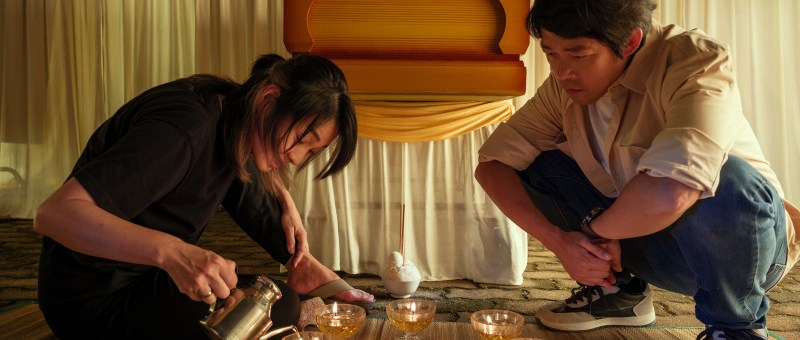
Yet when government officers march into his father’s funeral for which his sister has splashed out on a traditional Taoist burial suit, he learns his father secretly converted to Islam and must be laid to rest in the Muslim burial ground having undergone an Islamic funeral. As he says to his brother Cai who is an activist protesting the corrupt government, it is easier to be a Muslim in this society. You can get cars and loans more easily, not to mention have multiple wives. The government officer looks at him with similar suspicion to the Taiwanese couple, claiming that he understands the “Chinese mindset,” and is sick of people who convert to Islam for purely cynical reasons and never practise the religion. This is what you get, he seems to say as he rejects Yao’s attempts to bribe him and confiscates his father’s body.

It turns out that the reason may not have been so cynical after all, but nevertheless the family is forced through the farce of burying a doll in order to complete the Taoist funeral rites without which they cannot really lay their father to rest. Yao’s and Cai’s mad decision to exhume him from the Muslim burial ground is then an attempt to bring him “home,” though the concept is one that’s in other ways constantly shifting. Yao’s niece asks her mother where Yao’s “home” is now, though the answer they come up with is only that home is wherever he is. That the body ends up getting lost is an indication of its statelessness but also a restoration of freedom in being uncoupled from the notion of national identity. 

Still, young Quan wondered if the stars here were the same as they were back home or if they’d travelled so far the ancestors could no longer protect them. Everyone must find a way to survive, Yao’s father had told him, though his brother Cai may think he’s coward for going to Taiwan rather than staying in Malaysia and trying to make things better like he is with the protest movement. The irony is that their father died on Independence Day draped in a Malaysian flag, while they later use it as a bandana to cover their faces when confronting the police as they try to rescue their father’s body only to enter another kind of in between space, if one in which they are freer to claim their own identity.


The Waves Will Carry Us screened as part of this year’s CinemAsia Film Festival.

Trailer (English subtitles)
Republic of Pipolipinas (Republika ng Pipolipinas, Renei Dimla, 2025)

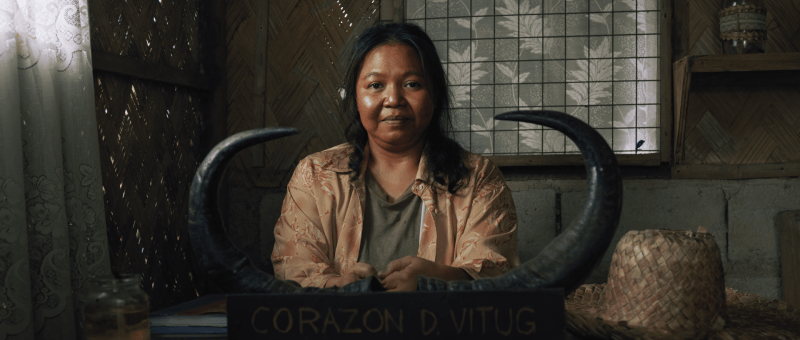
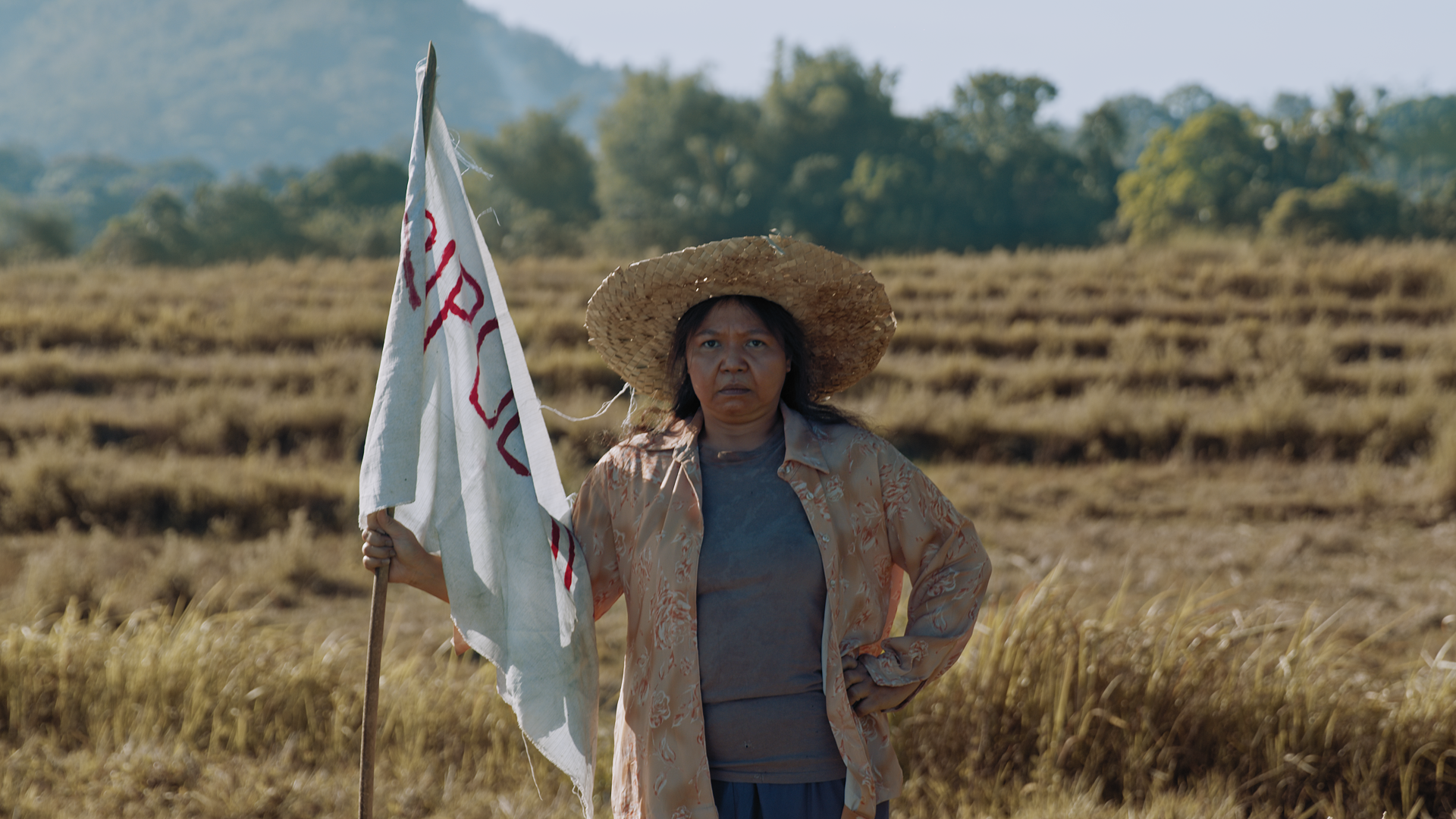
Declaring herself sick of being a Filipino, disillusioned farmer Cora decides to secede from the Philippines and start her own nation which she calls the “Republic of Pipolipinas”. She chose this name, she says, in memory of the People Power Revolution in 1986 which showed her that anything is possible when people work together for the nation. She may have spelled “people” in a non-standard way, but really what does that matter if it sounds right and you know what she means?

A mocumentary shot in the style of Parks and Rec, Renei Dimla’s deadpan satire uses its heroine’s zany idea to explore the contemporary reality of the Philippines in which many others are also sick of being Filipino and want to start again. What Cora most objects to is that the local authorities are trying to take her land which her family have been farming since the days of her great-great-grandfather. They say they have deeds going back to the Spanish colonial era saying the land is theirs, but Cora points out that’s really just neocolonialism. How can they tell a Filipino woman that this land doesn’t belong to her? Her children are buried there, and so she refuses to move, sending letters from the office of the President of the Republic of Pipolipinas to the mayor telling them that if they come on her land she’ll charge them with trespassing which incurs a fine to be paid in ducks, chickens, and cows.

In a way, that might demonstrate that Cora is living in the past, but she has a point when she says that she doesn’t want money in the Republic of Pipolipinas because that’s when you start getting corruption. Most of her neighbours think she’s a bit mad, but see her as a local eccentric, except for the few who think she might have killed her abusive husband with rat poison. Nevertheless, many of them are mired in poverty. The lady at the local shop lets Cora pay in eggs, but another woman comes and asks to add to her tab because there’s nothing to feed the children and her husband hasn’t been paid again. Local boy Ogie has dropped out of school because his mother’s ill. She’s refusing to see a doctor because they can’t afford it. Cora puts back some of her purchases and asks for the money instead which she gives to Ogie so his mother can get medicine. 

Many of the people who later join the Republic of Pipolipinas have similar problems. One woman has lost a son to extrajudicial killing. A man working as a tour guide hates himself for greeting people so warmly when he knows the country is in a bad way and the vision they sell to tourists is a lie. But once the Republic of Pipolipinas starts to grow, the same kind of issues appear. Led by actress Alessandra de Rossi playing a version of herself, the new citizens become frustrated with Cora’s lack of sophistication and begin talking about constitutions and what kind of nation they want the Republic of Pipolipinas to be while vying for power.

Cora asks herself why they’re expected to die for the nation when the government’s job is to keep people safe from harm. After discovering that her farm is to be bulldozed to build a waste treatment centre, or really a landfill site filled with rubbish imported from Korea and other wealthy nations, she discovers corruption in the local government and tries to expose it only to end up being accused of embezzlement herself, which is ironic because she consistently rejected the presence of money precisely because it leads to corruption. Even a local official who refuses to believe Cora would do something like that sheepishly admits that it’s difficult to avoid temptation once in power, as if corruption is an inevitability that can’t be resisted. But even collaborators aren’t exempt from the wrath of the regime. The mayor believes he’ll weather this storm just fine and continue to “serve the people” while throwing his underlings under the bus.

At heart, Cora isn’t really sick of being Filipino, she just wants the Philippines to be a better place for the children to grow up. She can’t stand the flag ceremonies and enforced patriotism, the expectation that they must serve a nation which no longer serves them. What she holds onto is a lesson that her father taught her during the People Power Revolution, that the nation is not abstract concept but collection of people who can still turn this thing around no matter how hopeless it might seem now.


Republic of Pipolipinas screens in Amsterdam 10th/11th April as part of this year’s CinemAsia Film Festival.

Trailer (English subtitles)
Becoming Human (ជាតិជាមនុស្សា, Polen Ly, 2025)

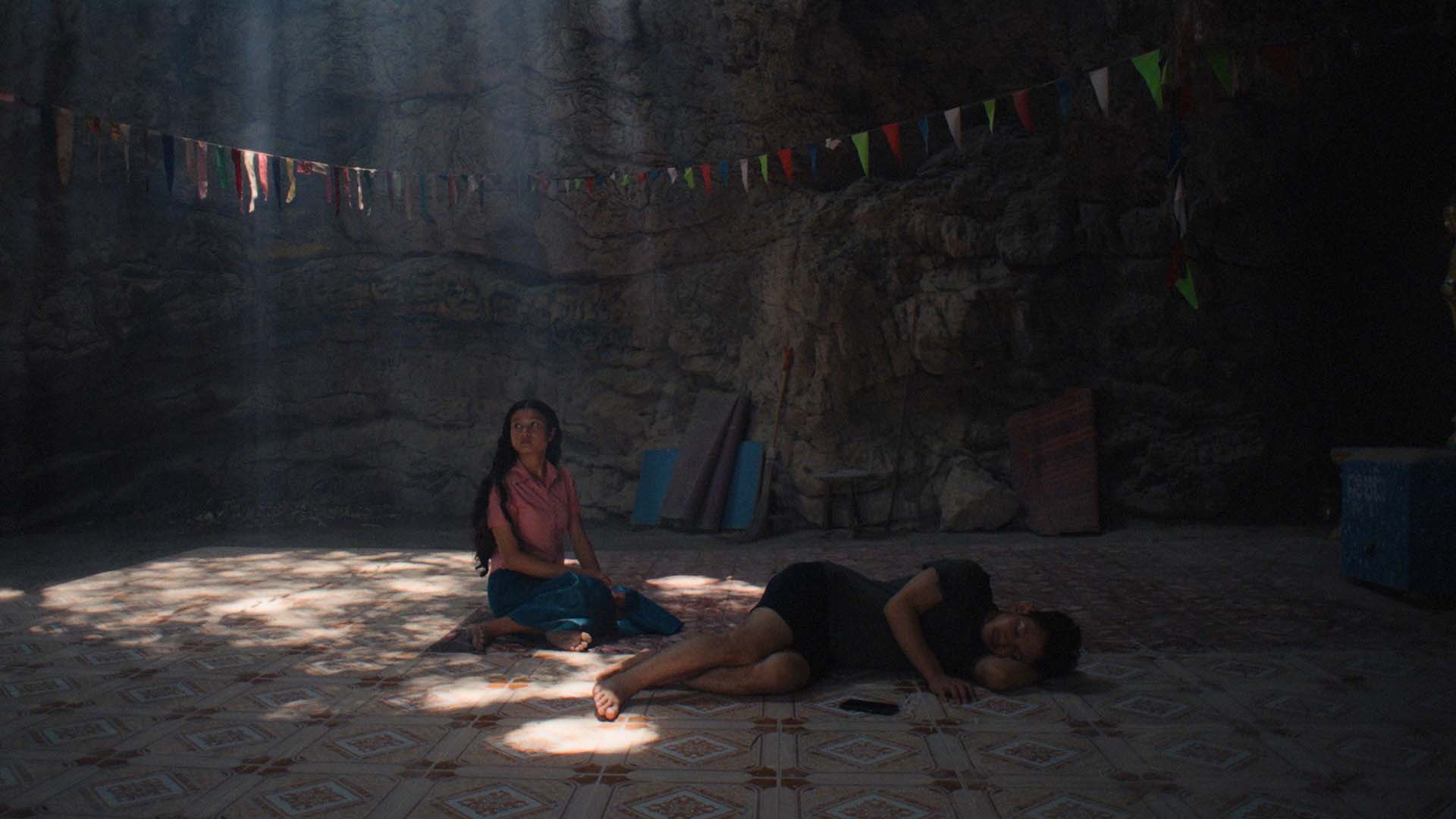
In a way, all cinemas are haunted spaces. They echo and replay time while becoming repositories for the thoughts and feelings of all who walk through their doors. Perhaps that’s why many of them feel so human, as if they really had a soul. Or perhaps they steal a little bit of ours and hide it away behind the screen. The cinema in Polen Ly’s Becoming Human (ជាតិជាមនុស្សា), however, really does have a spirit of its own now facing eviction as it, too, is to be torn down to make way for a new that no one may really want. 

This feeling of unwilling displacement and rootlessness echoes through the film, not the least in the figure of the woman across the way cleaning out her late mother’s home. She looks lovingly at a tree on the rooftop knowing she will never see it again and this last memory of her childhood will not last much longer. Her son sarcastically asks her why she doesn’t take it with her and the house too for that matter if she likes them so much. She would if she could, she replies, with a tone that suggests she’s put out not have the option of doing so. Thida, the cinema ghost, is also in search of a tree, one that once stood outside her childhood home, though she’s no idea if either of them are still there now. She’s rooted to this place, or more precisely to a small shrine inside it that is later rather unceremoniously put out for the bin men with the rest of the demolition refuse. 

But Hai, a young photographer weary of his life as a journalist in a world in which no one wants to talk about anything serious, is also in his way haunting this space. He tells Thida that he has no home to go back to. Abandoned as a child, he took shelter in a pagoda which, when Thida breaks free and visits it, looks much like the ruined cinema with the light streaming in from above. Now the pagoda is to be torn down too, this time for a quarry which is slowly destroying the very landscape in levelling mountains to build tall buildings in other places. After being sent off for rebirth, Thida encounters a woman who used to be the guardian spirit of a lake, but has learned to live with changing times. Nevertheless, she laments that the lake was filled in to build more apartment blocks and shopping centres for the wealthy. The lake, meanwhile, was used by the poor villagers to water their crops and provided them with fish. The villagers were made into wandering ghosts too. They lost their homes, went to prison for protesting, or took their own lives because they could not find a place for themselves in this changing landscape.

Thida resisted rebirth because her suffering was too great in this life and she’s no desire to repeat it. Being a ghost’s not all that bad, she insists, but there are reasons she can’t move on and in, someways, it’s the country that’s haunting her rather than she it, much as her presence provides both comfort and melancholy for Hai who perhaps risks becoming trapped in nostalgia for a lost past he never really knew. He sings old songs in the abandoned cinema, while ironically playing a classic film for Thida on his smartphone. Perhaps in a way this demonstrates that things don’t disappear so much as merely migrate. Somewhere, the film is always playing even it’s just echoing in the ears of Thida and Hai as they look for new homes in a place where it feels as if the foundations are always been dug out from underneath them.

Still, Thida is also a temporal ghost carrying with her the lingering trauma of a war that continues to scar a landscape if only in its empty spaces. Given the ability to go anywhere, Thida realises there is nowhere to go but home. She grasps the grass where her house once was and seems to make peace with something. Nevertheless, in the end she can’t let it go, choosing to take her memories with her however painful they might be. This land is being reborn too, dying and being rebuilt, while in some respects at least forgetting itself while simultaneously unable to move on from its past.


Becoming Human screens in Amsterdam 8th, 10th, and 12th April as part of this year’s CinemAsia Film Festival.

Trailer (English subtitles)