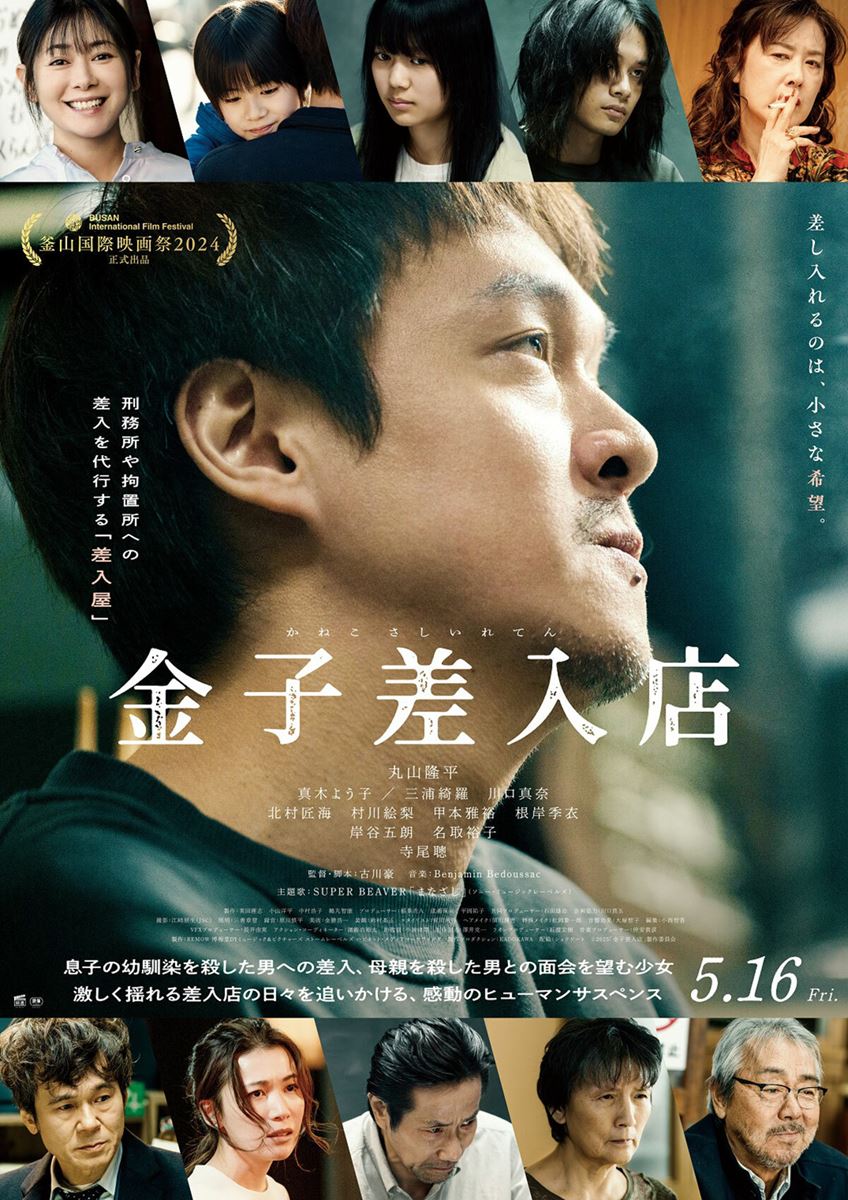
Kaneko’s Commissary (金子差入店, Go Furukawa, 2024)

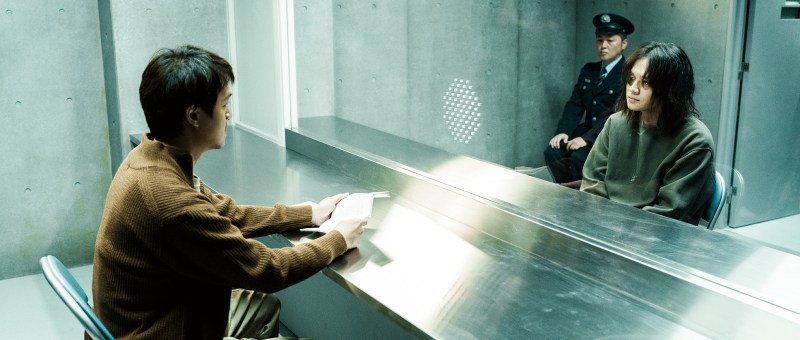
The tranquil life a man has built for himself after leaving prison is disrupted by unexpected tragedy in Go Furukawa’s social drama Kaneko’s Commissary (金子差入店, Kaneko Sashiireten). The commissary of the title refers to a service run by those like Shinji (Ryuhei Maruyama) which handles deliveries to people in prison and arranges visits by proxy. In Japan, visiting hours only take place during the day on weekdays making it difficult for visitors who work regular jobs or live far away. There’s no way to make an appointment, either. Visitors must simply show up and wait with the possibility that it might not be possible so see their friends and relatives after all given that there are only so many meeting rooms available.

The commissary service is intended to mitigate this inconvenience by acting as a bridge between the imprisoned and their families, educating them about the prison system and advising them on what can and can’t be delivered. For Shinji it seems to be a means of atonement. Sent to prison for a violent crime when his wife Miwako (Yoko Maki) was pregnant with their first child, he’d angrily lashed out her when she skipped a visit little knowing it was because she was busy giving birth. Nevertheless, several years later he’s bonded with his son and is living a happy, peaceful life. The film subtly suggests that his is partly because he’s gained a strong and supportive familial environment anchored by his formerly estranged uncle who occupies the paternal space Shinji may otherwise have been lacking. He has a complex relationship with his mother who mainly visits when he’s not home to pressure Miwako into giving her money which she fritters away on toy boys much to Shinji’s embarrassment. It’s these complex feelings towards his mother that seem to fuel his fits of rage and threaten the integrity of his new family.

But by the same token, there is external pressure too in the low-level stigma and prejudice which surrounds them simply by virtue of their proximity to crime. Though they appear to be well accepted by the community, when their son Kazuma’s friend Karin in murdered by a young man with mental health issues, it refocuses the rage of the community on them too. Someone keeps smashing the flower pots outside their home, while Miwako is ostracised by the other women in the neighbourhood and de facto sacked from her part-time job because the other employees refuse to work on the same shift as her. Kazuma starts getting bullied at school because someone found out his father had been in prison, though what his father did is obviously nothing at all to do with him. 

In Japanese society, the extended family of those who’ve committed crimes is dragged into the spotlight. The mother of Karin’s killer Takashi is hounded by the media though as she says, much as she can’t understand why he did something like this, he’s a grown man and she’s not really to blame for his actions. Though we might originally feel sorry for her, especially as Takashi coldly rejects all her efforts on his behalf, she quickly becomes entitled and almost threatening. She pressures Shinji for news about her son, while he tries to avoid telling her that Takashi rejects her gifts and isn’t interested in her letters. Being forced to visit him tests the limits of his compassion as he too wonders if the man who killed Karin is really worthy of this level of care.

At the prison, he runs into another young woman who repeatedly tries to get in to see a prisoner despite the fact he keeps denying her requests. The lawyer Shinji works with has a theory about the girl, Sachiko (Mana Kawaguchi), and the yakuza she wants to wants to see. Now institutionalised, the yakuza discovered there was no place for him on the outside. His old boss was no longer around and he had no status in the underworld, so he probably committed a crime to be put away again, but at the same time maybe there was more to it than that. People save each other in unexpected ways, even it’s just with gentle acceptance and patience with a world that it is itself often lacking in the same.


Kaneko’s Commissary screens as part of this year’s Japan Foundation Touring Film Programme.

Trailer (no subtitles)
Sham (でっちあげ ~殺人教師と呼ばれた男, Takashi Miike, 2025) [Fantasia 2025]

After a couple of hundred years of corporatising culture, sham apologies have become an unfortunate phenomenon all over the world. Corporations in particular will often offer a fairly meaningless apology that acknowledges a minimal level of responsibility but does not bind them to recompense those they’ve wronged nor put right anything that their conduct has made wrong. The problem is that an apology has become a kind of sticking plaster that allows us all to move on but doesn’t really solve anything and may even prevent us from doing so because it turns us all into accidental liars who are primed to say “sorry” to make the situation go away even it wasn’t actually our fault.

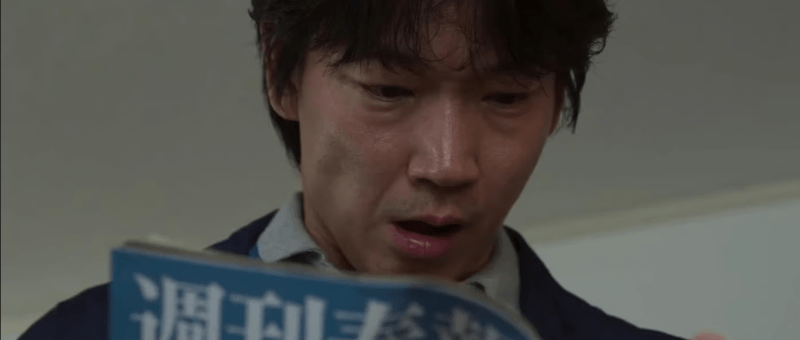
That’s essentially what happens to Seiichi (Go Ayano), previously an unremarkable primary school teacher with a teenage son of his own and an apparently happy home. Inspired by a real life case, Takashi Miike’s courtroom drama Sham (でっちあげ ~殺人教師と呼ばれた男, Detchiage: Satsujin Kyoshi to Yobareta Otoko) flirts with ambiguities but in keeping with its themes eventually descends into a defence of the well-meaning man as its hero becomes so embroiled in the injustice being done to him that he doesn’t see that he is not entirely blameless. Though we’re first introduced to him as the “homicidal teacher” the papers describe him as, the film’s title leaves us in no doubt that his account is the truer. But it remains a fact that during his conversation with Ritsuko (Ko Shibasaki), the mother of the boy Seiichi is accused of racially bullying, he did remark that Takuto’s American grandfather may explain his unique characteristics which is perhaps within the realms of thoughtless things well-meaning people say in awkward conversations but hints at a level of latent societal prejudice. In any case, that the fact his conversation with Ritsuko ended up drifting towards subjects like bloodlines and the Pacific War is not ideal, while Seiichi should probably have been more mindful of his politically neutral position as an educator. 

Likewise, he doesn’t dispute that he tapped Takuto lightly on the cheek to “educate” him that it hurt when he slapped another boy, Junya, who, according to Seiichi, he was bullying. He probably shouldn’t have done this either, even if some may see it merely as common sense in teaching the children that violence is wrong, as ironic as that may be. In any case, the film is on Seiichi’s side and insistent that he did not treat Takuto any differently on account of his non-Japanese ancestor nor spout off any of the racist nonsense that Ritsuko attributes to him. But the major problem is that Seiichi is mild-mannered and also a product of this society. He tries to protest his innocence, but is pressured by his headmaster to apologise anyway which is, of course, a form of lying, something they discourage the children from doing. In the end he goes along with it, because it’s easier to just say “sorry” and hope it goes away rather than address the real issues. 

It’s this sham society that the film seems to be critiquing, even if its message gets lost among its intertwining plot threads as Seiichi effectively finds himself bullied by an empowered tabloid media formenting mob justice against what it brands a far-right fascist teacher as a means of selling papers through generating outrage. While he is scrutinised and scorned, no one bothers to look into Ritsuko’s story which is already full of holes such as why, if she’s so protective as a mother, she waited for her son to be a victim of “corporal punishment” 18 times before complaining to the school. Little motivation is given for Ritusko’s actions, though Miike films her and her husband with an an almost vampiric sense of unease as they appear eerily in black on their way to the school. Unhinged herself, the answers may lie in Ritsuko’s own childhood and her yearning for a protective mother figure, not to mention the sophistication of being a child returning from abroad with good education and prospects for the future.

Seiichi refocuses his closing statement on Takuto, insisting that he doesn’t blame him for “lying”, but it’s perhaps also try that he is a kind of victim too whose own actions can only be explained by a closer look at his relationship with his mother and familial environment. But it turns out that it really is easier to just say “sorry” and move on. Even the psychiatrists seem more interested in treating Ritsuko like a customer whose wishes must be obeyed than earnestly trying to help Takuto even if his issues don’t seem to be as serious as his mother might have it. According to Seiichi, telling a child off is the purest expression of love. If everyone carries on with sham apologies, nothing really changes and kids like Takuto get forgotten about as everyone falls over themselves to make the situation go away. No one really cares about the truth, and so it becomes an inconvenience to social cohesion in which those who insist on speaking it are hounded down until they agree with the majority and meekly say “sorry” while those in the wrong nod their heads and continue with their lives free of blame or consequence.


 Sham screened as part of this year’s Fantasia International Film Festival.

Trailer (English subtitles)