Strawman (稻草人, Wang Tung, 1987)

The literal “strawman” at the centre of Wang Tung’s colonial era satire is a scarecrow who occasionally narrates the events of this small village where, he laments, almost all the young men have been sent off to die in small corners of South East Asia in the name of the Japanese emperor. All of this sounds quite absurd to A Fa (Chang Po-Chou) and Big Mouth (Cho Sheng-Li), two brothers who’ve evaded the draft because their mother cleverly smears cow dung in their eyes while they sleep so they won’t get taken by the Japanese like everything else in the village.

The brothers are caught in a clash of imperial powers and changing times yet are busy just trying to live their ordinary lives. They each have several children, so many the scarecrow quips that they can’t remember all their names, which might be why the most recognisable two are nicknamed “doo-doo” and “stinky head,” and struggle to support themselves by farming sweet potatoes on the land that turns out to be owned by their pro-Japanese brother-in-law. Not really wanting to admit that the war is all but lost, the brother-in-law is planning to sell the farm and move his family to Japan, meaning the brothers will be displaced from their land and lose their livelihood with few other prospects for making a living. 

Though things carry on as normal in the village, it’s clear that the Japanese are essentially looting and exploiting them. Not only do they take the young to die for the emperor, but later come for the brothers’ cows too, insisting that they need them for “taxes” because men are starving at the front. This clash of cultures is obvious in the opening scenes as a Japanese soldier returns the ashes of men who fell in battle to their families while reading out a formal speech in his own language that the villagers do not really understand. While their brass band plays the ironically Westernised sounds of militarism, the villagers drown them out with their traditional instruments as they start their own set of death rituals. These two communities are essentially incompatible and effectively living separately. The soldiers turn around and walk in one direction, while the villagers walk in the other releasing the tension born of this oppositional meeting.

Indeed, the villagers all speak Taiwanese (though Wang was ironically, and anachronistically forced to use Mandarin at the time of release) and exist in a slightly different world to the Japanese-speaking soldiers. A Fa is annoyed with Doo-doo for asking if he should take a Japanese name but subsequently asks if he can have one too on learning that he’ll get better sugar rations. The brother-in-law mixes Japanese and Taiwanese in the same sentence while his wife mainly answers in Taiwanese when her children exclusively speak Japanese. The sight of the children’s traditional Japanese geta wooden sandals scandalises and confuses the brothers’ children, while the cousins mock them in Japanese knowing they won’t understand. Only the slightly bumbling local Japanese official straddles the two worlds by conversing mostly in Taiwanese with the villagers and Japanese with his bosses.

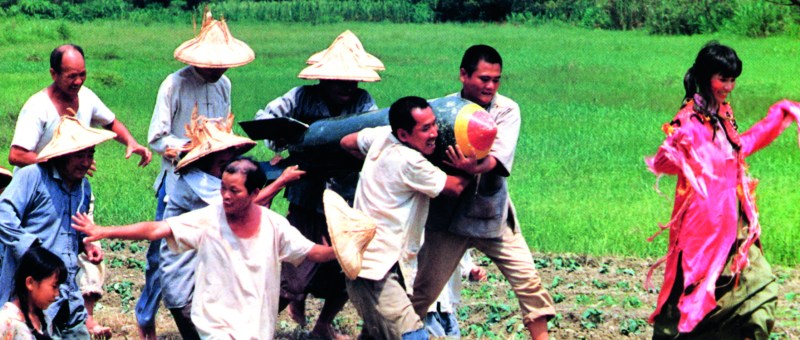
As good citizens of the empire, the children are asked to participate in metals collection and are given rewards for their finds. Doo-doo gets extra again when he picks up shrapnel from an American bomb which sets up a more complex relationship with American imperialism that will arrive after the war when the island is essentially recolonised by the arrival of the KMT and a large influx of mainlanders fleeing the communist take over. When a bomb lands on the brothers’ land but doesn’t go off, they think it’s manna from heaven and determine to take it to the main police station in the town in the hope of a large reward, while the official is convinced he’s going to get a big promotion for this tremendous find. 

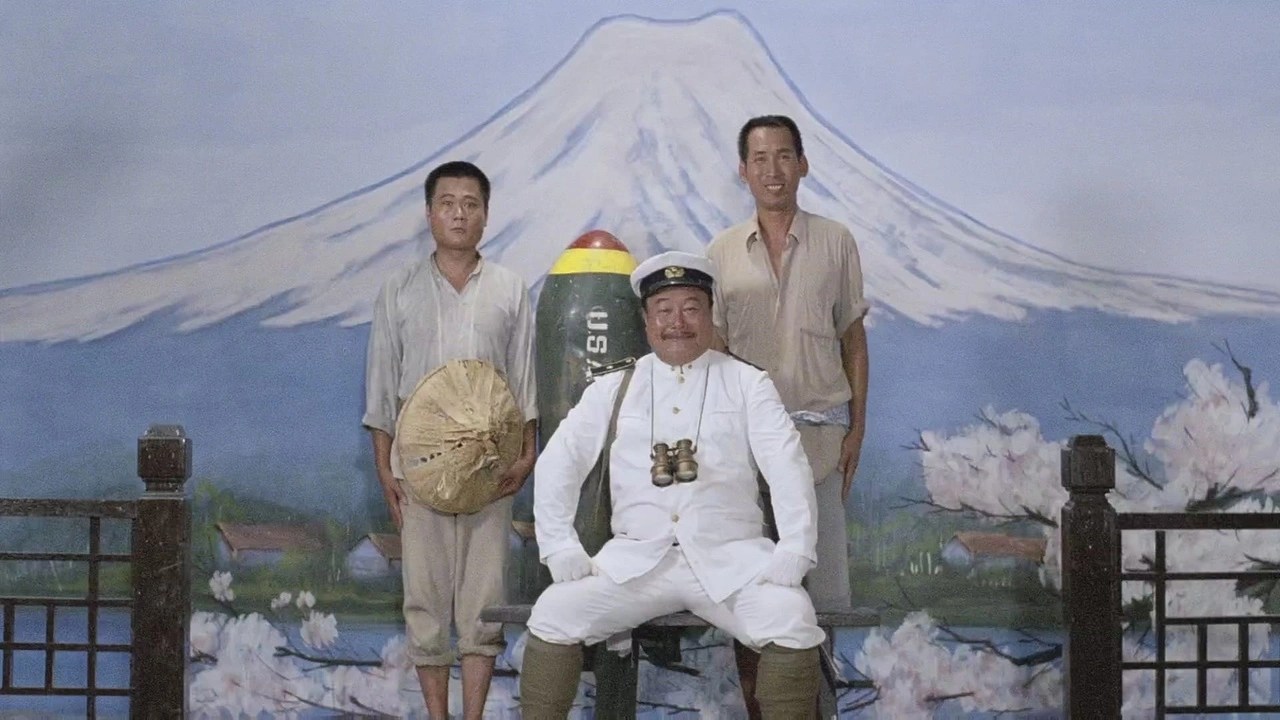
Everyone is so fixated on the economic potential that they’ve forgotten this is a bomb and even if it seems like a dud, there’s still a chance it could go off any second and this could all quite literally blow up in their faces. In this, the film seems to be satirising an over dependence on America who were the main backers of the KMT regime. The film was released shortly after the end of martial law during which there had been an attempt to rewrite the history of the island, preventing open discussion of the fact that Taiwanese men had died fighting for Japan and that the island had been bombed by the Americans. So impressed with themselves are they that the brothers and the official have their photo taken with bomb in-between and Mount Fuji backdrop behind as if signalling this complex network of relationships.

Still, even after the prize turns out not to be great riches after all but a hefty supply of fish, the Doo-doo and his grandmother cheer on the bombings hoping for more of the same in the future. The kids even put buckets out in the field waiting for the next raid hoping they can catch some of the shrapnel while forgetting that bombings are actually dangerous, rather than just lucrative, until being caught in one. Small moments of terror and sadness such as the brothers’ finding a frightened deserter hiding in their shed who doesn’t want to go to war because his wife’s pregnant and his family’s economically dependent on him, interrupt what is otherwise a warm and humorous depiction of rural life. A Fa and Big Mouth might be strawmen too, living their lives knowing little of the geopolitical situation but just trying to keep the crows off the grass long enough to get a little to eat before that too is taken away from them.


Strawman screened as part of the BFI’s Myriad Voices: Reframing Taiwan New Cinema.

Trailer (Traditional Chinese / English subtitles)
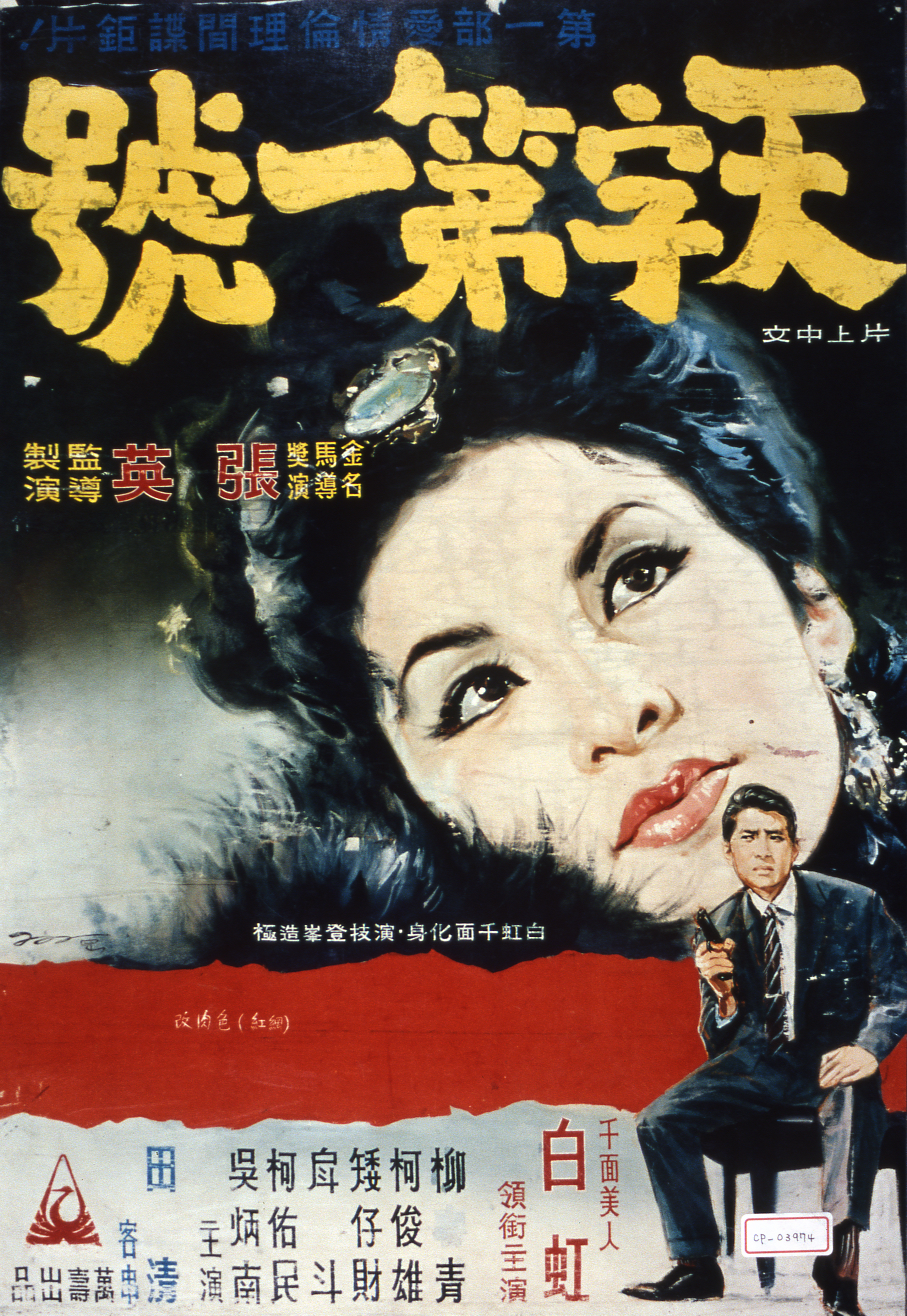
The Best Secret Agent (天字第一號, Chang Ying, 1964)

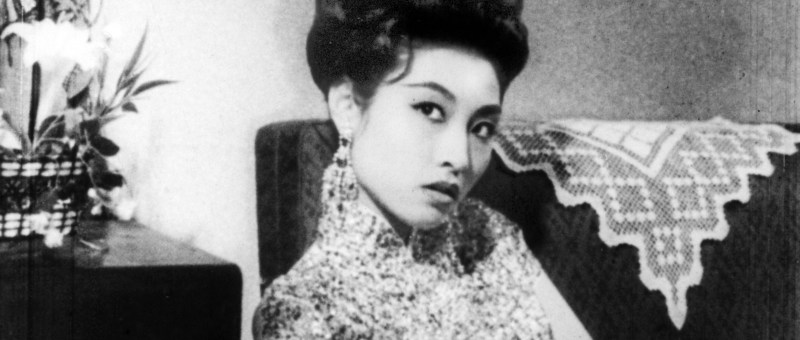
“The Japanese have destroyed our family. You must avenge me” a dying father instructs his daughter, his words somewhat ironically echoing the ideology of the ruling regime in hinting at the national trauma of exile and separation. Arriving in the wake of Bond mania, Chang Ying’s The Best Secret Agent (天字第一號) is, incongruously enough, a Taiwanese-language remake of an earlier film from 1945 set in Shanghai amid the Anti-Japanese Resistance movement, but at heart is less a tale of espionage and intrigue than a romantic melodrama in which a capable woman sacrifices romantic love for the patriotic and filial while perhaps subversively finding true freedom and independence. 

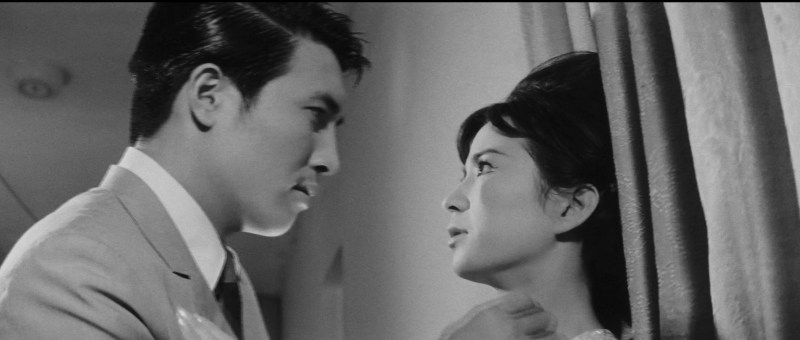
As Tsui-ying’s (Pai Hung) father (Ko Yu-Min) later explains, not wishing to be enslaved they fled from the Japanese but are forced to degrade themselves with public performances in the market square, the old man stooping to beating his daughter when the show fails to please the audience. A kindhearted man from the crowd, Ling-yun (Ko Chun-Hsiung), comes to her defence but Tsui-ying forgives her father blaming the Japanese for the misfortune which has befallen them. Soon after, Tsui-ying’s father is killed during an airstrike using his dying breath to ask for vengeance. After becoming a nightclub singer in Shanghai, Tsui-ying ends up running into Ling-yun again and the pair fall in love but she is also working as a spy and is ordered to break up with him in order to capitalise on the attraction a prominent collaborator, Chao-chun (Tien Ching), feels for her. Reluctantly she obeys, Ling-yun going abroad to study while she eventually becomes Chao-chun’s wife only to discover some years later that Chao-chun is actually Ling-yun’s uncle. 

The central melodrama revolves around the impossible love of Tsui-ying for Ling-yun, a love that she must willingly sacrifice in order to fulfil her role as a daughter both to her literal father and to her country. There is also however a degree of awkward comedy in Ling-yun’s continual discomfort that he must now refer to Tsui-ying as his aunt, their love now a further taboo in taking on a quasi-incestuous quality. Continually pained, she must keep her cover identity intact unable to explain to Ling-yun why she left him, encouraging him to think of her as a cold and heartless woman while watching him romancing his cousin, Ai-li (Liu Ching), whom she has come to genuinely care for as a maternal figure despite there being very little difference between them in age. 

What she apparently doesn’t know despite being a cunning mastermind is that almost everyone in her house is also a spy. As the famed Heaven No. 1, Tsui-Ying plays the cooly elegant wife of a diplomat cosying up to the Japanese but her activities perhaps owe more to the Basil Rathbone Sherlock Holmes movies than they do to the ever popular Bond, a late montage sequence showing her in a series of disguises from a wise old man to anonymous soldier and cheerful shoeshine boy while an early slapstick set piece sees the Resistance hide a pistol inside a roast duck in order to assassinate the Japanese advisor at dinner, the plan almost foiled by Chao-chun’s fiddling with the lazy Suzan. 

Everything is indeed the fault of the Japanese, but it’s Chao-chun, the collaborator who is the true villain even in his bumbling cluelessness, a quality also reflected in his idiot police chief Captain Wan who consistently fails to capture any Resistance members despite Chao-chun repeatedly ordering him to. In another bumbling piece of verbal humour, Captain Wan (Hu Tou) simply repeats the speech he’s just had criticising him for incompetence verbatim to his own subordinates while not doing much of anything himself. They are both, fairly obviously, outclassed by Tsui-ying playing the part of the clueless society bride lounging around in her furs and mediating in-house disputes while simultaneously plotting to bring them both down once they’ve outlived their usefulness. Though she is forced to give up what is most important to her, her love for Ling-yun, what she discovers is perhaps a transgressive sense of freedom and independence in her life as a master spy not otherwise available to an ordinary woman as she pursues her revenge for the death of her father.

Nevertheless, she is also orphaned both literally and metaphorically forced into a life of wandering. The separation of the lovers, blamed on the Japanese, is symbolic of that between the two Chinas as echoed in Tsui-ying’s melancholy love song and no doubt appealing to the prevailing ideology of the ruling regime save for the implication of fatalism as Tsui-ying and Ling-yun pursue exile in opposing directions. Even so with its fantastically compelling heroine, ironic humour, and atmosphere of intrigue tempered with melancholy romance, The Best Secret Agent more than lives up to its name as the master spy effortlessly completes her primary mission even if sacrificing her heart in the process. 


The Best Secret Agent streams in the UK 25th to 31st October as part of this year’s Taiwan Film Festival Edinburgh.

Trailer (Traditional Chinese subtitles only)

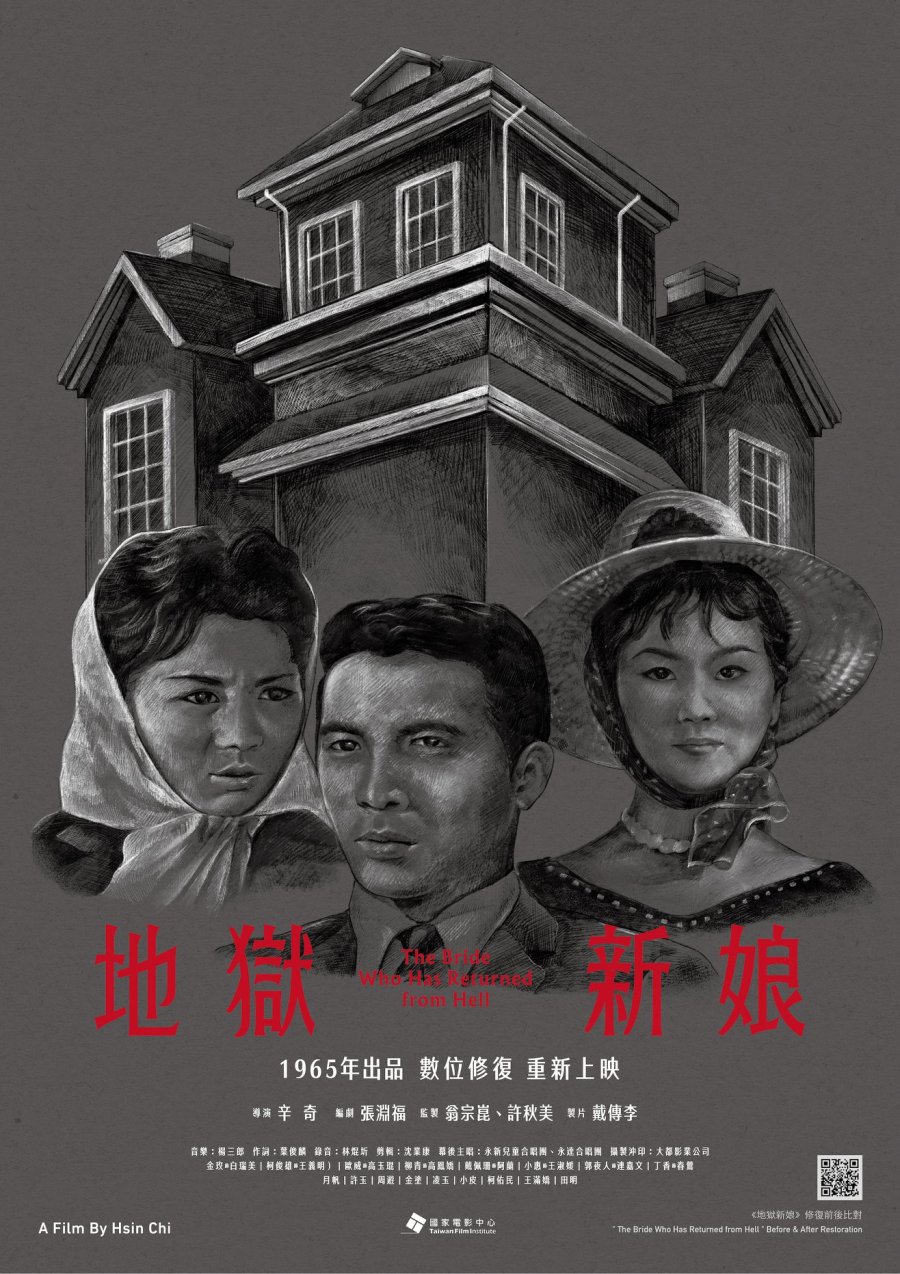
The Bride Who Has Returned From Hell (地獄新娘, Hsin Chi, 1965)

“That place is filled with horror and mystery” a creepily persistent man on a train claiming to be a clairvoyant warns the new governess to a home that does indeed turn out to be tinged with tragedy, though in true gothic melodrama fashion that was something of which she was already well aware. Inspired by the Victoria Holt novel Mistress of Mellyn, Taiyupian The Bride Who Has Returned From Hell (地獄新娘) is less supernatural mystery than eerie romance which sees frustrated desire collide with outdated social mores to destabilise the social order in the otherwise tranquil world of the new elite. 

Echoing the novel’s Cornish atmospherics, the opening title sequence pans over the rugged coastal landscape with its rocky outcrops and crashing waves before homing in on a policeman picking up a handbag while his colleagues investigate the body of a man drowned at sea. Meanwhile, wealthy entrepreneur Yi-Ming (Ko Chun-Hsiung) is worried because his wife Sui-Han is not at home despite the fact they’re supposed to be going to a friend’s birthday party. The man’s body is identified as Guo Jing-Min, Yi-Ming’s cousin and the older brother of the woman living next-door, Feng-Jiao (Liu Ching). Jing-Min and Sui-Han were once lovers, and given that the handbag appears to have been hers, it’s assumed that the pair attempted to elope but got into trouble and drowned with Sui-Han’s body possibly lost at sea. 

Perhaps tellingly, Yi-Ming’s reaction to his wife’s disappearance is irritation and suspicion. He asks the housekeeper if Sui-Han has ever stayed out all night while he’s away from home and on learning that she may have come to harm focuses solely on the embarrassment of being a man whose wife has betrayed him. “How am I supposed to face people?” he angrily asks Feng-Jiao who apologises on her brother’s behalf (but seems equally unperturbed at his demise). He more or less gives up on finding out what’s happened to Sui-Han and begins to reject his daughter, Su-Luan, solely because she reminds him of his wife while taking up with another woman, Mrs Lian (Kuo Yeh-Jen), who married a much older man presumably for his money. 

Meanwhile, Sui-Mi (Chin Mei), Sui-Han’s sister who has recently returned to Taiwan after many years living abroad in Singapore, has secretly taken a job as a governess in the Wang household under an assumed name in order to investigate her sister’s disappearance. The man on the train who warned her about the house’s dark mystery, the lonely little girl, and the man with a bad reputation turns out to be none other than the other brother of Feng-Jiao who lives with her in a neighbouring mansion. Apparently employed partly because of her physical similarity to the (presumed) late Sui-Han in an effort to provide comfort to the highly strung Su-Luan, Sui-Mi is only one of several doubles in play which include the decidedly creepy little girl Lan (Dai Pei-shan), the housekeeper’s granddaughter, who insists that Sui-Han is still alive while more or less spying on everyone making full use of her invisibility as a member of the servant class. 

Like any heroine of a gothic romance, Sui-Mi’s role is not just to solve the mystery but to restore order by unifying the various forces of destabilisation currently threatening the Wang family which is one reason we see her actively include Lan, treating her the same as she does Su-Luan, teaching the two girls to be friends and equals as she educates them both together. The other threat to social harmony is in Yi-Ming’s moodiness and womanising, most particularly his possibly immoral relationship with Mrs. Lian and inability to embrace his role as a father by showing love to his daughter who is already becoming strange and neurotic in the wake of her mother’s death, believing that she has been abandoned by both parents. Thus, partly thanks to her physical similarity to Sui-Han as her sister, Sui-Mi assumes the maternal role assuring Su-Luan that she will love her forever in her mother’s place while Yi-Ming’s growing attraction to her precisely because of these maternal qualities, in its own way also problematic, draws him back towards the proper path of home and family. 

Pursued by Feng-Jiao’s creepy brother and conflicted in her attraction to her brother-in-law while still harbouring the suspicion he may be involved in her sister’s disappearance, Sui-Mi finds herself drifting away from the idea of solving the mystery even while inhabiting the creepy mansion which is in its own way both literally and figuratively haunted. A dream apparition of her sister in an ethereal use of double exposure effectively gives her permission to pursue her romantic destiny by instructing her to stay in Taiwan and look after Su-Luan because, she fears, no one else will which doesn’t speak highly of Yi-Ming, while reminding Sui-Mi that she came to the Wangs’ for a reason.  

“You can’t get true love by manipulation” the villain is later told, revealing to us that the motive in this case really was romantic jealousy, a typically gothic sense of repression born of oppressive patriarchal social codes which prevent the proper expression of desire and eventually lead to violence. Sui-Mi restores order by solving the mystery and then healing the rifts by, ironically, submitting herself to those same oppressive social codes in assuming her “natural” role as wife and mother. Using a series of unexpected music cues from ominous Japanese folksong Moon over Ruined Castle as Sui-Mi surveys the rugged mansion to the more upbeat Hana as she plays with the children, moody jazz, Danny Boy, and even the James Bond theme playing over the climax (not to mention the many instances of child star and producer’s daughter Dai Pei-shan singing her gloomy lullaby), Hsin goes all in on the gothic imagery even having Sui-Mi almost fall victim to a suspicious rock fall just as she becomes a credible romantic heroine, before ending on a cheerful note with another song celebrating the simple joys of the traditional family.


The Bride Who Has Returned From Hell streams in the UK until 27th September as part of the Taiwan Film Festival Edinburgh.

Restoration trailer (English subtitles)