Peking Opera Blues (刀馬旦, Tsui Hark, 1986)

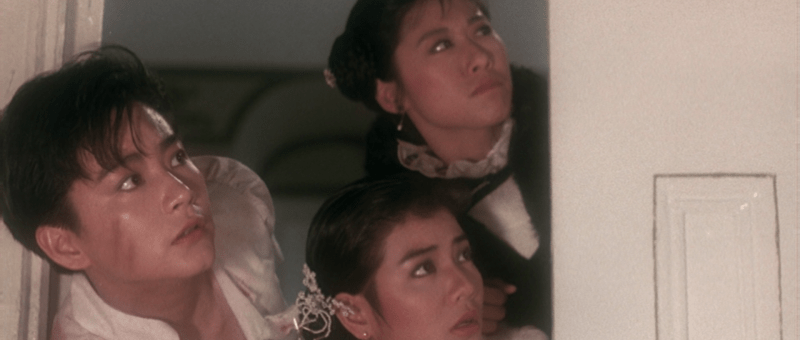
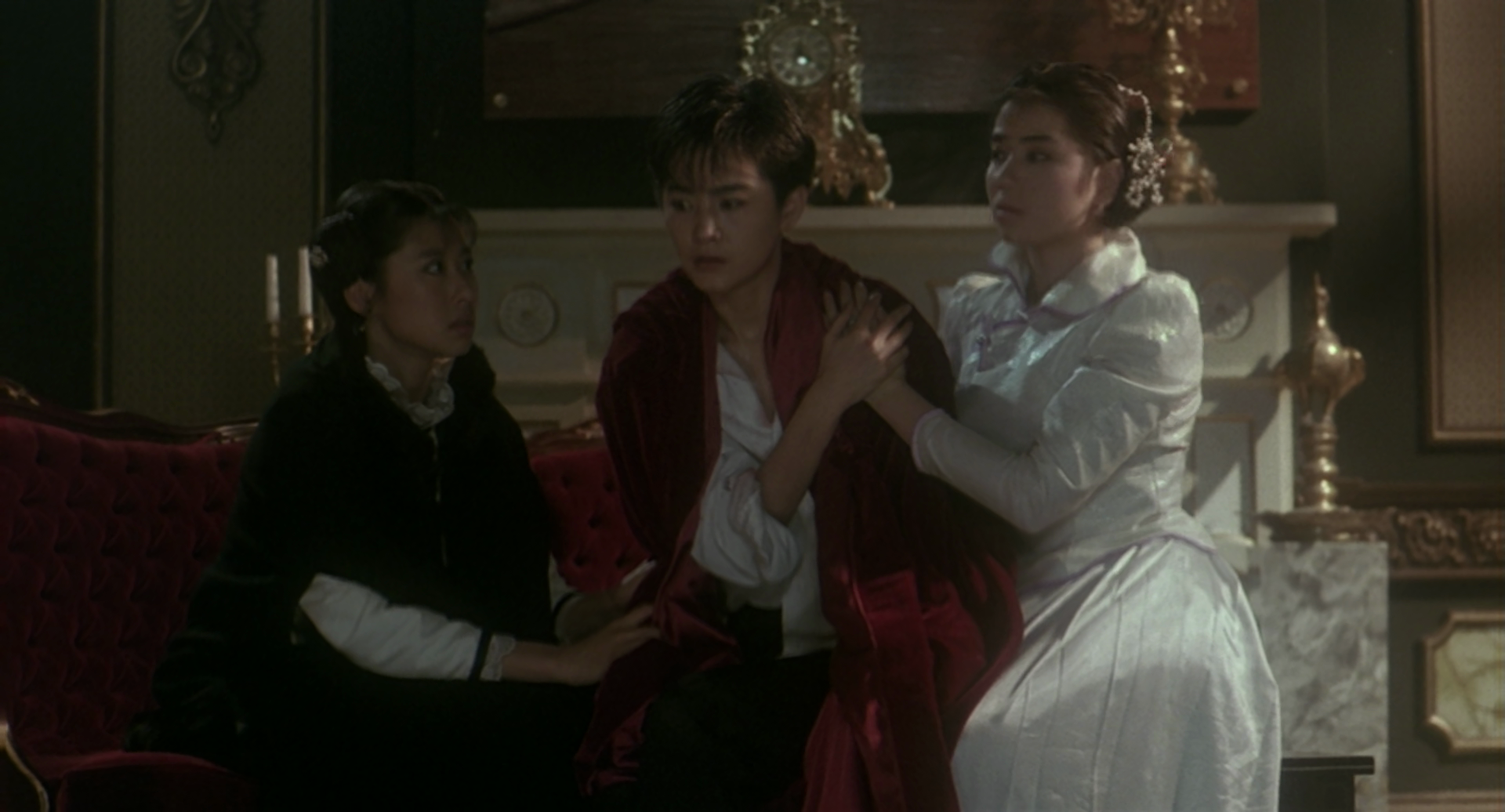
“There aren’t enough heroes,” the leader of an opera troupe shouts, “quick, those of you who were villains change your clothes.” Only the names change in Tsui Hark’s Peking Opera Blues (刀馬旦). Politics and history are mere performance in the revolving doors of power. Set in 1913 at the beginning of the warlord era that followed the end of the Qing dynasty, the film is also speaking to a nascent sense of Handover anxiety. As one warlord falls, another rises to take his place. When he too is defeated, the first warlord returns. Meanwhile, our heroes stand still as history happens around them without their consent, longing for an age of democracy which even now has not yet arrived.

As the film opens, warlord Tun (Huang Ha) is carousing with courtesans and boasting about his 28 wives when his soldiers begin to revolt because they’ve not been paid. Tun has lost all his money gambling and decides to flee while the soldiers loot the palace. His downfall both satirises the innate corruption of power and its anonymous nature as he is soon replaced by the governor who can’t believe his luck. The governor is accompanied by his androgynous daughter, Tsao (Brigitte Lin), who has short hair and dresses in military uniforms, and has recently returned after studying abroad. 

Unbeknownst to her father, Tsao is secretly working for the democratic resistance. President Yuan Shi Kai has been borrowing money from foreign banks to finance a bid to restore the monarchy. Tsao knows her father is the broker and plans to steal secret documents to expose Yuan’s corruption and thereby usher in a democratic revolution. Yet she also finds herself conflicted in the necessity of betraying her father knowing that she is the only person in whom she has absolute trust. In the absence of a son, he plans to hand his empire to her, only she doesn’t really want it. To find her new democratic future, she will have to let the old world die and that means letting men like Tun and her father go with it.

Her mission is contrasted with that of Bai Niu (Sally Yeh), the daughter of a Peking Opera troupe manager. Bai Niu’s greatest desire is to be on stage, but women are barred from performing. All female roles are played by men who are also sexuality exploited, essentially pimped out to important people and supporters to ensure the troupe’s survival. Though Tun and Tsao may openly vie for power, the real source of power lies with corrupt police chief, Liu (Ku Feng), who insists on sleeping with the troupe’s biggest star. When he flees, he gives Bai Niu his spot and permission to perform despite her father’s objections, but what she perhaps doesn’t realise is that this “freedom” also traps her with the threat of sexual exploitation, something she is later subject to while assisting with Tsao’s plan to knock her father out so she can steal the key to his safe.

Wandering musician Sheung Hung (Cherie Chung), meanwhile, is much more accustomed to using her sexuality to get by and seeks freedom through riches. She wants the money so that she can flee abroad, which is both an expression of a desire for broader horizons and that to escape the chaos of the warlord era. It also, of course, speaks to the present day and those planning to get rich quick and leave Hong Kong before the Mainland takes over. The three women in ways reflect different reactions to the looming anxieties of the Handover, Tsao the revolutionary staying to fight for democracy, Bai-niu holding fast to her family and culture and trying to live through it as best she can, and Sheung Hung who is planning to leave.

They are all, however, at the mercy of circumstance and there’s an essential irony in the film’s conclusion which leaves them all scattered, vowing to reunite when the chaos is over and democracy has been restored, given that this likely means they will never meet again as the promised age of democratic freedom has not yet come to pass. Yuan is exposed, but it makes no difference. As if signalling the absurdity, Tsui flashes back to the laughing face of the Peking Opera performer with which the film opened. Rocketing between farcical humour, the subversive homoeroticism between the women, the grim reality of authoritarianism as Tsao finds herself tortured by the resurgent Tun, and the kinetic energy of the finely crafted action scenes, Tsui finds a genuine sense of poignancy in the futility of of the heroes’ quest. Finally, the best weapon they have is friendship and solidarity in which they protect and save each other while otherwise at the mercy of history being made all around them that they are otherwise powerless to influence.


Trailer (no subtitles)

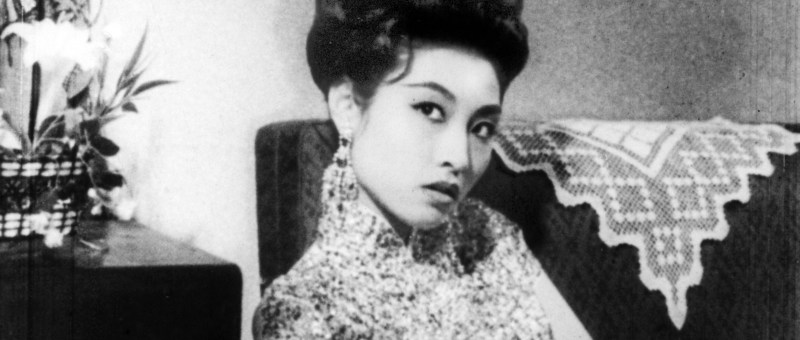
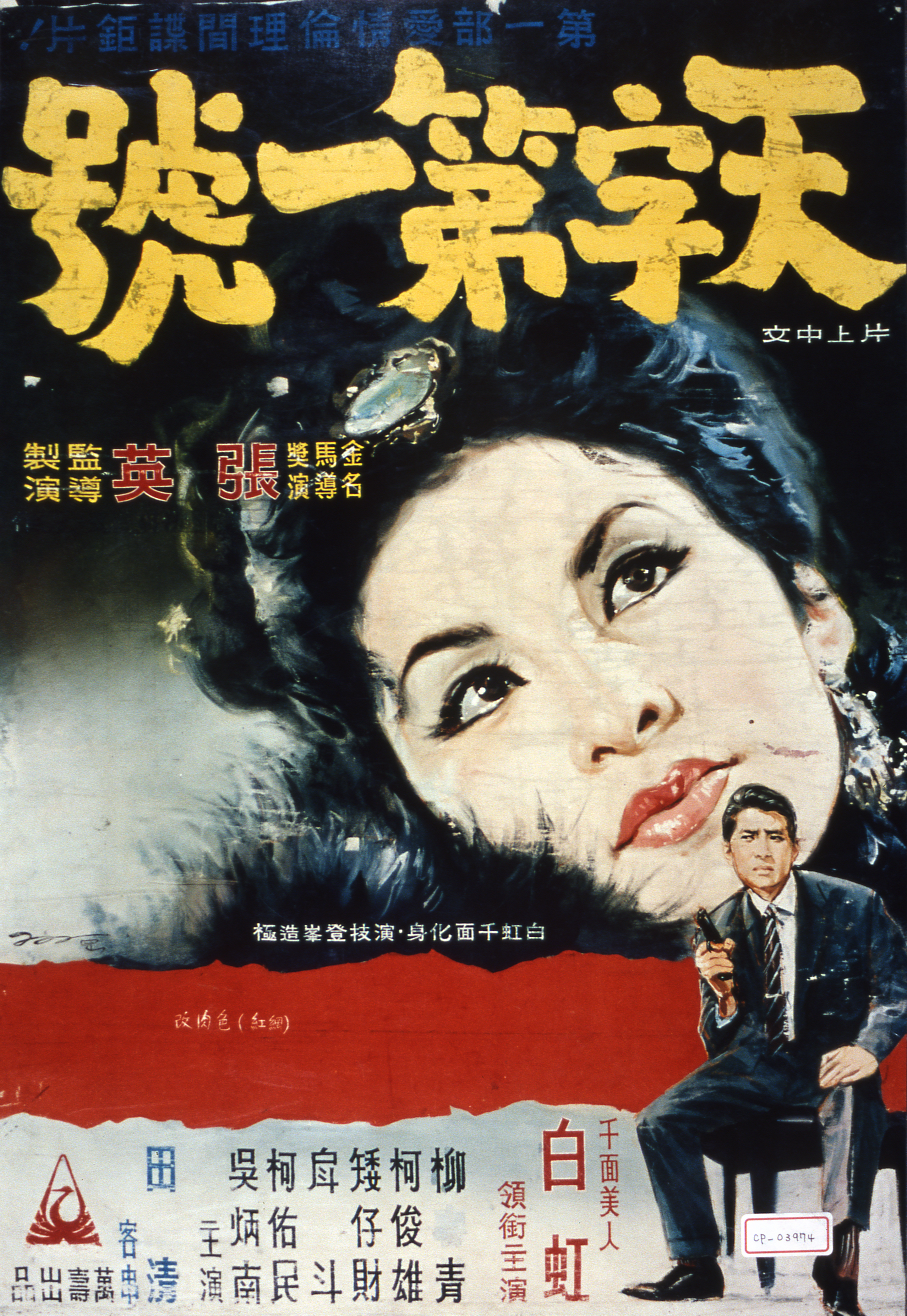
The Best Secret Agent (天字第一號, Chang Ying, 1964)

“The Japanese have destroyed our family. You must avenge me” a dying father instructs his daughter, his words somewhat ironically echoing the ideology of the ruling regime in hinting at the national trauma of exile and separation. Arriving in the wake of Bond mania, Chang Ying’s The Best Secret Agent (天字第一號) is, incongruously enough, a Taiwanese-language remake of an earlier film from 1945 set in Shanghai amid the Anti-Japanese Resistance movement, but at heart is less a tale of espionage and intrigue than a romantic melodrama in which a capable woman sacrifices romantic love for the patriotic and filial while perhaps subversively finding true freedom and independence. 

As Tsui-ying’s (Pai Hung) father (Ko Yu-Min) later explains, not wishing to be enslaved they fled from the Japanese but are forced to degrade themselves with public performances in the market square, the old man stooping to beating his daughter when the show fails to please the audience. A kindhearted man from the crowd, Ling-yun (Ko Chun-Hsiung), comes to her defence but Tsui-ying forgives her father blaming the Japanese for the misfortune which has befallen them. Soon after, Tsui-ying’s father is killed during an airstrike using his dying breath to ask for vengeance. After becoming a nightclub singer in Shanghai, Tsui-ying ends up running into Ling-yun again and the pair fall in love but she is also working as a spy and is ordered to break up with him in order to capitalise on the attraction a prominent collaborator, Chao-chun (Tien Ching), feels for her. Reluctantly she obeys, Ling-yun going abroad to study while she eventually becomes Chao-chun’s wife only to discover some years later that Chao-chun is actually Ling-yun’s uncle. 

The central melodrama revolves around the impossible love of Tsui-ying for Ling-yun, a love that she must willingly sacrifice in order to fulfil her role as a daughter both to her literal father and to her country. There is also however a degree of awkward comedy in Ling-yun’s continual discomfort that he must now refer to Tsui-ying as his aunt, their love now a further taboo in taking on a quasi-incestuous quality. Continually pained, she must keep her cover identity intact unable to explain to Ling-yun why she left him, encouraging him to think of her as a cold and heartless woman while watching him romancing his cousin, Ai-li (Liu Ching), whom she has come to genuinely care for as a maternal figure despite there being very little difference between them in age. 

What she apparently doesn’t know despite being a cunning mastermind is that almost everyone in her house is also a spy. As the famed Heaven No. 1, Tsui-Ying plays the cooly elegant wife of a diplomat cosying up to the Japanese but her activities perhaps owe more to the Basil Rathbone Sherlock Holmes movies than they do to the ever popular Bond, a late montage sequence showing her in a series of disguises from a wise old man to anonymous soldier and cheerful shoeshine boy while an early slapstick set piece sees the Resistance hide a pistol inside a roast duck in order to assassinate the Japanese advisor at dinner, the plan almost foiled by Chao-chun’s fiddling with the lazy Suzan. 

Everything is indeed the fault of the Japanese, but it’s Chao-chun, the collaborator who is the true villain even in his bumbling cluelessness, a quality also reflected in his idiot police chief Captain Wan who consistently fails to capture any Resistance members despite Chao-chun repeatedly ordering him to. In another bumbling piece of verbal humour, Captain Wan (Hu Tou) simply repeats the speech he’s just had criticising him for incompetence verbatim to his own subordinates while not doing much of anything himself. They are both, fairly obviously, outclassed by Tsui-ying playing the part of the clueless society bride lounging around in her furs and mediating in-house disputes while simultaneously plotting to bring them both down once they’ve outlived their usefulness. Though she is forced to give up what is most important to her, her love for Ling-yun, what she discovers is perhaps a transgressive sense of freedom and independence in her life as a master spy not otherwise available to an ordinary woman as she pursues her revenge for the death of her father.

Nevertheless, she is also orphaned both literally and metaphorically forced into a life of wandering. The separation of the lovers, blamed on the Japanese, is symbolic of that between the two Chinas as echoed in Tsui-ying’s melancholy love song and no doubt appealing to the prevailing ideology of the ruling regime save for the implication of fatalism as Tsui-ying and Ling-yun pursue exile in opposing directions. Even so with its fantastically compelling heroine, ironic humour, and atmosphere of intrigue tempered with melancholy romance, The Best Secret Agent more than lives up to its name as the master spy effortlessly completes her primary mission even if sacrificing her heart in the process. 


The Best Secret Agent streams in the UK 25th to 31st October as part of this year’s Taiwan Film Festival Edinburgh.

Trailer (Traditional Chinese subtitles only)