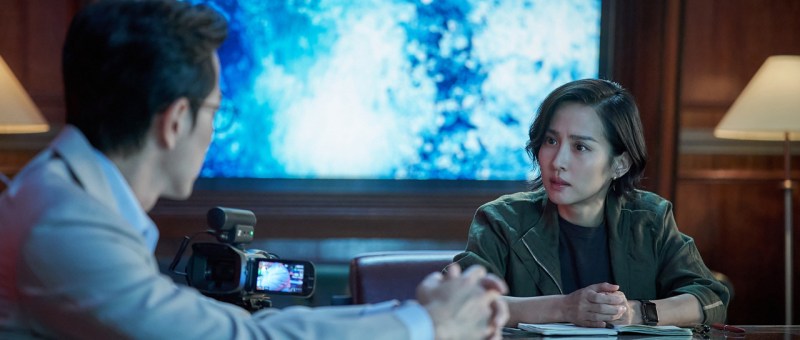
Silver Apricot (은빛살구, Jang Man-min, 2024)

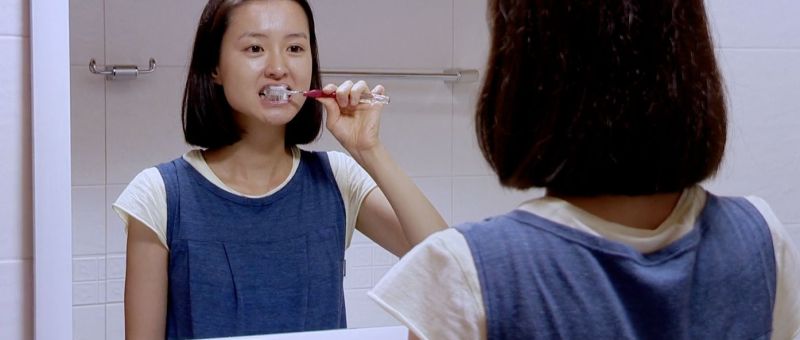
Money ruins everything. It eats away at even the most fundamental of human connections, rendering them all, in their way, transactional. But you need it, in the same way a vampire needs blood and it might be that the only way to get it is to suck it out of someone else’s neck. Or at least, that’s how it is for Jung-seo (Na Ae-jin) in Jang Man-min’s familial drama Silver Apricot (은빛살구, Eunbitsalgu). 

At 32 years old, she’s still being held on a temporary worker contract with her sleazy boss, who is low-key sexually harassing her, using the prospect of full, salaried employment to manipulate her working life. She works “overtime” making posters to advertise other exploitative jobs, such as gig economy delivery driver, with the cheerful slogan “anyone can do it” which she later acknowledges is probably “insulting” to those who do actually do it and are fighting for proper pay and recognition. Secretly, however, she’s working on a webtoon about a vampire, which is how she works out her anxieties and what she actually wants to do and would be doing if money wasn’t getting in the way.

The particular way it’s getting in the way right now is that she’s won an apartment lottery and urgently needs to get the money together for a deposit. Jung-seo plans on going halves with her fiancée Gyeong-hyeon (Kang Bong-sung), but he seems reluctant to put the money in and is clear he won’t make up the shortfall when she’s turned down for the permanent position and won’t be earning as much as she hoped. All that’s left to her is the bank of mum, but her mother’s fed up with her always asking for money and claims she’s saving too with the hope of opening her own restaurant despite the fact that Jung-seo suspects the owner of the place she works at now is romantically interested in her. Perhaps like Jung-seo, she’s lost the ability to trust anyone after having a bad experience with Jung-seo’s father who left them for another woman and still lives in their home town with a new family. 

Jeung-seo’s father Young-joo may also have had artistic dreams in that he was once a saxophonist but gave his sax to her mother as security for a loan he never repaid. Her mother suggests she ask him for the money back instead, but that means opening old wounds that may be better left unresolved. Young-joo (Ahn Suk-hwan) is like a vampire himself, draining those around him of their cash to fund one harebrained scheme or another from stock market speculation to spurious property investments that he swears will pay off but almost never do. Gyeong-hyeon may not be much better in this regard, himself dabbling in stocks despite Jeung-seo making him promise he wouldn’t in a way that makes it hard for her trust him and suggests that men are always hung up on potential future gains rather than what they have concretely right now. 

Predictably, Young-joo doesn’t really want to pay up and insists on meeting Gyeong-hyeon first in and old-fashioned bit of patriarchal nonsense which makes even less sense considering how little of a father he has been to her for all these years. Gyeong-hyeong, meanwhile, is instantly taken in by him and has all but fallen for one of his scams. Maybe it makes sense on paper to abandon the city and live in an area with a lower cost of living doing a less prestigious kind of job like running a cafe which would lessen your financial burden and allow more “free” time to practise your art even if would still be a side hustle, but Jeung-seo knows better than to believe her father’s lies and knows full well that he’s only changed his tune because he overheard how much profit they could make with the apartment and thinks he’s entitled to some of it if he gives them the money.

But it’s not even like Jung-seo is asking for money from him. She’s only asking for money that actually belongs to her mother. Money ruined their relationship too, and it even interferes in her connection with her younger half-sister Jung-hae (Kim Jin-young) who idolises her but also frames her for stealing her mother’s savings after asking her to secretly sign a lease on an apartment she could use for her own art, music, and as a safety net in case her mother really decides to leave Young-joo this time when his plan to redevelop a building in a nearby town inevitably goes belly up. Joo-hee (Choi Jung-hyun) may have this in the back of her mind herself, which explains her coolness toward Jung-seo, fearing her sudden need for the repaying of old debts will destabilise their family and mess things up for Jung-hae. 

Despite the familial tension, being back in her hometown where Gyeong-hyeong’s spineless pragmatism is all the more obvious forces Jung-seo to think about what the apartment actually represents and whether that’s what she wants. Once she signs, she’ll be locked into that very conventional life which is what everyone in Seoul strives for, but might not actually be right for her. Her friend in her hometown, Tae-joo, has joined the navy for the financial security and will be able to get a military apartment when he marries. He’s given up drawing webtoons, and possibly also on his romantic hopes for Jung-seo. When she makes overtures towards him, he replies that he’s not ready to give up on his civil servant girlfriend, suggesting that he isn’t brave enough to break out of this conventionality either. Jung-seo is essentially in a relationship of convenience with Gyeong-hyeon that is not based on love but solely on the ability to buy the apartment which is what he really wants from her. The question is whether she has the courage to get off this train or is willing to settle for a life of dull humiliation submitting herself to the whims of her bosses while gradually abandoning her hopes and dreams to live in an apartment that is itself not a home but an investment in a future that will never really be hers.


Silver Apricot screened as part of this year’s London Korean Film Festival.

Trailer (English subtitles)
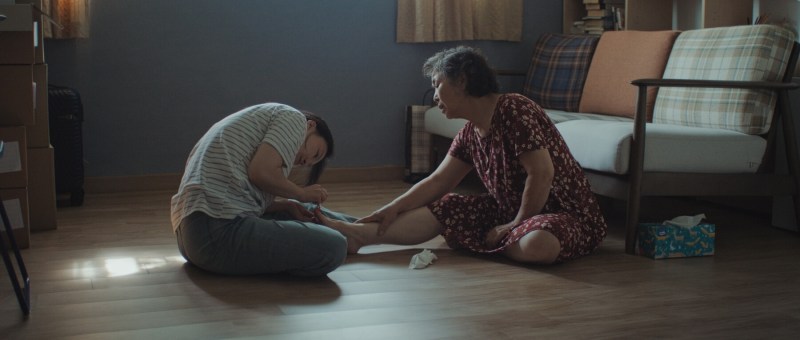
3670 (Park Joon-ho, 2025)

In recent years, indie films about North Koreans in the South have focused on the discrimination they face and how difficult it can be for them to integrate into South Korean society, not because of how different it is from everything they’ve known, but because the South doesn’t quite accept them. The problems of the hero of 3670 are, however, two-fold in that he is also gay and finding it difficult to straddle both communities while looking for companionship.

The opening scene finds him having sex with a guy from a dating app in a darkened room, but as soon as they’re finished, his partner gets up to shower and insists on leaving, refusing Cheol-jun’s (Cho You-hyun) invitations to get dinner and clearly uninterested either in friendship or romance. He asks him where he’s from, and on figuring out he’s from the North, rolls his eyes a little asking if he doesn’t have any gay friends yet. Cheol-jun doesn’t have any South Korean friends at all, let alone gay ones, and has never met any other gay people who left North Korea. He’s never disclosed the fact that he is gay to his North Korean friends or aunt living in the South who is his only familial link, which leads to moments of accidental insensitivity when his friends push him to date a North Korean girl they mistakenly think is interested in him, and his aunt tells him to settle down and get married in the South as his parents would have wanted him to.

The film seems a little ambivalent about Cheol-jun’s third community which is the Church. While it might be as Cheol-jun says helpful in a lot of ways in giving him something to belong to and helping with things like scholarship applications, it’s somewhat exploitative in that their help is obviously conditional on Cheol-jun accepting their religious beliefs which are otherwise in conflict with desire to find freedom as a gay man. Cheol-jun sometimes picks up extra money speaking at Church events in which he outlines how grateful he is to have been “saved” by the grace of God which brought him to the South away from the Godless North. Unlike other similarly themed films, 3670 doesn’t tread any further into how those from the North can be almost fetishised and exploited for their stories, but it is clear that that the Church is also using him to further their own aims. On the advice of his hookup date, Cheol-jun ends up attending a mixer for gay men which he keeps secret from his North Korean friends where he meets Yeong-jun (Kim Hyeon-mok), a gay man of the same age who lives in his area and shops at the convenience store where he has a part-time job, and later gets him a paying gig speaking about his salvation at his church.

Yeong-jun’s mother is a deaconess, and it seems that, in some ways, Yeong-jun is even less free that Cheol-jun who is beginning to discover a new kind of freedom as he introduces him to the gay scenes in Jogno and Itaewon. He views himself as inferior because he doesn’t believe himself to be conventionally attractive and has been having trouble passing the interview process to get a job (possibly those two things are somewhat connected in his mind). Yeong-jun also hasn’t said anything to his mother about being gay and sometimes goes to church to placate her even though he thinks there’s no place for him there as a gay man with the rather repressive religion that his mother practices. When he gets a job and is fully independent, he plans to stop attending church, making clear that for him, as a gay man in a capitalistic society, his freedom rests in financial security and achieving socially defined success by joining the workforce.

The fact that’s capitalism to which Cheol-jun must adjust himself is echoed in his advisor’s advice that he needs to market himself and give the university he’s trying to apply to a reason to choose him over another candidate. When he becomes a member of Yeong-jun’s friendship group, they also tell him that he needs a “selling point”, which they think should be his North Koreanness. But in an odd way, these ironic words of advice do lead to him becoming more at home with himself even if he’s also still caught between these two communities. With his North Korean friends, he dresses in a dowdier style, but puts on fashionable clothes and a university baseball cap to hang out in queer spaces with Yeong-jun. He tells his North Korean friends that he’s going to visit his aunt while occasionally blowing them off to see his gay friends, making it clear that he cannot exist simultaneously in both spaces as a North Korean and as a gay man.

But as much as Cheol-jun begins to find himself, Yeong-jun founders. Cheol-jun overhears some of his gay friends making fun of him for his North Koreanness and suggesting they only hung out with him out of pity, robbing him of this new community through spite and bitchiness rooted in a series of misunderstandings along with the social dynamics within the gay community and the friendship group itself. Nevertheless, when he does actually meet another North Korean man through the hook-up app, he helps him accept himself too by introducing him to these queer spaces in much the same way Yeong-jun did and showing him that it’s alright and it’s not as difficult or frightening to inhabit these spaces as he might have assumed it to be. 

Cheol-jun finds freedom here, at least much more freedom than he would have in the North. He’s not in the same kind of danger. But even many of the men in Yeong-jun’s friendship group are closeted and live as “straight” men, keeping quite about their private lives and restricting their authentic selves to Itaewon and Jogno, much as Cheol-jun keeps his North Korean and gay selves separate until he eventually decides to confide in some of his friends and finds them unexpectedly supportive because like him they too are here in search of happiness. The title of the film comes from a code Yeong-jun’s friends use to organise meetups hinting at their clandestine nature and desire to avoid inviting outsiders into their secure community. Cheol-jun, by contrast, is now free to wear his trendy clothes with his North Korean friends and to be open and unguarded in either community, effectively eliding the division between the two. Though his relationship with Yeong-jun who evidently meant a lot to him and changed his life in many ways may have been disrupted by the societal realities of the South from lookism not just in the gay community but the wider society to conventional definitions of success and entrenched homophobia along with the way they impact on a man like Yeong-jun, Cheol-jun has perhaps discovered a home for himself and a kind of freedom in his life as a gay North Korean man in the South.


3670 screens as part of this year’s San Diego Asian Film Festival.

Trailer (no subtitles)

Hi-Five (하이파이브, Kang Hyoung-chul, 2025)

If you suddenly developed super powers, what would you do with them? Would you start using them for good to save the people around you, or would you become obsessed with the power itself and try to amass more of it while your using abilities only for your own ends? Those at the centre of Kang Hyoung-chul’s superhero comedy Hi-Five (하이파이브) are firmly in the helping others camp, but they’ve seen enough movies to know that every hero needs a villain and there’s someone else out there who wants their power for themselves.

That would be ageing cult leader Eternal Young-chun (Shin Goo), New God Resurrected. Young-chun is just ripping his followers off and doesn’t believe in anything he preaches but has, on the other hand, started to believe in his own divinity. He’s been keeping himself in good health through frequent organ donations from less fortunate people to the extent that his body’s a kind of Ship of Theseus. His daughter’s fed up with his longevity and hoping he’ll finally snuff it so she can take over, which is why she’s after the five in the hope of taking them out before Young-chun can steal all of their transplanted organs too. It turns out that the pancreas he was given was taken from a superhero who took his own life and has not only rejuvenated his body but given him the ability to suck the life force out of other people to empower himself in a more literal way than he’s already feeding off his followers by exploiting their devotion to convince them to give up all their money and assets or else work themselves to death for free.

The other five commonly transplanted organs were given other people who are all marked with a tattoo and have been given powers of their own, though one of them hasn’t figured out what hers is yet. In contrast to Young-chun’s soullessness, each of the five seems to have had their own problems that are only impacted by their transplants rather than directly caused by them. Teenager Wan-seo (Lee Jae-in) received the heart and is frustrated by her overprotective father who constantly asks about her friends though she keeps saying she doesn’t have any because she was ill for so long and had to skip school for treatment which is why struggling to make any new ones. He won’t let her do taekwondo either, though that’s what she most wants to do and possibly why she ended up with the all powerful, super speedy fighter skills. Ji-sung (Ahn Jae-hong), meanwhile, is a struggling screenwriter with an interest in the superhero genre. He doesn’t have any friends either, which may be to do with a poor career decision that alienated him from his community. Though he’s the first one to want to get the group together, he’s soon consumed by cynicism. Ji-sung got the lungs and can blow things away, but struggles to convey his emotions with words and gets into an alpha male hissy fit with Ki-dong (Yoo Ah-in), a super-sharp guy who got the corneas and can manipulate electricity but is actually a bit of a loser with gambling issues and similar interpersonal issues to Ji-sung.

Middle-aged yogurt lady Seon-nyeo (Ra Mi-ran) got the kidneys and can’t figure out what her superpower is but becomes the force who holds the group together. Even so, she’s battling mental health issues and some guilt about something that happened in her past and caused unintended harm to another person. Factory foreman Heel-han (Kim Hee-won) is a devotee of the cult, but frustrated and conflicted by the obvious disregard for workers’ safety and wellbeing. He got the liver, and can heal minor wounds caused by recent accidents. The reason he has no friends is that he cut off all of his relationships when he joined the cult, which is one other reason he doesn’t want to make a fuss about the abuse of workers and is originally flattered by Young-chun’s attention.

Nevertheless, it’s becoming part of the group that allows them to save each other and themselves figuratively and literally in combining their strengths to battle Young-chun, who is after all also sort of a part of them and a member of their family as another recipient of organs from the same person. Kang imbues their somewhat clumsy heroism with a quirky humour, even giving the occasional use of CGI a comedic, comic book aesthetic to lean into what might otherwise be a minor liability though production design and values are top-notch. It’s a shame the film was held up for four years by Yoo Ah-in’s drug arrest which has severely hampered his career and led to most of his unreleased work being shelved at the time, otherwise this might have gone on to become a fun movie franchise with deepening lore led by a likeable cast of everypeople using their powers for good in small but important ways. Still, just this episode alone is plenty of warmhearted fun as the gang come together to expose Young-chun’s vain and selfish cult leader for the conman he is, saving themselves and freeing those like them who fell victim to his lies.


Hi-Five screened as part of this year’s London Korean Film Festival.

International trailer (English subtitles)

What Does That Nature Say to You (그 자연이 네게 뭐라고 하니, Hong Sang-soo, 2025)

“But you’ve got your father behind you,” Junhee’s (Kang So-yi) older sister Neunghee (Park Mi-so) points to her sister’s boyfriend, Donghwa (Ha Seong-guk), meeting her family for the first time despite dating Junhee seriously for three years. But that’s not the way Donghwa likes to think about it, preferring to deny his privilege and insist that, as he does not take accept anything from his famous father, he’s an “independent” man. This notion is quickly squashed by Junhee who otherwise seems to have accepted Donghwa’s way of life when she admits that it’s more like Donghwa doesn’t like accepting anything from him, but will ask for money when he’s truly desperate. Neunghee subtly tries to remind him that whatever he might say about it, his life is only possible because he has a safety net and to insist otherwise is superficial and childish. But superficial and childish is exactly what Donghwa slowly exposes himself to be in Hong Sang-soo’s latest lacerating character drama, What Does That Nature Say to You? (그 자연이 네게 뭐라고 하니, Geu Jayeoni Nege Mworago Hani)

Donghwa is also, apparently, a little vain in that he needs glasses but doesn’t wear them so to him the world is always a little fuzzy around the edges. This might also explain why Hong films in low grade digital, much like In Water, rendering this otherwise idyllic mountain setting somewhat ugly and ill-defined. Donghwa wasn’t even supposed to be meeting Junhee’s parents today, which is why they sat in his car round the corner for ages after he drove her from Seoul before accidentally bumping into her father so he had little choice other than to stay. He said he’d come two years ago, but for whatever reason didn’t. Neunghee thinks it’s odd they’ve been putting off marriage, cautioning her sister that the “right time” never really exists and you don’t necessarily need to overthink these things, though increasingly she seems to come to the conclusion that the relationship isn’t strong enough because of Donghwa’s insecurities and Junhee’s lack of certainty. Junhee describes her as “depressed”, though Neunghee seems quite upbeat and though you could argue is basically doing the same as Donghwa in relying on her parents while she figures things out, seems to have more of a direction and self-awareness about the way she’s living her life. 

Though the initial meeting seems to go well and Donghwa bonds with his father-in-law Oryeong (Kwon Hae-hyo), he has a minor falling out with Junhee after she objects to some of his philosophical ramblings complaining that sometimes she thinks he waxes on about the ineffability of the universe in order to escape his problems. Oryeong later says something similar, that he spends his life evading things, while Jun-hee’s mother Sun-hee (Cho Yun-hee) laments that he hasn’t yet collided with reality and that’s why his poetry lacks substance even though he claimed to be a “poet”. When he says he likes the simple life and is wary of materialism, it’s difficult to know whether it’s a real position or merely an attempt to gloss over his lack of financial standing.

A now irritated Oreyong criticises him for not having his life more in order at the age of 35. Son of a famous TV lawyer or not, he doubts Junhee will be happy with a man still working part time at a wedding venue and as an ad hoc photographer on the weekends. Everyone keeps needling Donghwa about his old banger of a car, a Kia Pride from 1996 for which Oreyong thinks he paid too much seeing as it’s not old enough to be a “classic” car nor reliable enough for use as an everyday vehicle. Donghwa says he just likes it, before admitting that he doesn’t have the money for a new one anyway. The same goes for his recent adoption of facial hair with Oreyong criticising him for only doing it half-heartedly rather than going for the full bohemian poet aesthetic, though he’s likely done it to look a bit more manly and distinguished to gloss over his increasing insecurities about being the only son of a successful man who can’t escape his father’s shadow and still doesn’t seem to have figured himself out as an independent person.

Asking Donghwa what he likes about Junhee might not be entirely fair. It’s not as if love needs a reason. But his characterisation of her as an “angel” is also superficial, even if her family’s constant remarking on her upright character might be the same. Yet for all that, this awkward meeting filled with social niceties, and the wisdom of Junhee’s parents who think this relationship is not likely to last but know it’s better to let Junhee figure that out for herself, might be the collision with reality that Donghwa has been needing in showing him how childish and superficial his behaviour and lifestyle and have really been. Or at least, he’s beginning to realise they’re right about the car and maybe it’s time he set himself up straight if he is actually serious about his future with Junhee.


What Does That Nature Say to You screens as part of this year’s San Diego Asian Film Festival.

Frosted Window (흐린 창문 너머의 누군가, Kim Jong-kwan, 2025)

The title Frosted Window (흐린 창문 너머의 누군가, heulin changmun neomeoui nugunga) refers to the film’s final segment, a meta meditation on grief and loss, but, on the other hand, it’s true enough that we sometimes look at the world through a blurred lens and meet each other through an imperfect abstraction. A three-part portmanteau film, each of the segments takes place in a different season, with the opening titles perhaps standing in for an otherwise unseen spring, and reflect the director’s flights of fancy in imagining the lives of those living in the quiet backstreets of Seochon in Seoul, which is known for its literary associations and historical architecture.

It may be its maze-like quality that gives rise to so many differing tales, but in the first segment, at least, it stands in as another place as a lovelorn artist tries to pick up various women by bothering them while they are minding their own business in public places. The first is in a German coffee shop, where he speaks to a woman in English assuming her to be a foreigner because she has international vibes and is reading a book in German, but she is actually Korean, if having lived abroad for many years, which is awkward. Nevertheless, he carries on trying to chat her up while she tolerates him. Eventually he gets the message and leaves, trying to pick up another foreign woman in the street before backing off when she’s joined by a foreign man. The artist seems to a romantic who finds inspiration in these quests for love and advises his friend, a blocked writer, to go for a walk in search of romance in order to reawaken his creativity.

But a man who is also a blocked writer played by the same actor turns up in the second part where he is both an observer and an object. A woman calls a man to an upscale bar and drinks expensive whisky with him. The man is clearly interested in her, though he has a girlfriend he’s become tired of but won’t break up with, but she seems uninterested in him even as she continues to behave flirtatiously. There’s obviously something else going on, but it’s not originally clear if she wanted to toy with him a while, is making fun of him by exploiting his attraction to her to get him to make a fool of himself (to which he gladly obliges), or has something against his unseen girlfriend, on whom this is all very unfair no matter which way you look at it. It is, however, a performance for the barman, who watches silently until the woman comes back later to ask him what he thought.

The woman, a local beautician, along with another from the florist’s who reunites with the artist in the October-set first tale, reappear in the last one echoing the sense of a fictional world that begins to take over as one story gives way to another. This time we have two artists, an actress who has been taking some time out, and a female film director she has worked with previously, who meet by chance in a cafe of which this area seems to have a lot considering its size. As the director outlines the story, we see the actress playing her role blurring the lines between the layers of “reality” present in this segment and the film as a whole. We have been, in some ways, like the barman passive observers with each of these tales performed for our benefit, but this last meta segment allows the actress to begin processing the weight of a loss which may be her own.

She is saved, in a way, by the friendly atmosphere of Seochon and the kindness of strangers that restore her sense of self-worth, both as an actress and person. The actress tells the director that though she had taken only a small break, people had already forgotten her and so her return to acting has been more difficult than anticipated with no offers of major roles, only smallish, walk-on parts. The encounter with a fan shows her that she had been missed and there are those who are waiting to see her again on screen, so her life and career had not been pointless and there is a path forward for her in the wake of her loss. This is perhaps testament to the frosty window of Seochon, home to a thousand stories, and a gentle warmth that seems to emanate even in the depths of winter. 


Frosted Window screened as part of this year’s London Korean Film Festival.

Trailer (English subtitles)
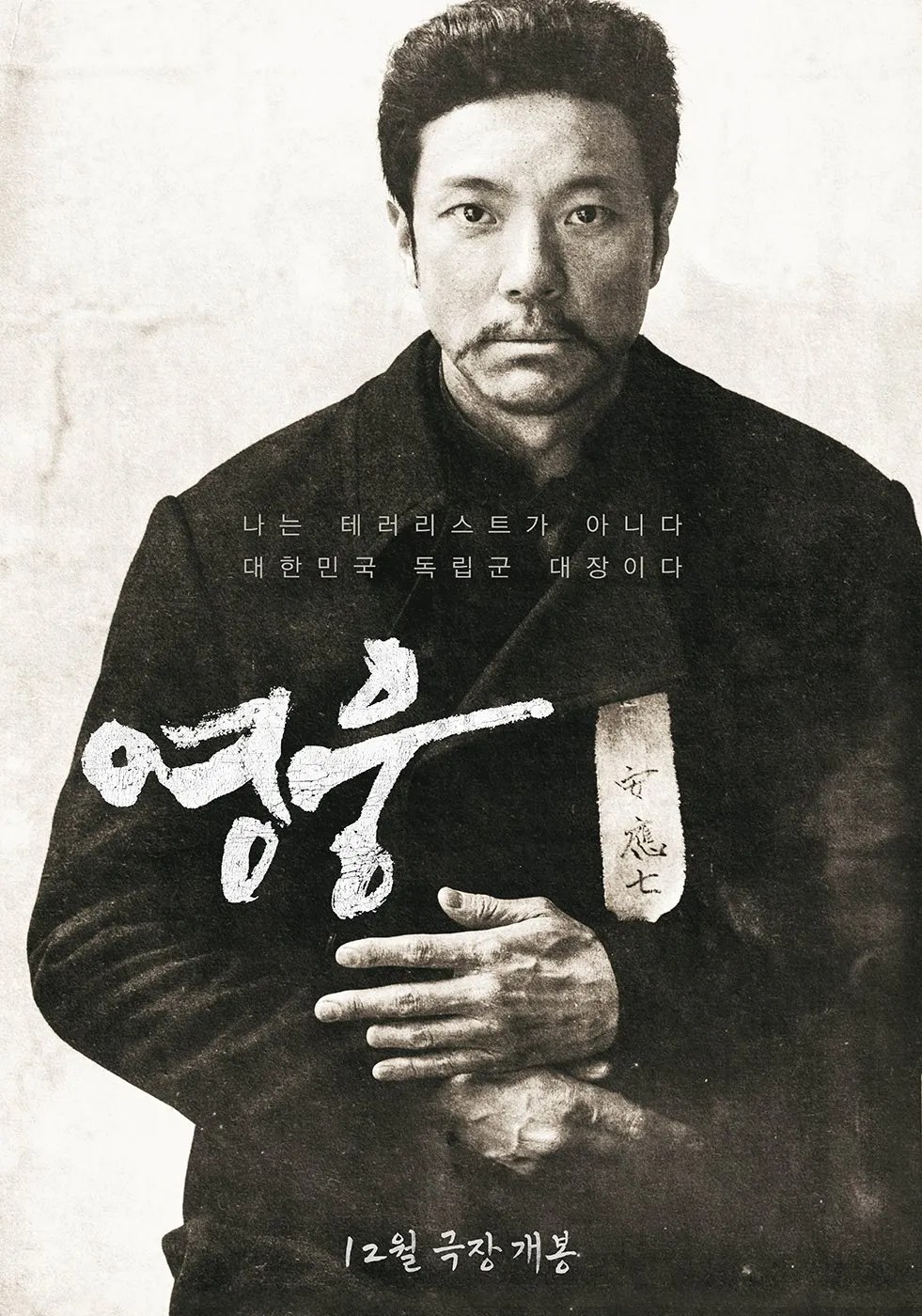
Full Ship (滿船 / 만선, Kim Soo-yong, 1967)

Released two years earlier, Kim Soo-Yong’s The Seashore Village had focused on the lives of women left behind while their husbands went to sea. Full Ship (滿船 / 만선, Manseon), meanwhile, more closely examines the lives of the men themselves along with the increasing pull towards modernity as this very traditional way of life becomes ever more precarious. Based on a play and another of Kim’s literary films, it nevertheless flies close to the wind in subtly challenging the effect that feudalistic capitalism has on each of these men’s lives as they find themselves dependent on the whims of the shipowner.

As Gom-chi (Kim Seung-ho) says, he’s fifty years old and he’s spent his life captaining someone else’s boat. Yet, he’s spent a lot of it toadying for the shipowner and justifying his reluctance to pay the fisherman by citing the shipowner’s expenses which include fuel for the boat, paying the union, and mending nets. The shipowner claims that he lives off debts and the fishermen actually owe him because he’s been lending them money and expects them to pay him back. Some of the other men suggest holding a gut ritual in his honour, but it’s unclear whether the shipowner is really as strapped as he says or merely hoarding all the money for himself. He dresses in fancy hanbok and looks more like a feudal lord than a contemporary business owner. When the fishermen do indeed come in with full boats and expect they’ll finally be getting what they’re owned, they receive only sacks of rotten hulled barely rather than rice. Still, most of them feel they have no choice than to suck up to the shipowner with even Gom-chi agreeing there are expenses to pay while drunkenly letting slip that he has savings and plans to buy his own boat only for the shipowner to find out and ban him from going to sea until he pays up what he owes.

Which is all to say, they’re between a rock and a hard place though “sea-crazy” Gom-chi holds tight to this way of life and has become estranged from his oldest surviving son Do-sam (Namkoong Won) who refuses to become a fisherman while Gom-chi’s wife, who has just given birth to a late baby though already in middle age, is opposed to letting their newborn grow up to go sea. They’ve already lost two sons to the waves, while Gom-chi’s father and grandfather were taken by the waters. To his mind, a fisherman dying at sea is merely going home and Do-sam is a failure and a coward for not following the tradition. 

He blames this on the fact that Do-sam left the island to do his military service and has become corrupted after seeing a different way of life on land. Another man who escaped the island, Beom-soe (Park Noh-sik), has returned wearing a suit and looking like a successful businessman, though as we later discover he’s on the run for a crime committed in the city, symbolising what the end results of this urban corruption may be. Seul-seul (Nam Jeong-im), Gom-chi’s daughter, is also tempted by the city while travelling there to sell goods though almost run over by a bicyclist on her arrival demonstrating its many dangers. People stare and laugh at them, as if the island women with their old-fashioned hanbok had emerged from another world. They laugh at Seul-seul too when she gives in to temptation and gets her hair set and styled into a beehive paid for by her boyfriend Yeon-cheol (Shin Young-kyun) who has also resisted the sea in favour of starting an innovative pearl farming business which is starting to pay off, though Gom-chi still seems resistant to their marriage. Beom-soe is taken with Seul-seul’s island innocence and tries to convince her to come with him with fancy presents from the city of soaps, perfumes, and silk, but she continues to resist him as if sensing that his urban success is not to be trusted. 

But, on the other hand, some seem to think it would be better to take their chances on land than continue with this harsh way of life. The film opens with a funeral in which a half-crazed old woman asks why they’re burying her son when he told her in a dream that he was alive just lost at sea. After a storm, Gom-chi comes back shouting of full boats, but they’re full of dead men drowned by the shipowner’s greed though he only complains about the damage to his vessel. Even the shamaness is a little bit corrupt, telling Do-sam’s mother that it would be inauspicious for him to marry because she’s having an affair with him herself, though prayers and rituals to the Dragon King are all they really have to protect them. Trapped between the sea and encroaching modernity that promises only more exploitation and misery, they have, as the poetic bookending narration suggests, only the life-giving, life-taking waters to turn to.


The Ugly (얼굴, Yeon Sang-ho, 2025)

Poets and philosophers have long debated the true nature of “beauty”. “Living miracle of Korea” Yeong-gyu (Kwon Hae-hyo) has spent most of his life pondering it, not least because he is blind and is often told that the figures he carves on name stamps are “beautiful”. For his customers, “beauty” is rooted in the visual, and for those reasons it seems to them impossible for Yeong-gyu to experience it. It doesn’t occur to them that he may experience “beauty” in other ways or that beauty is not necessarily as connected with vision as they assume it to be. 

But then again, in Yeon Sang-ho’s dark fairytale The Ugly (얼굴, Eolgul), the concept of “beauty” is itself inverted to become something eerie and uncomfortable in symbolising the forced harmony of an authoritarian society. In the present day, a TV documentary crew is interviewing blind stamp carver Yeon-gyu, though it’s obvious the producer is becoming frustrated with Yeong-gyu’s evasiveness while simultaneously hoping to tell an inspirational story about how he overcame adversity that is in itself a little exploitative. She gets an ironic lucky break when, midway through filming, the remains of Yeong-gyu’s wife and the mother of his only son Dong-hwan (Park Jeong-min) are discovered following her disappearance 40 years previously.

Yeong-gyu had told Dong-hwan, who was a baby at the time, that Young-hee had simply run away and does not seem to have made much attempt to look for her. Though this might seem odd, it was after all a time when people just disappeared without warning and asking questions would only put those left behind in danger, so perhaps it’s understandable that Yeong-gyu, a man marginalised by his disability, simply accepted the fact of her absence and chose to believe that she had left him even if it conflicts with his description of her as “kind”. Everyone describes Young-hee of having been a “kind” person even while they otherwise scorn her as “ugly”, describing her as a monstrous creature with an appearance they find gruesome though almost comical rather than frightening. 

When Young-hee’s estranged family turn up at the funeral, they too are embarrassed by her ugliness and crassly make a point of clarifying to Dong-hwan that they don’t want to share their inheritance with him. According to them, Young-hee left home as a young child after telling their mother she’d seen their father with another woman. Their mother beat and her and refused to believe it, while the other family members resented Young-hee for raising an inconvenient truth and fracturing the harmony of this “perfect” family. Young-hee encounters something similar while working at clothing factory where she challenges the boss after finding out that he has raped an employee, but is again ignored and then silenced. Years later in the present day, the former workers claim that it’s thanks to the boss that they survived, echoing the defenders of dictator Park Chung-hee who credit him with curing the intense poverty of the post-Korean War society and turning the nation into the economic powerhouse it is today no matter how many died in his pet construction projects such as the Gyeongbu Expressway. 

Young-hee too works under these exploitative conditions similar to those seen in A Single Spark. When her boss refuses her a bathroom break, she is too frightened to defy him and ends up soiling herself earning herself the unpleasant nickname “Dung Ogre”. Yet when she sees injustice she tries to combat it and refuses to back down even when others shun her. Gradually we begin to realise that the reason Young-hee is called “ugly” is because she speaks the truth and reflects the “ugliness” of those around her. Years later, the colleague who told her she’d been raped by the boss blames herself for her death, knowing that Young-hee was only trying to help her and probably didn’t realise that exposing the boss would kill her only resultiing in a quest to identify the victim. “My shame became his forgiveness,” she reflects, regretting that she too scorned Young-hee and that her failure to speak enabled him to go on abusing other women with impunity. Afraid of the factory boss’ violent thugs and desperate to keep their jobs, no one challenges him least of all Yeong-gyu who tells his wife to shut up and keep the peace.

But for Yeong-gyu, Young-hee’s “ugliness” has other implications in that it reflects his own insecurities and marginalisation. Along with using various derogatory terms to describe Young-hee’s ugliness, the interviews throw in a series of ableist slurs and it’s clear that they also consider Yeong-gyu to be “ugly” because of his otherness. Yeong-gyu resents that they look down him, and learning that Yeong-hee is considered to be “ugly” is consumed with a deep sense of humiliation as if he were being mocked and laughed at for having such an “ugly” wife while, paradocxically, she must only have been interested in him as a means of bringing about his degredation. 

But then, this visual notion of “beauty” is meangingless to Yeong-gyu who has been blind since birth so it ought not to matter to him whether Young-hee is objectively beautiful to the sighted. Notions of visual beauty are socially and culturally defined and shift over time, but at this time and in this society being “beautiful” is it seems important, not least because it implies conformity. Young-hee’s “ugliness” is then transgressive and empowering in its defiance of the code of silence that defines authoritarianism, but within it Yeong-gyu finds only the undermining of his masculinity and humiliation in being found unworthy. That he’s now called a “living miracle of Korea” for overcoming those hard times is a cruel irony and a comment on the state of the contemporary nation forged in dictatorship and tempered by a hyper-capitalistic disregard for human rights in the quest for prosperity. Confronted by these truths, Dong-hwan finds himself with a choice, but in the end may take after his father after all in his own desire to tidy away unpleasantness and avoid having to accept the “ugly” reality. 


The Ugly screened as part of this year’s LEAFF.

Trailer (English subtitles)
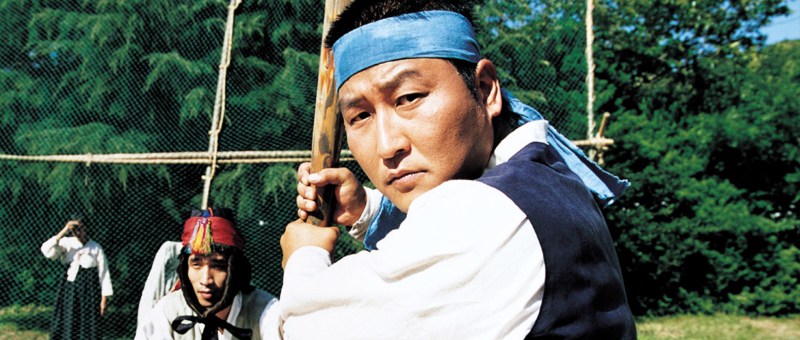
Project Y (프로젝트 Y, Lee Hwan, 2025)

The opening sequence of Lee Hwan’s Project Y (프로젝트 Y) seems to echo the iconic intro of Millennium Mambo as two women look back over their shoulders as they traverse a seemingly endless tunnel. Later we realise that the tunnel is their passage out of the underworld of the red light district towards escape and liberation, not only from patriarchal control and their impossible lives, but from a generational legacy of abuse and entrapment.

Indeed, Ga-young (Kim Shin-rok) the adoptive mother of Mi-sun (Han So-hee) and birth mother of Do-kyung (Jeon Jong-seo), is fond of asking who is saving who when we’re all the same, and insisting that your life is yours to save. It’s a message the girls have taken to heart, yet they remain devoted to each other in a relationship that also appears to be romantic or perhaps has already transcended romance in the depth of their connection. Mi-sun has been working as a karaoke bar hostess for a number of years while Do-kyung works as her driver and occasional courier for various shady types. They plan to leave the red light district now Mi-sun has saved enough money to buy a florist’s from its retiring owner along with a downpayment on a apartment, but it turns out half the girls in the red light district have been scammed by a dodgy estate agent at the behest of local kingpin Blackjack (Kim Sung-cheol).

It seems that Blackjack may have done this deliberately in a nefarious plot to increase the girls’ debts and prevent them from leaving. Blackjack’s callousness is signalled early on when he tells the girls’ manager to get rid of a drooping plant if she can’t manage it and space the others out to disguise the gap. But on the flip side, Blackjack has a young and very silly wife who has got into host clubs and has been spending all his money on a young man who is openly exploiting her. Though the men are ostensibly in the same position as the women, they still have a greater power in preying on female loneliness while the women, by contrast, may be indulging in this behaviour precisely because it gives them an illusion of control they ordinarily don’t have a patriarchal society. Blackjack’s wife throws expensive gifts at her favourite host in an attempt to persuade him to enter a deeper relationship while blabbing her husband’s secrets. The host doesn’t seem to have realised it might be a bad idea to be messing around with Blackjack’s wife, while stealing his secret stash is going to annoy him even more and Blackjack’s not the sort of man you want to be annoyed with you.

Blackjack watches a video of a dog drowning in a tarpit while he works out, and this particular tarpit acts as a kind of vortex drawing all the greed in the red-light district towards it. Hearing about the plot to rob Blackjack, the girls decide to rob him first and blame it on a local hoodlum. But after retrieving a bag with the exact amount they lost, discover a stash of gold bars. It’s taking them too that damages the integrity of their quest and sets them on a course towards a direct confrontation with Blackjack as they try their hardest to escape the red light district for good.

The implication seems to be that if they take the money, they’ll never really be free because it stemmed from the source of their exploitation. This might in a way be what Ga-young is trying to teach the girls in her otherwise hard to read behaviour, sacrificing herself to save them from their poor decision to cross Blackjack while trying to catapult them free of the red-light district though she knows she herself can never leave. Slick and stylish, Lee’s noir stays just on the right side of realism despite its recurrent grimness and larger than life characters such as the Blackjack’s icy female enforcer Bull and captures both girls’ desire for a “normal life” of working in the day and sleeping at night, along with the cheerful solidarity of the hostesses as they band together to take revenge on Blackjack and finally free themselves from this world of constant betrayal and exploitation.


Project Y screened as part of this year’s LEAFF.

International trailer (English subtitles)
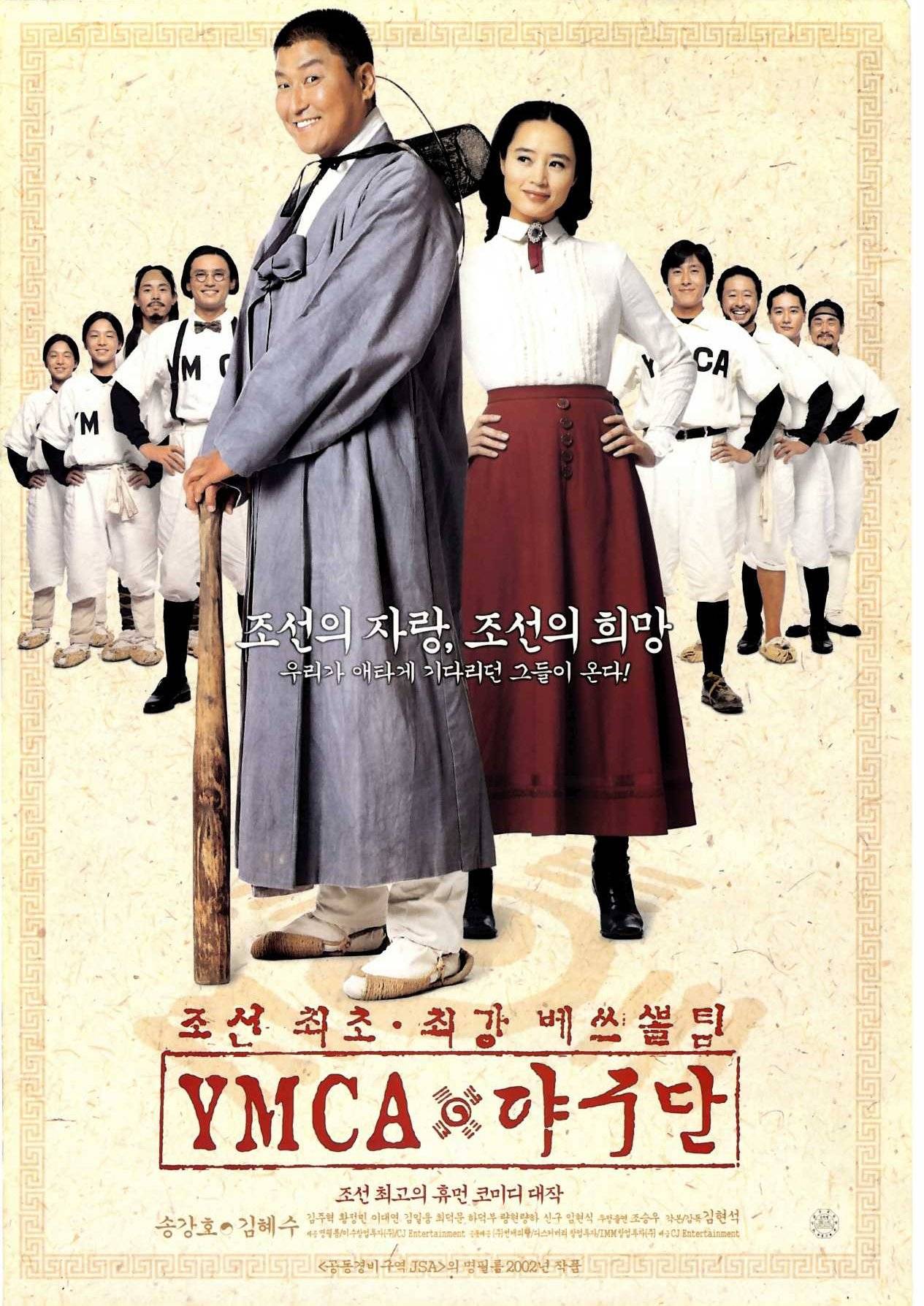
The People Upstairs (윗집 사람들, Ha Jung-woo, 2025)

A moribund marriage finds itself haunted in the reflective image of the couple upstairs in Ha Jung-woo’s take on the Spanish film, Sentimental. A very ’70s sex farce, the film is, in other ways, a refreshingly modern examination of contemporary relationships that ultimately comes down on the side of sexual freedom and personal fulfilment rather than encouraging its unhappily married protagonists back into a socially conformist cage of merely settling for an unsatisfying existence.

You can tell Jeong-ah (Gong Hyo-jin) is unsatisfied by the way she accidentally embarrasses the life model at the art class where she teaches part-time to the point he feels he has to cover himself up even though it defeats the purpose of him being there. Her work as a temporary art teacher is also a symbol of her defeated hopes having given up on her creative practice to focus on more practical concerns while her husband, Hyun-soo (Kim Dong-wook), is a struggling film director who is currently on the 48th draft of a project to turn an unsuccessful film pitch into a TV drama that he’s been working on for the last four years. 

Neither of them are getting much sleep because the rambunctious nightly lovemaking of the couple upstairs keeps them up at night, but these days Hyun-soo sleeps on a fold up mattress in his office which is full of empty boxes of instant ramen like some student bachelor pad. Though they’re only in adjacent rooms, they communicate through Kakao talk and are otherwise leading separate lives. That might be why Jeong-a is drawn to the self-help YouTube channel run by Soo-kyung (Lee Hanee), her upstairs neighbour, which assures that no one can cure the loneliness inside you and the fastest way to better relationships is to stop expecting too much from other people. 

But it’s clear that Jeong-a, at least, is looking for something more which is likely why she decides to invite the upstairs neighbours over for dinner. Hyun-soo isn’t keen on the plan and tries to force her to cancel, then only agreeing to stay an hour while making passive-aggressive comments and veering close to telling the Kims that they can hear everything that’s going on upstairs and they don’t like it. Soo-kyung and her husband Mr Kim (Ha Jung-woo) are, however, the inverse of Jeong-a and Hyun-soo in their hyper-sexualised relationship and apparently solid marriage. They’ve come with something to say too, but while Jeong-a is increasingly receptive to their entreaties and open about her dissatisfaction, Hyun-soo is rude and indignant, resentful of what he sees as a perverse intrusion into his otherwise very “normal” life.

Indeed, part of this is that Mr Kim keeps making subtle digs at his masculinity in needling him about his lack of career success and inability to get this TV drama off the ground after apparently working on it for four years. This is also the root of Hyun-soo’s own insecurities and withdrawal from Jeong-a, unable to see himself as a man in the wake of his dissatisfying career. But Mr Kim is also a contradictory picture of masculinity. A teacher of Chinese characters who really wanted to be a calligrapher, he cuts a fairly authoritarian figure, but is otherwise a modern new man who is domesticated and open with his feelings. The Kims bring a dish to the dinner that Mr Kim has made while he orgiastically tears into pomegranate and suggestively squeezes lemons. He fixes drinks, makes tea, and gets out of the way while his wife does her work. 

But at the same time, the film seems to dial back on the inherent queerness of the Kims’ sexual practice by eliding the homoeroticism between Hyun-soo and Mr Kim who is keen to recruit him because his apparently explosive essence. This internalised homophobia is also a manifestation of Hyun-soo’s conventionality and desire for middle-class properness to bring order to his life, if only superficially, by continuing to live in a simulacrum of a marriage that leaves husband and wife unhappy. The recently remodelled flat is full of the signs of aspiration from the posh china to elegant modern decor. But it’s a row about the curtains that most obviously signals the cracks in their relationship. Jeong-a doesn’t want any because she wants a more open and transparent marriage, while Hyun-soo can’t live without them because he craves repression and can’t understand a life without it.

In any case, during their incredibly weird evening with the Kims, the couple hit rock bottom that is also a kind of epiphany liberating them from their misconceptions and the inertia of their married life. Hyun-soo, finally, begins to realise that Jeong-a is right when she says he uses sarcasm to run away from his problems and if he wants to save his marriage, he’ll have to be a little more emotionally honest and open to compromise. Despite his squeamishness, the film seems to come down on the side of the Kims who are living happy and fulfilling lives in embracing their sexuality, while it is Hyun-soo, by contrast, who must learn to open up even if he’s not quite ready to get in the lift.


The People Upstairs screened as part of this year’s LEAFF.

Trailer (no subtitles)

No Other Choice (어쩔수가없다, Park Chan-wook, 2025)

Most of the time, when someone says they had no choice, they’re paradoxically admitting that they had one, but they expect to understand the choice they’ve made because we would have done the same or can’t reasonably expect them to accept the consequences of the alternative. “No other choice,” on the other hand, is self-contradictory, clearly stating that a choice does indeed exist. Perhaps that’s why it seems so irritatingly disingenuous every time it’s said to Man-su (Lee Byung-hun), even if he eventually succumbs to its self-absolving qualities.

In any case, it’s this sense of powerlessness that’s at the centre of Park Chan-wook’s satirical drama as a middle-aged man finds himself suddenly exiled from the upper-middle-class lifestyle he’s worked so hard to build for himself when his company’s taken over by an American firm who have “no other choice” than to shed some staff. Man-su is blindsided by this corporate betrayal, attending self-help sessions that remind him there’s no such thing as jobs for life any more. Losing his job wasn’t his choice, but in some ways perhaps that makes it worse. 

What connects him with the other men in his position is that he’s obsessed with getting another job in the paper industry rather than exploring other options. All of these men are fixated on getting back what they feel has been taken from them. Not only is Man-su dead set on getting another job in paper, but on holding on to the family home from which he was displaced as a child and has only just managed to reclaim. To that extent, what he wants is a return to a past that doesn’t quite exist any more or exists only in his memory and is therefore unattainable.

Losing his job also leaves him displaced within his family as his sudden inability to keep them in the manner to which they’ve become accustomed eats away at his sense of masculinity. They’ve already had to exile the dogs, leaving his young daughter distraught, while his wife, Miri (Son Ye-jin), has started working again, further emphasising his failure as a provider. Witnessing one of the other men’s wives cheating on him with a much younger lover, Man-su too begins to fear that his wife no longer sees him as a man and will cheat on him too with someone who better fulfils the codes of masculinity. Yet it’s his stubborn male pride that undermines his positions much more than the unfortunate fact of having lost his job, which wasn’t after all something he had much control over. The wives are all much more pragmatic and come up with realistic solutions such as ruthless belt tightening and ceding a little ground by voluntarily giving up anything inessentials while encouraging their husbands to be a little more pragmatic and consider new directions rather stubbornly fixating on reclaiming the life they had before. 

That might be Miri decides to just sort of go with it even after beginning to suspect that Man-su has something to do with the disappearance of his rivals. At least he’s being proactive, even if it’s not really the best way to go about it, and by burying a few bodies there, he’s basically made it impossible to sell the house which is one goal achieved. It’s not losing your job that’s the problem, it’s how you deal with it, one of the other men’s wives insists as even Man-su ironically berates him for not listening to any of his wife’s “sensible” suggestions. Then again, the fact Man-su is eventually offered a job training AI replace him invites the suggestion that he’s basically killing all the other workers in the hope of clinging on to the wheel as soon as possible. The managers state they had “no other choice” about that too, and are grinning with the blinkered vision that prevents them from realising there’ll be no need for managers when there’s no one manage. 

In any case, the fact that Man-su walks around for with toothache for a significant amount of time echoes the hero of Aimless Bullet and suggests that perhaps things aren’t all that much different in the Korea of today caught between deepening wealth inequality, exploitative working conditions, and employment precarity presented by the rise of AI and increasingly globalisation. There is something quite sad about the devaluing of these skills in that what Man-su and the other men share is reverence for paper, the beauty and texture of it, along with the craftsmanship and pride in their work that now seems to belong to a bygone era. It seems that the dog-eat-dog world of capitalism leaves Man-su with “no other choice” than to do what he did and leave others with no other choice but him, but all he’s really done is seal his own fate in a futile attempt to hold on to a past that is rapidly slipping away.


No Other Choice screens as part of this year’s BFI London Film Festival.

Trailer (English subtitles)