“Give only what you can take responsibility for,” Yoon-ji (Sim Su-bin) is advised by an apparently compassionate older man trying to explain to her that sometimes you end up causing further pain while trying to be kind. Yoon-ji’s problem might be that no one seems to want to take responsibility when it comes to her and she herself is struggling to do so while faced with an unexpected pregnancy. Not only has the father disappeared off the face of the earth, but he was also her 36-year-old high teacher and is obviously not going to take any sort of responsibility for his conduct, certainly not for the baby, but not for the false expectations and unresolved emotions with which he’s left Yoon-ji, either.
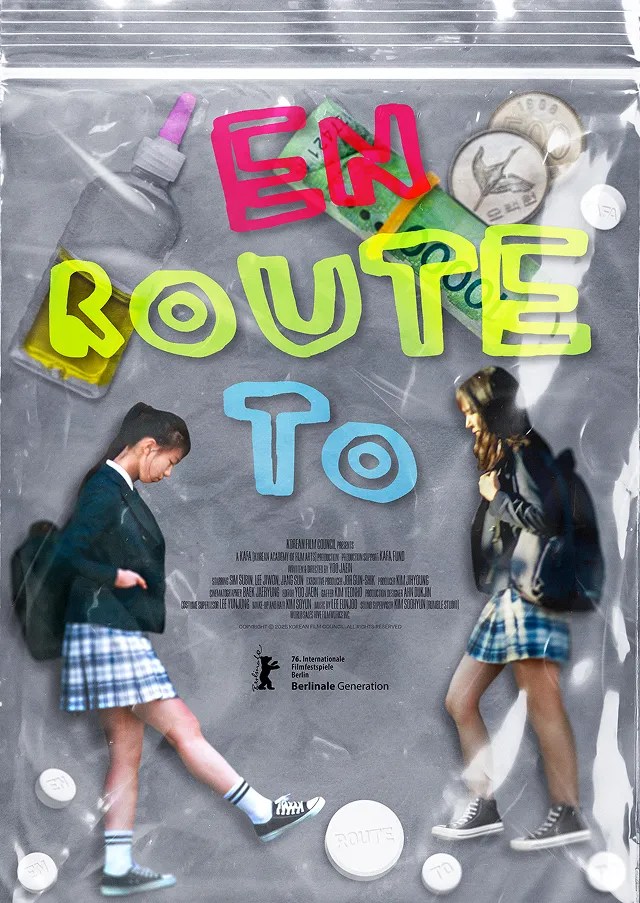
Much of Yoo Jae-in’s graduation film En Route to (지우러 가는 길, Jiureo ganeun gil) takes place against the backdrop of the only recent decriminalisation of abortion in Korea, but explores the ways in which young women like Yoon-ji are still left with few options when deciding what to do about an unexpected pregnancy. Though she wanted to keep the baby, she is pressured into an abortion assuming that Mr Han has disappeared because she refused to get one and will return once she has. This rather childish thinking demonstrations both her naivety and her desperation, little understanding the situation she is in. It doesn’t seem to occur to her that Mr Han may have done this before and probably doesn’t see her as a long-term romantic prospect. After all, he has a wife already, even if they’ve been living separately with the implication that he’s ended up being transferred to this school in flight from allegations at his previous place of work.
To try to keep it secret, Yoon-ji orders abortion pills off the internet without any sort of guarantee of what she’s actually taking which could be actively harmful to her health in other ways or perhaps just be chalk that won’t help her to end the pregnancy. After finding out what Yoon-ji has done because she borrowed her savings to pay for the pills, Yoon-ji’s roommate Gyung-sun (Lee Jiwon) asks her why didn’t go to a hospital, but as they find out, Yoon-ji would need parental approval in addition to the money to pay for the procedure and as she was abandoned by her father, there is no one she can ask to sign even assuming that the situation allowed her to involve her guardians and she felt comfortable doing so. A friend knows of a vet who is willing to provide backstreet abortions as a hangover from the era in which it was a criminal offence to end a pregnancy, leaving Yoon-ji at the mercy of potentially dangerous medical interventions.
Meanwhile, she can’t really tell anyone about what’s happened to her as Mrs Han has begun to figure out that her husband may have been a serial offender but is intent on saving his reputation, perhaps as a means of saving her own so that she would not have to accept the fact not only that her husband had sexual relations outside of the marriage, but that he did so with underage girls whose trust in him he willingly betrayed while abusing his position as a teacher. She uses her relative wealth to cow Yoon-ji and Gyung-sun into silence by dangling the prospect of a scholarship, ironically in Mr Han’s name as a means of whitewashing his reputation.
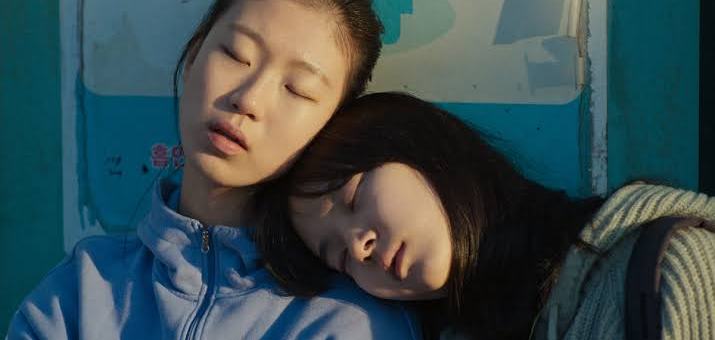
Gyung-sun is particularly upset about this, partly because her own mother gave birth to her very young and Gyung-sun has always felt a little guilty about all her mother missed out on to raise her like going to university and getting a better job, or getting married and starting a bigger family. Without explaining why, she pushes Yoon-ji towards ending the pregnancy in part because she experienced bullying and exclusion simply for being the child of a young single mother and does not think it’s fair for Yoon-ji to have a child when she has not really thought about the realities of raising it by herself or what she will tell them about their father when they’re old enough to ask. Both Yoon-ji and Gyung-sun are somewhat outsiders, though Yoon-ji continues to yearn for a family of her own, while Gyung-sun has been selling under the table vape cartridges at school to fund a working holiday visa in Australia specifically to set out for her own independence.
Nevertheless, it’s really in each other that they begin to find a new sense of ”family” as they bond over the question of what to do for the best when it comes to Yoon-ji’s future and the baby’s. They do indeed take responsibility for what they give to each other, and though left to handle all of this largely on their own, offer mutual support through this difficult time before allowing a conclusion to be reached that will enable them to move on. Warm and empathetic while refusing to moralise, Yoo’s humorous drama is a testament to the power of female friendship which can in some ways at least overcome the constraints of the world around it.
En Route To screened as part of this year’s London Korean Film Festival.
Trailer (English subtitles)