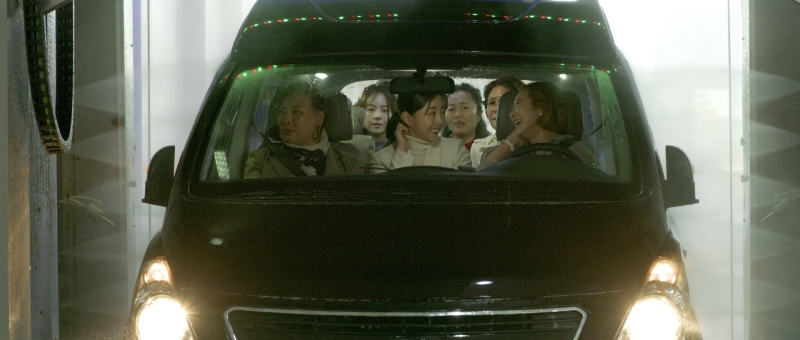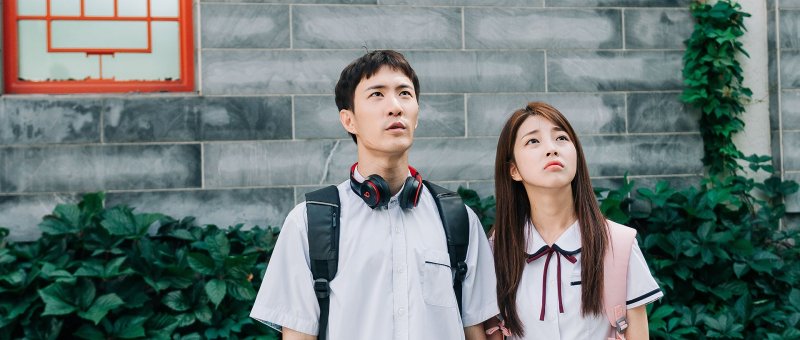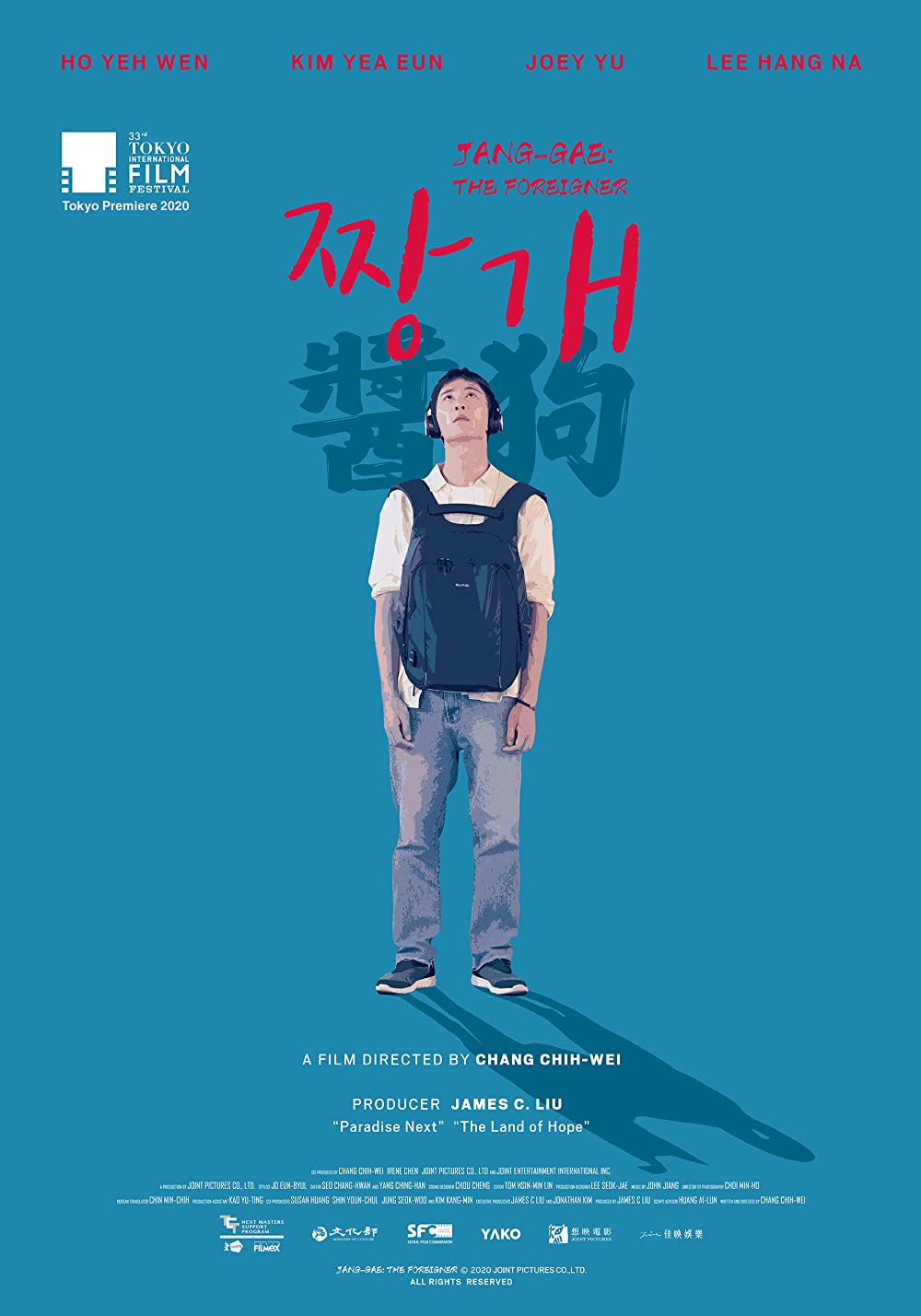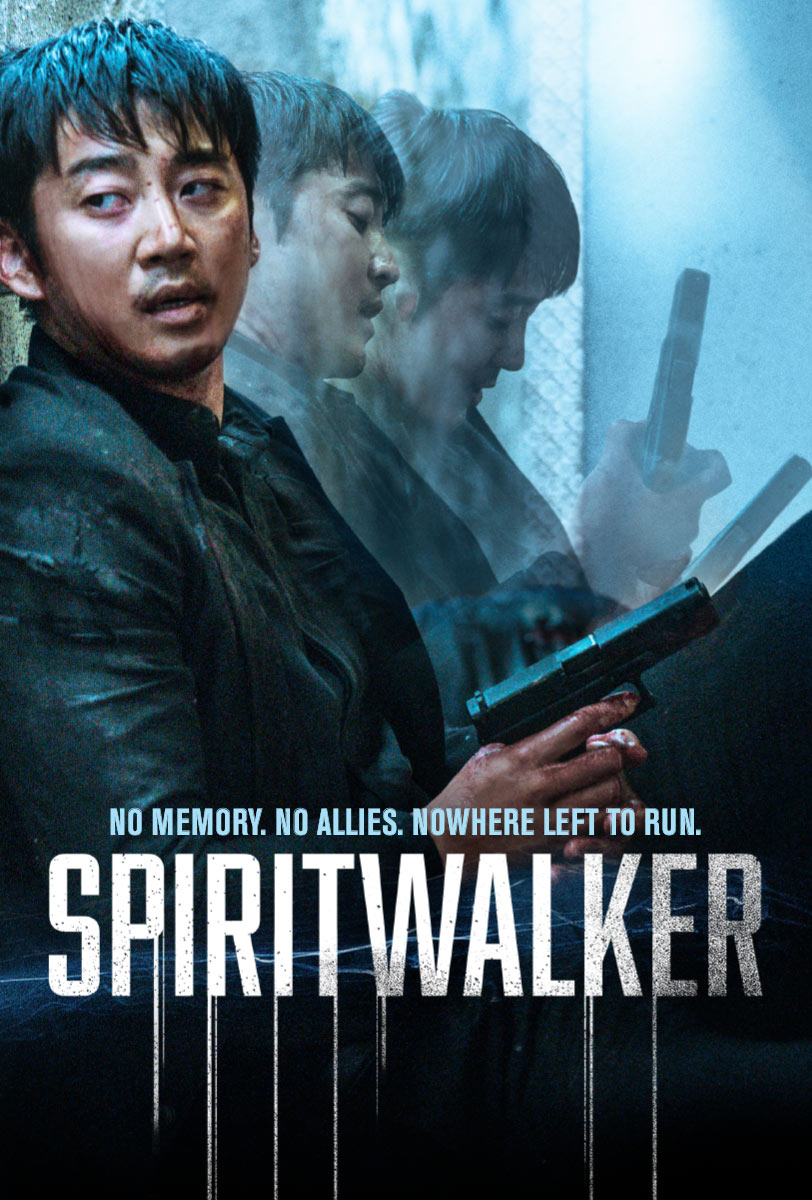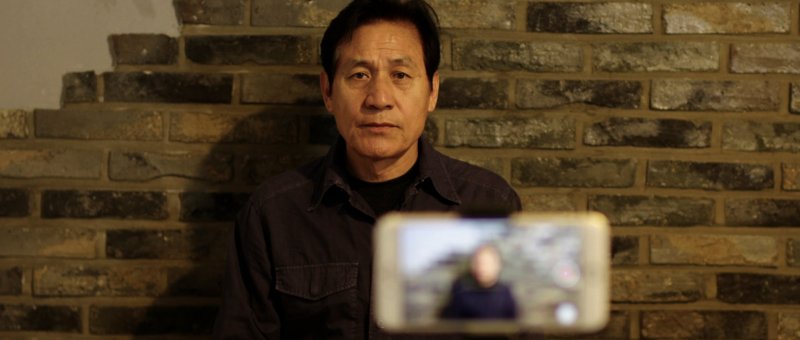
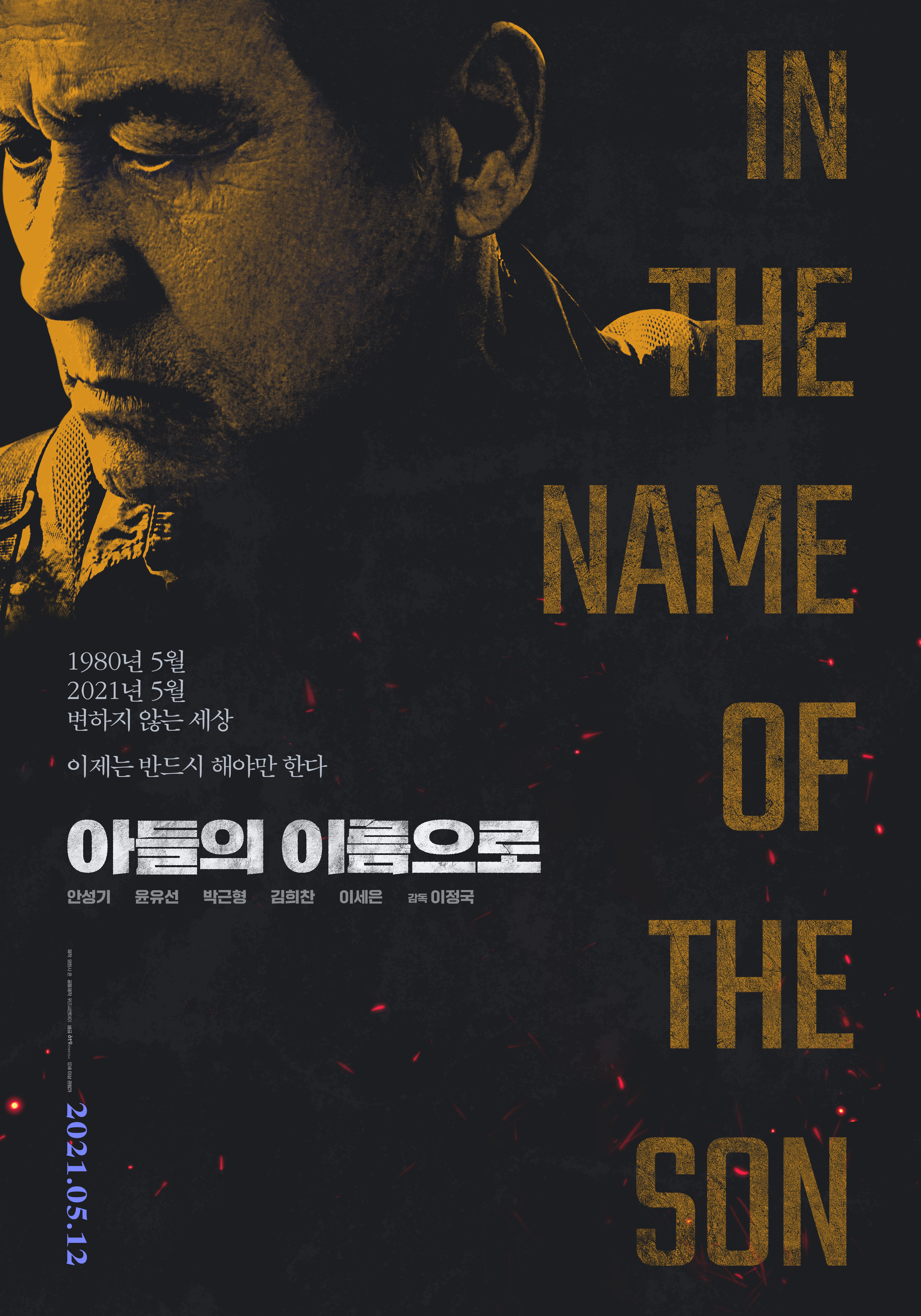
Spiritwalker (유체이탈자, Yoon Jae-geun, 2021)

“Who do you think I am?” the amnesiac hero of Yoon Jae-geun’s existential thriller Spiritwalker (유체이탈자, Yucheitalja) eventually asks having gained the key to his identity but continuing to look for it in the eyes of others. Yet as he’s told by an unlikely spirit guide, maybe knowing who you are isn’t as important as knowing where you’ve come from and where it is you’re going advising him to retrace his steps in order to piece his fragmented sense of self back together. 

A man (Yoon Kye-sang) comes round after a car accident with no memory of who he is or how he got there. He arrives at the hospital after a homeless man (Park Ji-hwan) calls an ambulance for him, but quickly realises he might be in some kind of trouble especially as the police are keen to find out who shot him and why. With that in mind, he decides to make a break for it but finds his sense of reality distorted once again as the world around him changes eventually realising that he’s shifted into the body of another man somehow connected to his “disappearance”. In fact this happens to him every 12 hours which is in many ways inconvenient as his impermanence hampers his ability to keep hold of the evidence he’s gathered while preventing him from making allies save for the homeless man who is the only one to believe his body-hopping story. 

As the homeless man points out, no-one in his camp really knows who they are anymore and to a certain extent it doesn’t really matter (in fact, he never gives his own name) because they have already become lost to their society as displaced as the hero if in a slightly different way forever denied an identity. What the homeless man teaches him, however, is that the essence of his soul has remained figuring out that at the very least he’s a guy who prefers hotdogs to croquettes even if he can’t remember why which is as good a place to found a self on as anywhere else. Even so, through his body-hopping journey he begins to notice that all of his hosts are in someway linked, inhabiting the same world and each possessing clues to the nature of his true identity. 

The central mystery, meanwhile, revolves around a high tech street drug originating in Thailand which causes hallucinations and a separation of body and soul apparently trafficked to Korea via a flamboyant Japanese gangster with the assistance of the Russian mafia in league with corrupt law enforcement members of which have begun getting dangerously high on their own supply with terrible if predictable results. This sense of uncertainty, that everyone is operating under a cover identity and those we assumed to be “good” might actually be “bad” and vice versa leans in to Yoon’s key themes in which nothing is really as it seems. Body and soul no longer align, the hero constantly surprised on catching sight of “himself” in mirrors, not knowing his own face but realising that this isn’t it while desperate for someone to “recognise” him as distinct from the corporeal form he currently inhabits. Though they may not be able to identify him, some are able to detect that he isn’t “himself”, behaving differently than expected, speaking in a different register, or moving in a way that is uniquely his own even while affected by other physical limitations such as one host’s persistent limp. 

Inevitably, the hero’s path back to reclaiming his identity lies in unlocking the conspiracy of which he finds himself at the centre, figuring out which side he’s on and what his highest priorities are or should be in gaining a clear picture of his true self as distinct from the self that others see. High impact hand-to-hand combat sequences give way to firefights and car chases while the hero finds himself constantly on the run in an ever shifting reality, Yoon employing some nifty effects as an apartment suddenly morphs into a coffee shop as the hero shifts from one life to another existentially discombobulated by the lives of others but always on the search for himself and a path back to before finding it only in the returned gaze of true recognition. 


Spiritwalker is released on blu-ray in the US April 12 courtesy of Well Go USA.

Interntational trailer (English subtitles)

The Girl on a Bulldozer (불도저에 탄 소녀, Park Ri-woong, 2021)

“Everyone just takes it” the heroine of Park Ri-woong’s Girl on a Bulldozer (불도저에 탄 소녀, Bulldozere Tan Sonyeo) is advised by her partly well-meaning uncle, urging her to know her place, stop fighting and become complicit with the injustice that pervades their society. Already beaten down by life, he has come to the conclusion that there is no other way out other than to submit himself to the quasi-feudalistic social codes of contemporary capitalism, but Hye-yeong (Kim Hye-Yoon) is still naive enough to think that she’s entitled to fairness and that she has the capacity to resist if not exactly for the good of society then in standing up for herself and her family. 

Family is however something about which she feels conflicted, disappointed in her feckless father (Park Hyuk-Kwon) fearing his gambling and drinking problems may have got the better of him yet again. As the film opens, 19-year-old Hye-yeong is in court charged with assault after intervening in a convenience store dispute. She already has a criminal record but the judge is lenient with her in reflection of the fact that she stepped in to defend someone weaker than herself, sentencing her to community service and vocational training rather than prison but reminding her she is now old enough to receive a custodial sentence should anything like this happen again. It’s immediately obvious that Hye-yeong is a very angry young woman who has already lost any real hope for the future, staking everything on saving enough money from her part-time jobs to rent a flat so she can move out and take her younger brother Hye-jeok with her. 

What little stability she has disappears when her father leaves early one morning and does not return, Hey-yeong receiving a call from the police informing her he’s a wanted man having apparently committed an assault and stolen a car from his former employer which he later drove off a bridge harming two pedestrians in the process. Meanwhile she also discovers that her father may have lost the restaurant where they live and work, a couple turning up to make alterations as if they already owned the place, the woman claiming that her husband is the nephew of Chairman Choi (Oh Man-seok) her father’s former boss and the owner of the car which he is accused of stealing. Part of Hye-yeong’s problem is her liminal adolescent status. It’s obvious her father had been keeping a lot of things from her while she’s constantly asked when her mother is coming to sort everything out though her mother died years ago and even the aunt she later approaches for help is less than sympathetic partly as we discover because her father dragged his brother into his money problems by making him a witness to a deal with the increasingly shady Choi. 

Choi is an embodiment of corrupt chaebol culture, adopting a quasi-feudalistic authority that allows him to wield his authority over those lower than himself in the complicated class hierarchy of the contemporary society as if he were a lord and they merely serfs. Also in debt to him, Hye-young’s uncle tries to talk to her about the way the real world works, that she should stop resisting Choi whom she blames one way or another for her father’s accident and know her place, acknowledging that when you’re nice to men like Choi they’re nice to you blaming his brother not for his foolish decision to trust him but for his eventual rebellion in insisting on getting what he was promised rather than submitting himself to Choi’s whim. The fact that Choi is currently running for political office promising to “never surrender to injustice” while making this small corner of backstreet Incheon great again through almost certainly corrupt construction contracts is only another expression of the insidious links between business and politics that once again work to oppress young women like Hye-yeong. 

Meanwhile, she finds herself constantly at the mercy of shady insurance companies one working for the victims of her father’s accident who turn out to be, as she thought, scammers playing up their injuries in the hope of cash amid the compensation culture that defines the modern society. Then again on the other hand, she discovers that her father had reactivated a series of insurance policies of his own, some suggesting the accident may have been a suicide attempt in that he hoped to take his debts with him while providing his children with financial security through the payout. The dragon tattoo on Hye-yeong’s arm which she has to hide with a sleeve in mainstream society marks her out as someone not to be messed with, but also exiles her from conventional success making it difficult to get a regular job or walk around without the implication of violence following her while even the vocational training she chooses of learning how to drive heavy vehicles also rejects her the instructor flat out saying that he’s “not being sexist” but thinks the course is unsuitable for a woman and she won’t find work as one in the construction industry. Young, reckless, and naive Hye-yeong opts for short-term vengeance literally attempting to take a bulldozer to the comfortable lives of men like Choi whose wealth is founded on the exploitation of those like her in counting on their desperate complicity, but discovers that his position is already far too entrenched to be turfed out by a single mechanism alone. “We at Korea Insurance will always be a source of strength for you” she’s ironically told after finally receiving a payout rather than an invoice left with little other choice than to try and make her way free of the control of the Chois of the world in rejecting her complicity. 


The Girl on a Bulldozer screened as part of Osaka Asian Film Festival 2022

Clip (English subtitles)

Hommage (오마주, Shin Su-won, 2021)

A struggling female filmmaker finds herself haunted by a ghost of the silver screen in Shin Su-won’s strangely moving ode to cinema, Hommage (오마주). As much about the difficulties faced by women in the predominantly male film industry as those faced by women in general in the still patriarchal society, Shin’s drama looks back to a cinematic golden age and the pale shadows of those history has seen fit to forget. “You will vanish one day like I did” according an ominous note discovered in a never finished screenplay, but through a gentle process of restoration the forgotten figures of the past can perhaps be resurrected as the frustrated director begins to find new hope in a departed kindred spirit. 

Dressed very much like Shin herself, struggling director Ji-wan (Lee Jung-eun) has hit a creative rut. Her third film, Ghost Man, has recently been released but is not exactly setting the box office on fire while the latest tentpole blockbuster continues to pack them in. With her confidence at rock bottom and financial worries hovering on the horizon, Ji-wan is offered an unusual job which although it might not pay much will be very worthwhile in helping to restore Hong Eun-won’s 1962 melodrama A Woman Judge starring the great Moon Jeong-seok to its former glory. Unfortunately like many films of its era the negative is in poor condition with sound missing from several scenes which Ji-wan is supposed to re-dub only she’s not much to go on beginning by tracking down the director’s daughter in the hope of retrieving a script before embarking on a kind of scavenger hunt in the search for Hong herself. 

As the film opens and indeed closes, Ji-wan is in the middle of a swimming lesson quite literally attempting to keep herself afloat mimicking the despair she is beginning to feel in her personal life as regards her career. She identifies strongly with Hong who, in the film’s slightly fictionalised history, was forced to give up filmmaking after her third film, as Ji-wan herself fears she may have to do, having toiled away for 10 years just waiting for the opportunity while Ji-wan is also approaching the 10th anniversary of her decision to pivot into filmmaking as a married wife and mother. Though she had taken the job only reluctantly, the desire to restore the film is partly born of her need to rebuild her confidence as a filmmaker but also to honour Hong’s legacy and restore her rightful place in Korean film history. 

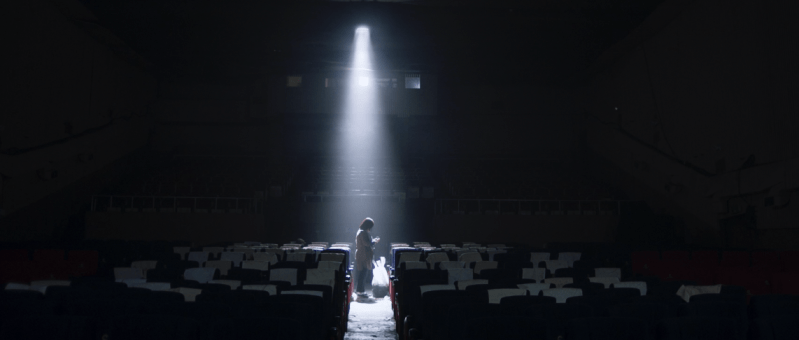
Playing out like a ghost story, Ji-wan is almost literally haunted by Hong’s silhouette in her elegant trench coat and hat, at several moments hearing someone shout “let me out” as if pleading with her to release Hong’s spirit from within the sealed film cans of her almost forgotten feature. Meanwhile she’s spiritually haunted by the discovery of a woman’s body in a car parked outside her apartment building which had not been discovered for some months, a pretty photo of a young woman sitting on her dashboard perhaps of the woman herself or of a daughter, sister, friend but either way a poignant reminder of a life extinguished which Ji-won worries may have been that of her next-door neighbour whose crying she sometimes heard through the walls. On meeting some of those who once knew Hong, each at some point laments that they are the only ones left who remember that time while Ji-wan gets her epiphany in a soon to be torn down cinema with a hole in the roof raining down light into an empty auditorium,. 

Surrounded by unsupportive men from her grumpy husband (Kwon Hae-hyo) to surprisingly chauvinistic son (Tang Jun-sang) who declares himself “love-starved” while echoing the words of those around him that her desire to chase her dreams is “selfish”, Ji-wan is beginning to feel as if she’s disappearing too while finding herself forced to re-confront her notions of femininity in approaching the menopause combined with an unexpected medical crisis. Things aren’t quite as bad for her as they were for Hong, at least no one’s ever thrown salt at her as Miss Lee (Lee Joo-Sil), Hong’s friend and editor, recounts, but she’s less than surprised on hearing that Hong had kept the existence of her daughter secret from her colleagues fearful they’d never let her direct if they knew she was a mother. The film Ji-wan is trying restore is based on the true story of Korea’s first female judge who was in fact murdered by her husband, though the film envisages a more positive ending if within the limits of contemporary patriarchy in insisting that a career is not incompatible with fulfilling the expectations of traditional femininity in caring for her in-laws, husband, and children. Ironically enough, Korea’s first film director Park Nam-ok had been forced to film with her baby on her back but completed just one feature which survives only in incomplete form. 

Many films are presumed lost from Korea’s golden age not just those directed by women, but the particular lack of respect shown towards the films of Park and Hong is particularly upsetting to Ji-wan who later discovers that to add insult to injury old film stock was often mined for its silver content and then sold off to be used as hatbands other such frivolous material. No one really valued these films very much when they were made, so no one made much of an effort to preserve them just like no one is making much of an effort to save the ruined the cinema where she chases the ghost of Hong, the embittered projectionist eventually giving in to Ji-wan’s enthusiasm as she holds up the 8mm film she’s discovered to the light pouring though its ceiling. A beautifully haunting cinematic mystery, Shin’s melancholy drama eventually allows its heroine to reclaim her love for cinema along with her self-confidence as a filmmaker through the restoration of the past finding a kindred spirit in the long departed Hong unfairly denied not only the acclaim she deserved but the artistic possibility to which she should have been entitled. 


Hommage screened as part of this year’s Glasgow Film Festival.

Original trailer (English subtitles)
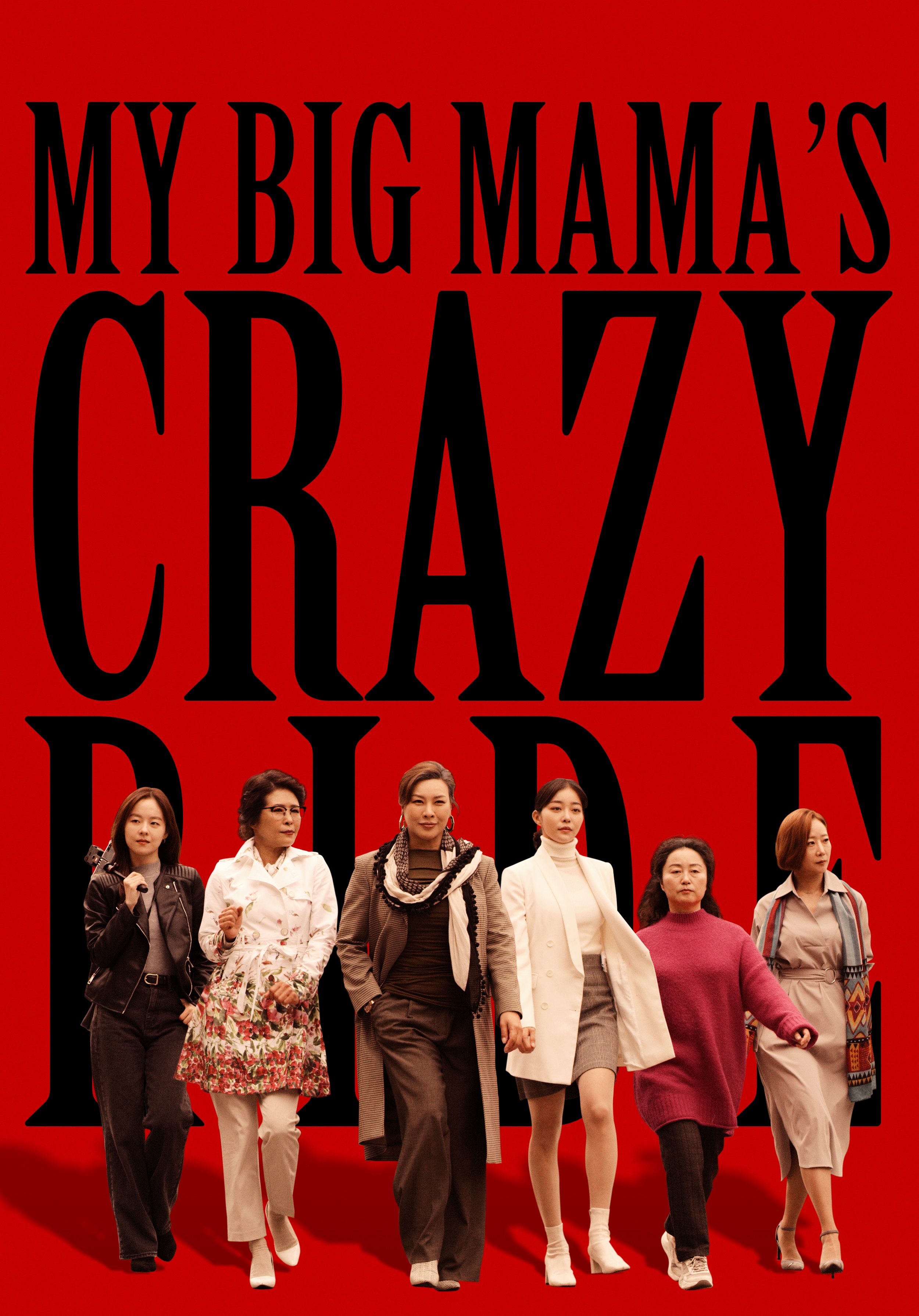
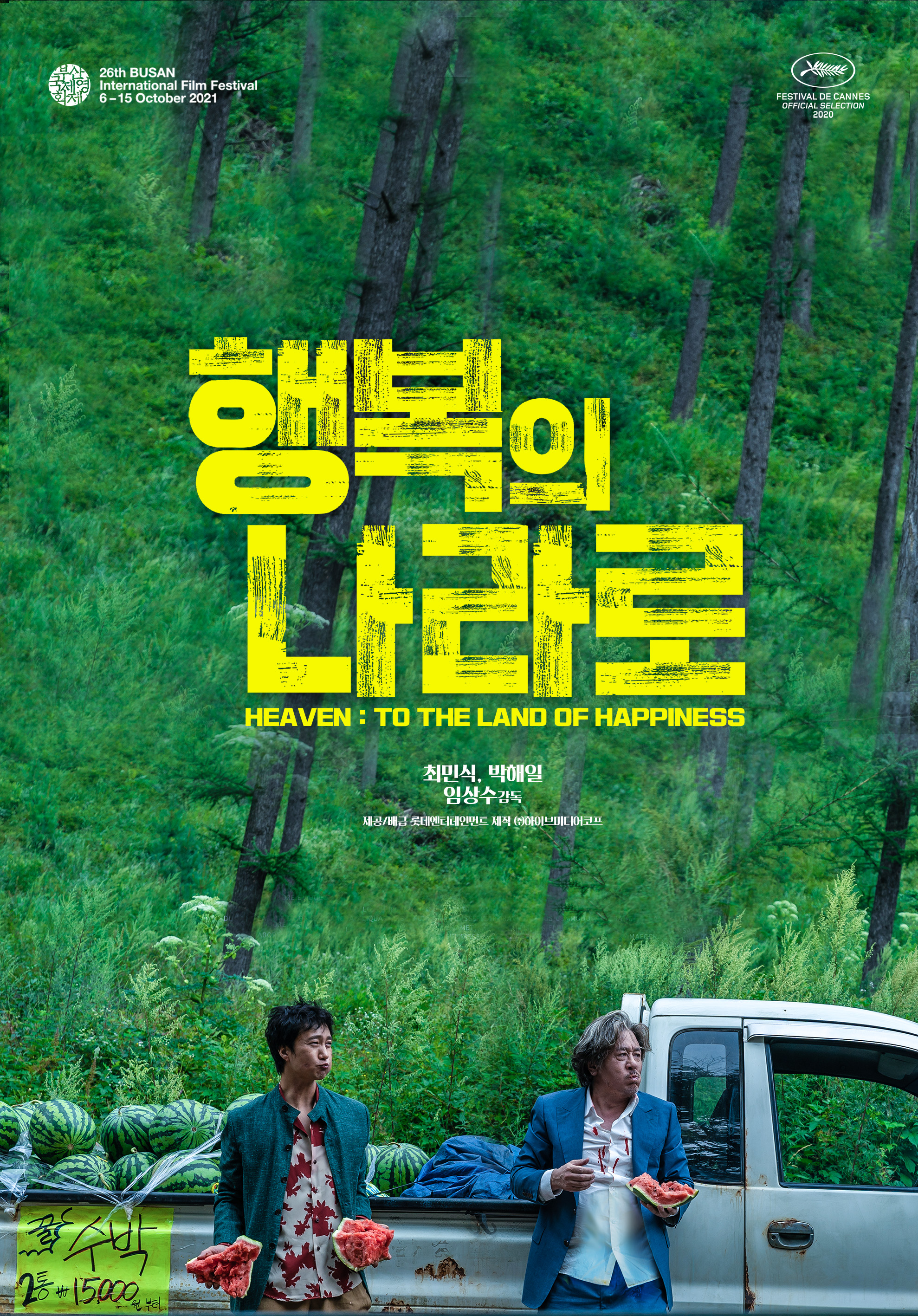
Heaven: To the Land of Happiness (행복의 나라로, Im Sang-soo, 2021)

A chronically ill thief and a “poetic fugitive” find themselves on the run from a “philosophical gangster” whose money they unwittingly stole after driving off with his hearse in Im Sang-soo’s playful existential drama, Heaven: To the Land of Happiness (행복의 나라로, Haengbokeui Nararo). In one way or another, all of our heroes are sick or dying, pushed into a moment of introspection which forces them to consider how it is they wanted to live and what for them night constitute a good death while pursued by pettiness and injustice squabbling over the most meaningless but equally impossible to live without thing imaginable, money. 

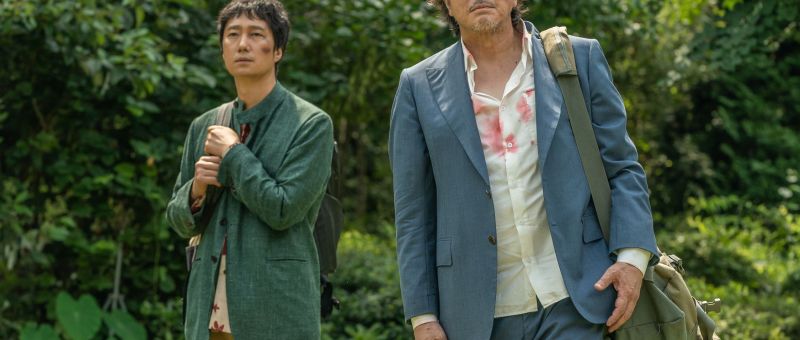
Our narrator, Nam-sik (Park Hae-il), is a youngish man suffering with a chronic illness which has forced him into a life of wandering taking menial jobs at hospitals in order to steal the medicine he needs to treat his condition which otherwise costs more than the average annual salary for a month’s supply. On the day his cover’s about to be blown, he runs into Prisoner 203 (Choi Min-sik) who has been brought in by the local prison only to be told that his brain tumour is now inoperable and in their estimation he has as little as two weeks left to live. Unwilling to die behind bars and longing to see his estranged daughter again, 203 manages to mount an escape attempt with the help of Nam-sik who ends up on the run with him after getting accidentally tasered. 

Not only are Nam-sik and 203 each suffering from life-limiting medical conditions, but even the elderly female gang boss, Madame Yoon (Youn Yuh-jung), is also bedridden and apparently at death’s door while in an extreme irony the casino money the guys have accidentally run off with was stored inside an ornate black coffin. Rich man or thug we’re all the same when we die, 203 remarks as he and Nam-sik prepare to bury the coffin before discovering what’s inside, hinting perhaps at the utter pointlessness of the gangsters’ quest to retrieve it. After, all you can’t take it with you and 203 has little need of vast riches now which is another irony seeing as he’d been in prison for embezzlement. 

All of those around him constantly describe 203 as a “decent man”, his guard quickly shutting down the outlandish suggestions of a bumbling cop that he may have murdered the owner of an abandoned truck by exclaiming that 203 isn’t the sort of person who would do something like that. In fact, Nam-sik and 203 are responsible fugitives, often giving away large sums of money to those they meet in exchange for the use of a vehicle or some other kind of assistance. 203 doesn’t even want his share of the loot, partly because he rightly assumes it’s only going to bring them trouble, and partly because he no longer has need for it. Nam-sik meanwhile seems to relish the idea of being rich, but quite literally needs money to survive in order buy his medication (as well as potentially help out the impoverished mother who rings him asking for financial assistance). Even Madame Yoon seems to want the money as a kind of survival mechanism, suddenly reviving after hearing her stylish but inept gangster protege daughter (Lee El) report she’s found the missing cash while otherwise explaining to her that she needs to be “tough, persistent, and almost merciless in order to beat the insignificants and become rich”. 

But you can’t buy your way out of death with money, even if as the philosophical gangster says everyone has to go some way, don’t take it personally. Caught in existential limbo, the two men generate a kind of absurdist brotherhood, a wandering Vladimir and Estragon, or the Rosencrantz and Guildernstern of Stoppard’s play blinking in and out of existence while caring for each other altruistically for no other reason than the connection they’ve developed in shared mortal anxiety. “It was warm and it made me feel happy” Nam-sik reflects somewhat incongruously on a death that was in its own way good and just amid so much injustice. Swapping the provocation which defines much of his earlier work for cheerful melancholy, Im’s strangely moving existential dramedy suggests that happiness lies in simple human connection and the power of redemption while money only leads in one direction. 


Heaven: To the Land of Happiness screens in Chicago on March 13 as part of the 14th Season of Asian Pop-Up Cinema.

International trailer (English subtitles)

Sunday League (선데이리그, Yi Sung-il, 2020)

A dejected middle-aged former footballer rediscovers both a love for the game and his self respect while coaching a trio of hopeless amateurs towards competition glory in Yi Sung-il’s underdog sporting drama, Sunday League (선데이리그). A testament to the restorative power of team sports, Yi’s gentle comedy allows each of its troubled heroes to discover a positive outlet, gaining a sense of confidence that isn’t about winning or losing but mutual support and community spirit. 

As a young man, Joon-il (Lee Seong-uk) had been primed for sporting success but an injury soon brought his career on the pitch to an end. Sullen and embittered, he is a now middle-aged man with a drinking problem and a part-time job working for an old friend coaching a kids’ team while in the middle of an acrimonious divorce. As will become apparent, he is temperamentally unsuited to coaching young children, his coaching style somewhere between drill sergeant and dictatorial PE teacher essentially amounting to little more than bullying. His ill-tempered rant even reduces one small boy to tears proving the last straw for head coach Sang-man who has to field the complaints from understandably upset parents. Otherwise at a loss, he fires Joon-il from the kids team but asks him to help out on a new sideline coaching amateur players, an offer he originally turns down but later reconsiders when faced with the realities of his impending divorce and desire to maintain contact with his son. 

Each of the new students is like him in their own way stuck, looking for a way forward while blowing off steam through team games. While Bok-nam’s fried chicken shop is struggling in a difficult economy, the otherwise superrich Mr Kim is considering running for public office but privately insecure, while the last recruit Hyun-su is a shy and fragile man recently diagnosed with bi-polar who has been signed up by his wife after losing his job. It has to be said that Hyun-su’s mental health is sometimes treated as the butt of a joke in which he is often simply told to “man up” while his tendency to burst into tears on the field becomes a running gag, yet through training with the other guys he does at least begin to find a sense of purpose and contentment both on the field and off through working in Bok-nam’s chicken shop with his wages paid by the ever generous Mr Kim. 

As for Joon-il, meanwhile, he struggles both as a coach and as a father unable to get over his own sense of regret and resentment in the loss of his sporting career while his son goes quietly off the rails. Though originally reluctant and irritated by the dilettantism of his pupils, Joon-il is finally forced to face himself in realising that his own stubbornness has been the cause of all his problems and that his tendency to run away from unpleasantness rather than face it head on has only made his life more difficult. Picking up a series of innovative new coaching techniques such as using videogames to demonstrate otherwise confusing strategies while rediscovering the power of positive reinforcement he begins to coach himself back towards his best self finding a new sense of purpose on the pitch. 

Meanwhile, Yi throws in a series of of surreal gags including a lengthy sequence in which the team square off against the squad from the local church led by a football-mad pastor while a chorus of hallelujah rings out over the match as the guys finally begin to find their footing. Joon-il only took the job on the promise of a full-time salaried position if he managed to get them into the finals of a local competition, but in the end it isn’t really about winning or losing so much as self-improvement and gentle camaraderie, the guys each facing themselves while playing the game and discovering a new sense of pride in their progress Bok-nam cheerfully exclaiming that they are all footballers simply by virtue of playing the game. A warmhearted sports dramedy about positive male bonding and positivity for the future, Sunday League discovers new sides to the beautiful game in its restorative abilities affording each of the guys a new lease on life as members of a small team of plucky underdogs less interested in the winning than the taking part.


Sunday League screens in Chicago on March 13 with director Yi Sung-il in attendance as part of the 14th Season of Asian Pop-Up Cinema.

International trailer (English subtitles)
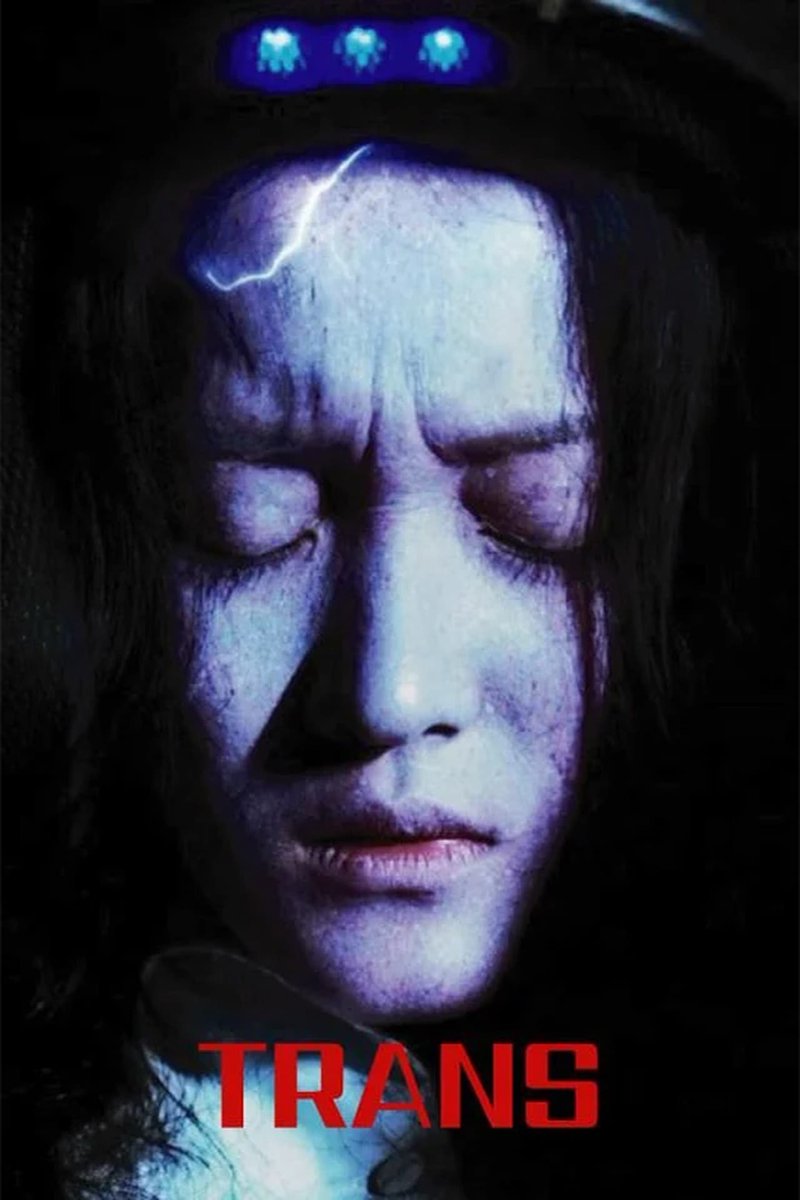
Trans (트랜스, Do Naeri, 2021)

The troubled heroine of Do Naeri’s sci-fi psychodrama Trans (트랜스) finds herself quite literally “stuck in a deep loop” while attempting to transcend herself and escape her teenage angst. Playing with new religion imagery, Do’s elliptical drama sends the young woman on a quest for self-apotheosis through physical transformation, a literal obliteration of the self in order to be reborn as something more than human, yet internally conflicted in the costs and implications of such a “rebirth” even while her consciousness seemingly fractures under the weight of its demands. 

Then again, perhaps all of this is just fantasy returning us repeatedly to the opening scenes in which high schooler Minyoung is awoken from her reverie by a woman’s scream that might in some sense be her own. A classmate’s body has been spotted draped over a tree, his face and torso marked with what seem to be electrical burns. According to the police, Minyoung was the last person to be in contact with Taeyong which in itself seems odd as we’re immediately shown flashbacks of him bullying her because of her bulimia, attempting to shove junk food into her face. On one such occasion she’s rescued by fellow student Itae, wearing a mask and firing some sort of laser gun. Itae later takes her to his secret lab where he researches the concept of transhumanism believing that the next step in human evolution lies in hacking the brain, enhancing human physicality with technological augmentation such as the chip he has implanted on his chest apparently given to him to “cure” his OCD. 

Taeyong’s quasi-fascist ramblings take on the language of new religion, talking of electrical “baptism”, death and resurrection, eventually directing a mystical prayer to the sky as if requesting divine blessing for his transcendence of the human form. Such language may be perfectly tailored to Minyoung whose only other interaction we see is with a dubious online church in which she questions her mentor on the nature of evil, asking why God could not have just made humanity “perfect” to begin with only for her mentor to suggest that evil is a choice that proves free will ensuring that humans are not just mindless robots following divine orders. Mindless robots is however what Taeyong believes humanity to be, his quest for transcendence apparently also one of revolution hoping to obliterate humanity as it is once and for all. He may in some sense reflect Minyoung’s alienation, a desire for revenge against a society by which she feels rejected, while fellow classmate Nochul perhaps reflects her concurrent anxiety. 

Yet there is something dangerous in Itae’s insistence that Minyoung is merely “stuck in a loop” and that certain behaviours or aspects of personality regarded as “disorders” are all the fault of faulty wiring and can simply be “fixed” by rebooting the system through electronic shock without ever considering the reasons those feelings or behaviours may have come to exist. He prays on Minyoung’s desire for control and dangles the promise of empowerment while merely using her in his plan to bring about the destruction of humanity while implying she may have already entered a state of “trans” which is why her world keeps repeating itself with details slightly altered until finally reaching the source of her trauma and uncovering the “truth” of her reality as defined by her own consciousness.  

This may all indeed be in her head to one extent or another as she looks for a way to transcend herself, her sense of alienation, dysphoria with her surroundings, and spiritual despair led astray by some worryingly fascististic philosophy advanced by a teenage mad scientist hellbent on the destruction of “low class robots” and the creation of a new superman through engineered evolution apparently using little more than a MacBook Air and a series of TV screens, his chief piece of equipment a modified motorcycle helmet. Careering through transhumanism to teleportation, invisibility, parallel universes, and time travel there is much that makes little literal sense as Minyoung constructs and deconstructs identities while repeatedly remaking her world if not quite to her liking then at least to her satisfaction only perhaps to wish she could return to a state of ignorance, human once again. 


Trailer (English subtitles)

Recalled (내일의 기억, Seo Yu-min, 2021)

A traumatised woman finds herself trapped in an uncertain reality in Seo Yu-min’s puzzle box neo noir, Recalled (내일의 기억, Naeileui Gieok). Situating itself in a world of future ruins, Seo’s tragic tragic tale of existential mistrust is as its sci-fi-inflected Korean title “Memories of Tomorrow” might imply also a paradoxical exploration of the importance of dreams and the belief that other lives are possible while the heroine struggles to piece together the shards of her fractured identity only to realise there are some truths it may be better never to learn. 

30-something Soo-Jin (Seo Yea-ji) wakes up in hospital after an accident she has no memory of to realise that she has no idea who the extremely upset man at her bedside could be, or who she herself is for that matter. The nurses ask her if she recognises her husband, Ji-hoon (Kim Kang-woo), which she doesn’t but evidently does feel some degree of closeness to him as he continues to care for her with the utmost devotion. On leaving the hospital, he takes her home to a well-appointed flat in an affluent area and though she tries to restart her life from zero she can’t escape her sense of anxiety and begins having what she regards as premonitions of impending disaster centring on two other apartments one with two small children and the other a teenage girl and an intense middle-age man. Her doctor tells her that she is most likely hallucinating because of her brain injury, while even Ji-Hoon snaps at her that she’s obviously unwell and ought to take things easy. Nevertheless, Soo-Jin can’t simply ignore the increasing uncanniness of the world around her especially when she begins to discover discrepancies in the backstory she’s been fed by Ji-Hoon and the evidence presenting itself about her former life. 

Perceptive policeman Ki-sang (Park Sang-wook) himself hints that there might be something not quite right with Soo-jin’s life in remarking that her apartment looks like a model home seconds after walking in and then noticing a few other details that set off alarm bells in his admittedly suspicious mind. Meanwhile, he’s investigating the theft of materials from a nearby abandoned building site for a never completed block of luxury condos suggestively titled “Dream Town”, a project cancelled when the architecture firm Ji-hoon worked for went bust. The foreman who reported the theft remarks that the apartments pre-sold like hotcakes, but even in the building where Soo-jin lives a banner outside advertises a “big sale on unsold units” hinting at a kind of economic hubris or perhaps suggesting that the “dream” they’re offering of luxury living is either unrealisable for most or simply undesirable. According to Ji-hoon, Soo-jin wanted to emigrate to Canada for a quiet life surrounded by nature hoping to escape the unsatisfying present for an ironic return to the pastoral past. 

Soo-jin meanwhile struggles to orient herself having only Ji-hoon as an arbiter of truth but unable to trust him, doubting not just his identity but her own, while burdened by prophetic visions which may be less missives from the future than intrusions from the traumatic past. As she later puts it, her Canadian dream became a memory which sustained, both beacon of hope and escapist fantasy in its promise of idyllic peace and happiness. There is however a cruel irony in the suggestion that good and bad all this is happening to her because of love and its competing desires for salvation and destruction, while she only blames herself consumed with misplaced guilt and confused by an imperfect grip on objective reality. “Our memories await us there” she’s ironically advised of her Canadian dream, urged to abandon this failing reality for a new one exchanging her traumatic memories for those not yet made which in a sense already exist and have only to be attained. The final revelations may therefore be somewhat cruel as Soo-jin gathers the shards of her broken past to come to a long delayed understanding of herself, but Seo’s finely crafted puzzle box mystery does at least afford her the opportunity of reclaiming her identity while resolving the multi-layered trauma of her life in a patriarchal society ruled by personal greed. 


Original trailer (no subtitles)

A Princess’ One-Sided Love (公主님의 짝사랑 / 공주님의 짝사랑, Choi Eun-hee, 1967)

“Those are the rules of the palace for a princess” the rebellious heroine of Choi Eun-hee’s second directorial feature A Princess’ One-Sided Love (公主님의 짝사랑 / 공주님의 짝사랑, Gongjunimui Jjaksarang) is told, though the “palace” is really the society and the “rules” those which all women are expected to “endure”. Quietly and perhaps subversively feminist, Choi’s humorous tale draws inspiration from Roman Holiday but unexpectedly engineers a happier ending for its lovelorn heroine who is permitted to transcend the constraints of her nobility if not quite of her womanhood. 

Tomboyish princess Suk-gyeong (Nam Jeong-im) is the youngest of six princesses and the last to remain at home in the palace yet to be married. Consequently, she is infinitely bored all the time and continually up to mischief in part because as a princess she is not permitted to leave the estate and has a natural curiosity about the outside world. That curiosity is further sparked when she lays eyes on handsome scholar Kim Seon-do (Kim Gwang-su) who picks up a shoe she had dropped while inappropriately running on the day of her mother’s birthday celebrations. Possibly the first young and handsome man she has even seen, Suk-gyeong cannot help but be captivated by him and manages to convince her sisters to help her escape the palace to venture in search of her probably impossible love under the pretext of visiting her grandparents whom she has apparently never visited before.  

Like Audrey Hepburn in Roman Holiday, what Suk-gyeong wants is a break from the “tedious and pathetic” life of a princess, but soon discovers herself to be entirely naive as to how the “real world” works. Her sisters agreed to help her in part because they acknowledge how difficult it was for them when they married and had to leave the palace with no understanding of how to live outside it. Having left in the clothes of a servant, the first thing that Suk-gyeong realises is that the outside world is governed by a different set of hierarchies and even if she’s a princess she is still a woman and therefore presumed to be “inferior” to men to whom she is expected to remain subservient. Her grandfather, who has never met her before, wastes no time exerting his patriarchal authority in his own, comparatively humble, home. “A woman, once married, must abide by the rules of her new family, the confucian ethics, and respect your father and husband and become a wise and obedient wife” he explains, striking her across the calves with a cane to teach her a lesson for her imperious tone in failing to pay him the proper respect. 

Failing to use appropriately polite language with those around her, forgetting that she should now be deferent both to men and to those who exceed her in age, gets her into constant trouble. Nevertheless, a trip to the marketplace gains her a further understanding of the extremes in her society firstly when she misunderstands a rice cake seller’s patter and assumes he intended to gift her some of his produce as he might to a princess, and secondly when she bumps into a woman with a baby on her back and breaks the pots she was hoping to sell to pay for her husband’s medical care. Introduced to such desperate poverty, the undercover princess knows not what to do but later gifts her a jade pin hoping perhaps to at least cure the husband’s malady, only to wander into another dangerous situation when she is mistaken for a sex worker by a trio of drunken noblemen who pull her into a drinking establishment which is in fact a brothel. Naively drinking with the men she mocks them for their attempts to play on their names each boasting of their famous fathers and personal connections to men she knows to be elderly cranks and obsequious fools. Shocked to discover what goes in establishments like these she tries to make her escape but is almost assaulted by one of the men, Shim, who is later posited as an ideal match by her unsuspecting mother laying bare another patriarchal double standard as Shim plays the part of the gentleman in order to effect his advancement. Luckily, she is saved by Seon-do who happens to be passing but mistakes her for a boy because of the disguise she is currently wearing. 

Selfish in her naivety, Suk-gyeong is warned that her impossible crush might end up harming Seon-do’s hopes of making it into the elite through success in the state exam while he, once made aware of the truth, immediately does the right thing by kindly rebuffing the princess’ inappropriate interest leaving her with a poetic love letter claiming he’s gone off to a temple for a spell of intensive study. Perhaps improbably it’s the love letter that eventually saves them, touching the king’s heart and convincing him to acquiesce to his sister’s wishes of escaping the gilded cage of nobility. Suk-gyeon’s pleas to renounce her royal title might also stand in for a desire to renounce womanhood in that it “stops us from doing anything we want. We are matched up with an unknown husband and we spend our youths in misery for our lives are tedious and pathetic”, reminding her brother that as a king but in truth as a man he cannot understand even while he reminds her that these are the “rules” endured by countless ancestors. The king is moved, he breaks with tradition and frees his sister yet he does so to allow her to become a wife even if he has also granted her the freedom to choose her husband and live in the outside world unconstrained by the strictures of nobility but nevertheless bound by oppressive patriarchal social codes. Nevertheless, it’s an unexpectedly progressive conclusion advocating for change and personal happiness over the primacy of duty and tradition. 


A Princess’ One-Sided Love streamed as part of the Korean Cultural Centre UK’s Korean Film NightsFilming Against the Odds 

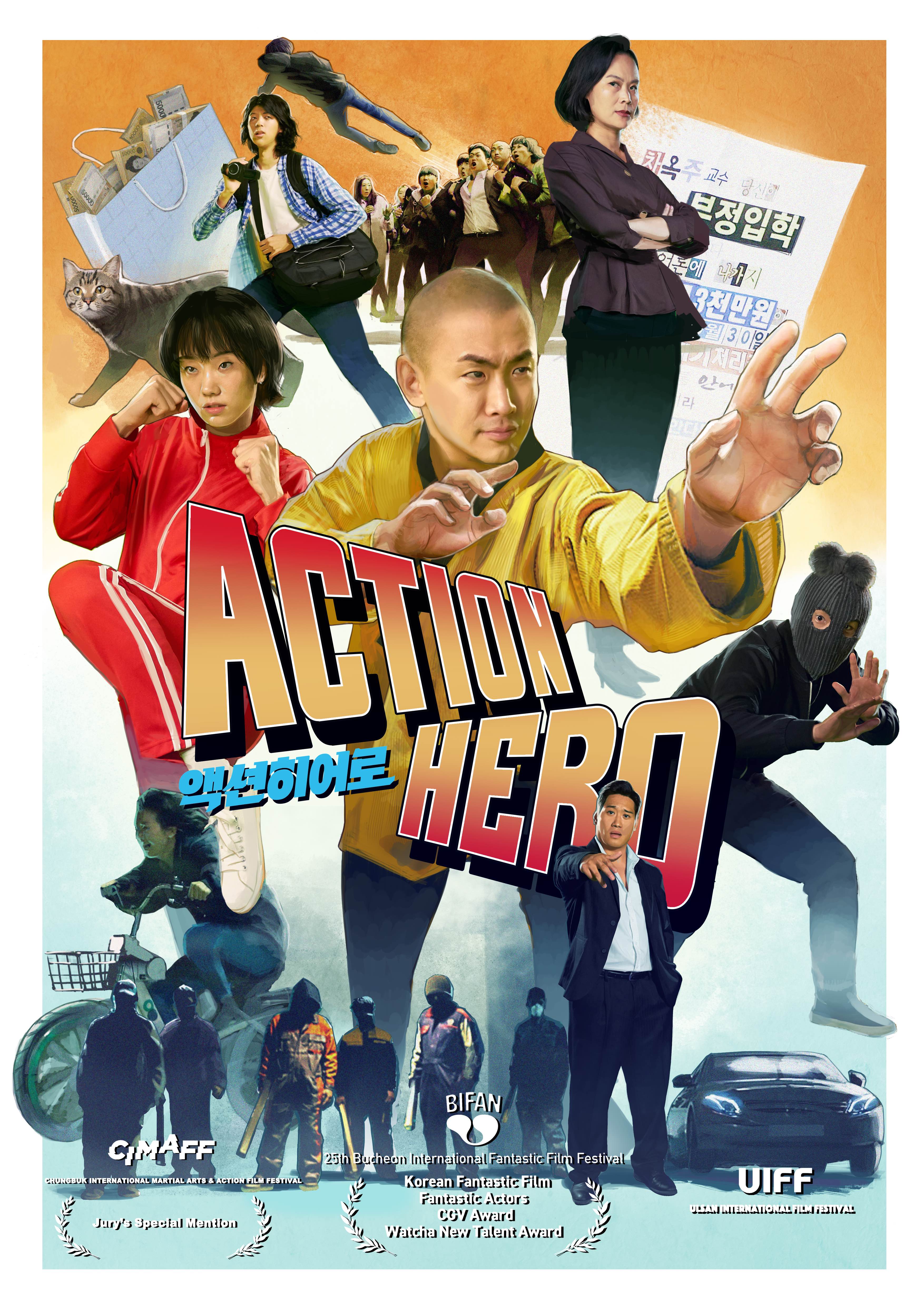
Action Dongja (액션동자, Yongminne, 2020)

Four little monks discover brotherhood in their shared sadnesses as they valiantly chase down a gang of evil robbers specialising in thieving ancient relics from Buddhist temples in Yongminne’s slapstick kids adventure movie Action Dongja (액션동자). Exposing a societal prejudice against orphans along while upending a few stereotypical notions about monks, Yongminne’s warmhearted drama is equal parts a coming-of-age tale for each of the pint-sized monastics and Home Alone-style heist movie as the kids plot how to take down the crooks using their unique skillsets.

Little Jingu has had it tough. He lost his parents at a young age and has been separated from his younger sister. Now his grandmother who was raising him has died and another woman whom the grandma had apparently asked to take care of him has decided to dump him at the temple instead. Apparently Christian, the woman planned to leave him at an orphanage but thought the temple might be better because he’ll be near his grandmother’s resting place. As might be expected, Jingu does not take well to his new life. Not only is he overcome with grief having lost all of his family members, his home, and everything he knew but he didn’t ask for this very regimented existence and it’s obviously an extreme adjustment which might explain why he’s become mute, sullen, and withdrawn. Nevertheless, one very cheerful and friendly boy nicknamed “piggy” because of his bottomless stomach, extra sensitive nose, and obsession with food keeps trying to make friends with him even coming to his aid when he’s hazed by a couple of local kids at school and later bailed out by two top martial artists, the kind and sensitive Jeongbeop and the exceedingly mean and authoritarian Gajin. 

Jeongbeop explains to the bullies that it’s not right to bully those weaker than yourself and so they had no choice other than to defend themselves, asking for forgiveness as they leave. That doesn’t make much difference to the monks, however, when the boys’ parents turn up to throw their weight around insisting that they don’t want kids like these at their sons’ school virtually accusing the temple of training up little thugs. “Kids without parents are the ones who lie” one fires back, unwilling to believe her good little son could have misrepresented himself while reflecting a societal prejudice towards those who have no family. The younger of the two monks tries to defend the boys, insisting that it’s hardly their fault they’re orphans, but the chief monk is quick to placate the parents while perhaps sending mixed messages punishing Jingu and the other boys but later taking them out for Korean barbecue. Though many Buddhist monks are vegetarian, it is not strictly required and in any case the boys are too young to be expected to adhere entirely to asceticism yet the group’s presence once again arouses a degree of suspicion and resentment as opposed to mere surprise in an irrationally annoyed couple on a nearby table. 

Meanwhile, the boys are also rejected by their peers who unfairly blame them when their temple is robbed, the chief monk stabbed, and a precious picture scroll stolen. Jingu happened to see the face of the man who did the stabbing, but is unable to say anything later telling his new friends when they hatch a plan to catch the thieves themselves as a way of regaining the respect of the other boys and getting justice for the chief monk. In true heist movie style, Jingu who has not yet had his ordination takes the other kids shopping so they can better blend in, the gang even becoming temporary street performers Piggy rapping sutras while the other two do a martial arts display, to pick up extra cash after getting pickpocketed in the big bad city. Unexpectedly it’s Piggy who saves the day with his famously well-attuned sense of smell, picking up the scent of incense on a suspicious man at the port. Bonding during their mission, the boys come to an understanding of their various traumas and the ways in which they inform some of their behaviour generating a sense of brotherhood as they band together to take down the robbers. An old-fashioned kids adventure with a monastic twist, Action Dongja is a charming tale of unconventional found family in which the lonely hero learns to find his place while chasing bad guys and solving crime.


Action Dongja streamed as part of Yubari International Fantastic Film Festival 2021.

The Basement (지하실, Choi Yang-hyun, 2021)

Two weeks doesn’t seem like a very long time. You might think you can stick anything out for two weeks if you know it will definitely be over in 14 days, but what if you don’t know when or if it’ll end and 14 days turns into 28 with no sign it might not turn into 42? In some ways that might seem like a familiar situation at the present moment, but it’s one that comes to define the lives of an affluent upper-middle class family in Choi Yang-hyun’s pandemic allegory The Basement (지하실, Jihasil). 

When the alert goes out that South Korea is under attack with a nuclear missile apparently on its way the Choi family dutifully obey the emergency text on their phone and take refuge in the basement intending to stay the advised two weeks until the radiation will have decreased to acceptable levels. Unfortunately, however, once down there they realise their preparations have not been thorough enough, the power is out and they’ve left the suitcase containing clothing and emergency supplies upstairs. With phone lines jammed, no radio reception, and no way of keeping in contact with the outside world they have no idea if the strike actually took place or if their friends and family members made it to safety. 

Placed under such strain, it’s understandable that small grievances and tensions in the family are quick to arise. Wife Hayeon seems particularly irritated by her practically minded husband Dongbaek, describing him as “immature” and complaining that he’s never really put his family first preferring to spend his weekends playing golf with the boys. Not helping matters, Dongbaek sadly reflects that he “probably” won’t be able to go on that work jolly golfing in Thailand the following week which whatever way you look at it is not a primary concern in the present moment. She also complains that he made such a fuss buying all this expensive camping equipment that he hardly ever used but at least it’s paying off now during their accidental holiday in the dank and depressing basement of their well-appointed detached home in the suburbs of an area described as “Korea’s Silicon Valley”. Dongbaek meanwhile reflects that he’s glad they sold their Gangnam flat for a spacious house (even if they’re trapped in one room of it) because even if they’d probably have made a bundle on the housing market if this hadn’t happened, they’d be gonners as inner-city apartment dwellers. 

Nevertheless, the first crisis occurs when the family begin hearing the sound of a neighbour frantically calling to them from outside apparently unable to reach her husband or son and looking for some kind of human support. Teenage daughter Jiseon wants to open the door, but her mother is conflicted and Dongbaek dead against it. The woman’s distress clues them in to the fact that something bad really has happened on the surface, but they’ve only so many resources and Dongbaek apparently doesn’t want to share while Jiseon can’t understand how he could be so heartless as to listen to someone screaming for help and not open his door. 

He meanwhile is more invested in finding practical solutions, trying to solve the bathroom problem they neglected to think of previously while setting up a water still to catch moisture from the wooden ceiling beams, repeatedly making reference to his time in the army and disaster preparedness training. Yet the problem they can’t solve is the anxiety, how will they ever know if it’s really safe to come out especially as the radio, once it’s working, gives contradictory messages either suggesting everything’s fine or that North Korea has occupied Seoul. Practically speaking, they can’t stay down here forever, there’s only so much food and some of them are already beginning to experience ill-effects from staying so long in the dark and damp. Sooner or later they’ll have to overcome their growing sense of anxiety for the unknown outside and brave the new reality. A claustrophobic chamber drama starring only three actors with occasional outside voices, Choi’s pandemic adjacent drama explores how one family attempt to come to terms with impending apocalypse while combatting boredom in equal measure to fear and despair but discovers that togetherness and endurance are perhaps the key skills for survival. 


The Basement streamed as part of Yubari International Fantastic Film Festival 2021.

International trailer (English subtitles)