Review of Na Hong-Jin’s The Yellow Sea (황해, Hwang Hae, AKA The Murderer) – revised form of a piece first published by UK Anime Network in March 2012.
Gu-Nam (Ha Jung-Woo) is a taxi driver with a gambling problem. If the gambling wasn’t enough to get him into trouble, he’s also in debt to some gangsters over the money for his wife’s passage to South Korea. His wife was meant to be sending the money she’d make there back to him and their daughter to help pay off the debt, but no one’s heard from her in months. The obvious assumption is that she’s made a new life for herself and doesn’t want to be found, but Gu-Nam can’t quite bring himself to believe it. As a Joseonjok – a Chinese Korean from the Yanbian Korean Autonomous Prefecture, Gu-Nam had little chance of living an honest and prosperous life. Disowned by both China and Korea, many Joseonjoks are forced to resort to criminality in order to survive.
Just as it seems things are about to hit a crisis point, Gu-Nam receives an interesting job opportunity. Myung-ga (Kim Yun-Seok), the dog seller at the market, suggests Gu-Nam go to South Korea, kill a prominent businessman, look for his wife and return back to China (with the businessman’s thumb for proof). Assuming all goes well, Gu-nam will receive the pin number for an account with 57,000 Yuan, maybe return with his wife in tow or at least find out once and for all what the situation is between them, and finally get these gangsters off his back.
Still, sneaking into South Korea and committing a murder – it’s a big ask, and first off Gu-Nam rejects the idea out of hand but one conversation with his decidedly tough mother later and Gu-Nam has accepted. However, when he gets to Korea he finds things aren’t as simple as Myung-Ga made out. There seems to be a much bigger game in play than Gu-nam bargained for and it’s not long before he’s running from the police, gangsters, and just about everyone else.
If there’s one thing there’s a lot of in this film, it’s running. It’s difficult to think of another film that manages to make a good old fashioned foot chase quite so exciting. The set pieces are astonishing – multi-car pile-ups, police driving into and over each other, an extended chase sequence through a cargo boat – the list goes on, all with Gu-nam running desperately towards the camera. Propelled by pure survival instinct and later an intense need for revenge and an explanation, Gu-nam keeps running no matter what is coming for him.
One of those things is, of course, Myung-ga who’s now got a total mess on his hands that’s threatening to derail all of his current business arrangements (well, except the dog selling – something to fall back on). If there’s another thing there’s a lot of in this film, it’s stabbing (and later axing). Luckily for him, it seems Myung-ga is something of an expert at this as we find out in one scene where we see him, badly wounded, enter a room full of angry gangsters – the camera cuts away and we return to find all of the gangsters seemingly dead with very little fuss. He even tries to kill someone with a lamb bone at one point! Myung-ga is certainly not someone one would want to be meeting on a dark night (or ever buy a dog from). He is though, one of the most compelling film villains of recent years.
Speaking of stabbings, The Yellow Sea is a very violent and extremely bloody film. If you’re well versed in Korean crime dramas, you might be aware that South Korea has very tight gun laws, so much so that not even the toughest gangsters carry guns. Consequently what you have here is a lot of people sneaking around trying to get the drop on each other to stick the knife (or occasionally, hatchet) in. Obviously, it’s much quieter than gunfire but also much messier and much more physical. The only guns in the film are those which belong to the police, who are largely depicted as bumbling idiots who can’t tell one end of a gun from the other.
This Bounty Films release (distributed by Eureka in the UK) is the shorter 140 minute ‘Director’s Cut’. There is, however, some controversy about whether it really is a director’s cut or an international version prepared by the film’s co-producers Fox International. For the record, it runs about sixteen minutes shorter than the version seen in Korea. Despite being the shorter version, The Yellow River does still feel a little long at times and really pushes the ideal running time for a thriller of this kind. Nevertheless it does manage to keep the momentum going throughout and even has a streak of morbid humour running right through it.
A sad meditation on the futility of life, particularly for those who find themselves at the bottom of the pile and are forced to scrap like dogs for the little other people have left behind, The Yellow Sea is an exciting addition to the recent wave of Korean crime thrillers. Following on from his impressive debut The Chaser, The Yellow Sea certainly catapults director Na Hong-jin right into the top tier of Korean cinema.
The Yellow Sea is available on DVD and blu-ray from Eureka in the UK and on DVD from 20th Century Fox in the US.
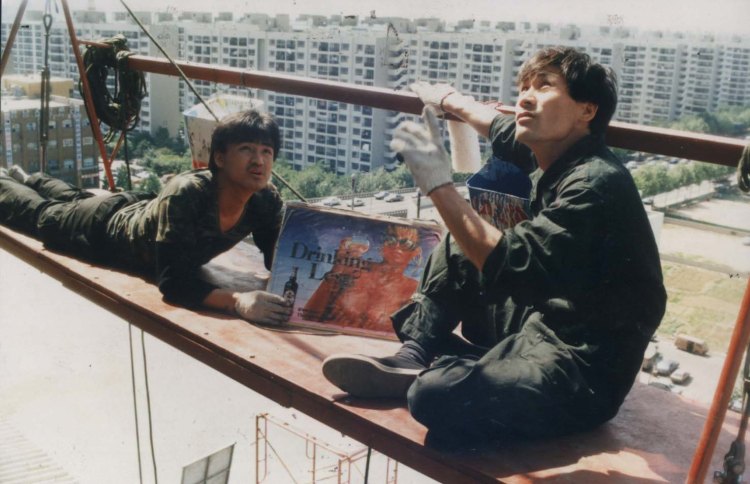 Though not a big box office hit at the time of its release, Park Kwang-su’s Chilsu and Mansu (칠수와 만수, Chil-su wa Man-su) is not only fondly remembered by its contemporary audience chiefly because of the amusing performances of its still popular leading actors, but is also credited with kicking off what would become known as Korean New Wave. Released in 1988 and set sometime in 1987, this is the new Seoul emerging into democracy after decades of military rule and looking ahead to the glory of the 1988 Seoul olympics. However, as ever, the future has not been evenly distributed and there are those who find themselves unable to climb its ladder through no fault of their own.
 Aside from the original 1960 version of The Housemaid (and this perhaps only because of its modern “remake”), mid 20th century Korean Cinema has been severely neglected overseas. Ha Kil-jong’s The March of Fools (바보들의 행진, Babodeul-ui haengjin) is almost unknown abroad but consistently tops Korean lists of the country’s best cinema and has been both enormously influential on later filmmakers and fondly remembered by audiences.
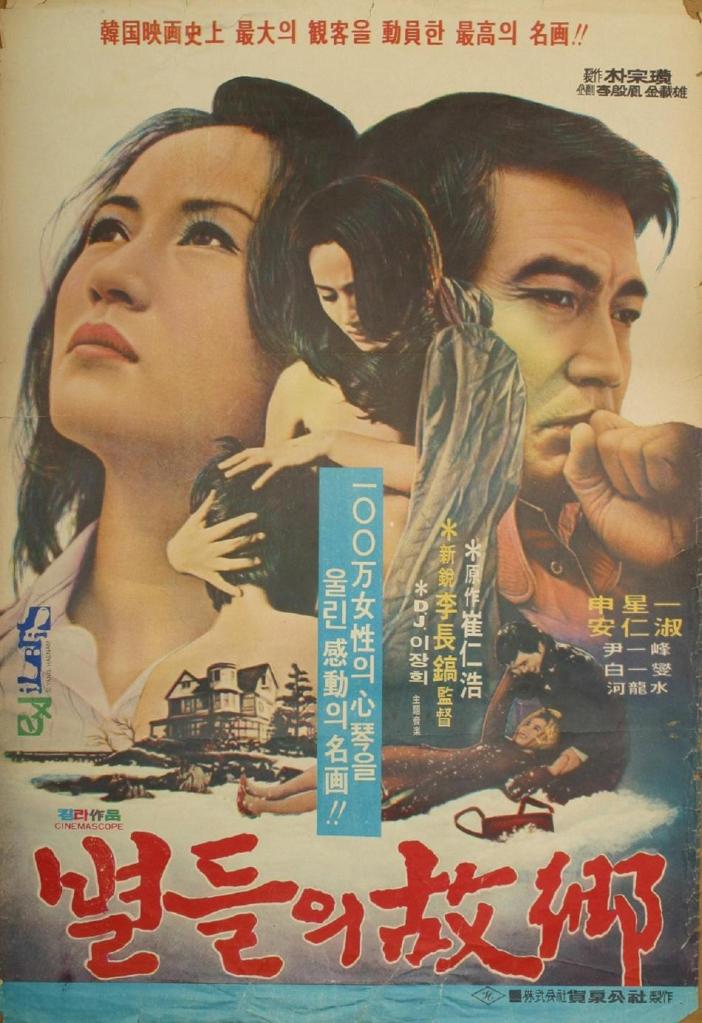 In writing the original novel which inspired Heavenly Homecoming to Stars, Choi In-ho stated that he wanted to tell the story of “a woman whom a city killed”. The novel itself was first serialised in a newspaper where it quickly became a must read and popular discussion point among readers of all ages. It’s perhaps less surprising then that this completely radical film adaptation by first time director Lee Jang-ho proved to be the big cinema hit of 1974. A new “youth culture” movement was beginning inspired by social and political developments from overseas and there was a growing appetite for films and novels which were equally revolutionary. Heavenly Homecoming to Stars managed to provide this but also, crucially, was able to appeal to older age ranges too thanks to its re-imagining of classical melodrama.
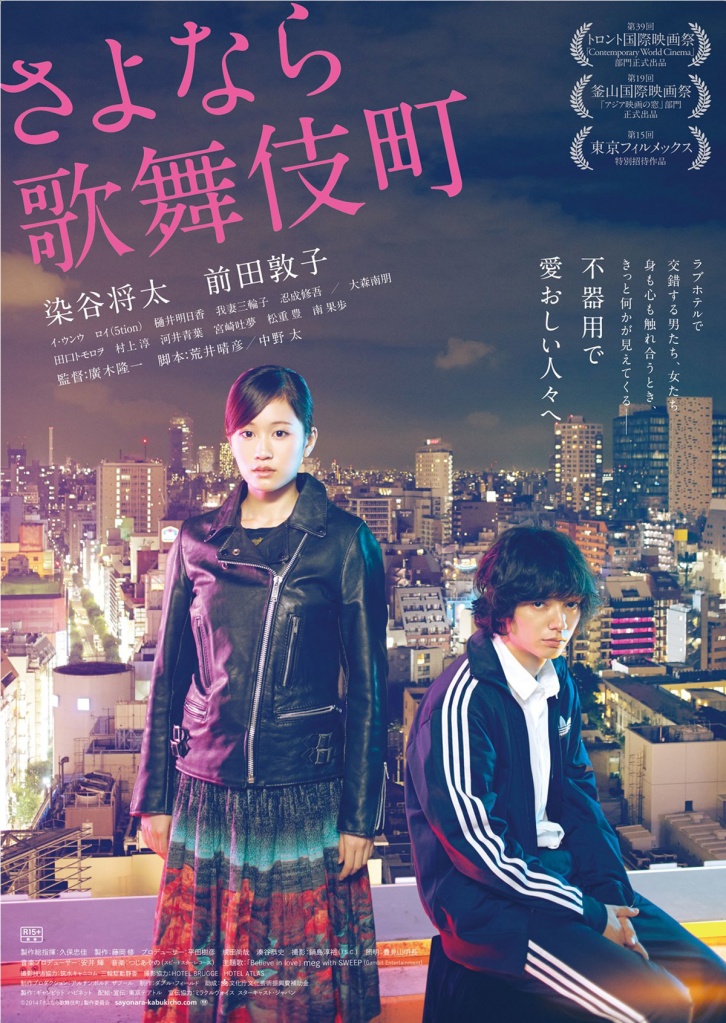 Kabukicho Love Hotel (さよなら歌舞伎町, Sayonara Kabukicho), to go by its more prosaic English title, is a Runyonesque portrait of Tokyo’s red light district centered around the comings and goings of the Hotel Atlas – an establishment which rents by the hour and takes care not to ask too many questions of its clientele. The real aim of the collection of intersecting stories is more easily seen in the original Japanese title, Sayonara Kabukicho, as the vast majority of our protagonists decide to use today’s chaotic events to finally get out of this dead end town once and for all.