Exit 8 (8番出口, Genki Kawamura, 2025)

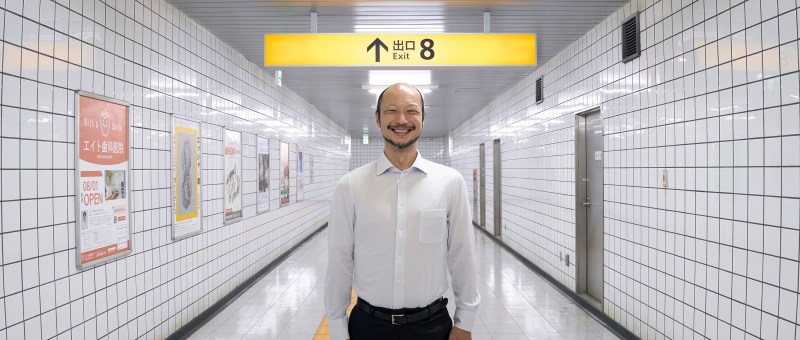
Shinjuku Station is notoriously difficult to escape. The endless labyrinthine corridors all look the same, lending the environment a degree of surreality that leaves you feeling anxious that actually you’re making no progress at all merely walking in circles and may do so until you die. It becomes a more literal hellscape for one “lost man” in Genki Kawamura’s elliptical adaptation of the popular video game in which the hero finds himself trapped in the same looping corridor where he is told he must turn back if he spots anything that isn’t as it should be and that he should do this eight times so that he can reach Exit 8 (8番出口, Hachiban Deguchi) and leave the station.

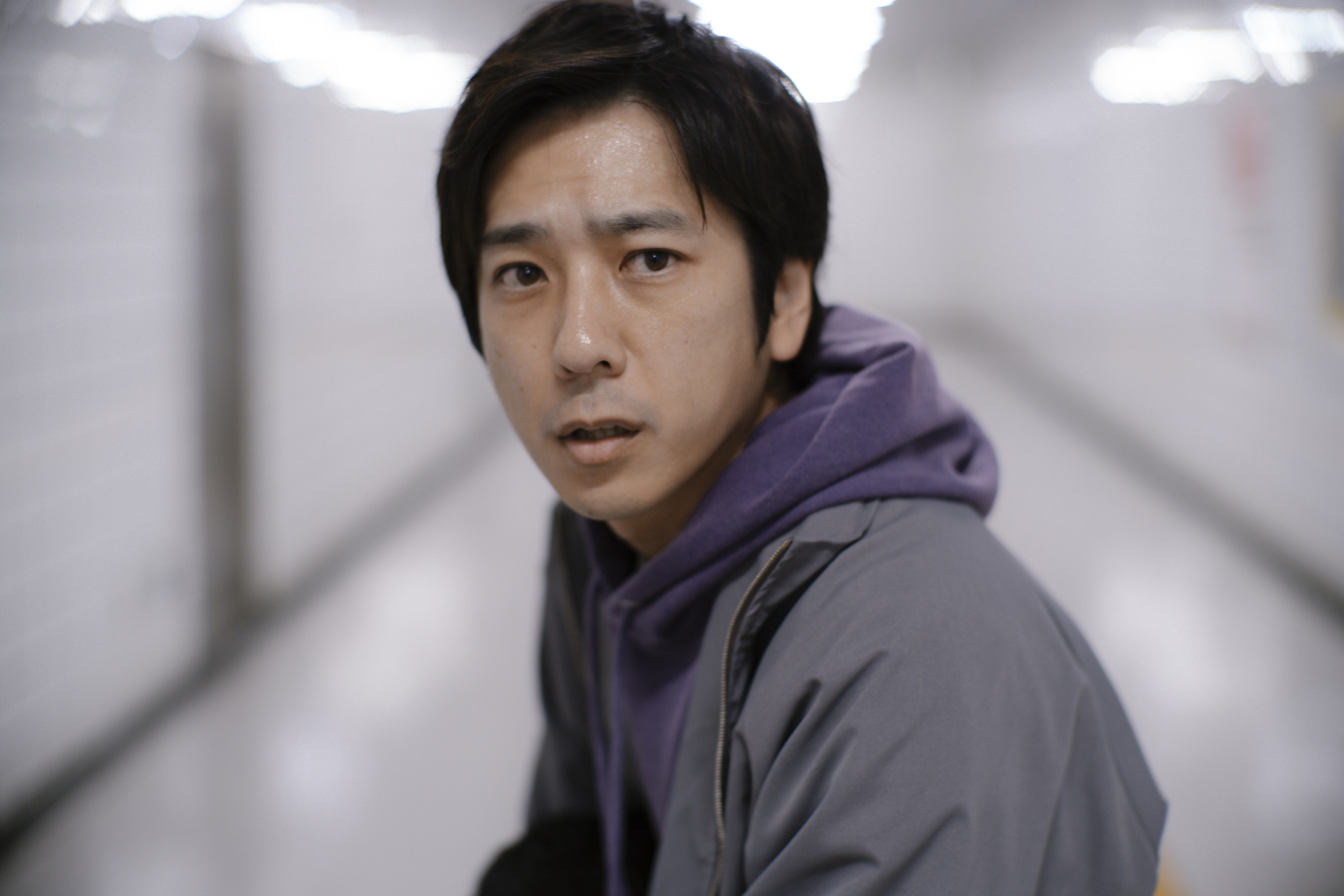
The figure 8 is an ellipsis in itself while simultaneously recalling the Noble Eightfold Path of Buddhism in which one must complete the eight steps to find Nirvana and escape the painful cycle of life and rebirth. It’s birth that most occupies the Lost Man (Kazunari Ninomiya) as, shortly before he enters the tunnel, he receives a call from the girlfriend (Nana Komatsu) he’s just broken up with telling him she’s pregnant. She says knows he always had an anxiety about becoming a father, but wants to know what he wants to do. Kawamura films this opening sequence in POV, at once recalling the film’s video game origins and placing us directly into this world in which we feel the Lost Man’s shock and disorientation as he stops suddenly and staggers while the world carries on around him. 

The tunnel is then a manifestation of his mental destabilisation as he tries to process impending fatherhood and make a decision about whether or not he wants this child. This is to an extent reflected in his name in which he is both geographically and mentally “lost” while unable to reach a decision. Inside the tunnel, he’s told not to “overlook” anything that seems like an anomaly as if he were trying to remake the world and teach himself which is the right path to take. Though as his equally unnamed girlfriend says in a sequence that may be a fantasy, future echo, or fractured memory, no one can really know which path is right and life is a continual act of faith that we will not come to regret the decisions we have made or the ones we failed to make. 

This is most obvious when the Lost Man encounters a little boy with a scratch on his face in the tunnel and immediately decides he’s an anomaly, only to discover he isn’t when the counter resets to zero meaning he made the wrong decision and has to start again. The boy seems to be another person trapped in the loop, though not previously on the same cycle as the Lost Man, but at the same time he comes to represent both the son the Lost Man may have and himself as a little boy. Likewise, the Walking Man (Yamato Kochi) that he encounters also seems to become the father that Lost Man fears becoming, and the one he never met. While the Walking Man eventually abandons the boy on discovering what could be Exit 8 to make his own escape, the Lost Man refuses to do so and begins to come to an accommodation with his own role as a potential father as well a responsible member of society. 

In the opening sequence, he’d stood by and done nothing as an obnoxious salaryman laid into a mother holding her crying baby on the train, the only white-dressed figure on this funereal carriage filled with people dressed in back on their way to work. Another loopee asks the Walking Man if being trapped in this purgatorial hellscape is really any different than his life in which he repeats the same actions every day in the daily grind of the salaryman and it does seem as he is looking for an escape from the soul-destroying meaninglessness of the corporate life otherwise hinting at his own failed paternity and flight from domestic obligation. Meanwhile for the Lost Man, he fears he isn’t ready to become a father in part because he’s only a temp worker and hasn’t anchored himself safely enough within adulthood to be able to support a wife and child. Still, he resents himself for not having stood up for the woman and her baby in being cowed into submission by the paternal figure of the salaryman and the fear of putting his own head above the parapet by refusing to mind his own business like everyone else with their heads buried in their phones.

But then again, how could you ever really know that you’ve found the “real” Exit 8 and it’s not just another “anomaly” presented by the loop. Perhaps you never actually escaped this labyrinth, only ventured deeper inside it. Or perhaps, you escape the loop when it’s time for you to do so because your mind is clear and you know which path to take. There’s a minor irony in some the decor with the subway etiquette poster reading “are you alright?” while intending to ask the reader if they’re sure they’re behaving appropriately on public transport, but also hinting at the Lost Man’s failure to intervene and the Walking Man’s indifference to others. In any case, the tunnel has its hellishness and terror but it can also lead you where you’re supposed to go, if only you allow it.


Exit 8 screens 8/9th October as part of this year’s BFI London Film Festival.

Trailer (English subtitles)
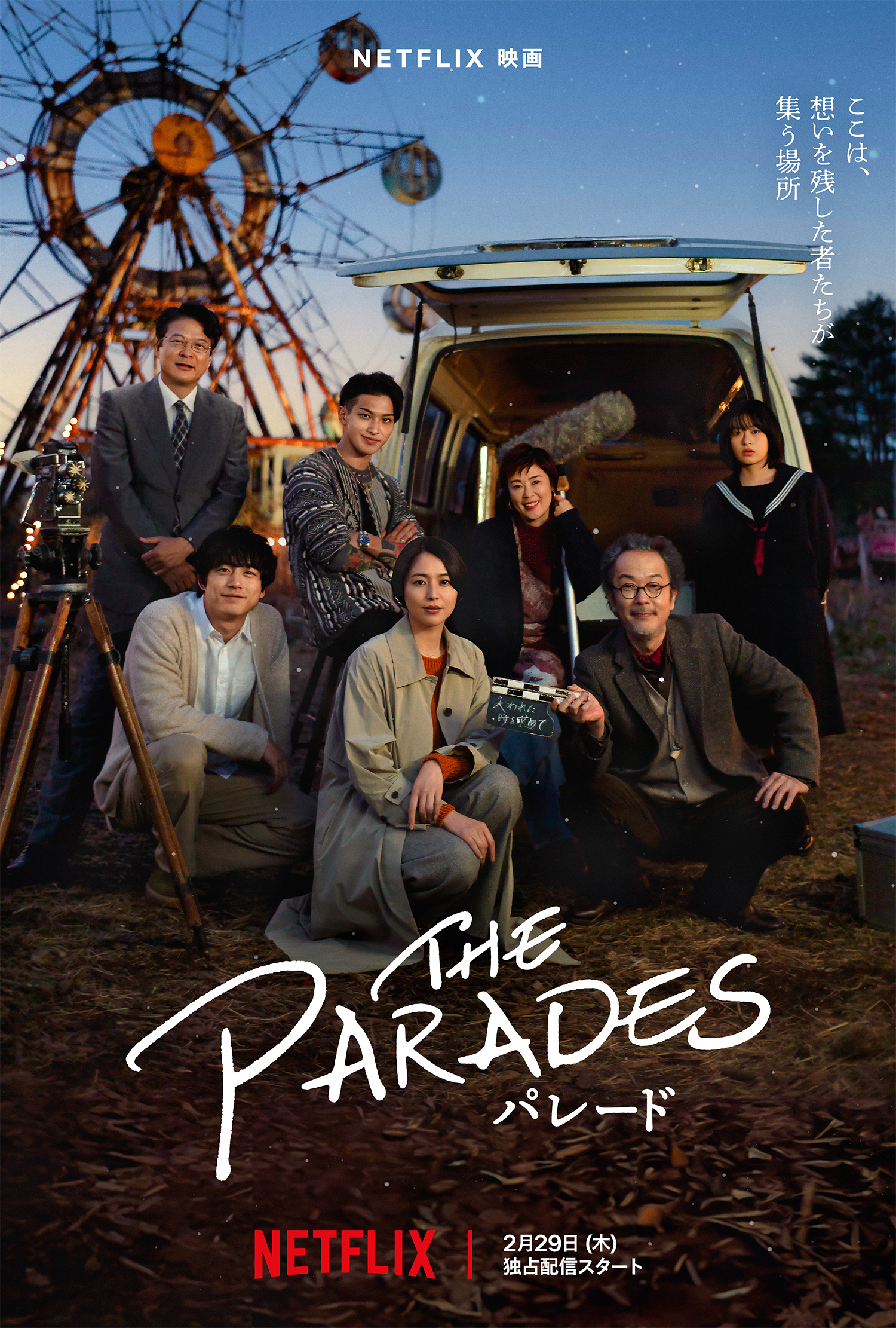
The Parades (パレード, Michihito Fujii, 2024)

Living a life without regrets is easier said than done. The protagonists of Michihito Fujii’s The Parades (パレード, Parade) each have unfinished business that prevents them moving on from this world, but what they discover is an unexpected sense of solidarity among similarly lost souls as they try to lay themselves to rest. After all, all they can do now is observe and reflect while helping others like them with their own lingering doubts and regrets.

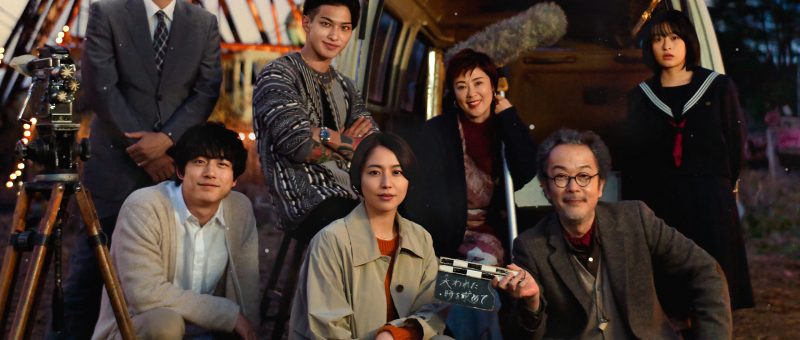
Drawing inspiration from the 2011 earthquake and tsunami, Fujii first introduces us to Minako (Masami Nagasawa). A 35-year-old single mother, she wakes up on a beach and frantically looks for her seven-year-old son Ryo (Haru Iwakawa) little realising that the reason no one seems to be able to hear or react to her is because she’s already dead. Picked up by fellow ghost Akira (Kentaro Sakaguchi), she’s taken to a disused fairground that doubles as a hub for wandering souls. Though it takes her a while to accept her new situation, she gradually bonds with others at the camp each of whom have their own unfinished business which isn’t all that different from her own in that they mostly want to be sure the people they left behind will be alright.

The film takes its name from the monthly processions in which wandering souls meet by lantern light to look for their missing people together. This sense of solidarity and empathy seems to echo the best of humanity along with a melancholy longing. There appears to be little rancour in this afterlife, a yakuza who was killed in a gang war simply feels sorry for his father and so guilty about the girlfriend he left behind that he’s been afraid to face her for the last seven years, and a high school girl who took her own life because of bullying first thinks her unfinished business is vengeance on the bullies but later accepts is actually a desire to apologise to her best friend who then had to take the brunt of the bullies’ cruelty on her own.

What the film seems to say is that we should have more of this fellow feeling in life. Former film producer Michael (Lily Franky) constantly references his days as a student protestor remarking that they might not have amounted to very much but at least they had unity. His regret is less his failed revolution than a moment of emotional cowardice that saw the woman he loved marry someone else instead. Constant references to the end of Casablanca echo their plight as if Maiko (Yuina Kuroshima / Hana Kino) married Sasaki (Ayumu Nakajima / Hiroshi Tachi) for the good of the revolution though she really loved Michael who unlike Rick just walked out on it because in the end he wasn’t brave enough to risk the consequences of its success or failure. 

The world building may not always be consistent and the rules of this universe appear unclear. It seems that in general the ghosts don’t linger long. Even the heavenly liaison Tanaka (Tetsushi Tanaka) appears to have been dead not longer than 40 years with Michael seemingly the only other long-stayer with the others’ deaths fairly recent. In general they are only really waiting for themselves or others, wanting to make sure that their loved ones will be alright in their absence even though there’s nothing more they can do for them now other than observe. Though they can walk through this world and interact with physical objects, their presence is otherwise invisible unless the person they wish to contact happens to be in an altered state. To this extent, the resolution may seem like a bit of a cop-out but does lend an additional poignancy and imply that these lessons learned in limbo can still be taken into the mortal realm creating additional empathy and solidarity among the living so that they may be able to live their lives freely and fully perhaps not entirely without regrets but at least with fewer of those that would prevent them from moving on when their time comes. But even if they find themselves trapped in limbo, they’ll hopefully find others like themselves and a gentle sense of hopefulness about what’s to come even as they prepare to leave this world.


Trailer (English subtitles)

A Far Shore (遠いところ, Masaaki Kudo, 2022)

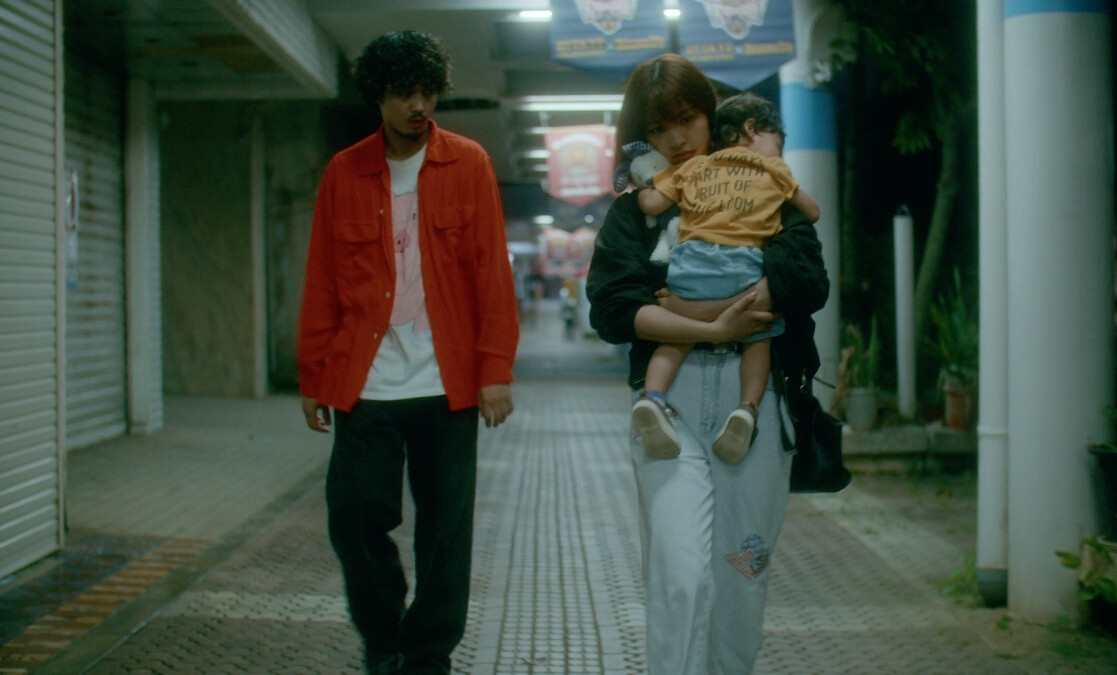
A young mother struggles to find a way through a legacy of parental abandonment and exploitation in Masaaki Kudo’s Okinawan drama, A Far Shore (遠いところ, Tooi Tokoro). As the title implies, the heroine does indeed long to go somewhere far away but finds herself hemmed in by the nature of the island on which she lives while facing rejection from all sides. She tries to do everything right, working to support herself and her son, but is finally left with no place to turn in a fiercely patriarchal and judgemental society. 

At 17 (Kotone Hanase), Aoi makes her living as a bar hostess leaving her two-year-old son Kengo (Tsuki Hasegawa) with her grandmother. Her husband, Masaya (Yoshiro Sakuma), is a drunken lout who can’t, and doesn’t want to, hold down a job. She hides the money she earns in various stashes around their apartment including in the bathroom bin fearful that Masaya will take it and they’ll be left short on the rent again. Though he refuses to work, Masaya resents being kept by his wife and often turns violent, viciously beating Aoi if he suspects her of hiding money from him or otherwise feels in some way belittled. 

On the one had, she isn’t supposed to be working in the clubs because she’s a minor but realistically they are the only place where she can find the kind of employment that will pay enough to support herself and her son. The clubs know they make more money off underage girls so they are keen to employ them, a gaggle of men from Tokyo obviously taken with the transgressive thrill of buying cocktails for a girl who technically isn’t old enough to drink, but cut them loose when the police come knocking as Aoi discovers when she is picked up by a patrol who take her in for questioning and ask insensitive questions such as how a woman who does what she does can love her son while making her the criminal rather than prosecuting the bar which employed her. In any case when Masaya beats her so badly she is forced to take on even more debt paying for hospital treatment she can no longer do bar work because men won’t want to drink with a woman whose face is bruised. In another irony, it’s the inability to work in bars, which only requires sitting and talking with men, that finally leaves her with little option other than sex work in which her clients are also often violent. 

Her plight in a sense echoes a legacy of abandonment in the Okinawan islands, her own parents having seemingly disowned her with her mother apparently in prison on the mainland and her father remarried with other children. When she asks him for help he just tells her that it’s easy for a woman to find work when men will struggle all their lives in Okinawa’s difficult employment environment, brushing off grandma’s reminder of the lucrative subsidy she assumed he had as a fisherman. Meanwhile Grandma also takes against her, believing she’ll end up wayward like her mother but seemingly accepting little responsibility for either of the women while suggesting that part of her problem lies in not having given enough respect to her local Okinawan heritage neither speaking the language nor obeying the customs. Grandma’s last straw is seeing Aoi take back Masaya after he abandoned her and ran off with all her savings, while he echoes his refusal to work by insisting they move in with his mother who can’t do anything with him either because he’s been indulged by a fiercely patriarchal social culture that encourages him to think he owes women no basic respect or decency. To add insult to injury he ends up landing Aoi with even more debt when he’s arrested after a bar fight and tells the police that his wife will pay the compensation money he owes to the other guy for throwing the first punch.

Eventually Aoi is brought to the attention of social services who do actually seem a little more sympathetic than might be expected but still largely fail to accept that she may be a mother but she’s also a child in need of care. She tries get to a respectable job in a cafe but encounters only further exploitation with extreme low wages, a shift pattern that doesn’t suit a working mother, and a one month probationary period during which she wouldn’t be paid which is obviously impossible for her to manage with no other means to support herself while everywhere she goes people just look down on her. A bleak portrait of life in contemporary Okinawa, Kudo’s icy drama suggests the hope of a distant place is all women like Aoi have to keep them going but in the end it may not be enough. 


A Far Shore made its World Premiere at this year’s Karlovy Vary International Film Festival.