
All Greens (万事快調〈オール・グリーンズ〉, Takashi Koyama, 2025)

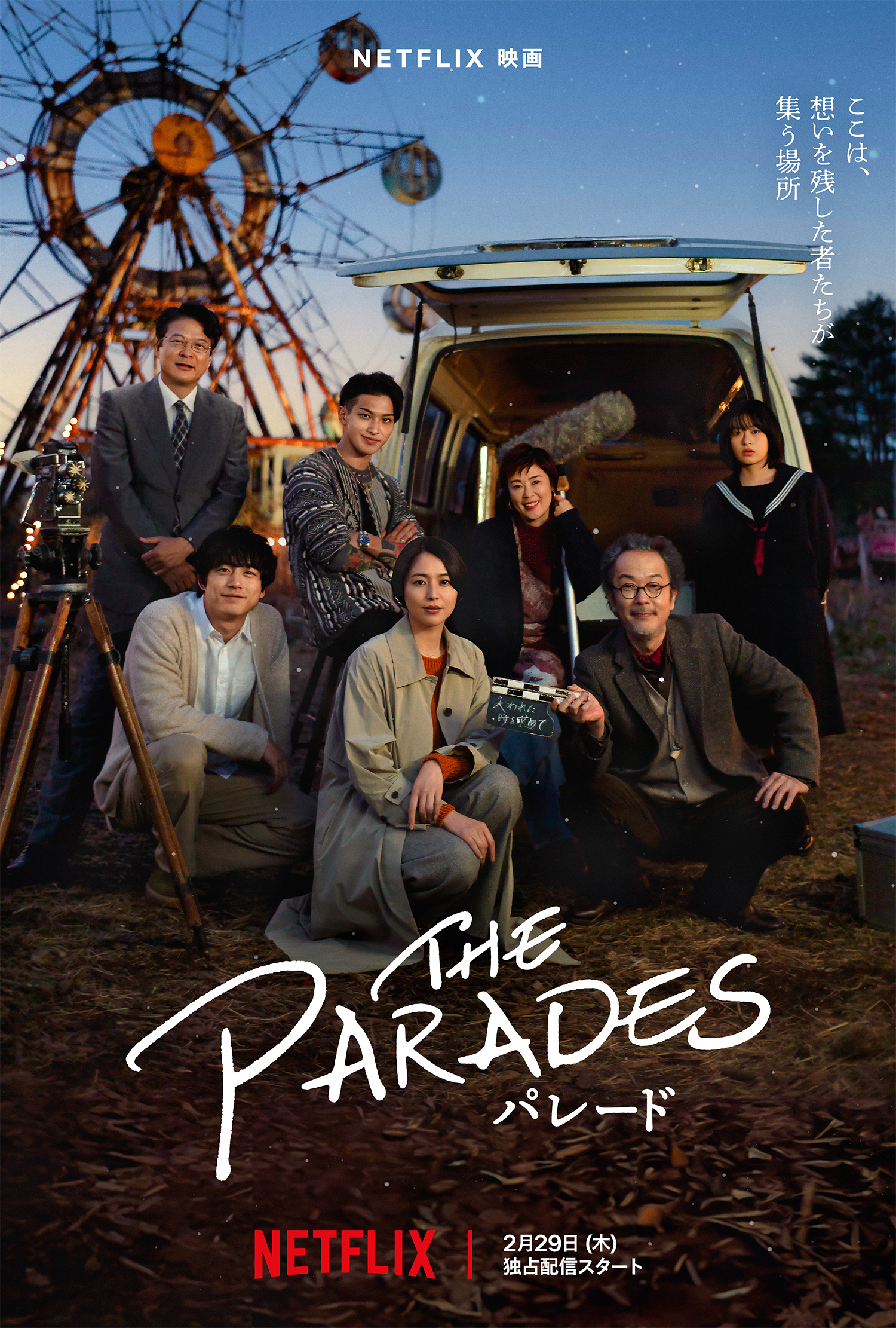
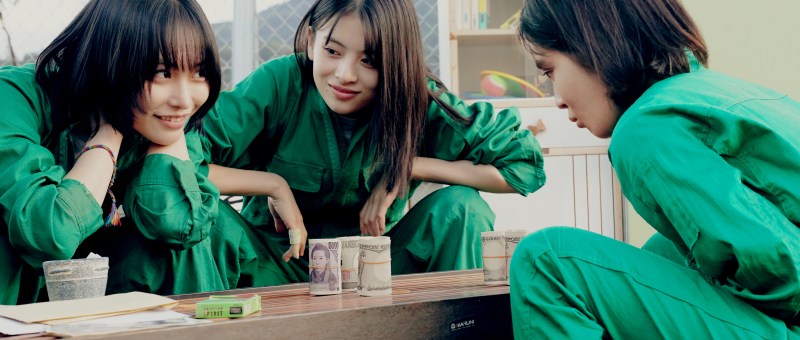
Consumed by rural ennui, three teenage girls set on a dramatic plan for escape in Takashi Koyama’s darkly comic youth drama, All Greens (万事快調〈オール・グリーンズ). The title turns out to be apt, not only in ironically referencing the drugs at the film’s centre, but also that the girls are all still fairly naive and just trying to figure out their place in the world. Whatever that may turn out to be, it’s clear that each of them is constrained by their circumstances from abusive fathers to absent parents and outdated patriarchal ideals.

The reduced horizons of their lives are evident in Hidemi’s (Sara Minami) description of the school as a place where everyone’s either given up on exams or is too poor to access better education. She and Mako (Mizuki Yoshida) seem to resent popular girl Milk (Natsuki Deguchi) and her seemingly perfect life, but are unaware that circumstances are similar to theirs or that she too is longing to escape this dead-end town. Hidemi is sick of her abusive father and submissive mother and finds release through rap music. Mako wants to be a manga artist, but is under pressure from her family who expect her to marry a man to take over their farm. And Milk has become a mother to her mother who appears to have had a mental breakdown following the death of her husband, a nuclear plant worker caught up in a radioactive incident. 

The attitude of Mako’s family may seem excessively old-fashioned, but seems to reflect the traditional culture of the village. When the teacher warns their class about a flasher, he tells the girls to travel in groups and avoid going home alone while ensuring their skirts are not too short as if that had anything to do with the likelihood of being flashed. The three girls are briefly united when they witness a woman and her small child being dumped in the middle of an intersection by an abusive spouse. They hear later that the woman snapped, killed her abusive husband and burnt his house down before drowning herself and her daughter in the river. Each of them fear ending up like this woman, as if the village itself were an abusive spouse from whom they can’t escape. Hidemi’s dreams of rap stardom are even disrupted when she’s offered a promising opportunity with a “beat master” who first tells her he’s quitting the business because he’s getting married and needs a more stable line of work, and then matter-of-factly says that the job is conditional on sleeping with him. He even tried to drug her drink, but Hidemi has a healthy level of suspicion regarding men who offer help, so she switched their drinks which is how she finds out he has a safe full of marijuana seeds.

The drugs offer a more literal kind of escape in the prospect of a small business the three girls could operate illicitly together without really thinking about the consequences beyond the hope of making enough money to leave town. Later they bring in two fellow students who need money because they are gay and want to move in together to escape their oppressive families, though Hidemi’s assertion that karma isn’t real may seem hubristic while playing into her sense of the world as a lawless place in which there are no real consequences for anything because she’s used to seeing bad guys get away with their crimes. In trying their luck in the big city, however, the girls find themselves out of their depth as their small-town gangster dreams implode in the face of the realities of urban crime. 

In the end, the only real answer may be to burn it all down, but the sense of solidarity between the girls has at least given them the courage to chase their dreams even if they may still prove elusive. As the fumes make their way through the school, it provokes a sense of liberation as the old codes of conformity begin to dissolve and people say what they really feel. It may be only temporary and perhaps lead nowhere at all, but for the moment at least the road ahead is wide open.


All Greens screened as part of this year’s Nippon Connection

Trailer (no subtitles)
The Parades (パレード, Michihito Fujii, 2024)

Living a life without regrets is easier said than done. The protagonists of Michihito Fujii’s The Parades (パレード, Parade) each have unfinished business that prevents them moving on from this world, but what they discover is an unexpected sense of solidarity among similarly lost souls as they try to lay themselves to rest. After all, all they can do now is observe and reflect while helping others like them with their own lingering doubts and regrets.

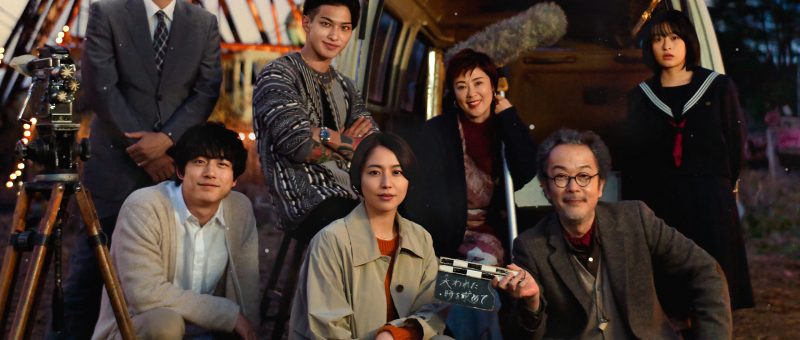
Drawing inspiration from the 2011 earthquake and tsunami, Fujii first introduces us to Minako (Masami Nagasawa). A 35-year-old single mother, she wakes up on a beach and frantically looks for her seven-year-old son Ryo (Haru Iwakawa) little realising that the reason no one seems to be able to hear or react to her is because she’s already dead. Picked up by fellow ghost Akira (Kentaro Sakaguchi), she’s taken to a disused fairground that doubles as a hub for wandering souls. Though it takes her a while to accept her new situation, she gradually bonds with others at the camp each of whom have their own unfinished business which isn’t all that different from her own in that they mostly want to be sure the people they left behind will be alright.

The film takes its name from the monthly processions in which wandering souls meet by lantern light to look for their missing people together. This sense of solidarity and empathy seems to echo the best of humanity along with a melancholy longing. There appears to be little rancour in this afterlife, a yakuza who was killed in a gang war simply feels sorry for his father and so guilty about the girlfriend he left behind that he’s been afraid to face her for the last seven years, and a high school girl who took her own life because of bullying first thinks her unfinished business is vengeance on the bullies but later accepts is actually a desire to apologise to her best friend who then had to take the brunt of the bullies’ cruelty on her own.

What the film seems to say is that we should have more of this fellow feeling in life. Former film producer Michael (Lily Franky) constantly references his days as a student protestor remarking that they might not have amounted to very much but at least they had unity. His regret is less his failed revolution than a moment of emotional cowardice that saw the woman he loved marry someone else instead. Constant references to the end of Casablanca echo their plight as if Maiko (Yuina Kuroshima / Hana Kino) married Sasaki (Ayumu Nakajima / Hiroshi Tachi) for the good of the revolution though she really loved Michael who unlike Rick just walked out on it because in the end he wasn’t brave enough to risk the consequences of its success or failure. 

The world building may not always be consistent and the rules of this universe appear unclear. It seems that in general the ghosts don’t linger long. Even the heavenly liaison Tanaka (Tetsushi Tanaka) appears to have been dead not longer than 40 years with Michael seemingly the only other long-stayer with the others’ deaths fairly recent. In general they are only really waiting for themselves or others, wanting to make sure that their loved ones will be alright in their absence even though there’s nothing more they can do for them now other than observe. Though they can walk through this world and interact with physical objects, their presence is otherwise invisible unless the person they wish to contact happens to be in an altered state. To this extent, the resolution may seem like a bit of a cop-out but does lend an additional poignancy and imply that these lessons learned in limbo can still be taken into the mortal realm creating additional empathy and solidarity among the living so that they may be able to live their lives freely and fully perhaps not entirely without regrets but at least with fewer of those that would prevent them from moving on when their time comes. But even if they find themselves trapped in limbo, they’ll hopefully find others like themselves and a gentle sense of hopefulness about what’s to come even as they prepare to leave this world.


Trailer (English subtitles)