A young woman wrestles with her cultural identity when tasked with executing a will she can’t even read in Leong Po-Chih’s 1986 diaspora drama, Ping Pong (乒乓). The dead man’s family members can agree on only one thing, that they hate the will and won’t sign it, but are also constantly reminding themselves that “the third principle” of being Chinese, according to uncle Siu Loong (Victor Kan), is to obey the elders’ wishes and never question them.
Sam Wong (K. C. Leong) is found dead in a telephone box still clasping the receiver not far from his incredibly successful Chinatown restaurant. Elaine Choi (Lucy Sheen) is a young British-Chinese lawyer who arrived in the UK from Macao around the age of seven following the deaths of her parents. Her first problem is that she no longer remembers any Chinese and is unable to read the will she’s been charged with executing, eventually getting a family member to help her decode it while realising that it’s going to set the cat amongst the pigeons. Her sense of cultural dislocation is only deepened when she attends Sam’s Taoist funeral and admits to the British wife of Sam’s son Alan (Ric Young) that she has no idea what’s going on either. Sam’s wife Ying (Lam Fung), who came to the UK at 17 for an arranged marriage, hurriedly shoos her daughter-in-law out while berating her son for not knowing how inappropriate it is for a pregnant woman to attend a funeral. Elaine is also told that her presence is inappropriate and invited instead to a dinner at Sam’s restaurant the following day to read out the will.
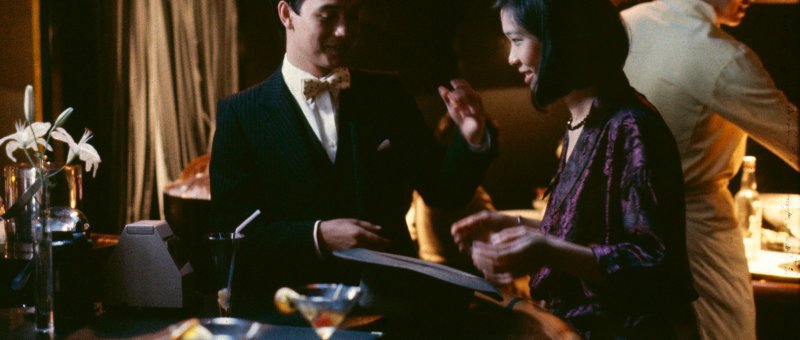
Of course, it’s not unusual to encounter discord among family members when it comes to settling an estate, but Sam seems to have either entirely misunderstood his relatives or else deliberately set out to teach them a lesson, one that will help them recover the Chinese identity they may each be in danger of losing. Alan has become a professor and married an upper middle-class British woman (Victoria Wicks). Their home is the epitome of a certain kind of stereotypical Englishness while Alan appears to show little interest in his cultural legacy. The absent Michael (David Yip) who doesn’t even attend the funeral or will reading runs a flashy fusion-style “Chinese” restaurant which is entirely staffed by Italians and holds regular cream pie parties. Michael is an embodiment of the spirit of the age. Educated in expensive boarding schools, he’s become an obnoxious English gentlemen in cricket jumpers and sharp suits who plans to build a seven-storey leisure complex on Gerrard Street with money from a Hong Kong millionaire looking to escape Handover anxiety. For Michael, his Chinese heritage is just something to be sold and repackaged to people to who don’t know any better. The design for the leisure centre is like some orientalist fever dream, a fairytale pagoda channeling Grauman’s Chinese Theatre and Cinderella’s Castle.
Sam left him the restaurant on the condition he run it “the Chinese way”, which obviously isn’t something Michael was particularly keen on doing. Michael’s older half-sister, Cherry (Barbara Yu Ling), a child of Sam’s first marriage in China, is also resentful that her father left the warehouse she’d been managing to her step-mother Ying along with the family home, while leaving a farm they owned growing Chinese vegetables to family friend, Mr Chen (Robert Lee), rather than to one of the descendants. Her husband Siu Loong, a former Hong Kong cop, tries to teach their children “Chineseness” through rote learning and casual violence including the instruction that children should obey without question, but otherwise supports his wife’s hope of firing Elaine in favour of someone who knows the way Chinatown works and can be relied upon to reinterpret the will in their favour.
That she wasn’t from “Chinatown” might be why Sam chose Elaine in the first place, realising that she’d carry out his wishes rather than her own interpretation of them. She becomes preoccupied with the identity of the person on the other end of the phone when Sam died while herself growing to like the Wongs and trying to smooth over their familial discord. What she comes to understand is that Sam knew exactly what he was doing, trying to engineer a course correction in the lives of his overly Westernised children to force them to get back in touch with their roots rather than lose their Chinese heritage. But then China is also changing. Sam wanted to be buried in his hometown back on the Mainland, and so Elaine heads to the embassy only to met by an ironic civil servant who has pictures of pandas and pagodas on the wall of his office. He hands Elaine a bunch of tourism pamphlets while instructing her that she should learn her Chinese so she can go back to her “homeland”. “Which one?” she scoffs, chuckling at the newly open China now also commodifying its cultural heritage as a destination for curious Westerners as she chucks the pamphlets in the bin directly outside the embassy.
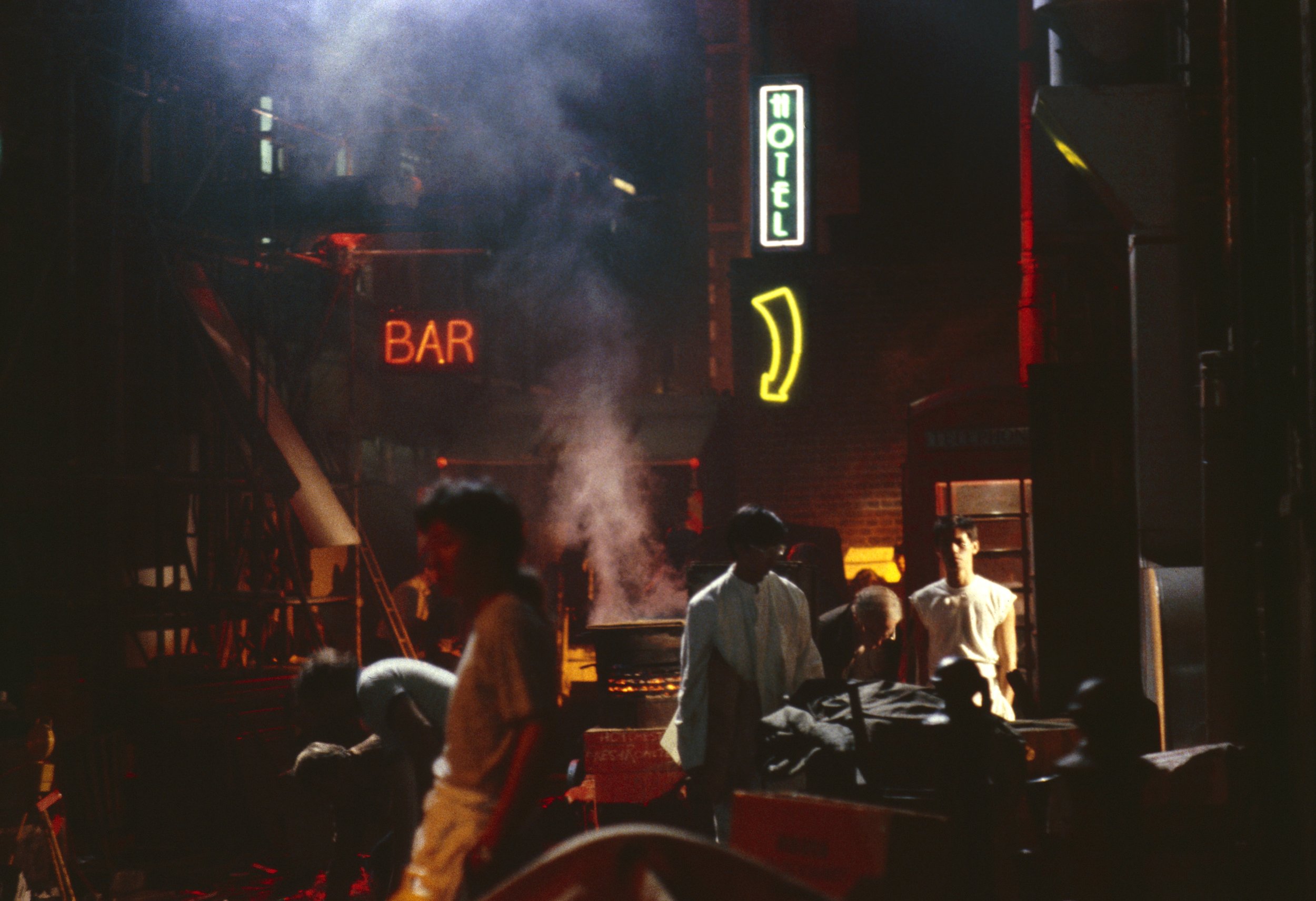
Sam’s will may be the ultimate act of patriarchal manipulation, not least in his passing over of his daughter in favour of the prodigal son who had seemingly rejected everything he stood for, but does ultimately allow the family to begin repairing itself while reclaiming their cultural identity. Elaine, who had deftly fended off the patronising overtures from her sleazy boss who refers to her as his “pretty little Chinese lawyer”, also gains a sense of herself as a female warrior like the wuxia comics she loved as a child in Macao while doing her best to protect Sam’s legacy in executing his wishes. An atmospheric evocation of smokey ‘80s London Chinatown on the brink of change, Ping Pong allows its heroine to begin to find her answers only to discover they lead her right back to source. “Everything moves in cycles” Elaine philosophises envisaging her own new beginning in a changing society.
Ping Pong screened as part of this year’s Hong Kong Film Festival UK.
 Where oh where are the put upon citizens of martial arts movies supposed to grab a quiet cup of tea and some dim sum? Definitely not at Boss Cheng’s teahouse as all hell is about to break loose in there when it becomes the centre of a turf war in gloomy director Kuei Chih-Hung’s social minded modern day kung-fu movie The Teahouse (成記茶樓, Cheng Ji Cha Lou).
 Windows on Worlds