Following (그녀가 죽었다, Kim Se-hwi, 2024)

“None of this would have happened if you didn’t follow me,” the hero of Following (그녀가 죽었다, Geunyeoga jug-eossda) is told by his opposite number though he himself doesn’t see anything untoward about his voyeuristic hobby and justifies his habit of “peeping” into the lives of others on the grounds that it does no harm. Of course, he’s not very well placed to make that decision and too narcissistic to consider that while he watches someone may be watching him. 

In any case, what Jung-tae (Byun Yo-han) claims to want to see is “the real you” rather than the persona created for public consumption which is why he’s drawn to duplicitous influencer Sora (Shin Hye-sun) whom he spots simultaneously munching on a sausage and posting about eating a vegan salad. Of course, as an influencer “followers” are what most she most craves though not of the kind Jung-tae becomes nor does she want this particular kind of attention not least because it threatens the facade she’s created for herself as a “good person” posting about her altruistic deeds such as rescuing dogs and cats for which her followers send her monetary gifts and donations for various funds and charities. 

As for himself, Jung-tae thinks he remains a fairly anonymous person. As an estate agent, he projects an image of himself as being kind and trustworthy, while he runs a popular online blog under a pseudonym. He gives little of himself away and later acknowledges that part of the thrill of his voyeurism is a sense of superiority, that he is privy to privileged information about strangers that others do not have. Misusing his position, he sneaks into people’s houses and takes something insignificant as a trophy while also performing small household tasks in recompense. Perhaps it should have seemed like a red flag to him that Sora suddenly wanted to sell her apartment (on her landlord’s behalf), let alone that she didn’t make any attempt to tidy up before giving him a key, but he is so assured of himself that the possibility he has been discovered doesn’t really occur to him until he sneaks into Sora’s place and finds her dead, covered in blood on her living room sofa. Predictably, he does not call the police because he’d have to admit he let himself into her apartment when he shouldn’t have. 

Receiving a threatening letter, Jung-tae then becomes a classic wrong man in the firing line for Sora’s murder and in his mind unfairly persecuted for his “harmless” hobby. The irony is that the person who’s targeting him is doing so because they had something they did not wish others to see and fear Jung-tae may have done so which would give him power over them, while what Jung-tae wants to keep hidden is his own voyeurism. “It’s all about reputation,” he explains and his would be ruined if his clients knew he’d been misusing the keys they entrusted to him for professional purposes let alone the embarrassment of being exposed as a peeping tom even if in this case his peeping isn’t sexual but intimate on another level. 

The power dynamics between the seer and the seen are always shifting, not least because Jung-tae believed himself invisible and in fact continues to think that he is the victim as does the person targeting him. He later comes to realise that what he did was wrong and that he invaded these people’s privacy, but continues to centre himself and despite the glasses he now wears at the film’s conclusion he may not see anything any more clearly than before. What unites him with his own stalker is a sense of frustrated loneliness and longing for connection if also a kind of acceptance even if mediated through a “fake” persona to paper over the cracks in their identity. Yet ironically, even the killer’s words that none of this would have happened if he hadn’t been following them further bolsters his narcissistic sense of importance as much as it reflects the words of an abuser deflecting responsibility for their own actions. Jung-tae has met his mirror image and may not like what he sees (or perhaps does not see at all) while they equally struggle to understand why others cannot see that they are the victim. Told with a touch of humour and a degree of B-movie silliness, Kim Se-hwi’s taut psychological thriller nevertheless suggests that even as we obsess over the image we project to others and that they project to us, we remain largely blind to ourselves and all too keen to justify our actions to maintain a carefully constructed self-hood that is otherwise unlikely to stand up to scrutiny.


Following screened as part of this year’s London Korean Film Festival.

Original trailer (no subtitles)

Yaksha: Ruthless Operations (야차, Na Hyeon, 2022)

“Justice is preserved by being just” according to the idealistic hero at the centre of Na Hyeon’s Yaksha: Ruthless Operations (야차, Yacha) , though he’ll eventually come round to his sometime mentor’s belief that “Justice must be preserved by any means necessary”. Any means necessary is indeed the motto of the titular hero named for the unpredictable Buddhist deity and regarded by his superiors as a dangerous maverick though as it turns out he does indeed have justice in mind even if his idea of justice might not fully align with those whom he is intended to serve. 

The failure of the regular justice system is signalled in the film’s opening as idealistic prosecutor Ji-hoon (Park Hae-soo) finds his case against a corrupt CEO falling apart because of procedural mistakes by his own rookie team. Humiliated on the courthouse steps, Ji-hoon is given a punitive transfer to the NIS where he is kept out of trouble, told to draw a salary but given very little work. He and his jaded colleague who was once known as the “bulldozer of justice” but has been ruined by this bizarre form of punishment and no longer has the will do to anything much at all mostly spend their time doing jigsaw puzzles stave off boredom. When his colleague admits there’s no more hope for him and turns down an offer of reinstatement, Ji-hoon agrees to travel to Shengyang, a hotbed of international spies in China, to find out what’s going on with a series of false reports from their agents on the ground led by maverick black ops officer Yakska. 

What he soon discovers is that he’s been dragged into some murky geopolitical shenanigans between North Korean spies, his target’s possibly corrupt team, and the Japanese who are once again up to no good trying to prevent a possible alliance between North and South believing such a union would present too much of a threat to their economic position in North East Asia. His problem is that Yaksha’s field craft does not measure up to what he regards as appropriate conduct. He engages in firefights and commits what seem to be summary executions while later threatening to torture a hostage to force her to reveal the location of their missing asset, a North Korean financial kingpin, Moon (Nam Kyung-eup), who had been acting as a double agent for the Japanese but had become disillusioned with their imperialist outlook and decided to defect to the South bringing valuable information with him. 

It has to be said that however uncountable it may be to see a Japanese spy who behaves like a gangster committing acts of torture in a well appointed lab on a Chinese woman in China, Yaksha cannot exactly claim the moral high ground having attempted to do something similar only in his filthy hideout in an abandoned mine. Ji-hoon’s dilemma is that he doesn’t know whose side, if any, Yaksha is on or if he’s after the North Korean trillions Moon had been managing rather than a hugely beneficial national asset. Exposed to this morally grey world, however, Ji-hoon’s idealist edges begin to soften as shifts towards Yaksa’s “by any means possible” philosophy while trying to stop evil Japanese spy turned lobbyist from recovering the valuable data Moon had to sell and going on to do even more nefarious deeds undermining the possibilities for reunification along with the Koreas’ economic potential. 

Somewhat uncomfortably, the film does then more or less condone torture, betrayal, and summary execution if conducted in the pursuit of “justice” even while simultaneously approving of Ji-hoon’s idealistic pursuit of the rich and powerful who continue to misuse their position and cause pain to ordinary people. It comes to something when the safest ally is a gang of human organ traffickers with whom Yaksha seems to be suspiciously familiar. Nevertheless, what Yaksha eventually asks Ji-hoon to do is to “clean things up” hinting at the duo’s complementary qualities as they pursue “justice” in both the legal and more immediate senses. Filled with some quite literally explosive action sequences along with some admittedly broad comic book antics as the guys face off against Hideki Ikeuchi’s Japanese arch villain Yaksha is certainly a good looking film if one with a dark heart beating at its centre. 


Original trailer (English subtitles)

The Call (콜, Lee Chung-hyun, 2020)

The call is coming from inside the house. It’s a final revelation intended to chill, the idea that the source of threat is located in the very place where you ought to feel safe, protected, invulnerable. Of course, there are many reasons someone might not feel completely safe at home, those who perhaps live with hidden threat every day, a hidden darkness that lies at the centre of twisty Korean thriller The Call (콜). Another in a small series of time travelling communication, The Call makes connection through outdated technology, an almost literal ghosting in a voice from the past that, like an inverted Strangers on a Train, offers the tantalising promise of mutual salvation only to prove extremely unreliable. 

28-year-old Seo-yeon (Park Shin-hye) has just returned to her rundown country home because her mother, whom she intensely resents blaming her for the death of her father in a fire, is suffering with a brain tumour. Though her strawberry farmer uncle Sung-ho (Oh Jung-se) describes the place as the most desirable property in town, the home in which Seo-yeon finds herself is cold and austere, a creepy old mansion decorated in an outdated style and filled with gothic furniture. To make matters worse, Seo-yeon has left her phone on the train but unexpectedly assures Sung-ho that she’ll be fine with the landline, later calling herself and getting through to a woman who claims to have found it but asks for a reward and then hangs up presumably to assess her options. Then, the landline starts ringing with calls from a young woman trying to reach a friend and claiming that her mother is planning to set fire to her. Though obviously disturbing, Seo-yeon assumes the calls are a simple wrong number until she discovers a hidden room with what looks to be some sort of tiled experimentation area along with a box of memorabilia which lead her to think the phone is somehow connecting her to the girl who lived in her room at the turn of the millennium. 

Also 28 only born 20 years earlier, Young-sook (Jeon Jong-seo) claims to be at the mercy of a wicked shamaness step-mother convinced that she has a dark destiny. The two women engage in a strange act of intergenerational bonding between two people who are the same age, Seo-yeon mystified by the meaning of the word “Walkman” while Seo-yeon struggles with the concept of the multifunctional smartphone. The force which unites them is parental dissatisfaction as Seo-yeon claims a hatred for her mother she does not perhaps really feel and cannot in any case compare with that of Young-sook for the religiously abusive stepmother who fully believes she is possessed by the devil. In in this the time difference proves useful, Seo-yeon realising that Young-sook has the power to prevent her father’s death, but only latterly that she also even from the future has the ability to change her new friend’s fate. 

Essentilally a Strangers on a Train scenario, the two women agree to save each other, Young-sook dutifully restoring Seo-yeon’s imagined fairytale future, the creepy mansion transformed into an elegant modern dwelling, her mother and father now both healthy and happy. Seo-yeon, however, begins to neglect her promise, too busy enjoying her repaired family life to remember that Young-sook is imprisoned in the house suffering horrifying abuse. Young-sook is, in a sense, the embodiment of Seo-yeon’s familial trauma, the violent resurfacing of a long buried memory that threatens to tear to her life apart but also has the ability to repair it in revealing the truth that allows her to reconnect with her mother who, we learn, has repeatedly sacrificed herself for her daughter’s sake. Nevertheless, you begin to wonder if the shamaness had a point and the lid was best left on Young-sook as her hurt and resentment in being neglected by her new friend eventually take a turn for the dark. 

In essence, Seo-yeon’s decision to interfere with the past engineers a chain of disastrous events robbing her of her illusionary happiness while eventually landing her right back where she started if perhaps with a little more insight and having healed her relationship with her mother. Part tale of millennial anxiety, part gothic nightmare, The Call may not always be internally consistent but charts a dark tale of trauma and response as a haunted young woman finds herself stalked by the psychopathic embodiment of her buried guilt only to discover that a call from the past is always hard to ignore. 


Original trailer (English subtitles)

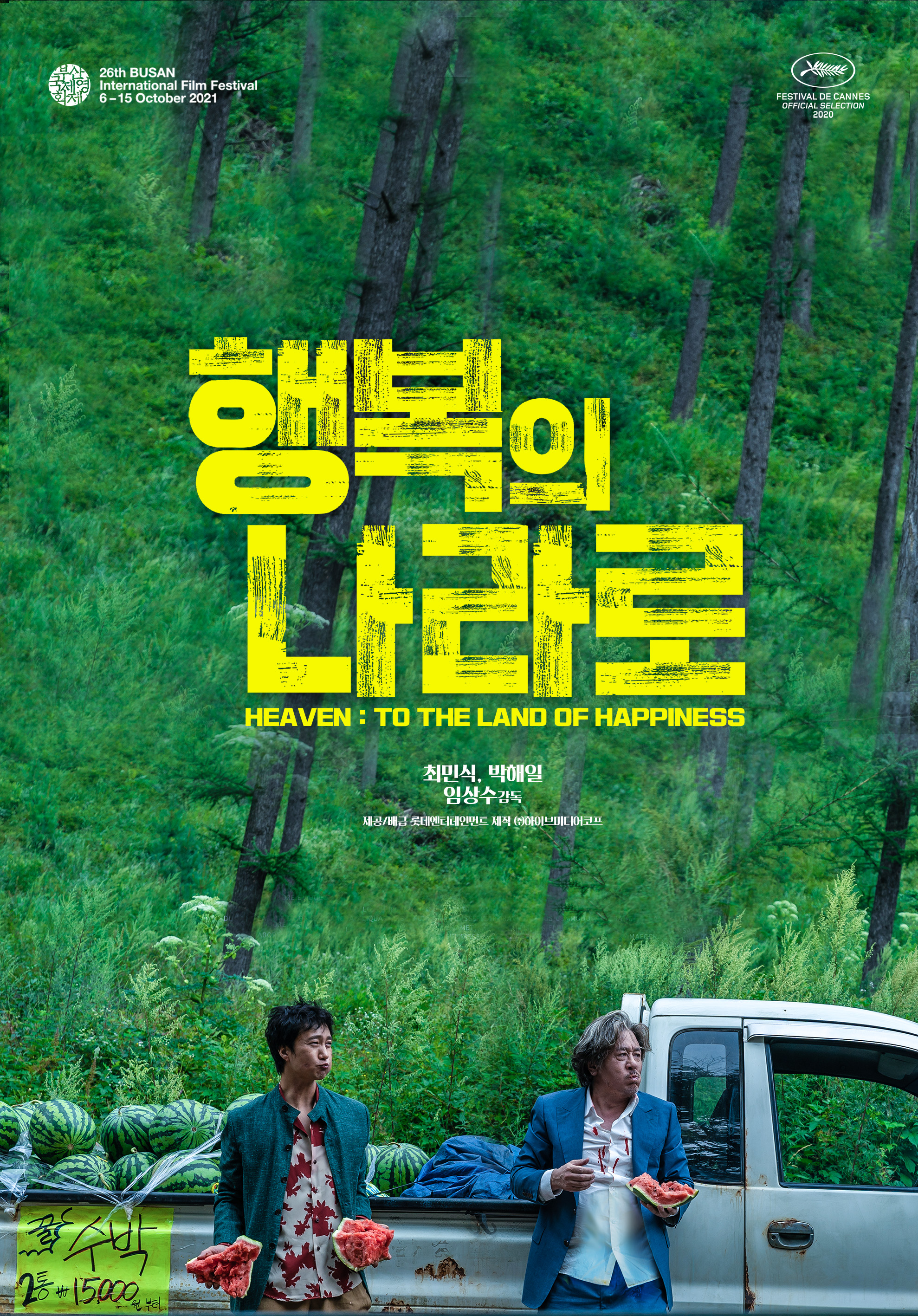
Heaven: To the Land of Happiness (행복의 나라로, Im Sang-soo, 2021)

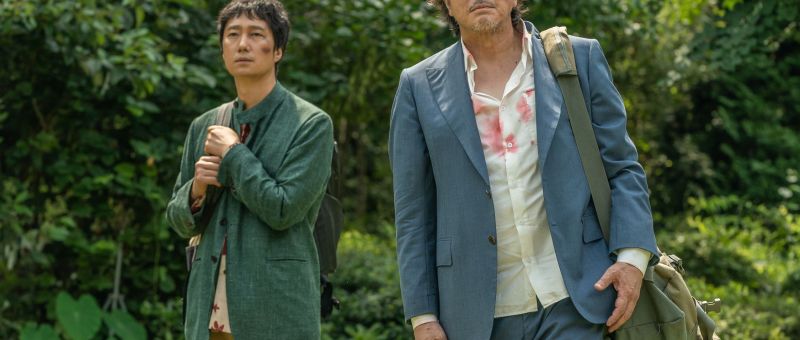
A chronically ill thief and a “poetic fugitive” find themselves on the run from a “philosophical gangster” whose money they unwittingly stole after driving off with his hearse in Im Sang-soo’s playful existential drama, Heaven: To the Land of Happiness (행복의 나라로, Haengbokeui Nararo). In one way or another, all of our heroes are sick or dying, pushed into a moment of introspection which forces them to consider how it is they wanted to live and what for them night constitute a good death while pursued by pettiness and injustice squabbling over the most meaningless but equally impossible to live without thing imaginable, money. 

Our narrator, Nam-sik (Park Hae-il), is a youngish man suffering with a chronic illness which has forced him into a life of wandering taking menial jobs at hospitals in order to steal the medicine he needs to treat his condition which otherwise costs more than the average annual salary for a month’s supply. On the day his cover’s about to be blown, he runs into Prisoner 203 (Choi Min-sik) who has been brought in by the local prison only to be told that his brain tumour is now inoperable and in their estimation he has as little as two weeks left to live. Unwilling to die behind bars and longing to see his estranged daughter again, 203 manages to mount an escape attempt with the help of Nam-sik who ends up on the run with him after getting accidentally tasered. 

Not only are Nam-sik and 203 each suffering from life-limiting medical conditions, but even the elderly female gang boss, Madame Yoon (Youn Yuh-jung), is also bedridden and apparently at death’s door while in an extreme irony the casino money the guys have accidentally run off with was stored inside an ornate black coffin. Rich man or thug we’re all the same when we die, 203 remarks as he and Nam-sik prepare to bury the coffin before discovering what’s inside, hinting perhaps at the utter pointlessness of the gangsters’ quest to retrieve it. After, all you can’t take it with you and 203 has little need of vast riches now which is another irony seeing as he’d been in prison for embezzlement. 

All of those around him constantly describe 203 as a “decent man”, his guard quickly shutting down the outlandish suggestions of a bumbling cop that he may have murdered the owner of an abandoned truck by exclaiming that 203 isn’t the sort of person who would do something like that. In fact, Nam-sik and 203 are responsible fugitives, often giving away large sums of money to those they meet in exchange for the use of a vehicle or some other kind of assistance. 203 doesn’t even want his share of the loot, partly because he rightly assumes it’s only going to bring them trouble, and partly because he no longer has need for it. Nam-sik meanwhile seems to relish the idea of being rich, but quite literally needs money to survive in order buy his medication (as well as potentially help out the impoverished mother who rings him asking for financial assistance). Even Madame Yoon seems to want the money as a kind of survival mechanism, suddenly reviving after hearing her stylish but inept gangster protege daughter (Lee El) report she’s found the missing cash while otherwise explaining to her that she needs to be “tough, persistent, and almost merciless in order to beat the insignificants and become rich”. 

But you can’t buy your way out of death with money, even if as the philosophical gangster says everyone has to go some way, don’t take it personally. Caught in existential limbo, the two men generate a kind of absurdist brotherhood, a wandering Vladimir and Estragon, or the Rosencrantz and Guildernstern of Stoppard’s play blinking in and out of existence while caring for each other altruistically for no other reason than the connection they’ve developed in shared mortal anxiety. “It was warm and it made me feel happy” Nam-sik reflects somewhat incongruously on a death that was in its own way good and just amid so much injustice. Swapping the provocation which defines much of his earlier work for cheerful melancholy, Im’s strangely moving existential dramedy suggests that happiness lies in simple human connection and the power of redemption while money only leads in one direction. 


Heaven: To the Land of Happiness screens in Chicago on March 13 as part of the 14th Season of Asian Pop-Up Cinema.

International trailer (English subtitles)

What a Man Wants (바람 바람 바람, Lee Byeong-heon, 2018)

What a man Wants posterMarriage, eh? Bit of a rollercoaster. Lee Byeong-heon’s sex farce What a Man Wants (바람 바람 바람, Baram Baram Baram) takes two ordinary couples and exposes the various hypocrisies which underpin their existences as they battle boredom and excitement in turn before finally figuring out exactly which relationship(s) they would ideally like to be in full time. The sexual politics are distinctly old fashioned, as is the male fantasy wish fulfilment at the film’s centre, but Lee chooses wryness over cynicism in asking if a little infidelity here and there might actually strengthen an otherwise shaky connection.

Seok-guen (Lee Sung-min) used to design rollercoasters all over the world, but now he drives a taxi on Jeju and gets his kicks “picking up” fares. That’s not to say he doesn’t love his wife, the patient Dam-deok (Jang Young-Nam), but he enjoys the thrill of the chase and favours instant gratification over the patient pleasures of married life. Seok-guen is often aided and abetted in his assignations by his straight laced brother-in-law, Bong-soo (Shin Ha-kyun), who is married to Seuk-guen’s forthright sister, Mi-young (Song Ji-hyo). Bong-soo doesn’t really approve of Seok-guen’s carrying on and doesn’t see the appeal of extra-marital affairs, but realises he has little choice other than to help Seok-guen out or risk his family life imploding. The couples live next-door to one another and are extremely close.

The trouble starts when Seok-guen tries to pick up the alluring Jenny (Lee El) at a pool bar. Bong-soo, not normally smitten, is seemingly hit by a lightening bolt and finds himself suddenly fantasising about another woman. Seok-guen had long been urging Bong-soo to have an affair (which is odd seeing as Bong-soo is married to his little sister), but he probably hadn’t envisaged him stealing Jenny out from under him. Flattered when Jenny starts paying him attention, Bong-soo succumbs only to make a rookie mistake of going home with her panties in his jacket pocket. Bong-soo takes revenge for years of being an alibi and blames the whole thing on Seok-guen who is mock thrown out by Dam-deok though she only really means to teach him a lesson rather than get rid of him for good.

The problem with Jenny is she’s not really real. She’s an embodiment of a male fantasy that might as well have been conjured up by the otherwise dull Bong-soo. With her sexy outfits, self consciously cute way of speaking, and frankly unbelievable interest in a boring failed restaurateur you really have to wonder if she’s not some kind of spy or a master criminal lining up a mark (except that neither Seok-guen or Bong-soo have any money). Sadly, no. She’s just the archetypal sexpot ripped straight from a ‘70s farce with little more to her character than sauciness with a side order of harlotry, despite the valiant efforts of actress Lee El who attempts to imbue her later emotional scenes with depth and sincerity to make up for her underwritten role. Jenny repeatedly claims to know what men “want” and then gives it to them, like some sort of temptress from a folktale, never allowed to express what it is she might “want” but only ever hanging around to be “won” by one of the two guys.

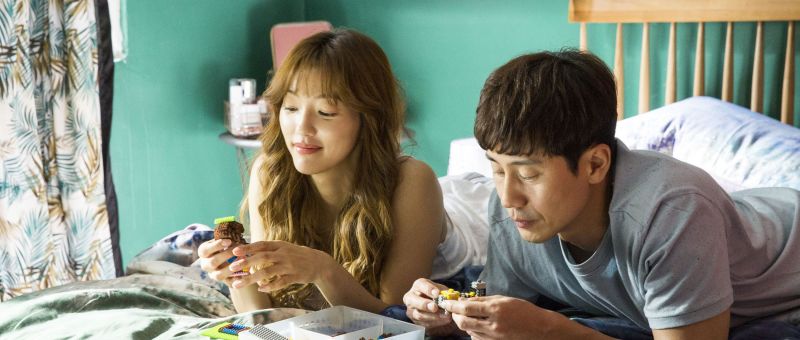
Bong-soo and Seok-guen undergo a role reversal when an unexpected tragedy forces Seok-gun to reassess his philandering ways while Bong-soo becomes a practiced adulterer. The marriage of Mi-young and Bong-soo is already on shaky ground – their sex life is all but dead and they’ve been having trouble conceiving. Mi-young is addicted to social media while Bong-soo spends his spare time building LEGO models, and in addition to being marital partners they also co-own an “Italian” restaurant which Bong-soo has long wanted to turn into a Chinese one (he trained as a Chinese chef) but Mi-young continually ignores his dream despite the fact that the restaurant is permanently empty and about to go bankrupt. Partly mid-life crisis, Bong-soo’s affair is motivated by a need to reassert his “manhood” while Jenny flatters him, strokes his ego, and does all the “wifely” things the “bossy” Mi-young refuses to do.

Yet just as Seok-guen said they would, Bong-soo’s fortunes improve thanks his to philandering – he becomes a better chef, the business takes off, and Mi-young (paradoxically) seems to develop more faith him as well as additional respect for his increasing “manliness”. Both men, through their interactions with the almost non-existent Jenny, are then forced to consider what, or who, it is they really want though Lee’s message seems to be that there are “secrets” in every marriage and perhaps it’s better not to ask too many questions if you want to maintain a happy married life. Cynical, though gleefully so, What a Man Wants is a salty affair but one which ultimately places its faith in “love” to find its way home despite the messiness of the journey.


What a Man Wants was screened as part of the New York Asian Film Festival 2018.

International trailer (English subtitles)

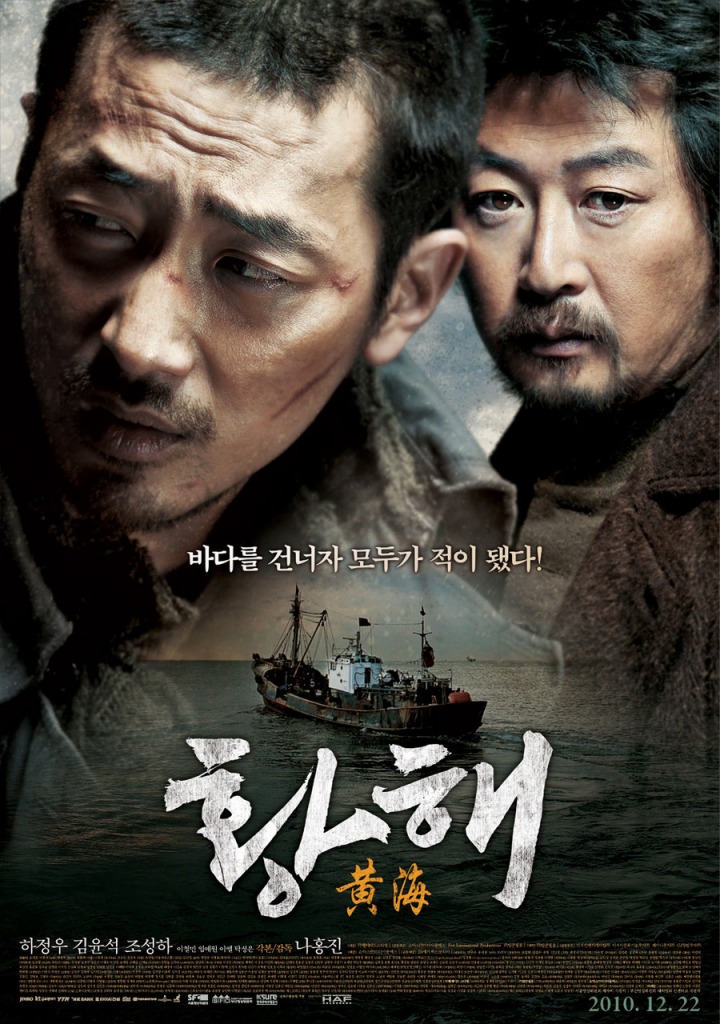
The Yellow Sea (황해, Na Hong-Jin, 2010)

yellow sea korean posterReview of Na Hong-Jin’s The Yellow Sea (황해, Hwang Hae, AKA The Murderer) – revised form of a piece first published by UK Anime Network in March 2012.


Gu-Nam (Ha Jung-Woo) is a taxi driver with a gambling problem. If the gambling wasn’t enough to get him into trouble, he’s also in debt to some gangsters over the money for his wife’s passage to South Korea. His wife was meant to be sending the money she’d make there back to him and their daughter to help pay off the debt, but no one’s heard from her in months. The obvious assumption is that she’s made a new life for herself and doesn’t want to be found, but Gu-Nam can’t quite bring himself to believe it. As a Joseonjok – a Chinese Korean from the Yanbian Korean Autonomous Prefecture, Gu-Nam had little chance of living an honest and prosperous life. Disowned by both China and Korea, many Joseonjoks are forced to resort to criminality in order to survive.

Just as it seems things are about to hit a crisis point, Gu-Nam receives an interesting job opportunity. Myung-ga (Kim Yun-Seok), the dog seller at the market, suggests Gu-Nam go to South Korea, kill a prominent businessman, look for his wife and return back to China (with the businessman’s thumb for proof). Assuming all goes well, Gu-nam will receive the pin number for an account with 57,000 Yuan, maybe return with his wife in tow or at least find out once and for all what the situation is between them, and finally get these gangsters off his back.

Still, sneaking into South Korea and committing a murder – it’s a big ask, and first off Gu-Nam rejects the idea out of hand but one conversation with his decidedly tough mother later and Gu-Nam has accepted. However, when he gets to Korea he finds things aren’t as simple as Myung-Ga made out. There seems to be a much bigger game in play than Gu-nam bargained for and it’s not long before he’s running from the police, gangsters, and just about everyone else.

If there’s one thing there’s a lot of in this film, it’s running. It’s difficult to think of another film that manages to make a good old fashioned foot chase quite so exciting. The set pieces are astonishing – multi-car pile-ups, police driving into and over each other, an extended chase sequence through a cargo boat – the list goes on, all with Gu-nam running desperately towards the camera. Propelled by pure survival instinct and later an intense need for revenge and an explanation, Gu-nam keeps running no matter what is coming for him.

One of those things is, of course, Myung-ga who’s now got a total mess on his hands that’s threatening to derail all of his current business arrangements (well, except the dog selling – something to fall back on). If there’s another thing there’s a lot of in this film, it’s stabbing (and later axing). Luckily for him, it seems Myung-ga is something of an expert at this as we find out in one scene where we see him, badly wounded, enter a room full of angry gangsters – the camera cuts away and we return to find all of the gangsters seemingly dead with very little fuss. He even tries to kill someone with a lamb bone at one point! Myung-ga is certainly not someone one would want to be meeting on a dark night (or ever buy a dog from). He is though, one of the most compelling film villains of recent years.

Speaking of stabbings, The Yellow Sea is a very violent and extremely bloody film. If you’re well versed in Korean crime dramas, you might be aware that South Korea has very tight gun laws, so much so that not even the toughest gangsters carry guns. Consequently what you have here is a lot of people sneaking around trying to get the drop on each other to stick the knife (or occasionally, hatchet) in. Obviously, it’s much quieter than gunfire but also much messier and much more physical. The only guns in the film are those which belong to the police, who are largely depicted as bumbling idiots who can’t tell one end of a gun from the other.

This Bounty Films release (distributed by Eureka in the UK) is the shorter 140 minute ‘Director’s Cut’. There is, however, some controversy about whether it really is a director’s cut or an international version prepared by the film’s co-producers Fox International. For the record, it runs about sixteen minutes shorter than the version seen in Korea. Despite being the shorter version, The Yellow River does still feel a little long at times and really pushes the ideal running time for a thriller of this kind. Nevertheless it does manage to keep the momentum going throughout and even has a streak of morbid humour running right through it.

A sad meditation on the futility of life, particularly for those who find themselves at the bottom of the pile and are forced to scrap like dogs for the little other people have left behind, The Yellow Sea is an exciting addition to the recent wave of Korean crime thrillers. Following on from his impressive debut The Chaser, The Yellow Sea certainly catapults director Na Hong-jin right into the top tier of Korean cinema.


The Yellow Sea is available on DVD and blu-ray from Eureka in the UK and on DVD from 20th Century Fox in the US.