Christmas in August (8월의 크리스마스, Hur Jin-ho, 1998)

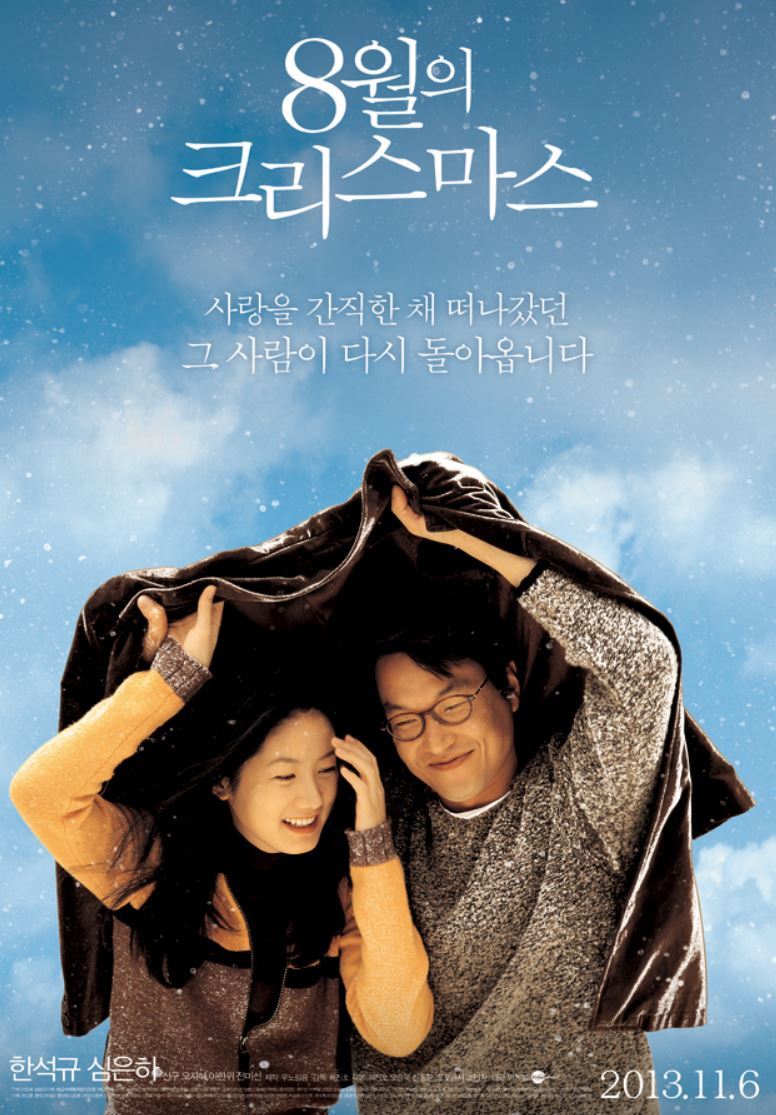
The cruel ironies of life are visited on a lovelorn photographer nearing the end of his days in Hur Jin-ho’s understated melodrama, Christmas in August (8월의 크리스마스, Palwolui Christmas). Christmas in August was Hur’s debut feature though he’d become primarily known for similar material in coming decades even if the romance was rarely as subtle and achingly poignant as in his first film. In some ways about life’s unfinished business, the impossibilities of communication, and coming to terms with impending death Hur allows his melancholy leads to discover a kind of serenity even in the depths of their yearning.

We never really find out the nature of Jung-woo’s (Han Suk-kyu) illness, only that it does not ostensibly interfere with his ability to live a normal life, though unfortunately terminal. After learning that he has only a short time to live, he simply goes home and washes the dishes, continuing with the mundanities of his life as if determined to get on with it. When someone asks him about his health, he tells them that he’s fine or that it’s not really serious, drunkenly letting slip to a friend that he will die soon but making it sound like a joke. Aside from a single moment of drunken railing against his fate, he accepts it with dignity and continues living quietly much as he always has while making preparations for after he’s gone, painstakingly writing down instructions for his father on how to use the TV remote and use the more modern printing facilities in his photography studio. 

There is perhaps a certain irony in the fact that he’s a photographer which is after all about trapping a memory or a point in time and preserving it for an eternity. He himself cannot move on, apparently hung up on his first love who married another man only to return later seemingly unhappy and regretful though she only asks him to remove the photo of her from the display in front of his store as if the memory of her youthful self is too painful to bear. And then, a young traffic warden wanders in looking for an urgent enlargement. For Da-rim (Shim Eun-ha), despite her youth, everything seems to be last minute, making several visits to the shop with an order that must be completed as soon as possible before visiting with no order at all. 

The relationship that arises between them is diffident and tender. It is also largely unspoken, Da-rim simply remarking on having a friend that can get them free tickets to an amusement park without exactly asking Jung-woo if he would like to accompany her. From his side, Jung-woo is passive, happy to be in her presence but also wary in knowing there is no possible future for them. He obviously cannot tell her that he’s ill or this brief respite from the futility of his life would disappear while she takes his diffidence as a lack of interest. It’s a love story that never quite gets started but is deeply felt all the same even its chasteness. 

Then again, perhaps words are unnecessary in situations such as this, a single photograph explanation enough on its own. In essence a gentle character study of a dying man’s learning to part with life as mediated through his yearning for a young woman though knowing that his love cannot be fulfilled, Hur presents death as something warm to be accepted rather than feared. Jung-woo takes a final photo with his friends whose eyes are all moist with tears as they pull him to the centre though he, like always, meant to stand on the end. He simply continues living, doing the dishes, retouching photographs, drinking with friends or else quietly crying himself to sleep. 

Though employing many of the tropes of romantic melodrama, Hur aims for subtlety and the eternal heartbreak of life’s unfairness that what we most desire arrives as soon as we can no longer have it. Even so, Jung-woo accepts his fate with good grace and treasures the memory of an unexpected love even as it slips away from him, storing it safely inside a photograph and a letter he may not actually intend to send. “Thank you and goodbye,” he signs off, which might be as a good a declaration of love as any other.


Original trailer (no subtitles)

Underground Rendezvous (만남의 광장, Kim Jong-jin, 2007)

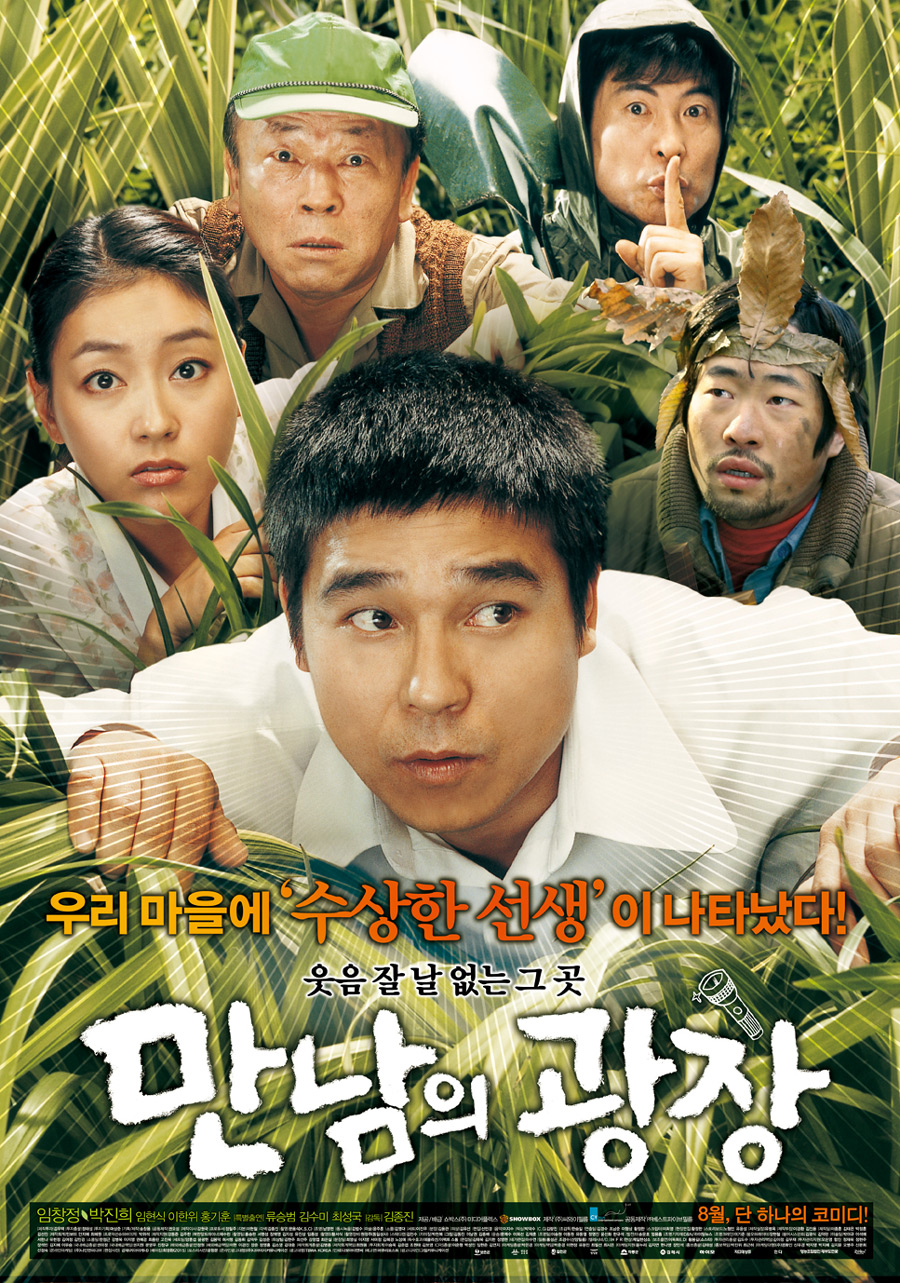
Underground Rendezvous posterAt the very beginning of Kim Jong-jin’s Underground Rendezvous (만남의 광장, Mannamui Gwangjang), a group of kindly villagers in the north of Korea are caught by surprise when they unwittingly help to build the 38th parallel – a series of fortifications which will divide them from one another forevermore. Family members are trapped on different sides of an artificial border by a matter of accident rather than choice, a decision effectively made for them by the Americans and Russians amping up cold war hostility in engineering a proxy war over war-torn Korea.

30 years after the villagers sealed their own fates through being overly helpful, the South Korea of the 1980s is perhaps not so different from its Northern counterpart. A brief hope for democracy had once again been dashed and the land remained under the yoke of a cruel and oppressive dictatorship. Young-tan (Im Chang-jung), a boy from a poor village, is determined to escape his life of poverty by travelling to Seoul and studying to become a teacher. However, within five minutes of exiting the station, his country bumpkin ways see his only suitcase swiped by a street thief. An attempt to report the crime only gets him into trouble and so Young-tan is sent to a “re-education” camp in the mountains. Falling off the back of a truck, he gets lost and eventually ends up in a remote village where they assume, ironically enough, that he is the new teacher they’ve been expecting for the local school. The village, however, has a secret – one that’s set to be exposed thanks to Young-tan’s questions about a beautiful lady he saw bathing at the local watering hole.

Young-tan turns out to be a pretty good teacher, though not exactly the sharpest knife in the drawer. The village’s big secret is that the divided families were so attached to each other that they each started digging tunnels to the other side shortly after the wall went up and eventually met somewhere in the middle where they’ve built a large cave they use for underground reunions. Apparently existing for 30 years, no one outside of trusted citizens on either side knows about the tunnel’s existence. No one has used it to switch sides, the only purpose of the tunnel is for relatives and friends to mingle freely in defiance of the false division that’s been inflicted on them by outside forces.

Young-tan, however, is fixated on the bathing woman who turns out to be North Korean Sun-mi (Park Jin-hee) – the sister-in-law of the village chief. Thinking only of his crush and also a comparative innocent and devotee of the moral conservatism of ‘80s Korea, Young-tan catches sight of Sun-mi and the village chief and is convinced that the old man is molesting an innocent young maiden. He sets out to convince the villagers of this, little knowing the truth and unwittingly threatening to expose the entire enterprise through failing to understand the implications of his situation.

Kim pulls his punches on both sides of the parallel, only hinting at the oppressions present on each side of the border with Sun-mi fairly free in the North, working as the army propaganda officer in charge of the noisy broadcasts which attempt to tempt South Koreans to embrace the egalitarian “freedoms” on offer to defectors. Meanwhile the villagers in the South live fairly isolated from the unrest felt in the rest of the country, continuing a traditional, rural way of life but are also under the supervision of a local troop of bored army conscripts on the look out for North Korean spies. Nobody wants to defect, though perhaps there’d be little point in any case, but everyone longs for the day when families can all live together happily as they used to free from political interference.

Satire, however, is not quite the main aim. An absurd subplot sees the “real” teacher marooned on his own after taking a detour and accidentally standing on a landmine leaving him rooted to the spot on pain of death, but the majority of the jokes rest on Young-tan’s “misunderstandings” as a village outsider, goodnatured simpleton, and bullheaded idiot. A final coda tries to inject some meaning by hinting at the effects of repurposing the truth for political gain and the tempered happiness of those who get what they wanted only not quite in the way they wanted it, but it’s too little too late to lend weight to the otherwise uninspired attempts at comedy.


Currently streaming on Netflix UK (and possibly other territories)

Original trailer (no subtitles)