Hope (호프, Na Hong-jin, 2026)

A decade on from The Wailing, Na Hong-jin returns with a piece of baffling hokum, Hope (호프), in which a small town close to the DMZ is assaulted by humanoid giants during the 1980s. Playing out like a satire of Hollywood monster movies, by the film’s abrupt cliffhanger ending we begin to get the impression that we’ve been watching from the wrong side of the screen. The “real” movie was a space fantasy revolving around the fall of an alien empire and the fate of a “chosen one”, while we’ve been seeing things from the perspective of an indigenous community witnessing the arrival of strange, new beings.

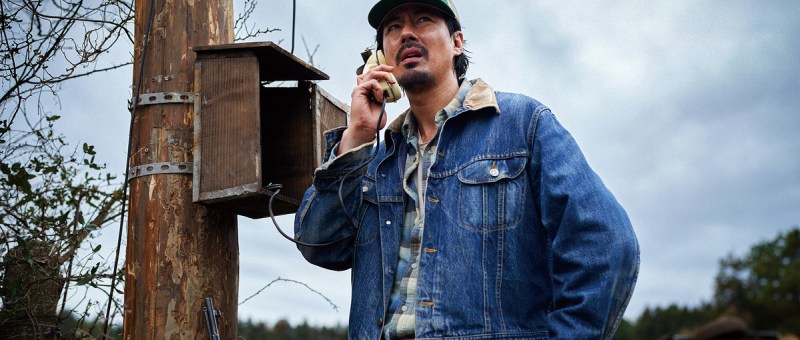
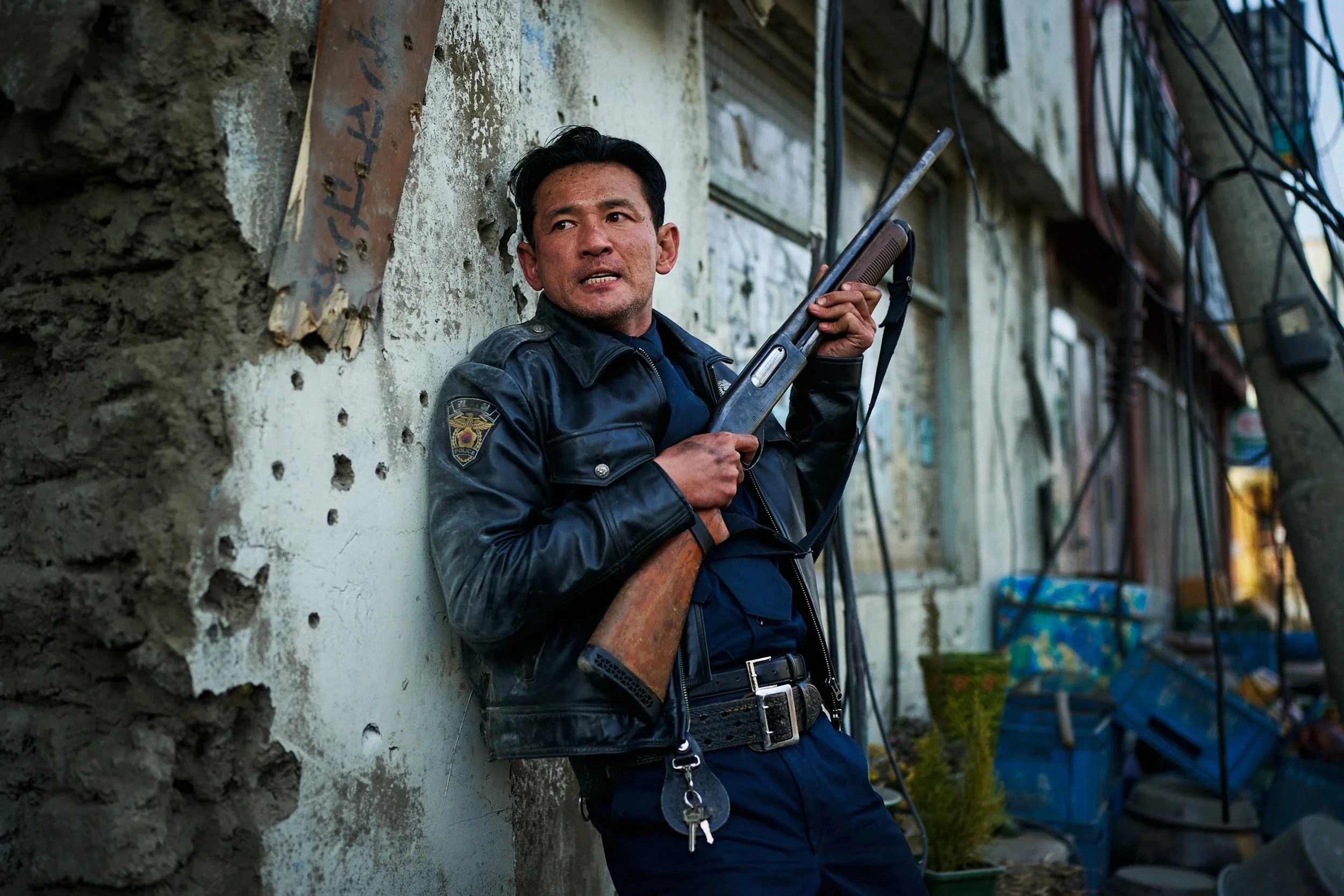
In any case, the first indication that something is “wrong” is the discovery of a mutilated cow by police chief Bum-seok’s (Hwang Jung-min) cousin Sung-ki (Zo In-sung). Sung-ki’s gang of hunters seem to think a tiger could be responsible, convincing Bum-seok that local wise man Hae-sul (Im Hyun-sik) said he saw one out in the mountains. Hae-sul did indeed see something, but according to his own reports, it was not a tiger. In any case, the hunters split off to investigate the mountains while Bum-seok returns to the town and finds it in a state of chaos. Bodies line the streets while buildings have been destroyed. Occasionally, he hears strange roars and sees cars flying overhead, thrown by some unknown force. 

The town itself has a frontier aesthetic like something out of an American western and unlike the Korea usually seen in the movies. There are signs reminding people to report spies and frustrate infiltration, reminding us that this is a paranoid place that has been on a war footing for around 30 years. Most of the residents are elderly and were, therefore, adults during the Korean War which explains why so many of them are so familiar with military weaponry and why there’s so much of it around including things like grenade launchers which aren’t generally used by the police. This is clearly not an invasion attempt from the North, though it explains why everyone is so keen to shoot first and ask questions later after decades of fearful vigilance.

This is first the hint we have that perhaps the heroes are the bad guys after all. While the first half sees Bum-seok and gung-ho policewoman Seung-ae (Jung Ho-yeon) desperately chasing the monster in their patrol car, Bum-seok begins to feel pity for it after looking into its human-like eyes and noticing that it appears to be crying. The idea that the real monsters maybe the heroes and, by implication, we in the audience isn’t a particularly original idea and is played with such unsubtlety that Na appears to be poking fun at the trope. There’s an unpleasantness to the degree with which the hunters in the particular rejoice in the idea of killing something so unusual. They aren’t so much brave young men of the village going off to kill the monster, as bloodthirsty animals little different from their prey. 

In fact, this whole mess started because one of the village’s more unusual residents killed something he shouldn’t have. Outside of the action sequences, the film is at its best exploring the weirdness of the small-town environment. There seems to be a running gag that where the men are panicked and confused, the women are ready to meet this moment with crazed determination such as Sung-ae turning up announced with machine guns, grenade launchers, and even a missile, or the female pathologist hacking away at the body of a fallen “monster” with a chainsaw. As the film concludes, the humans are on the run and in a panic with Bum-seok admitting he has no idea what to do, while Sung-ae at least as a kind of a plan even if it might not have much chance of success. There is, then, a rather thin line between defence aggression. In some respects, they may already have crossed it in their determination to fend off this “incursion’ and expel the “foreign elements” from the town. Nevertheless, there is a small ray of hope I the residents’ sudden coming together to resolve the unknown threat, even if their initial response to it is motivated by fear and ignorance.


Trailer (English subtitles)

Underground Rendezvous (만남의 광장, Kim Jong-jin, 2007)

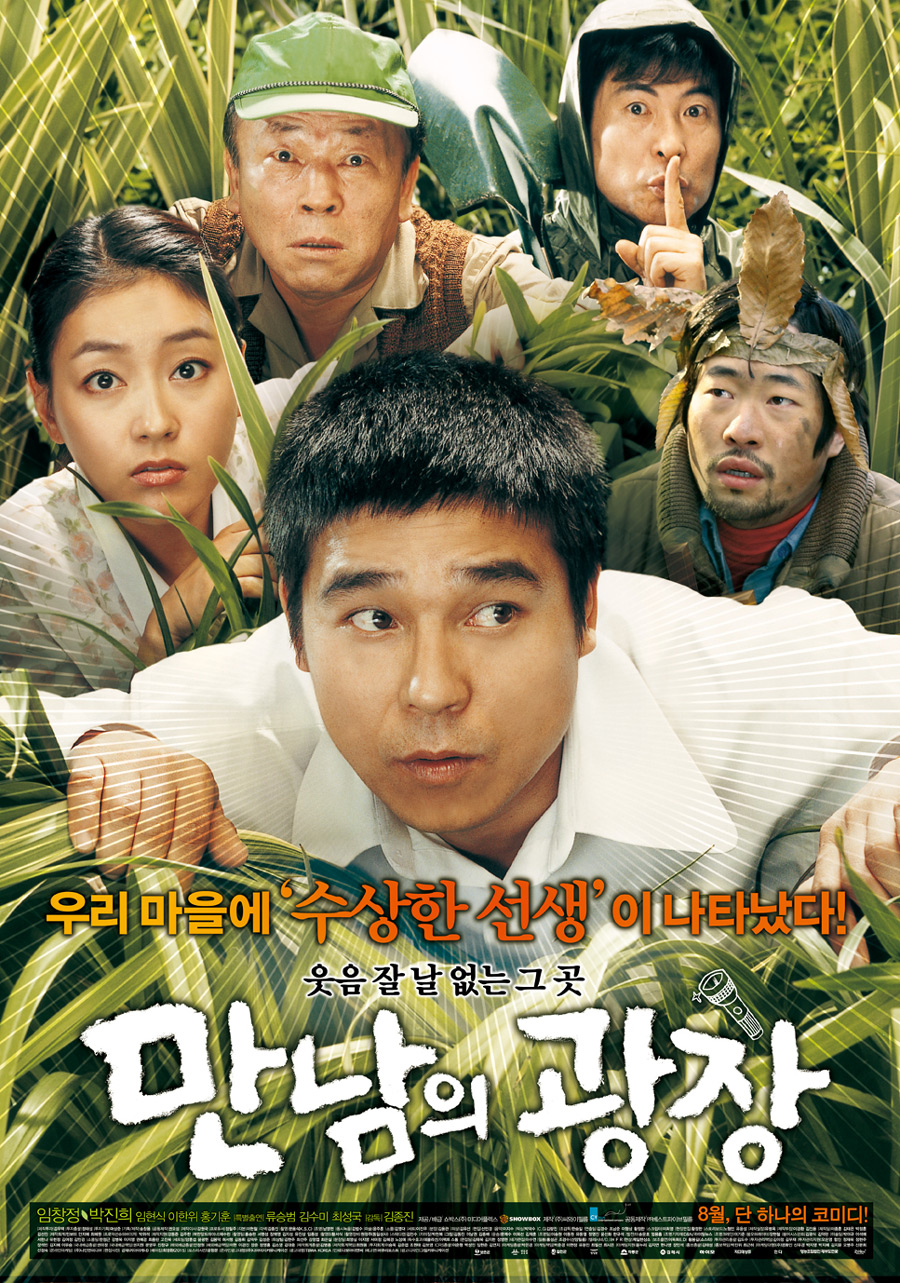
Underground Rendezvous posterAt the very beginning of Kim Jong-jin’s Underground Rendezvous (만남의 광장, Mannamui Gwangjang), a group of kindly villagers in the north of Korea are caught by surprise when they unwittingly help to build the 38th parallel – a series of fortifications which will divide them from one another forevermore. Family members are trapped on different sides of an artificial border by a matter of accident rather than choice, a decision effectively made for them by the Americans and Russians amping up cold war hostility in engineering a proxy war over war-torn Korea.

30 years after the villagers sealed their own fates through being overly helpful, the South Korea of the 1980s is perhaps not so different from its Northern counterpart. A brief hope for democracy had once again been dashed and the land remained under the yoke of a cruel and oppressive dictatorship. Young-tan (Im Chang-jung), a boy from a poor village, is determined to escape his life of poverty by travelling to Seoul and studying to become a teacher. However, within five minutes of exiting the station, his country bumpkin ways see his only suitcase swiped by a street thief. An attempt to report the crime only gets him into trouble and so Young-tan is sent to a “re-education” camp in the mountains. Falling off the back of a truck, he gets lost and eventually ends up in a remote village where they assume, ironically enough, that he is the new teacher they’ve been expecting for the local school. The village, however, has a secret – one that’s set to be exposed thanks to Young-tan’s questions about a beautiful lady he saw bathing at the local watering hole.

Young-tan turns out to be a pretty good teacher, though not exactly the sharpest knife in the drawer. The village’s big secret is that the divided families were so attached to each other that they each started digging tunnels to the other side shortly after the wall went up and eventually met somewhere in the middle where they’ve built a large cave they use for underground reunions. Apparently existing for 30 years, no one outside of trusted citizens on either side knows about the tunnel’s existence. No one has used it to switch sides, the only purpose of the tunnel is for relatives and friends to mingle freely in defiance of the false division that’s been inflicted on them by outside forces.

Young-tan, however, is fixated on the bathing woman who turns out to be North Korean Sun-mi (Park Jin-hee) – the sister-in-law of the village chief. Thinking only of his crush and also a comparative innocent and devotee of the moral conservatism of ‘80s Korea, Young-tan catches sight of Sun-mi and the village chief and is convinced that the old man is molesting an innocent young maiden. He sets out to convince the villagers of this, little knowing the truth and unwittingly threatening to expose the entire enterprise through failing to understand the implications of his situation.

Kim pulls his punches on both sides of the parallel, only hinting at the oppressions present on each side of the border with Sun-mi fairly free in the North, working as the army propaganda officer in charge of the noisy broadcasts which attempt to tempt South Koreans to embrace the egalitarian “freedoms” on offer to defectors. Meanwhile the villagers in the South live fairly isolated from the unrest felt in the rest of the country, continuing a traditional, rural way of life but are also under the supervision of a local troop of bored army conscripts on the look out for North Korean spies. Nobody wants to defect, though perhaps there’d be little point in any case, but everyone longs for the day when families can all live together happily as they used to free from political interference.

Satire, however, is not quite the main aim. An absurd subplot sees the “real” teacher marooned on his own after taking a detour and accidentally standing on a landmine leaving him rooted to the spot on pain of death, but the majority of the jokes rest on Young-tan’s “misunderstandings” as a village outsider, goodnatured simpleton, and bullheaded idiot. A final coda tries to inject some meaning by hinting at the effects of repurposing the truth for political gain and the tempered happiness of those who get what they wanted only not quite in the way they wanted it, but it’s too little too late to lend weight to the otherwise uninspired attempts at comedy.


Currently streaming on Netflix UK (and possibly other territories)

Original trailer (no subtitles)