My Name (내 이름은, Chung Ji-young, 2026)

An ageing woman’s internalised anxiety and inability to remember her childhood stand in for a nation’s wilful amnesia in Chung Ji-young’s gentle contemplation of the legacy of the massacre that began on 3rd April 1948 on Jeju Island. Set mainly in the late 90s a decade or so after Korea’s transition to democracy, the film emphasises the importance of reckoning with the buried past in order to prevent its mistakes occurring again.

Those mistakes are largely reflected in the life of cheerful teenager Young-ok (Shin Woo-bin) who is embarrassed by the fact his single mother is much older than all the other parents while she also gave him a name that is customarily given to girls. On the first day of the new term, Young-ok’s teacher Mr Hwang (Heo Dong-won) mockingly refers to him as “Miss Young-ok” with exaggeratedly feminine gestures. Hwang is, in many ways, a relic of the authoritarian past and his mocking of Young-ok’s name bears out the toxic masculinity of a militarised society. Min-soo (Choi Jun-woo), Young-ok’s more astute best friend, takes the teacher to task for skipping over the massacre in their contemporary history classes. Hwang tells him that it is “unimportant” as it does not even appear on the university exams, brushing off Min-soo’s protests that the city wouldn’t be gearing up to commemorate the 50th anniversary of an “unimportant” event. If it were important, it would be in the text book, Hwang insists demonstrating his lack of curiosity and authoritarian mindset. Of course, it later turns out that he is also corrupt. Young-ok’s mother Jeong-sun (Yeom Hye-ran) brings a “gift” to parents’ day, but ends up not giving it to him after noticing that his desk draw is full of other envelopes while he makes veiled comments about all the kids being “equal”, but some being more equal than others depending on how thick those envelopes are.

The film seems to equate this masculine jockeying for power with the origins of the massacre as the boys engage in slapping games similar to the way in which the army forced the villagers to slap their friends who had been accused of being communist sympathisers to prove their own loyalty. Rich kid Kyung-tae (Park Ji-bin) has just transferred in from Seoul having apparently caused some trouble there due to his violent outbursts. He too makes the kids engage in slapping games to define hierarchy, while using picking up on Young-ok as a useful stooge too naive to see that Kyung-tae has manipulated him into becoming class president because unlike Min-soo he will be easy to control. Young-ok is too concerned with being liked and is happy to have been co-opted into Kyung-tae’s gang, going along with his violent rule and even betraying Min-soo by siding with Kyung-tae even when he makes him lie on his behalf. This is where it starts, as the film would have it, by failing to stand up to a thuggish teen leveraging his wealth and status to dominate those around him.

Jeong-sun, meanwhile, is encouraged to address the cause of her anxiety rather than suppress it with medication by a doctor newly arrived from Seoul. Delving into the source of her trauma awakens memories of the massacre that it had long been taboo to talk about. The subsequent connections to both Korea’s involvement with the Vietnam War and the Gwangju Uprising in 1980 in which ordinary people were once again murdered by the state echoing what had happened in Jeju hint at a destructive legacy of militarised authoritarianism infecting all areas of society. In order to fully progress into the new democratic future, the nation will need to reckon with its autocratic past which begins with the act of remembrance. 

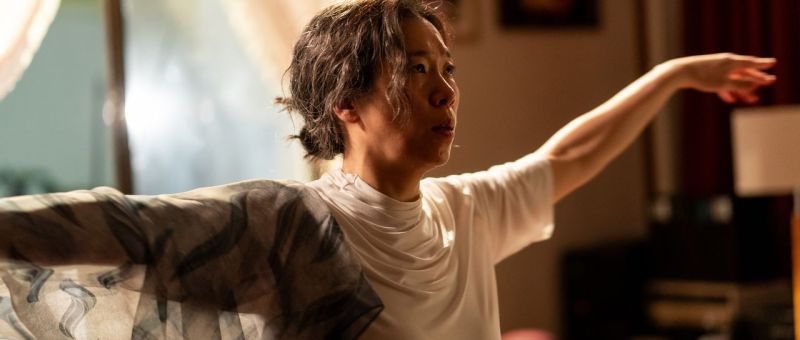
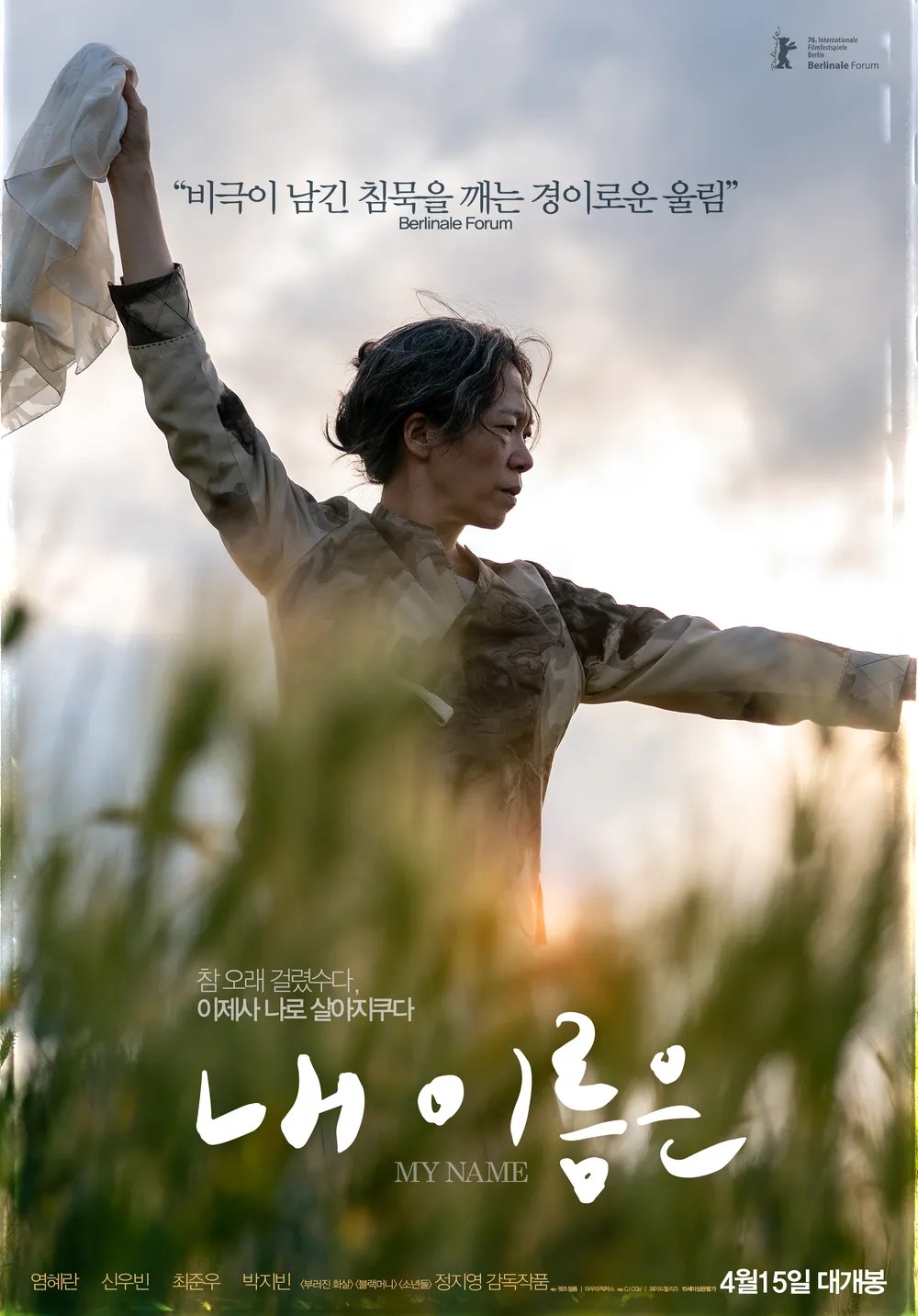
This is really what Jeong-sun begins to do in unlocking the traumatic memories of her childhood and with them reclaiming her authentic identity that also informs that of Young-ok. As she told him, she dances when she’s happy and also when she’s sad, but there is something quite poignant in her dancing her in the memory of those who lost their lives during the massacre as if she were liberating both their souls and her own by resolving to go on building a better, kinder world that remembers its past and is mindful not to repeat it.


My Name screened as part of this year’s New York Asian Film Festival.

Trailer (English subtitles)

Underground Rendezvous (만남의 광장, Kim Jong-jin, 2007)

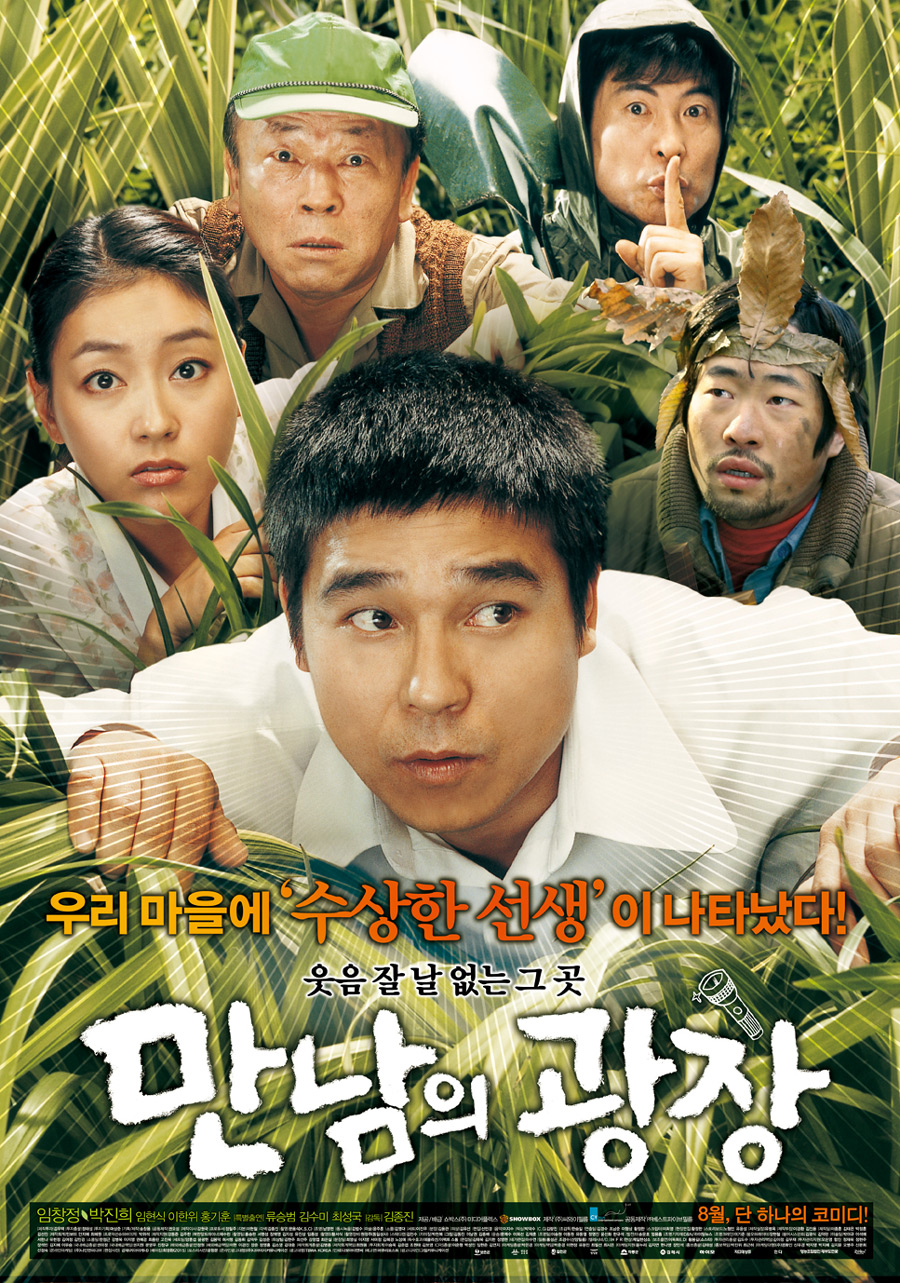
Underground Rendezvous posterAt the very beginning of Kim Jong-jin’s Underground Rendezvous (만남의 광장, Mannamui Gwangjang), a group of kindly villagers in the north of Korea are caught by surprise when they unwittingly help to build the 38th parallel – a series of fortifications which will divide them from one another forevermore. Family members are trapped on different sides of an artificial border by a matter of accident rather than choice, a decision effectively made for them by the Americans and Russians amping up cold war hostility in engineering a proxy war over war-torn Korea.

30 years after the villagers sealed their own fates through being overly helpful, the South Korea of the 1980s is perhaps not so different from its Northern counterpart. A brief hope for democracy had once again been dashed and the land remained under the yoke of a cruel and oppressive dictatorship. Young-tan (Im Chang-jung), a boy from a poor village, is determined to escape his life of poverty by travelling to Seoul and studying to become a teacher. However, within five minutes of exiting the station, his country bumpkin ways see his only suitcase swiped by a street thief. An attempt to report the crime only gets him into trouble and so Young-tan is sent to a “re-education” camp in the mountains. Falling off the back of a truck, he gets lost and eventually ends up in a remote village where they assume, ironically enough, that he is the new teacher they’ve been expecting for the local school. The village, however, has a secret – one that’s set to be exposed thanks to Young-tan’s questions about a beautiful lady he saw bathing at the local watering hole.

Young-tan turns out to be a pretty good teacher, though not exactly the sharpest knife in the drawer. The village’s big secret is that the divided families were so attached to each other that they each started digging tunnels to the other side shortly after the wall went up and eventually met somewhere in the middle where they’ve built a large cave they use for underground reunions. Apparently existing for 30 years, no one outside of trusted citizens on either side knows about the tunnel’s existence. No one has used it to switch sides, the only purpose of the tunnel is for relatives and friends to mingle freely in defiance of the false division that’s been inflicted on them by outside forces.

Young-tan, however, is fixated on the bathing woman who turns out to be North Korean Sun-mi (Park Jin-hee) – the sister-in-law of the village chief. Thinking only of his crush and also a comparative innocent and devotee of the moral conservatism of ‘80s Korea, Young-tan catches sight of Sun-mi and the village chief and is convinced that the old man is molesting an innocent young maiden. He sets out to convince the villagers of this, little knowing the truth and unwittingly threatening to expose the entire enterprise through failing to understand the implications of his situation.

Kim pulls his punches on both sides of the parallel, only hinting at the oppressions present on each side of the border with Sun-mi fairly free in the North, working as the army propaganda officer in charge of the noisy broadcasts which attempt to tempt South Koreans to embrace the egalitarian “freedoms” on offer to defectors. Meanwhile the villagers in the South live fairly isolated from the unrest felt in the rest of the country, continuing a traditional, rural way of life but are also under the supervision of a local troop of bored army conscripts on the look out for North Korean spies. Nobody wants to defect, though perhaps there’d be little point in any case, but everyone longs for the day when families can all live together happily as they used to free from political interference.

Satire, however, is not quite the main aim. An absurd subplot sees the “real” teacher marooned on his own after taking a detour and accidentally standing on a landmine leaving him rooted to the spot on pain of death, but the majority of the jokes rest on Young-tan’s “misunderstandings” as a village outsider, goodnatured simpleton, and bullheaded idiot. A final coda tries to inject some meaning by hinting at the effects of repurposing the truth for political gain and the tempered happiness of those who get what they wanted only not quite in the way they wanted it, but it’s too little too late to lend weight to the otherwise uninspired attempts at comedy.


Currently streaming on Netflix UK (and possibly other territories)

Original trailer (no subtitles)