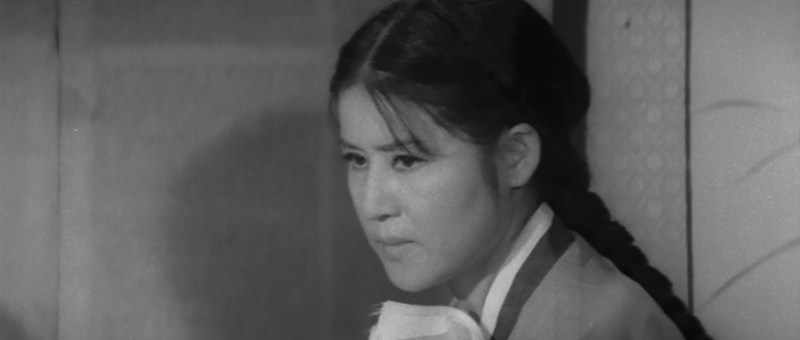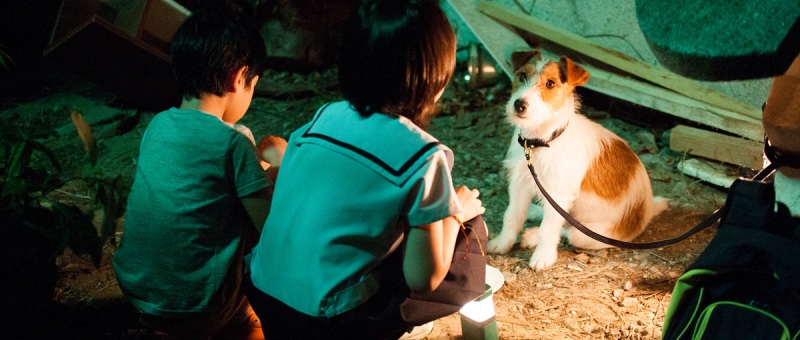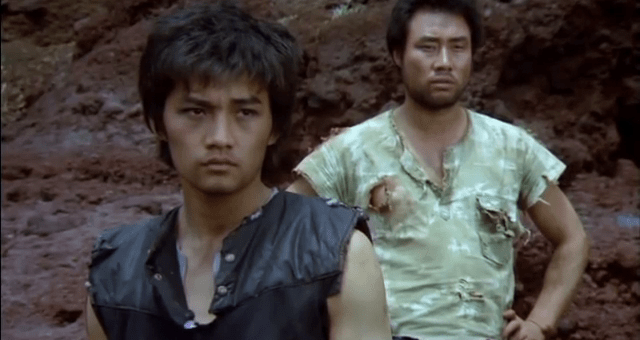
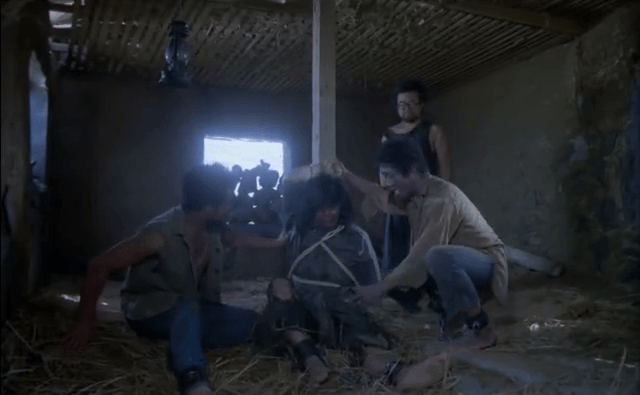
Lee Jang-ho’s Baseball Team (이장호의 외인구단, Lee Jang-ho, 1986)

After finding huge success with his debut film, Lee Jang-ho soon became disillusioned with the film industry and was in fact temporarily banned after being found in possession of marijuana. After the assassination of Park Chung-hee in 1979, Lee returned with a new focus on socially conscious filmmaking only to be blindsided by the advent of an entirely new age of oppression following the coup of general Chun Doo-hwan in 1980. In contrast to Park’s regime, Chun’s embarked on a deliberate bread and circuses policy pushing sports, sex, and screen in which social commentary was out and softcore very much in. 

Lee had opened his nonsense film Declaration of an Idiot with a scene of himself committing suicide because no one cares about movies anymore, they only like sports which lends a note of irony to his incredibly strange and very of its time baseball film, Lee Jang-ho’s Baseball Team (이장호의 외인구단, Lee Chang-houi wingudan). Adapted from a popular sports manhwa, the film is ostensibly a much more commercial affair yet in its way is attempting to subtly attack the growing inequalities of the Chun era as its poor mountain boy hero, Hye-seong (Choi Jae-sung), squares off against posh boy rival Dong-tak (Maeng Sang-hoon) not only for sporting glory but the hand of his innocent first love Um-ji (Lee Bo-hee). 

As Dong-tak joins a top-rated team and is interviewed on television, Hye-seong returns to the mountains to train and is trying to dodge the train fare while travelling with his father to discuss joining a team. He eventually strikes a blow against Dong-tak by striking him out during a perfect game, but ruins his shoulder in the process with his baseball dreams then behind him, which is a problem because he’s devoted his entire life to fulfilling the promise he made to Um-ji when they were children to become a great baseball player. Hye-song repeatedly promises to do anything he can to make Um-ji happy even if it means accepting her relationship with Dong-tak, but Dong-tak openly laughs at him for being a nobody though there is something worryingly intense in his suddenly throwing all his letters from Um-ji, which he had in his bag, on the table describing them as written by a “goddess” and his “sacred place.”

As for Um-ji herself, she seemingly has little control over her life as the daughter of an upperclass family. She began dating Dong-tak before reconnecting with Hye-seong in Seoul and originally sticks to her class-appropriate match before being tempted by her innocent childhood connection and realising Dong-tak is an arrogant arsehole who didn’t show up to her birthday dinner because he forgot and went on a date with another girl. Even so, her family continue to pressure her into marrying Dong-tak despite his manly decision to ignore her until he’s accomplished his mission of achieving 100 consecutive hits at which point he’ll propose. Hye-song ironically makes a similar decision, taking off for a training session on a remote island which ends up lasting a whole year during which his completely insane mentor Coach Byeon-ho (Ahn Sung-ki) denies him permission to write to her. When he returns, Um-ji has ended up married to Dong-tak and is in a depressive state wandering through life in a daze of guilt and disappointment that she betrayed both herself and Hye-seong because of social pressure to conform and is now stuck in this emotionally unsatisfying relationship. Hye-seong rejects her on the grounds that the spark has gone from her eyes and she’s no longer the Um-ji of his youth though also accepting some responsibility for that. At the end of the film, Hye-song loses his sight which allows him to reunite with a changed Um-ji who has separated from the now loser Dong-tak, no longer able to see the change in her remembering only the Um-ji he fell in love with. 

The men who were with him on the island where they underwent bizarre martial-arts style training regimes, were whipped and shackled, and almost killed their one-armed teammate have similar problems returning to situations that are less satisfying than they hoped. A wimpy pitcher despised by his son returns to find him unimpressed, while another discovers his wife had temporarily left him, and an incredibly short man, Kyeong-do, who’d been bothering a bank employee so much she switched branches to avoid him discovers she’s engaged to another man. Kyeong-do refuses to give up, arrogantly telling her that he’ll be replacing her groom on the big day while continuing to behave like a massive creep but actually successful in the end because of his sporting and financial success though it looks more like a case of her giving in than actually falling for him and sends some very mixed messages about a woman’s agency in this still conservative age. 

The players brand themselves losers and outsiders, each of them in some way compromised and locked out of pro-baseball from Kyeong-do’s short stature to Hye-seong’s poverty though the decision to include a mixed race man which may have been intended as a progressive gesture seriously backfires by having a Korean actor perform in blackface while insensitively mimicking racial stereotypes. The coach, Byeong-ho is also an outsider by virtue of walking with a cane and purposefully creates a team of others like himself he can train with his cruel and bizarre methods to take on the Dong-taks of the world. Even so, others brand them “inhuman”, “beasts trained with whips”, and continue to resent their attempt to subvert the contemporary class order. 

On the surface, however, Lee has simply made a baseball film about a group of outsiders who triumph over adversity. He fills it with the spirit of the times, throwing in several sequences accompanied by contemporary pop songs along with an atmosphere of ridiculous excess not to mention inconsequentiality as if he were actively mocking the current direction of Korean cinema despite the occasional moment of artistry such as the gothic scene in which Um-ji realises Hye-seong has returned but the pair are separated by a billowing white curtain. An oddity, but perhaps one that speaks of the oddity of its times. 
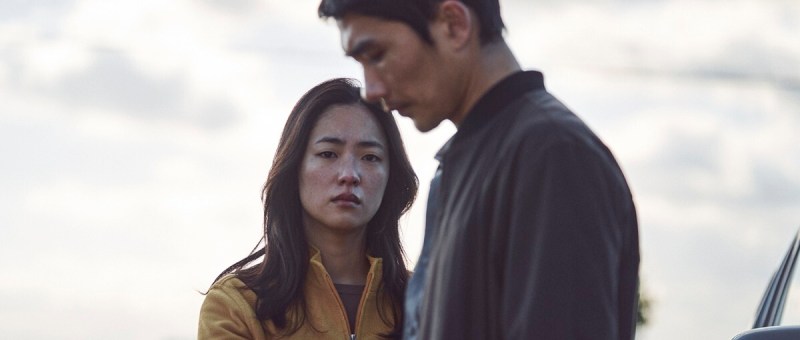

Night in Paradise (낙원의 밤, Park Hoon-jung, 2020)

Sometimes being too good at your job can be a definite liability. So it is for the hero of Park Hoon-jung’s melancholy gangster noir, Night in Paradise (낙원의 밤, Nagwonui bam). Park’s worldview is often nihilistic and sometimes downright unpleasant, though it’s a sense of fatalistic sadness that dominates this otherwise over familiar tale of a noble gangster cruelly misused by those who choose not to obey their shared code and thereafter finding himself on a dark path towards if not exactly redemption then at least an inevitable ending. 

Rising foot soldier Tae-gu (Uhm Tae-goo) has found himself in the middle of an old-fashioned gang war, serving an ambitious boss, Yang (Park Ho-san), who has unwisely decided to press into territory operated by the well established Bukseong gang. Getting some of his guys back after being kidnapped by Bukseong and held in an apartment block where the community is currently protesting the take over and demolition by gangster redevelopers, Tae-gu is told by his opposing number that Yang is a crazy upstart who would be a nobody without him and that he made a mistake turning down a job offer from Bukseong boss Doh. Tae-gu is however an old school mobster loyal to his gang which is why he doesn’t stop to think things through when someone close to him is killed in a car accident in which he assumes he was the intended target, believing Doh is striking a low blow. Encouraged by Yang, he meets with Doh in person and daringly knocks him off at a swimming pool sauna escaping through a window in the nude. Yang arranges to send him to Jeju Island to lay low before moving on possibly to Russia, but Yang has also been engaging in a failed pincer movement which left them all in hot water after failing to take out Doh’s no. 2, Ma. 

As the title might hint, even the island “paradise” of Jeju is not free of death and crime as Tae-gu discovers after bonding with their contact, Kuto (Lee Ki-young), a fixer smuggling guns from Russian mobsters hidden inside consignments of fish. Like Tae-gu’s sister, Kuto’s niece Jae-yeon (Jeon Yeo-been) is suffering from an undisclosed terminal illness that seems to have few obvious symptoms but has left her with suicidal tendencies. Kuto’s decision to take Tae-gu in is motivated by his desire for money to take Jae-yeon to America for treatment though she and Tae-gu are also much the same both having lost people close to them because of their proximity to the gangster world while he and Kuto search for ways to make up for the harm their lives of violence has caused. 

Jae-yeon is quick to remind Tae-gu that she will soon be dead and that therefore nothing really matters and her life has no meaning while he perhaps as a gangster feels something similar that his life ended the day he first picked up a gun yet there are also ways in which he must act in satisfaction of his code. His tragedy is that he’s operating under a misapprehension, blindly trusting in the wrong people when the truth is painfully obvious to all but him.

Park inserts a series of ironic pillow shots of the idyllic Jeju night scene with comforting lights swinging from tropical trees and gentle waves rolling on the horizon, before closing with a series of eerie daytime shots of familiar locations now devoid of people as if this were a hell our heroes had recently been haunting, ghosts of a violent landscape. His fight scenes are visceral yet also occasionally cartoonish, several taking place in the confined space of a car expertly framed by Park as the heroes fight desperately for life while constrained by their environment. A high octane chase through an airport with its ubiquitous escalators soon gives way to an impressive motorway-bound set piece with an unexpected resolution, the gangsters later scattering on hearing far off police sirens though as we also realise police collusion is an inescapable factor in the fragile equilibrium of the underworld even if it might not stretch all the way to idyllic Jeju. “Don’t waste your tears” Tae-gu unironically offers in weary resignation to his fate, a noble gangster to the last too good to survive in a world of nihilistic futility. 


International trailer (English subtitles)

The Childe (귀공자, Park Hoon-jung, 2023) [Fantasia 2023]

“Isn’t money great? Everything is solvable with it” according to a lawyer working for an ailing chaebol CEO, but for the man he’s talking to money is at the root of all his problems because he doesn’t have any and is therefore powerless not least to save his equally ailing mother who needs an expensive operation to survive. The latest action drama from Park Hoon-jung, The Childe (귀공자, Gwigongja) implies an apparent focus switch in that the korean title, Nobleman, is also that of its absurdly cheerful assassin. “Childe” in its medieval spelling may simply be an attempt to lend a eerie mythical quality similar to the way the word “witch” is used in Park’s previous films, but in its original meaning also hints at the ostensible protagonist’s liminal status as a “nobleman” who has not yet come of age. 

That’s in part because Marco (Kang Tae-joo) has no idea of his parentage, only that his father was Korean and returned home alone leaving him and his mother behind in the Philippines. Referred to by a derogatory term for children fathered by Korean men as a result of sex tourism, Marco is an embittered young man filled with resentment and little hope for the future whose literal fatherlessness is an allusion to his cultural orphanhood. His mother sent him to Korean schools and raised him only to speak English and Korean, either feeling some affection for his absent father or more practically deciding he might have a better life as a Korean even if in the end neither culture fully accepts him. He would never have attempted to look for his father were it not for his mother’s illness hoping in some way to make him accept responsibility for his actions and the family he abandoned. 

In essence, Park uses the ailing chaebol patriarch’s familial irresponsibility as a wider metaphor for corporatising colonialism and exploitation while emphasising the corrupting influence of chaebol culture in which money really can solve pretty much everything even, it’s implied, imminent death. Picked up by a slick lawyer, Marco is told his father is looking for him too because, ironically enough, he is also ill and near death so simply wants to see the son he abandoned. Chairman Han will fly him to Korea and also cover his mother’s medical bills if he agrees to come but once he arrives Marco realises he’s in a very precarious position caught in the middle of a succession battle between his two half-siblings who each see him only as a pawn and ultimately want him dead. A mysterious assassin billed as The Nobleman (Kim Seon-ho) but introducing himself only as a “friend”, possibly the last you’ll ever make, is hot on his tail though his motivations remain unclear. 

As in some of his other films, Park hints at a mysterious shadow world filled with conspiracy and dominated by chaebol interests though in this case the figure of the corrupted patriarch takes on a poignant sensibility in which he too has become little more than a pawn. It appears he may disapprove of his children’s actions and actually has a genuine interest in meeting the son he abandoned who is like the hero of a fairytale the most just, deprived of his birthright by the greedy machinations of others. The abiding mystery may be why the chairman is kept alive though it seems that oldest son Yi-sa (Kim Kang-woo) is otherwise unable to maintain control of the corporate empire without recourse to his father’s identity for he has little power of his own. 

That might go some way to explaining the absurdity of his sociopathic violence, wandering around in a bathrobe carrying a shot gun and executing newspaper editors who’ve tried to expose their dodgy dealings in the midst of a vast estate bordered by forests. Even the school girl half-sister roams around with a pistol taking pot shots at Marco and The Nobleman but interestingly not at Yi-sa or the Chairman which hints at an odd kind of familial solidarity even in this incredibly dysfunctional and corrupt environment along with a wilful determination to deprive Marco of what may be his birthright. As with his previous films, Park loads up on gore delivered with more than a little absurdity in a series of high impact action scenes, but finally returns again to an unconventional friendship and unexpected brotherhood between the powerless and dispossessed in a sense at least reclaiming something that was theirs by right with the only means at their disposal. 


The Childe screened as part of this year’s Fantasia International Film Festival and is released in the US courtesy of Well Go USA.

International trailer (English subtitles)

Daughter-in-Law (민며느리, Choi Eun-hee, 1965)

Domestic power struggle meets oppressive patriarchal social codes and entrenched class prejudice in Choi Eun-hee’s lighthearted marital drama, Daughter-in-Law (민며느리, Minmyeoneuli, AKA The Girl Raised as a Future Daughter-In-Law). One of the biggest stars of Korean cinema’s golden age, Choi was only the third woman to direct a feature film and the first to direct herself as the leading lady, adapting a popular radio serial in which a pure hearted young girl finds herself suffering while patiently fulfilling the role of a dutiful daughter-in-law to a tyrannical middle-aged woman. Though the film may eventually reinforce traditional gender roles and the patriarchal norms of the conventional marriage it also subtly undercuts them in its final bid for female solidarity as well as in the surprisingly frank depiction of the sexually active relationship between the middle-aged in-laws. 

Perhaps surprisingly, the film opens with a montage sequence of a young woman doing laborious household tasks while the title song muses on the difficulties of married life. For young Jeomsun (Choi Eun-hee), the problems are compounded as we discover she was in effect sold into marriage because of her once wealthy family’s poverty and as her intended husband is still only a child is treated as an unpaid housekeeper by her harridan of a mother-in-law, Mrs Kim (Hwang Jung-seun). “Serve your parents and respect your husband, that’s this country’s way” Mrs Kim reminds her, continually dissatisfied with everything but mostly that she isn’t getting enough respect or attention as the head of the household (in the domestic sense at least). 

As thoughtlessly cruel as she often appears to be, Mrs Kim’s behaviour can perhaps be seen as merely an attempt to leverage the only power she will ever have as the matriarch in her own house, a power made all the greater by the fact her son is still a child and her future daughter-in-law only afforded a liminal space within the family hierarchy. She continually reminds her husband (Kim Hie-gab) and Jeomsun that she too had a mother-in-law who treated her badly, often making her work through the night, and so her treatment of Jeomsun is a way of paying down the system, a facet of the “custom passed down through the generations”. Having been badly treated herself, she relishes her new sense of power and treats her daughter-in-law badly as misdirected payback for her own youthful suffering. 

Jeomsun herself has internalised a sense of the system’s righteousness, fully believing that she must do her “duty” as a good daughter-in-law even when her own mother points out that her in-laws are hardly doing their duty when they wilfully mistreat her. Added to notions of patriarchal subjugation is a further class dimension that leaves Jeomsun at their mercy because she has become impoverished, her mother having consented to her marriage only reluctantly in an attempt to avoid having to sell the family house. Jeomsun had been in love with a local man, Sugil (Park No-sik), but felt their union was impossible while her father was alive because he was of a lower social class and continues to believe it improper even after his death with only her mother lamenting that she wishes she had found a way that her daughter could have had a happier life marrying a man she loved. For his part, Sugil attempts to buck the system by continuing to pursue her, hoping to “buy” her back off the Kims after raising money while the marriage remains unconsummated and therefore unofficial. 

Choi’s age, then in her late 30s though presumably playing the part of a young woman in her late teens or early 20s, further adds to the incongruous inappropriateness of her position in the household as the future wife of a boy who is still quite clearly a child. Yet the young master, Bokman, appears to dote on her, often taking her side against his mother but in the end unable to defend her, too afraid of Mrs Kim to tell the truth and risk having to take responsibility for his actions preferring to let Jeomsun pay for them instead. In an interesting role reversal, it’s Mr Kim who is the perpetual peacemaker, a kind and patient man who quite clearly loves his firecracker wife despite her harsh demeanour. The slightly comedic depiction of their cheerfully active sex life as a middle-aged couple is perhaps at odds with the often prudish times, but also softens Mrs Kim’s otherwise difficult character until such time as she’s tricked into a moment of self-realisation in the recognition that her resentment of Jeomsun is really a reflection of her maternal jealousy and therefore entirely unfair. 

It’s this momentary epiphany that brokers an opportunity for a new female solidarity not only between Jeomsun and her mother-in-law but also with her own mother who must then find the magnanimity to forgive Mrs Kim for treating her daughter so badly in the first place. What began as a tale of patriarchal cruelties, a young woman sold as a wife to a spoilt child at the expense of her own romantic fulfilment, ends with a wilful reversal of the “custom passed down through the generations” as Mrs Kim agrees to cede some of her power in treating her daughter-in-law as more of an equal while making space to welcome her mother, another mother-in-law, into her home. “We all have to live according to our duties” Jeomsun had sadly explained to her former love, yet what she discovers is that duty is a two way street and lies perhaps more in mutual compassion than in slavish devotion to outdated tradition. 


Daughter-in-Law is currently available to stream in the UK as part of the Korean Cultural Centre UK’s Korean Film Nights: Filming Against the Odds where it will be followed by Choi Eun-hee’s second film as a director A Princess’ One Sided Love on 27th May. Other films streaming in the season include Park Nam-ok’s The Widow (streaming throughout), Li Mi-rye’s My Daughter Rescued From The Swamp and Lee Seo-gun’s Rub Love (both 10th June).

How to Steal a Dog (개를 훔치는 완벽한 방법, Kim Sung-ho, 2014)

how to steal a dog posterEverything seems so simple to children. The logic maybe surreal, but it is direct. Problems have solutions and there are clear pathways to achieve them even if they seem odd to a more adult way of thinking. Perhaps we’d all be better off if we thought about social issues in the same way children do, though naivety and innocence often prove blindspots in otherwise solid plans. How to Steal a Dog (개를 훔치는 완벽한 방법, Gaereul Hoomchineun Wanbyeokhan Bangbub) is basically a heist movie in which two adorable little girls plan to kidnap a beloved pooch from a rich old lady who will then be only too happy to part with her millions to get it back but it’s also a subtle social satire on class relations and the economic causes of family breakdown in modern Korea.

Little Ji-soo (Lee Re) tries her best to put brave face on it, but at home everything’s gone wrong. In fact, they don’t even have a home any more – Ji-soo’s dad’s pizza business failed and he’s run off and left them. Evicted, the family have been living in the old pizza van while Ji-soo’s mum (Kang Hye-jung) has convinced an old flame (Lee Chun-hee) to give her a job as a waitress in a posh cafe. It’s approaching crunch time because Ji-soo’s birthday is coming up and the other kids are expecting to be invited to a party at a house Ji-soo doesn’t have. When she spots an ad for a lost dog which promises a reward, Ji-soo strikes on an idea. Together with a new found friend (Lee Ji-won), she hatches a complicated plan to steal the beloved dog of the grumpy old lady (Kim Hye-ja) who owns the cafe where her mother works and extort enough money to buy a lovely new house for her family where she can have her birthday in style.

Ji-soo’s worldview is both cheerfully innocent and extremely cynical. Sad and lonely with her dad gone, she blames her mother’s fecklessness for their present plight, berating her lack of practicality and failure to get her kids into a proper home in good time. Playing the sensible one for her family of three, Ji-soo is always on the look out for scams and trickery, assuming most people are up to something especially when it comes to innocent little girls. Hence she quickly has the number of the local pizza boy (Lee Hong-ki) who takes orders for family size pizzas but writes regular on the order slips and then pockets the difference from the unsuspecting customer. When she spots an ad in an estate agent’s window for houses at 5 million won she becomes fixated on gaining exactly that amount of money, thinking “per three square metre” is the name of an area and little knowing that 5 million won won’t even buy you a front porch in Seoul let alone an entire house.

Though living in a van is not exactly pleasant, Ji-soo’s problem is more one of social shame than it is of actual discomfort. All the kids at school have already been indoctrinated with class competitiveness and everyone is still talking about the last birthday party, the subject of which is getting a little nervous in case Ji-soo’s house turns out to be nicer than his. No one knows Ji-soo’s dad has run off and they’re living in a van, even the teacher seems curious enough about Ji-soo’s putative birthday party to actively remind her about it and enquire when she plans to make some kind of announcement to her schoolmates.

Thankfully, Ji-soon does eventually learn that money and status aren’t everything. The mean old lady turns out just to be sad and lonely, filled with regrets about a mistake made in her past. The scary homeless man (Choi Min-soo) turns out to be a goodhearted free spirit, and Ji-soo’s mum finally finds her feet after buckling down in an honest yet low paying job which requires a lot of early morning starts. From Ji-soo’s point of view, adults are still a bit rubbish but everything seems to be working out for the best. Oddly pure hearted for a story about dognapping, How to Steal a Dog is a charming, whimsical adventure in which a little girl’s faith in the goodness of the world is finally rewarded, even if not quite in the way she imagined.


Original trailer (no subtitles)

https://www.youtube.com/watch?v=X87IdmUIPZw

A Bittersweet Life (달콤한 인생, Kim Jee-woon, 2005)

bitterweet life posterAs Boss Kang (Kim Young-chul) tells the hero of Kim Jee-woon’s A Bittersweet Life (달콤한 인생, Dalkomhan Insaeng), no matter how well things are going, it only takes one mistake to make it all float away. Like any good film noir, the forces which conspire to ruin the quiet, orderly life of cooler than thou gangster Sun-woo (Lee Byung-hun) are those of desire as they come in conflict with codes of loyalty and decency. Sun-woo, like many a lonely hitman before him, finally wakes up to the emptiness of his life only to find no point of escape except the one he has often provided for others in precisely the same situation.

Smartly suited, Sun-woo is the trusted manager of the casino bar, Dolce Vita. Taken away from his elegant dessert in the upstairs restaurant, Sun-woo deals with a group of rowdy customers in true gangster fashion by launching in with a series of jump kicks and quickly thrown punches that reveal just why it is Sun-woo rules the roost. Sun-woo’s boss, Kang, has a special mission for his most trusted minion – keep an eye on his much younger girlfriend, Hee-soo (Shin Min-a), while he travels to Shanghai for three days. Kang thinks Hee-soo is having an affair. If she is, Sun-woo’s options are either to call Kang right away or take affirmative action on his own initiative.

Sun-woo investigates, but much to his surprise finds himself taken with Hee-soo. She is indeed having an affair, something which Sun-woo tries to ignore but finally has to be dealt with. A sudden pang of sympathy stops him from contacting Kang or pulling the trigger. Instead he decides to let the pair go on the condition they never see each other again. Thinking it’s all behind him, Sun-woo tries to go back to his regular job but he’s still dealing with the fallout from playing whistleblower on a high ranking gangster’s son.

Kim opens with an arty black and white sequence of tree branches swaying. In the story offered in voice over a disciple asks whether it is the trees or the wind which are moving, but the master replies that is is neither – it is the heart and mind which move. Like the branches, Sun-woo’s heart has begun to stir. Not love exactly, or lust, but movement. Sun-woo gazes at the way Hee-soo’s hair brushes her shoulder, at the way she walks and smiles at him. Listening to her cello rehearsal, his own emotional symphony begins, dangerously unbalancing his previously one-note existence with its identical suits and minimalist apartments.

Yet if Sun-woo’s downfall is Hee-soo and her alluring vitality, it was Kang’s first. An ageing gangster, Kang feels foolish taking up with a young girl but just can’t help himself. He loves the way Hee-soo couldn’t care less about what other people think, but that also worries him because she’ll never care what he thinks. Kang’s childishly romantic gift of a kitschy lamp with two owls huddling together on the base is the perfect symbol of his misplaced hopes – oddly innocent yet ultimately redundant. Notably, the lamp is one of many things shattered when Sun-woo takes Hee-soo’s lover to task.

Realising he has been betrayed, though not quite for the reasons he thinks, Sun-woo vows revenge. Everything has gone wrong, and he no longer believes in any kind of future which has him in it. Pausing only to send a more mature romantic gift to Hee-soo, an elegant lamp she’d admired on one of their shopping trips, he marches off towards certain death no longer caring for own life in his quest for vengeance and retribution. Repeating Kang’s questions back to him, asking for the real reason any of this happened, doesn’t get him very far but even if these two men have shared the same folly, they fail to understand each other even in death.

Returning to the master and his pupil, the closing coda recounts another story in which the pupil wakes up from a dream, weeping. The master asks him if he’s had a nightmare but the pupil says no, he’s had the sweetest of dreams. He’s crying because he’s awake and knows his dream can never come true. Sun-woo too has woken up, he knows there’s nothing for him now except to accept his fate. He has but been asleep, dreaming a sweet dream, and now he must wake and taste life’s bitterness just as he prepares to leave it.


Screened at London Korean Film Festival 2017.

Original trailer (English subtitles)