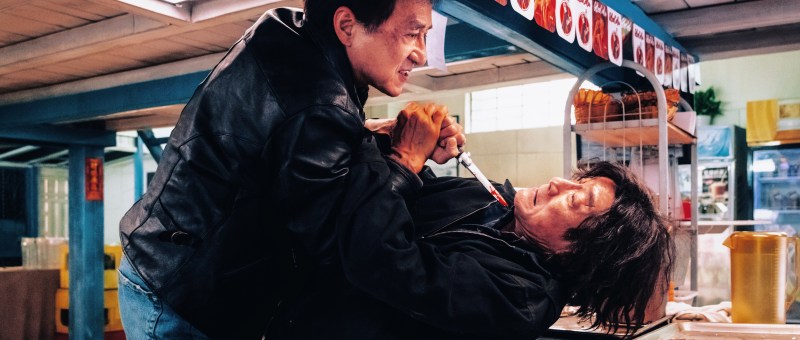
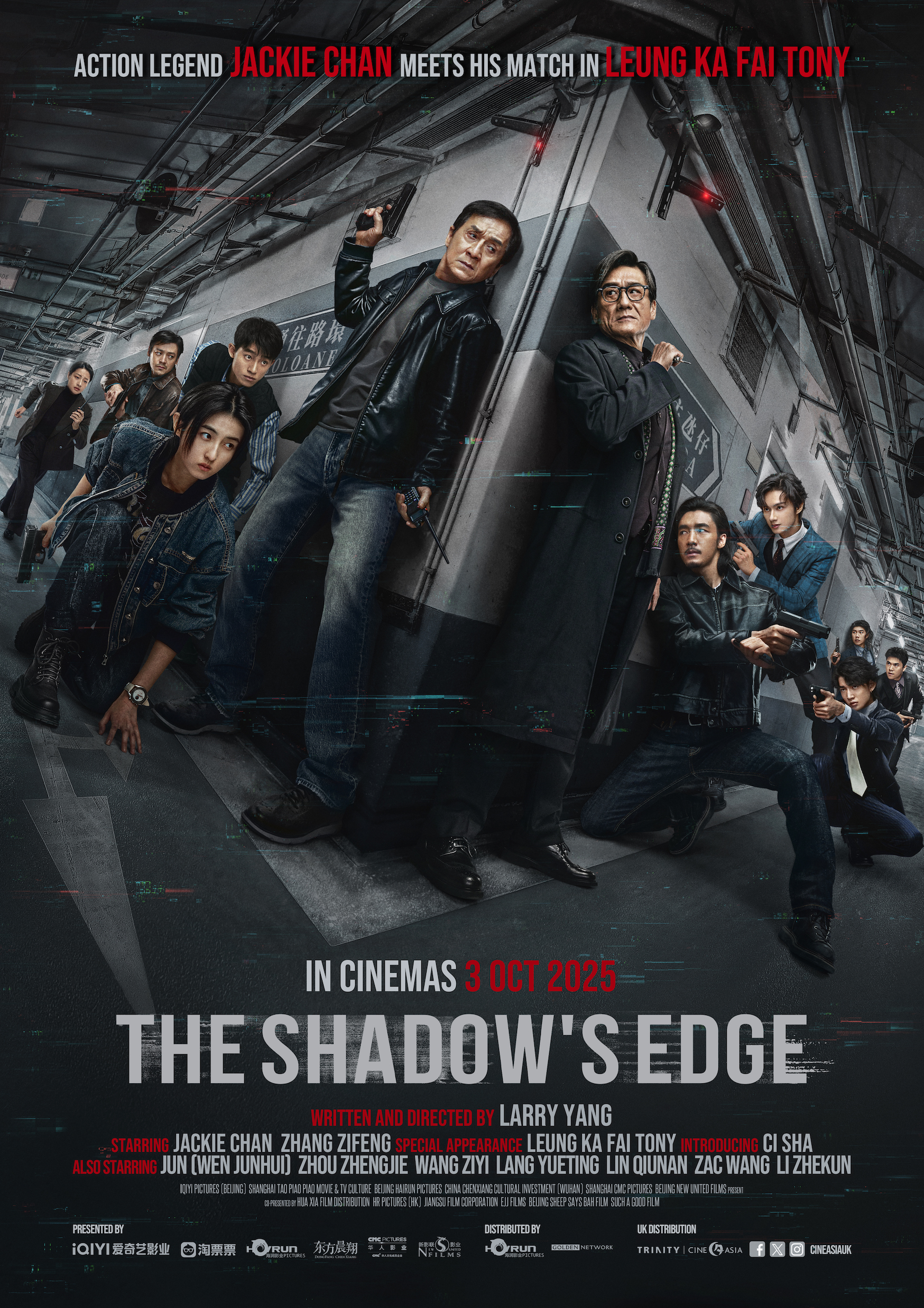
The Shadow’s Edge (捕风追影, Larry Yang, 2025)

China’s mass surveillance system has come to the rescue in many a recent action film, as if it were saying that China will always find you if you’re in trouble but perhaps also if you’re the one making it. A loose Mandarin-language remake of 2007’s Eye in the Sky, The Shadow’s Edge (捕风追影, Bǔfēng zhuīyǐng) takes a slightly different tack in being somewhat wary of AI-based technology and the way it’s already embedded itself so deeply in our lives as to have engendered a rapid deskilling of the younger generation. 

The Macau police force rarely conducts on the ground surveillance anymore and is heavily reliant on its network of video cameras along with facial recognition software. Madame Wang (Lang Yueting), however, the officer in charge ends up disabling the AI system because it’s proving unhelpful and undermining her authority. In any case, it leaves them vulnerable to interference and unbeknownst to them they’ve been hacked. A talented group of thieves have managed to throw them off the scent by manipulating the footage so it looks like their vehicle is in a completely different place while they’re busy committing the crime. The hackers have managed to combine new technologies and old in a much more successful way than the police as they use a mixture of traditional disguise techniques and well-honed spycraft along with video manipulation to evade detection. 

It’s at this point that the police decide they need to bring back someone who still remembers how to do analogue police work to teach them how to combat this new digital threat. The irony is that the hackers are also being led by a veteran espionage expert now in his 70s and known only as “The Shadow” (Tony Leung Ka-fai). Though it’s true enough that he knows the evil that lurks in the hearts of men, The Shadow has surrounded himself with a group of former orphans whom he has trained in the arts of surveillance and infiltration while they take care of all the new technological stuff. But it’s also a slight degree of hubris and a mishandling of the digital side that leads to a slip-up in which the Shadow’s face may have been captured on camera for the first time in decades. As he ages out, there is conflict between father and sons as the boys begin to resent the Shadow’s paranoia and over cautiousness, wondering why they don’t simply take the bigger prize without considering that it may be more difficult to claim and leave them vulnerable to retribution.

Wong (Jackie Chan), the former special forces veteran officer they bring in to train the youngsters experiences something similar in the awkwardness of his relationship with Guoguo (Zhang Zifeng), the daughter of his former partner who was killed on the job because of an error in judgement made by Wong. Guoguo has been consistently sidelined by the police team where she’s surrounded by incredibly sexist men who doubt her ability to do the job because of her gender and short stature, and now has conflicting feelings about Wong that are bound up with her father’s death and a fear of being patronised convinced that Wong too is reluctant to let her do her job out of a problematic sense of overprotection.

Nevertheless, she proves a natural at the old-fashioned art of surveillance and develops a more positive kind of paternal relationship with Wong than that the Shadow has with his band of orphans. In essence, Guoguo learns both how to be part of a team and how to lead it, while Shadow’s boys don’t really learn much of anything beyond ruthlessness and generational conflict. In any case, the answer seems to be that’s what’s needed is both old and new, and that an over-reliance on technology isn’t helpful while AI isn’t necessarily faster than a finely tuned mind like the Shadow’s or merely someone who knows the backstreets well enough to anticipate an exit route. Drawing impressive performances from both his veteran leads, Yang succeeds in blending expertly crafted action sequences with interpersonal drama and giving the film a slick retro feel through the use of split screens and impressive editing. A post-credits sequence also hints at a wider conspiracy in play and the potential of a sequel, which would certainly be a welcome development given the strength and ambition of this opening instalment.


The Shadow’s Edge is in UK cinemas from 3rd October courtesy of CineAsia.

UK trailer (English subtitles)
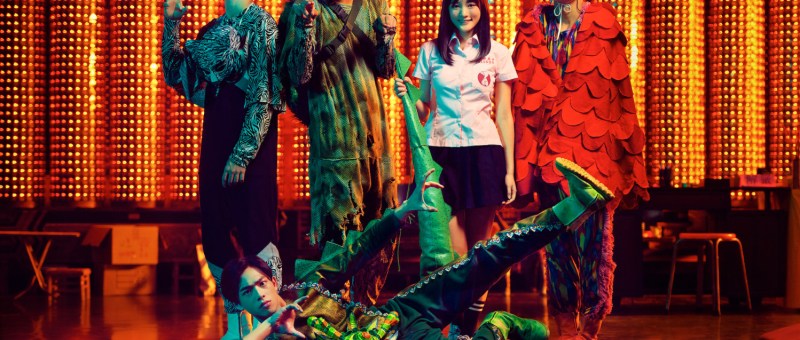
All Because of Love (痴情男子漢, Lien Yi-Chi, 2017)

All Because of Love PosterGrowing up is hard is to do – that is, unless you’re the hero of a teen movie, in which case growing up is merely “difficult” and everything is sure to be alright once the bullies have been vanquished and the last dance danced. Designed to appeal to its target audience, the world of the teen movie is usually black and white, free from the chaos and confusion which most experience during adolescence. All Because of Love (痴情男子漢, Cqíng Nánhàn) is, however, refreshingly honest in its fierce love of a messy situation, forcing its hero into a series of “difficult” circumstances while he plays the noble fool holding fast to an obviously unrequited love in the hope that his niceness will somehow capture his true love’s heart.

When we first meet Erkan (Kent Tsai), he’s a nerd and the member of an oppressed minority at his school, constantly targeted by the tough guys. He is hopelessly in love with popular girl Mandy (Gingle Wang), who is actually dating one of the bullies and doesn’t even really know who Erkan is. Despite his declaration to love her for a thousand years, Erkan’s attempts to woo Mandy end in spectacular and humiliating failure but still he does not give up. Shortly after graduating high school, Mandy abruptly rings him for “a date”. Erkan, still smitten, is excited but Mandy has an ulterior motive – she is pregnant with her jock boyfriend’s child and, abandoned by her own one true love, reckons Erkan might like to try out life as a baby daddy. She is correct in her assumption and Erkan would be buying a ring if he had any money but as it is they’ll have to make do with the gentle guidance of Erkan’s elopement expert grandad (Hsu Hsiao-shun) who takes them back to his seaside home town where they can hide out from Mandy’s overbearing (and very wealthy) family.

As the title implies, the rest of the film becomes a treatise on love – requited or not, familial and romantic, permitted or illicit. Erkan is thrilled, on one level, to have got it together with Mandy but on the other hand Mandy won’t let him near her and it’s clear she is only using him and taking advantage of his noble character to get her out of a fix. Meanwhile, staying at inn, Erkan gets to know another girl, Sing (Dara Hanfman), who is in a permanently gloomy mood thanks to her devastating ability to read minds, and hasn’t left her room in years. Sing, thanks to her ability, has fallen half in love with Erkan’s goofy goodheartedness but also knows he’s still hung up on Mandy, and that Mandy is still hung up on her ex-boyfriend. She is then in a difficult position but manages to strike up enough of a friendship with the lovelorn young man to spur her on to exploring the outside world once again.

Meanwhile, Erkan is also confronted by the eerie similarities between his present predicament and the circumstances of his birth. Having always lived with his granddad, Erkan assumed his parents had passed on but discovers there may be more to the story only he’ll have to go to Japan to find out. Erkan’s granddad kicked off the cycle by eloping with Erkan’s grandmother, leaving their hometown far behind to live a life of love far away, though his son and grandson do not seem to have had so much luck when it comes to romance and Erkan’s romantic answers perhaps lie in exploring his family history rather than re-examining his high school days and refusing to let go of his idealised teenage crush.

A heart to heart with Sing provokes a more grown up meditation of unrequited love even if Erkan is entirely oblivious to Sing’s delicately concealed feelings. Purehearted, Erkan insists that love does not need to be requited, merely loving without being loved is good enough for him (so he says, or perhaps he just doesn’t expect anything more). Sing tells him he’s wrong, that it takes two to love and that a one sided affection is nothing more than intense loneliness. Erkan agrees, missing Sing’s hidden meaning, but maturely admitting that it would be wrong to hold someone’s hand just because you’re lonely when your heart is elsewhere.

Erkan’s idealised love for Mandy is gradually revealed as an adolescent affectation while she is left battling various kinds of familial expectation and manipulation before discovering her former boyfriend is not perhaps the heel that everyone had assumed him to be. Meanwhile, Sing is doing something similar in trying to lay to rest the ghost of a friend who left long ago and Erkan is left trying to reclaim his identity though figuring out who he really is before learning to look at what’s right in front of him rather than indulging in a romantic fantasy. Lien Yi-chi sends Erkan on some very bizarre adventures, swapping genres at a moment’s notice from westerns to classic melodrama and musicals and then settling on something in the middle which feels oddly authentic and lived in despite its strangeness. Often absurd if not quite surreal, Lien’s warmhearted silliness is almost impossible to resist as is the cheerful innocence of the effortlessly romantic conclusion.


Screened at the 20th Udine Far East Film Festival.

Original trailer (English subtitles)