A Foggy Tale (大濛, Chen Yu-hsun, 2025)

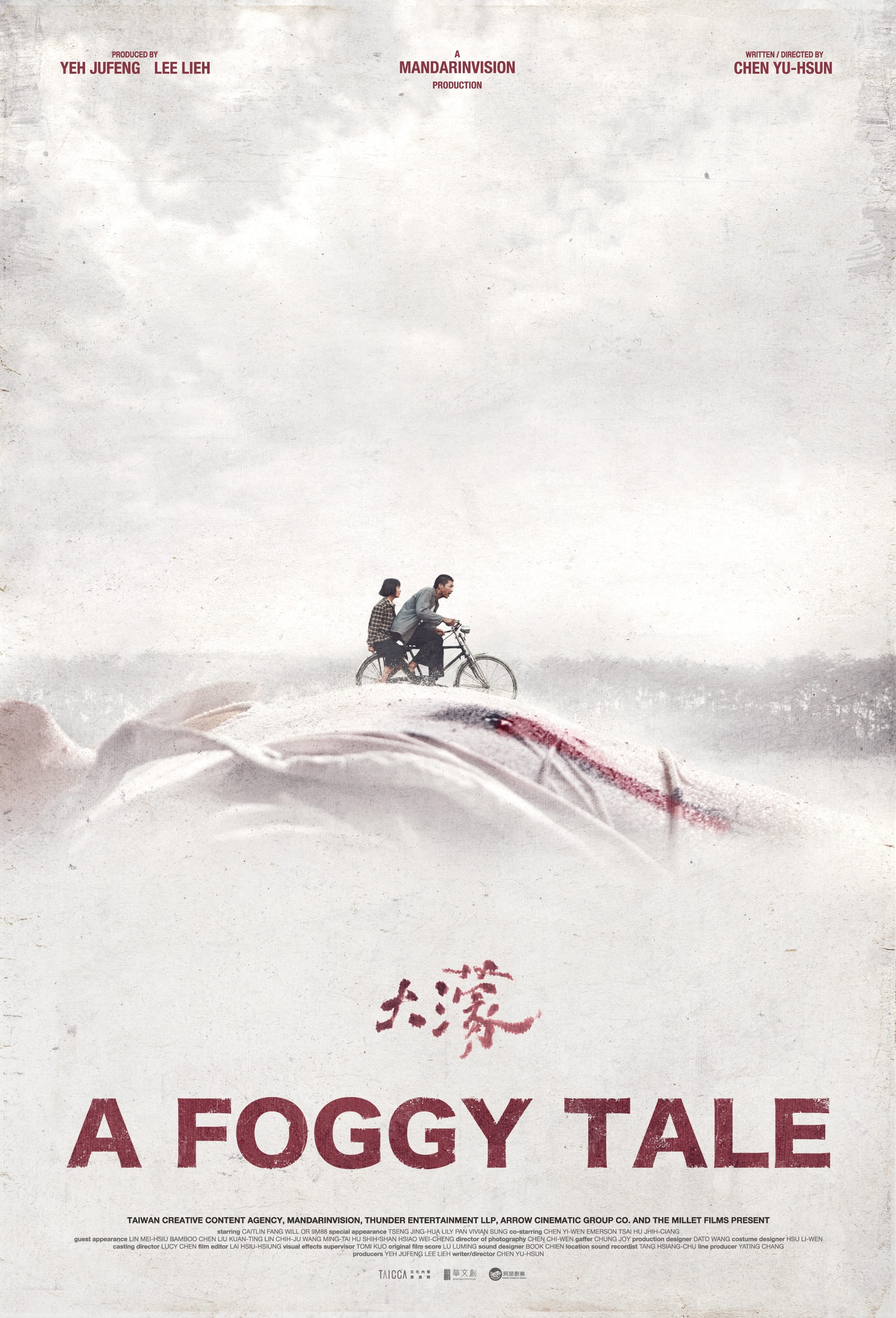
A young girl witnesses the horrors of the White Terror when she travels from her rural hometown to retrieve the body of her brother who has been executed by military police in Chen Yu-hsun’s otherwise light-hearted odyssey through 1950s Taipei, A Foggy Tale (大濛, dà méng). The title refers to a story the heroine’s brother Yun (Tseng Jing-hua), whose name means “cloud”, tells twice. First, it’s a metaphor for a resistance movement as two drops of water join many others to form a cloud that then descends on a patch of land that makes it farmable. Secondly, the second water droplet never makes it to the cloud, but instead becomes trapped half way and dissolves into the mist.

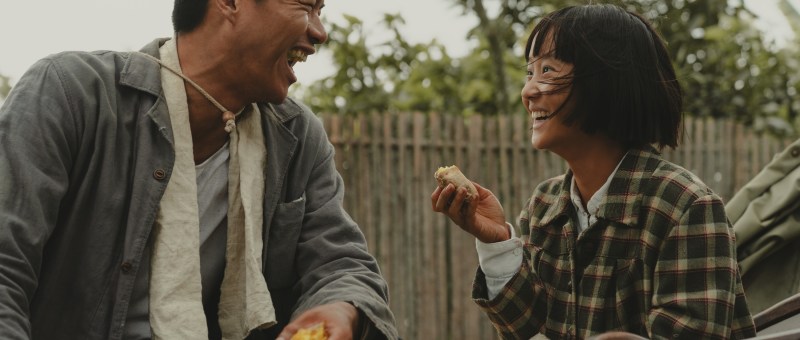
It is, however, into a foggy town that Yue (Caitlin Fang) arrives after leaving alone when her uncle, who has taken over her parents’ house following both of their deaths, explains that he can’t pay to retrieve Yun’s body. Their aunt is already resentful of the money they spent trying to save, and in truth does not want the extra mouths to feed of her niece and nephew. She would much rather have the house, which she regards as her husband’s rightful inheritance anyway, to herself for her sons to be the masters of. While he was in hiding, Yun had approved of Yue’s desire to become a teacher though she’s been taken out of school and, as he says, women in the country generally have little other choice than to become wives and mothers working the land. 

To add to the sense of displacement, Yue has an older sister in Taipei whom she’s never met because she was fostered out as a future daughter-in-law before Yue was born. Hsia (9m88) has since left the family who brought her up after refusing to marry the man she was betrothed to because they had been raised like siblings, though he remains somewhat resentful and badgers her to return. She had been acquainted with Yun while he was a student in the city, but has no idea that he has been killed after being arrested as a possible “communist” for protesting against the regime. 

Though she may not have felt it in the country, the forces of oppression are all around Yue in the city in the very presence of the military police. After being caught sleeping in the street, she’s taken in and beaten up by a policeman for talking back, while they also push her to “explain” where she got her money as a prelude to confiscating it for themselves. A kind yet flawed rickshaw driver (Will Or Wai-lam) who saves her from being kidnapped and sold into sex work, explains to her that the funeral home even charges for the bullets that were used to shoot her brother and she likely needs two or three times as much as she thought or they’ll throw him in a mass grave with the other victims of the regime.

Years later, an older Yue who has fulfilled most of her dreams though she no longer speaks Taiwanese with her adult daughter but Mandarin, sees a news report about the discovery of a mass grave and checks the names of those identified looking for someone she lost. This unearthing of the buried is past of symbolic of the desire to expiate this history, though Yue does not find the answers she’s looking for and the question is left hanging. When times where unbearable, Yun had told her to wind his watch forward and think of the Taiwan years to come that would be better where people could be free from oppression and exploitation. It took longer than expected, but some of that world has come to be, the film seems to say, if not completely and still with this mist hanging in the air that is the victims of the White Terror. Still, Yue’s story has its share of whimsy as she chases through the backstreets of a labyrinthine city. She encounters both kindness from the justice-loving rickshaw driver who tries to help but also scams her out of her brother’s watch only to return it years later as a means of assuaging his guilt, and cruelty from the men who tried to sell her, the secret policeman who apparently went into business, and unforgiving detectives. But in other ways, what she finds is a kind of peace and her place as a part of this nation and society as time continues its eternal march forward.


A Foggy Tale screens in Chicago 10th April as part of the 20th edition of Asian Pop-Up Cinema.

Trailer (English subtitles)

The Sadness (哭悲, Robert Jabbaz, 2021) [Fantasia 2021]

“You’re just like me, violent and depraved” a crazed aggressor sneers, almost victorious in his defeat in having goaded his target into bashing his head in with a fire extinguisher. A defiantly depraved tale, Robert Jabbaz’ zombie-adjacent horror The Sadness (哭悲, Kū Bēi) as the title implies suggests that the propensity for violence and cruelty lurks within us all merely waiting for some kind of trigger, in this case a deadly virus, to set it free. 

The film opens, however, with tranquility as young couple Jim (Berant Zhu Ting-Dian) and Kat (Regina) cuddle in bed before Kat’s alarm goes off. The mood begins to sour when Jim reveals they’ll have to cancel their upcoming holiday because he’s been offered work on a film and that is apparently something that’s been thin on the ground. As he turns on the TV, a pundit and a scientist argue about the “Alvin virus” which many people apparently believe is only a cold, though those people are obviously quite wrong (sound familiar?). The virologist continues to explain that the danger is the virus contains similar genetic material to rabies and he fears it may soon mutate into something seriously worrying. In any case, he finds it suspicious the virus has fetched up on the eve of an election and hints at the dubious immorality of politicising a public health crisis. Jim first encounters the afflicted on spotting an elderly person in a bloodstained nightgown who later turns up at his local cafe to bite several members of the clientele who then turn on him seemingly consumed by a violent and irrational rage.

Kat meanwhile experiences something similar as a madman with a knife rips through the carriage of the MTR in which she is currently sitting. Yet, as we discover, the violence and sadism is not entirely indiscriminate but informed by the underlying “sadness”, resentment, and anxieties of the infected person. Kat’s day had got off to a bad start when the middle-aged creep (Wang Tzu-Chiang) sitting next to her kept trying to chat her up only to go off a rant about the entitlement of pretty women when he’s only trying to be friendly after she threatens to call the police because he’s ignored all of her polite hints and requests to be left alone. Crazed, the train creep continues to stalk her determined to get his revenge. His rage and violence is fuelled by the pre-existing condition of his misogyny. 

The fact that Kat appears to be otherwise immune to the virus may suggest that she is a fairly well-adjusted person with no underlying sadnesses or personal resentments, yet she is apparently still capable of great violence when presented with the right trigger(s), in this case being existential terror. The infected meanwhile profess themselves in a state of ecstasy as they indulge their darkest desires. Jabbaz’ gore-fuelled odyssey is in truth a little too depraved, the sickening scenes of sadistic violence accompanied by copious amounts of blood not to mention scattered innards and severed limbs. “This is my kiss, I’m kissing you to death” a woman preens while holding a circular bone saw seconds after revealing that she always had trouble making friends but is beginning to feel as if she’s finally found her crowd. 

A minor irony is that this pandemic anxiety is expressing itself in Taiwan which up until recently at least had done a stellar job of suppressing COVID-19 largely thanks to the opposite of the impulses on display here. Yet there is also something of obvious satire in certain people’s refusal to listen to the science even as the president’s head literally explodes live on TV, while Jim picks up a brochure for reasonably priced apartments only to be told that the pandemic has also “depressed” the property market. His next-door neighbour, Mr. Lin thinks Alvin is a conspiracy theory designed to create economic instability those in the know can profit from later. He seems to have a nasty cold, but refuses to go to the doctor because it seems like a lot of bother when they’re just going to tell you to stay at home and rest. Mr. Lin’s theories are in part vindicated by another scientist who also thinks the government has been ruled by political concerns, too afraid of the economic consequences of a lockdown to contemplate ordering one even while knowing not to do so endangers public health. “Everything must be politics. There’s no room for truth” he laments, though as it turns out he isn’t free of his own darkness either. 

Not for the faint of heart, Jabbaz’s absurdist satire is a depraved journey through every kind of human degradation imaginable darkly suggesting that sadistic violence is never as far from the surface in the ordinary person, or indeed in ourselves, as we’d like to believe. “It feels like I’ve finally found a purpose in life” a member of the infected dreamily explains, embracing his life of ultra violence apparently freed of the burdens of contemporary civility. 


The Sadness screened as part of this year’s Fantasia International Film Festival.

Original trailer (English subtitles)

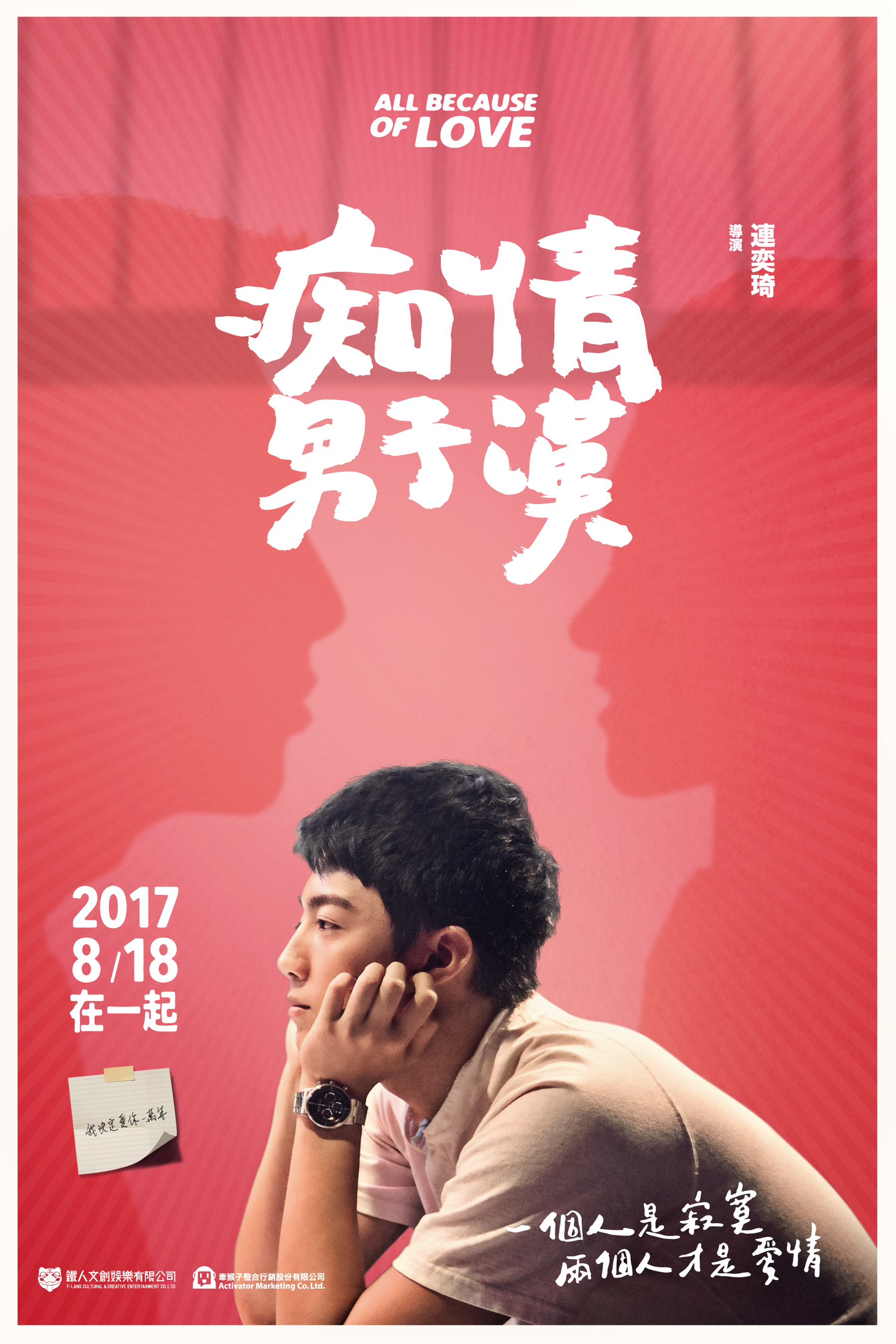
All Because of Love (痴情男子漢, Lien Yi-Chi, 2017)

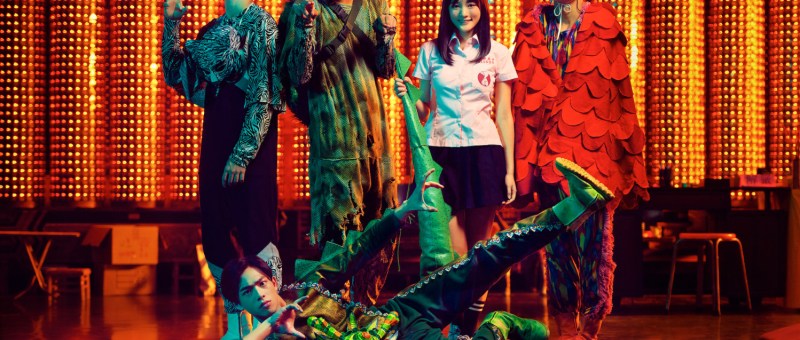
All Because of Love PosterGrowing up is hard is to do – that is, unless you’re the hero of a teen movie, in which case growing up is merely “difficult” and everything is sure to be alright once the bullies have been vanquished and the last dance danced. Designed to appeal to its target audience, the world of the teen movie is usually black and white, free from the chaos and confusion which most experience during adolescence. All Because of Love (痴情男子漢, Cqíng Nánhàn) is, however, refreshingly honest in its fierce love of a messy situation, forcing its hero into a series of “difficult” circumstances while he plays the noble fool holding fast to an obviously unrequited love in the hope that his niceness will somehow capture his true love’s heart.

When we first meet Erkan (Kent Tsai), he’s a nerd and the member of an oppressed minority at his school, constantly targeted by the tough guys. He is hopelessly in love with popular girl Mandy (Gingle Wang), who is actually dating one of the bullies and doesn’t even really know who Erkan is. Despite his declaration to love her for a thousand years, Erkan’s attempts to woo Mandy end in spectacular and humiliating failure but still he does not give up. Shortly after graduating high school, Mandy abruptly rings him for “a date”. Erkan, still smitten, is excited but Mandy has an ulterior motive – she is pregnant with her jock boyfriend’s child and, abandoned by her own one true love, reckons Erkan might like to try out life as a baby daddy. She is correct in her assumption and Erkan would be buying a ring if he had any money but as it is they’ll have to make do with the gentle guidance of Erkan’s elopement expert grandad (Hsu Hsiao-shun) who takes them back to his seaside home town where they can hide out from Mandy’s overbearing (and very wealthy) family.

As the title implies, the rest of the film becomes a treatise on love – requited or not, familial and romantic, permitted or illicit. Erkan is thrilled, on one level, to have got it together with Mandy but on the other hand Mandy won’t let him near her and it’s clear she is only using him and taking advantage of his noble character to get her out of a fix. Meanwhile, staying at inn, Erkan gets to know another girl, Sing (Dara Hanfman), who is in a permanently gloomy mood thanks to her devastating ability to read minds, and hasn’t left her room in years. Sing, thanks to her ability, has fallen half in love with Erkan’s goofy goodheartedness but also knows he’s still hung up on Mandy, and that Mandy is still hung up on her ex-boyfriend. She is then in a difficult position but manages to strike up enough of a friendship with the lovelorn young man to spur her on to exploring the outside world once again.

Meanwhile, Erkan is also confronted by the eerie similarities between his present predicament and the circumstances of his birth. Having always lived with his granddad, Erkan assumed his parents had passed on but discovers there may be more to the story only he’ll have to go to Japan to find out. Erkan’s granddad kicked off the cycle by eloping with Erkan’s grandmother, leaving their hometown far behind to live a life of love far away, though his son and grandson do not seem to have had so much luck when it comes to romance and Erkan’s romantic answers perhaps lie in exploring his family history rather than re-examining his high school days and refusing to let go of his idealised teenage crush.

A heart to heart with Sing provokes a more grown up meditation of unrequited love even if Erkan is entirely oblivious to Sing’s delicately concealed feelings. Purehearted, Erkan insists that love does not need to be requited, merely loving without being loved is good enough for him (so he says, or perhaps he just doesn’t expect anything more). Sing tells him he’s wrong, that it takes two to love and that a one sided affection is nothing more than intense loneliness. Erkan agrees, missing Sing’s hidden meaning, but maturely admitting that it would be wrong to hold someone’s hand just because you’re lonely when your heart is elsewhere.

Erkan’s idealised love for Mandy is gradually revealed as an adolescent affectation while she is left battling various kinds of familial expectation and manipulation before discovering her former boyfriend is not perhaps the heel that everyone had assumed him to be. Meanwhile, Sing is doing something similar in trying to lay to rest the ghost of a friend who left long ago and Erkan is left trying to reclaim his identity though figuring out who he really is before learning to look at what’s right in front of him rather than indulging in a romantic fantasy. Lien Yi-chi sends Erkan on some very bizarre adventures, swapping genres at a moment’s notice from westerns to classic melodrama and musicals and then settling on something in the middle which feels oddly authentic and lived in despite its strangeness. Often absurd if not quite surreal, Lien’s warmhearted silliness is almost impossible to resist as is the cheerful innocence of the effortlessly romantic conclusion.


Screened at the 20th Udine Far East Film Festival.

Original trailer (English subtitles)