
Go for Broke 2 (重生2, Marc Ma, 2026)

When her son is taken by child traffickers, a former assassin vows revenge in Marc Ma’s action drama, Go For Broke 2 (重生, chóngshēng 2). A thematic sequel to the earlier film, Go For Broke 2 once again deals with a delicate issue in a way that seems both ill-advised and at times unethical as it zooms in on a world of exploitation in which children are merely tools to broker influence between powerful men.

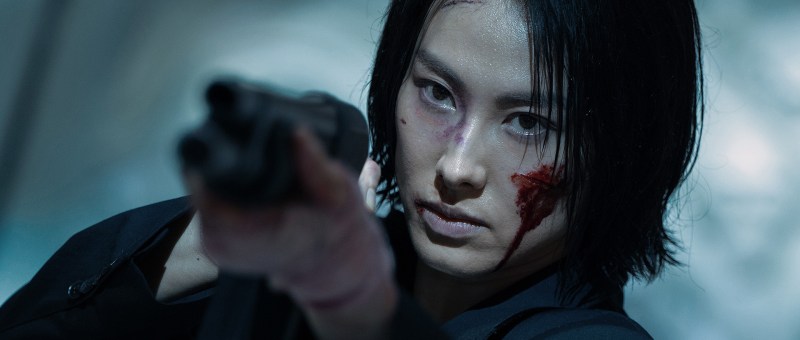
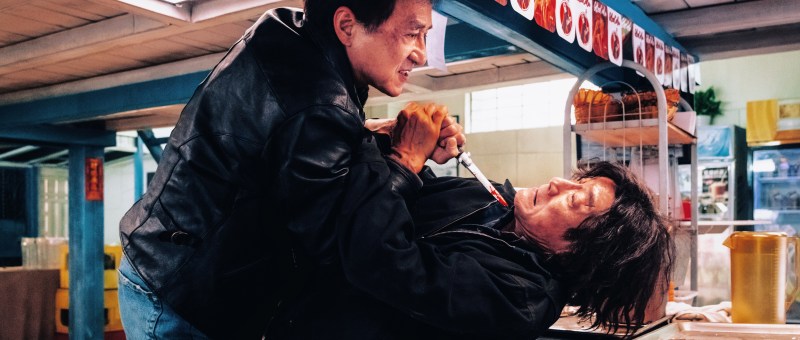
Or at least, as is made clear in its final sequence, the film draws influence from the Epstein scandal as the shady gangster Zuo Man (Sammo Hung Kam-bo) arranges parties on “Carnival Island” where important men can mix with small children. Xi La’s (Isabella Leong Lok-yau) son is abducted while on a school trip with other children from around the world and taken to a boat where he is physically and sexually abused. Xi La manages to track him down when he is the victim of a traffic accident, but is eventually unable to save him. After teaming up with the brother of a girl killed at the same time, Su Cheng (Wen Junhui), she vows revenge and to make everyone who harmed her son suffer.

Ironically, Xi La seems to have been an exploited child herself raised to become an assassin without knowing true family until making a life with Paka. Su Cheng is similarly an orphan who blames himself for his sister’s abduction. Zuo Man, by contrast, is running a family business with both his sons involved in trafficking children, one having begun abusing children himself despite Zuo Man’s disapproval. The action appears to take place in a fictionalised version of America, though aside from all the signs being in English with many of them referencing medical insurance, it doesn’t really look like it architecturally or environmentally.

Nevertheless, turning back to her old gang, Xi La is forced to step into a world of conspiracy as Zuo Man invites what seem to be various prominent American politicians and businessmen to the “island”. The children are dressed in Edwardian-style white outfits and distastefully asked to play in an all while room with clouds floating above that seems to be designed as some kind of heaven. Later, it turns out, that the children are also being experimented on and tortured to produce some kind of serum that can be used for its anti-ageing properties by a rich and powerful class obsessed with youth and immortally. It has to be said that the ethics of placing child actors into some of these scenes, such as one of a young boy undergoing some kind of electroshock treatment, may be ethically questionable, as is the film’s prominent use of AI.

While doing their best to save the other children, Xi La and Su Cheng discover that powerful people seem to be protecting Carnival Island and that alerting the authorities to its presence probably wouldn’t help. When confronted, Zuo Man crassly insists that all the kids were no hopers from the slums who would just have become “lowlifes” anyway, so all he’s doing is “recycling” them so they can be consumed to nourish the elite. As such, the film seems to be kicking back and the ingrained elitism of an apparently shadow world, but doesn’t do too much more with it than using it as evidence of the villains’ evilness while they would even sacrifice their own children to keep their business interests going.

Once again the film is really built around its action sequences but the use of CGI blood spatter again seems a little flippant given the seriousness of the child tracking issue. Similarly, Xi La’s quest to wipe out the gangsters seemingly borrows from exploitation cinema, but the film continues to take itself quite seriously rather than simply allowing Xi La to satisfy her desire to avenge Paka. Anchored by a powerful performance from Isabella Leong Lok-Sze which pretty much carries the film, it addresses themes such as motherhood and family along with the shadowy conspiracy which seems to hang over the “ordinary” world, but can never overcome a sense of tasteless and flippancy in the way that it approaches them, a sentiment borne out by the final AI generated sequence linking the action with real-world events.


Trailer (Simplified Chinese / English subtitles)
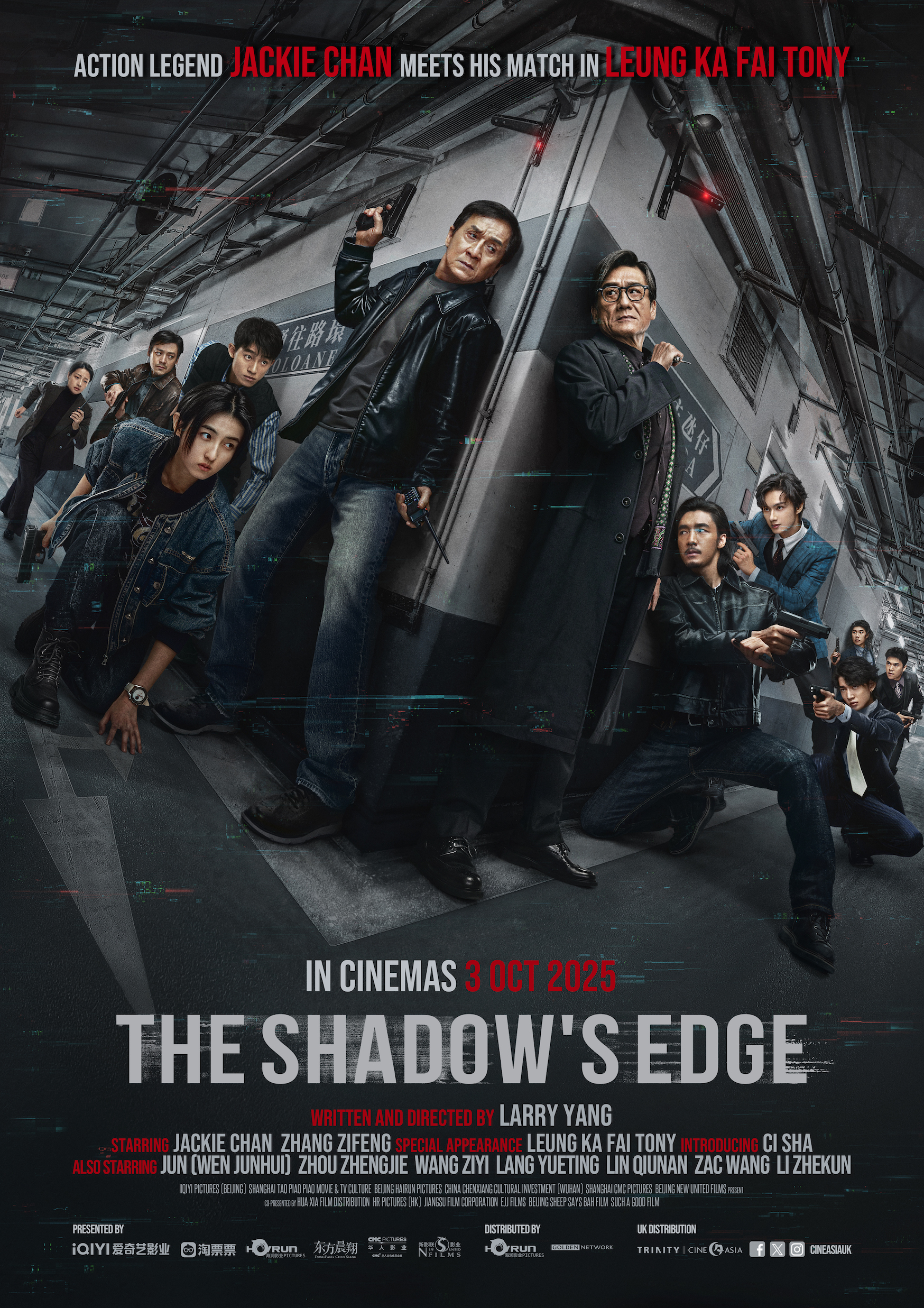
The Shadow’s Edge (捕风追影, Larry Yang, 2025)

China’s mass surveillance system has come to the rescue in many a recent action film, as if it were saying that China will always find you if you’re in trouble but perhaps also if you’re the one making it. A loose Mandarin-language remake of 2007’s Eye in the Sky, The Shadow’s Edge (捕风追影, Bǔfēng zhuīyǐng) takes a slightly different tack in being somewhat wary of AI-based technology and the way it’s already embedded itself so deeply in our lives as to have engendered a rapid deskilling of the younger generation. 

The Macau police force rarely conducts on the ground surveillance anymore and is heavily reliant on its network of video cameras along with facial recognition software. Madame Wang (Lang Yueting), however, the officer in charge ends up disabling the AI system because it’s proving unhelpful and undermining her authority. In any case, it leaves them vulnerable to interference and unbeknownst to them they’ve been hacked. A talented group of thieves have managed to throw them off the scent by manipulating the footage so it looks like their vehicle is in a completely different place while they’re busy committing the crime. The hackers have managed to combine new technologies and old in a much more successful way than the police as they use a mixture of traditional disguise techniques and well-honed spycraft along with video manipulation to evade detection. 

It’s at this point that the police decide they need to bring back someone who still remembers how to do analogue police work to teach them how to combat this new digital threat. The irony is that the hackers are also being led by a veteran espionage expert now in his 70s and known only as “The Shadow” (Tony Leung Ka-fai). Though it’s true enough that he knows the evil that lurks in the hearts of men, The Shadow has surrounded himself with a group of former orphans whom he has trained in the arts of surveillance and infiltration while they take care of all the new technological stuff. But it’s also a slight degree of hubris and a mishandling of the digital side that leads to a slip-up in which the Shadow’s face may have been captured on camera for the first time in decades. As he ages out, there is conflict between father and sons as the boys begin to resent the Shadow’s paranoia and over cautiousness, wondering why they don’t simply take the bigger prize without considering that it may be more difficult to claim and leave them vulnerable to retribution.

Wong (Jackie Chan), the former special forces veteran officer they bring in to train the youngsters experiences something similar in the awkwardness of his relationship with Guoguo (Zhang Zifeng), the daughter of his former partner who was killed on the job because of an error in judgement made by Wong. Guoguo has been consistently sidelined by the police team where she’s surrounded by incredibly sexist men who doubt her ability to do the job because of her gender and short stature, and now has conflicting feelings about Wong that are bound up with her father’s death and a fear of being patronised convinced that Wong too is reluctant to let her do her job out of a problematic sense of overprotection.

Nevertheless, she proves a natural at the old-fashioned art of surveillance and develops a more positive kind of paternal relationship with Wong than that the Shadow has with his band of orphans. In essence, Guoguo learns both how to be part of a team and how to lead it, while Shadow’s boys don’t really learn much of anything beyond ruthlessness and generational conflict. In any case, the answer seems to be that’s what’s needed is both old and new, and that an over-reliance on technology isn’t helpful while AI isn’t necessarily faster than a finely tuned mind like the Shadow’s or merely someone who knows the backstreets well enough to anticipate an exit route. Drawing impressive performances from both his veteran leads, Yang succeeds in blending expertly crafted action sequences with interpersonal drama and giving the film a slick retro feel through the use of split screens and impressive editing. A post-credits sequence also hints at a wider conspiracy in play and the potential of a sequel, which would certainly be a welcome development given the strength and ambition of this opening instalment.


The Shadow’s Edge is in UK cinemas from 3rd October courtesy of CineAsia.

UK trailer (English subtitles)