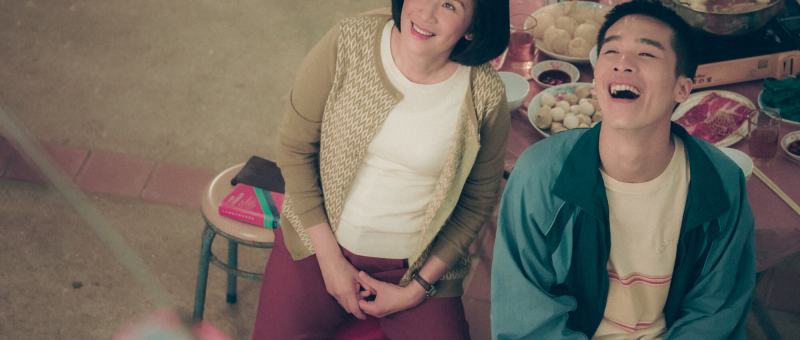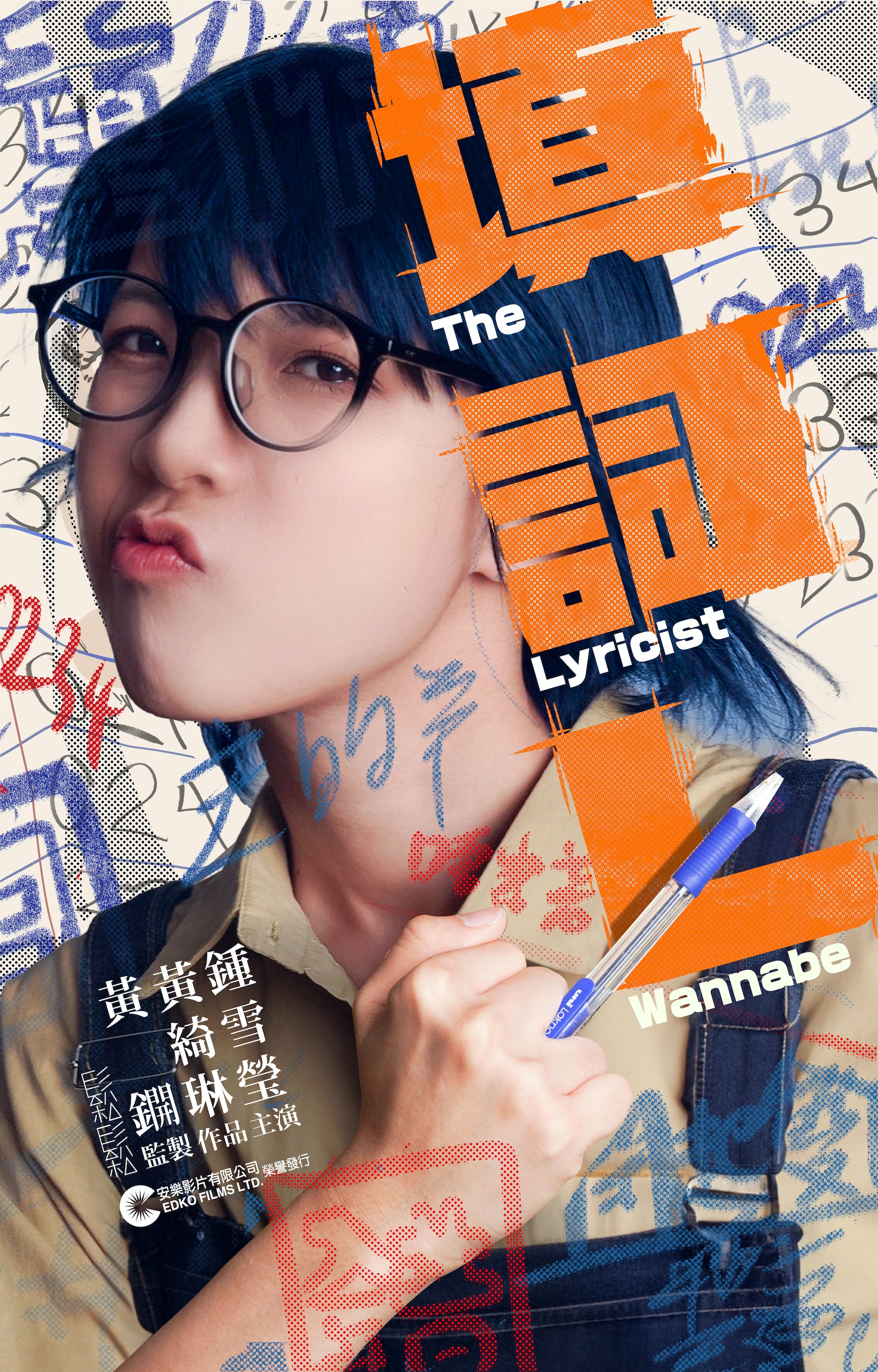
The Lyricist Wannabe (填詞L, Norris Wong, 2023)

Sometimes a dream might have come true only we never really noticed. In Norris Wong’s autobiographically inspired drama The Wannabe Lyricist (填詞L), a young woman battles her way towards becoming a Cantopop songwriter yet perhaps she already is one by virtue of her constant act of lyric writing. What she craves is the validation of having a song published, yet experiences setbacks at every step of the way that encourage her to doubt her talent or the right to continue chasing her dreams.

At a particularly low point after being taken on by a music producer to work with a spoilt influencer who’s getting studio time as some kind of favour, Sze (Chung Suet Ying) is told that her lyrics are no good and that after struggling so hard for six years perhaps she ought to take the hint and accept she isn’t suited to this line of work. It’s an act of intense cruelty, though one in part motivated by a well-meaning faux pas. In her excitement, she told the influencer she’d write lyrics for her album for free just to be published, but the palpable sense of desperation seems to have put the influencer off unable to have confidence in the work that Sze herself has devalued.

She encounters something similar during a partnership with an aspiring pop star who says he likes her lyrics but then drops the bombshell that he plans to sing in Mandarin because it’s a bigger audience. Ironically, on a trip to Taipei to sell his album she’s told that his accent is no good for the local market and while they like the song she worked on she later realises that they hired another lyricist for “real” release without even telling her. What’s more, tones don’t matter while singing in Mandarin whereas lyric writing in Cantonese is a painstaking process of trying to ensure that the tone of the word fits the melody. Aside from its political implications, not only does the pop star’s arbitrary decision to just sing it Mandarin ruin the lyrical flow she spent so long perfecting but entirely disrespects her work.

After deciding to take a break from trying to make it in music, Sze gets a job working at a ridesharing app startup where she’s roped in to create a jingle but once again her hopes are dashed when the business strays into a legal grey area and several of the drivers are arrested. While the app’s creator silently cries in his office, his female colleague ponders going somewhere else, “anywhere that doesn’t punish dreamers” which seems like a nod not only towards an oppressive capitalism that values only marketability but equally the increasingly oppressive atmosphere of the nation’s political realities. In a way this is what Sze ends up doing too, putting geographical distance between herself and the failure of her dreams by returning to the land which as the farmer says never lies to you, you reap what sow.

Yet for all her drive and perseverance there are others who view Sze’s obsession with her dreams as selfish and self-involved complaining that she rarely considers the feelings of others and neither notices nor cares if she may have hurt or inconvenienced them. She’s told that her lyrics are hollow because she lacks life experience but also is incapable of empathising and cannot see anything outside of her quest to become a lyricist. She watches other people move on, her brother getting married, friends enjoying career success etc while she’s still stuck looking for her big break only for something to go wrong just as everything was about to go right.

Wong signals the playful qualities of her fantasies though use of onscreen illustrations and even a karaoke-style video along with the nostalgic quality of the early 2000s setting of Sze’s schooldays with its MSN messenger and ICQ. Sze may be “dragged along by the melody” in more ways than one as she tries to make peace with her dreams and her future and find some way of living in harmony with the rhythms of the world around her but eventually comes to realise that she was a lyricist all along no matter what anyone else might have tried to convince her she was.


The Lyricist Wannabe screened as part of this year’s Osaka Asian Film Festival and opens in UK cinemas 15th March courtesy of Cine Asia.

Original trailer (Traditional Chinese / English subtitles)
In Broad Daylight (白日之下, Lawrence Kan, 2023)

A jaded investigative reporter rediscovers a sense of purpose even as her industry flounders while exposing systematised abuse and neglect in privately run care homes in Lawrence Kan’s hard-hitting drama, In Broad Daylight (白日之下). The film’s title hints at its pervasive sense of despair, the problem isn’t so much that no one knew the state of affairs but that no one cared enough to do anything about it while the journalists too find themselves at the mercy of a hyper-capitalistic society. 

A whistleblower close to the end of the film reveals that they’d been anonymously sending photos from the care home where they work because they wanted “to feel human again” and “treat others as humans” only until now no one had taken any notice. They weren’t really expecting that anyone ever would. Top investigative reporter Kay (Jennifer Yu Heung-Ying) is one of only a handful of reporters left on her paper which is threatening to shut down the investigative department altogether if they can’t bring in a big scoop. Kay’s boss is similarly conflicted, not wanting to crush the idealism of rookie recruit Jess in insisting that their work has value in telling the stories that should be told while privately reminding Kay that the care home scandal might not be “explosive” enough to earn them a reprieve from their boss. 

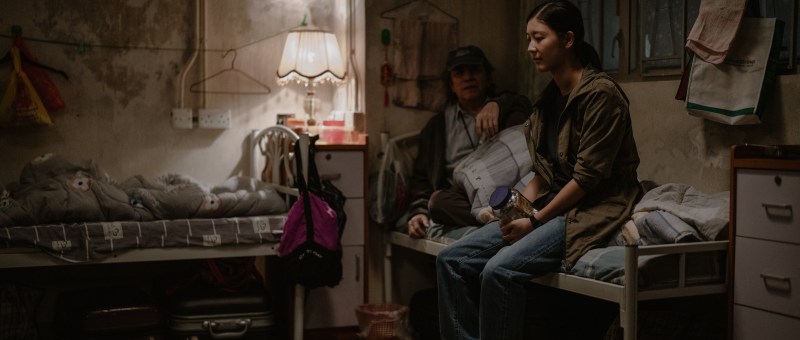
For her own part, Kay is already jaded explaining to Jess that nothing really matters and nothing they write makes any difference when wrongdoers generally get off scot-free. Her desire to pursue the care home story is partly personal in that she’s dealing with a degree of guilt and grief over the death of her grandfather who took his own life in a privately run facility. To investigate one she’s been tipped off is particuarly bad, she poses as the granddaughter of a patient with dementia, Kin-tong, explaining that she’s not visited before because her family moved to Canada when she was a child, and thereafter making an offer to volunteer on seeing how bad things really are there witnessing not only a dead rat in Kin-tong’s room but physical abuse of the residents. 

It would be easy enough to assume that the faults are “isolated incidents” as the regulatory body likes to describe them and mostly down to the presence of the head nurse, Mrs Fong, who is clearly not someone who should be working in a care facillity, but the truth is that these are systemic problems largely born of governmental indifference. A government source tells her that the waiting list for a publicly funded homes stands at 15 years leaving many families little choice but to take what they can afford in the private sector. They are often unable to take care of elderly relatives themselves because they cannot take time off work to do so, or are simply not equipped to respond to their loved ones’ needs. 

But neither are the care homes. The manager, Chief Cheung who is blind himself, in part justifies the existence of his facility on the grounds that it is difficiult for people with disabilities to find homes to take them, painting the community as a happy family home doing its best rather than a callous attempt to exploit the vulnerable run by a dodgy businessman who admits that even if they’re exposed they’ll just change their name and start again somewhere else. Kay asks Kin-tong why he stays but he tells her that they’re all the same anyway. Even when she uncovers evidence of sexual abuse of a resident with learning difficulties she discovers that it’s almost impossible to prosecute because no one wants to put a vulnerable person on the stand opposite their abuser which allows them the confidence to think they can do whatever they want because they’ll never face dismissal let alone criminal proceedings. 

Kay begins to wonder what the point is if, as people are fond of telling her, no one really cares, but also is also forced to reflect on the moral difficulties of the situation. If the home is closed down, it will leave many of the residents with nowhere else to go. Mostly likely they will end up on the streets or in another equally bad private care home while she at least might earn herself a temporary reprieve in achieving the kind of scoop her money-minded editor was looking for. Her boss insists that she can’t change the world, the system won’t change overnight even if people are temporarily outraged. The truth is that these are people who’ve been abandoned by their society and often by their families especially with so many younger people emigrating leaving relatives behind with no one to watch over them. Though somewhat jaded, Kay comes to empathise with the people she meets at the care home and rediscovers a sense of purpose in her work that reminds her it’s worth the fight even if in the end nothing really changes. In many ways bleak, Kan’s empathetic drama is otherwise undespairing in its gentle advocation for mutual compassion and world in which we can truly take care of each other.


In Broad Daylight screened as part of this year’s New York Asian Film Festival. It will also be screening in Chicago on Sept. 16 as part of the 17th season of Asian Pop-Up Cinema.

Original trailer (English subtitles)

Zero to Hero (媽媽的神奇小子 , Jimmy Wan Chi-Man, 2021)

“No one treats you like an ordinary person, so become an extraordinary one” the heroic mother at the centre of Wan Chi-Man’s Zero to Hero (媽媽的神奇小子) tells her young son as he struggles to find a place for himself as a disabled person in an unaccommodating society. Inspired by the real life story of multi-medal winning Paralympian So Wa Wai (Leung Chung-hang), Wan’s inspirational tale is as much about maternal determination as it is about overcoming preconceived limits but also makes a series of subtle points about how the contemporary society treats disability. 

Wan opens in Guangzhou in 1981 as Wai’s mother Mrs. So (Sandra Ng) frantically rushes him to hospital only to be told that he has jaundice which has resulted in cerebral palsy meaning that he will likely never be able to walk or feed himself. The doctor double checks if the family would like to proceed with treatment given this information to which they emphatically reply they would. A few years later, the family has migrated to Hong Kong and Mrs. So is forced to take Wai with her to her job in a laundry, eventually finding herself at her wits end after his hearing aid goes missing placing her son on the shoot and shouting at him to walk only to shut the belt down just before he reaches the edge. At this point, Wai manages to pull himself onto his feet, proving the doctors wrong and teaching himself to walk unassisted. Witnessing an older Wai run away from neighbourhood bullies gives Mrs. So an idea and she soon tries to enrol him in a club for athletes with physical disabilities only to be turned away because of his age but his decision to join in anyway gets him noticed by former Paralympian relay runner Coach Fong (Louis Cheung Kai-chung) who decides to take him on and train him up. 

In contrast to other sporting biopics, Wai’s path to Olympic success is more or less drama free even as he strives to improve his athletic abilities and overcome the mild resentment among some of his teammates in needing to change their style and position in order to accommodate him. Wan does however hint at the difficulties of living as a disabled person in late 20th century Hong Kong, Fong explaining to Mrs So that the Paralympics aren’t aired on Hong Kong TV and disabled athletes earn only 10% of that earned by the able-bodied. Wai does receive a small subsidy, but the Sos are otherwise forced to scrimp and save so that Wai can continue running, a situation that becomes impossible after his father is injured in an accident and left unable to work. 

It’s also clear that Mrs. So’s all encompassing love for her son causes occasional tension in the family in leaving her younger, able-bodied son understandably feeling neglected while everyone fixates on Wai’s sporting success. Wai’s brother is perfectly aware that he was born in part as a safety net for Wai so that someone would be around to look after him once the Sos have passed away and cannot at times help resenting him. Yet the family unit remains generally united until the older Wai’s prideful resentment of what he sees as his mother’s micro-managing begins to undermine their relationship. “I just want to run” Wai explains, fed up with the series of commercial opportunities his mother has agreed to on his behalf in an attempt to keep him financially secure in the future. When a director for an advert tells him he’s speaking “too well” and asks him to sound more disabled Wai has had enough, leading to a confrontation that ends both in romantic heartbreak and a falling out between mother and son. 

“Catching up is the story of my life” Wai reminds Fong, emphasising the film’s inspirational message that sometimes people have further to go but get there in the end while also signalling the various ways lack of accommodation for his disabilities has continued to hold him back outside of his sporting success. A heartwarming tale of an incredible mother-son bond, Zero to Hero insists that the mutual determination to succeed turned them both into heroes allowing Wai to achieve his full potential as a Paralympian bringing gold and glory back home in defiance of those who told him he’d never be anything. 


Zero to Hero screens Aug. 21 as part of this year’s New York Asian Film Festival.

Original trailer (Traditional Chinese / English subtitles)