Monk Comes Down the Mountain (道士下山, Chen Kaige, 2015)

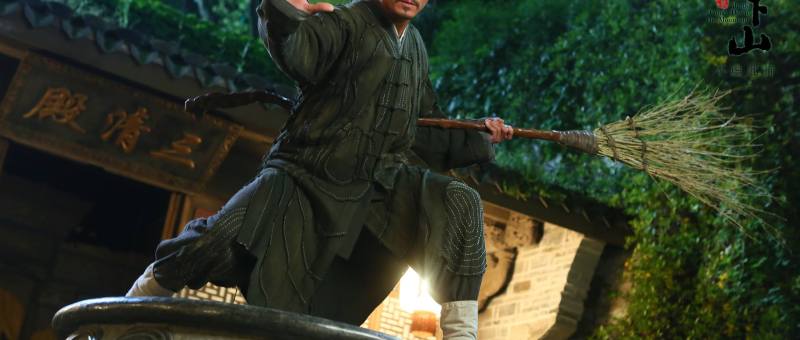
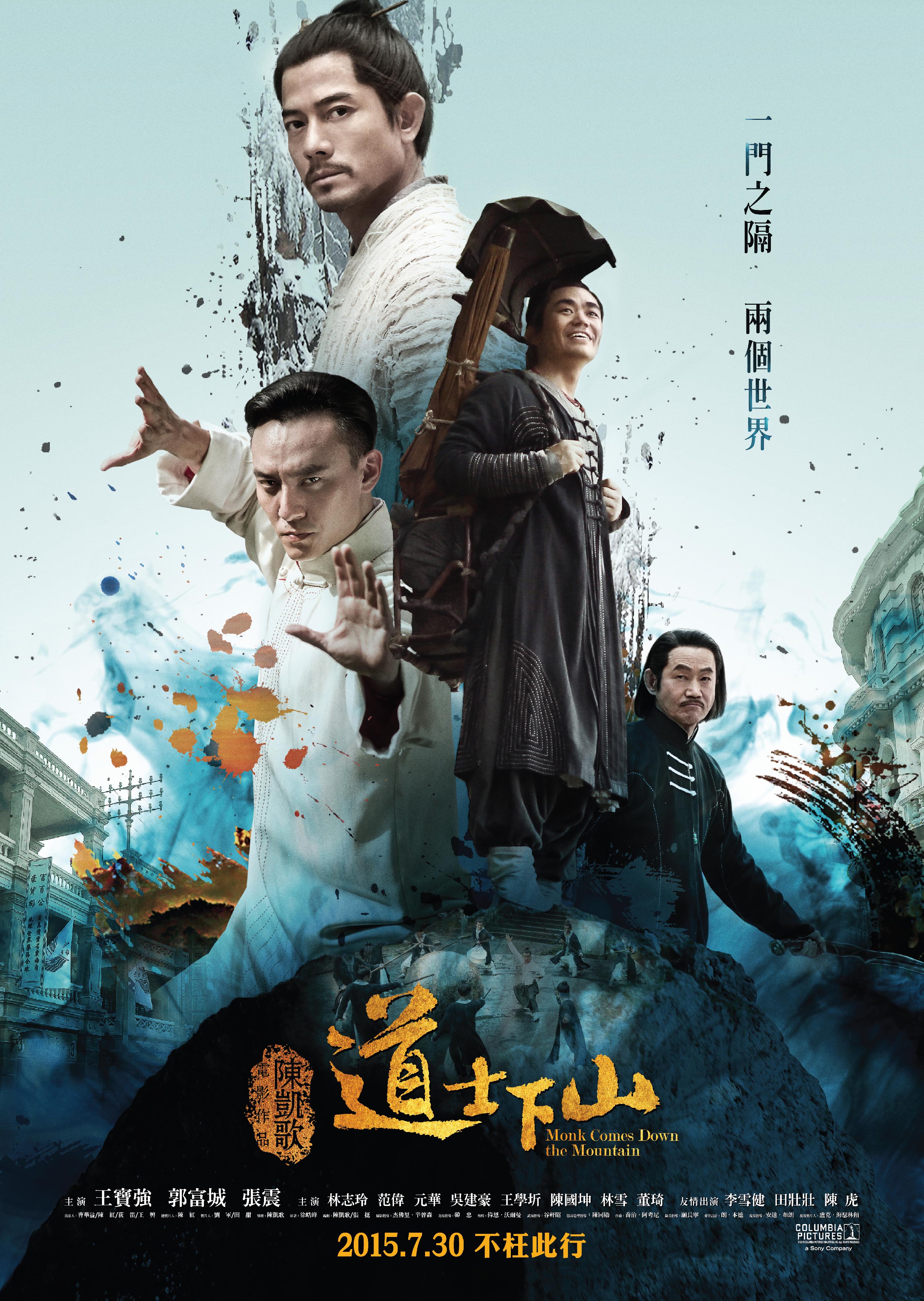
A wandering monk is forced to consider a series of dualities presented by his traditional upbringing and burgeoning modernity in Chen Kaige’s ‘30s wuxia Monk Comes Down the Mountain (道士下山, dàoshì xiàshān), inspired by the work of novelist Xu Haofeng. Essentially a picaresque, Chen sets orphan He Anxia (Wang Baoqiang) adrift in the secular world where he learns to see good and bad and perhaps the murky overlap between the two while simultaneously telling a rather subversive tale of frustrated same sex love and corrupt authorities. 

When the temple at which he was abandoned as a baby falls into financial difficulty, He Anxia enters a kung fu fighting competition he believes will put him first in line for food only in cryptic monk fashion the “prize” turns out to be exile as the winner is obviously the most capable of looking after themselves alone in the world. He Anxia is however something of an innocent and despite the monk’s warning to stay true to himself soon falls into difficultly yet ends up discovering a new father figure in monk turned pharmacist Tsui while trying to steal his fish. For all of Tsui’s goodness, however, there is discord in his house as his pretty young wife Yuzhen (Lin Chi-ling) prefers his dandyish brother, Daorong (Vanness Wu), who has abandoned the filial piety of the past to chase modern consumerist pleasures in selling the shop he inherited for a fancy ring. When the situation escalates, Anxia finds himself taking drastic action only to wonder if he did the right thing. 

Head of a local temple Rusong (Wang Xueqi) encourages him to think beyond dualities, wondering if he did the right thing for the wrong reasons or the wrong for right. This temple is famous for helping women have male children through praying to goddess of mercy Guan Yin, yet under Rusong’s predecessor they adopted a much less spiritual solution to the problem in simply providing a place where other men could father their sons. Rusong again asks him if the men who took part were sinners or saints while laying bare the paradoxes of the monastic life in the contemporary society. A petitioner goes so far as to ask Anxia if he might be her saviour, pointing out that if she cannot provide a male heir even though the problem may lie with her husband she may be cast out of her family, thereby disgraced not to mention financially ruined. Having lived all his life in the temple surrounded by men, gender inequality is not something Anxia had been very aware of. He tells her that though he had no family he was able to find one only to lose it, little understanding why she might not be able to do the same. 

On the other hand, he appears to show surprising perspicacity in the touching moments in which he must say goodbye to his second father figure, reclusive kung fu master Xiyu (Aaron Kwok), in realising the depth of his feelings for army buddy Boss Zha (Chang Chen) who then becomes his final master. Ironically, the obviously homoerotic relationship between Xiyu and Boss Zha was perhaps less controversial in 2015 than it might be in the present day but its inclusion is nevertheless surprising if also poignant as Xiyu tells Boss Zha that he should resume his stage career, marry and have children, while he will live a quiet and lonely life perfecting his kung fu though he will always keep him in his heart. Fiercely loyal to his mentors, Anxia accepts this relationship totally and appears to fully understand its import to Boss Zha to whom he subsequently transfers his allegiance as they band together to face off against big bad Peng. 

Playing into the good fathers and bad motif, Peng’s problem is his sense of paternal rejection in being passed over by his biological father in favour of Xiyu whose skills are stronger. After having ousted his rival, Peng fears the same thing will happen to his own son who is not only lacking in aptitude for martial arts but also appears to have a drug problem. To win they resort to cheating in picking up a pistol signalling both their own lack of jianghu honour and the nature of the changing times in which the very nature of kung fu has perhaps become obsolete. Meanwhile, Anxin and Zha are targeted by the police commissioner, Chao, who happens to be a former triad and also points his gun at them if less successfully while in cahoots with the amoral Peng and son.

Only through each of these subsequent encounters does Anxia begin to realise why he was cast down from mountain, understanding that he had to witness the good and bad of the secular world in order to understand his Buddhist teachings and finally find his place. With sumptuous production values perfectly recreating the 1930s setting, Chen’s quietly subversive 20th century wuxia takes aim at the ills of the contemporary society in its tales of corrupt authorities and amoral greed, but eventually finds solace in simple human goodness and genuine relationships as Anxin continues on his long strange journey to find his way home. 


International trailer (English subtitles)
Creation of the Gods I: Kingdom of Storms (封神第一部:朝歌风云, Wuershan, 2023)

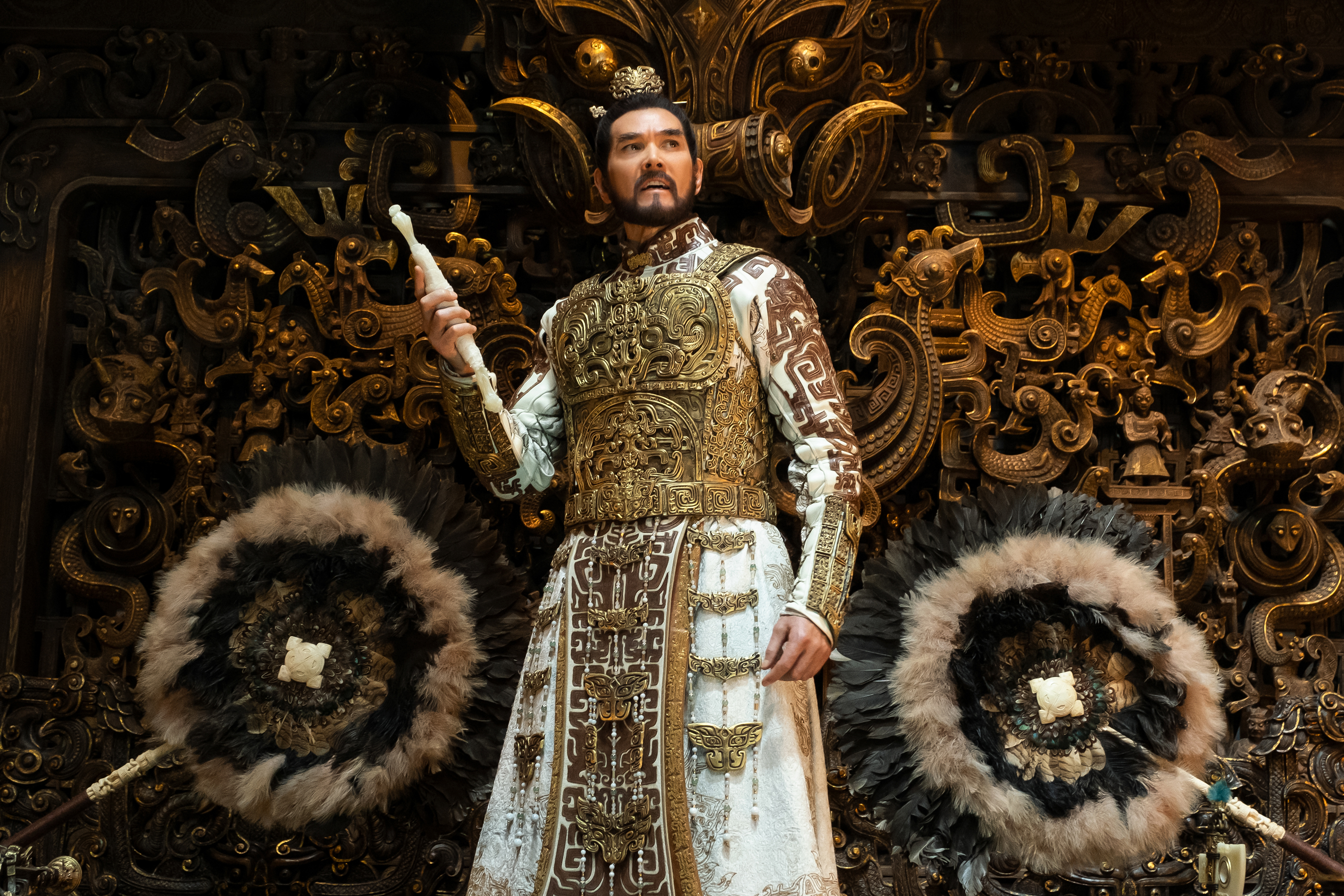
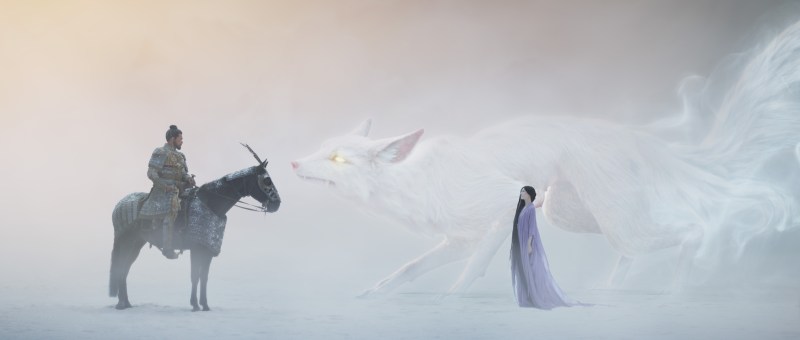
A bad ruler, like a bad father, has only bad lessons to teach his sons and will receive the same in kind in Wuershan’s beautifully produced fantasy epic, Creation of the Gods 1: Kingdom of Storms (封神第一部:朝歌风云, Fēng Shén Dìyī Bù: Zhāogē Fēngyún). Inspired by the classic work of 16th century literature also known as Investiture of the Gods which serves as a kind of foundation myth, the film is the first of three and a 10-year labour of love from the director that began shooting in 2018 and took nearly four years to complete post-production. 

As the opening title card explains, the film focusses on the fall of the Shang dynasty at the hands of its last king and King of All the Realms Yin Shou (Fei Xiang), known posthumously as King Zhou. He is first introduced, however, through the eyes of the young man that is really the hero of the tale, Ji Fa (Yu Shi), who describes him as a hero of the kind he dreams of becoming. Yin Shou is charged with leading an attack on the compound of rebellious lord Su Hu who has refused to pay his taxes, taking with him the four hostage foster sons of the primary dukes along with that of Su Hu himself. The boy is sent to plead with him but gets no reply. In a show of what seems like kindness, Yin Shou asks him what sort of father his must be to give no reply and formally adopts the boy but only in the knowledge that honour dictates he now take his own life as proof of his loyalty to the Shang. 

These young men, Ji Fa included, are forced to ask themselves to whom they owe their loyalty, a man who gave them up and may long have forgotten them or Yin Shou who has in a sense raised them and demands their loyalty. Ji Fa is fiercely loyal to Yin Shou and thinks him everything a good father, a good commander and eventually king should be. Yet Yin Shou has extremely strong second son syndrome and resents his father and older brother for treating him as an also ran. Ji Fa meanwhile is still naive and egotistical, coming to the palace dreaming of becoming “a hero” with only a superficial understanding of what that would mean and easily swayed by Yin Shou’s majesty while Yin Shou in turn rejects his own son ironically fearful of him as a rival having watched the old king die at the hands of his brother while privately pleased that he will finally take his rightful place on the throne only to be told that the kingdom is in peril and the only way to save it is to commit public self-immolation. 

When the legendary heroes Jiang Ziya (Huang Bo), Nezha (Wu Yafan), and Yang Jian (Cisha) turn up with a magic scroll that can undo the Great Curse bearing down on the land, Yin Shou describes it as blessing on realising the talisman gains in power the more souls it receives. There may be something a little chilling the contemporary echoes of his paranoid authoritarianism as he actively begins to round up subversive elements even as he takes as a mistress the daughter of a man he beheaded who in reality took her own life and has been possessed by a fox spirit though it is also quite ironic that it is Su Daji (Narana Erdyneeva) who will bring down the Shang. 

In any case, Wuershan brings the classic tale to life with a sense of magic and wonder painstakingly recreating the fantasy world of feudal China with its beautiful landscapes marred by chaotic infighting and destabilised by dysfunctional filiality. In the end, Ji Fa will return to his true father and with him the path of righteousness which will overcome the Great Curse and begin to restore order laying the foundations for the Chinese society. Meanwhile, in this age of demons and strange creatures, interventions from the heavens and the mortal world in so much chaos that Nezha has been brought in to help, Wuershan discovers a kind of soulfulness embracing the timeless quality of this ancient mythological tale yet grounding it in a well honed sense of emotional reality.


Creation of the Gods I: Kingdom of Storms is in UK cinemas now courtesy of CineAsia.

Trailer (Simplified Chinese / English sutbtitles)

Home Coming (万里归途, Rao Xiaozhi, 2022)

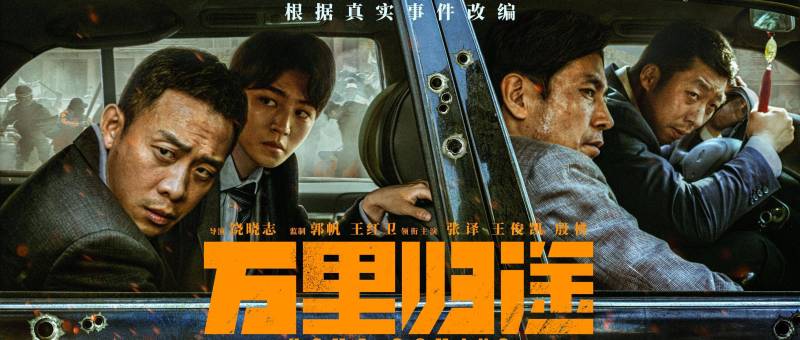
A pair of Chinese diplomats find themselves the last hope of stranded construction workers when civil war erupts in a middle-eastern nation in Rao Xiaozhi’s visually impressive action drama, Home Coming (万里归途, Wànlǐ Guītú). A “Main Melody” National Day release, the film is less heavy on jingoistic patriotism than might be expected if slotting neatly into the recent trend of celebrating various branches of officialdom, this time foreign service consular staff, but nevertheless leans into the recurrent “just stay in China” message of government-backed big budget cinema in insisting that nowhere is the Chinese citizen safe other than at “home”. 

According the closing titles inspired by a series of real life events, the film opens in the fictional nation of Numia which is currently experiencing a period of instability with widespread protests against the government. As tensions quickly rise amid a full-scale uprising led by rebel warlords, consular staff are tasked with evacuating Chinese citizens. Jaded consular attaché Zong (Zhang Yi) has a heavily pregnant wife at home, but gives up his seat on the last plane out to a “Taiwanese compatriot” in what can only be read as a less than subtle advocation for a One China philosophy. Booked on the next boat out, Zong nevertheless ends up staying behind to help rescue a contingent of construction workers who are unable to cross the border as they have lost their documentation and require consular assistance to secure exist visas to a neighbouring nation. 

The message of the film might in some ways seem confusing. The by now familiar inclusion of stock footage featuring Chinese citizens overjoyed to arrive home thanks to the assistance of the consular officials emphasises that the Chinese government will always be committed to protecting the interests and safety of Chinese citizens abroad, but it’s also clear that the safest thing of all is not to leave or else to return home as quickly as possible. “Let’s go home” becomes a recurring motif as the construction workers and diplomats will themselves forward fuelled by hometown memories and a desire to see their families as much as simply to survive. Then again, there is also a subtle defence of the role of Chinese corporations overseas. An elderly driver from the local area makes a point of defending his friends and employers to a warlord as he points a gun at his head, reminding him that the Chinese do them a service by building railways and hospitals though it seems this corporate intrusion is one of the things the warlord is rising up against.

No information is really given as to why there is animosity towards the ruling regime, but the film nevertheless goes out of its way critique dissent by suggesting that it is the rebels who are in the wrong. Bodies are frequently seen hanging from billboards and bridges, and rebel leader Mufta tortures and pillages while playing sadistic games with captives. A secondary plot strand seems to suggest that a good leader must sometimes mislead those around them for their own good. Zong finds himself in conflict with his young and naive partner Lang who thinks they should be honest and admit that even if they make it to the next town there may be no one waiting for them while Zong knows that if they tell the construction workers that they’ll never reach it anyway in which case there’s nothing else to do but stay still and die. Zong is proved right, implying that Lang’s problem was that he had insufficient faith in China to protect them (which they can largely because of their massive satellite surveillance network) and endangered the lives of others because of it. But then Mufta also makes a strategic error in a bit of showmanship that effectively unmasks him in front of his men as a duplicitous coward rather than the grizzled revolutionary they thought they were following. 

In any case the closing news reports emphasise the rescue’s value in demonstrating that China is a strong and reliable country capable of protecting its people abroad, though the flip side of that is also seen in Zong’s insistence to the warlord that China will retaliate if any of his people are harmed. Meanwhile, Zong also seems keen to prove that China is a more inclusive place than many others, offering to take their driver back with them if he wanted to come. When the rebels finally concede the Chinese can leave, they refuse permission for an orphaned local girl who had been adopted by a Chinese couple but Zong refuses to leave without her insisting that as she has been adopted she is now incontrovertibly Chinese and he will protect her too. Rao shoots with a gritty roving camera drawing inspiration from the paranoid thrillers of the 1970s along with similarly themed contemporary pictures such as Korea’s Escape From Mogadishu and Hollywood’s Argo, while making the most of incredibly high production values with a series of explosive action sequences but does his best to mitigate the jingoistic undertones through his uncertain, battle weary hero even if ending on a slightly ironic note with an unexpected, post-credits appearance from a National Day movie icon.


international trailer (English / Simplified Chinese subtitles)

The Wandering Earth II (流浪地球2, Frant Gwo, 2023)

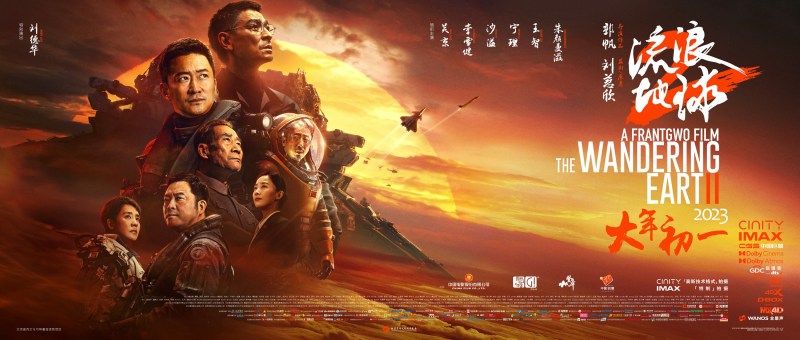
Back in what now seems like another world, Frant Gwo’s The Wandering Earth became a Lunar New Year box office smash and was described by some as China’s first foray into big budget sci-fi. Adapted from a novel by Liu Cixin, the film was much about fathers and sons as it was about sacrifice and solidarity in the face of oncoming apocalypse all of which are quite traditional New Year themes. Arriving four years later, The Wandering Earth II (流浪地球2, liúlàng dìqiú 2) largely drops overt references to the Spring festival bar the repeated motif of journeying home, but does once again stress the importance of international cooperation in safeguarding the future of the planet.

Then again, it seems that many feel it’s not a good use of time or resources to address a problem that will occur in a hundred years when they are long dead. A prequel to the first film, Wandering Earth II begins in the early days of the Moving Mountain Project which is the plan to push the Earth onto a different orbit to escape the sun’s eventual implosion. Given its enormous expense and the reality that much of the population will simply be left to die, the majority of the public back the rival Digital Life program in which humanity would be saved by relocating to a new virtual reality. Where this virtual reality is supposed to be stored is not exactly clear if there is no Earth for it to exist on, but it’s clear that some consider the possibilities of the digital existence preferable to allowing millions to die in the tsunamis which will engulf the Earth as it uncouples from the moon’s gravitational pull. 

Chief among them is software engineer Tu (Andy Lau Tak-wah) who is griefstricken by the loss of his wife and child in a traffic accident and has been secretly working on creating a fully fledged AI simulacrum of his daughter Yaya. He tells his more practically minded colleague Ma (Ning Li) that he doesn’t have the right to define what is “real” while eventually jeopardising the Moving Mountain Project by prioritising his desire to save Yaya over saving the Earth and eventually creating the AI system that will become Moss, a possibly dangerous entity which decides the best way to save humanity is to destroy mankind. 

The first film’s hero, Liu Peiqiang (Wu Jing), meanwhile is a rookie astronaut caught up in a terrorist incident carried out by militant opponents of the Moving Mountain project while enjoying an incongruously goofy courtship with fellow astronaut and future wife, Duoduo (Wang Zhi). This time around, he’s a dutiful son rather than conflicted father serving alongside his own dad who eventually becomes an example of intergenerational sacrifice as the old begin to make way for the young whose responsibility it now is to preserve the Earth. A nervous young aid serving the current premier later takes over the reigns and finds herself giving the same advice to a similarly nervous young man as they prepare to carry on the Wandering Earth project despite knowing that it will take thousands of years to complete. 

The ultimate message is therefore to choose hope, as Peiqiang later does striving to save the world even if it all turns out to be hopeless, rather than giving up and resigning oneself to one’s fate as many suggest doing when faced with the potential failure of their mission. As in the first film, the plan requires cooperation between nations and this time even more so as world powers must surrender their nuclear weapons to help blow up the moon. The Chinese premier looks forward to a day when governments can work on solving future problems rather than preparing for war, but then in an echo of the ongoing climate crisis some just don’t seem to see the point in dealing with something that won’t happen for a hundred years despite likely being among the first to complain no one did anything sooner when it finally affects them. Gwo adds a little whimsy in the technically pre-apocalypse setting with charming details such as Tu’s warm relationship with his dog-like robot helper and the general goofiness of Peiqiang’s attempt to court Duoduo while improving on the already polished visuals of the first film through several high impact set pieces but finally returns to its messages of hope and solidarity perhaps intended for a weary world attempting to find its own way out of a period of protracted strife.


The Wandering Earth II is in UK cinemas now courtesy of CineAsia.

International trailer (English voice over, Simplified Chinese / English subtitles)

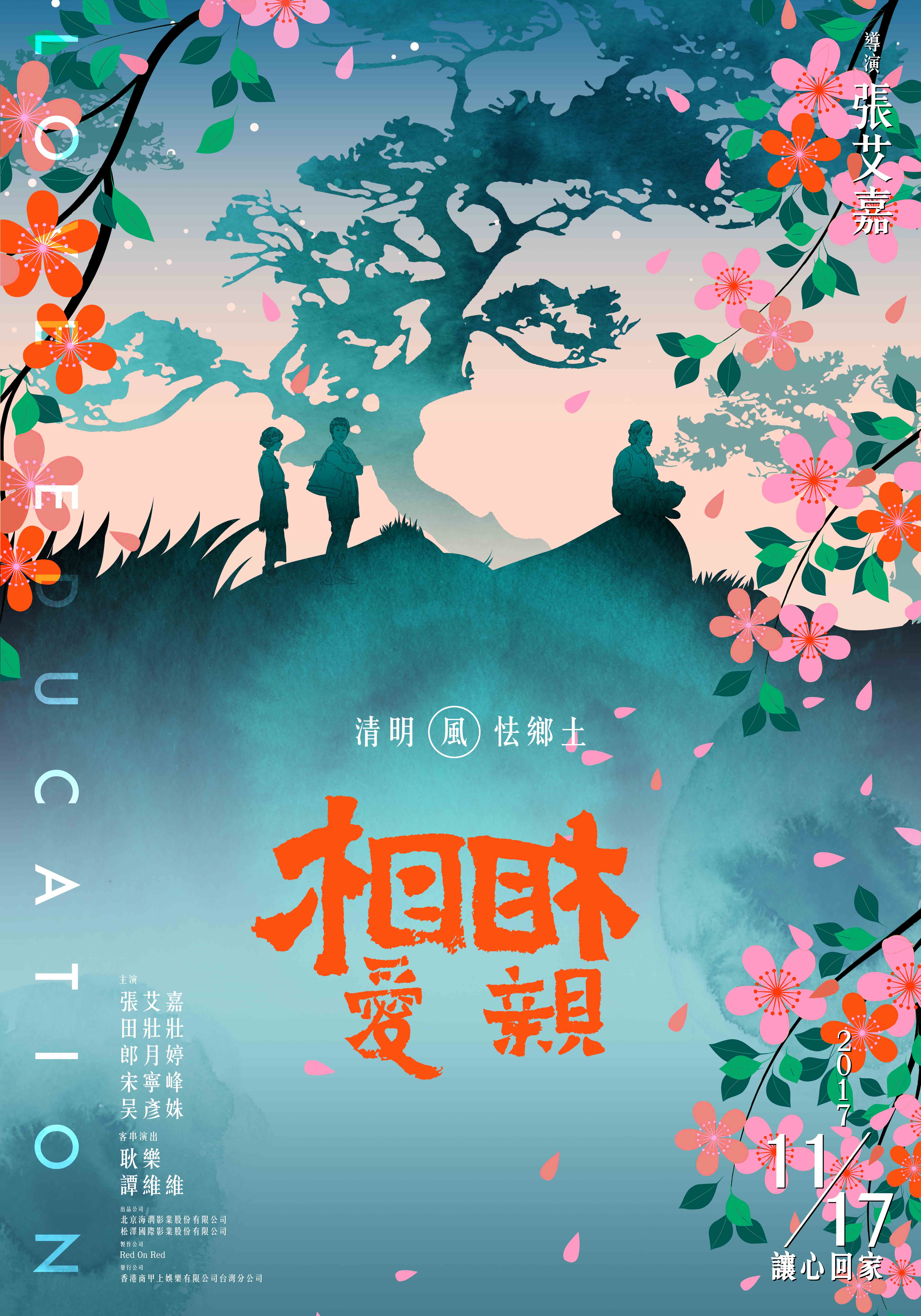
Love Education (相愛相親, Sylvia Chang, 2017)

Love Education posterWhat is love? Who gets to define it, and should it be a force of liberation or constraint? Sylvia Chang attempts to find out in looking at the complicated, unexpectedly interconnected romantic lives of three generations of women who discover that nothing and everything has changed in the decades that divide them. While a bereaved daughter channels her own anxieties of impending mortality into a petty and hopeless quest to validate the true love history of her parents, a daughter battles an oddly familiar problem with her musician boyfriend, and an elderly village woman is forced to realise she wasted her life waiting for the return of a man who had so carelessly abandoned her. Mediated by a culturally specific argument over burial rites, Love Education (相愛相親, Xiāng ài xiāng qīn) is a meditation on the demands and obligations of love, both familial and romantic, as they inevitably change and mature across the arc of lifetimes.

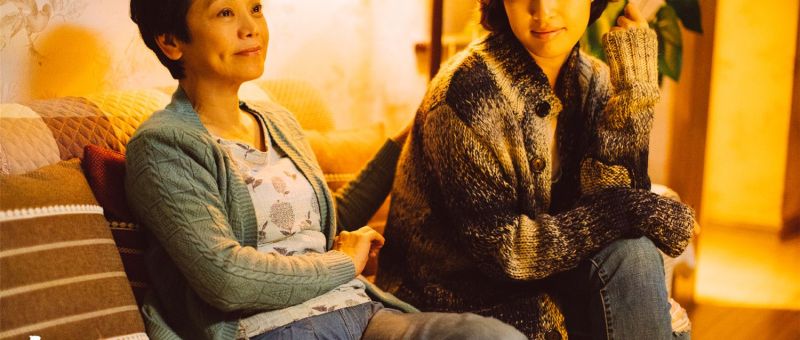
As Huiying’s (Sylvia Chang) elderly mother lies dying, she sinks into a vision of a bright summer’s day spent with her one true love who is already waiting for her in a better place. Huiying, a middle-aged school teacher facing semi-enforced retirement, is thrown into a tail spin of grief and anxiety in losing her mother, realising that it won’t belong before her daughter will in turn lose her. Weiwei (Lang Yueting), an aspiring TV journalist, remains unmarried and still lives at home though, unbeknownst to Huiying, is planning to move out and live with her aspiring rockstar boyfriend, Da (Song Ning). The plan is, however, thrown into confusion by the resurfacing of his ex, in the city with her son to compete in a cheesy TV singing contest. Meanwhile, Huiying has become obsessed with the idea of burying her mother alongside her father, only his body was sent back to his rural hometown, as is the custom, and so will need to exhumed and brought to the city. Unfortunately, Huiying’s father was technically a bigamist – he left an arranged marriage in the country to look for work in the city, “married” Huiying’s mother and never looked back. Huiying, determined to prove the “legitimacy” of her parents’ love seeks to reunite them in death, but Nana (Wu Yanshu) – the abandoned country wife, is hellbent on retaining the body, at least, of the man she married and thereby legitimising herself as a “true” wife.

Huiying’s grief-stricken descent into desperate obsession is a thinly veiled attempt to work through her own feelings of middle-aged dissatisfaction and anxiety on being violently confronted by her transition from a position of authority into a potentially powerless old-age. Her decades long marriage to Xiaoping (Tian Zhuangzhuang), a mild-mannered former teacher turned driving instructor, is comfortable enough but perhaps floundering as the couple contemplate their retirement and impending dotage. Huiying, mildly jealous of a elegant pupil who seems to have taken a liking to her husband, is also entertaining a mild crush on the father of one her own pupils while quietly feeling the distance that has inevitably grown between herself and her husband throughout the years. And so, she sets about “proving” that her parents’ romance was good and true, not only morally recognised but blessed by the state and legally approved.

This, however, proves more difficult than expected due to China’s rapid modernisation, series of political changes, high levels of bureaucracy and idiosyncratic way of issuing documentation. As her parents were “married” in the ‘50s, their union was approved by the local Communist authorities whose approach to record keeping was not perhaps as serious as might be assumed. The receipt for their license should be at the local block office, but they knocked that down. The papers were supposed to be moved to the town hall, but lacking resources they simply threw away all the documents from 1978 and before. Huiying’s parents belong to a past which has literally been thrown away, erased from history and regarded as an irrelevance by the current generation who think only of the future.

Meanwhile, Nana has been patiently waiting in her home town – a “good wife” by the standards of her rural society. Marrying Huiying’s father in an arranged marriage she has done all expected of her – looked after his family and then lovingly tended his grave despite the fact that he abandoned her after only a few months of marriage, not even bothering to tell her that he met someone else and wasn’t coming back. Nana, like Huiying, is desperate to legitimise her position to avoid the inevitable realisation that she has sacrificed her life for a set of outdated ideals.

Weiwei feels this most of all. Unlike her mother, she can’t forgive her grandfather’s moral cowardice in treating his first wife so cruelly. Building up an unexpected bond with the ironically named “Nana”, Weiwei is also forced to think about her own stalling relationship with Da who put his rockstar dreams on hold to stay with her rather than proceeding on to Beijing to try his luck there. Da, like her grandfather, has a past – in this case a childhood sweetheart with a young son and possibly territorial ambitions over a kind young man she has wounded through abandoning. Should Weiwei wait for Da, and risk ending up all alone like Nana, or should she end things now and give up on youthful romanticism for grown up practicality?

So bound up with the “legitimisation” of love, there’s an inevitable degree of possessiveness which creeps into each of the relationships – even that of Huiying and her daughter as she attempts to clip her wings to keep her close, but there’s also a kind of generosity in Chang’s direction which eventually allows them all to break away (to an extent) from an insecure need for validation to something bigger, warmer, and with more capacity for empathy and understanding. Quite literally a Love Education, Chang’s exploration of the romantic lives of three generations of women finds that though the times may have become more permissive nothing has become any easier. Nevertheless, there is comfort to be found in learning to appreciate the feelings of others, offering support where needed, and making the most of what you have while you have it in the acceptance that nothing is forever.


Screened at the 20th Udine Far East Film Festival.

Original trailer (English subtitles)
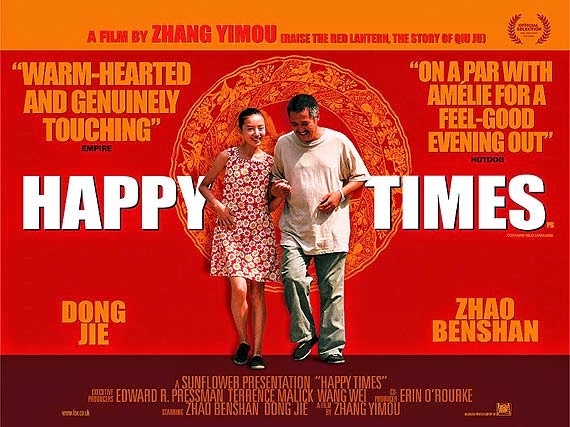
Happy Times (幸福时光, Zhang Yimou, 2000)

Happy TimesPossibly the most successful of China’s Fifth Generation filmmakers, Zhang Yimou is not particularly known for his sense of humour though Happy Times (幸福时光, Xìngfú Shíguāng) is nothing is not drenched in irony. Less directly aimed at social criticism, Happy Times takes a sideswipe at modern culture with its increasing consumerism, lack of empathy, and relentless progress yet it also finds good hearted people coming together to help each other through even if they do it in slightly less than ideal ways.

An older man in his 50s, Zhao is a bachelor afraid that life has already passed him by. Desperate to get married for reasons of companionship, he’s settled on the idea of finding himself a larger lady who, he assumes, will be filled with warmth (both literally and figuratively), have a lovely flat he can move into and will also be able to delight him with delicious food. Not much to ask for really, is it? Unfortunately, he ends up with a woman nicknamed “Chunky Mama” who is pretty much devoid of all of these qualities beyond the physical. She has an overweight son whom she spoils ridiculously and a blind stepdaughter she treats with cruelty and disdain.

Zhao is eager to please his new lady love and has told her a mini fib about being a hotel manager. He and his friend Li had been planning to open a “love hut” in an abandoned trailer in the forest but this plan doesn’t quite work out so when Chunky Mama asks him to give the blind girl, Little Wu, a job in the hotel Zhao is in a fix. Together with some of his friends, he hatches a plan to create a fake massage room in an abandoned warehouse where they can take turns getting massages from the girl in the hope that she really believes she’s working and making money for herself. However, though Little Wu comes to truly love her mini band of would be saviours she also has a yearning to find her long absent father who has promised to get her treatment to restore her sight, as well as a growing sense of guilt as she feels she’s becoming a burden to them.

Zhao decided to name his “love hut” the Happy Times Hotel – to him there’s really no difference between a “hut” and a “hotel”. In some ways he’s quite correct but the expectation differential isn’t something that would really occur to him, straightforward fantasist as he is. In fact, Zhao is a master of the half-truth, constantly in a state of mild self delusion and self directed PR spin as he tries to win himself the brand new life he dreams of through sheer power of imagination. His friends seem to know this about him and find it quite an amusing, endearing quality rather than a serious personality flaw.

Unfortunately this same directness sometimes prevents him from noticing he’s also being played in return. The ghastly stepmother Chunky Mama is in many ways a clear symbol of everything that’s wrong with modern society – brash, forceful, and materially obsessed. For unclear reasons, she’s hung on to Little Wu after the breakdown of the marriage to her father but keeps her in a backroom and forces her do chores while her own son lounges about playing video games and eating ice-cream. Ice-cream itself becomes a symbol of the simple luxuries that are out of reach for people like Little Wu and Zhao but quickly gulped down by Chunky Mama’s son with an unpleasant degree of thoughtless entitlement. The son is a complete incarnation of the Little Emperor syndrome that has accompanied the One Child Policy as his mother indulges his every whim, teaching him to be just as selfish and materially obsessed as she is.

For much of its running time, Happy Times is a fairly typical low comedy with a slightly surreal set up filled with simple but good natured people rallying round to try and help each other through a series of awkward situations but begins to change tone markedly when reaching its final stretch. Zhao and Little Wu begin to develop a paternal relationship particularly as it becomes clear that the father she longs for has abandoned her and will probably never return but circumstances move them away from a happy ending and into an uncertain future. The film ends on a bittersweet note that is both melancholy but also uplifting as both characters send undeliverable messages to each other which are intended to spur them on with hope for the future. “Happy Times Hotel” then takes on its most ironic meaning as happiness becomes a temporary destination proceeded by a long and arduous journey which must then be abandoned as the traveller returns to the road.


Retitled “Happy Times Hotel” for the UK home video release.

US release trailer (complete with dreadful voice over and comic sans):