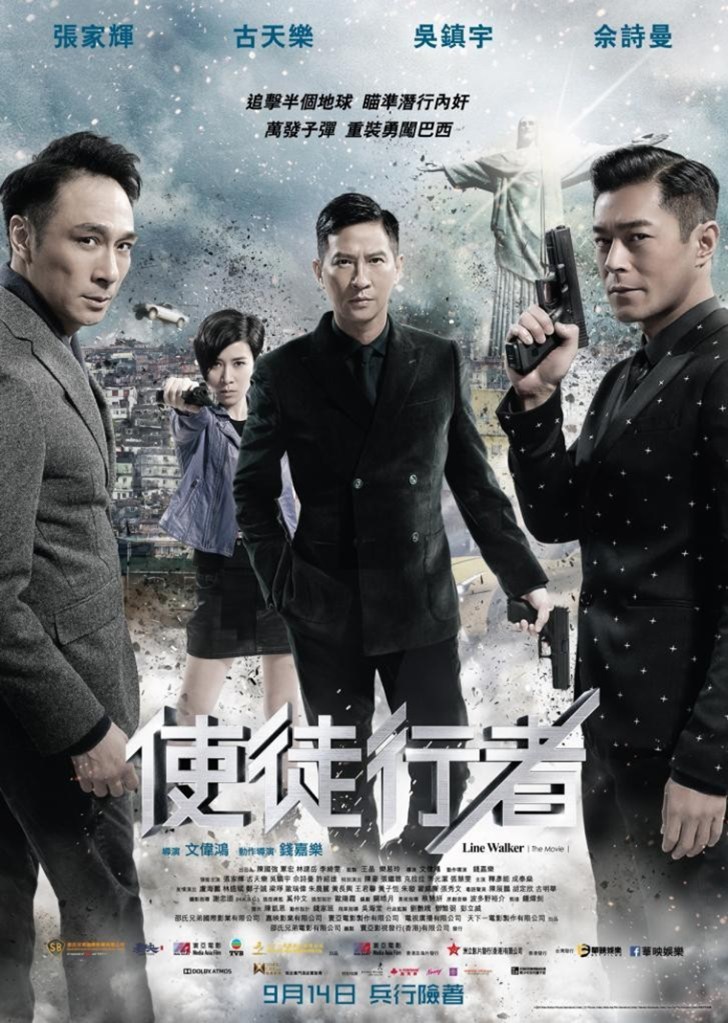
When sitcoms make the transition to the big screen, they usually do so by going on holiday. Police procedurals are no different as Line Walker (使徒行者), a cinematic outing for a wildly popular Hong Kong TV series, proves by throwing its hat into the global ring with a Brazil bound drug based gang war. Taking more than a little inspiration from the classic undercover cop drama Infernal Affairs, Line Walker joins former undercover officer Ding and her handler Q as they receive a mysterious message from a missing operative identifying himself only as “Blackjack”.
Two years ago (as detailed in the TV series), a top Hong Kong detective, Hong, managed to find just enough time before being murdered to wipe all his data relating to officers currently working deep cover. Ditzy cop Ding (Charmaine Sheh) was one such asset, and together with her boyfriend who is also her boss, Q (Francis Ng), managed to round up and bring in all the other operatives save one whose file was corrupted beyond recovery. Therefore when they receive a message written in Hong’s unique code signed “Blackjack” they are cautiously optimistic.
The trail leads them to a corporatised Triad gang currently engaged in the usual Triad business of petty gang wars over drugs, territory, and power. Shiu (Louis Koo) and Lam (Nick Cheung) are best buds and underlings in the organisation with their eyes on bigger prizes. Making a trip to Brazil to broker a drugs deal the pair get themselves into various kinds of trouble which is only compounded by the “Blackjack” issue and suspicions of a possible mole in the gang.
Ding and Q are the only returning characters from the TV series which has received significant upgrades in the big screen jump with the addition of several Hong Kong superstars including Louis Koo and Nick Cheung. Though the central narrative stands alone, there is a degree of assumed familiarity with the ongoing backstory which is at times frustrating for the uninitiated but never much of a barrier. Line Walker does, however, suffer from the common pitfalls of the TV show making the jump into the cinematic world in that it can’t shake the artificial largeness of the small screen.
After beginning with a broadly comic sequence as Ding chases down Blackjack in a Macao casino whilst making time for slapstick pratfalls along the way, the tone progressively darkens until the final, gritty action based finale. Though the banter between the bickering couple Q and Ding is never less than amusing, Ding’s cutesy airhead routine feels out of place with the general tone of the rest of the film especially as she is also supposedly part of a team of elite undercover police officers.
In attempting to up the ante, Line Walker’s scriptwriters have thrown in twists and turns at every juncture as more and more diehard criminals suddenly confess that they are, in fact, undercover police officers. No one is telling the whole truth as double crosses and betrayals dominate the action with an overt Infernal Affairs homage set in the Olympic stadium. Frankly, it all borders on the ridiculous as plot twist plies on plot twist with predictable regularity though it does at least make things exciting.
Exciting is clearly the name of the game when it comes to the action set pieces which attempt to make the most of the cinematic budget. The most high profile of these are the Brazil set sequences filled with shootouts and car chases not to mention precision timed chain reactions of exploding vehicles used as bombs. The physical fights are impressively visceral but occasionally contrived. In one notable instance two men are attacked by a lone assassin armed only with a knife but almost allow themselves to be stabbed for no reason at all. When they do fight back, they do so one on one rather simply taking down the opponent by overwhelming him with their combined strength.
Caught between comedy crime caper and gritty heroic bloodshed, Line Walker can’t make either approach work leading to an abrupt and unsatisfying, if artistically pleasing, finale. Koo and Cheung do their best as the brothers in crime duo each realising that they can’t quite go through with betraying the other, moving from easy banter in the first half to angst ridden glares in the second, but they’re in a different picture from the sunny world of Ding and Q who are still stuck in the TV screen. Though the overworked plot and variable tone create serious problems, Line Walker does at least offer impressive action with a thin layer of comedy even if it fails to hit its emotional target.
Original trailer (English subtitles)
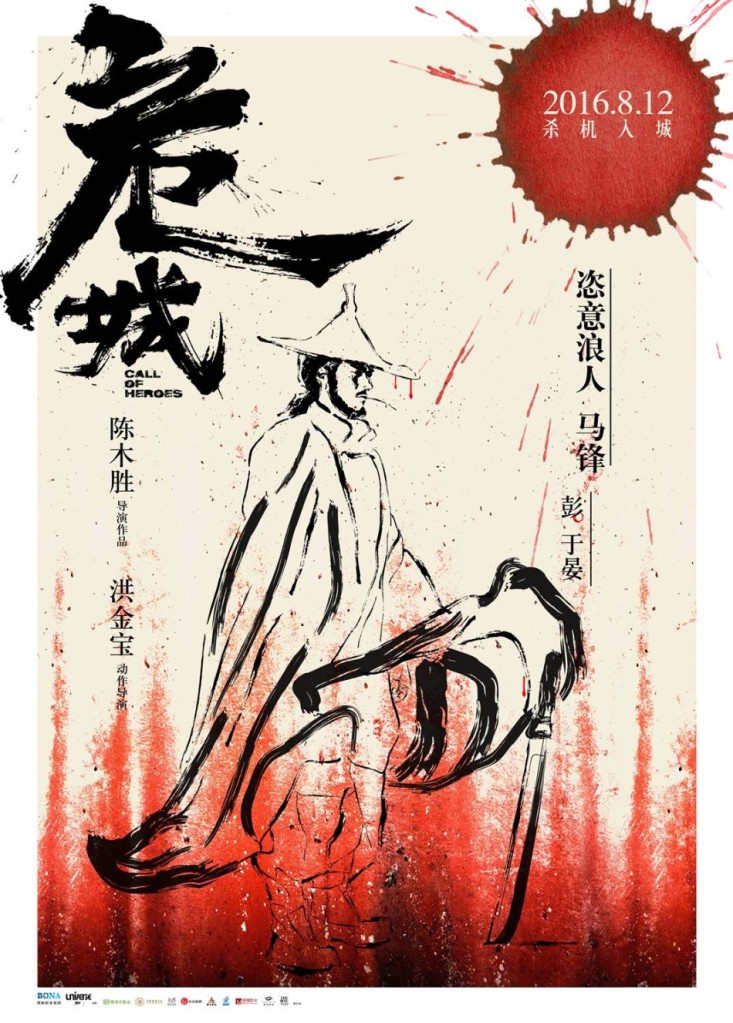 A blast from the past in more ways than one, Benny Chan’s Call of Heroes (危城, Wēi Chéng) is a western in disguise though one filtered through Akira Kurosawa and Sergio Leone more than John Ford. Filled with Morricone-esque musical riffs and poncho wearing reluctant heroes, Chan’s bounce back to the post-revolutionary warlord era is one pregnant with contemporary echoes yet totally unafraid to add a touch of uncinematic darkness to its wisecracking world.
 Often, people will try to convince of the merits of something or other by considerably over compensating for its faults. Therefore when you see a movie marketed as the X-ian version of X, starring just about everyone and with a budget bigger than the GDP of a small nation you should learn to be wary rather than impressed. If you’ve followed this very sage advice, you will fare better than this reviewer and not find yourself parked in front of a cinema screen for two hours of non-sensical European fantasy influenced epic adventure such as is League of Gods (3D封神榜, 3D Fēng Shén Bǎng).
