
Hit N Fun (臨時決鬥, Albert Mak Kai-Kwong, 2025)

“There’s no point looking back,” according to the heroes of Albert Mak Kai-Kwong’s surreal Muay Thai comedy Hit N Fun (臨時決鬥), but then again it seems like victory lies in staying in the ring. No matter how many times you lose, you have to keep fighting because precisely because you have no expectation of winning. Bruce’s (Louis Koo Tin-lok) gym in Macao is then a remnant of a world on the brink of eclipse that he’s been desperately trying to cling on to only to come to the slow realisation that it may be time to let it go.

His wife Carrie (Gigi Leung Wing-kei) is experiencing something similar after trying to make a comeback as an actress. A promising opportunity goes awry when she realises it’s for an advert for a menopausal tonic and protests that’s she’s far too young for all that but is immediately shut down by the producer, Elsa (Louise Wong Tan-ni), who says she doesn’t even know who she is but is only using her as a favour to her aunt, Bridget (Harriet Yeung), who is Carrie’s manager. Carrie complains that she can’t get a foothold in the contemporary cinema scene partly because of a dearth of parts for women her age, while she’s equally too afraid to let go of ingenue roles and her image of herself as one to make the irreversible shift to playing mothers of adult women. But then it also seems that you can’t get anywhere without a huge following on social media, which is largely powered by young actors from big agencies with hundreds and thousands of fans. 

Meanwhile, Elsa can’t let go of her long-term boyfriend Daniel (Peter Chan Charm-man) who has been unsuccessfully trying to break up with her but has not yet disclosed that he’s now in a relationship with Surewin (Chrissie Chau Sau-na), a Muay Thai champion who started out at Bruce’s gym but left with his best student, Arnold (German Cheung), to start up on their own. Unlike Bruce’s traditional gym, Arnold’s is a slick, modern facility that pushes expensive package subscriptions and has a sideline in merchandising and fitness-related goods. In many ways the battle is between the wholesome sense of community presented by Bruce’s rundown school, and Arnold’s soulless corporate enterprise which doesn’t even really care that much about Muay Thai anymore.

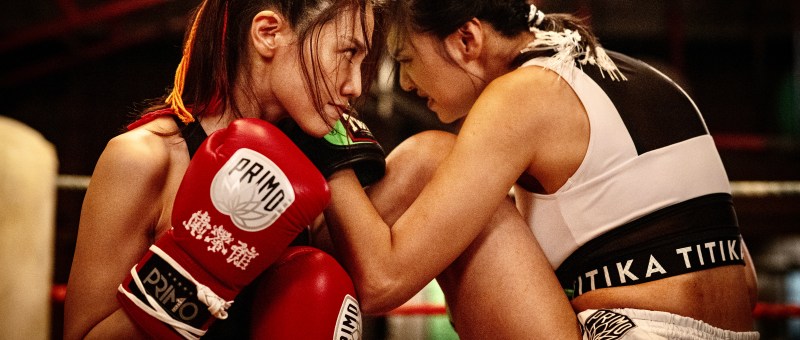
Then again, the unlikely champion of this wholesomeness is Elsa, who decides she has to fight Surewin not exactly for Daniel but to avenge and vindicate herself. Even though it’s very unlikely that she could really beat a champion after an intense three months of training, Elsa is determined to give it a go more out of stubbornness and pride than anything else. But then all she really needs to do is stick around, much like Bruce. Elsa only needs to be standing after four rounds and as Bruce is fond of reminding her, if the final bell hasn’t rung, then you haven’t lost yet. 

While training at the gym, Elsa begins to loosen up a bit and shifts more towards the world of Bruce’s gym than her high-powered job that is founded in consumerism and geared towards selling people things they don’t want or need to distract them from a sense of dissatisfaction about their lives. But on the other hand, perhaps there’s no point in the kind of stubbornness that prevents you from moving forward. Bruce has an old leather sandbag in his gym that seems to embody its soul, yet it’s already leaking sand as if the building itself were bleeding. Ironically, it’s Arnold who eventually tries to save it while Bruce seems resigned.

What they reach seems to be a kind of compromise, utilising Elsa’s skills to modernise and expand the gym, which is really just another way of fighting if also perhaps a concession and decision to leave something behind. You could also read this as an allegory for the Hong Kong film industry which is increasingly leaning towards the Mainland but still hanging on though some might say losing its soul in softening any hint of localness. On the other hand, Hit N Fun is quite defiantly a homegrown comedy starring some of the biggest local stars from Louis Koo and Gigi Leung to Tony Wu and the rising star Louise Wong. It ultimately seems to say, we’re still here, and we’ll pick our battles, but we’ll keep fighting even if we can’t win because perseverance can be a victory in itself.


Trailer (Traditional Chinese / English subtitles)
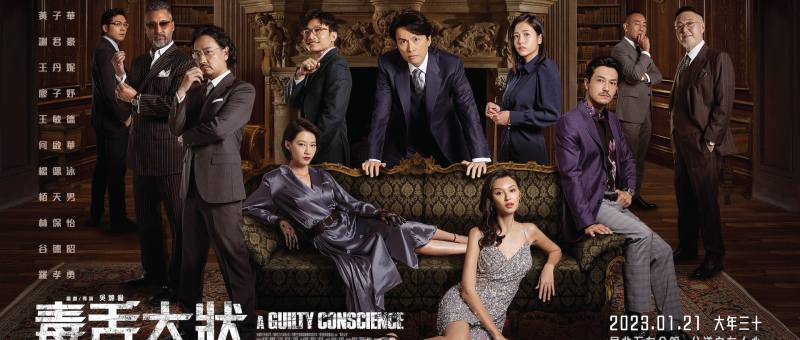
A Guilty Conscience (毒舌大狀, Jack Ng Wai-Lun, 2023)

“Something is wrong” a defence lawyer eventually asserts, witnessing a blatant attempt at perverting the course of justice right in front of her but otherwise unsure what to do about it when her opponents are so sure that they really are above the law. The directorial debut from screenwriter Jack Ng Wai-lun, A Guilty Conscience (毒舌大狀) is the latest in a series of films to put the judicial system on trial in pointing out that we are not in fact all equal before the law and the systems that are intended to protect us can often by subverted. 

Subverting the legal system was in a sense what the hero, fast-talking lawyer Adrian Lam (Dayo Wong Chi-Wah), had been trying to do. After years on the bench, his career as a magistrate is going nowhere and he doesn’t really bother to show up anymore which is why he’s abruptly demoted to a committee dealing with potentially obscene material. Cutting his losses, he decides to join the private sector working for a sleazy firm representing the rich and powerful. His first case is supposed to be a walk in the park, defending a woman, Jolene Tsang (Louise Wong Dan-Ni), accused of murdering her daughter. As usual, Lam assumes the case will be easy to win and doesn’t really bother putting the work in, especially once he finds out the mother was the mistress of a powerful man, Desmond Chung (Adam Pak Tin-Nam), and assumes sorting out the murder charge will help him get in with the elite. Only Lam badly miscalculates and owing to his own hubris sees his heartbroken client sentenced to 17 years in prison for a crime she almost certainly did not commit. 

It’s a huge wake up call for Lam who is suddenly snapped out of his cynicism and burdened by the guilty conscience of the title knowing that it’s his sloppiness that sent a bereaved young mother to serve out the rest of her youth in jail. Opening a small office of his own in a rundown part of town he resolves to serve a better kind of justice, but also determines to do what he can for Jolene in an effort to correct his mistake. He gets a chance when someone involved with the case dies and leaves a note explaining that they lied during the original trial, but as the wealthy Chung family is involved he finds himself frustrated at every turn. No one is brave enough to go against them, while their sleazy legal advisor Tung (Michael Wong Man-Tak) continues to manipulate the system to his own advantage. 

Lam may have to play a little dirty, appealing directly to the jury and wilfully breaking court procedure to make sure they hear evidence which is otherwise inadmissible, but does so in the interest of “truth” which according to Tung has no place in a court of law. Tung may well be correct, objective truth is largely irrelevant when rhetoric and legal argument hold sway. What’s morally wrong might not actually be against the law, while doing what’s right might also get you into trouble. That’s where the jury comes in, Lam answers, as a kind of check and balance using common sense to temper cold legality and decide what might best serve a kind of moral justice rather than simply answer if an offence has been committed under the law. 

But Tung calls the jury “laymen”, implying they are too stupid to understand legal complexities and are in fact a spanner in the works of justice. He objects to the introduction of “feelings” and preaches “fairness” while manipulating the system to his own advantage. Lam catches him out by needling at his elitism, pointing out that he may think he’s an elite now that he hobnobs with the rich and powerful but in their eyes he’ll never really be their equal in a world still ruled by old money. In a case Lam presided over in which a young man was accused of stealing a pair of ready meals from a convenience store where he’d previously been employed, he asks the defendant if he thought poverty was an excuse to do whatever he wanted, irritated by his attempt to manipulate his feelings by emotionally blackmailing him in claiming the meals were for his elderly parents and only taken because his boss had not paid his wages. Nevertheless, Lam had acted in the interests of “fairness” spotting that he was being asked to repay the full price in compensation when the meals he stole were actually heavily discounted and adjusting the amount accordingly. In effect Lam does something similar in defending Jolene, asking the rich if they think their power and status puts them above the law. The Chungs at least clearly think they do, doing their best to intimidate and frustrate the course of justice. 

“Everything is wrong” Lam adds during his closing speech, decrying the influence of wealth and power not only in the judicial system but in society at large. Tung thought he could manipulate the prosecutor (Tse Kwan-Ho) in knowing him to be a stickler for letter of the law, but even he knows that sometimes you might have to break the rules to do the right thing and to apply the law incorrectly would not be in the best interests of justice. With strong comedic undertones and warmhearted charm, Ng’s farcical courtroom drama discovers that the real culprits are privilege, elitism, corruption, and ambition but that justice can be served if only we apply a little common sense. 


A Guilty Conscience is in UK cinemas now courtesy of Magnum Films Global.

Original trailer (Cantonese with Traditional Chinese / English subtitles)