All Shall Be Well (從今以後, Ray Yeung, 2024)

There’s nothing that breaks a family apart as quickly as an inheritance. As a cynical lawyer points out, even mothers and sons fall out when it comes to money, so there’s nothing like it to to focus minds with an us and them mentality to clearly define who is and isn’t included under the umbrella of family. But why is it that meaningless pieces of paper hold so much sway over us when we ought to by be governed by the emotional truths that until a moment earlier ruled our lives?

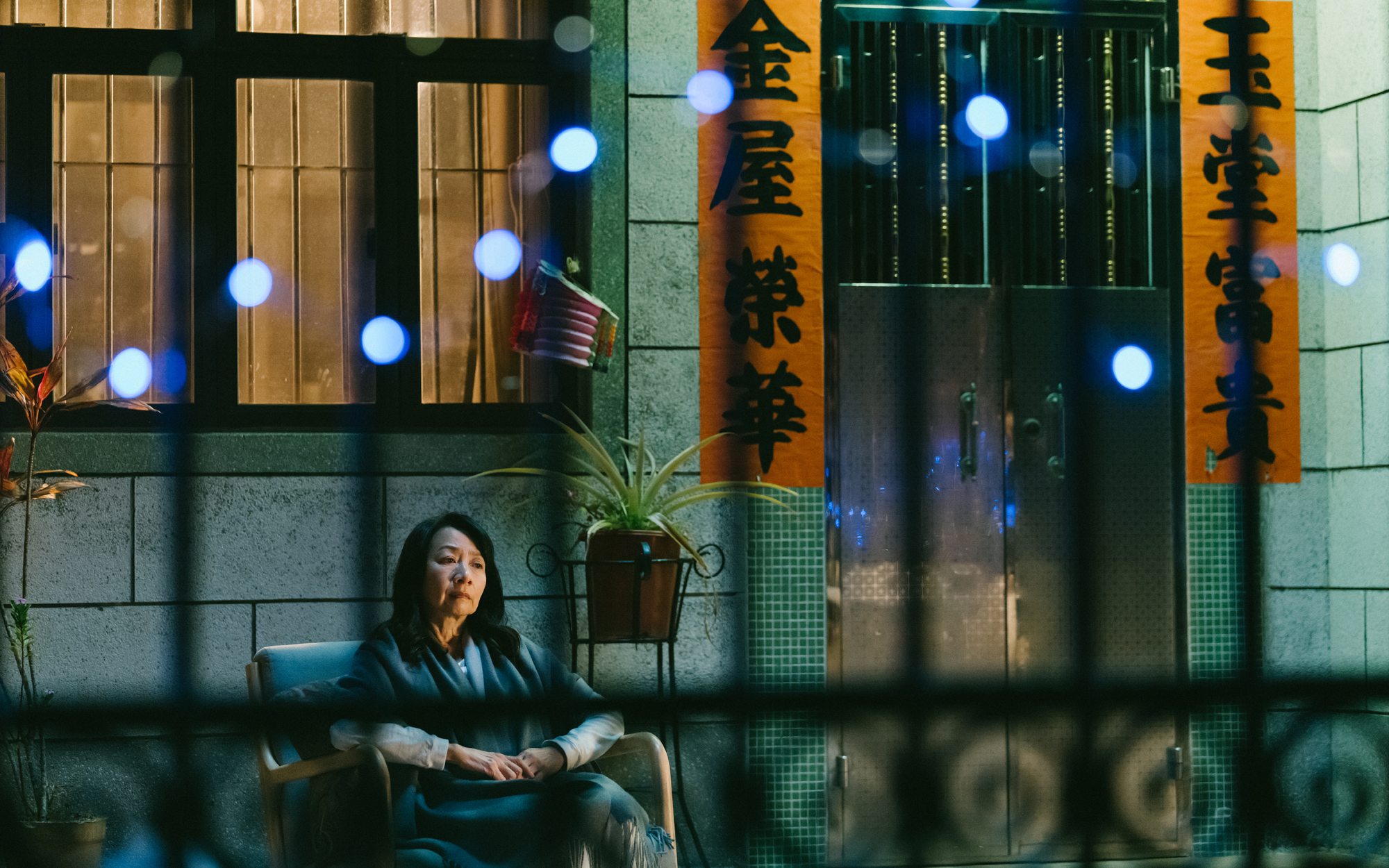
Angie (Patra Au Ga Man) had been fond of saying “because we’re family.” She never doubted her place in that of her partner who all appear, at least outwardly, to love her and accept her relationship with Pat in the way they’d accept any other marriage. But when Pat (Maggie Li Lin Lin) suddenly passes away in her sleep after one last family celebration the situation changes. Well-meaning family members step in to help with the work that must be done when someone dies, but perhaps unwittingly begin to take over slowly erasing Angie from their lives as not really one of them after all.

Her problems are two-fold. The biggest being that Pat never got round to making a will, nor did she think to put Angie on the deeds to the apartment they shared together or leave her financially provided for seeing as she’d managed all the money they’d made when they owned a factory and ran it together. The secondary problem is that Hong Kong does not recognise same sex marriage and so their relationship was not legally recognised. Had Angie been legally married to Pat, she should have inherited everything anyway because she was her spouse even without a will but with things the way they are she’s at the mercy of Pat’s brother Shing (Tai Bo). She never thought this would be a problem, because they’re family, but slowly realises that perhaps they don’t actually see her that way and with Pat gone no longer feel the need to include her.

Her sister-in-law Mei (Hui So Ying) insists on using a feng shui expert to plan the funeral who quickly puts the kibosh on Angie’s desire to have Pat buried at sea as she’d requested. Leaving aside the possibility that the feng shui master is conning them and receiving financial incentives from the people who run the columbarium, the family quickly begin to ignore Angie’s concerns swayed by the claims that interring her ashes will be more beneficial for her descendants which are Mei and Shing’s children seeing as Angie and Pat had none of their own.

A little disappointed in her kids, Mei at one point insensitively remarks that Angie is lucky not to have any though we’re also told that she almost gave in to parental pressure to marry a man in order to become a mother. Daughter Fanny (Fish Liew) makes lowkey racist remarks about her Indian neighbours as a way of expressing her frustration with her moribund marriage and unsatisfying living arrangements, while son Vincent (Leung Chung Hang) struggled to find employment and now works as an Uber driver thanks to the gift of a car from Angie and Pat which allows him to earn a living. He’s originally upset with his family’s suggestion of kicking Angie out of the apartment, but is also in a difficult position himself when his girlfriend becomes pregnant and they can’t find anywhere habitable to live on the kind of salary an Uber driver can earn. Though in her 60s, Mei is still doing a physically strenuous job as a hotel maid while Shing has taken a position he finds degrading as a nightwatchman at a carpark following the closure of his restaurant some years previously. 

The implication is these socio-economic pressures encourage them the abandon their responsibility to Angie as the beloved aunt they’ve known all their lives. But then there’s also the mild homophobia that rears its head, introducing Angie as Pat’s “best friend” and not allowing her to stand in the front with family at Pat’s funeral as if their relationship wasn’t really real because they were both women. Of course they may have behaved the same way had Pat been a man, squeezing Angie out because she had no legal claim as a common-law spouse, but it certainly seems to make it easier for them to abandon her and take everything she worked so hard to build with Pat as if they were really entitled to it. Shing justifies himself that he has to look after “his” family, which doesn’t include Angie, while cruelly implying that it’s what Pat would have wanted. 

In the end, Angie is left with no other option than to sue for her “rightful” share as a ”dependent” in an effort to force the family to recognise the legitimacy of her relationship with Pat. Thankfully she has another family in her community, though her own still living parents only partially accepted her relationship with Pat again referring to her as a “best friend” and making cracks about how she never married. But her family was Pat, and Pat is gone. Yeung paints a touching picture of grief as Angie reacts all the things she did with Pat but now alone, accompanied only by a sense of absence and comforted by her memories while otherwise exiled from a world that had seemed until then filled with familial love.


All Shall Be Well screened as part of this year’s New York Asian Film Festival.

Trailer (English subtitles)

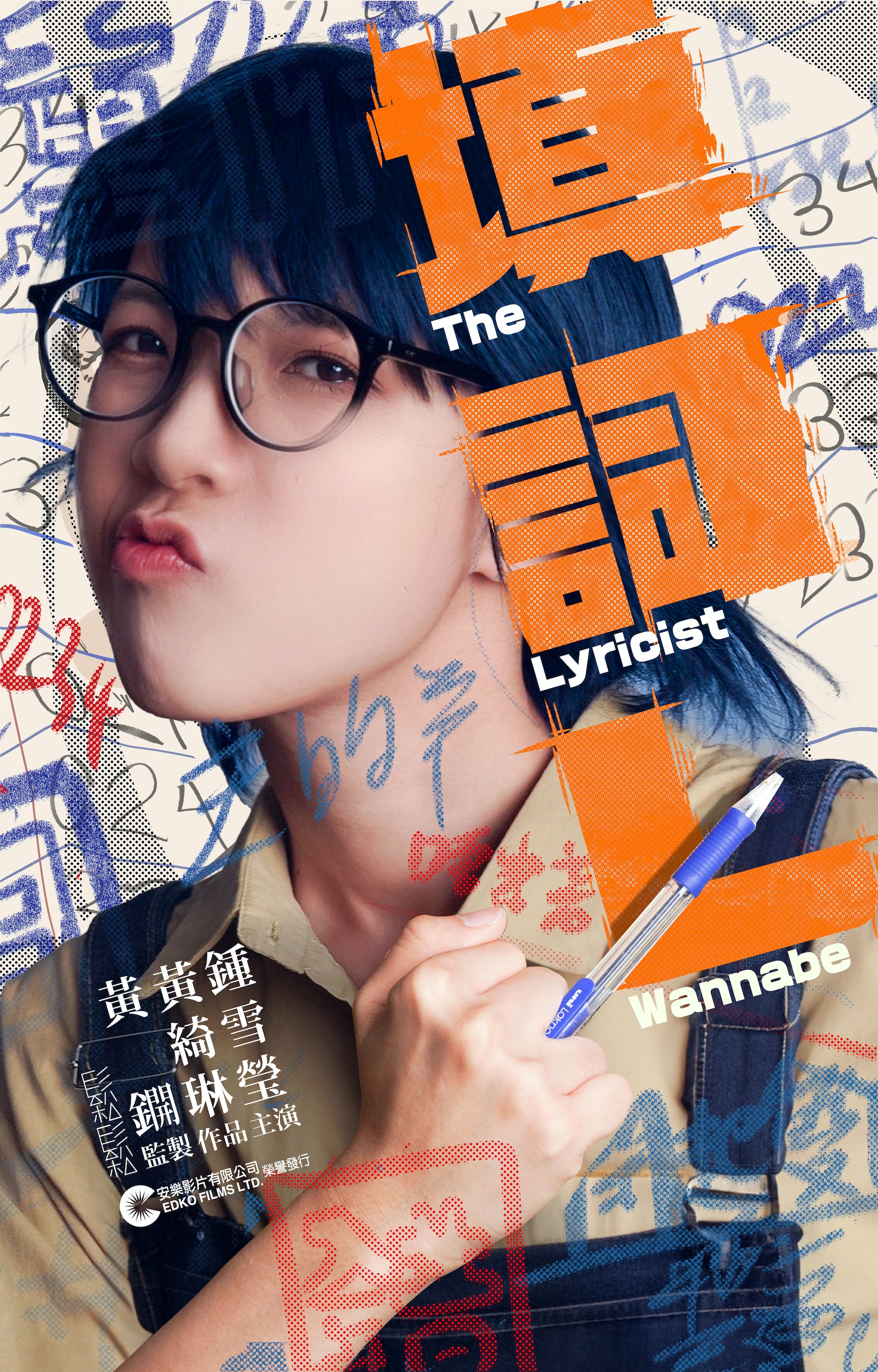
The Lyricist Wannabe (填詞L, Norris Wong, 2023)

Sometimes a dream might have come true only we never really noticed. In Norris Wong’s autobiographically inspired drama The Wannabe Lyricist (填詞L), a young woman battles her way towards becoming a Cantopop songwriter yet perhaps she already is one by virtue of her constant act of lyric writing. What she craves is the validation of having a song published, yet experiences setbacks at every step of the way that encourage her to doubt her talent or the right to continue chasing her dreams.

At a particularly low point after being taken on by a music producer to work with a spoilt influencer who’s getting studio time as some kind of favour, Sze (Chung Suet Ying) is told that her lyrics are no good and that after struggling so hard for six years perhaps she ought to take the hint and accept she isn’t suited to this line of work. It’s an act of intense cruelty, though one in part motivated by a well-meaning faux pas. In her excitement, she told the influencer she’d write lyrics for her album for free just to be published, but the palpable sense of desperation seems to have put the influencer off unable to have confidence in the work that Sze herself has devalued.

She encounters something similar during a partnership with an aspiring pop star who says he likes her lyrics but then drops the bombshell that he plans to sing in Mandarin because it’s a bigger audience. Ironically, on a trip to Taipei to sell his album she’s told that his accent is no good for the local market and while they like the song she worked on she later realises that they hired another lyricist for “real” release without even telling her. What’s more, tones don’t matter while singing in Mandarin whereas lyric writing in Cantonese is a painstaking process of trying to ensure that the tone of the word fits the melody. Aside from its political implications, not only does the pop star’s arbitrary decision to just sing it Mandarin ruin the lyrical flow she spent so long perfecting but entirely disrespects her work.

After deciding to take a break from trying to make it in music, Sze gets a job working at a ridesharing app startup where she’s roped in to create a jingle but once again her hopes are dashed when the business strays into a legal grey area and several of the drivers are arrested. While the app’s creator silently cries in his office, his female colleague ponders going somewhere else, “anywhere that doesn’t punish dreamers” which seems like a nod not only towards an oppressive capitalism that values only marketability but equally the increasingly oppressive atmosphere of the nation’s political realities. In a way this is what Sze ends up doing too, putting geographical distance between herself and the failure of her dreams by returning to the land which as the farmer says never lies to you, you reap what sow.

Yet for all her drive and perseverance there are others who view Sze’s obsession with her dreams as selfish and self-involved complaining that she rarely considers the feelings of others and neither notices nor cares if she may have hurt or inconvenienced them. She’s told that her lyrics are hollow because she lacks life experience but also is incapable of empathising and cannot see anything outside of her quest to become a lyricist. She watches other people move on, her brother getting married, friends enjoying career success etc while she’s still stuck looking for her big break only for something to go wrong just as everything was about to go right.

Wong signals the playful qualities of her fantasies though use of onscreen illustrations and even a karaoke-style video along with the nostalgic quality of the early 2000s setting of Sze’s schooldays with its MSN messenger and ICQ. Sze may be “dragged along by the melody” in more ways than one as she tries to make peace with her dreams and her future and find some way of living in harmony with the rhythms of the world around her but eventually comes to realise that she was a lyricist all along no matter what anyone else might have tried to convince her she was.


The Lyricist Wannabe screened as part of this year’s Osaka Asian Film Festival and opens in UK cinemas 15th March courtesy of Cine Asia.

Original trailer (Traditional Chinese / English subtitles)

The Moon Thieves (盜月者, Steve Yuen Kim-Wai, 2024)

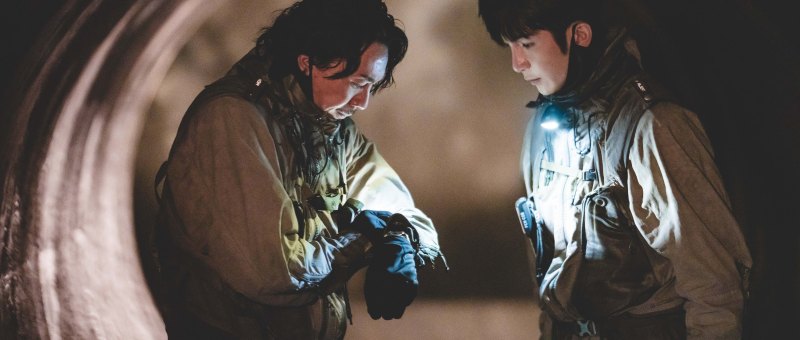
If something’s constructed entirely from orphaned parts of others like it, can you really say it’s a “fake”? Watchmaker Vincent (Edan Lui Cheuk-on) might say no, making his living through passing off “period correct” replicas of fancy watches as the “real” thing while trying to stay one step ahead of the authorities and the gangsters who seem to be his prime customers. Then again, The Moon Thieves (盜月者), Steve Yuen Kim-Wai’s return to the big screen in four years since Legally Declared Dead and a vehicle for phenomenally popular boyband Mirror, never really stops to ask just why vintage luxury watches are so desirable that the super wealthy are prepared to expend vast sums on a niche vanity status symbol but perhaps there really is no answer for that one. 

In any case, Vincent’s obsession is with the watch worn by Buzz Aldrin as he stepped onto the moon which seems to have become lost to time with NASA apparently refusing to confirm or deny its existence. His decision to make a period correct watch for a petty gangster in order to retrieve some info on the Moon Watch lands him in hot water when he’s blackmailed by local kingpin Uncle (Keung To), who is actually a youngish guy who’s taken over the name and criminal empire of his late father. Unless he wants the gangster to find out the watch is “fake”, Vincent will have to join his heist team and travel to Japan where he’ll sneakily replace three watches worn by Picasso with his homemade replicas. 

It has to be said that the film’s fatal flaw is the miscasting of Keung To as the mercurial gangster, Uncle. Though his boyish bravado might play into the idea that Uncle is out of his depth, too insecure to even use his own name rather than adopt his father’s, To’s total lack of menace or authority leaves him a rather hollow villain who alternates between super sharp intelligence and dull predictability laced with misplaced smugness. Meanwhile, Vincent is able to stay a few steps ahead of him if only in his canny knowledge of the vintage watch trade and easy power to manipulate the markets though even he probably didn’t plan on incurring the wrath of space-obsessed local yakuza who are very annoyed to have had their luxury watches stolen out from under them. 

This leaves the gang doubly vulnerable while veteran members Chief (Louis Cheung) and Mario (Michael Ning) begin to suspect that Uncle is getting rid of all his father’s previous associates and doesn’t really plan to let them live. Tensions within the group are only further strained by an unexpected hitch in the plan which brings them to the attention of the yakuza despite their incredibly careful preparations. Yuen keeps the tension high through the heist slipping into slick Ocean’s Eleven-style visuals which lend a sense of cool to the gang’s endeavours which are after all a kind of rebellion against Uncle as much as they are a capitulation to his stronghold on the local community. 

Twists and double-crosses abound as the gang try to stay ahead of him with not everything quite as it seems. Like the watches, they take everything apart to put it back together again in a way that better suits them, freeing themselves from Uncle’s thumb which might in itself stand in for another distant and corrupt authority. Ironically, the yakuza remarked that no one remembers who came second yet everyone is desperate to get their hands on the famed Moon Watch worn by the second man to walk on the moon as a kind of holy grail among horologists that they would maim or kill for though of course even if they had it they could never show it to anyone fearing they’d caught out by the authorities including NASA who apparently have a lot of say over this particular relic of the moon landing. The heist isn’t quite as daring as actually stealing the moon, though it is definitely a sticky situation for all involved which eventually requires them to hide their quarry in plain sight while doing their best to outsmart Uncle and avoid turning on each other. Smart and slick, the broadly comic overtones lend an endearing quality to Vincent’s quest for survival while targeted by a ruthlessly corrupt and infinitely implacable authority.                                                                                                                                                                  


The Moon Thieves opens in UK cinemas 23rd February courtesy of Central City Media.

UK trailer (English subtitles)