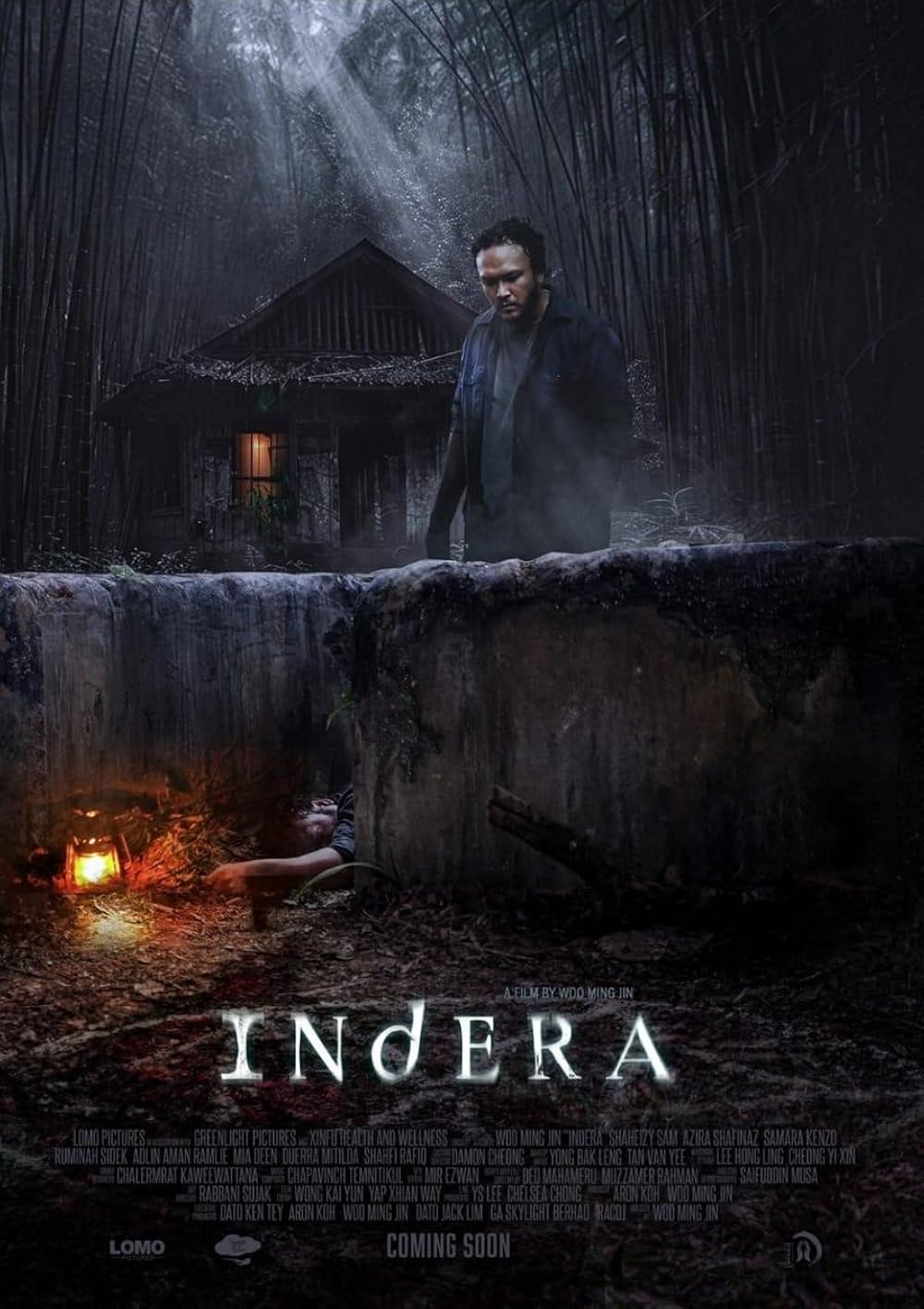
Indera (Woo Ming Jin, 2024)

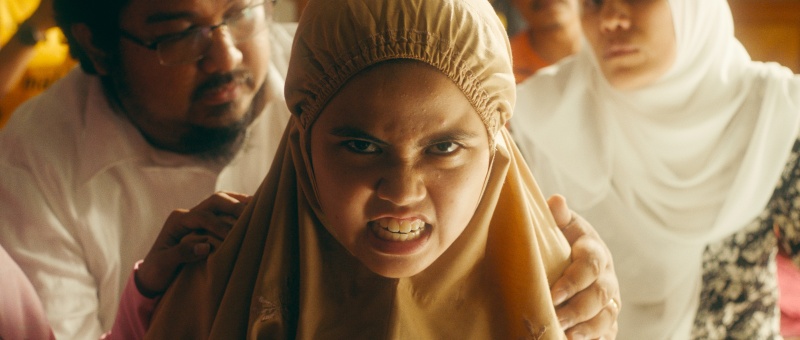
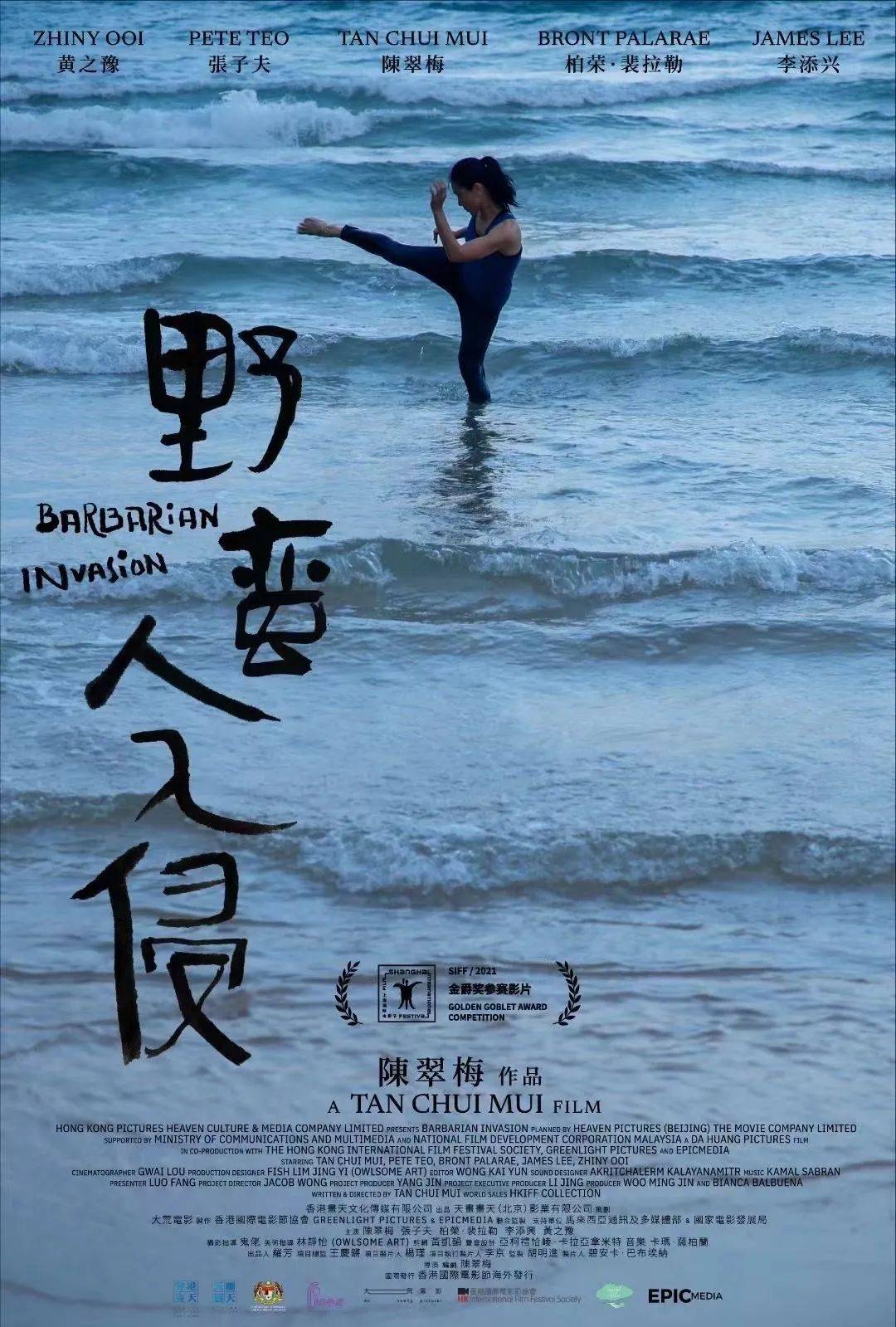
“Let’s leave this place,” a father tearfully tells his daughter, “we’ll find a better home,” but it seems the girl has found her home already and no longer wishes to leave in Woo Ming Jin’s eerie folk horror, Indera. In many ways about coming to terms with loss and grief, the film also explores tensions within the contemporary society through allusions to the 1985 Memali Incident in which political tensions in the country culminated in the siege of a village resulting the deaths of 14 villagers and four policemen.

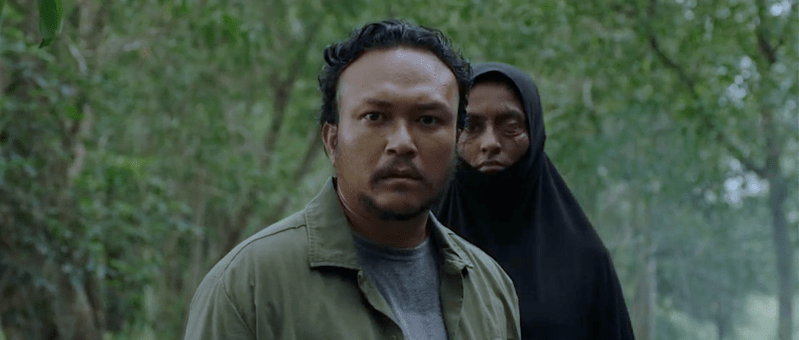
The film begins however nine years earlier with Joe driving his pregnant wife Anisa down a country road only for the engine to overheat. Joe gets out to find some water leaving his wife alone, but his stabbing of a beetle for his collection on the way back seems to provoke some strange event. On returning to the car he finds Anisa gone, and flashing forward to the present day we can see that he is now a single father to Sofia who has been mute since birth but is able to hear.

Ironically, present day action opens with her refusing to open a door though she will later be told not to listen when a mysterious force calls her name only to ignore the warning. This time she avoids answering because she suspects it’s debt collectors. Lost in his grief, Joe appears to be living in financial difficulty and is far behind with his rent. They’ve run out of food, which is why Sofia has eaten only sweets, which she seems to be rationing, for breakfast. Joe tells her that they have to protect their castle like in the fairytale Sofia is fond of reading, but in fact the pair are soon kicked out with otherwise sympathetic landlord Haji giving them a tip off about another job as a live-in handyman for a Javanese shamaness living way out in the country. On their arrival however, it’s clear that there is something very odd going on that neither of them really understand.

Nevertheless, the old woman’s home is a kind of liminal space that comes to represent Joe’s unresolved grief. The old woman, who asks to be addressed as “Mother,” asks him if he’s heard about what’s going on in Memali, and he admits he has but that it’s none of his business. Mother agrees that there’s no need to become involved in the affairs of others, but also ominously points to her birds and asks if a blind bird knows that it is caged. The same could be asked of Joe as his fate and that of the King in Sofia’s fairytale become intertwined while she progresses towards a destiny that is out of his control. Encountering a spirit that seems to be that of his late wife, Joe is forced to face his paternal anxiety and the fact that on some level he may have been responsible for what happened to Anisa while also resentful towards Sofia as a child he may not have wanted whom he also blames for her loss.

Perhaps Mother knows all this already, telling Joe that everyone has their sickness and she’s worked out what his is already though he cannot seem to see hers nor what the ominous hole she seems to be worshipping may represent. She claims that the children she has with her in the former orphanage that is her home were all “unwanted,” as Sofia may also have been and Anisa too, but has a dark purpose for them that Joe is ill equipped to understand. The hole comes to represent the bottomless pit of his grief and regret, but the spirits are also echoes of the forces of authoritarianism haunting Memali in which the children are told not to look back or answer if something calls their name and on no account ever to venture near the hole.

Still, Sofia can’t help being curious and the hole may come to represent something else to her while Joe struggles to understand his relationship with his daughter, seeing her perhaps as a manifestation of his own transgression and ultimately an embodiment of evil that it is his duty to destroy. Eerie in its palpable sense of dread, Woo Ming Jin’s oblique folk horror is pregnant with political allegory and locates its most chilling moment in Sofia’s insistence that “this is our home” in the suggestion that in the end there is no “better home” to go to but only this inescapable hell. 


Indera screens in Chicago 28th March as part of the 19th edition of Asian Pop-Up Cinema.

Trailer
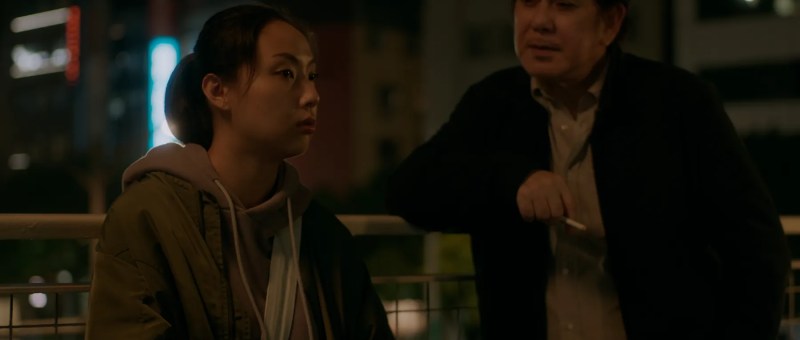
Next Stop, Somewhere (別來無恙, James Lee, 2025)

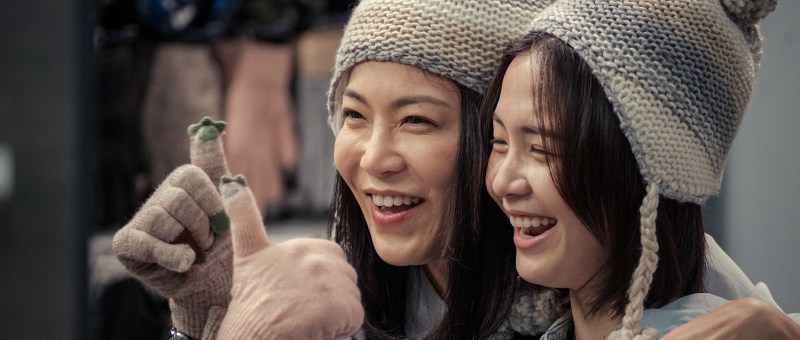
What does “freedom” actually mean? Will money buy it for you or just result in another kind of prison in which you cannot really say you’re free because you don’t feel like you have the choice to leave? Leaving is really at the centre of James Lee’s sensitive drama Next Stop, Somewhere (別來無恙, biéláiwúyàng) in which the protagonists of parallel stories have both left their homelands not altogether by choice in search of a greater freedom that they nevertheless struggle to find.

Hong Kong actor Huang (Anthony Wong Chau-sang) has left Hong Kong in search of political freedom in the wake of the Umbrella Movement, but is immediately constrained by coronavirus quarantine on his arrival in Taiwan. He is constantly trying to get in contact with a man called James who also seems to be in some political trouble and is not always able to answer, which is a problem because James is supposed to be handling the transfer of his money out of Hong Kong. Huang might be “free” of political oppression, but in reality one is never “free” without money and arguably not even then because of the necessity of acquiring it. That seems to be part of the problem for his maid at the hotel, Xiao Qian (Angel Lee), who feels trapped in a relationship that no longer seems to be working while unable to leave it because neither of them can afford the rent on their own.

Xiao Qian’s relationship is with another woman and perhaps it could be argued that in Taipei she at least has the freedom to live with the person she loved, though on the other hand she pointedly refuses to explain when her girlfriend Bae shows up at the hotel looking for her after she stops answering her calls or messages. Bae also seems to have mental health issues that also perhaps prevent Qian from leaving her, though she continues to treat her coldly and repeatedly refuses her requests for intimacy. It seems that Qian wanted to study abroad in America, but so far has been unable to go. A $100 bill to her represents another kind of freedom, though as she later says to Huang in the end freedom about having the choice to leave.

A $100 bill meant freedom for Kim (Kendra Sow) too, but like Huang she finds herself trapped by the realisation that the note did not represent what she was led to believe it would. Not entirely of her own choice, Kim leaves Vietnam to become the mail order bride of a Malaysian man who claimed to be a wealthy businessman in his 40s but in reality is a market trader quite a bit older than that. Mr Li (Mike Chuah) is totally besotted with his new brides, telling his friends that there were cheaper girls available but his is the prettiest. But in the end he’s trapped by this situation too. It’s clear he hadn’t thought through the reality and was acting out a kind of romantic fantasy. Young and naive, Kim recoils from his touch and building a relationship with her is impossible because she doesn’t speak Mandarin and he doesn’t know Vietnamese. They’re hassled by immigration officials and Mr Li’s irate mother who berates Kim insisting that they only brought her here to have a son and heir so she’s not fulfilling her obligations. For his part, Mr Li is partly sympathetic in that it’s clear he has no desire to force himself on Kim and hurt, if understanding, that she rejects him. When he eventually does try to force her, he can’t go through with it because of the sight of her tears. 

As her mother-in-law feared she might, Kim finds release though a growing relationship with the immigration officer who’s closer to her in age and also an outsider, rejected by Mr Li’s mother on the grounds of his ethnicity. Through love, she finds another kind of “freedom”, but with it constraint and it remains unclear how this situation will play out even as, like Huang, she surrenders the $100 bill to someone who needs it more. To pass time in quarantine, Huang orders a copy of Mishima’s Temple of the Golden Pavilion, a book about a young monk who sets fire to the temple because he can’t bear the existence of something so beautiful in this profane world. Having not yet finished the book after Huang lent it to her, Qian asks him why the boy did it and he replies that perhaps he felt trapped and that only by burning the temple down could he be free. To that extent, for each of them “freedom” means burning the world behind you and never looking back, if only in a purely symbolic sense in finding the courage to leave a dissatisfying situation, no matter how impossible that might seem, along with the willingness to look for happiness somewhere else. 


Next Stop, Somewhere screens as part of this year’s Cinema at Sea.

International trailer

Tiger Stripes (Amanda Nell Eu, 2023)

There’s a moment in Amanda Nell Eu’s Tiger Stripes in which a teacher writes a sentence in English on the board for the students to fill in the blanks. “The father ___ to work,” one reads. Another, “The mother ___ at home.” It’s within these blanks that the girls live their lives, contained by rigidly held patriarchal norms supported by a religious environment that turns resistance into heresy, something demonic and evil that must be rooted out so the afflicted individual can be returned to society without their parents being ostracised.

A bright and talented student, Zaffan (Zafreen Zairizal) is shown to flaunt these rules by wearing a bra and commandeering the toilets to record tiktok dance videos with the help of her friends Mariam (Piqa) and the more conservative Farah (Deena Ezral). Perhaps the most transgressive thing about them is that she’s removed her hijab and in fact much of her clothing, defiantly assuring herself with a cheekiness that seems almost naive. After getting her school uniform wet in a local pond, she cheerfully runs home hair exposed in only her smalls. Her father barely bats an eyelid, but her mother is incensed. Somewhat counter productively, she drags her outside and shouts at her in front of all the neighbours about bringing shame on their family. 

Time and again, it’s other women that cause Zaffan the most trouble. After her classmates discover that she’s got her period and is therefore a woman, they beat her up and call her names suggesting that she’s unclean and no longer wanting to associate with her. It doesn’t help that her new status is known to all because girls on their period cannot participate in some of the religious practices at the school which similarly reinforce the idea that menstruation is a pollutant and womanhood itself is toxic. It’s indeed womanhood which been activated in Zaffan along with a natural desire to resist her oppression and be who she is. She begins to undergo a transformation that even she barely understands, snapping and snarling those who challenge her while otherwise catching and eating wild animals which she tears apart with her teeth. 

The girls tell each other a story of a woman, Ina, who apparently went feral and escaped to live in the forest. They tell it as a cautionary tale, but Zaffan begins to see and identify with Ina who has found a kind of natural freedom outside of the oppressive patriarchal social codes of the contemporary society. Yet it’s precisely this freedom that must tempered ad women kept in their place. The school later calls in some kind of spiritualist, Dr. Rahim (Shaheizy Sam ), who pedals snake oil treatments and claims to be able to exorcise the young women who have similarly come down with shakes and shivers in the wake of Zaffan’s metamorphosis. Earlier on, Zaffan had seen a wild tiger filmed by a man who walked slowly behind it, menacing but unwilling to engage. Her friends tell her they probably mean to kill it, but there’s also an ineffectuality in this male timidity that is essentially afraid of an independent woman. Having transformed herself into a tigress, Zaffan too is followed by a crowd of men but all they do is stare at her back.

Meanwhile, in the background her teachers make ironic comics that the students won’t amount to anything while the Malay pupils seemingly trail behind their Chinese classmates. Zaffan becomes the embodiment of monstrous femininity, a dangerous and transgressive womanhood that rejects all of the constraints placed upon it. Though she does not understand what is happening to her and is hurt that her former friends, still on the other side of adolescence, now view her as something other and unpleasant, Zaffan longs for the freedom of the forest and to dance to her heart’s content no longer willing to submit herself to the strictures of the patriarchal society. Her rebellion earns its followers among girls of her age, themselves longing for freedom but too afraid to ask for it. Tinged with supernatural dread, the film nevertheless presents Zaffan’s progress as a gradual liberation found in the natural world, nature red in tooth and claw but alive and unconstrained as free as a tigress in a world without man.


Tiger Stripes is in UK cinemas now courtesy of Modern Films.

UK trailer (English subtitles)

Ma, I Love You (真爱好妈, Chiu Keng Guan, 2023)

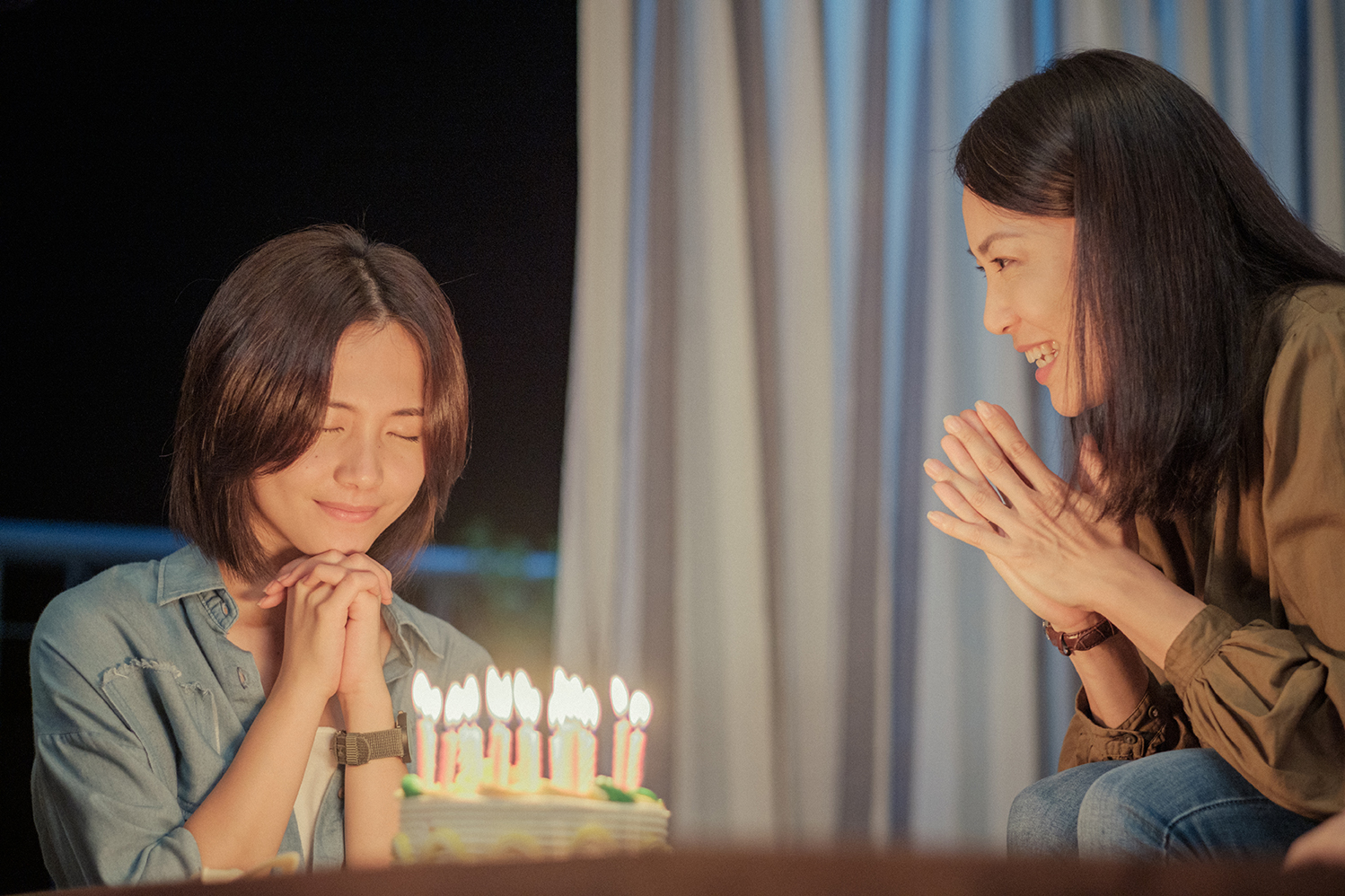
A single mother experiences separation anxiety when she discovers her teenage daughter plans to study abroad in Chiu Keng Guan’s heartwarming drama, Ma, I Love You (真爱好妈). While the daughter yearns for freedom, she is also understandably wary of heading out into the world alone and as much as she fears her mother’s sometimes worryingly obsessive love also recognises that it’s costing her own freedom in her inability to rediscover something to live for outside her daughter.

The bond between the pair is unusually strong in part because of the father’s early death in an accident at the beach which has left Bee Ling clingy and over protective. Now 18, Qi Qi is acutely embarrassed by her mother’s habit of turning up unannounced when she’s out with her friends while insisting on driving her everywhere rather than letting her drive herself or take public transport. That’s one reason that she hasn’t told her she’s given up her part-time job to take French lessons and has applied to study at a university in France. 

It’s obviously a big adjustment for Bee Ling who has devoted her entire life to raising her daughter. Even her job as an insurance agent for which she has won countless awards as a top employee is something she’s only worked hard at to provide for Qi Qi with the end goal of buying a home where they can live together. As her friends and family try to point out to her, children aren’t meant to live with their parents forever and Qi Qi isn’t a child anymore. She wants her own life and the freedom to explore, while Bee Ling should also have the freedom to find new interests and ways to fulfil herself. 

While her friend Li Yan is excited about the idea of her son Zi Hao studying overseas, Bee Ling tries to do whetever she can to prevent Qi Qi going including visiting a shrine to pray that she fails the interview before boldly stating that she will simply go to France with her which is the opposite of what Qi Qi wanted. “I want to go to a place without you” she rather bluntly states, trying to get through to her mother that she wants to be free of her helicopter parenting. 

But then Qi Qi is perhaps a little more anxious than she makes out and afraid to head out on her own without her mother to look out for her. Following a series of setbacks, she appears to have given up walking blankly through an apartment Bee Ling wanted to buy vacantly replying that she’s happy to go with whatever her mother decides. Even Bee Ling is by this point a little less controlling, looking for a place with similar sized rooms and keen that Qi Qi decide how she wants to decorate her space but is also still quite dependent on her daughter not really knowing what she’d do with herself without her.

Ironically, through her campaign to frustrate Qi Qi’s plans to study abroad, Bee Ling begins to develop new interests and make new friends. An older French woman living in their building explains to her that life began again for her at 70. Her children are grown up with lives of their own, so why shouldn’t she be free to live as she pleases? Meanwhile, Bee Ling’s mother also begins to reflect that perhaps she made the same mistake coloured by the times in which they lived thinking that a girl should stay at home. She now regrets what might have been and sees that Bee Ling’s mistaken attempts to stop Qi Qi going abroad will only bring harm to them both.

In any case, as the title implies the pair eventually discover a way to rebalance their relationship with Qi Qi reflecting on the difficulties her mother faced raising her alone and Bee Ling discovering a new sense of possibility for the future in setting her daughter free. Together they begin to move past the shared trauma of the sudden loss of Qi Qi’s father while ready to embrace new challenges. “Life is elsewhere,” Bee Ling is told by a French teacher, suddenly finding herself ready to look for it while allowing her daughter to do the same.


Ma, I Love You screens Nov. 3/4th as part of this year’s San Diego Asian Film Festival.

Original trailer (English subtitles)

Abang Adik (富都青年, Jin Ong, 2023)

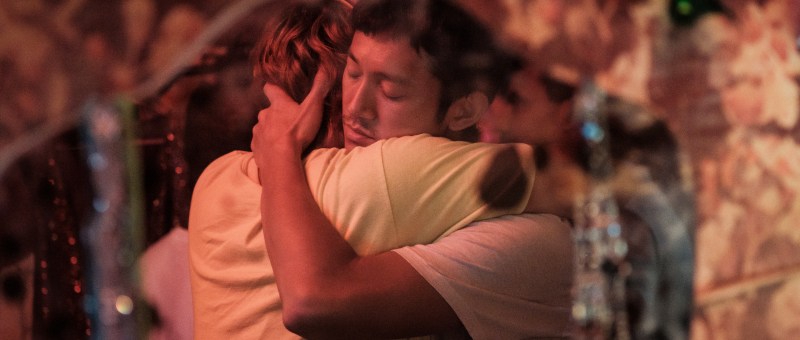
Displaced brothers find themselves trapped on the margins of a prosperous city in Jin Ong’s gritty drama, Abang Adik (富都青年). Essentially a story of brotherhood, Ong explores the fates of those largely cast out from mainstream society who must as one character later says be forever watchful, keeping a place to hide and to which escape while denied the most ordinary of things such as home and family for no reasons other than bureaucracy and prejudice. 

Both Abang (Chris Wu Kang-ren) and Adi (Jack Tan) were born in Malaysia but are technically undocumented and finding it difficult to replace their identification without things like birth certificates or access to other family members to help replace them. While Abang, who is deaf, is earnest and determined to do everything properly, Adi is sick of waiting for things to work out in his favour and has begun working as a middleman for traffickers to earn enough money to pay for a fake ID while supplementing his income with sex work. The pair are aided by social worker who tries to do her best to help get their documentation in order but finds herself with an uphill battle against implacable bureaucracy and governmental indifference. 

Ong spends most time with the brothers but makes clear the oppressive quality of the world inhabited by those trapped on the margins such as the undocumented migrants who become victims of a police raid following a tip from a broker taking kickbacks. As Adi later remarks they ask for workers to come and then they want them to go, irritated to see a policeman carrying a watch he appears to have just accepted as a bribe. With no other family members around them, the brothers have been cared for by a neighbour, transgender sex worker Money, who is like them locked out of mainstream society just for being who she is while Abang finds himself further disadvantaged by his disability and the difficulties involved in finding employment. 

Abang falls in love with a refugee from Myanmar but her family will soon be moved on to another country, while Ali develops feelings for one of his clients though she soon tells him she’s planning to move to another area to get married and enjoy a more stable if perhaps less financially comfortable life outside of the city. He offers to marry her instead, but really has nothing to give her other than his body. When a tragic accident sends the brothers on the run, they realise they have no one to rely on but each other and no real place to go. In a poignant monologue in the film’s closing scenes, Abang complains to a well-meaning monk that he is incapable of understanding his life or how difficult it has been for him to simply go on existing. He wishes that he could speak, that he had a family, that he had a safe space to call home and was not forever looking over his shoulder in case he had to leave in a hurry but instead all he gets is cosmic irony sacrificing himself to save Adi in the belief that he still has a chance at a better life if only he can swallow his pride, meet his father, and get an ID card. 

In the end they are both displaced, forcibly separated and pushed in opposing directions. Abang revisits their childhood, making paper aeroplanes as he once had with Adi and saying a final farewell with their ritualistic practice of cracking hardboiled heads on each other’s heads finding for a moment an identity as brothers reflected in each other. Ong shoots their marginalised existence in vibrant colour but also captures a sense of the city as oppressive and unwelcoming, as if it were actively ejecting them with its ubiquitous police patrols and constant danger while authority figures are largely corrupt and uncaring save the earnest social worker who ironically pays a heavy price just for wanting to help those who need it most. Melancholy if not exactly bleak, the film positions the brotherhood between the two men as a course of salvation allowing them to overcome a sense of despair in a society that seems all but closed to them.


Abang Adik screened as part of this year’s New York Asian Film Festival

Original trailer (Traditional Chinese / English subtitles)

Barbarian Invasion (野蛮人入侵, Tan Chui Mui, 2021)

“Who are you?” the lead actress asks herself, at one point in several languages, as she tries to reclaim her identity from the library of roles which she must play key among them mother to six-year-old son and recent divorcee plagued by scandal. Tan Chui Mui’s meta drama Barbarian Invasion (野蛮人入侵), in which she also stars, is in part a search for the self along with the desire to assert ownership over a physicality that is otherwise uncomfortably shared but also an exploration of local indie filmmaking and the unique challenges faced by a female filmmaker in the South East Asian industry. 

Moon Lee (named for the Hong Kong star and played by Tan Chui Mui herself) was formerly a successful actress who married a high profile actor but has now divorced and is raising her six-year-old son Yu Zhou alone. Responding to a request from an old friend, she’s agreed to travel to the coast to revive her film career and has brought Yu Zhou with her as his father is filming in Japan and her mother has just had a knee operation. What Moon hadn’t realised is that she’ll be starring in a low budget action movie inspired by The Bourne Identity and that the director, Roger (Pete Teo), wants her to look convincing as a top assassin. Moon isn’t really convinced but begins to see it as an opportunity for personal growth training with the mysterious Master Loh (James Lee) who, like the wise old monk sitting outside, is fond of cryptic aphorisms.

Nevertheless, Moon’s attention is constantly diverted by Yu Zhou’s restlessness. He darts in to defend her while she’s trying to practice martial arts and runs away when left with a baby sitter, making friends with the daughter of a local cafe owner. She tells the assistant Cathy that when she was pregnant people would come up and touch her belly as if her body no longer belonged to her but had become public property. Moon resented being told that her baby was her greatest work, as if all of her other achievements paled in comparison to her motherhood and she herself had become nothing more than a conduit for her child’s existence. A mere 3D printer for the next generation, as she puts it. Yet what’s she’s doing is in effect an attempt to reintegrate body and soul. As the wise old monk tells her the body is not the prison of the mind but the mind a prison of the body. She achieves mastery over herself through embracing unconscious action. “What is “myself?” she asks Loh and finds the answer in the her that automatically raises its fist to her head in self-protection. 

But that doesn’t perhaps help her differentiate Moon Lee the woman from Moon Lee the actress and the various roles she’s played on and off screen. It seems there was a degree of scandal in her recent divorce that’s prompted her into a reconsideration of herself, while she is left feeling betrayed when Roger explains that the producers want to cast her ex Julliard (Bront Palarae) as her love interest and may even pick him over her if she refuses because he is still a big box office draw. Roger then gets a major offer of investment, but it’s from a Chinese actress who wants Moon’s part. Chinese producers want a Chinese star he tries to explain to an increasingly exasperated Moon who wonders what all this is for if she is so easily replaceable. 

In any case, an event which seems to transgress the borders between the real and the fictive throws her into the role of her amnesiac heroine who has only muscle memory along with the ability to speak several languages chiefly those spoken by roles she previously played such as a Burmese refugee and Vietnamese bride. Still, as her character begins to recover her identity she too comes into herself, brings some ironic closure to her relationship with her ex, and embarks on a somewhat mystic journey into the self all while ironically riffing on classic kung fu movie themes injected with a little contemporary pop culture. To the challenger the sword was everything, to Musashi everything was the sword Roger explains of a tale in which the elderly Miyamoto Musashi defeated a young rival through turning the world around him into a weapon, adding that to him while film was once everything everything is now film. And so it is for Moon in her ongoing psychodrama rediscovering herself among many others as she fights her way towards bodily autonomy and the reclamation of her authentic identity.


Barbarian Invasion screened as part of this year’s Five Flavours Film Festival and is available to stream in Poland until 4th December.

Original trailer (Simplified Chinese / English subtitles)

Imaginur (Nik Amir Mustapha, 2022)

“It’s a pickle, isn’t it? Trying to remember what you don’t know you’ve forgotten.” So says the father of the hero of Nik Amir Mustapha’s touching sci-fi romance, Imaginur. It is however his son who’s trying to piece things back together while seemingly stuck in a maddening time loop chasing the ghost of lost love and searching for his “happy place”, the safest place he can imagine that will reconnect him with who he really is. 

Zahul seems to be haunted by fleeting glimpses of a woman whose face is hidden. After being involved in a traffic accident, he fetches up at the hospital but is there with his elderly father who is living with dementia. An elderly lady gives him a card for a special service called Hypnotica run by a mad scientist named Ramil who claims he can use hypnosis to cure Zahul’s panic attacks the most recent of which caused him to abandon his father in a supermarket after an awkward interaction with his ex. Ramil tells him that they’re simply going to revisist old memories with a new perspective to solve the cause of his anxiety but we can’t be sure when or if Zahul has actually left the state of hypnosis. Unable to remember or get a firm grasp on his reality he becomes panicked and short tempered, eventually paranoid and rambling about people trying to steal his brain.

Even so as someone puts it, his quest for Nur, a woman he meets at a burger stand, is also a quest for light and the path back towards himself in reclaiming his past even if it comes with the pain of loss on waking up to the reality. “This is what becomes of our lives” the sympathetic elderly woman laments of Zahul’s father, only for Zahul to reply that there’s no point resisting, but resisting is in a sense what he’s been doing trying to push through to a more concrete reality unwilling to accept the first or even second iteration of a moment in time but looking for the essential truth of it. 

What his father tells him is that the answer is what we feel in out hearts, that there’s nothing so important as feeling except perhaps the memory of it. That is in a sense what Zahul is chasing, trying to reorient himself through emotional logic while simultaneously reluctant as if avoiding something he doesn’t know that he’s forgotten. Meanwhile, he becomes increasingly paranoid about the shadiness of Ramli’s operation which even he calls a “pseudoscience” wondering if he’s caught up in some kind of conspiracy while convinced they’re trying to steal his brain or at least mess with it to drive him out of his mind. 

Yet it all seems to come back to a choice he didn’t and didn’t make watching the mysterious woman head towards a station with a suitcase but getting hit by a car before reaching her. “Remember me” she plaintively asks in the shared space of his mindscape, perhaps a phantom of his imagination but also a real woman he didn’t know he’d forgotten who holds the key to everything he is. “You live inside your head a little too much” Nur tells him, and she’s absolutely right while ironically advising him to find his happy place little knowing that perhaps he has and they’re already in it. 

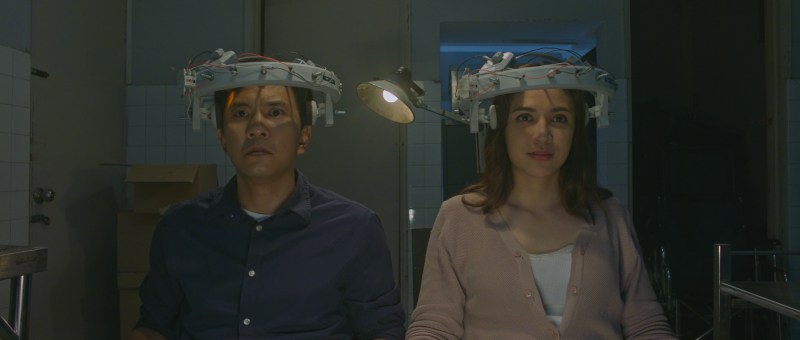
Oneiric and elliptical, the film’s fragmentary dream logic in which Zahul is forced to relive a series of moments from getting a parking ticket to being at the hospital eventually builds towards a moving moment of cohesion as Zahul manages to find himself again accepting both love and loss along with memory in all of its emotional intensity. Opening with a classic hypnotic spiral, there’s a kind of charm in Nik Amir Mustapha’s retro production design in the lo-fi hypnotism headsets Ramil alarmingly claims turn off part of the brain along with the softened colour palate that lends a note of nostalgia to what we assume to be the present day. In any case there is something genuinely touching in Zahul’s determination to reclaim himself through remembering lost love and discovering the eternal in transient moments of happiness.  


Imaginur screened as part of this year’s New York Asian Film Festival.

Teaser trailer (English subtitles)

Images: © 2022 Lumatic Films.

Love Conquers All (爱情征服一切, Tan Chui Mui, 2006)

“Girls are mostly stupid” extols the dubious romantic lead of Tan Chui Mui’s debut feature, “they think their love can conquer all”. Ironically titled Love Conquers All (爱情征服一切, àiqíngzhēngfúyīqiè), Tan’s ‘90s drama wonders how true that might be or if in a sense love can at least triumph over reality as we watch the naive heroine falling wilfully or otherwise into a dangerous web of abuse and exploitation while torn between the innocent romance of a hometown boyfriend and the confusing compromises of seedy urbanity. 

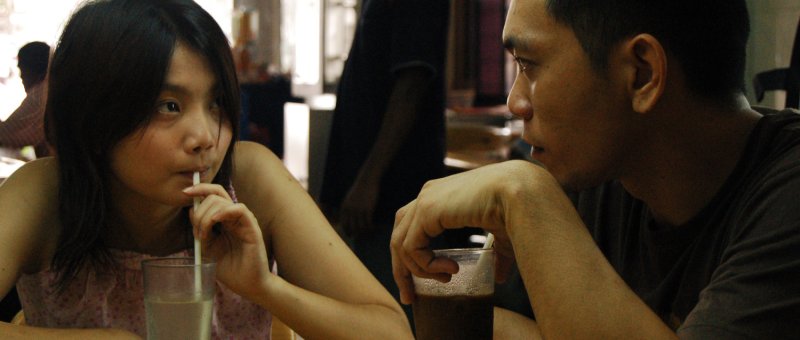
Innocent country girl Ping (Coral Ong Li Whei) travels from her home in Penang to work in a relative’s restaurant in Kuala Lumpur. While using a pay phone to keep in touch with her family, she comes to the attention of John (Stephen Chua), a somewhat rough local man who quickly begins stalking her bizarrely enough with the offer of a bunch of bananas to which Ping claims to be allergic. Nevertheless, lonely in her new life in the city rooming with her employer’s young daughter Mei, she eventually gives in and begins a relationship with him. While they’re at a hawker stand one evening, he introducers her to his friend, Gary, whom he claims is a pimp. Gary’s modus operandi is to pick up a new girl every three months, make her his girlfriend and then disappear sending a friend to say he’s in trouble with some shady types and needs money fast. Unable to pay, the young woman is drawn into sex work which Gary forces her to continue on his return before selling her off to people traffickers and starting the process over again. 

Ping seems fairly horrified by John’s story, but inevitably experiences something similar herself as John expresses fear for his future given the precarity of his underworld life, turns up with bruises, and then disappears sending Gary to tell her he needs money fast. She knows what’s happening but goes along with it anyway, perhaps out of a sense of fatalism or as John has suggested because she gives in to the romantic fallacy that her love can save him though he only means to use and discard her. Or perhaps, who knows, it is just a coincidence and he really does love her after all. A minor moment of potential exploitation mirroring their earliest date in which she suggests buying him a jacket but he prefers a different, possibly more expensive one, may imply something different. 

In any case, Ping’s view of romance may be overly idealised informed by the brand of TV drama so cheesy that little Mei and her mum can’t help giggling as they watch. Mei too is in the middle of an innocent romance with a penpal who calls himself only the “Mysterious Man” which is on one level worrying even if her explanation that he usually talks about stuff at school implies they may be of a similar age and she may even know him. At different stages, both Ping and Mei are seen drinking at the cafe staring into space thinking of their respective romantic interests though Ping’s situation is obviously not quite so innocent. On a fairly coercive date in which he idly raises the idea of marriage and children, John drags her to the beach and posits an ideal family life in small house like that of his aunt to whom he introduces her as his wife but may or may not actually mean to provide her. 

“You have no choice unless you jump” John uncomfortably repeats as he completes his romantic conquest even as Ping continues to call her hometown boyfriend on the phone telling him she loves him even in front of a mildly jealous John. Perhaps their romance is to her a kind of fantasy of romantic sacrifice set in contrast with the more prosaic sacrifice she has made to leave her family and travel to the city. While working in the cafe she’s approached by another creepy guy only a little older than John but just as persistent and taking much the same approach insistently asking for her name though she eventually manages to brush him off. Yet the question remains, is Ping merely a romantic fool, “stupid” as John had said, or a young woman attempting to take control of her romantic destiny as perhaps Mei is doing when she asks her mother to drive her to her pen pal’s address so she can figure out what he looks like? Shot digitally in a retro 4:3, Tan’s debut feature is replete with zeitgeisty detail of Kuala Lumpur in the ‘90s and filled with the lacuna of nostalgia, but offers no real answers for the duplicitous nature of love. 


Love Conquers All streamed as part of Odyssey: a Chinese Cinema Season.

Original trailer (English subtitles)

Zombie Infection (Belaban Hidup: Infeksi Zombie, Ray Lee Voon Leong, 2021)

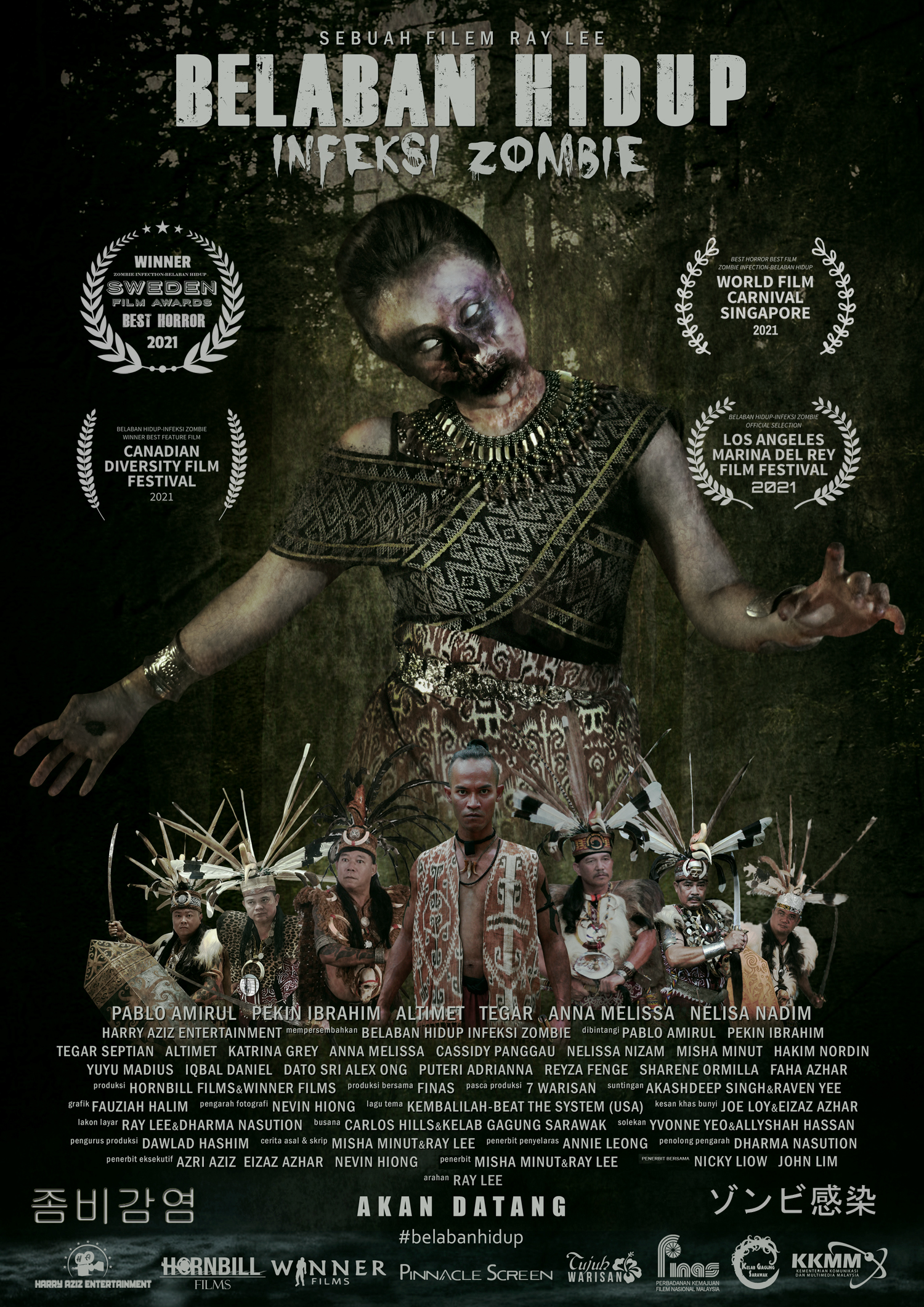
An indigenous village finds itself under threat thanks to concurrent waves of colonialism in Ray Lee Voon Leong’s indie undead drama, Zombie Infection (Belaban Hidup: Infeksi Zombie). “Don’t concern yourself with outsiders. Our longhouse should be our only concern” advises the village head, yet as the heroes will shortly discover nowhere is really as isolated as it might at first seem and the consequences of exploitation and abuse will eventually reach even the deepest of forests.

As detailed in the opening voiceover animation, evil Russian mad scientist Dr George (Weeam Shawaheen) has fled to Borneo after creating chaos elsewhere and is currently conducting his nefarious experiments on the marginalised taking villagers off the streets and tricking orphans with the promise of free medical care in return for participating in “clinical trials”. Unfortunately, Dr George’s marvellous medicine turns people into zombies which becomes a problem when a bunch of them escape along with a handful of orphans fleeing their captivity at the hands of the exploitative physician. After searching a nearby mall looking for a missing sister and picking up a little boy orphaned by his zombified mother, the gang make their way into the forest assuming that the rough terrain will make it harder for the zombies to follow them but unfortunately they are not quite correct in their assumption. 

Meanwhile, an indigenous village is going about its normal life hunting in the forest little knowing they are already under threat despite the persistent nightmares plaguing village head’s son, Gadang (Pablo Amirul). Gadang is soon to become a father for the second time but his relationship with his young daughter Suna is beginning to fray, his wife Jawai (Anna Melissa) cautioning him that he can’t keep making promises only to disappoint her later as he agrees to take her swimming in lieu of allowing her to accompany him into the forest. His father patiently sharpens knives, insisting that it’s best to be ready for any eventuality though village life seems to be happy and as far as they know there is no reason to feel unsafe. Nevertheless, the infection soon catches up with them even if they are slow to believe claims of an undead invasion coming from “outsiders” later blamed for bringing evil into the forest. 

Only, it wasn’t the orphans who brought it, one of whom has indigenous tattoos on his shoulders and speaks the same language as the other villagers, but arguably two of their own who had sold out their people to collaborate with Dr George in return for riches. Realising the scale of the problem on his hands, Dr George determines to look for an antidote but there’s nothing he can really do to put right the chain reaction his immoral greed has caused in his exploitative misuse of the marginalised members of a small South East Asian nation. 

“What has happened is indeed alarming” according to one of the villagers in what might be the understatement of several centuries, but isolation is no longer enough to protect their longhouse from the ravages of colonialism as they find themselves assaulted by hordes of man-eating monsters created by the greed and amorality of the infinitely corrupt Dr. George. Gadang is forced to face his nightmares, anxious in assuming his father’s responsibility to protect the village while mindful that he has perhaps in a sense neglected his duties as a husband and father while playing the big man in the forest. It’s just as well his dad sharpened all those knives, because they are its seems their last defence even as they’re forced deeper into the forest in search of a safety that may no longer exist. 

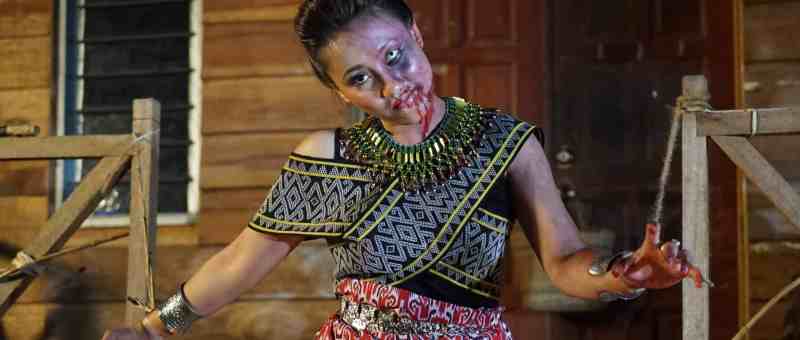
At its best when exploring the lives of the indigenous community, Zombie Infection reaches its stride only when arriving at the forest even while its attempt to shift focus from the fleeing orphans to the villagers is only partially successful. Nevertheless, the film makes the best of its meagre budget with some impressive prosthetics and zombie choreography as the villagers go after the undead threat with indigenous weapons and wearing traditional dress. Yet as the film’s melancholy conclusion perhaps implies, the legacy of colonialism can’t be overcome so easily leaving the survivors in the middle of a battle seemingly far from its end. 


Zombie Infection streamed as part of Yubari International Fantastic Film Festival 2021.

Original trailer (no subtitles)

Babi (Namewee, 2020)

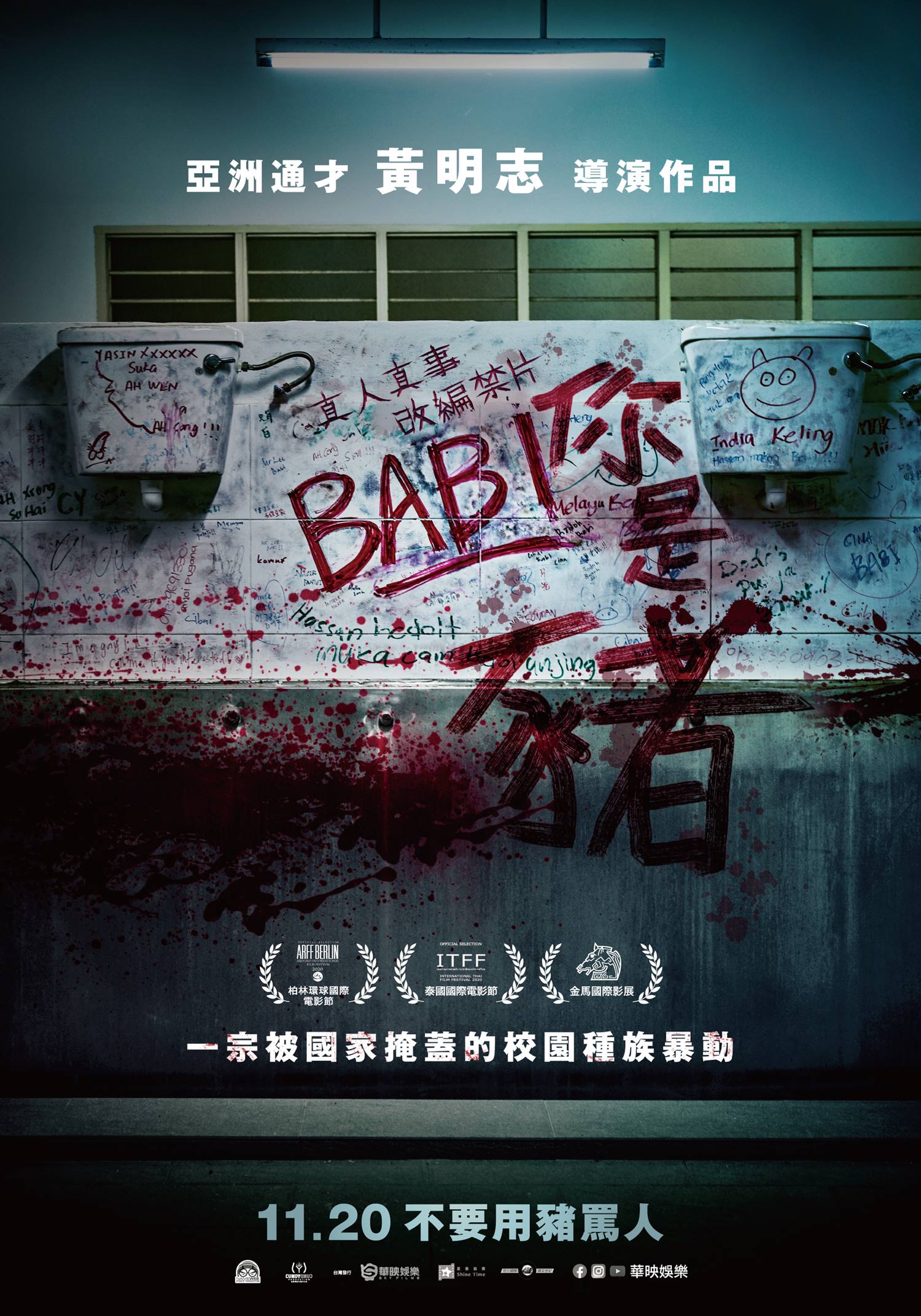
No stranger to controversy, Namewee’s latest, Babi, saw him once again questioned by the authorities when a complaint was lodged citing the film’s alleged “racist elements” which “tarnished Malaysia’s image” while the producer was also later accused of failing to gain the proper license for the film’s production. In fact, some were convinced that the film itself was fake and Namewee’s claims that it had been shortlisted for major international festivals were just bluster, yet it does really exist even if some really wish that it didn’t considering the rather bleak picture it paints of a society marked by racial discrimination and corrupted authority. 

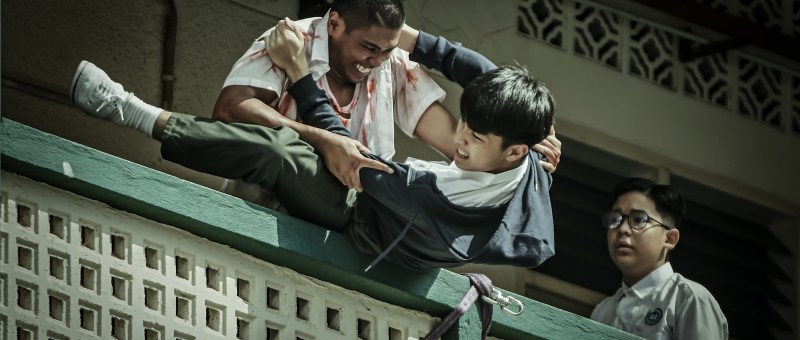
Namewee opens with a lengthy context sequence outlining major events which occurred in the year 2000 from the Australian Olympics to Bush’s election while claiming that the shocking story he’s about to tell is true but was never reported because, it’s implied, it was covered up by the authorities. A boy dies at an ordinary high school, apparently having gone over one of the balconies and landing in the courtyard below. The school, panicked, want to get this cleared up as soon as possible, preferably before going home time because they’d rather the parents didn’t find out about it and are desperate to keep it out of the papers. For all of these reasons, it’s best for them to call the boy’s death a suicide, yet empathetic and soon to retire police officer Singh insists on a full and proper investigation. 

What follows is a Rashomon-like series of alternative witness statements each of which move silently towards the truth. What’s certain is that a fight broke out between rival gangs in the cafeteria after rich kid Kiet’s coke was knocked over, he assumed deliberately. Kiet is an extremely unpleasant and entitled young man resentful that no one likes him but constantly harping on about his prominent father while showing off his wealth by, among other things, driving a BMW to school. This perhaps plays into an unpleasant stereotype as Kiet is a member of the ethnic Chinese community which, despite being a minority, is resented by some Malays the film suggests for its supposed stranglehold on the national economy. The Chinese minority, meanwhile, continue to suffer degrees of discrimination. The boy who died, Chong, had been turned down when applying for a university scholarship because of his ethnicity despite his Malay friend Yisin attempting to speak up for him with the teachers. 

The teachers are, however, not interested and apparently extremely racist themselves. Arch villain Mr. Nasir quite obviously has it in for anyone not Malay, snapping as the leader of the Indian boys is questioned that “Indians are all liars” which is even more awkward considering the lead policeman is an Indian Sikh. Bullying another Indian student, he likens the necklace he’s wearing to a “dog collar” while branding Chong an “outsider” and an “immigrant” when he dares to ask questions about the procedures for awarding scholarships which Mr. Nasir claims are intended for the indigenous community while continuing to insist that Chong must be rich simply because he is Chinese. 

Mr. Nasir is himself a symbol of everything that’s wrong with the contemporary society and an embodiment of the corrupt authority that provokes the boys’ rebellion. He is actively, even gleefully, racist and routinely abuses his power in the most heinous of ways, while the leaders of the Chinese and Malay gangs also lost fathers to corrupt authority figures. Aside from his racism, Mr. Nasir is also extremely homophobic, taking aside an effeminate Indian student, ripping off his accessories, and later humiliating him. Yet his chief complaint is about the word scrawled on the bathroom wall, “Babi”, meaning pig, which he takes as a mockery of Islam. 

As the closing captions explain, the teachers were later transferred while a number of students were expelled from the school though we cannot know the veracity of Namewee’s claims, no one has apparently ever reported on the case. The incident remains “unreported but not forgotten”. In any case there is genuine poignancy in the frustrated friendship between a Malay boy and his two Chinese friends, eventually corrupted by jealousy and resentment caused by societal conservatism and discrimination. Yet as bleak and nihilistic as the film’s conclusion may seem, it does allow a ray of light in the youngsters’ eventual rebellion against the corruption which so oppresses them, united if only in a moment by their desire to break free of its duplicitous constraints. 


Babi screened as part of this year’s New York Asian Film Festival.

Original trailer (English/Traditional Chinese subtitles)