Sister Street Fighter: Fifth Level Fist (女必殺五段拳, Shigehiro Ozawa, 1976)

Though it’s tacked on to the Sister Street Fighter series, Level Five Fist (女必殺五段拳, Onna hissatsu godan ken) actually has nothing to do with it save borrowing a part of the title which is intended to signal the presence of its star. Thus, this is not really a martial arts movie but a much more conventional Toei action film in which the leading role is technically split between Etsuko Shihomi’s posh girl karate champ and Tsunehiko Watase’s sexist cop. It does however continue the smuggling theme with the drugs this time first being packed inside fish and then encased in Buddha statues to be exported to America.

Like many Toei films of the time, there is an underlying theme of anti-Americanism as the “Far East” big boss, posing as a Hollywood movie exec, is supposedly from there but has a strong accent suggesting otherwise. Meanwhile, the brother and sister at the film’s centre are a pair of children who were fathered by American servicemen at the bases in Okinawa who presumably took no responsibility for their upbringing. The brother’s father was black, while the sister’s was white, and though they have both suffered prejudice and discrimination because of their mixed ethnicity, it’s clear that Jim (Ken Wallace) has had it worse. Michi (Mitchi Love) makes good use of her native-level English abilities and martial arts skills to work as a bodyguard / interpreter for visiting dignitaries, but Jim seems to struggle to find employment and subsequently ends up working for a Korean gang run out of a local nightclub. 

The pair have a dream of saving up enough money to return to Okinawa, which was returned to Japan in 1971 after an extended period of US occupation, and opening a restaurant which the film positions as a desire to escape from the racism they experience on the mainland. When Jim says that Kiku (Etsuko Shihomi) is their only friend, he half implies that the discrimination they face is down to being Okinawan rather than their mixed ethnicity which would continue to be an issue even on the islands as it was in their childhood even if there may be more understanding given the continuing presence of the American military and larger numbers of mixed-ethnicity people. In any case, it’s true enough that even those from Okinawa do also experience discrimination on the mainland and are not always accepted as “Japanese” while their Okinawan identity is not respected either. 

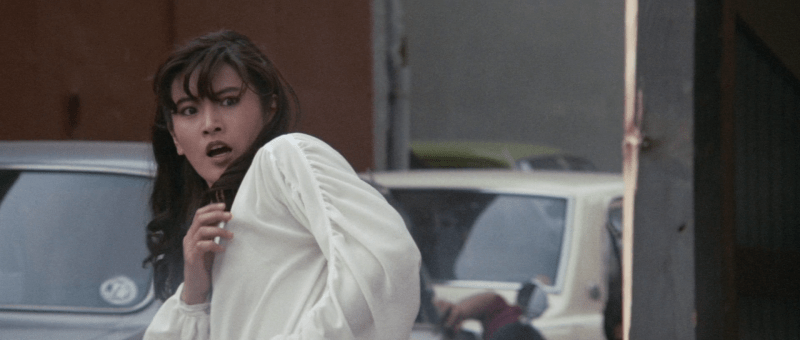
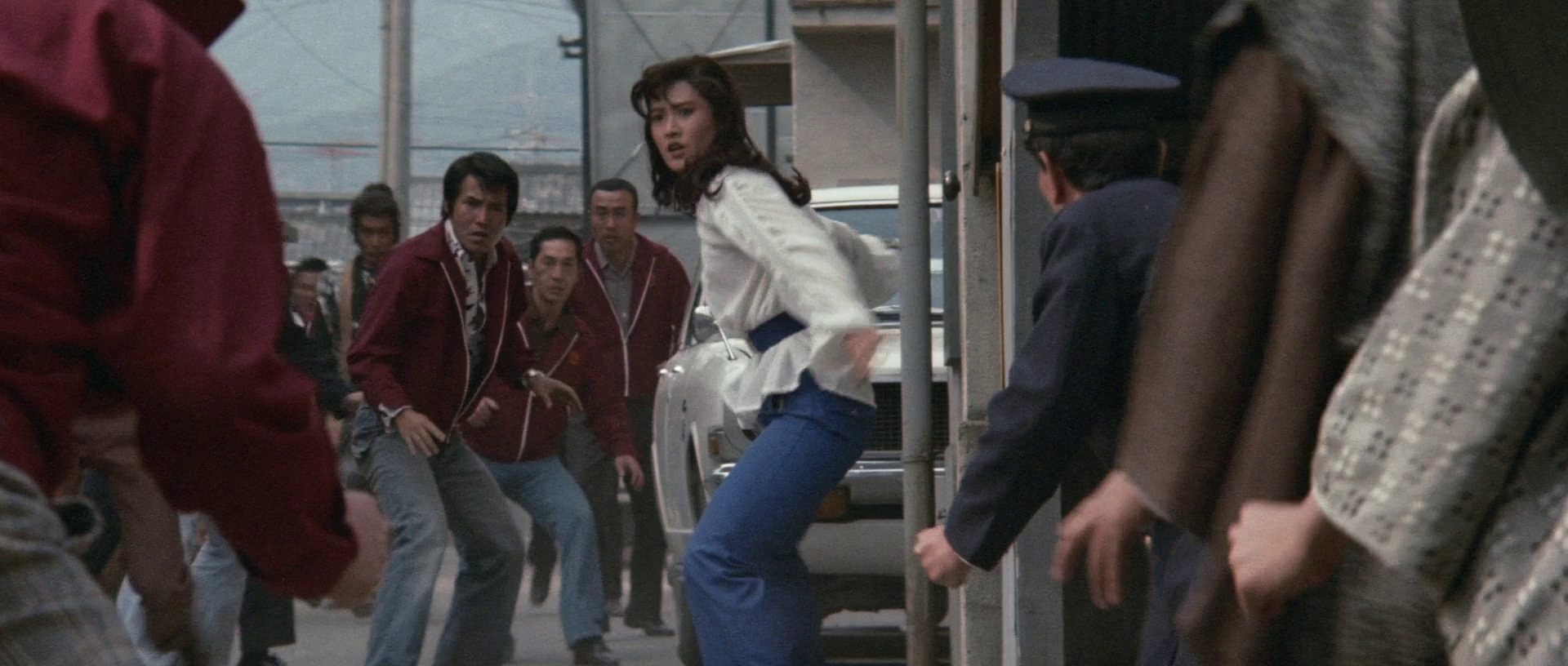
Kiku is trying to protect her friends, but finds herself hamstrung by rigid cop Takagi (Tsunehiko Watase) who also happens to be the son of a friend of her father’s. Kiku’s father is apparently a self-made man and successful kimono merchant married to a more conservative woman with higher social ambitions. As the film opens, Kiku is dressed in a kimono and being subject to a formal omiai meeting for an arranged marriage with an admittedly promising candidate who graduated from an elite university and works for a prominent bank. But Kiku looks bored throughout and defiantly flouts social convention by suddenly claiming to have an appointment and walking out, much to her mother’s embarrassment. Her father lets her go and is apparently less bothered about this sort of propriety though later trying to put his foot down when she leaves the house dressed like a hippy rather than in a fine kimono which is not, after all, a very good advert for the family business. 

Her father also tries to set Kiku up with Takagi, but like her mother, Takagi also tells her to keep her nose out of the case and “try trusting a man for once”. He criticises her for saying that she doesn’t want to lose to a man and explains that men are attracted to women because of their “gentleness.” He adds that cooking and raising children are what make women happy, with the clear implication that Kiku is in the wrong for flouting conventional gender roles and should quickly conform by getting married and becoming a wife. Kiku appears to give him the benefit of the doubt and this confusion over gender roles is compounded when she poses as a boy and takes a job as a extra on the jidaigeki film set at the studio which turns out to be a front for drug runners. A queer-coded actor who is later told off for “stalking people again” tries to hit on her in a clear allusion to her masculinity. But unlike in the Sister Street Fighter films, she is ultimately defeated and tied to a log with a buzz saw coming at her only to be saved by the intervention of Takagi while the final scenes see her supporting him after he is (possibly fatally) injured defeating the bad guys.

All in all, it’s some rather confusing messaging but seems to come out on the side of male authority as represented by the police rather than Kiku’s father who is depicted as a weakened figure of masculinity owing to being henpecked by his wife and hoodwinked by his feisty daughter. Even the grinning sap from the gym who tried to put Chanel No. 5 on Kiku’s karate outfit, much to her annoyance, is later revealed to be an undercover cop. Which is all to say, that Kiku’s martial arts ability is almost a kind of joke and something that places her outside of conventional gender norms which should otherwise be “corrected” rather than praised, as it was in the Sister Streetfighter series which placed more emphasis on martial arts philosophy. Then again, the original trilogy ended on a similarly sour note in reaffirming Koyu’s maternity. It seems it’s less sisters doing it for themselves, than sisters doing as they’re told, which aside from anything else is a disappointing conclusion to one of the few female–led action franchises of the 1970s.


Original trailer (English subtitles)
Wicked Priest (極悪坊主, Kiyoshi Saeki, 1968)

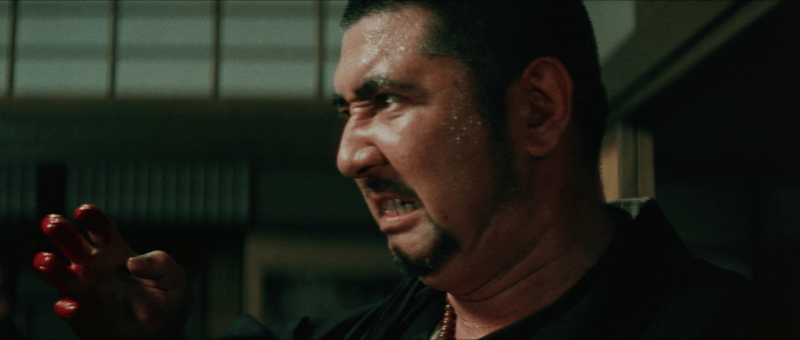
A bunch of corrupt monks get a lesson in business ethics from one of their own in the aptly titled Wicked Priest (極悪坊主, Gokuaku Bozu). The first in a series of five films starring Tomisaburo Wakayama as a rogue Buddhist monk who enjoys fighting, drinking, and women but deep down has a powerful sense of moral righteousness, Wicked Priest is in its own way another take on classic ninkyo only this time it’s temples acting like yakuza clans rather than actual gangsters with “wicked priest” Shinkai the ironic symbol of nobility. 

Set in early Taisho, the film opens with a prologue set five years before the main action in which Shinkai breaks up a fight between another violent monk, Ryotatsu (an incredibly gaunt Bunta Sugawara), and some yakuza he challenged while they were hassling a young man for supposedly messing with the wrong girl. Predictably, it’s Shinkai who ends up in trouble. Relieved of his duties, he’s exiled to another temple and sentenced to spend a whole year in isolation thinking about what he’s done. Five years later we can see that the conclusion he’s mostly come to is that the religious world is full of hypocrisy anyway and he might as well live his life to the full while he can.

Indeed, the opening scene sees him ironically reciting a sutra with his head between a woman’s legs and preparing to drink holy water from her belly button. The problem here seems to be one of inter-temple politics that sees Shinkai hassled by officious monk Gyotoku (Hosei Komatsu) who objects to Shinkai’s behaviour and to the leniency which is shown to him by head priest Donen (Kenjiro Ishiyama). Of course Gyotoku is later discovered to be the source of corruption, wanting to depose Donen and take control of the temple in part to facilitate a sex ring he’s running that involves live peep shows literally on temple grounds. Shinkai, meanwhile, has a particular dislike for abusers of women and especially for pimps eventually rescuing some of the women indentured by a local brothel and unfairly kept on after redeeming their contracts with bogus loans, and starting a women’s refuge in the temple where they can find “honest” work and eventually lead “normal lives” as farmers or waitresses free of the abuse and oppression they faced in the “hell” of indentured sex work.

Wandering around the town, he saves one young woman newly arrived in Tokyo from falling victim to a scam and being forced into sex work by getting her a waitressing job at a local restaurant. To keep her safe, he jokes with the cafe owner that he’s already slept with her which in the bro codes of the time makes her his woman and owing to his famously violent nature no one else is going to bother her. For what it’s worth, women young and old come to admire him greatly for his gallantry though he never abuses his position. All of his sex partners are at least of his own age and fully consenting even if he is not exactly faithful in love. 

Meanwhile there’s some minor commentary more familiar from post-war gangster films that sees the temple as a refuge for orphaned men. The fatherless Shinkai finds a beneficent paternal authority in Donen and is, he says, “reformed”, if living to a code that seems to be mostly his own but informed by a kind of moral righteousness not found in others at the temple. Having discovered that a wayward young man Shinkai is attempting to save from his life of petty crime exploiting women for his own gain is a son he never knew existed, Donen would have left the temple to fulfil his familial role but is prevented from doing so by the intrusion of temple politics. Unless undertaking specific vows, Buddhist priests are not necessarily expected to practice celibacy and are permitted to marry yet Donen’s father objected to his choice of bride and she left not wanting to disrupt his temple career. Shinkai entrusts the boy to Donen, talking him into accepting a new paternal authority as a means of returning him to the “proper” path while himself swearing that he will leave the temple in order to ensure justice is served against the true “wicked priest” Gyotoku. Directed by ninkyo specialist Kiyoshi Saeki, the film ends in an outburst of bloody violence as Shinkai takes revenge on institutional corruption but once again leaves its hero a lonely wanderer in an unjust world.


Original trailer (no subtitles)

Poem (哥, Akio Jissoji, 1972)

Poem dvd coverThere might be a temptation to view Akio Jissoji’s “Buddhist Trilogy” as an intensely Japanese affair given its obvious preoccupation with Eastern religious thought and background dialogue with the political confusion of the day, but like fellow New Wave outsider Kiju Yoshida, Jissoji had studied French literature and there is something classically European about his nihilistic ennui in the midst of a decaying social order. Poem (, Uta), the trilogy’s final instalment, bears this out most of all as the servant boy of a noble house, secretly its spiritual heir, alone attempts to resist the march of time to save the natural essence of a culture about to eclipse itself in consumerist emptiness.

Jun (Saburo Shinoda), a strange young man, is a servant/legal clerk to a lawyer, Yasushi (Shin Kishida), who is the oldest son of the Moriyama family. Though he has inherited stewardship of the house and mountains, Yasushi and his wife Natsuko (Eiko Yanami) long to break free of its traditionalist constraints by ripping it apart and replacing tatami mat comfort with Western modernity. They can’t do that, however, because old Moriyama (Kanjuro Arashi), Yasushi’s father, is still alive and Yasushi doesn’t particularly want to have to talk to him. Meanwhile, the spacious mansion is also shared by a legal student, Wada (Ryo Tamura), who is kind of interning with Yasushi while repeatedly failing the bar exam, and the family’s maid Fujino (Hiroko Sakurai).   

Unlike Yasushi, Jun sees his life’s purpose as serving the Moriyama family. Intensely worried that a fire may engulf this fine house built with only the best Japanese cedar, Jun gets up every night at midnight and patrols with an electric torch, looking for loose sparks. One night he finds some, though not the kind he was expecting, on accidentally witnessing Wada make love to Fujino. Apparently uninterested, Jun looks it over and moves on while the lady of the house, Natsuko, starved of affection by her impotent husband, finds herself stirred by such unexpected eroticism.

Yasushi’s physical impotence is perhaps merely a manifestation emasculated powerlessness as the oldest son of a noble house who, nevertheless, wields no real power and is entirely unable to make decisions for himself. Yet his big case at work is thrown into confusion when his social climbing client suddenly tries to have his partner, Arita (Haruhiko Okamura), removed days before the court hearing because it might look nicer to have someone of Moriyama’s standing representing him. Even so, Yasushi is so clueless with the modern world that he needs Jun, a calligraphy enthusiast and advocate for the old, to operate the photocopier because he doesn’t know how (and neither does Wada). Only Jun, in another contradiction, insists on working to rule and leaving at 5pm because his “main job” is protecting the house and serving the Moriyama family, not Yasushi. Jun allows himself to be seduced by Natusko on the grounds that if she does not receive sexual satisfaction inside the house she will need to look for it outside which could bring shame on the Moriyama name. Finding out his wife is sleeping with another man, the weird servant boy no less, Yasushi doesn’t even care (besides being mildly turned on), as long as she doesn’t do anything which might arouse “rumours”.

The dirty secret that neither Yasushi or his debauched brother Toru (Eishin Tono) know is that Jun, whose name means “pure”, is their illegitimate half-brother that their father had with a maid. As we later discover, old Moriyama plans to divide his estate not in two but three, believing that it hardly matters anyway because division, in a break with the system of traditional succession by the oldest son, will be the end of the Moriyama family. He may well have a point as neither Yasushi, who eventually abandons the house to Toru and escapes to Kyoto, or his brother are interested in legacy. Once Moriyama passes, they plan to sell the entire plot, mountains and trees and all, to developers. In fact, the house already technically belongs to someone else because as soon as he moved in Toru started taking out exorbitant loans to fund his wastrel playboy lifestyle and has already figured out the jig is up and they’re all broke. Only Jun, who hears the voice of the mountains as if it were the voice of existence itself, is desperate to save the family name though he is at this point almost beyond saving himself.

Looking for the “absolute” in tombstones, Jun is told that only darkness exists inside. Yet he is certain that as long as form survives, content can return. He sees the Moriyamas’ forests as the essence of an older Japan and their untouched natural beauty the rock on which their souls are anchored. Yet his half-brothers oppose him. For them, Japan, even the world, is already ruined and nothing worth protecting remains. Existence itself is nothing more than a dream, and suicide no different. They no longer feel they can live “in such an age”.

Yet Jun, his father’s spiritual heir even if he doesn’t know it, keeps reaching, perhaps not quite hoping but demanding even in his powerlessness which may, in a sense result in a kind of transcendence in its purity. Unlike the ambiguously hopeful ending of This Transient Life, or the urgent ominousness of that of Mandala, Poem ends in defeat and futility, suggesting that time cannot be stopped or progress arrested even by those who seek the eternity of enlightenment. And so Jissoji brings us full circle by showing us a world in entropy unsalvageable in the cruelty of its contradictions.


Poem is the third of four films included in Arrow’s Akio Jissoji: The Buddhist Trilogy box set which also features an introduction and selected scene commentaries by scholar of the Japanese New Wave David Desser plus a 60-page booklet with new writing by Tom Mes and Anton Bitel.

Original trailer (English subtitles)
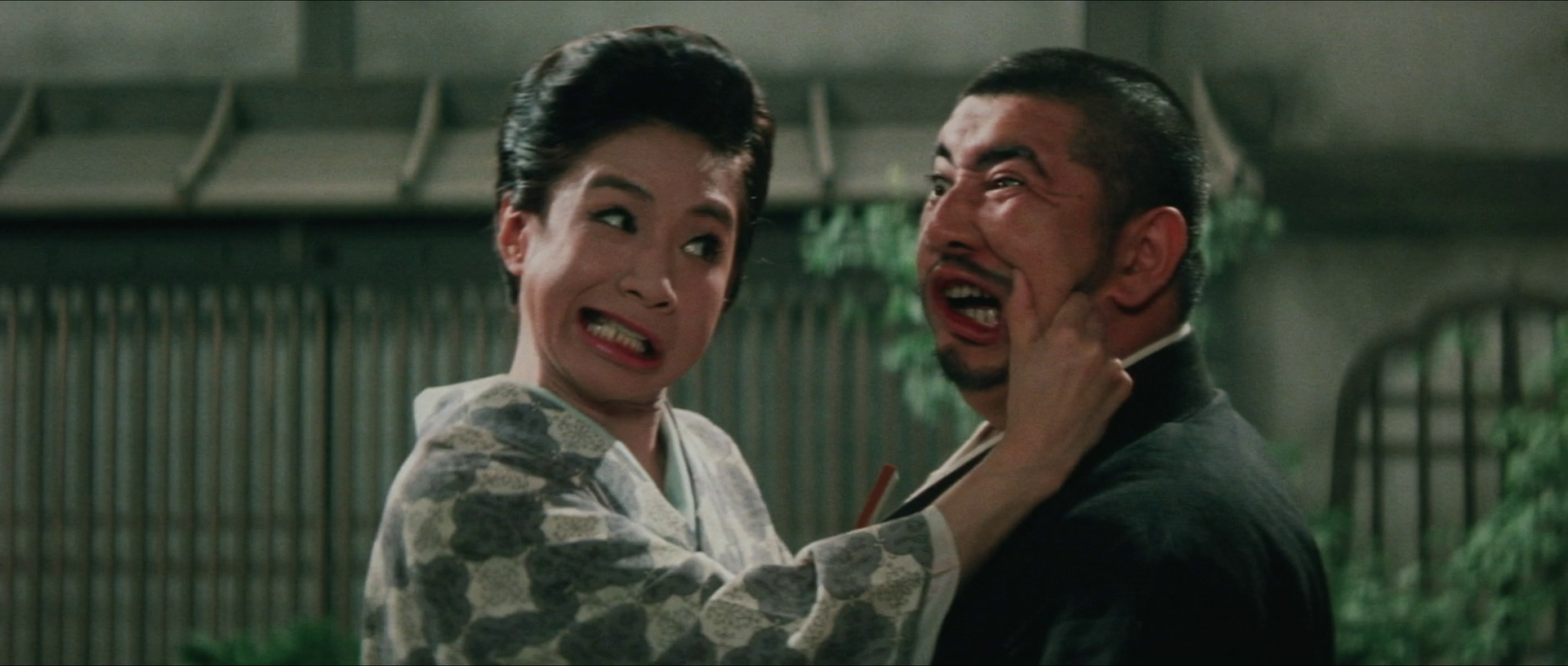
Kurutta Yaju (狂った野獣, Sadao Nakajima, 1976)

Kurutta Yaju dvd coverRobbing a bank is harder than it looks but if it does all go very wrong, escaping by bus is not an ideal solution. Sadao Nakajima is best known for his gritty yakuza movies but Kurutta Yaju ( 狂った野獣, Crazed Beast/Savage Beast Goes Mad) takes him in a slightly different direction with its strangely comic tale of bus hijacking, counter hijacking, inept police, and fretting mothers. If it can go wrong it will go wrong, and for a busload of people in Kyoto one sunny morning, it’s going to be a very strange day indeed.

A young woman receives a phone call at a cafe – the person she’s waiting for is on his way, but the girl seems surprised and irritated to hear he will be arriving via public transport. Meanwhile, ordinary people are seen cheerfully going about their everyday business and boarding a bus headed for Kyoto station while a cool looking man in mac and sunshades clutches a violin case in the back. Suddenly, two shady guys jump on after their bank robbery goes belly up. Trying to escape the police, they threaten the driver with a gun and take the passengers hostage.

This sounds like a serious situation, and it is, but the two bumbling bank robbers haven’t thought any of this through and have no plans other than somehow driving the bus onwards to a land without policemen. Eventually the authorities are made aware of the hijacking but there is another hidden problem – the driver has a heart condition and is supposed to be avoiding “stressful situations”. Neither the bus company or the police has any more idea what to do now than the increasingly panicked criminals and the situation quickly makes its way into the press whereupon the mothers of two little boys presumed to be onboard are forced to dash straight down to the police station to find out exactly what the police are up to as regards rescuing their sons from dangerous criminals.

The atmosphere on the bus is tense but also ripe for comedy as each of these captive passengers gradually reveals an unexpected side of themselves. The “hero”, Shin (Tsunehiko Watase) – the cool looking dude on his way to meet the girl waiting in the cafe, keeps a low profile in the back, hoping this will all blow over. Meanwhile, a woman desperately tries to get off the bus because she’s more worried about missing an appointment than being killed by hijackers, and an adulterous couple on their way back from an illicit visit to a love hotel begin bickering about what will happen if any of this gets into the papers. The two little boys start crying and are comforted by an old lady who takes the time to remind the hijackers that they’re bringing shame on their families as well as exhorting the man next to her who is so engrossed in the racing news that he hasn’t really noticed the hijacking that he ought to be doing something about it. He does, but only gets himself into more trouble whilst further revealing the depths of the highjackers’ ineptitude.

Soon enough the woman from the cafe, Miyoko (Jun Hoshino), jumps on her bike to chase the bus and find out what Shin is playing at. As might be expected, there’s more to Shin than his ice cold exterior, and more to that violin case than a priceless musical instrument. The bus careers onward while the police come up with ever more bizarre attempts to stop it including, at one point, trying to drive right into the side to damage the engine. Bizarre hilarity ensues as a troupe of traditional musicians trolls the hijackers with an impromptu show, a kid pees out the window, and the bus plows straight through a chicken barn like some old time cartoon. Shin becomes the unlikely hero of the hour as he ends up counter hijacking the bus to try and cover up the circumstances which led him to get on in the first place.

Playing out in real time and only 78 minutes in length, Kurutta Yaju is a brilliant mix of absurd comedy and gritty action movie. Shin attempts to ride the situation out, hoping he’ll be able to turn it to his advantage, and, though he plays everything beautifully, eventually becomes disillusioned with what his strange bus odyssey might have cost him. Action packed, hilarious, and ultimately a little bit sad Kurutta Yaju is a lost gem in Toei’s B-movie backlog and another exciting addition to Japan’s long history of bus-centric cinema.


Original trailer (no subtitles)

The Yakuza Papers Vol. 3: Proxy War (仁義なき戦い: 代理戦争, Kinji Fukasaku, 1973)

3-Battles-Without-Honor-and-Humanity-3-Proxy-WarThree films into The Yakuza Papers or Battles Without Honour and Humanity series, Fukasaku slackens the place slightly and brings us a little more intrigue and behind the scenes machinations rather than the wholesale carnage of the first two films. In Proxy War we move on in terms of time period and region following Shozo Hirono into the ’60s where he’s still a petty yakuza, but his fortunes have improved slightly.

It’s now 1960 – almost 15 years since Hirono came home from the war. The young people who are just coming of age grew up in the turbulent post-war era but probably don’t remember much of the conflict itself. These days the problem is the ANPO treaty and the wider world’s pre-occupation with communism. Russia and America are engaged in various “proxy wars” across the world in what would come to be known as the cold war. This tactic of indirect warfare has also taken root in the yakuza world as gangs and gang members form covert alliances, hatch secret plots to take out rivals, or otherwise try to manipulate the situation to their advantage. When the head of the Muraoka crime syndicate is assassinated in broad daylight and his underling, Uchimoto, does nothing, it kickstarts a chain of petty vendettas as each of the ambitious crime bosses vie to fill the power vacuum with the snivelling Uchimoto not least among them.

Bunta Sugawara returns to centre stage again with Hirono at the forefront of the action. One of the few yakuza guys who’s pretty happy with his lot and not seeking a higher position he’s in the perfect spot to become a very important player when it comes to supporting other people’s bids for power. Having originally backed Uchimoto he’s at something of a disadvantage following Uchimoto’s cowardly flip-flopping. However, having found himself back under the aegis of former boss Yorimoto, it does afford Hirono the possibility of finally getting revenge against him. Gangs merge several times while fracturing on the inside as the lower bosses try to get their guys in line whlst picking sides as to whom they support in the leadership battles (some with more of an eye on their own futures) but this time the action is a little more cerebral than the audacious violence of the immediate post-war period.

Changing up his style slightly, Fukasaku keeps the overall documentary approach with the news reel voice over relating the salient political and historical details plus the initial captions explaining the names and allegiances of the major players but reduces the freeze frame death announcements. The action is still frenetic with ultra naturalistic handheld camera and occasional strange angles but this time he opts for a muted colour effect in the final shoot out which increases the shocking nature of the scene. Blow for blow there’s less overt violence here though there is a fairly graphic and unpleasant rape scene which feels a little out of place though it does add to Fukasaku’s argument about the nature of aggression.

Once again the ruined the dome looms large over everything, reminding us that this isn’t just a story of gang warfare but a critique of the senselessness of a violent life. As the film says, young men are the first to die when the battles begin but their deaths are never honoured. Like Hiroshima Death Match, Proxy War also leads to the death of a youngster in pointless gang violence – another young man who ended up in the criminal underworld through lack of other options. The futility of the cycle of violence is becoming wearing – as is perhaps the point. One gang boss falls, another rises – only the names have changed. There’s no rest for an honest yakuza like Hirono when the less scrupulous are willing switch allegiance without a second thought. The only victory is staying alive as long as you can.


Proxy War is available on blu-ray in the UK as part of Arrow Video’s Battles Without Honour and Humanity: The Complete Collection box set.