Taipei Story (青梅竹馬, Edward Yang, 1985)

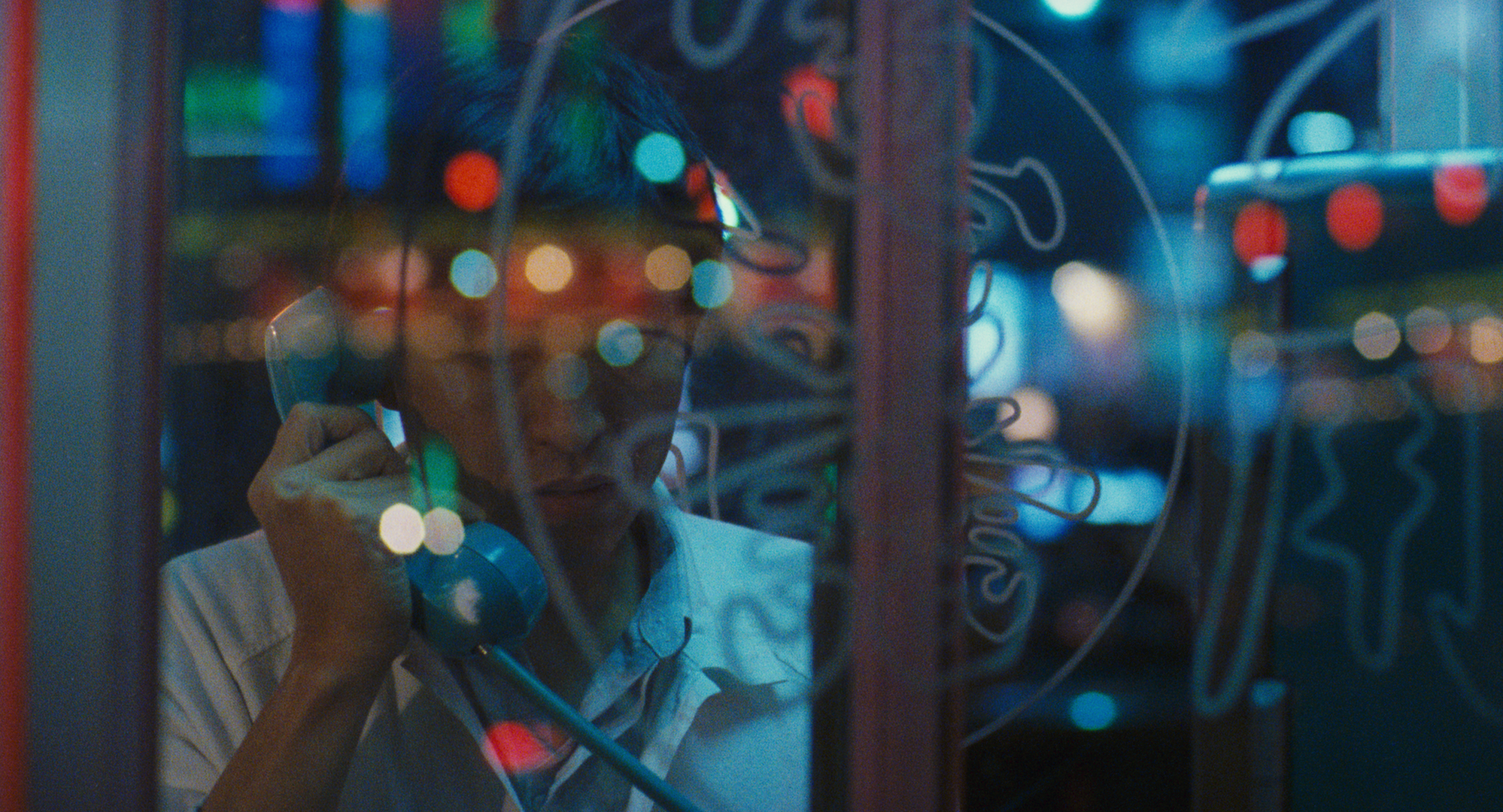
“Just a fleeting hope. The illusion that you can start over” the hero of Edward Yang’s melancholy drama of the costs of modernity, Taipei Story (青梅竹馬, Qīngméizhúmǎ), eventually laments. Yang apparently chose the English title himself in a deliberate echo of Yasujiro Ozu’s equally pessimistic drama, yet the original title literally translated as “childhood sweethearts” also has its poignancy in hinting at the loss of innocence and hopeless impossibility of the fracturing love between its twin protagonists. 

Yang begins and ends in an empty room, for an empty room is always a possibility. As the film opens, high-flying career woman Chin (Tsai Chin) is buying her own apartment, already envisioning her life there in pointing out to her boyfriend Lung (Hou Hsiao-hsien) where they’ll put the TV and VCR so they can watch movies in bed hinting at a new level of consumerist success. More practically minded, he points out that the place needs a little work but Chin is confident she can manage it, saving up and paying in instalments having no immediate anxiety about her income. 

Yet Yang seems to suggest that this burgeoning economic powerhouse is built on shaky ground. The construction firm at which Chin works has recently been hit with a potential lawsuit about a lethal building error, while Chin’s mentor has already moved on and the firm has been bought up by another company presumably intent on some shady business of its own. This Chin discovers to her cost on hearing the not entirely unexpected news that the new bosses don’t understand her job title and want to demote her to the role of secretary which, she suspects, is just a way of pushing her to resign (which she then does). 

Shoddy business practices are also it seems responsible for her father’s present moment of financial insecurity though he only further alienates his daughter by talking entirely with Lung when the pair come to visit stopping only to ask awkward questions about marriage and children. Later we realise that part of Chin’s resentment towards her father is due to a long history of domestic abuse, her mother later crying silently prompting Chin to withdraw some of her savings something she would not have done had her father asked it. Yet Lung, old-fashioned in many ways and not least in his filiality, feels duty bound to help his not-quite father-in-law provoking a row between the pair when he gives him money he’d saved in the forlorn hope of going into business with his brother-in-law in America. 

Once childhood friends and now seeking a new start, the couple begin to dream of a new life though as Lung later says, America, like marriage, is not a panacea. Chin is in a sense torn between past and future neither of which have much possibility, in a committed relationship with Lung yet jealous over his past with a mutual childhood friend, and also carrying on an affair with an unhappily married man at work. A high-flying executive and independent career woman, she is determined to keep moving forward while Lung is stuck in the past hung up on baseball glory and morally righteous to a fault, helping out Chin’s feckless father while knowing it will do no good while his attempt to help a friend sort out his complicated family life leads only to tragedy. It’s obvious that he does not fit in with Chin’s yuppie friends, one particularly obnoxious male colleague describing him as having the face of a yam farmer and needling him to the point that it eventually leads to an altercation in a karaoke bar. Chin doesn’t seem particularly upset about the fight, comforting Lung as he confesses that he ends up in fights in order to stick up for himself or else because of his love of justice, but continues hanging out with her unpleasant friend for otherwise unclear reasons. 

But it’s less a love of justice than frustrated masculinity that eventually seals Lung’s fate, unwisely picking a fight with a young tough not so much in order to protect Chin as to preserve his own sense of wounded male pride. Realising the futility of his situation, he is unable to move forward into the new society, whereas Chin eventually finds herself substituting his role as her former mentor shows her around a potential new office space just as she had him her apartment envisioning how they will exist within it, where their offices will be along with the state of the art computer room. “It’s actually nice here,” she assures her, “now we have a big American company right in our hometown. Why go abroad?”. Yet Chin perhaps remembers her dejected colleague lamenting that all the new buildings look the same and he can’t even remember which ones he worked on so anonymous has the landscape become. In this Taipei story, the city is devoid of life or character a highly corporatised arena of increasingly dehumanising capitalism where everyone dreams of escape abroad to America or Japan, yet all Chin can do lowering her sunshades is to gaze from the window of her new office onto the lonely streets below and ask herself where it is she thinks she’s going. 


Taipei Story streamed as part of this year’s Taiwan Film Festival Edinburgh.

Trailer (English subtitles)
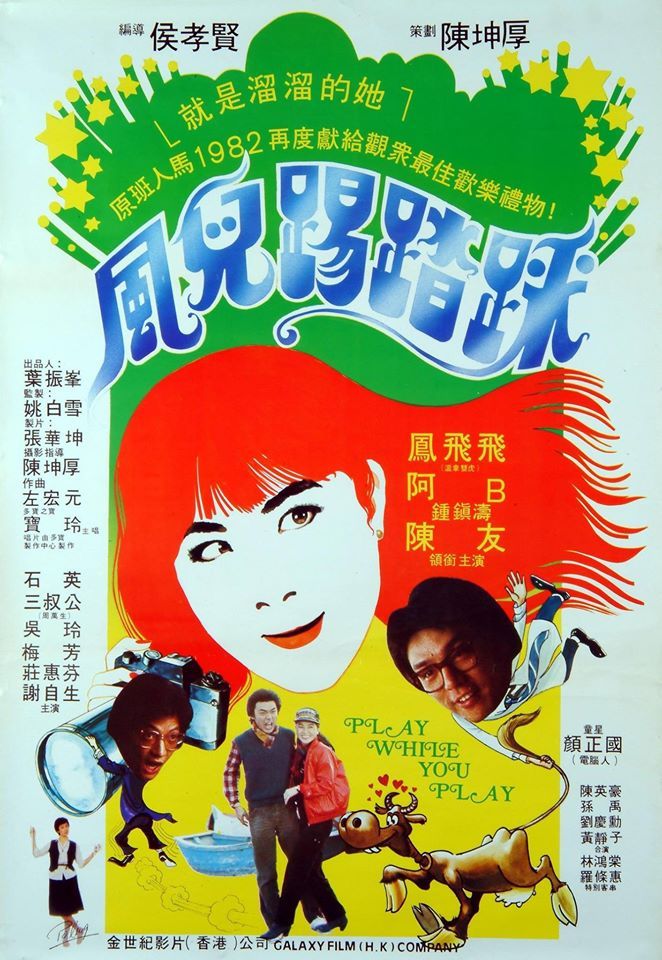
Cheerful Wind (風兒踢踏踩, Hou Hsiao-Hsien, 1982)

A leading figure of the New Taiwan Cinema movement, Hou Hsiao-Hsien has sometimes been regarded as difficult or inaccessible but there has always been a kind of playfulness in his wistful romanticism and it is not perhaps as surprising as it might first seem to realise that like many directors of his generation he began his career with a series of idol movies starring top Hong Kong star Kenny Bee. Cheerful Wind (風兒踢踏踩, Fēng Ér Tī Tà Cǎi, AKA Play While You Play) reunites him with Cute Girl co-star and Taiwanese chart topper Fong Fei-fei* who, in true idol movie fashion, sings the title tune the refrain of which is heard frequently throughout. For all that, however, it’s a surprisingly subversive effort in what is often regarded as a conservative genre, painting its heroine as a free spirited modern woman and refusing to punish her either for her breezy approach to romance or for rejecting marriage in favour of individual fulfilment. 

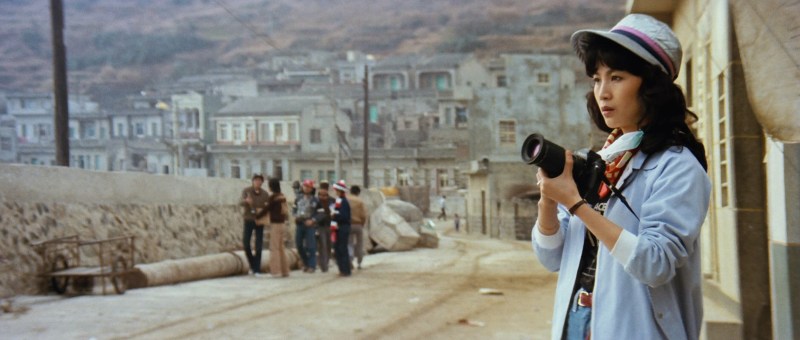
The heroine, Hsiao Hsing-Hui (Fong Fei-Fei), is a keen photographer working for an ad company currently shooting a commercial for detergent in a traditional seaside village. Whilst there she catches sight of Chin-tai (Kenny Bee), a musician she later discovers to be blind and, therefore, not catching sight of her as she had first assumed. Somewhat problematically, Hsing-hui decides to use Chin-tai in the commercial, an essentially exploitative action that plays into various unhelpful stereotypes about the blind as they hope to show that “even” those who cannot see are aware of their brand despite being unaware of the branding. She does something similar after unexpectedly running into him back in Taipei and “helping” him to cross a road he had no intention of crossing, but this does at least provide the opportunity of a second meet cute which kick starts their relationship. 

Hsing-hui, however, is technically already attached to nerdy colleague Lo Zai (Anthony Chan Yau) with whom she is living though apparently in separate rooms. He is keen to move things forward and has already quit his job with the intention of taking Hsing-hui to meet his mother in Hong Kong who has apparently been nagging, but she is in no particular hurry and has in fact already agreed to fill in for her brother teaching at the primary school in her home town while he goes to Australia for a tennis competition. 

This new focus on international travel perhaps symbolises the growing ambitions of a newly prosperous, globalising society. Hsing-hui’s dream is not marriage but to see the world, which is one reason she’s staying with Lo Zai in that they plan to tour Europe together and she fears she may never have another opportunity. Back in Taipei, meanwhile, when Hsing-hui’s country bumpkin father (Chou Wan-sheng) arrives to take a look at Lo Zai, they take him to eat pizza and drink Coca-Cola in a trendy restaurant but he finds himself doubly displaced. He speaks mainly Taiwanese dialect and struggles to understand the capital’s preferred Mandarin, quickly lost after failing to understand directions while trying to find the bathrooms at the station and enduring a series of comic misunderstandings while trying to converse with Lo Zai who hails from Hong Kong. In fact, the family aren’t really that keen on the idea of her marrying a Hong Konger, but in a pleasantly modern touch Hsing-hui’s father is quick to tell her that it’s her own decision and as long she’s sure he’ll support it. 

Chin-tai meanwhile jokes about a wife needing good teeth as if she were a goat or a horse being sold at auction and as sympathetic as her father is, he also brings up dowries while attempting to negotiate with Lo Zai who goes along with it but isn’t actually that invested in the “hassle” of marriage anyway. “I prefer the old ways, they were more romantic then” Chin-tai confesses, and to an extent Hsing-hui does too, a hippieish free spirit even in the country where she’s taken to task by her new boss for getting the kids to paint an undersea mural on the playground wall rather than the government approved slogans they were supposed to be reinforcing. For all of this drive and positivity, this is still a nation trapped under martial law and would be for the next five years which makes the tacit approval of Hsing-hui’s desire to seize her own destiny romantic and otherwise all the more subversive. What she gets is a universal happy ending with a man who has no desire to trap her and vows to wait while she achieves her dreams in the hope that she will then return to him. Hou’s second feature sees him flirt with youthful post-modernist aesthetics and is so absolutely of its time that it almost hurts, but for all of its essential fluffiness is also an infinitely breezy affirmation of a woman being absolutely herself and the men just dealing with it as she steps bravely into a freer future entirely of her own choosing. 


Cheerful Wind streamed in its new restoration as part of this year’s Udine Far East Film Festival.

Festival teaser trailer (dialogue free)

Title song performed by Fong Fei-fei

*The standard pinyin romanisation of 鳳飛飛’s name is Feng Fei-Fei, but she is usually credited as Fong Fei-fei.