The Spring Outside the Fence (竹籬笆外的春天, Li Youning, 1985)

Two young women attempt to ride the waves of a changing Cold War Taiwan in Li Youning’s bittersweet melodrama, Spring Outside the Fence (竹籬笆外的春天, zhúlíbā wài dechūntiān). The titular fence is that of the military dependents’ village where the two women grew up that comes to represent an increasingly distant past and a vision of Taiwan that has all but become obsolete by the film’s conclusion in 1972 in which the nation seems to have abandoned both the US and the idea of reclaiming Mainland China to forge a more independent future.

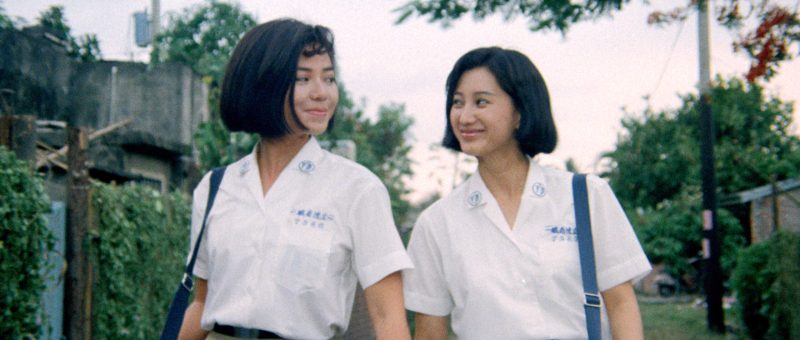
The film opens in 1949, not long after the Chinese Civil War and nationalist defeat in which Chiang Kai-shek’s forces fled to Taiwan. The military dependents’ village is a settlement for the family members of former KMT soldiers and a rather ramshackle, rundown place. Nevertheless, Ai Hua (Su Ming-ming) says she likes it because the people are kinder there than elsewhere. They’re like one big family with everyone supporting each other. To that extent, one could describe her relationship with best friend Li Lin as “sisterly”, though there are hints in her longing gazes that suggest her affection for her may lean towards the romantic. When Li Lin begins dating their childhood friend He Kang, Ai Hua abruptly agrees to go out with another boy she’s previously turned down only to later admit there is “no chemistry” between them.

That’s partly because he’s a slightly patronising hypocrite who tries to encourage Ai Hua to work on her English so she can study abroad in the US. He gives Ai Hua books on “existentialism”, while He Kang had given her poetry after reading some of her own in the newspaper. When Taiwan is kicked out of the UN, the other boy first broaches the subject with Ai Hua but then drops it saying he thinks it’s probably too difficult for her to understand. Despite his sense of betrayal that America sided with China, he is still studying English and planning to study in the US in order to get ahead. Ironically, capitalism has now become the enemy of right-wing patriotism even among the formerly privileged waishangren whose status has begun to decline. With the Vietnam War coming to a close, the bar in Taipei where Li Lin works as a hostess, and Ai Hua as an accountant, begins to refocus its attentions on chasing Japanese businessmen rather than US forces.

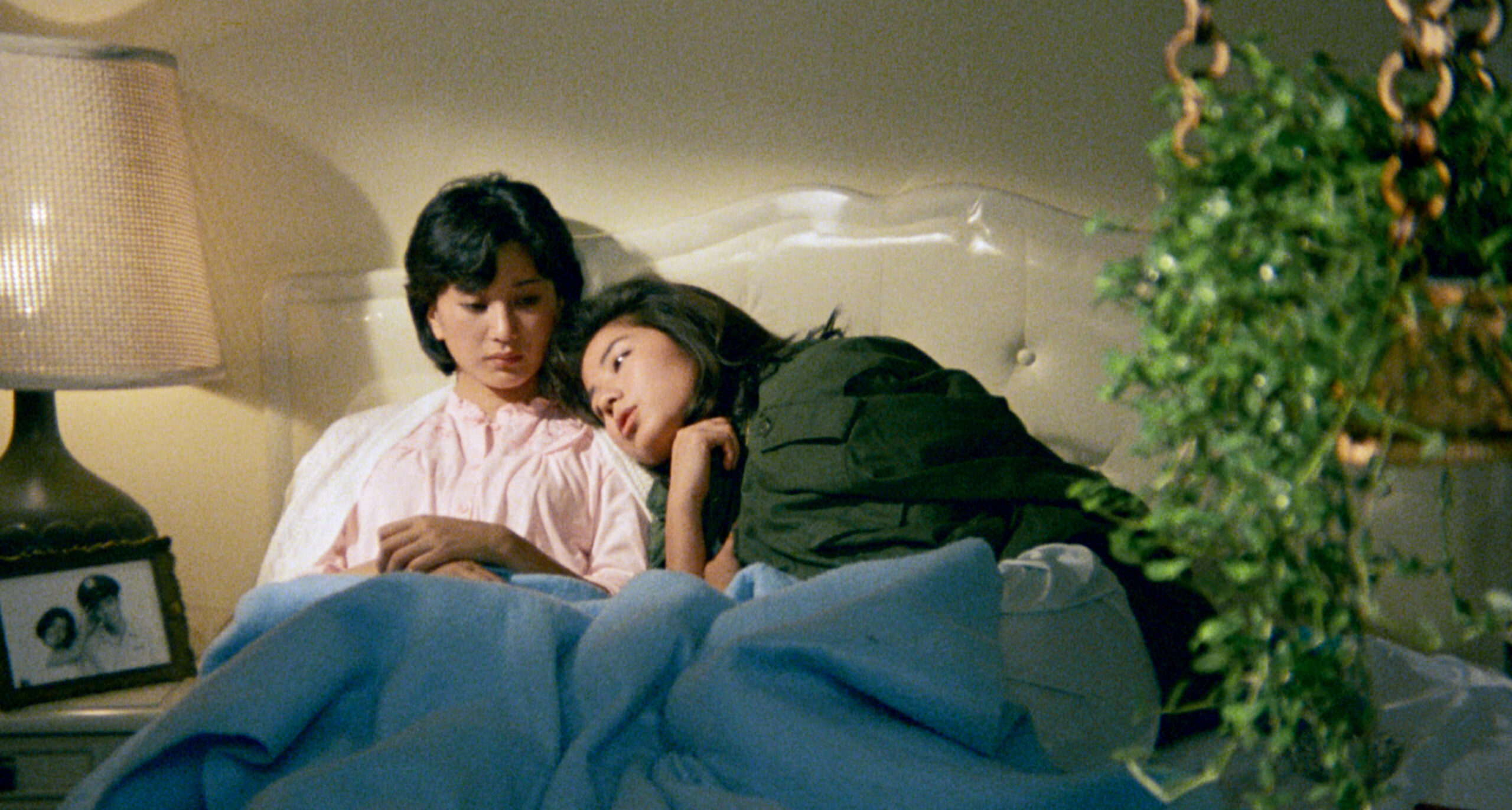
He Kang’s early death can also seen as symbolic of the death of the KMT’s vision of Taiwan. As a child, he’d given a firebrand speech about becoming a fighter pilot like his father to liberate the Mainland with a large picture of Chiang Kai-shek dominating the classroom. The children used to enjoy standing on the air raid shelter watching the planes go by safe in the knowledge that they were protected. For Li Lin, the planes also seemed to symbolise freedom and a world outside of the village. Her room is full of pictures of classic Hollywood stars like James Dean and Clark Gable, while she listens to the Beach Boys and dances to the The Twist aligning her with the anti-communist sensibilities of the KMT. Her love for He Kang is also bound up with this ideology in which the village is only ever really a transient space designed to exist only until the Mainland is retaken and the families return. 

Speaking of her own emotional repression, Ai Hua remarks that she was always envious of Li Lin who was confident in expressing her feelings and having a good time outside the fence while she remained trapped within it. Though Li Lin remains wedded to the past, wearing He Kang’s jacket and the aeroplane necklace he gave her in lieu of a ring, the two women watch the plane carrying Chinese-speaking American airman Michael, whom Li Lin has rejected, fly away with a sense of sadness tempered with optimism. They have now only each other, but have perhaps achieved a kind of self-sufficient independence free of both Mainland China and America in the new nation of Taiwan. 


The Spring Outside the Fence screened as part of this year’s Queer East.

Taipei Story (青梅竹馬, Edward Yang, 1985)

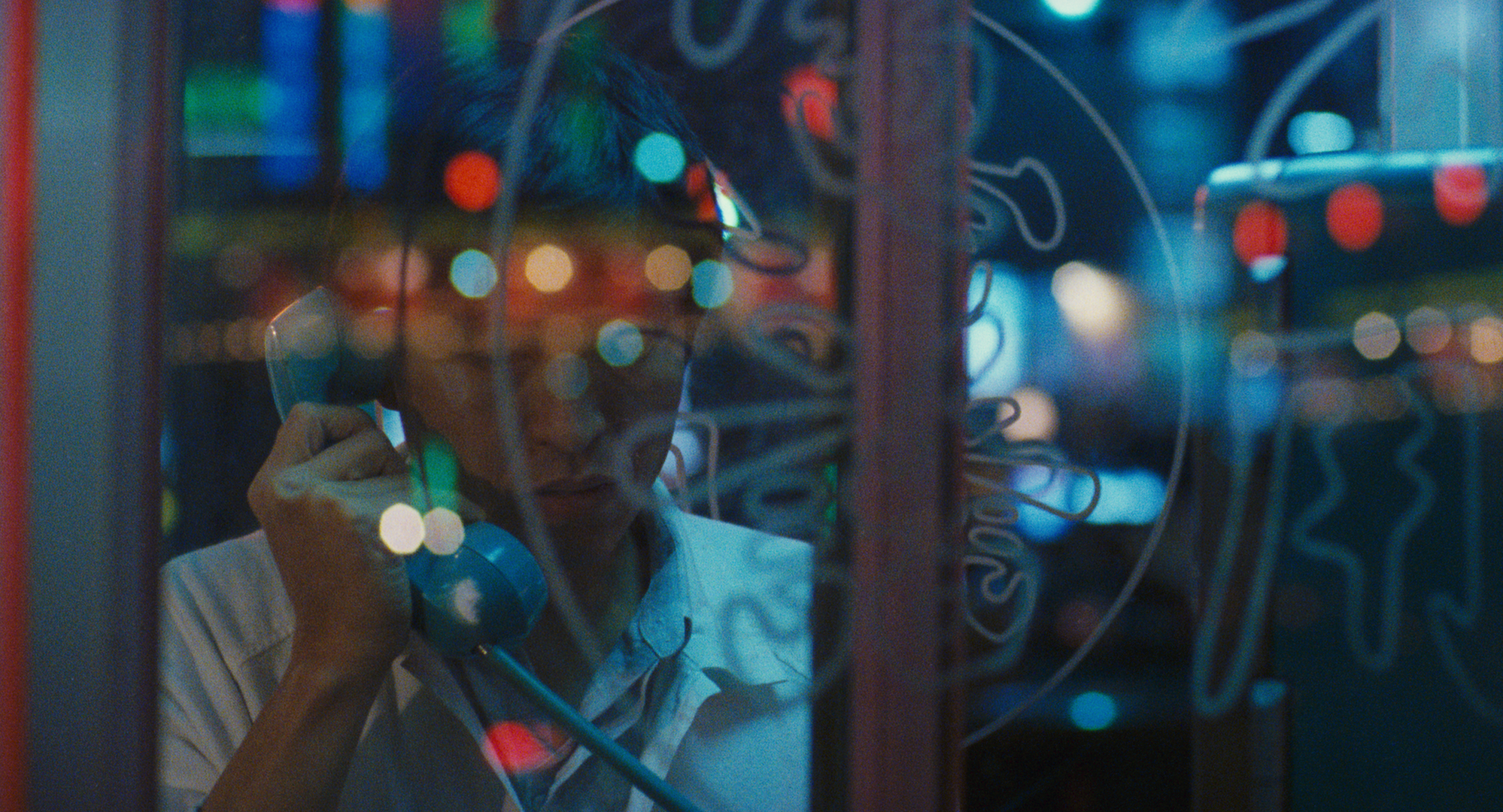
“Just a fleeting hope. The illusion that you can start over” the hero of Edward Yang’s melancholy drama of the costs of modernity, Taipei Story (青梅竹馬, Qīngméizhúmǎ), eventually laments. Yang apparently chose the English title himself in a deliberate echo of Yasujiro Ozu’s equally pessimistic drama, yet the original title literally translated as “childhood sweethearts” also has its poignancy in hinting at the loss of innocence and hopeless impossibility of the fracturing love between its twin protagonists. 

Yang begins and ends in an empty room, for an empty room is always a possibility. As the film opens, high-flying career woman Chin (Tsai Chin) is buying her own apartment, already envisioning her life there in pointing out to her boyfriend Lung (Hou Hsiao-hsien) where they’ll put the TV and VCR so they can watch movies in bed hinting at a new level of consumerist success. More practically minded, he points out that the place needs a little work but Chin is confident she can manage it, saving up and paying in instalments having no immediate anxiety about her income. 

Yet Yang seems to suggest that this burgeoning economic powerhouse is built on shaky ground. The construction firm at which Chin works has recently been hit with a potential lawsuit about a lethal building error, while Chin’s mentor has already moved on and the firm has been bought up by another company presumably intent on some shady business of its own. This Chin discovers to her cost on hearing the not entirely unexpected news that the new bosses don’t understand her job title and want to demote her to the role of secretary which, she suspects, is just a way of pushing her to resign (which she then does). 

Shoddy business practices are also it seems responsible for her father’s present moment of financial insecurity though he only further alienates his daughter by talking entirely with Lung when the pair come to visit stopping only to ask awkward questions about marriage and children. Later we realise that part of Chin’s resentment towards her father is due to a long history of domestic abuse, her mother later crying silently prompting Chin to withdraw some of her savings something she would not have done had her father asked it. Yet Lung, old-fashioned in many ways and not least in his filiality, feels duty bound to help his not-quite father-in-law provoking a row between the pair when he gives him money he’d saved in the forlorn hope of going into business with his brother-in-law in America. 

Once childhood friends and now seeking a new start, the couple begin to dream of a new life though as Lung later says, America, like marriage, is not a panacea. Chin is in a sense torn between past and future neither of which have much possibility, in a committed relationship with Lung yet jealous over his past with a mutual childhood friend, and also carrying on an affair with an unhappily married man at work. A high-flying executive and independent career woman, she is determined to keep moving forward while Lung is stuck in the past hung up on baseball glory and morally righteous to a fault, helping out Chin’s feckless father while knowing it will do no good while his attempt to help a friend sort out his complicated family life leads only to tragedy. It’s obvious that he does not fit in with Chin’s yuppie friends, one particularly obnoxious male colleague describing him as having the face of a yam farmer and needling him to the point that it eventually leads to an altercation in a karaoke bar. Chin doesn’t seem particularly upset about the fight, comforting Lung as he confesses that he ends up in fights in order to stick up for himself or else because of his love of justice, but continues hanging out with her unpleasant friend for otherwise unclear reasons. 

But it’s less a love of justice than frustrated masculinity that eventually seals Lung’s fate, unwisely picking a fight with a young tough not so much in order to protect Chin as to preserve his own sense of wounded male pride. Realising the futility of his situation, he is unable to move forward into the new society, whereas Chin eventually finds herself substituting his role as her former mentor shows her around a potential new office space just as she had him her apartment envisioning how they will exist within it, where their offices will be along with the state of the art computer room. “It’s actually nice here,” she assures her, “now we have a big American company right in our hometown. Why go abroad?”. Yet Chin perhaps remembers her dejected colleague lamenting that all the new buildings look the same and he can’t even remember which ones he worked on so anonymous has the landscape become. In this Taipei story, the city is devoid of life or character a highly corporatised arena of increasingly dehumanising capitalism where everyone dreams of escape abroad to America or Japan, yet all Chin can do lowering her sunshades is to gaze from the window of her new office onto the lonely streets below and ask herself where it is she thinks she’s going. 


Taipei Story streamed as part of this year’s Taiwan Film Festival Edinburgh.

Trailer (English subtitles)