Virus (바이러스, Kang Yi-kwan, 2025)

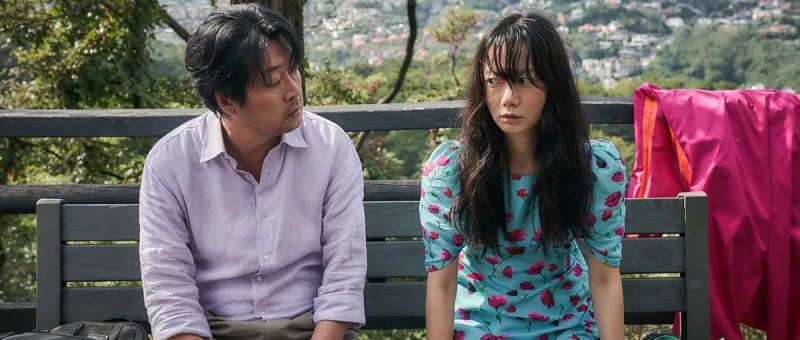
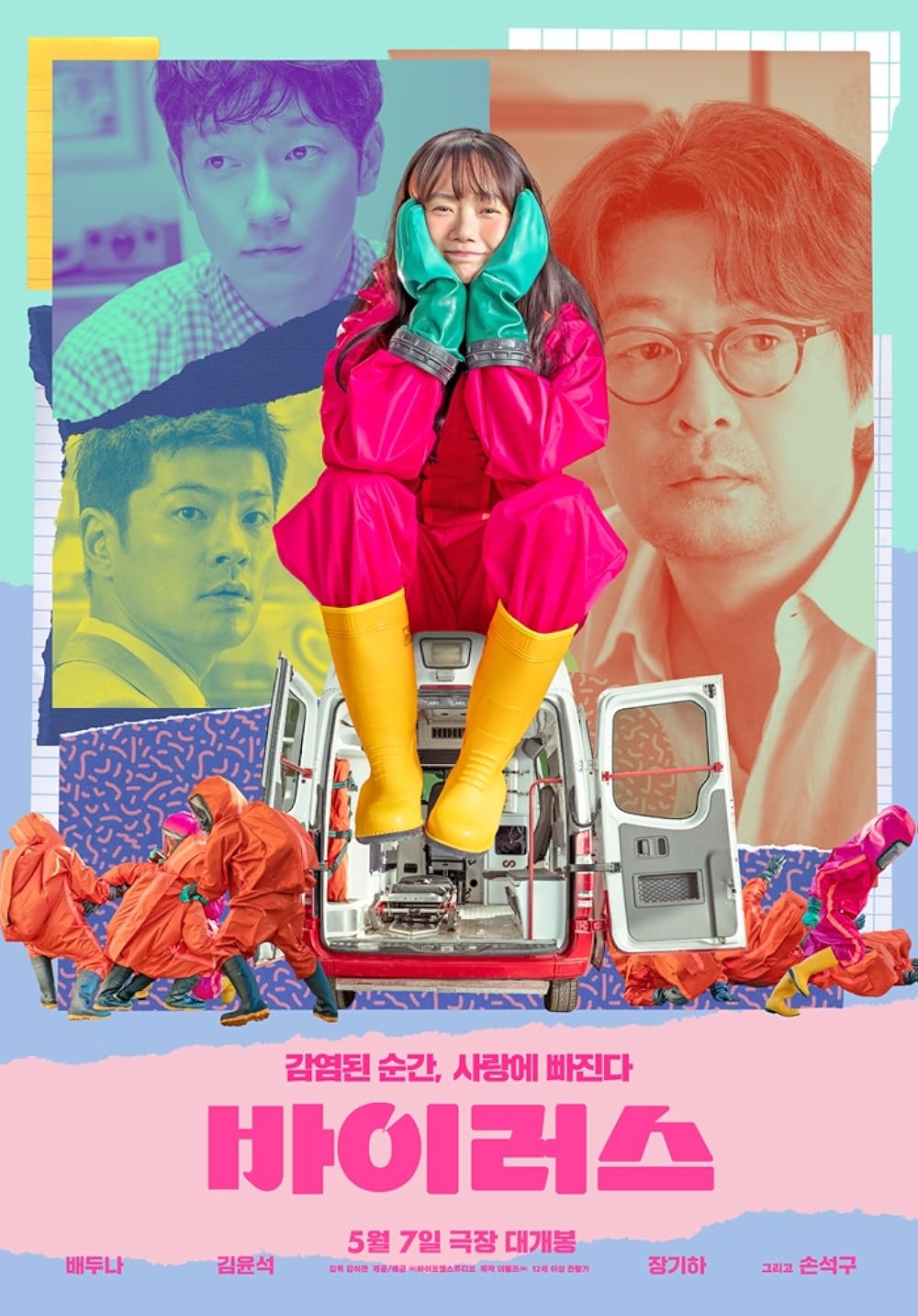
Falling in love is like catching a virus, according to lonely scientist Gyun (Kim Yoon-seok), but how can you know if your feelings are “real” or just part of a crazy fever dream you won’t even remember as soon as the infection leaves your system? “There are no fake feelings,” lovelorn translator Taek-seon (Bae Doona) counters, which is true, but sometimes people do things they don’t recognise or later understand because they weren’t in their right mind, whether because of the sickness called love or a more literal kind of contagion. 

Anyway, this particular virus makes people incredibly happy for the short period time before they die and was developed as part of a project to create an anti-depressant with no side effects. Taek-Seon gets infected after a disastrous date her sister forces her to go on with socially awkward scientist Su-pil (Son Suk-ku). Su-pil is overly attached to the mice in his lab and is still mourning the death of Masako who appeared to him in a dream and told him to make sure her death wasn’t in vain. In retrospect, perhaps these are symptoms of the infection bubbling away in his body as much as they are of his loneliness, but it’s understandable that Taek-seon wasn’t really considering seeing him again only she’s forced into it when her mother and sister invite Taek-seon over to her apartment as a kind of enforced date. The mother and sister’s insistence on Taek-seon meeting someone and getting married is itself a reflection of a patriarchal society in which being unattached is taboo, while Taek-seon’s sister snaps back that translators won’t be needed soon because of AI implying she should find a husband to support her financially.

But then again, though she might claim to be, it does seem that Taek-Seon isn’t all that happy with her life and later confesses to being “always depressed”. She rarely leaves her apartment and lives a dull and unstimulating existence. Infected with the virus, she suddenly becomes sunnier, more confident, and independent, while chasing romance by approaching a childhood crush she seemingly never had the courage to pursue before. Yeon-u (Chang Kiha) is now a car salesman, and Taek-seon now suddenly has the urge to buy a Mini though she’s never actually driven outside the test centre despite having a license. In one sense, yes, it’s Yeon-u she’s after but the car also represents her latent desires for freedom and a more active life. 

Nevertheless, the corrupting aspects of the virus are all too present as Taek-seon begins to act in ways she may be embarrassed by if she could remember them once she’s better. Her memories seem to have remade themselves more to her liking. She’s forgotten that Yeon-u wasn’t quite the hero she thought he was in her overly idealised vision of the innocent childhood sweetheart that she never had the courage to pursue. On the run from “evil” scientists from the lab where Su-pil worked, she starts to fall for Gyun, the expert that’s helping her, but who’s to say whether her feelings are just a product of the virus, an attachment born of their relationship as doctor and patient, or something deeper. 

For his part, Gyun starts to fall in love with her seemingly before he himself is infected while knowing that she likely won’t remember any of this once she’s been cured. He too is still dealing with the romantic fallout of an improperly ended relationship in which he apparently stepped back because one of his friends liked his girlfriend more. The now-divorced girlfriend seems resentful that he didn’t put up more of a fight for her, and perhaps it’s true that he’s just a romantic coward and it’s a combination of the virus, a sense of responsibility, and the fact that Taek-seon’s natural immunity could hold the key to unlocking his own research that pushes him to try so hard to find a cure for her.

But his research goals are at least altruistic in his desire to find a depression cure without side effects to help people like his brother who took his own life. Dr Seong’s (Moon Sung-keun) lab, however, is entirely focussed on profit and protecting its own reputation. They’re mostly interested in Taek-seon because of her usefulness to them and are prepared to endanger her life if necessary. Even Gyun admits he acted unethically in agreeing to bypass animal testing but otherwise draws the line at anything that puts lives additionally at risk. Taek-seon, meanwhile, later signs over her antibodies so they can be used for free worldwide for the good of all. Even after the fever has cooled, the virus does seem to have made her a happier, more outgoing person who has the courage to pursue her dreams rather than living in lonely defeat. Whether her feelings were ”real” or merely part of her “sickness” and if the distinction really matters either way is up for debate, but that’s not to say she might not catch the love bug again from a less compromised position and actively in the driving seat of her own life.


Trailer (Korean subtitles only)

Anarchist from Colony (박열, Lee Joon-ik, 2017)

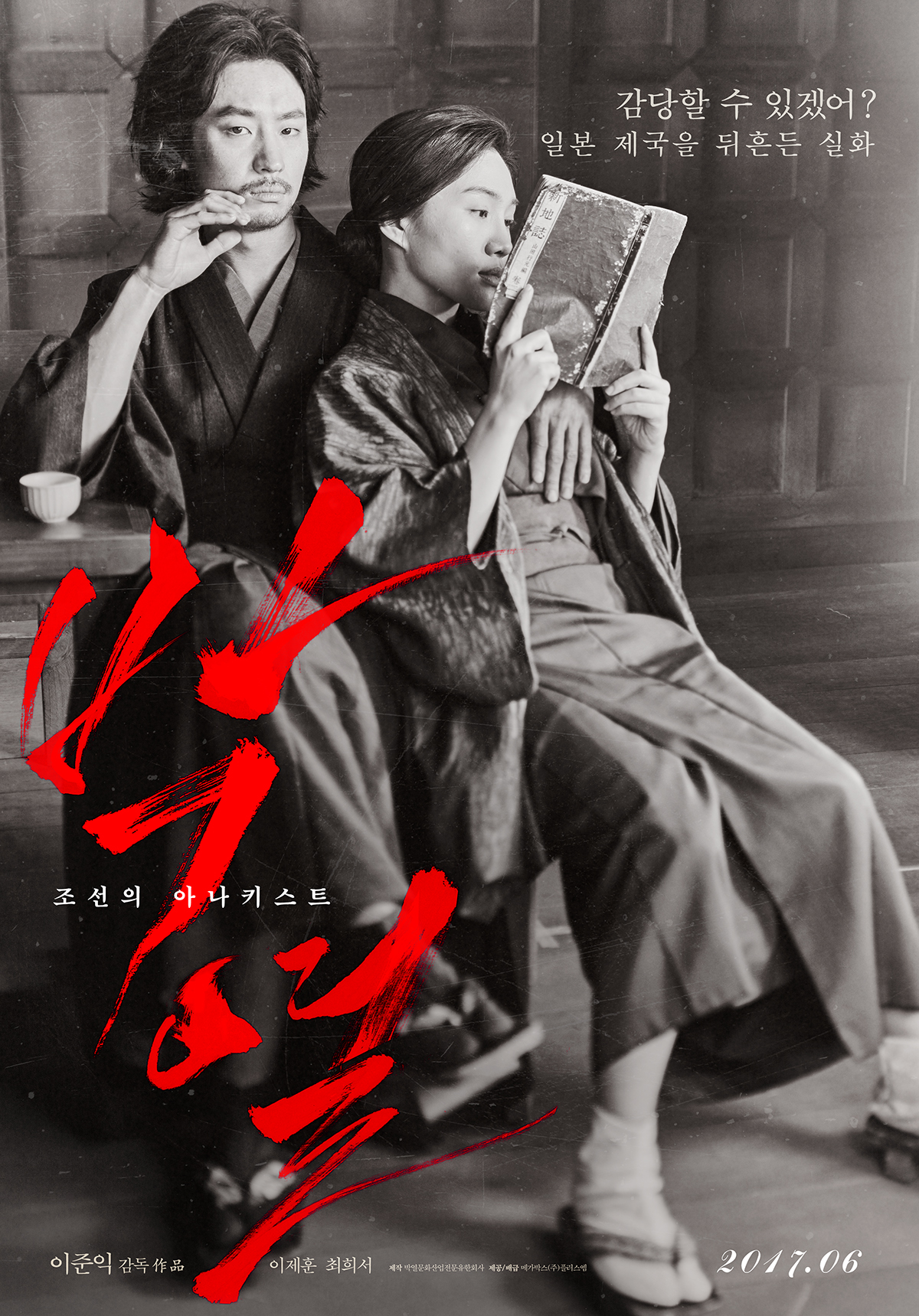
anarchist from colony posterLee Joon-ik follows his poetical mediation on the Korean independence movement, Dong-ju, with an equally philosophical, if not quite as rigorous, tale of rebellion and tragedy inspired by real life revolutionary anarchist, Park Yeol. Where Dong-ju was a tale of a world in in black and white, Anarchist from Colony (박열, Park Yeol) is one of glorious colour and the strange joy of pithily rejecting an oppressor’s authority. The oppressor’s authority is, however, infinite and no amount of anarchy will be enough to evade it even if there may be long term advantages in losing a battle in grand style.

Park Yeol (Lee Je-hoon) is a Korean left wing agitator living in Tokyo and earning a living as a rickshaw driver. He is also a hero to local Koreans and has gained a lot of fans (many of them female) thanks to his poetry including his latest entitled “Damn Dog” which laments his lowly status as an oppressed Korean man. One of his many fans, Fumiko Kaneko (Choi Hee-seo) – a Japanese woman who spent some time in Korea as a child, manages to work her way into his heart and becomes both a lover and an integral part of his revolutionary movement known as The Revolt.

In 1923, The Great Kanto Earthquake caused wide scale destruction and general chaos in the capital. Martial law was instituted, but a rumour soon spread that Korean insurrectionists were using the confusion to fuel their revolutionary ambitions, poisoning wells, committing arson, and plotting to assassinate the Emperor and his son. Of course, the rumours were baseless but led to a citywide pogrom in which around 6000 Koreans are thought to have been murdered both by ordinary people and by the army. Hoping to avoid the violence, Park decides he might be better off turning himself in to the police, but even police cells are not free of vigilante justice.

Unlike many recent films set during the colonial period, Anarchist from Colony is not particularly interested in demonising the Japanese. Generally speaking, the Japanese government are depicted as a collection of buffoons ill equipped to deal with the unexpected disaster of the earthquake and obsessed with rules, protocol, and Emperor worship. The major antagonist is a moustache twirling idiot and committed racist nursing a grudge against Koreans over a career setback to do with the suppression of the March 1, 1919  protest which kickstarted the Korean Independence Movement. The other officials mostly regard Mizuno (Kim In-woo) as an embarrassment, calling him out on his obvious racism and attempting to circumvent his machinations but more often than not failing to successfully outmanoeuvre him.

Having been partly responsible for the massacre in failing to stop the racist rantings of Mizuno and co, the government are eager to suppress all knowledge of it and distance themselves from anything that could make them look bad on the international stage. In this Mizuno makes a serious miscalculation when he decides to fit up the most popular Korean political activist he can get his hands on as a “traitor” and have him tried and executed as an example to the others. Park is wise to this scheme right away and decides to play along even if he knows it may eventually cost him his life. In fact, he almost hopes it will because not only will he lend weight to the cause of independence through his own martyrdom, but it will be much harder for the government to suppress news of the massacre with him on trial for his supposed terrorist activities which are being touted as its cause.

Yet the tale is framed not so much as suppressed revolution but ill fated love in the tragic romance of Park and Kaneko. The mini band of anarchists are a surprisingly cheerful bunch for hardline leftists, and Park and Kanenko’s intense bond is one of both political solidarity and true affection. Being anarchists through and through, they do not believe in marriage but agree to live together after signing a contract of cohabitation in which they mutually affirm their loyalty to each other and their cause. When Park is arrested, Kaneko turns herself in and follows him despite his pleas with her not to. The couple remain fiercely together to the end presenting a united front delighting in mocking their joint show trial even knowing they may soon be heading for the gallows.

This strange kind of lightness and dada-esque surrealism is an odd fit for the grim tale at hand. Lee mostly glosses over the wider implications of the massacre aside from minor references to longstanding prejudices such as Park’s beating by a customer who has short changed him and the vigilante gang’s repeated use of a particular phrase to flag up Korean accents. The overriding sense of flippancy undercuts the seriousness of Park’s plight and ultimately robs it of its power as his struggle is played for broad comedy rather than subtle satire. Perhaps overly ambitious, Lee’s reframing of of Park’s story as surrealist vaudeville romance never quite takes off, sacrificing passion for laughs but finding that they ring hollow surrounded by so much suppressed terror.


Screened at the London East Asia Film Festival 2017.

International trailer (English subtitles)

New Trial (재심, Kim Tae-yun, 2017)

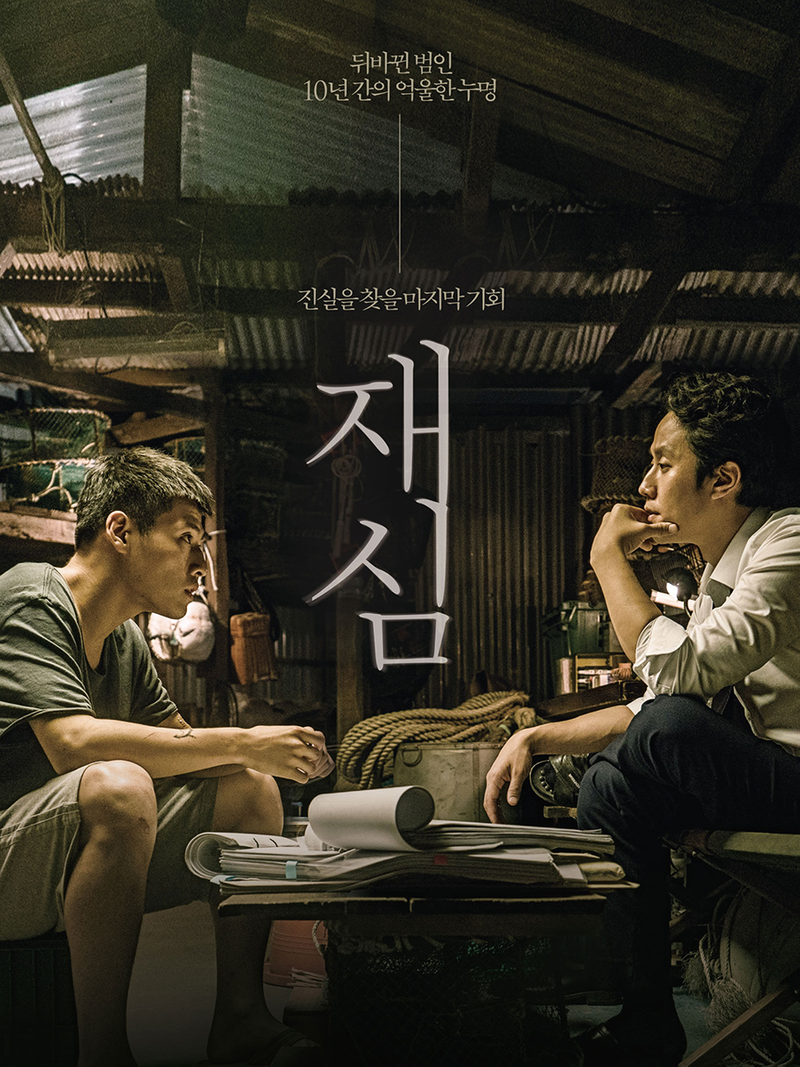
new trialIt’s a strange paradox that in a land defined by corruption of the legal system, your only hope my lie in a new trial. So it is for the hero of Kim Tae-yun’s latest film. Inspired by a real life miscarriage of justice (a case which was in fact still continuing at the time of filming), New Trial (재심, Jaesim) takes aim at everything from social inequality to unscrupulous lawyers and abuse of police power. A teenager pays dearly for being in the wrong place at the wrong time, not only losing 10 years of his life but the entire possibility of his future now that he’s forever branded a criminal. That’s aside from leaving his ageing (now blind mother) alone with no means of support and the additional burden of trying to clear her son’s name.
In the year 2000, reckless teen Hyeon-woo (Kang Ha-Neul) gets himself mixed up in the stabbing of a taxi driver. Despite sticking around to do his civic duty, he gets arrested, tried, talked into a false plea bargain confession and serves 10 years behind bars. Hyeon-woo might have been released after serving his time but he’s not the carefree kid he was before. Sullen, angry, and an ex-con without qualifications, he can’t find a job and has the additional burden of trying to care for his now blind mother. Even if he technically confessed to the crime because his conviction was inevitable and he wanted to get out faster so his mother wasn’t left alone, Hyeon-woo has his hopes permanently fixed on a retrial so he can clear his name once and for all.

Enter shady lawyer Park Jun-young (Jung Woo). Park is not your usual pick for a social justice case. He became a lawyer for the big bucks and macho posturing. After he loses a big case, incurs numerous debts, and is left by his wife and child, Park joins a big firm on a pro-bono basis, hoping to pick up a big client, impress them and get another permanent position. Thus he stumbles on Hyeon-woo’s case and, given the notoriety of the incident, thinks there may be some mileage in it.

Park may start off as the cynical, winner takes all school of legally savvy but morally bankrupt attorney but the more he looks into Hyeon-woo’s case the angrier he finds himself getting. Not only was Hyeon-woo betrayed by the police who knew the identity of the real killer but chose to scapegoat a poor boy instead, but he was also ordered to pay vast sums in compensation to the victim’s family. Saddled with an irreparable debt for a crime he did not commit, Hyeon-woo has reason for his passive aggressive defeatism and lack of faith in Park but gradually begins to come back to life when provided with real hope of achieving his goal of a new trial.

Yet much of the drama revolves around the two as they negotiate an uneasy trust. Hyeon-woo has been let down before by men in who said they could help only to make a speedy exit taking Hyeon-woo’s hard won money and faith in the future with them. Park starts off claiming Hyeon-woo’s guilt or innocence is an irrelevant detail, all that matters to him is winning the case and thereby getting his career back on track. Flitting through periods of winning and losing faith in each other the two are eventually able to come together in their common goal, each working for justice not just for Hyeon-woo but for all the other Hyeon-woos betrayed by political and judicial corruption.

The real life case which inspired New Trial is still not settled but the man who inspired the originally slippery Park has gone on to become Korea’s new trial king – coming to the rescue of those who find themselves at the mercy of shady forces and railroaded into paying for something they did not do. Park finds few allies in his new quest for social justice, and none among the ranks of the swanky lawyer elites he was so desperate to join, but every movement needs a leader and perhaps this one starts with a man called Park and a massive change of heart.


New Trial was screened at the 19th Udine Far East Film Festival

Original trailer (English subtitles)

https://www.youtube.com/watch?v=sMeCG2GKsBg

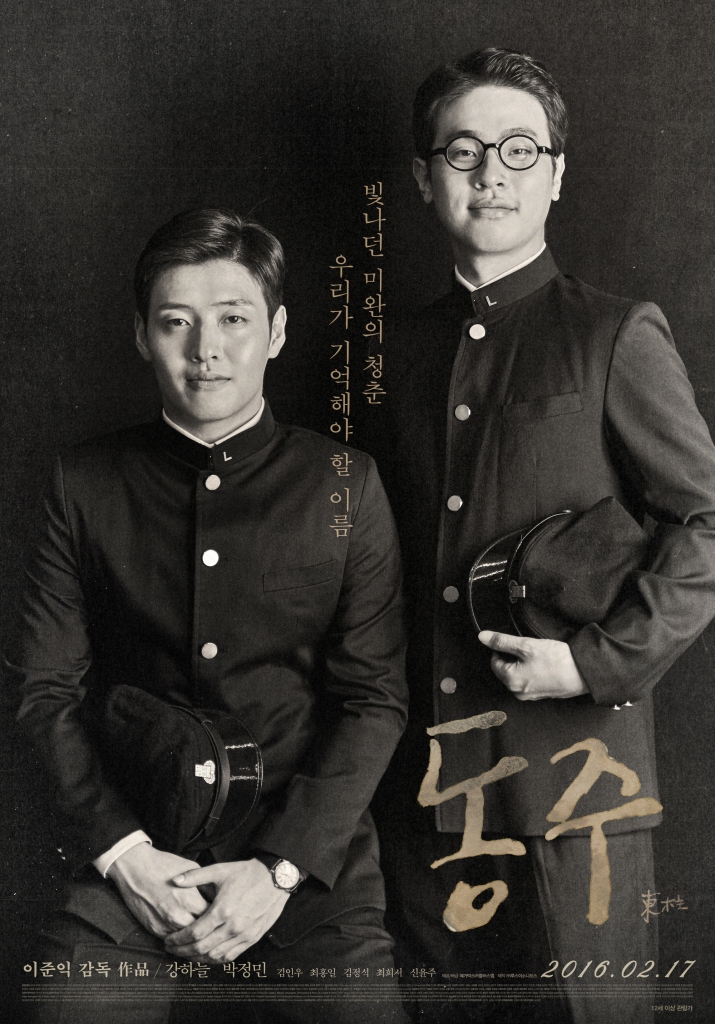
Dong-ju: The Portrait of a Poet (동주, Lee Joon-ik, 2016)

2016-03-12-1457751627-4889573

Lee Joon-ik’s previous film, The Throne, was a big budget period affair examining the well known story of tragic prince Sado who was, in a sense, murdered by his own nation as personified by his father, the king, for failing to bow to a tyrannous regime. Lee’s followup, Dong-ju: The Portrait of a Poet, charts a similarly melancholy path in its exploration of the life and times of its titular wordsmith, unhappily born into an age of anti-intellectual fervour with only the desire to write verses. Yet another of the recent films to address the Korea’s colonial history, Dong-ju, like its hero, may be the most contemplative as it raises a number of questions not only about the nature of resistance but also of its intrinsic values.

Growing up in a Korean religious settlement in Manchuria, Dong-ju (Kang Ha-neul) and his cousin Mong-gyu (Park Jung-min) have been largely cushioned from the effects of the Japanese occupation, but are aware it’s only a matter of time before their village loses its special status and is swallowed by the powers that be. Both boys have literary aspirations with the more bombastic Mong-gyu opting for prose and the dreamier Dong-ju committed to the far less well received world of poetry. Firm friends as they are, literary rivalry aside, each is bound for a different course as Mong-gyu becomes increasingly involved with the independence movement whereas Dong-ju’s rebellion remains largely on the page.

After travelling to Japan as students, both Dong-ju and Mong-gyu are arrested for insurrection and incarcerated in the notorious Fukuoka Prison where they are used as human subjects for experimentation. Regularly dosed with mysterious injections which blister the skin and weaken the constitution, neither lives long enough to see the return of their nation’s sovereignty just a few weeks later with Japan’s defeat at the end of the war.

Beginning with Dong-ju’s prison interrogation, the film is largely told through flashback as it follows the course of Dong-ju’s life from his adolescence in the village to domestic university and finally to Japan where he faces constant threat as an alien Korean in the land of the oppressor. Both he and Mong-gyu are committed to the idea that conscientious literature can change the world, even founding a student magazine dedicated to progressive texts. Mong-gyu, however, does not place the same faith in the art of poetry as does his friend, and eventually decides to head to China to join the left-wing arm of the Resistance movement in exile, only to become disillusioned with their extreme tactics.

Despite his loss of faith in Communist ideology, Mong-gyu remains committed to the idea of direct action and the eventual ushering in of the egalitarian revolution preceded by the expulsion of the Japanese. Far from opposing the draft of Korean students into the Japanese army, Mong-gyu plans to harness it to fill the army with capable, trained fifth columnists who will use the skills they learn in a foreign army to retake their homeland. After a brush with the ruling regime, Dong-ju tries to join the more active side of the resistance alongside his friend but is rebuffed. Mong-gyu knows his friend is not a born soldier and is much more valuable as a poet than on the front lines.

Dong-ju’s poetry is often not overtly political, anti-Japanese, or even anti-colonialist, but it is written in Korean – a daring act of political resistance in itself. During this era, Japanese was the dominant language, used in all official institutions and most schools (Dong-ju and Mong-gyu’s excluded because of its special religious status). One of the problems Dong-ju faces during his interrogation is that he delayed adopting a Japanese name much longer than was wise and subsequently continued to disseminate literature in Korean. When language is suppressed and nationhood denied to the extent that even names have been erased, what other means is there to reclaim an identity other than literature, and of literature what more powerful than poetry?

Dong-ju’s resistance to the brutalisation of of an oppressive regime is entirely internal. He writes in his native language about the things which matter, of his loneliness and youthful anxiety much of which is born of the uncertainty of his times. During his interrogation he is forced to sign a confession of his “crimes”, which he does, but with equal amounts of pride and shame as he wonders if his commitment to literature was time well spent when his comrades were dying in the streets. Was it responsible of him to commit himself to poetry rather than to medicine with all of its more immediately humanitarian benefits, or should he have thrown away the pen for the gun and joined the combatants in the armed struggle?

Mong-gyu, by contrast, feels only shame when he signs his papers which amount to a list of failed manifesto promises. Yes, he did plan all of these things but realised none of them, placing the lives of his friends in jeopardy as his did so. Perhaps he, like Dong-ju, should have agitated for social change through culture, rather than trying to fight an empire using only the empire’s cast offs.

There are no real answers to these questions, Korea regained its independence thanks to the collapse of the Japanese overseas empire rather than armed insurrection or the gradual enlightenment of the citizenry. Both men are left with a lingering sense of shame and impotence at having been unable to accomplish more in their cruelly shortened lives. Yet as for Dong-ju, there is rebellion enough in his poetry which bares all of his own soul as he suffered the torment of a poet forbidden from poetry, writing in a language proscribed by those that would seek to destroy the essence of his culture.

Filming in a crisp, washed out black and white, Lee imbues his world with a sense of melancholy and lost potential as two young men find themselves at the mercy of their times, fighting for their own independence as distinct from that of their nation but once again being denied. A necessarily sombre film unafraid to acknowledge the darkest edges of the colonial period, Dong-ju: The Portrait of a Poet is a celebration of the enduring power of the poetic form as exemplified by Dong-ju’s beautifully heartbreaking lines.


Reviewed at the 2016 London Korean Film Festival.

Original trailer (no subtitles)