Love Doesn’t Matter to Me (愛されなくても別に, Aya Igashi, 2025)

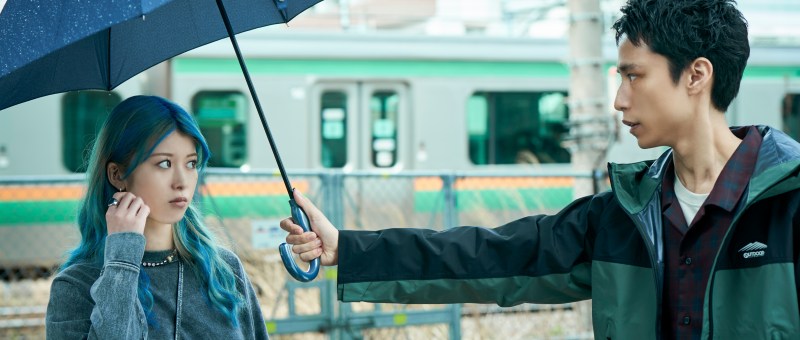
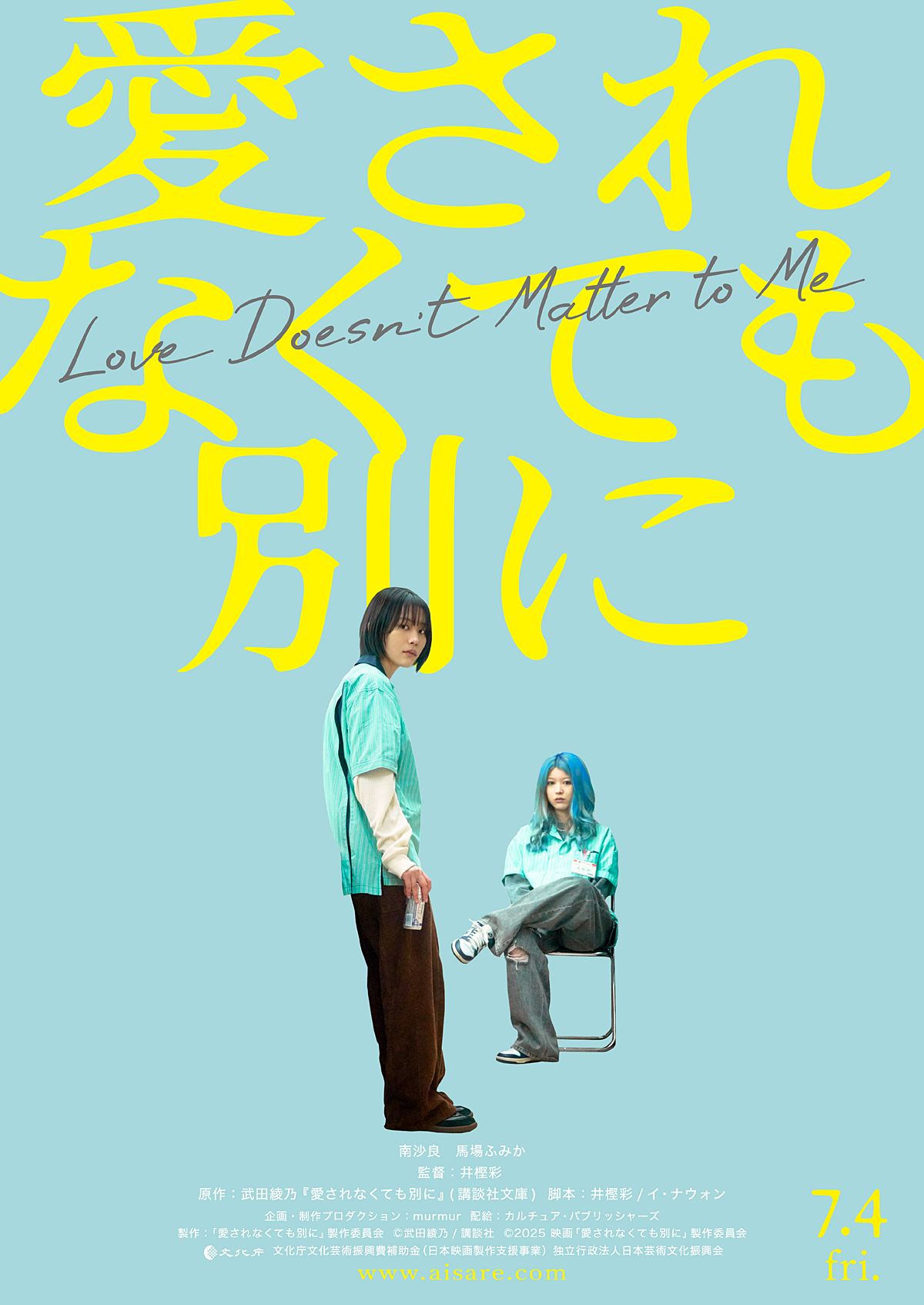
Two young women find solace and solidarity in each other after escaping toxic familial environments in Aya Igashi’s adaptation of the novel by Ayano Takeda, Love Doesn’t Matter to Me (愛されなくても別に, Aisarenakutemo Betsuni). Though some might say that parents always love their children even if that love was not conveyed in the optimal way, the two women struggle with their contradictory impulses in craving the love of a parent who in other ways they know is past forgiveness.

The problem for Hiiro (Sara Minami) is that the roles have become reversed. She is effectively the parent of her irresponsible mother (Aoba Kawai) who treats her like a housekeeper and is intent on exploiting her labour. Hiiro’s mother didn’t want her to go to university and is still charging her rent and board to live at home while Hiiro works several part-time jobs to jobs to support them. She believes that her mother lives beyond her means, but is unaware of the extent to which she’s been financially abusing her by keeping both the child support her absent father had been sending and the student loan she’d taken out as a safety net. Having to work so hard also means that Hiiro is tired all the time and is prevented from taking part in normal university life or social activities which leaves her unable to make friends. At times she resents her mother so much she’s worried she might end up snapping and killing her to be free, but at the same time loves her and therefore puts up with her ill-treatment.

Enaga (Fumika Baba), meanwhile, is ostracised because her father is on the run after killing someone, though the reason she is resentful of her family is a history of sexual abuse and exploitation that have left her feeling worthless. As she later says there’s no point comparing your unhappiness to that of other people, otherwise you just end up making yourself more miserable as if you were trying to win an unhappiness competition. Nevertheless, learning of Enaga’s situation wakes Hiiro up to the possibility that other people are unhappy too and her life may not have been as comparatively bad as she felt it to be in the depths of her isolation. 

Yet what both women seem to crave is the positive maternal relationship they’ve each been denied. Hiiro gets to know another student, Kimura (Miyu Honda), who also has no friends partly owing to a judgemental attitude and poor social skills whom she later discovers to be from a wealthy background despite her being desperate to find a job and working alongside Hiiro at the convenience store. Kimura resents her mother (Shoko Ikezu) for being overly controlling and possessive. She’s come all this way to university to escape her, yet her mother calls every few hours and is angry if she doesn’t answer and makes frequent visits leaving Kimura with no freedom or social output. To Hiiro, Mrs Kimura’s actions seem to come from an obviously loving place and she might have a point that Kimura is naive, having been kept sheltered all life by her own helicopter parenting, which is why she’s been sucked into a cult. Hiiro sees in Mrs Kimura the love and affection she’d have liked from her own mother and is jealous rather than seeing how seeing Kimura feels suffocated and is driven to despair in being unable to escape her mother’s control.

Lady Cosmos (Yoko Kondo), the cult leader in whom Kimura has found salvation, tells each of the girls that they were loved by their imperfect parents and ought to love them back, but they seem to know better. Though she makes some perspicacious comments, Lady Cosmos also tells them exactly what they want to hear and attempts to occupy a more positive material space to be the loving mother they never had. But, of course, not so different from Hiiro’s mother, she’s bleeding Kimura dry by forcing her to pay extortionate amounts for readings and holy water. Ironically she’s still controlling her much like her own mother had, but Kimura thinks she’s found freedom in cult and resents any attempt to undercut Lady Cosmos’ belief system even if she’s at least on one level forcing herself to believe it rather than being a true believer. 

What might be surprising is that the two women effectively break free of the “cult” of family in accepting that their parents aren’t good for them and the decision to cut them out of their lives is valid rather than the breaking of a taboo or an unnatural rejection of the sacred bond between a mother and a child. Instead they effectively remake the image of family for themselves as one of mutual solidarity and unconditional love between two people who aren’t related by blood but have discovered a much deeper bond rooted in shared suffering.


Love Doesn’t Matter to Me screens as part of this year’s Japan Foundation Touring Film Programme.

Trailer (English subtitles)

Liz and the Blue Bird (リズと青い鳥, Naoko Yamada, 2018)

Liz and the Blue Bird poster 1If you love it, set it free. For most accepted wisdom, but hard to practice. The heroine of Liz and the Blue Bird (リズと青い鳥, Liz to Aoi Tori) finds herself facing this exact dilemma as she puts off facing the inevitable changes in a childhood friendship with adulthood lingering on the horizon. A Silent Voice’s Naoko Yamada returns with another delicate examination of teenage relationships, this time a spin-off to the popular Sound! Euphonium franchise, in which her fragile heroines struggle to address their true feelings as they subsume themselves into the titular piece of music but fail to master it even as it strikes far too close to home.

Our heroine, Mizore (Atsumi Tanezaki), nervously waits outside the school as if too shy to head in alone, eventually trailing along behind the comparatively more extroverted Nozomi (Nao Toyama). The two girls have been tasked with playing a movement known as Liz and the Blue Bird, inspired by a storybook of which Nozomi is particularly fond. Liz, a lonely young woman living alone in the forest, bonds with a mysterious girl who arrives one day and seems to be the human incarnation of the blue bird she longingly gazed at in the sky. Though the two women bond and live together in blissful happiness, Liz begins to feel guilty that her love has trapped the blue bird on the ground and forces it away to fulfil itself in the sky.

To begin with, it’s difficult to tell if Mizore and Nozomi are really friends at all or if Mizore’s painfully obvious longing is a completely one-sided affair. Mizore herself remains hard to read, either intensely shy and anxiously self-conscious or wilfully aloof as she rejects overtures of friendship from some of the other girls and devotes herself to Nozomi alone. Nozomi, meanwhile, is outgoing and gregarious, a natural leader well liked by the other band members and with plenty of (superficial at least) friends though perhaps lonely and confused in her own way. There is a kind of awkwardness between them, a tension neither seems quite able to address, which finds expression in the failure of their musical performance as it continually fails to find its proper harmony.

The story of the blue bird takes on extra significance for each as they cast themselves, perhaps mistakenly, in their respective roles from the fairytale. Talking things over with a sympathetic teacher concerned that she hasn’t turned in her career survey, Mizore declares herself unable to understand the story, not comprehending how Liz could have brought herself to release the blue bird rather than cage it to ensure it would be hers, and hers alone, forever. Fearful that Nozomi will fly away, she wants to tether her close but again does not quite know how. Nozomi, meanwhile, is conflicted. She feels a responsibility towards her friend’s feelings, but is insecure in her own talents and unsure she could follow Mizore on her chosen path even if that was her independent will. In fear of disappointing each other, they begin to pull away rather than face the inevitable end of their peaceful high school days.

Yamada’s camera is painstakingly astute in capturing the awkwardness of adolescent interaction from the slight tension in Mizore’s shoulders as Nozomi draws too close to the way she plays with her hair when nervous, glancing plaintively at hands and calves or the swishing motion of Nozomi’s ponytail, but always hanging back. Unlike Mizore, Nozomi understands the moral of the story but feels the ending is too sad, convincing herself that if the blue bird is free to fly then it’s also free to return. Having been forced to confront their individual troubles, the girls are better placed to see themselves in relation to each other, breaking the tension but perhaps with melancholy resignation as they commit to enjoying their remaining time together in the realisation that they may soon part. A beautifully observed portrait of teenage friendship and awkward adolescent attraction, Liz and the Blue Bird is an infinitely subtle exercise in emotional intensity as its heroines find the strength to accept themselves and each other in acknowledging that they were each made to fly through perhaps not quite yet.


Liz and the Blue Bird was screened as part of the 2019 Nippon Connection Film Festival.

US trailer (Japanese with English subtitles)

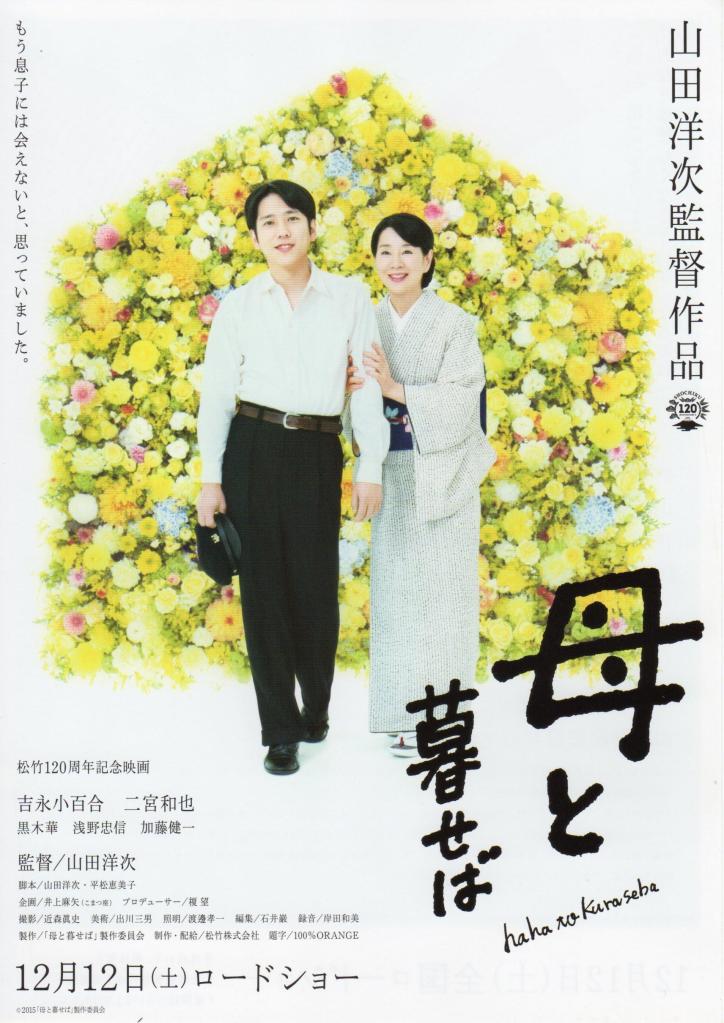
Nagasaki: Memories of My Son (母と暮せば, Yoji Yamada, 2015)

nagasaki-memories-of-my-sonAfter such a long and successful career, Yoji Yamada has perhaps earned the right to a little retrospection. Offering a smattering of cinematic throwbacks in homages to both Yasujiro Ozu and Kon Ichikawa, Yamada then turned his attention to the years of militarism and warfare in the tales of a struggling mother, Kabei, and a young a woman finding herself a haven from the ongoing political storm inside The Little House. Nagasaki: Memories of My Son (母と暮せば, Haha to Kuraseba) unites both of these impulses in its examination of maternal grief set amidst the mass tragedy of the atomic bomb and in the obvious reference hidden inside Japanese title (another Yamada trend) to the 2004 Kazuo Kuroki film The Face of Jizo (父と暮せば, Chichi to Kuroseba), itself based on a play by Hisashi Inoe. Whereas the young woman of Hiroshima found herself literally haunted by the image of her father to the extent that she was unable to continue living in the present, the mother at the centre of Nagasaki is approaching the end of her life but only now, three years after the bombing, is she ready to allow the idea of her son’s death to cement itself within her mind.

Nobuko’s (Sayuri Yoshinaga) son Koji (Kazunari Ninomiya) left as normal on that fateful morning, in a hurry as always, leaping onto the outside of a crowded bus that would take him to the university for a lecture on anatomy. That was three years ago and now it’s August again but in the absence of a body Nobuko has never been able to accept the death of her son, despite the picture on the altar and the two previous trips she’s made to the family grave on this date along with Koji’s girlfriend, Machiko (Haru Kuroki). Finally, Nobuko is beginning to feel it’s time to accept the inevitable, that her son is not lost somewhere and unable to find his way home but in some other world. This grudging acceptance of Koji’s death is the thing which returns him to her as the prodigal son suddenly appears one evening in spirit form to reminisce with his mother about the carefree pre-war days.

Kazunari Ninomiya’s Koji is, appropriately enough, a larger than life presence. A cheerful chatterbox, Koji blusters in to his old family home with the same kind of amusing energy he’d always lent it, laughing raucously to his mother’s polite but strange under the circumstances greeting of “have you been well?”. Reminiscences generally lean towards happier times but each time Koji becomes upset he suddenly disappears again, leaving his mother alone with all her sorrows. Nobuko lost both her sons to the war and her husband to TB and so she is quite alone now save for the kindhearted attentions of Machiko who continues to stop by and help her with house work or just keep her company.

The two women share an intense bond in their shared grief. Almost like mother and daughter Nobuko and Machiko help each other to bear the weight of their loneliness in the wake of such overwhelming tragedy. However, Nobuko is beginning to feel guilty in monopolising the life of this young woman who might have been her daughter-in-law or the mother of her grandchildren by now if things were different. Can she really ask her to sacrifice the rest of her life to a memory? Machiko swears that she has no desire to ever marry, preferring to remain loyal to her true love. “Shanghai Uncle” a black marketeer who brings Nobuko all the hard to find items not available through the normal channels, offers to set up an arranged marriage for the young woman but Nobuko is quick to turn it down on her behalf. In this new age of democracy, she says, young women ought to have the right to choose their own path whatever that may be. Nobuko respects Machiko’s choice, but after talking things over with Koji, urges her to consider letting the past go and honouring Koji’s memory by living fully while there is still time.

Interestingly enough, Machiko’s potential suitor, Kuroda – an injured war veteran and fellow teacher at the school where she teaches, is played by Tadanobu Asano who also played the shy researcher who began to reawaken the heart of the daughter at the centre of The Face of Jizo, Mitsue. Mitsue’s problem was more obviously one of survivor’s guilt, literally haunted by the friendly spirit of her genial father who continually urges her to embrace this last opportunity for happiness, to go on living even whilst others can’t. Nobuko’s journey is almost the reverse as she, essentially, attempts to cleave herself away from her life by ensuring Machiko is taken care of and knows that she has nothing to feel guilty about in seeking happiness even if it can’t be with Koji.

Despite the innovative opening sequence featuring the cockpit and targeting system of the plane which eventually dropped the bomb and the chilling effects sequence as it takes hold, Yamada then reverts to a kind of classical stateliness which is never as effective as Kuroki’s eerie magical realism. Adding in the Christian imagery associated with Nagasaki, the film takes a turn for the mawkish during the final sequence which descends into a series of heavenly cliches from fluffy white clouds to angelic choirs. Warm and melancholy, Nagasaki: Memories of My Son is a poignant exploration of life in the aftermath of preventable tragedy but one which also makes the case for moving on, honouring the legacy of the past with a life lived richly and to the full.


Original trailer (English subtitles)