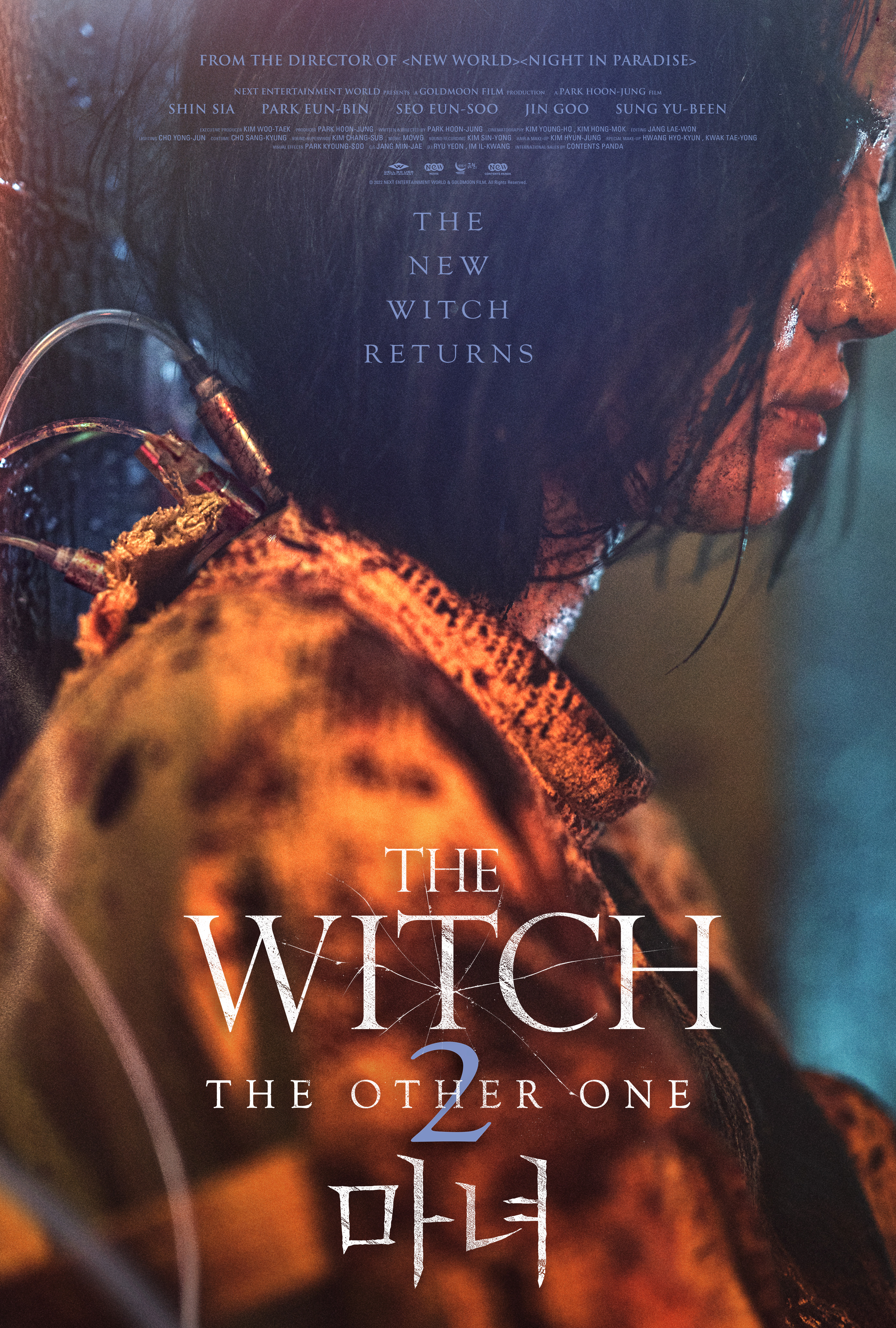
The Witch: Part 2. The Other One (마녀 2, Park Hoon-jung, 2022) [Fantasia 2022]

In Park Hoon-jung’s The Witch: Part 1.The Subversion, a young woman managed to escape a shady research facility to live as a regular high schooler while her adoptive parents wondered if their love for her could cure the violence with which she had been nurtured. Four years on, Hoon returns with Part 2: The Other One (마녀 2, Manyeo 2) which as the title implies follows another girl who similarly escapes her captivity and fetches up on a farm where she forms a surrogate family with a brother and sister in immediate danger of displacement. 

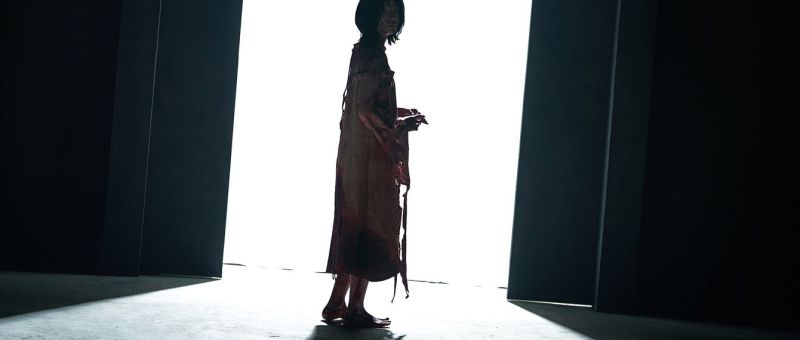
Unlike the first film’s Ja-yoon (Kim Da-mi) who rebuilt a life of “normality” after seemingly losing her memory, the unnamed girl emerges into a confusing and unfamiliar world in which everything is new to her. Challenged by a shady gang of guys on a highway, she’s bundled into a car which is where she encounters Kyung-hee (Park Eun-bin), a young woman kidnapped by a former associate of her late father who plans to murder her and steal her land for a lucrative construction project. Realising what might be in store for her, Kyung-hee tries to protect the girl and urges the gangsters to let her go before the girl decides to protect Kyung-hee in return by using her special abilities to total the car and set them both free. The girl is just about to finish off one of the mobsters when Kyung-hee tells her that she doesn’t need to, starting her on a path to questioning the indiscriminate violence with which she has been raised even as she determines to continue protecting Kyung-hee and later her brother Dae-gil (Sung Yoo-bin) who are now caught between the venal gangsters and an international conspiracy with various groups of people intent on either kidnapping or eliminating the escaped test subject. 

As had been hinted at in the previous film’s conclusion, there is a definite preoccupation with twins but also with internal duality. The shady corporation hints that the girl may be an upgraded edition, the “perfect model” of transhumanism, yet she appears less amoral than the unmasked Ja-yoon almost always seeking to incapacitate rather than kill while determined to protect Kyung-hee at any cost. To begin with, she is largely unable to speak but reacts with wide-eyed wonder to outside world visibly stunned by the wide open spaces on her way to the farm and develops a fascination with food eager to try anything and everything charging round a supermarket eating all the free samples while piling the trolley high with snacks. 

Like Ja-yoon however and in a superhero cliché she finds refuge on a farm and helps to complete the family which had been ruptured by absence but her new happiness is fragile on several levels not least of them that the farmhouse is under threat from venal gangster Yong-du (Jin Goo) who wants the land to build a resort. In an undeveloped plot strand, it seems that Dae-gil has lingering resentment towards his sister for leaving for America and returning only when their father died with the intention of sorting out the estate while it otherwise seems clear that their father was himself a gangster who may have used his ill-gotten gains to buy the farm in the first place. This is no ordinary rural backwater, but one brimming with darkness as the backstreet doctor turned drunken vet makes clear. 

In another duality, the girl is chased by a series of opposing forces split between “union” and “transhumanism” and represented by mercenary Sgt. Cho (Seo Eun-soo) and her South African partner (Justin John Harvey) and a gang of Chinese vigilantes from the Shanghai lab who are looking for the girl to get her to join them. Like the girl, the mercenaries appear to act with a code of ethics, trying their best to avoid civilian casualties while viewing death as a last resort while the ruthless vigilantes rejoice in violent brutality. In any case Park leaves the door open for a further continuation of the series in which the two women search for their shared origins in the hope of a literal, physical salvation but also perhaps the answer to a mystery long withheld from them. With a series of large scale and well choreographed action sequences, Park builds on the first film’s success and quite literally tells a sister story as “the other one” pursues her mirror image destiny while ironically finding beauty in the fireworks of a volatile society. 


The Witch: Part 2. The Other One screened as part of this year’s Fantasia International Film Festival and is released in the US courtesy of Well Go USA.

International trailer (English subtitles)

Images: Courtesy of Well Go USA Entertainment
Miss Baek (미쓰백, Lee Ji-won, 2018)

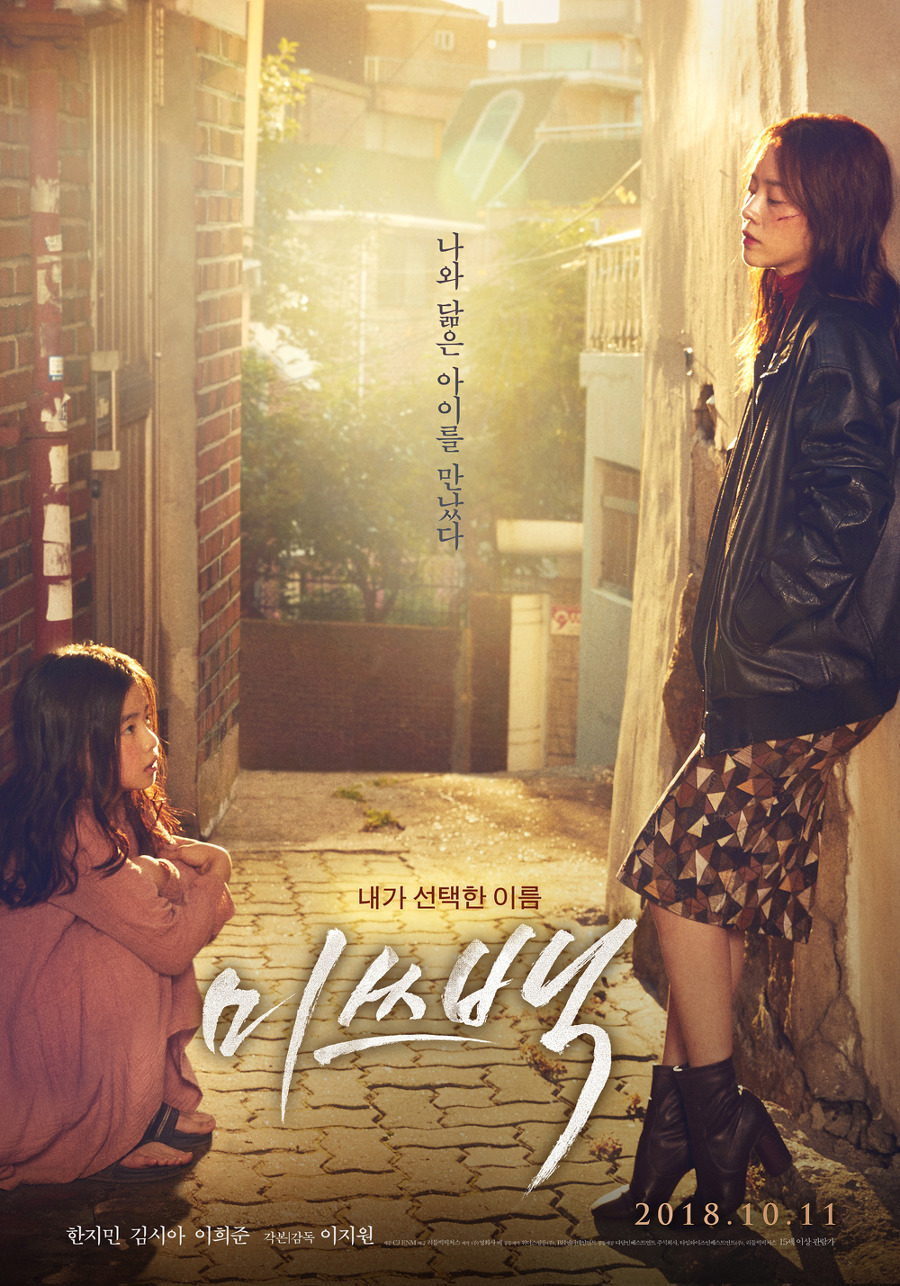
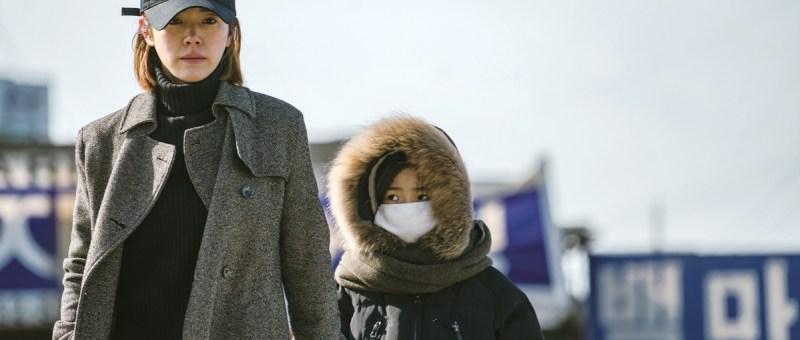
Miss baek posterIn one sense we’ve never been more connected to one another, but our tendency to remain inside our own solipsistic bubbles has never been higher. We ignore those in need, confident that “someone” will do something, that it isn’t our responsibility. Then again perhaps we don’t even notice. It’s freezing cold in director Lee Ji-won’s debut feature Miss Baek (미쓰백) and a little girl is sitting outside in her nightie. No one takes very much interest her even though it’s far too late for a child to be out alone. That is, until the titular Miss Baek (Han Ji-min) overcomes her own sense of alienation and decides to look back.

Now in her mid-30s, Baek Sang-ah is an aloof, near silent woman who ekes out a living through a series of casual jobs from car washing to massage. She is in a kind of relationship with a kindly policeman, Jang-sub (Lee Hee-joon), who wants to marry her, but Sang-ah has long ago ruled out the idea of marriage and family. She never wanted to be someone’s wife or mother. Sang-ah says this not (entirely) because she values her independence, but because of a legacy of trauma and abandonment born of the physical abuse she suffered at the hands of her mother who fell into depression and alcoholism following the loss of her husband. Fearing becoming another link in a long chain of abuse passed from parent to child, Sang-ha has kept herself isolated, avoiding all intimate relationships and vowing to continue on alone causing harm to no one.

One winter day, however, she can’t walk past the girl in the nightie anymore. Taking her to a nearby food stall, Sang-ha finds out the girl’s name is Ji-eun (Kim Si-a) and she’s nine years old. Just as Sang-ha is beginning to ask about the cuts and bruises on Ji-eun’s hands and feet, a well dressed woman who turns out to be her father’s girlfriend arrives and whisks the girl away. Sang-ha tries to forget about her and go on with her life, but she can’t seem to do it. Buying Ji-eun some proper winter wear, she resolves to try and help the girl the way that no one tried to help her.

There is something particularly insidious in the continuous stream of injustice and mistreatment Sang-ha and Ji-eun find themselves subject to precisely because of their lack of social power. Children, most obviously, have no mechanism to defend themselves besides their parents and should they try to speak out against them, they may not be listened to. Managing to escape, Ji-eun tried to tell the police what her parents were doing to her but they sent her home with only a mild warning to her smirking step-mother that she’d best ease back on the “discipline”. Understandably, Ji-eun doesn’t have much faith in the authorities as a source of salvation. Sang-ha experienced much the same but her oppression continued on into adulthood when she was arrested for violently defending herself against a would-be-rapist who happened to be the son of a wealthy and connected man who used his status to do as he pleased while Sang-ah went to jail. Sang-ha’s prison record comes back to bite her again when she tries to talk to the police on Ji-eun’s behalf only for them to lay into her when they eventually run her file.

Meanwhile, Ji-eun’s step-mother Mi-kyung (Kwon So-hyun) is well turned out and scrupulously polite. She has a plausible answer for everything and a talent for middle-class respectability, even crying during church services. Her father Il-gon (Baek Soo-jang), by contrast, is addicted to video games and rarely leaves the house while little Ji-eun is often locked in the bathroom where she cowers under the sink, or cast out onto the balcony in the mild hope that she’ll freeze to death. The only reason Mi-kyung has been keeping her around is the welfare payments, but they’re about to stop. Both “parents” project all of their personal resentments onto the face of a nine year old girl whom they beat, starve, and torture for no discernible reason other than they don’t know any other way to behave.

Ji-eun’s father was also beaten as a child. He wonders where the police were then and what sort of life they think Ji-eun is going to have when she too grew up like this. Sang-ah’s desire to save Ji-eun is also a desire to save herself as she contemplates maternity from both sides in revisiting the complicated relationship with her own mother while wondering if she is a fit person to care for a child with such poor models to follow. She doubts she can break the chain and free Ji-eun from a seemingly inescapable system of abuse and violence but through her deepening attachment to the little girl Sang-ha begins to find a way through her inertia and fear of intimacy to a deeper and more positive connection. A gritty yet always open and empathetic look at an all too often hidden social problem, Miss Baek is a promising and important debut from Lee Ji-won which refuses to look away from the dark and unpalatable but finds hope in the power of simple human kindness against cruelty and indifference.


Screened as part of the 2018 London East Asia Film Festival.

Original trailer (no subtitles)

https://www.youtube.com/watch?v=s5LZUasjAcg

Burning (버닝, Lee Chang-dong, 2018)

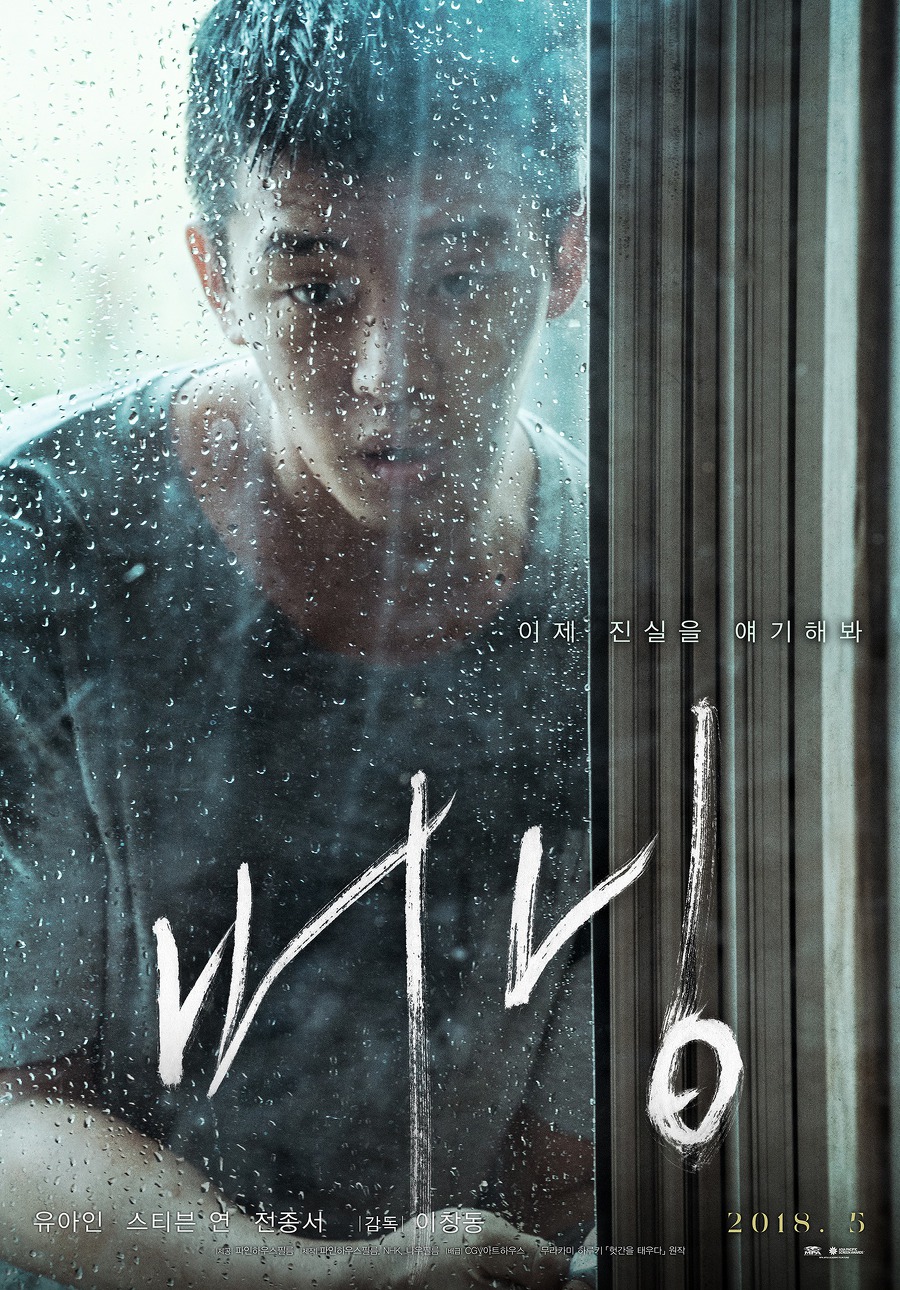
Burning posterWith the world the way it is, it’s no wonder young people everywhere find themselves lost and confused, unable to find a sense of greater purpose when all they see is futility. Eight years on from Poetry which revolved around a grandmother’s growing sense of disquiet on realising no one cares about the victim of her grandson’s transgression, Lee Chang-dong returns with a story of frustrated youth as three conflicted souls are drawn into a spiral of resentments, jealousies and forlorn hopes.

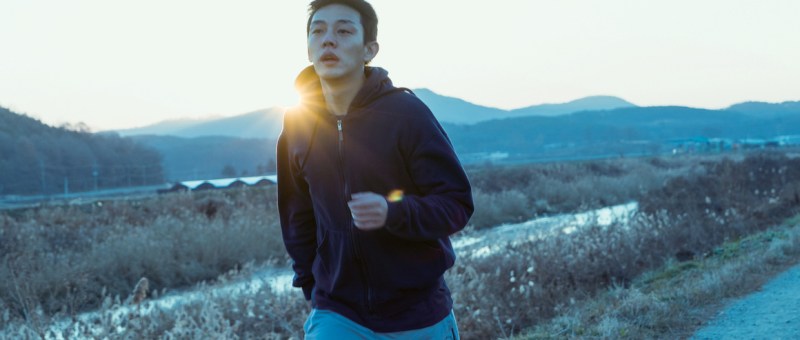
Our hero, Jong-su (Yoo Ah-in), is an aspiring writer currently working a series of casual blue collar jobs to get by in the city. One such job unexpectedly brings him into contact with Hae-mi (Jeon Jong-seo), a childhood friend from his home town he didn’t quite recognise. “Plastic surgery” she quips, though she seems happy enough to see him which comes as a surprise to Jong-su, awkward as he is. Hae-mi invites him for drinks over which she asks him a favour – to look after her cat while she goes off to Africa for a bit in response to the call of “great hunger”. Jong-su agrees, but has also agreed to go home to Paju to look after the family’s last remaining cow seeing as his dad, whom he hates, has got himself arrested after getting into a fight with a public official. Before she leaves for Africa, Jong-su begins a sexual relationship with Hae-mi which he seems to think is a sign of a deeper attachment, but when she rings and asks him to pick her up from the airport he is dismayed to find she’s in the company of another man – Ben (Steven Yeun), a handsome, sophisticated, and very wealthy Korean she was accidentally marooned with for three days in Nairobi waiting for a plane.

A man like Ben is an existential threat to one like Jong-su. He doesn’t even put up a fight when Ben, whose friend has been secretly following Jong-su’s rundown pickup all the way back to the city in his Porsche, offers to take Hae-mi the rest of the way. A farm boy from rural backwater Paju, he feels himself inferior, bumpkinish, and unrefined as Ben subtly undermines his self-confidence in order to boost his own sense of superiority. Jong-su, invited to Ben’s upscale condo for “pasta”, is instantly uncomfortable. Eventually unable to mask his rising resentment, he rudely lays into his host while smoking with Hae-mi out on the balcony by musing on how a man in early middle age can afford to live like this – cooking pasta and listening to music, driving a Porsche, owning a Gagnam apartment. In the first of many barbed comments which won’t help his cause, Jong-su asks Hae-mi what exactly she thinks Ben is doing with someone like her. She replies that he says he finds her “interesting”, but the sadness in her eyes implies that she’s already given this question more than a degree of thought.

Ben remains a cypher. Though his manner is charming, even superficially kind, there’s something unsettling about him, a kind of creeping hollowness coupled with unpredictability. Rattled, Jong-su starts going through his bathroom cupboards and finds a ladies’ makeup box and a draw full of trinkets which seem to have belonged to several different women. At the very least, Ben has not been honest with Hae-mi, but Jong-su doesn’t say anything. Jong-su, less naive, is also well aware of the way Ben has been trotting them out for entertainment value at dinner parties frequented by his wealthy friends who take in the country bumpkin freak show with cruel superiority. Ben, however, is already bored – yawning ostentatiously but making a conspiratorial show of locking eyes with Jong-su who he knows is on to him in more ways than one.

Unexpectedly rocking up at Jong-su’s rundown Paju farmhouse, Ben plants a kernel of intrigue in Jong-su’s fragile mind by telling him about his “hobby” of burning down random “greenhouses” just for the hell of it. Despite his literary pretensions, Jong-su takes Ben’s words at face value and misses the obvious subtext. Whatever Ben is or might be, men like him delight in destroying fragile things to mask their own fragility. Jong-su takes the bait and the “metaphorical” fire Ben has lit within him begins to catch.

Ben, who finds Hae-mi’s tears “fascinating” because he has never cried, says he burns things to feel his soul vibrate. Hae-mi, meanwhile, remains frustratingly distant to both men. She talks about spiritual hunger and longs to find some kind of meaning in a world of futility but also longs to disappear like an all too brief sunset. She “reminds” Jong-su of a childhood incident in which she fell into a well behind her family’s farm and eventually found salvation in the sudden appearance of his face, but Jong-su doesn’t even remember. Hae-mi is in a sense still living at the bottom of a well, staring at the sky and waiting for rescue only to find herself continually abandoned, friendless and alone.

Then again, perhaps nothing she’s told Jong-su is true. Hae-mi’s answer to want is imagination, a simple ability to “forget” a desired object does not already exist. She asks Jong-su to look after a cat who is so shy he begins to wonder if it’s real, reassured only by an empty food bowl and full litter tray. Jong-su is our “writer”, but the only thing he writes is a petition letter to get the father he can’t stand an appeal for crime he knows he committed. He is our guide to “truth” but his job is to engineer narrative – the story is his to direct and the ending his to choose. He writes because “the world is a mystery” to him, but remains trapped within his own petty preoccupations in which the full weight of his rage levels towards Ben whose existence seems so unfair.

Burdened by a strangely feudal deference, Jong-su is a fuse slowly catching light. Failed by family, he and Hae-mi are abandoned children looking for a way out. They thought they wanted out of Paju, but perhaps they were meant to be together in this place if the world were better and there were no more playboy kings like Ben, eager to do “anything for fun” in order to escape the emptiness of their existence in which inherited wealth has left them purposeless and hugely insecure despite the superficial confidence of class. Jong-su and Hae-mi chase brief moments of sunlight bounced back from the gleaming spires of an inaccessible city but find no relief or promise in its greying skies. Adapting a short story by Haruki Murakami, Lee Chang-dong paints a dizzying picture of a tinderbox world in which the rage of the oppressed little guy threatens to engulf us all while those best placed to help only want to fan the flames.


Screened as part of the 2018 BFI London Film Festival.

US trailer (English subtitles)