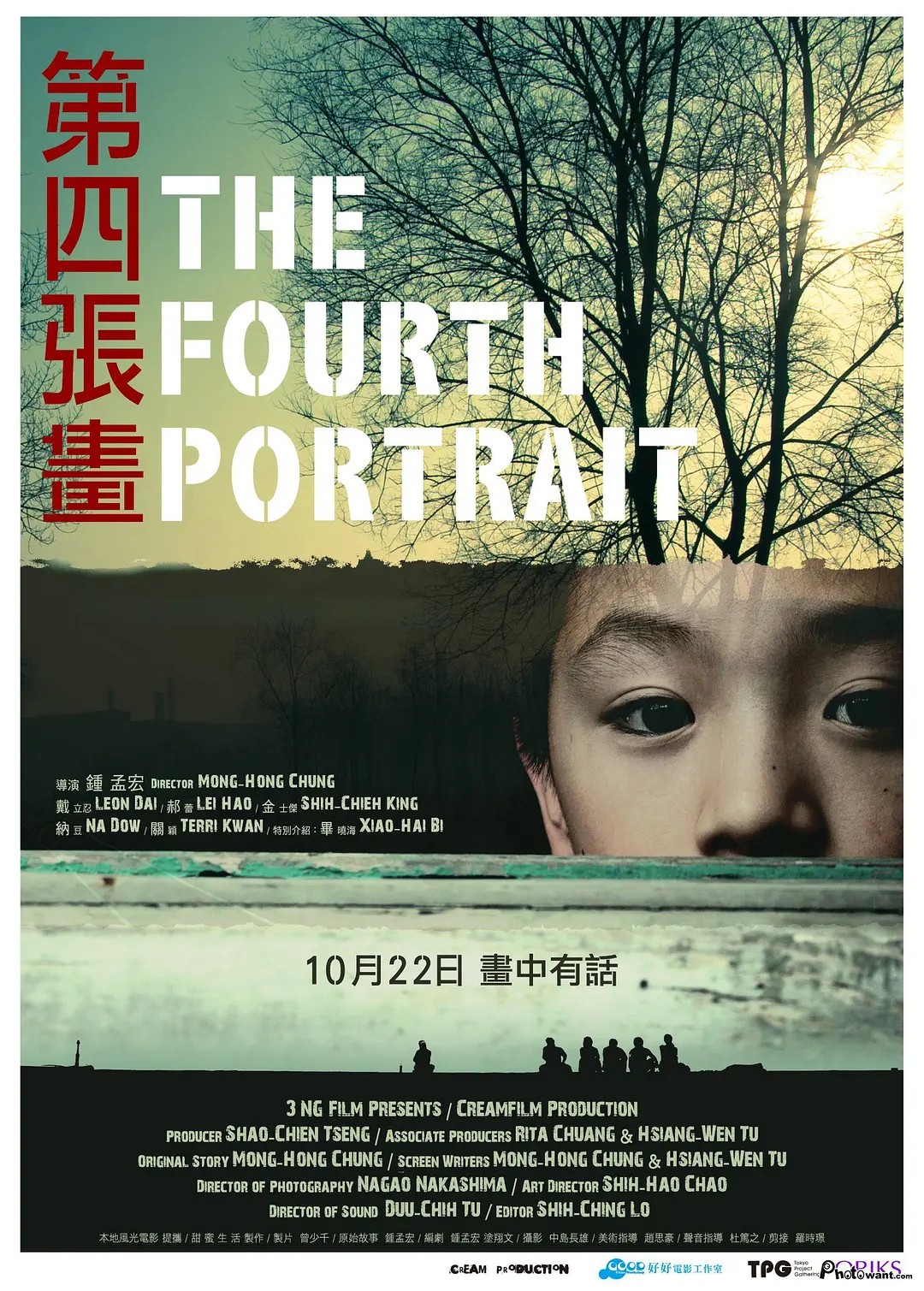
The Fourth Portrait (第四張畫, Chung Mong-Hong, 2010)

A young boy struggles to forge his own identity while lost amid the legacy of perpetual displacement in Chung Mong-Hong’s whimsical coming-of-age drama The Fourth Portrait (第四張畫). As the title implies, Chung structures his tale around four images as the boy looks for guidance through each of his relationships but perhaps finally discovers only that he is on his own and has only himself for protection yet must find the courage to try and escape even if it causes him pain. 

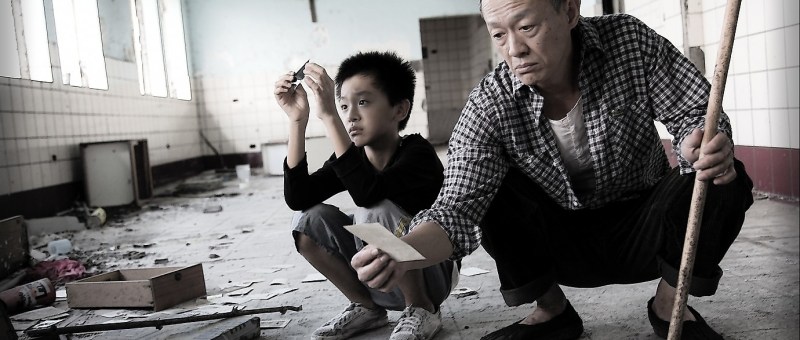
At 10 years old, young Xiang (Bi Xiao-Hai) is impossibly burdened in the way no child should be as a doctor coldly tells him that his father will soon pass, a nurse instructing him to stay put and let them know when his father is gone. Xiang impassively places a napkin over his father’s face, the undertakers bickering amongst themselves while deciding to do the funeral for free seeing as this child is now all alone and seemingly has no other family. Yet no one comes to take care of Xiang, he has to go home on his own and begins living independently eventually resorting to stealing lunch boxes at school only to be caught and scolded by a grumpy janitor who both tenderly offers him food but then roughly slaps him when he notices the boy is crying. 

As Xiang is about to become, the old man, Zhang (Chin Shih-Chieh), is also a displaced person having travelled from the Mainland 50 years previously. He takes him to scavenge abandoned buildings meditating on what it is that gets left behind, why it has value to some and apparently not to others. Xiang himself was abandoned by his mother who took his older brother with her but chose to leave him with his father, wondering perhaps if he is valuable or not. Technically if not literally orphaned, Xiang is later reunited with his mother, Chun-lang (Hao Lei), but is then displaced himself, forced to move to the city and into the house she shares with her second husband and infant child. Like Zhang his mother came from the Mainland in search of a better life she did not find and is living with a sense of disappointed futility trapped in her marriage to a dejected and violent man (Leon Dai) while forced to support the family through sex work at a nearby hostess club frequented largely by Mainland gangsters. 

Unanchored and insecure in his new environment, Xiang begins having strange dreams of his apparently absent brother Yi but his attempts to discover the truth about the past only further destabilise the foundations of his new home. His mother cannot fully embrace him because of her guilt over leaving him behind while unable to fully process the reality of what may have happened to Yi too frightened of the truth to risk poking around. His stepfather meanwhile is a haunted man, unable to work and seemingly the primary carer to their small child though neither them are ever really seen paying much attention to the baby. When Chun-lang tells Xiang that he is a stranger in their house, that she is no longer the mother she once was because she has married another man and has another child with him, she does so perhaps partly to encourage him to leave advising him to steer clear of his stepfather in a bid to keep him safe yet blaming herself for all the tragedy which has befallen her accepting it would not have happened if she had not “messed up” her life. 

Perhaps this is why Xiang finds himself bonding with a decidedly strange middle-aged man he meets by accident in a public toilet. “Big Gun” paints himself as something of a big brother figure, suggesting that they can drift together travelling around on his moped. His conduct towards the boy is extremely inappropriate in more ways than one involving him in his life of petty crime, yet Xiang finds in him a sense of acceptance that he doesn’t get from the other adults along with a new sense of independence. Yet Xiang’s illusions are eventually shattered twice over, the first revelation paving the way for a greater loss of innocence in discovering the truth about his brother while the second perhaps leads him to feel that he really is alone, continually displaced, and entirely unanchored in a world with offers little prospect of warmth, affection, or a place to belong. 

Like Zhang and his mother, Xiang is fails to settle in contemporary Taiwan lost amid a stream of constant dislocations and bound only for endless wandering. Yet staring into a mirror preparing for his fourth portrait he perhaps begins to forge an image of himself informed by those he’s drawn before and giving him the sense of confidence to survive the emptiness of the world around him. Beautifully shot with a lingering ethereality, Chung’s enigmatic storytelling coupled with the whimsical score lend a note cheerfulness to what in many ways is a fairly bleak situation but perhaps reflects the surreality of the boy’s life in his constant quest for belonging. 


International trailer (English subtitles)

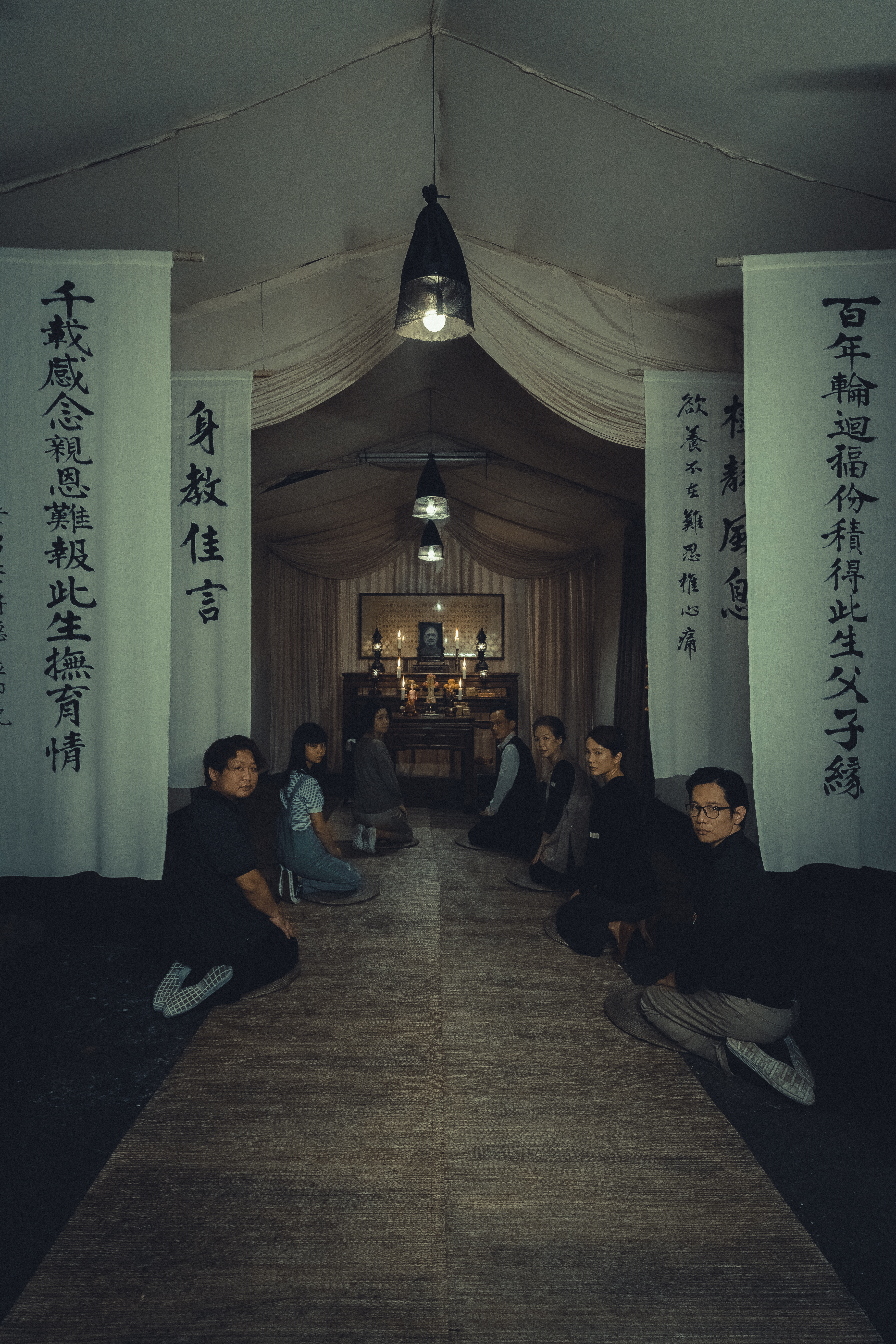
The Funeral (頭七, Shen Dan-Quei, 2022) 

“They’re your family, they won’t hurt you anyway” a little girl is consoled on suggesting that her relatives’ home may be haunted but it’s a statement which seems remarkably naive given the toxic situation at the centre of Shen Dan-Quei’s gothic drama, The Funeral (頭七, tóuqī). There may well be supernatural goings on, but the root of the problem remains familial exile and the outdated social codes which lead to it causing nothing but misery and loneliness for all concerned. 

Single mother Chun-hua (Selina Jen Chia-hsüan) hasn’t seen her family in a decade. She works several jobs trying to support herself and her daughter Qin-xuan (Bella Wu) who is seriously ill and on the list for a kidney transplant. When in the opening scene she begins to suspect a ghost has entered the convenience store where she works nights, it’s impossible to tell if she’s actually being haunted or is just tired and anxious. In any case, she’s later let go from that job after a co-worker complains about her falling asleep on shift which is right about when she gets a call from her estranged uncle (Nadow Lin) to let her know her grandfather, whom she had been very close to as a child, has passed away and she should come home for the funeral. Chun-hua is however reluctant because she evidently fell out with her authoritarian father (Chen Yi-Wen) when she left home and returning now is awkward in the extreme. 

Having set the scene with Chun-hua haunted in the city, Shen moves the action to the creepy gothic mansion where she grew up which does indeed seem to be a spooky place defined by its hostile atmosphere. Her father wastes no time telling her that she’s not welcome, but Chun-hua holds her ground and insists on being allowed to pay her respects to the only member of the family who seems to have shown her any affection. Later flashbacks suggest a concrete cause of the family’s disintegration, but then Chun-hua’s father seems to have taken against her even in childhood apparently refusing to allow her to celebrate her birthday with her sister seemingly also resentful of her for no clear reason. Though her mother clearly loves her, she cannot defy her husband and is unable to defend her daughter. The only one of the family privately happy to see Chun-hua, even her mother eventually tells her it would be better if she returned to Taipei as soon as possible given the awkwardness of the situation. 

Then again, as we later learn, she may have another reason in mind though this attempt to reframe the family’s animosity towards Chun-hua is a little problematic in suggesting they are cruel because they love her and want to her leave the toxic environment of the house to save her from its poisonous legacy. The grandfather may have been the only one to show her love, but it is his failings that have created division within the family causing some to feel rejected, excluded from the circle for no fault of their own. Her father’s rejection of her is in its own way similar, even if we later see him remorseful realising that his authoritarian parenting has cost him his daughter.

There may be a lot of supernatural action with the taoist priest permanently engaged in rituals over the grandfather’s body, but the darkness and resentment is purely human, born of loneliness and rejection in a lack of love and respect between those who are related by blood. Qin-xuan is at a disadvantage in knowing nothing of her extended family or mother’s relationship to them, she also rejected on arriving for the funeral. The place is indeed haunted beyond the scuttling figures that seem to catch their eyes and laden with the heavy atmosphere of the family’s inherent toxicity. But then through this extremely dark event, the relationship between mother and daughter is in its own way strengthened not least in Chuan-hua’s selfless determination to save her daughter from her own familial curse not to mention her medical precarity. Even so, the melancholy conclusion may hint that the toxic familial curse cannot be completely cured and is destined only to repeat itself in a perpetual cycle of hauntings. 


The Funeral screened as part of this year’s New York Asian Film Festival.

Original trailer (Traditional Chinese/English subtitles)

Images: © PINOCCHIO FILM CO. LTD

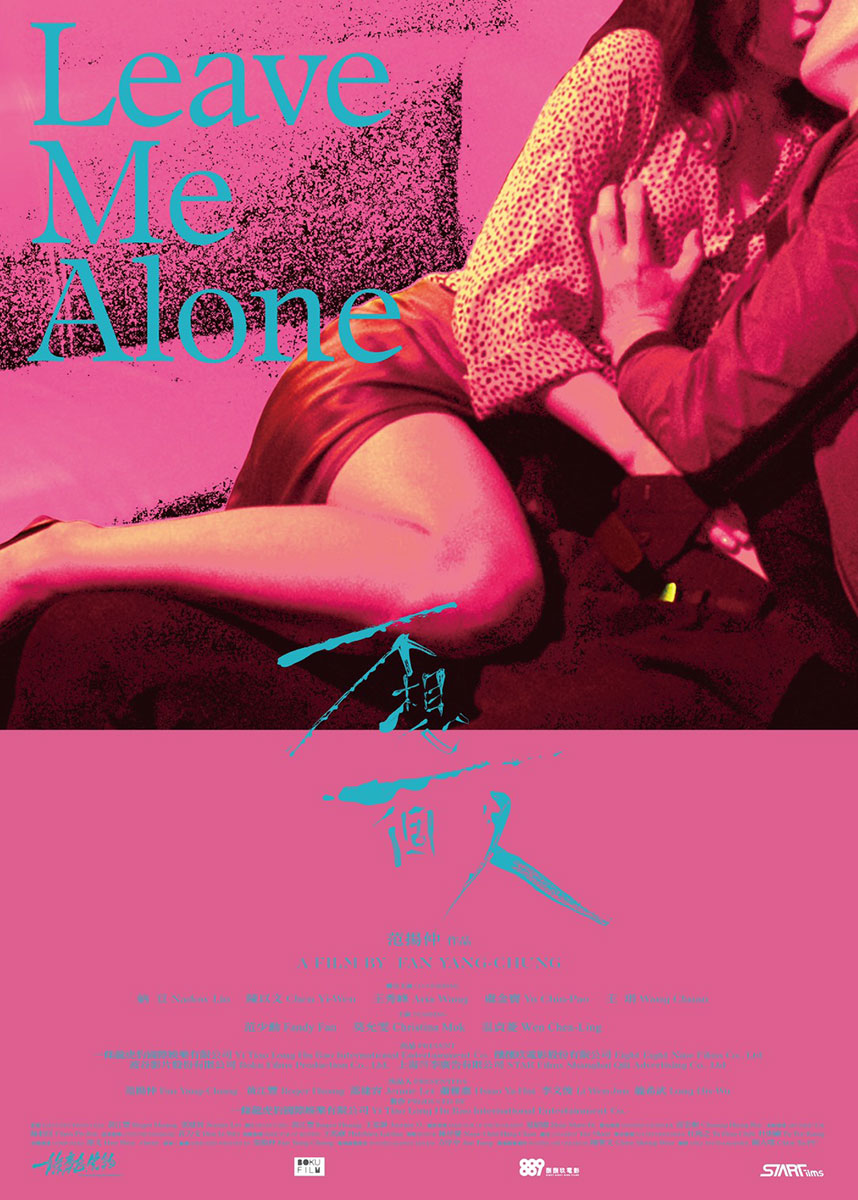
Leave Me Alone (不想一個人, Fan Yang-chung, 2021)

Lonely souls seek impossible connection in a rapidly disintegrating world in Fan Yang-Chung’s steamy urban drama, Leave Me Alone (不想一個人, bùxiǎng yīgèrén). The title may in its way be misleading, the original Chinese meaning something more like “I don’t want to be alone” hinting at the misdirected longing that informs all of the relationships in play, but is in another way the thing each of them fear – that they are being left behind while everything around them seems to be on the brink of collapse. 

Petty street pimp Loong (Fandy Fan Shao Hsun) literally lives in a disused building that’s about to be torn down, while his side gig involves working with a local gangster to pressure residents of an old-fashioned apartment block to sell up so the land can be redeveloped. Loong has a rather unsentimental, amoral approach to his work in finding the body of an old man and pressing his finger on the documents to make it look like he changed his mind right before died, something which seems all the colder on realising that his own father lives in the building. His gangster boss Brother Chao ominously reminds him that’s something he’ll need to take care of. 

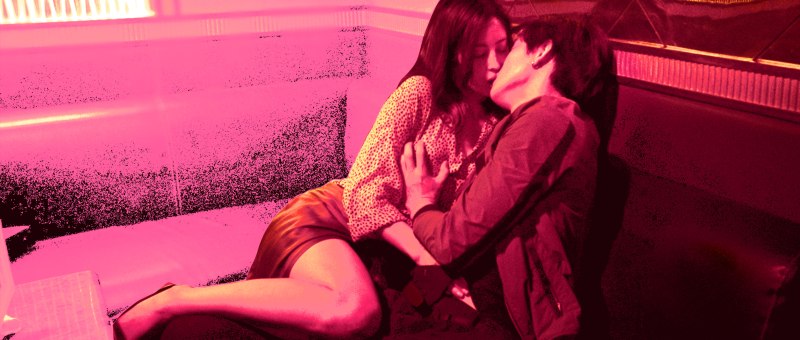
In other ways eager to please, Loong’s involvement with Brother Chao is part of his aspirational desire to live a better life which also in part explains his fascination with beautiful gallery owner Olivia (Christina Mok) who is also in her own way lonely having discovered that she’s carrying the child of her married lover whom she’d believed was ignoring her only to discover the reason he’s not been answering her calls is that he’s in hospital in a coma and unlikely to wake up. Both Loong and and Olivia are repeatedly blocked from getting what they want, she prevented from entering her lover’s hospital room on the orders of his wife and he later rejected from a fancy apartment block by the same set of security guards instructing him to take the back stairs as if reminding him of his status and the class difference between himself and Olivia even if he’s smartened himself up while continuing to exploit other women for his living.

He does perhaps undergo a minor pang of conscience when Olivia tells him not to treat her like one of his sex workers, but later seems to have given up on achieving a more mainstream success after overplaying his hand with Brother Chao and paying a heavy price for his hubris. Olivia meanwhile entertains other men in an attempt to overcome her loneliness, sending each of them away with the excuse that her friend is coming over though of course he isn’t and doesn’t respond to her messages. As she and Loong drift into an affair, Oliva becomes a kind of tourist in his world raising eyebrows at the karaoke bar where the girls entertain Brother Chao’s guys, but Loong is hopelessly out of place in her upperclass society hovering in the background at a swanky party and eventually alienating another guest he felt was belittling him by offering to set him up with one of his girls. While he longs for Olivia as a symbol of the high life he feels is denied to him, so Chin-shah (Wen Chen-ling) his casual squeeze longs for him looking perhaps for protection or uncomfortably for the familial while he largely thinks only of himself. 

In any case, they each live in a world set to disappear. In one of the earliest scenes, Olivia watches as workmen dismantle the current installation in preparation for the next, her own image shattering as a mirror is smashed by a workman’s hammer, while the disused apartments and obsolete housing complexes familiar to Loong must too eventually come down leaving him forever displaced in a rapidly gentrifying city. “You’re too poor and you can’t handle me” Olivia eventually reflects after asking Loong if he’d always be there to take care of her making it plain that they occupy two different worlds while temporarily trapped in the same liminal space by their shared loneliness and a longing for something else that they don’t think they can have. They must try to find a way to move on but are otherwise forced deeper onto the paths they’d already chosen while trapped together bound by their shared yet opposing desires. In Fan’s stratified city of frustrated longing, love may not be so much the cure for loneliness as its ultimate expression. 


Leave Me Alone screened as part of Osaka Asian Film Festival 2022

Original trailer (English subtitles)