Laugh, Everyone! (みんな笑え, Taichi Suzuki, 2025)

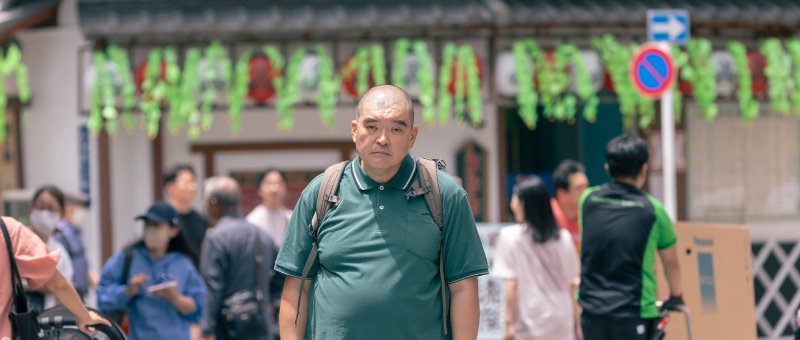
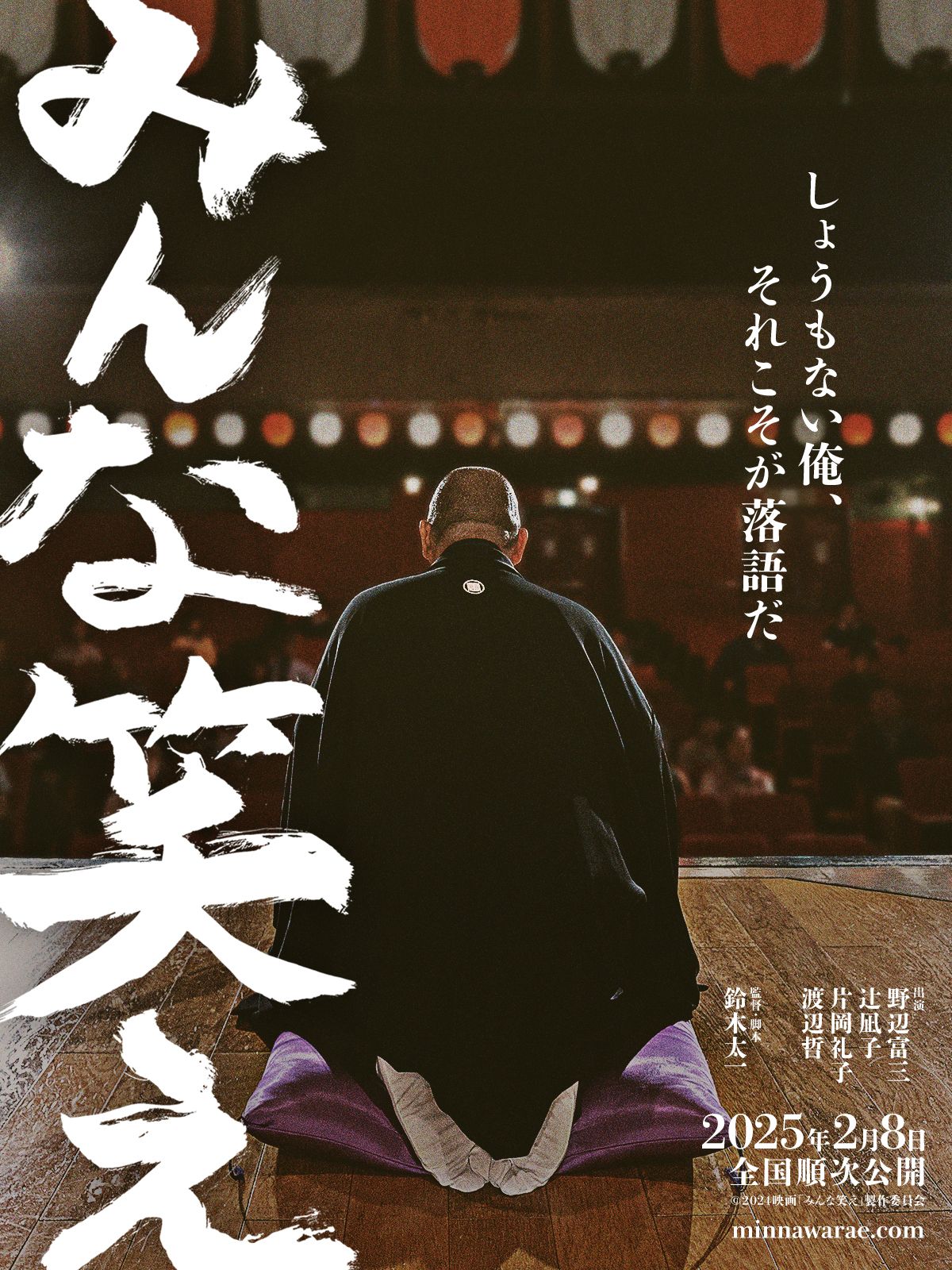
A down of his luck second generation rakugo storyteller begins to discover a new way of life after meeting an aspiring female comedian in Taichi Suzuki’s lighthearted dramedy, Laugh, Everyone! (みんな笑え, Minna Waremashit). The title is taken from a moment of madness in which a resurgent Tamon pleads for everyone to just laugh rather than being at each other’s throats or feeling like they want to die, but that’s something he himself may not be able to do until he’s truly made peace with his demons.

Chief among them would be his father, Kenzo, a rakugo master who’s tormented and bullied him his whole life. In general, rakugo storytellers recite a canon of classical tales that have been passed down since the Edo era, but despite having inherited his father’s stage name, Tamon avoids performing the classical repertoire and sticks to original material. His acts don’t seem to please the audience, and it’s clear that his father’s other disciple, Kannosuke, resents that it was Tamon who became the official heir despite having no talent when he was the rightful successor. Unfortunately, Kanzo failed to plan for his retirement and now has dementia, meaning that he can no longer perform. Unable to make money through rakugo, Tamon has a part-time job in a warehouse to try to make ends meet all while being berated by Kanzo for bing a useless failure.

There are some touching moments later on in which Kanzo bonds with the son of his carer and plays with him as if he were Tamon, hinting that he might have liked to have been a different kind of father and have a different kind of life if it were not for the pressure of passing on his rakugo name. For his part, Tamon has become timid in the extreme and has been running away from anything challenging or unpleasant his whole life. In fear of not living up to his father’s legacy, Tamon avoids the old stories and sticks to telling the same original tale he’s been doing for the last 30 years. 

But if his problem is that he can’t master the classics, Kiko’s is that she can’t innovate and all her original material is pinched from somewhere else. She and her comedy double act partner Chi-chan have been trying to break into television, but can’t catch a break with their largely improvised act. While auditioning, they encounter entrenched sexism as the male panellist tells them that women aren’t funny and don’t take comedy seriously. Kiko’s mother Yoko experiences something similar at her bar where her sleazy backer is all over a younger hostess with whom he eventually hopes to replace her, while Chi-chan has also fallen prey to a predatory man working at a host club. She has been financially supporting Joe to help him achieve his dream while he forces her into sex work to make him more money, pushing her to quit comedy and work for him full-time. This kind of exploitation has regrettably become so common that a specific law was passed in 2025 to prevent young male “hosts”, who work in bars where they charm women into buying drinks and gifts, forcing their patrons into debt and then sexual exploitation. 

Nevertheless, Kiko strikes gold when she hears Tamon’s baseball-themed routine and realises it’s the same one her mother used to listen to on cassette tape. Reworking it as a manzai routine, she sees a way through her creative block even if it’s sort of plagiarism. After getting his permission to use his material, Kiko begins to think of Tamon as a mentor while he almost thinks the same of her as they encourage each other through their comedic failures even while working in opposite directions. A kind of rapport emerges between them as they were actually an accidental manzai double act along with a more positive paternal relationship than that seen between Kanzo and Tamon which is fuelled by a fear of obsolescence, ego, and resentment. Through his friendship with Kiko and rekindling that with her mother, Tamon eventually gains the courage to stop running away and face himself in classic rakugo both making peace with the complicated relationship he had with his father and carving out a new identity for himself in emerging from his father’s shadow. Sparrows fleeing the cage, both he and Kiko rediscover the healing power of laughter and with it the courage to face their troubles head on rather than continuing to run away in fear of failure and miss out on the joy the craft can bring to those around them.


Laugh, Everyone! is available to stream until 14th September 2025 courtesy of Chicago Japan Film Collective.

Trailer (English subtitles)

Skeleton Flowers (かそけきサンカヨウ, Rikiya Imaizumi, 2021)

The increasingly prolific Rikiya Imaizumi has become most closely associated with zeitgeisty youth romance accurately capturing the fears and anxieties of 20-somethings in contemporary Japan but brings his characteristically mellow touch to the classic coming-of-age tale in adapting Misumi Kubo’s short story Skeleton Flowers (かそけきサンカヨウ, Kasokeki Sankayo). In contrast to the gloominess of the title, teenage angst is never where you’d expect it to be as the variously pre-occupied pair at the film’s centre strive to deal with their problems with maturity and mutual compassion. 

You might for instance expect Yo (Sara Shida) who has been raised by her father, Nao (Arata Iura), since her mother left the family when she was three to feel jealousy or resentment when he sits her down and tells her that he’s fallen in love and wants to get married, especially as the woman he’s fallen in love with, Yoshiko (Akiko Kikuchi), has a small daughter of her own, Hinako. Attempting to be sensitive, Nao frames the new arrangement in a positive light in that Yo will be have more free time to be a regular teen and hang out with her friends rather than skipping out on after school clubs to take care of the household chores, a spin which could backfire in that Yo has obviously been used to being the lady of the house and might feel as if a responsibility she was proud of carrying is being taken away from her or that she’s being displaced by the new maternal presence of Yoshiko. She may in fact feel a little of this, but rather than lashing out or rebelling against the change in her familial circumstances she does her best to accept it with good grace while simultaneously prompted into a reconsideration of the relationships between parent and child meditating on the absence of her birth mother and wondering how and why she could have come to leave her behind. 

Riku (Oji Suzuka), her sometime love interest, had started a discussion in their friendship group about their earliest memories Yo unable to come up with anything on the spot but later remembering her mother carrying her into the forest and showing her the skeleton flowers of the title which appear bright white when dry but gradually become transparent as they absorb water. Later she remembers something else unsure if it’s a memory or a dream, a feeling of being suspended in mid-air as her parents argued as if everyone had forgotten she existed. Riku too frequently states that he’s “nothing at all”, feeling himself lost and directionless after being diagnosed with a heart condition later forced to accept that his life will never be the same as it was and his choices are now limited in ways they might not have been before. His health anxiety ironically leaves him emotionally numb, unable to identify let alone express his feelings as he becomes close not only to Yo but another, much more direct, girl in his class Saki (Tomo Nakai) who later does him the favour of explaining exactly what his problems are hoping to jolt him out of his emotional inertia while taking him to task for having been unintentionally condescending in his innate kindness. 

It’s this innate kindness that eventually sees both the teens through, each approaching their various worries with a mature compassion. Riku had felt uncomfortable in his familial home and jealous of Yo’s “real family” as she comes to accept her new relationships with Yoshiko and Hinako, but himself comes to understand the complicated relationship between his overbearing grandmother and lonely mother as one of mutual support getting another tip from Yoshiko that even if he feels has no particular talents, also jealous of Yo’s artistic prowess, his ability to support those around him is a talent in itself and an important part of the whole. A robust emotional honesty and the willingness to think things through calmly eventually lead stronger bonds between all concerned, Yo forgiving her birth mother while also embracing a new maternal relationship with Yoshiko, while Riku gains a new perspective of his own and even if he still hasn’t quite learned to identify his feelings is more comfortable with expressing them directly. A gentle, empathetic coming-of-age tale Imaizumi’s teenage drama roots itself in a world of fairness and compassion that allows each of the teens the space to figure themselves out while helping others to do the same no longer transparent in the rain but whole and fully visible not least to themselves. 


Skeleton Flowers streams in the US until March 27 as part of the 14th season of Asian Pop-up Cinema

Original trailer (English subtitles)

Baby Assassins (ベイビーわるきゅーれ, Yugo Sakamoto, 2021)

“Drugs and pimping are outdated. We’re in the age of “moe”” according to a surprisingly progressive gang boss who takes his son to task for his sexism and insists that even the yakuza has a duty to create a comfortable working environment for women. Yugo Sakamoto’s anarchic deadpan action comedy Baby Assassins (ベイビーわるきゅーれ, Baby Valkyrie) is at heart a slice of life slacker drama about two young women reluctantly trying to make their way towards adulthood only the two young women are also elite assassins recently graduated from high school having been raised as coldblooded killers. 

For whatever reason it’s decided that the shy and socially awkward Mahiro (Saori Izawa) and the manic extrovert Chisato (Akari Takaishi) should become roommates occupying a furnished apartment paid for by their handler while they cover their other expenses through part-time jobs that will help them figure out how to live as “members of society”. The problems they face are perhaps those faced by many in the contemporary era just trying to make it through an unfulfilling side gig without killing anyone only for them the stakes are higher as Chisato discovers on braining a customer and strangling a moody coworker without realising she’s not just fantasising. Mahiro meanwhile finds herself entering a daydream in which she offs the combini manger interviewing her after his boring rant about kids today who think they can earn a living playing video games only to realise the store is staffed by yakuza-esque minions determined to avenge their boss. 

Already very efficient in their killing game, the girls never need to worry about cleaning up after themselves even if Chisato does get a lengthy lecture from the long suffering Mr. Tasaka who as it turns out has a lot of unsolicited advice about how she’s doing her job wrong or at least in ways which are inconvenient to him. Nevertheless while trying to live their normal lives they wind up sucked into gangland intrigue having accidentally offed a major supplier and thereafter engaged in a vendetta with equally crazed yakuza daughter Himari (Mone Akitani) who in a recurring motif proves much more in tune with contemporary gangsterdom than her “sexist” bother Kazuaki (Satoshi Uekiya). 

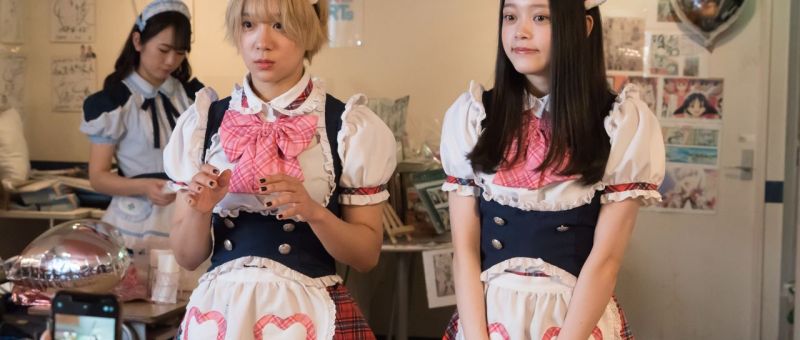
Gangsterdom has indeed changed, the boss declaring that they need to find a more “female-centric” business which is what brings them to a maid cafe as they declare themselves mystified by “moe”, rapidly becoming extremely irritated by the sickly sweet aesthetic of the cafe which requires them to order food through a series of annoyingly cutesy codewords while young women in ridiculous outfits call them “master” and satisfy their every whim. In some ways the Baby Assassins are a subversion of the kawaii ideal while also to some extent embodying its essential traits in their mix of infinite competence and adorable cluelessness, Chisato forever forgetting what’s she’s done with her weapons while Mahiro constantly mutters to herself under her breath. 

For them, killing is just another job which they mostly enjoy but can also be annoying, just like each other’s company. A mismatched pair, their dynamic strangely recalls Saint Young Men only they’re highly trained assassins trying to perfect a cover identity rather than peaced-out deities engaged in an ethnological study of life on Earth. They have a brief falling out over the same thing most roommates fight about, one feeling the other is not pulling their weight, Chisato irritated by Mahiro’s inability to find a job and Mahiro frustrated that Chisato devotes too much time to her side gig and not enough to their main job as killers for hire. Meanwhile, they’re suddenly plunged into a very adult world of bills and taxes and insurance, their handler promising to handle some of that for them because ironically enough they’re much more afraid of the taxman than they’ve ever been of the police. 

Surreal and filled with deadpan humour not to mention expertly choreographed fight sequences by Hydra’s Kensuke Sonomura, Baby Assassins is a perfectly pitched coming-of-age tale in which two young women attempt to find a place for themselves while contending with a still patriarchal society, eventually discovering a complementary sense of solidarity in their opposing natures as they come together to clean up their own mess while defiantly striking out for their futures as “members of society” whatever that may mean. 


Baby Assassins screened as part of this year’s Glasgow Film Festival.

Original trailer (English subtitles)

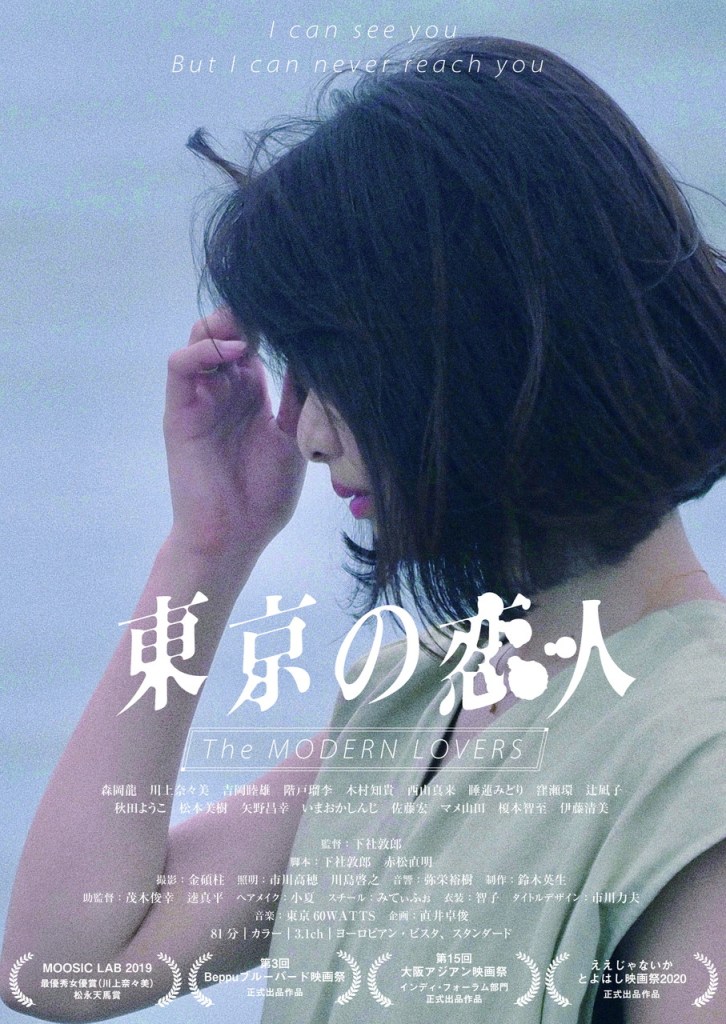
The Modern Lovers (東京の恋人, Atsuro Shimoyashiro, 2019)

Where now the dreams of youth? It may be impossible to escape a regretful middle age, wondering what might have been if only you knew then what you know now, but for the heroes of Atsuro Shimoyashiro’s The Modern Lovers (東京の恋人, Tokyo no Koibito) the pain seems all the more acute. “Today’s the day our youth ends” a brokenhearted woman laments, trying to make peace with her choices but finding that her return to the past may have done more harm than good. 

Tatsuo (Ryu Morioka) is a 31-year-old salaryman, married with a baby on the way and living in provincial Gunma. With the anxiety of impending fatherhood on his mind, he’s surprised to receive a message from his university girlfriend, Marina (Nanami Kawakami), who wants to reconnect. Telling his wife he’s going on a business trip, Tatsuo decides to spend the weekend in Tokyo, staying with another friend from uni before meeting up with Marina for a Sunday in the city reminiscing about old times. 

Like Tatsuo, his old college friend Komazawa (Tomoki Kimura) has long since given up the dream of becoming a filmmaker. A breakdown at 27 has apparently led to a diagnosis of bipolar disorder leaving him unable to hold down a job and dependent on his wife, Seiko (Maki Nishiyama), who supports both him and his step-daughter Shizuko through sex work while Komazawa has become an idle alcoholic. Despite his disappointment, Tatsuo spends the evening bonding with the local bar lady who claims to be able to see the future before leaving early in the morning to meet Marina who suggests revisiting the seaside they went to years before. 

Very much ready to step back into the more innocent past, Tatsuo has brought with him a tape of a song they used to listen to way back when and wastes no time in reassuming the poses of his 20-year-old self, sunshades and all. Marina, by contrast is self-consciously cute but mature, if perhaps sad. Tatsuo starts to tell her that he gave up his filmmaking dreams, married a good woman, and took a regular salaryman job at the family firm, but fails to complete the thought. Marina meanwhile casually remarks that she married a wealthy man but hints that she did so largely for convenience and material comfort rather than love. 

“We never get to marry the woman we love the most” Tatsuo’s strangely boys will be boys brother-in-law (Mutsuo Yoshioka) sighs, commiserating with Tatsuo’s lament for his disappointed youth and failure to make his filmmaking dreams a reality. We discover that an early success in a scriptwriting competition gave him an inflated sense of possibility, and that his desire for success was largely a desire to impress his girlfriend. Wounded male pride in his sense of artistic failure eventually convinced him he had to break things off while she silently cursed him, jokingly sentencing him to 18 years of solitude in a playful reference to a Tai Kato film. Now he realises his foolishness and is filled with regret in having settled for a conventional middle-class life as a husband and father.

Marina, meanwhile, is feeling something much the same in trying to achieve closure on the past before she becomes a mother. After breaking up with Tatsuo, she drifted through nude modelling and ended up the trophy wife of a wealthy man she doesn’t love, pegging her hopes on material comfort and hoping that love will come later. “I’m glad you’re happy now” a bar owner and former Instagram fan tries to congratulate her, but all Marina can do is smile sadly and ask her similarly troubled companion if happy is what she looks.    

“I’m not young anymore, I can’t live for a dream” Tatsuo accepts, but living on a dream is all they’re doing, recalling the time when they were “modern lovers” in Tokyo kidding themselves that they were urban sophisticates when perhaps all they did were the kinds of things unsophisticated suburbanites do like hang out at batting cages and go to barbecue restaurants. It’s too late to turn back now, but the past is a difficult trap to escape and perhaps what they long for is not so much the love cut off in its prime but a return to the possibilities of youth. Meeting again reawakens the desire for something more out of life than life may now have to give them, but this is day that youth ends, hitting the end of the road in a slow car crash of realisation that regret is the price of age.


The Modern Lovers was screened as part of this year’s Osaka Asian Film Festival.

Original trailer (no subtitles)

Retro hit Love You, Tokyo by Akira Kurosawa (not that one!) & Los Primos which recurs frequently throughout the film

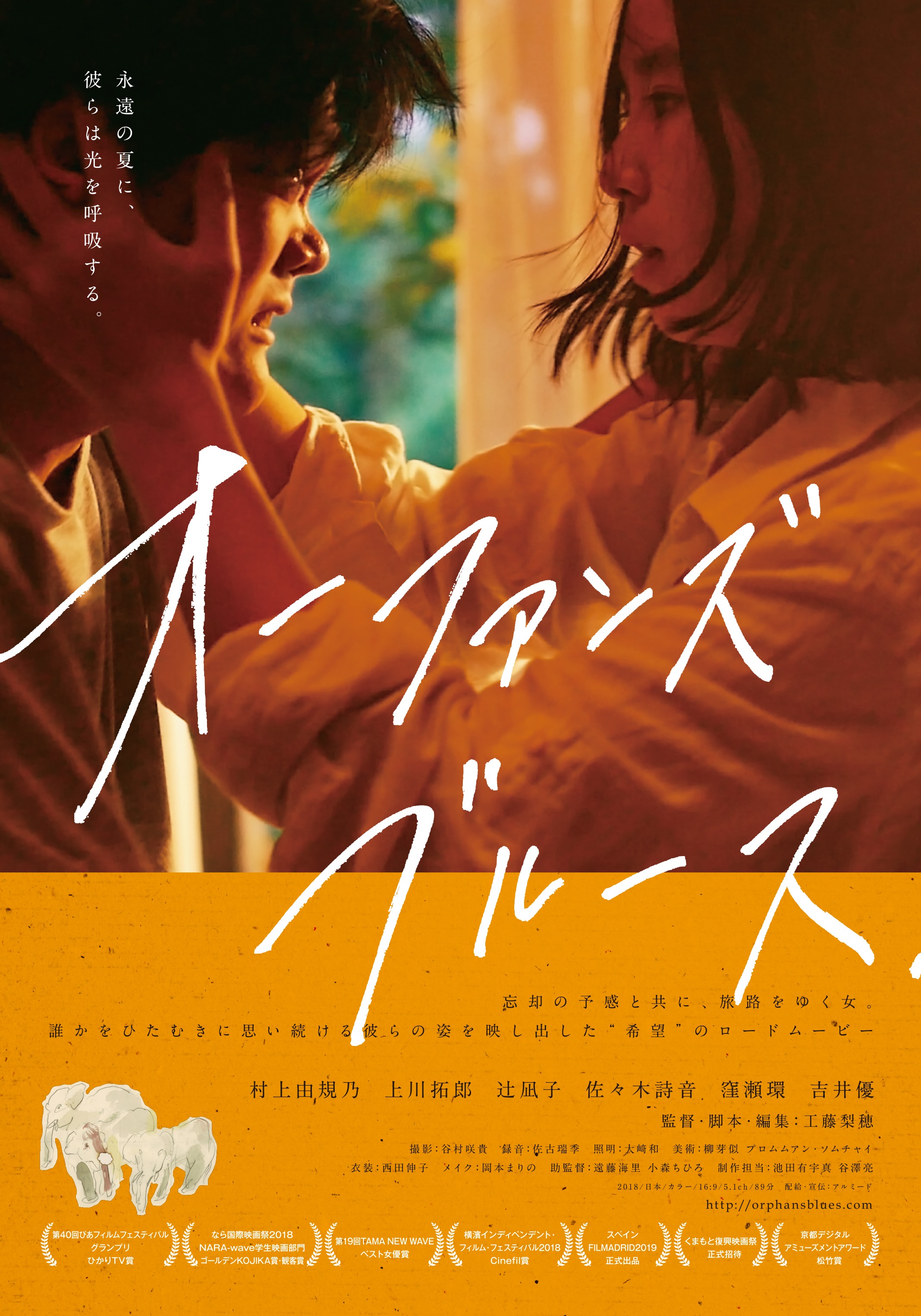
Orphan’s Blues (オーファンズ・ブルース, Riho Kudo, 2018)

Orphan's Blues posterThe past becomes an irresistible trap for a collection of variously troubled souls in Riho Kudo’s Pia winning feature Orphan’s Blues (オーファンズ・ブルース). “Things change” the heroine laments, unable to keep up with the relentless passage of time as her memory begins to collapse in on itself, leaving only nostalgia behind. A poetic exploration of grief, rootlessness, and trauma, Kudo’s bold debut sends its fugitive protagonists on a sad road trip into the long buried past as they attempt to dig up their childhood innocence in escape from an intolerable present.

Emma (Yukino Murakami), a middle-aged woman making a living with a tiny book stand at the side of the road in a small town, has been experiencing unexplained moments of memory loss – forgetting to place a customer’s order, leaving taps on, repeating herself having forgotten that she’s asked this question several times before. Losing the present sends her back to thoughts of the past as evidenced by a picture of a pack of elephants drawn by her childhood friend, Yang (Yu Yoshii), with whom she grew up in the same orphanage. Longing for that same closeness, she decides to track him down but a visit to Chinatown proves fruitless, as does an attempt to call in at the last address she had. Determined to find out what happened to Yang, she reconnects with another friend, Van (Takuro Kamikawa), who is in the process of fleeing to Tahiti with his girlfriend Yuri (Nagiko Tsuji) after stealing some gangsters’ money. When that doesn’t work out they end up accompanying Emma to a small inn run by a woman, Luca (Tamaki Kuboso), who was once in a relationship with Yang, and where a mysterious young man, Aki (Shion Sasaki), is currently staying.

All of our protagonists, bar perhaps Yuri, have a prominent burn somewhere on their body. Emma’s is on her left shoulder – a scald mark she keeps rubbing at times of stress. Van has a scar from a cigarette burn on his right arm, while Luca has what looks like a brand where a wedding ring might once have been worn. Even Aki has some kind scar on his right wrist, conveniently hidden by his long-sleeved shirts. Each of these people is in some way connected by the absent Yang, desperately in search of him even if some perhaps are more aware than others what might have befallen their absent friend.

Luca, who has a series of elephant tattoos across the nape of her neck, recounts that Yang once told her that elephants separate from the pack after receiving a premonition of their deaths. To spare the others the suffering of seeing them pass away, they leave before they go. Yang, they posit, may have followed their example but if he has all he has done is provoke additional suffering among his confused friends. Emma struggles to remember, frustrated by her inability to stay in the present while being pulled towards the past, feeling as if she’s missing some vital clue which will explain everything.

Meanwhile, the tensions between the five residents at the inn ebb and flow. Yuri, who never knew Yang and is beginning to fear she and Van will never get to Tahiti after all, feels herself excluded from the ongoing drama. She resents the closeness between Van and Emma, irritated that only Emma knows how to calm him down in the midst of emotional meltdown, while wondering how long he’s going to keep her waiting in this strangely liminal space caught between a past she never knew and a possibly unattainable future.   

Waiting is however where they are. Van wants to go back, return to a happy place the three childhood friends once travelled and dig up something they buried but can no longer remember. Emma, confused, eventually finds herself rooted in a delusion of the past, unable to see the present clearly while Van is left with little choice other than to abandon himself to facilitate her temporary happiness. Scarred, they run from a disappointing future into childhood nostalgia unable to reconcile the adults they’ve become with the children they once were. Literally as well as figuratively orphaned, they remain adrift with no clear place to belong or return to. Subtle and poetic, Kudo’s beautifully lensed debut is an achingly melancholy piece but one which perhaps finds hope in the solidarity of the lost as much as it suggests there is no path forward for those who can only look back.


Orphan’s Blues screens in New York on July 28 as part of Japan Cuts 2019.

Original trailer (English subtitles)