Iwane: Sword of Serenity (居眠り磐音, Katsuhide Motoki, 2019)

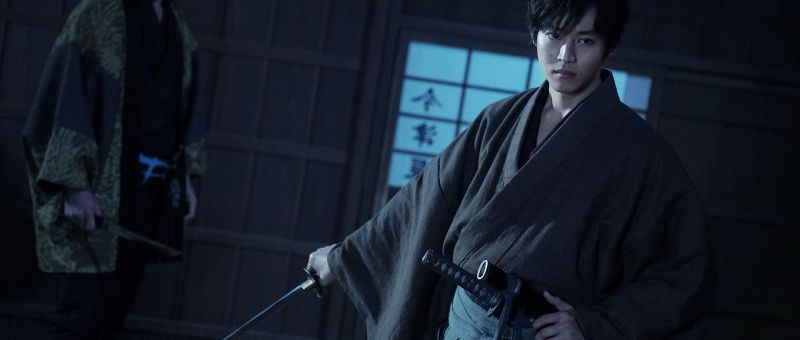
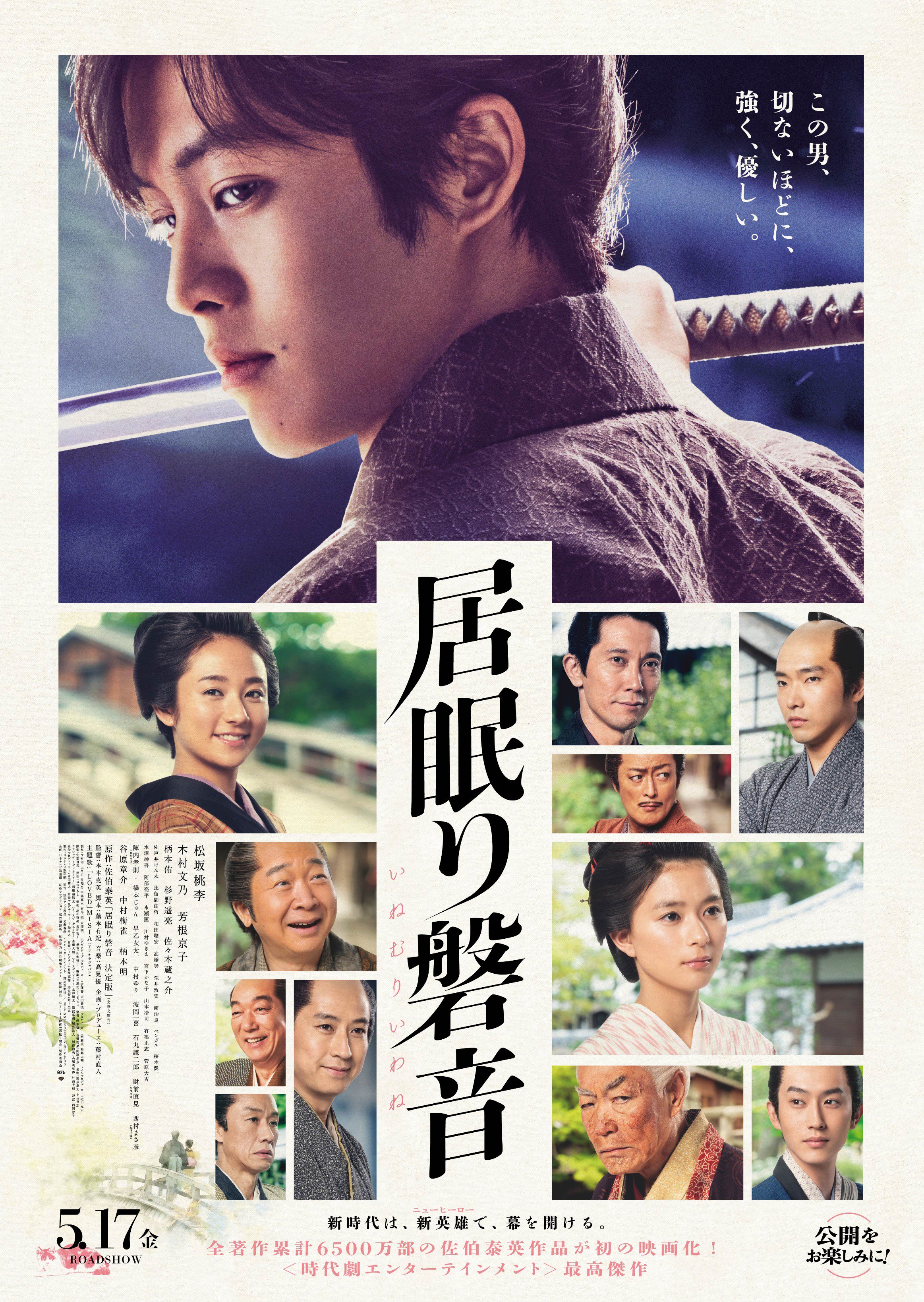
The contradictions of the samurai code conspire against one noble-hearted young man in Katsuhide Motoki’s adaptation of the long running series of historical novels by Saeki Yasuhide, Iwane: Sword of Serenity (居眠り磐音, Inemuri Iwane). Yet this truly serene samurai is a stoical sort, learning to bear his pain with fortitude while standing up for justice in an increasingly corrupt Edo where money rules all while an ascendent merchant class continues to challenge the fiercely hierarchical social order. 

Beginning in 1772 which turned out to be a disastrous year, the tale opens as hero Iwane (Tori Matsuzaka) prepares to return home after completing his three year rotation in Edo in the company of childhood friends Kinpei (Tasuku Emoto) and Shinnosuke (Yosuke Sugino). Shinnosuke is in fact married to Kinpei’s sister Mai, while Iwane will himself be married to Kinpei’s other sister Nao immediately on his return so close are they. As Iwane’s father tells him, there are great hopes for these young men that they can “turn our outdated clan around”, but events will conspire against them. Spoiling the happy homecoming, Shinnosuke is accosted by a drunken uncle who convinces him Mai has been unfaithful in his absence with the consequence that he kills her immediately on his return home. Unable to understand this turn of events, Kinpei confronts his friend but eventually kills him, while Iwane is then forced to kill Kinpei after he goes on murderous rampage in revenge for the wrong done to his sister. 

In trying to mediate the case, the argument is put forward that Shinnosuke acted rashly and should have brought his suspicion to the authorities rather than opting for summary execution. The lord however disagrees, condoning Shinnosuke’s actions under the rationale that to do so would have been considered “weak minded” while as Shinnosuke himself had claimed he acted in accordance with the samurai code in which female adultery is illegal and punishable by death. By contrast, he finds Kinpei’s rashness offensive, insisting that he also should have recognised the legitimacy of his sister’s murder and simply left quietly with her body. Having learned the truth in which his childhood friends became victims of clan intrigue, romantic jealousy, and tragic misunderstandings in this Othello-like plot, Shinnosuke and childhood sweetheart Nao are also consumed by the rashness of samurai law each exiled from their clan and cast adrift in Edo-era society. 

Edo-era society is however also itself corrupt. Some months later, Iwane has returned to Edo as a lowly ronin lodging with a kindly old man, Kinbei, who helps him find a job firstly gutting eel then as a bodyguard at a money exchange which has been receiving anonymous threats they assume are from rival broker Awaya who has hatched a nefarious plan to manipulate the currency market to stop the current Shogun introducing a new unit which can be used in both Edo and Kyoto which would understandably cut into his already corrupt business model. Luckily, Imazuya is an honourable man who backs the new currency plan and wants to do the right thing which makes him a perfect fit for Iwane’s innate sense of justice. “You don’t know the way of the merchant” Awaya snaps at him, suggesting both that the samurai are already on their way down as the merchants rise and that his unwillingness to play dirty will be his downfall. Nevertheless, Iwane is the type to adapt quickly, instantly coming up with a way to play Awaya at his own game and kick his destructive amoral capitalism to the curb. 

Meanwhile, he continues to pine for Nao while drawing closer to Kinbei’s earnest daughter Okon (Fumino Kimura). As we discover Nao is also a victim of an intensely patriarchal social order but through the tragedy that befalls them also finds strength and agency making a life changing decision that allows her to become independent while looking after her family if in the knowledge that the childhood romance she shared with Iwane is a thing of the past. Iwane too agrees that he is trapped in a living hell of guilt and grief, yet choosing to go on living anyway as calm and cheerful as he’d ever been while standing up to Edo-era corruption though uncomfortably enough this time against the destabilising influence of the rising merchant class and therefore in contrast to most jidaigeki reinforcing the legitimacy of the samurai order which has paradoxically also ruined his life with its rigid and implacable social codes. In any case, Motoki’s classic chanbara melodrama has a serenity of its own as the cheerfully laidback hero resolves to live his life by a code of his own free of samurai constraint. 


Trailer (no subtitles)
Silent Tokyo (サイレント・トーキョー, Takafumi Hatano, 2020)

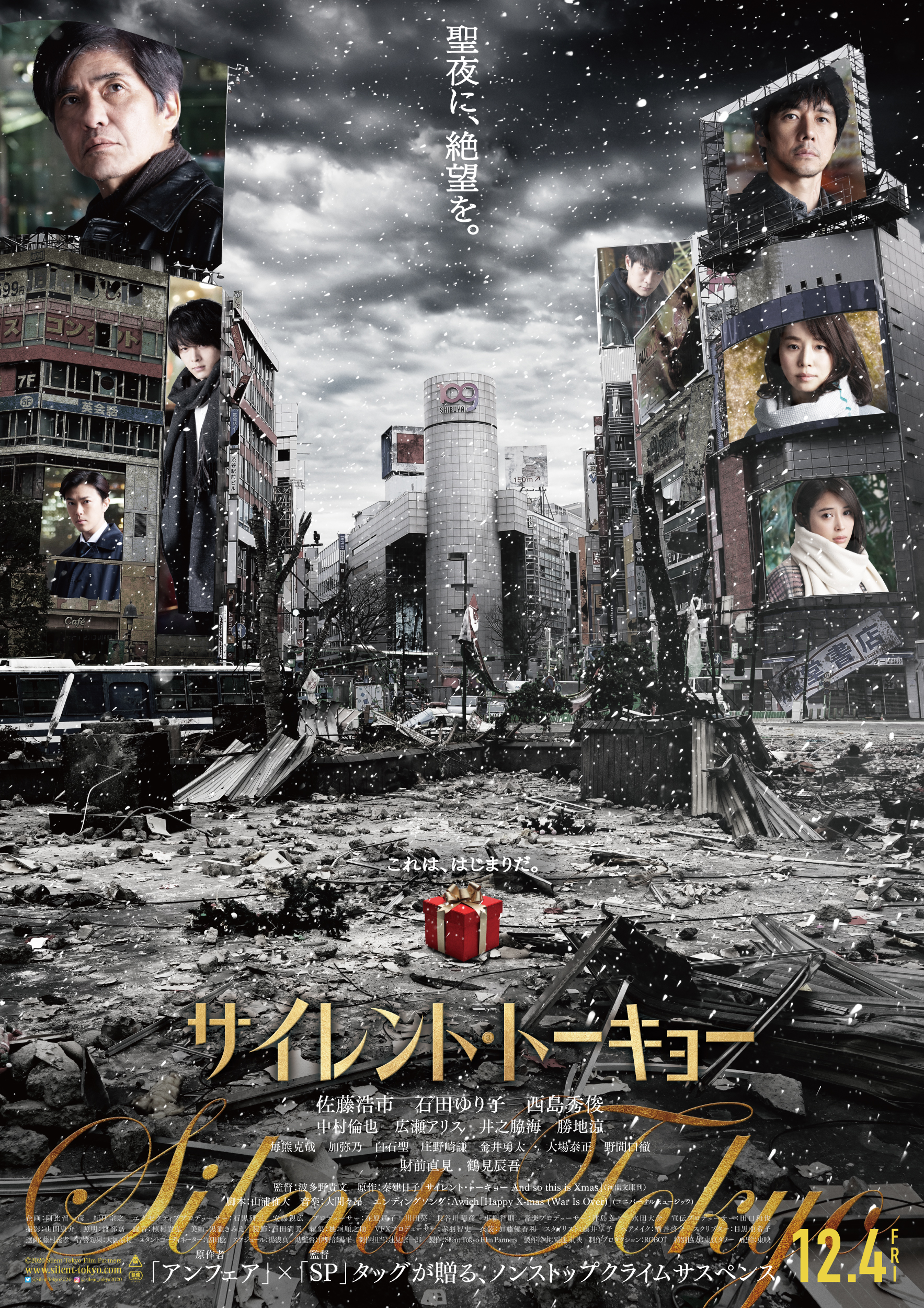
Traditionally speaking, Christmas is a time of joy and hope, peace to all men. It is then a particular cruelty to plan a terrorist event at the very time people have been conditioned to feel safe, even if in Japan Christmas is less about familial love than the romantic. Christmas Eve will be far from a silent night in Takafumi Hatano’s holiday thriller Silent Tokyo (サイレント・トーキョー) adapted from the novel by Takehiko Hata, the sound of explosions disrupting the peaceful atmosphere as a mysterious bomber threatens to blow up Tokyo Tower if they are not granted a personal audience with the prime minister on live TV. 

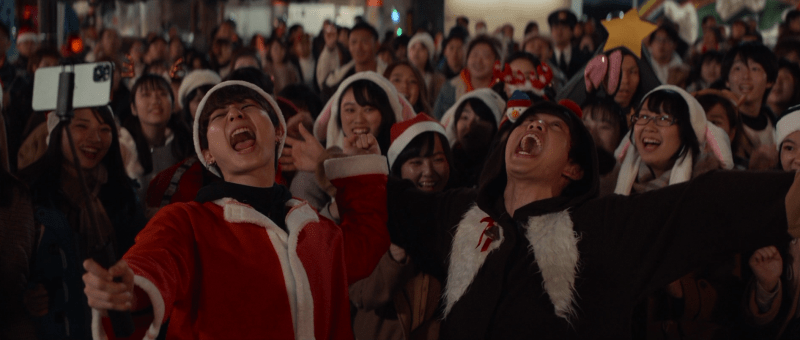
Thankfully Japan does not have an extensive history of terrorist action at least of this nature, that’s one reason why a when a pair of TV journalists report a tip off they’ve received about a bomb in a shopping centre the police take little notice. The shopping centre bomb is real but of low power leaving only a single person with light injuries after most shoppers are evacuated following a smaller warning explosion in a bin near the Christmas display. It’s enough for the police to take notice, especially as grizzled veteran Seta (Hidetoshi Nishijima) becomes convinced it’s likely a dry run for something more serious, but still no one really believes a bomb could go off in the middle of Tokyo even when a message from the bomber threatening to blow up the Christmas tree in Shibuya if they are not granted an audience with the prime minister is played on large screens around the city. For whatever reason, the police choose not to evacuate the area which is quickly filled by the morbidly curious along with holiday revellers in Santa suits live-streaming the event via social media as if it were the countdown on New Year’s Eve. When the bomb doesn’t go off, they content themselves with a rousing chorus of “congratulations” as if it were all some kind of Christmas prank only to be hit by the delayed explosion a few minutes later in an elaborately staged scene of urban carnage. 

Hatano shifts suspicion between a number of suspects before finally bringing it all together while continually hinting at the bomber’s, and the film’s, true message. Early on we see a mass protest against the prime minister who appears on a large screen insisting that Japan abandon its pacifist constitution and become militarised nation capable of going to war should the necessity arise. The irony is, of course, that the PM evidently chooses not to mount much of a defence against this immediate internal threat, never mind the external, while the bomber’s message turns out to be that war is morally wrong and not something a civilised nation should be pursuing. The bombs are intended as a wakeup call to the prime minister and the “apathetic” citizens of Japan who elected him, urging them that if they truly understood the nature of war they would want no part of it. That the message is delivered through violence which includes loss of life and serious injury is another irony and one likely to prove counterproductive especially considering the bullishness of the PM who repeatedly appears on TV screens insisting that the government does not negotiate with terrorists while simultaneously playing the strongman and not appearing to do very much else. 

In any case, the film briefly touches on other kinds of secondary violence such as the affects of post-traumatic stress in soldiers returning from peacekeeping missions overseas, police dealing with major incidents, victims of crime, and that of a young man having witnessed his father violently abusing his mother. But in keeping with the Christmas theme, the motive turns out to be romantic in addition to political delivered with a kind of misplaced love and desire for vengeance which goes someway to explaining the various target locations which are all obvious stop offs on a stereotypical Tokyo day trip culminating with the iconic Tokyo Tower. The irony of this anti-violence bombing campaign is fully brought home by the assertions of the police that they are technically at war with the bomber, who perhaps hopes that being directly subjected to the reality of military violence will help bolster support for the pacifist constitution while their hope of being able to change the prime minister’s nationalistic mindset through chatting with him on TV seems rather naive. In any case, the messages of peace to all men are perfectly suited to the festive season even if they come in slightly counterintuitive packaging. 


Original trailer (English subtitles available from CC button)

Noh Mask Murders (天河伝説殺人事件, Kon Ichikawa, 1991)

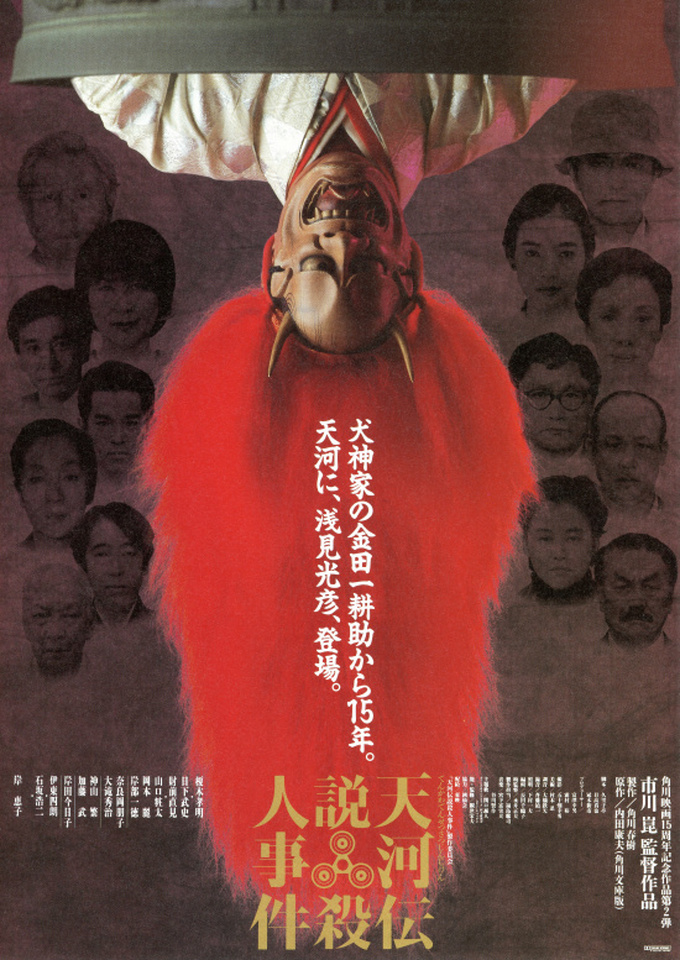
noh mask murders posterFor one reason or another, Japanese mystery novels have yet to achieve the impact recently afforded to their Scandinavian brethren. Japan does however have a long and distinguished history of detective fiction and a number of distinctive, eccentric sleuths echoing the European classics. Mitsuhiko Asami is just one among many of Japan’s not quite normal investigators, and though Noh Mask Murders (天河伝説殺人事件, Tenkawa Densetsu Satsujin Jiken) is technically the 23rd in the Asami series, Kon Ichikawa’s adaptation sets itself up as the very first Asami case file and as something close to an origin story.

Ichikawa, though he may be best remembered for his ‘60s arthouse masterpieces, was able to go on filmmaking where others perhaps were not precisely because of his forays into the populist with a series of mystery thrillers including several featuring top Japanese detective Kindaichi (who receives brief name check in Noh Mask Murders). Published by Kadokawa, Noh Mask Murders is produced by Haruki Kadokawa towards the end of his populist heyday and features many of the hallmarks of a “Kadokawa” film but Ichikawa also takes the opportunity for a little formal experimentation to supplement what is perhaps a weaker locked room mystery.

Asami (Takaaki Enoki) begins with a voice over as four plot strands occur at the same temporal moment at different spaces across the city. In Shinjuku, a salaryman drops dead on the street, while a young couple enjoy a secret tryst in a secluded forest, a troupe of actors rehearse a noh play, and Asami himself is arrested by an officious policeman who notices him walking around with a dead bird in his hand and accuses him of poaching. As he will later prove, all of these moments are connected either by fate or coincidence but setting in motion a series of events which will eventually claim a few more lives before its sorry conclusion.

To begin with Asami, he is a slightly strange and ethereal man from an elite background who has been content to drift aimlessly through life to the consternation of his conservative family which includes a police chief brother. He harbours no particular desire to become a detective and is originally irritated by a family friend’s attempts to foist a job on him but gives in when he learns he will have the opportunity to visit Tenkawa which is where, he’s been told, the mysterious woman who helped him out with the policeman in the opening sequence keeps an inn. Hoping to learn more about her, he agrees to write a book about the history of Noh and then becomes embroiled in a second murder which links back to the Mizugami Noh Family which is currently facing a succession crisis as the grandfather finds himself torn over choosing his heir – he wants to choose his granddaughter Hidemi (Naomi Zaizen) who is the better performer but the troupe has never had a female leader and there are other reasons which push him towards picking his grandson, Kazutaka (Shota Yamaguchi).

As with almost all Japanese mysteries, the solution depends on a secret and the possibilities of blackmail and/or potential scandal. The mechanics of murders themselves (save perhaps the first one) are not particularly difficult to figure out and the identity of the killer almost certainly obvious to those who count themselves mystery fans though there are a few red herrings thrown in including a very “obvious” suspect presented early on who turns out to be entirely incidental.

Ichikawa attempts to reinforce the everything is connected moral of the story through an innovative and deliberately disorientating cross cutting technique which begins in the prologue as Ichikawa allows the conversations between the grandchildren to bleed into those of Asami and his friend as if they were in direct dialogue with each other. He foregrounds a sad story of persistent female subjugation and undue reliance on superstition and tradition which is indirectly to blame for the events which come to pass. Everyone regrets the past, and after a little murder begins to see things more clearly in acknowledging the wickedness of their own actions as well as their own sense of guilt and complicity. Noh is, apparently, like a marriage, a matter of mutual responsibility, fostering understanding between people and so, apparently is murder, and one way or another Asami seems to have found his calling.


24 Hour Playboy (愛と平成の色男, Yoshimitsu Morita, 1989)

24-hour-playboyYoshimitsu Morita is an enigma. While directing some of the most acclaimed Japanese films of the 80s including The Family Game or the Soseki adaptation Sorekara, his primary dedication was to the “popular” which meant he did his share of more commercial projects such as the Kadokawa idol movie Main Theme or Banana Yoshimoto adaption Kitchen. As might be discerned from the title, 24 Hour Playboy (愛と平成の色男, Ai to Heisei no Irootoko) is among his more populist efforts and is most concerned with capturing the unique quality of its time as mid-bubble Japan said goodbye to the traumatic Showa era for the (hopefully) more prosperous Heisei.

After opening with a series of scenes of the luxury to be found in the modern era from expensive rolexes to elegant yachts, the film zooms in on its hero, Nagashima (Junichi Ishida), as he receives a call from his girlfriend to the effect that she will be visiting him shortly. However, Nagashima’s first action is to leap over his balcony and run down the hill below to hide out in his car and play his saxophone before taking refuge at his younger sister’s place. Nagashima has a serious problem in that he finds himself unable to sleep and is longing for a woman who can really tire him out. Consequently he’s become the “24 hour playboy” of the title, flirting with women here there and everywhere all day long hoping to find the one who can send him straight to bed.

Unusually for a film set in the age of consumerism, Nagashima is not a high powered executive or something more glamorous like an actor or a singer, he is, in fact, a dentist. When not inappropriately flirting with the young women who end up in his dentist’s chair, Nagashima also has a sideline as a jazz saxophonist which seems to be what he’d really like to do with his life but presumably is not as lucrative as the unexpectedly elite world of dentistry.

The consumerist society runs as background throughout the film as Nagashima enjoys a fairly upscale lifestyle perfect for a playboy with visits to trendy nightclubs and late night driving ranges, but the film also gets a lot of milage out of the literal change in era occurring just at the time the film was made. The traditional Japanese dating system takes its name from the emperor – the Showa era began in 1926 and was witness to both Japan’s tragic affair with militarism and expansionist warfare and the beginnings of its return to prosperity in the now nostalgic ‘70s and ‘80s. With the death of Hirohito in January 1989, his son Akihito assumed the throne and began the “Heisei” era. The film was released in 1989 but “Heisei” is referenced several times throughout both as a joke on the fact that “Heisei” means “peace everywhere” and in Nagashima’s comments that some things have already improved in the extremely young new regime.

In keeping with Morita’s determination to stay up to the minute, the film is very much of its time but paints its transitional moment as one of excitement and possibility but also of confusion and inertia. When Nagashima tells a late night barman that he doesn’t know what he wants, he’s talking about more than drinks though he seems happy enough with the gimlet the bar tender picks out for him. Nagashima’s insomnia is apparently caused by not having a good woman to share his bed, but he spends the film playing four women off against each other without ever being really serious about any of them.

After his sometime girlfriend whom he ran out on in the beginning starts talking marriage, Nagashima hatches a plan to get his sister to pretend to be a religious nutcase to put her off. Later he gets another girlfriend to pretend to be his wife and mother of his three children to rid himself of one of the others, gets rid of another by telling her he’s off to “dentists without borders”, and even ends up treating two of his simultaneous girlfriends at the same time in adjacent dental surgeries. Nagashima’s behaviour is caddish in the extreme, thinking only of himself and never really seeing the women in front of him as entities separate from their relationship with him.

A throwback to feckless ‘60s male heroes whose casual womanising represented aspirational male fantasy, Nagashima’s exploits are depicted in a light hearted and humorous way eased by the fact that the women don’t seem to mind very much even after they discover that they aren’t Nagashima’s one and only. Eventually outed as a love rat in the papers, Nagashima’s accidental fame, far from causing outcry and condemnation, attracts a vast crowd of ladies wanting in on the action for themselves.

Oddly the one woman Nagashima does seem to be able to connect with is his sister whom he ironically describes as the one woman he doesn’t understand. Frequently staying over at her apartment, Nagashima often remarks that he wishes all women like her or that all women were his sister, which is an extremely odd thing to say in the circumstances but she is the one woman he seems to have a fully realised conception of and is able to relate to on a human level.

Necessarily very much of its time – the Heisei era is even referenced in the slightly ironic title, 24hr Playboy is one of Morita’s most disposable efforts but is also a perfect reflection of contemporary society in its increasingly consumerist fervour where dentists can live like playboy millionaires and the sheer abundance of choice leaves young men paralysed with indecision. Nagashima’s playboy lifestyle is mined for comic value as he plays the melancholic hero who doesn’t know what he wants and and so has a massive fear of (and yet intense desire for) commitment, but Morita is always careful to point out his essential ridiculousness as Nagashima’s “Heisei” lifestyle becomes less “peaceful” with each additional girlfriend and the increasingly elaborate excuses needed to jilt them.