
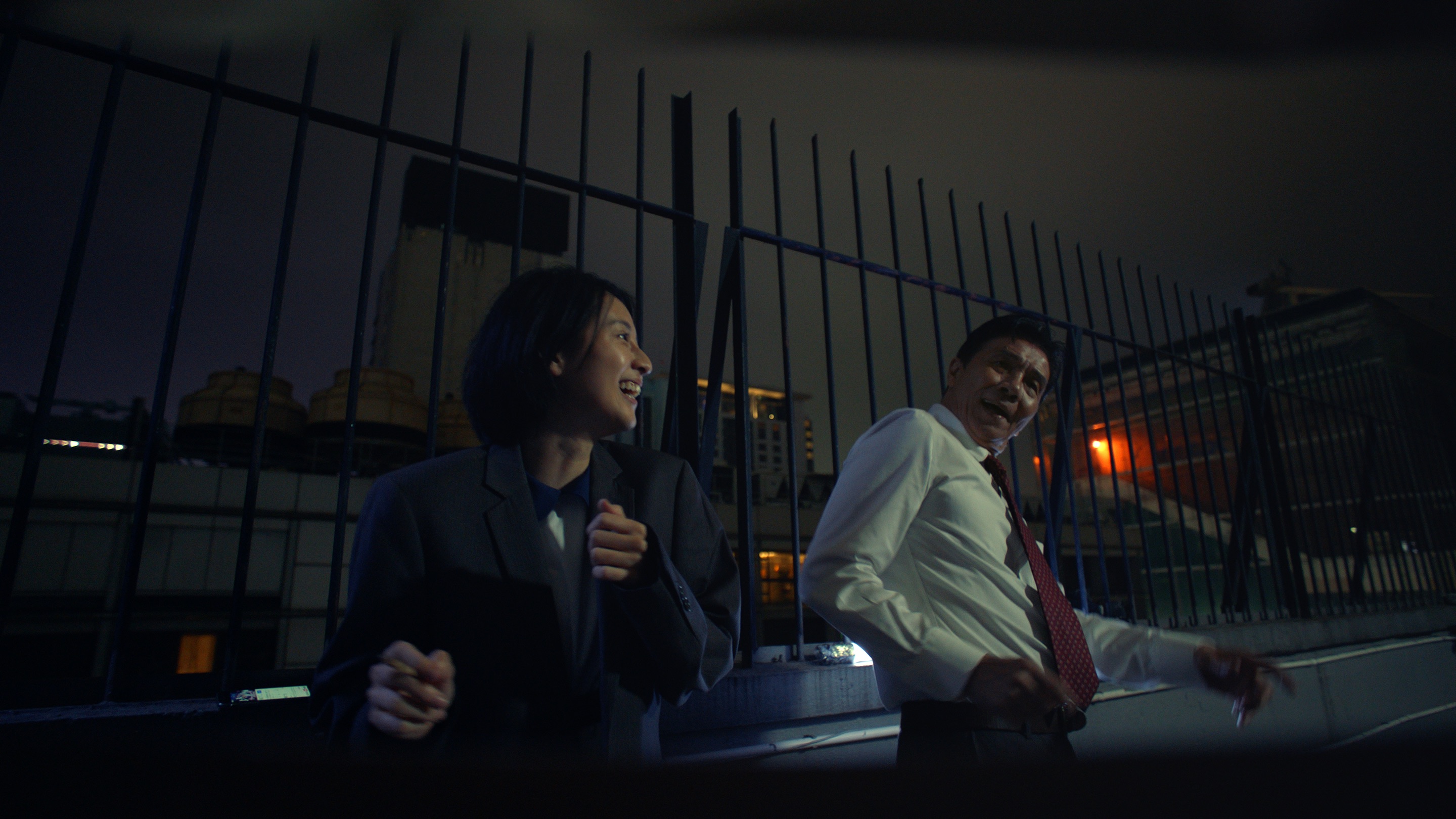
For Alice (給愛麗絲, Chow Kam Wing, 2024)

“I don’t know if I’m really lucky or really unlucky,” a young woman wonders after a series of narrow escapes amid the otherwise dismal circumstances of her life in Chow Kam Wing’s debut feature, For Alice (給愛麗絲). A lament for failed fatherhood, Chow plays with noir tropes and the legacy of classic Hong Kong cinema in his neon vistas of despair but eventually discovers a kind of catharsis even as the absent patriarch can redeem himself only in his absence.

Shuang has spent his life in and out of prison and evidently chose to not to maintain contact with his wife and daughter during his latest stretch. The titular Alice is like her namesake lost in the wonderland of contemporary Hong Kong though she named herself for the song and is doing her best to overcome the many problems in her life many of which stem from her relationship with her often absent mother and her string of problematic boyfriends including the latest one, a tailor, who is sexually abusing her. When her mother disappears yet again on a gambling trip to Macau she decides to run away, intending to stay with a friend and sleeping rough when it doesn’t pan out. She meets Shuang, she thinks, by chance sensibly wary but also grateful for the kindness of a stranger. 

As it turns out, her mother may have had a reason for all those gambling trips and it isn’t all that different from Shuang’s for his life of crime in that they are both doing it for Alice while constantly frustrated by the socio-economic realities of contemporary Hong Kong. Now in his 60s, Shuang wants to make amends and live a more law-abiding kind of life while redeeming himself as a father but struggles to find a foothold while slowly but anonymously building a paternal relationship with Alice who is facing similar problems to those he faced as a young man. Longing to escape her circumstances she sets her sights on independence and is tempted by criminality, ironically suggesting she will become a smuggler or deal drugs to support herself even as Shuang counsels her against it, encouraging her to pursue her education so she doesn’t end up like him. He didn’t have a choice, he explains, but she does and could make a better life for herself. 

But she’s still constrained by an overly patriarchal social system as she finds herself scrambling when her teacher wants to talk to her parents to discuss her smoking on school premises. Who could she possibly ask with her mother absent and the man in the position of a step-father actively harmful and in no position to help? Unbeknownst to her, Shuang accepts his paternal role and offers a genuine apology for his failed fatherhood, his irresponsible absence and its effects on the life of his daughter who was then left unprotected, vulnerable to life’s vagaries and the impossibilities of a stratified society. Yet in the end the only way he can help her is to damn himself, accept his choices and his absence and do what he can for Alice from afar. 

Chow’s Hong Kong is place of constant danger and ever present futility filled with dank corridors, rundown buildings, and neon-lit streets. Yet there is something resonant about Alice’s resilience and desire for freedom while accepting the friendship, help and support of a friendly neighbour adopting a less oppressive paternal role that aims, like the bird in bottle, to set his daughter free both of his own destructive legacy and the constraints of the situation she finds herself in. A parallel is seen in the life of Shuang’s friend, Jiu, again fixing his sights on one last job to provide a better future for his family but at the same time risking it knowing that it may mean forfeiting it entirely. Nevertheless, Shuang redeems his paternity in its denial, an act both of self-sacrifice and revelation in which he restores to Alice a more positive paternal legacy along with a sense of love and support otherwise absent from her life as a young woman largely alone in an often hostile environment.


For Alice screened as part of this year’s New York Asian Film Festival.
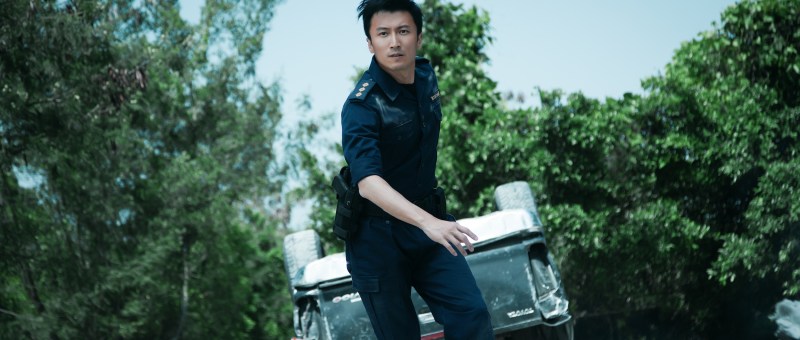
Customs Frontline (海關戰線, Herman Yau, 2024)

Who knew life as a customs official could be so dangerous? Those at the centre of Herman Yau’s high octane drama certainly do put themselves on the front line, facing constant threats of violence as they attempt to protect Hong Kong from nefarious goods and shady businessmen. The crisis in this case is, however, more international in nature as a Hong Kong corporation appears to be supplying an African warlord with seriously high tech equipment in exchange for diamonds. 

A mild political point is made that the world largely ignores conflicts in Africa, the warlord explaining that he needs all these weapons to defend himself because no one else is going to and those that do come to him largely do so for reasons of exploitation, including Dr Raw who acts as their supplier. The customs guys get dragged into it when a boat sails into their waters illegally and thereafter become determined to recover the MacGuffin of a high tech navigation device apparently stolen from the Thai army who would quite like it back. The gang are aided in their quest by a couple of Thai Interpol officers including Ying (Cya Liu) who helpfully speaks fluent Mandarin. 

Meanwhile, Customs is divided by internal polices as two divisions vie for control over the project while plotting their ascension to the soon to be vacated post of deputy commissioner. Veteran officer Cheung (Jacky Cheung) is raked over the coals by brash supervisor Kwok (Francis Ng) and, unbenkownst to him in a romantic relationship with his rival, Athena (Karena Lam). His parter Lai (Nicholas Tse) is meanwhile nursing a degree of heartbreak having broken up with team member Katie (Michelle Yim) a year previously only to hear that she is now engaged to marry someone else. 

Perhaps surprisingly, these interpersonal dynamics largely fall by the wayside and are never dealt with again. However, the film does get into some depth with Cheung’s mental illness which it suggests is largely due to the stress of the job and has turned him into two quite different people. Somewhat insensitively, the film further stigmatises metal illness in its implications regarding Cheung’s career and emotional wellbeing with constant shots of his medication and the suggestion that he is not really up to the job. 

For the most part, however, the Customs division end up in a series of firefights and car chases eventually trying to protect the son of an industrialist (Carlos Chan) who died in suspicious circumstances after trying to sever ties with smugglers. They’re strafed in an African compound, and engage in daredevil stunts trying to outrun the bad guys with combat skills that seem incongruous with their role as customs officials. The earnest Lai runs around punching bad guys in the name of justice to heal his broken heart while otherwise failing to bond with plucky Interpol agent Ying who still ends up as a damsel in distress despite her obvious skills though her chief manoeuvre is a honeytrap, using poisoned lipstick to knock out the chief arms dealer.

The film may hint at a dissatisfaction with inequality and consumeristm along with a healthy mistrust for large, family-owned corporations but otherwise fails to follow through. Cheng dreams of a place in the sun, a house by the sea for Athena where they could leave the stressful world of customs and intelligence behind but also seems resentful of her ambition asking her if she’d choose a quiet life with him over a shot at becoming deputy commissioner and annoyed when she replies that she hopes she can do both, achieving her career goals and then enjoying the rest of her life in a peaceful retirement at Cheung’s side. It may be this sense of hopelessness that drives him, realising he can’t attain what he really wants in the elusive career success denied him because of his reluctance to play the game along with the lack of financial power it affords him leaving him unable to buy that house by the sea or give Athena what he thinks she wants (but probably doesn’t, at least in the way he wants to give it to her). Though falling flat in terms of its interpersonal drama, the action scenes are at least exciting and well-designed even if the whole is somewhat hollow in its continual lack of bite.


Customs Frontline screens in New York July 17 as part of this year’s New York Asian Film Festival.
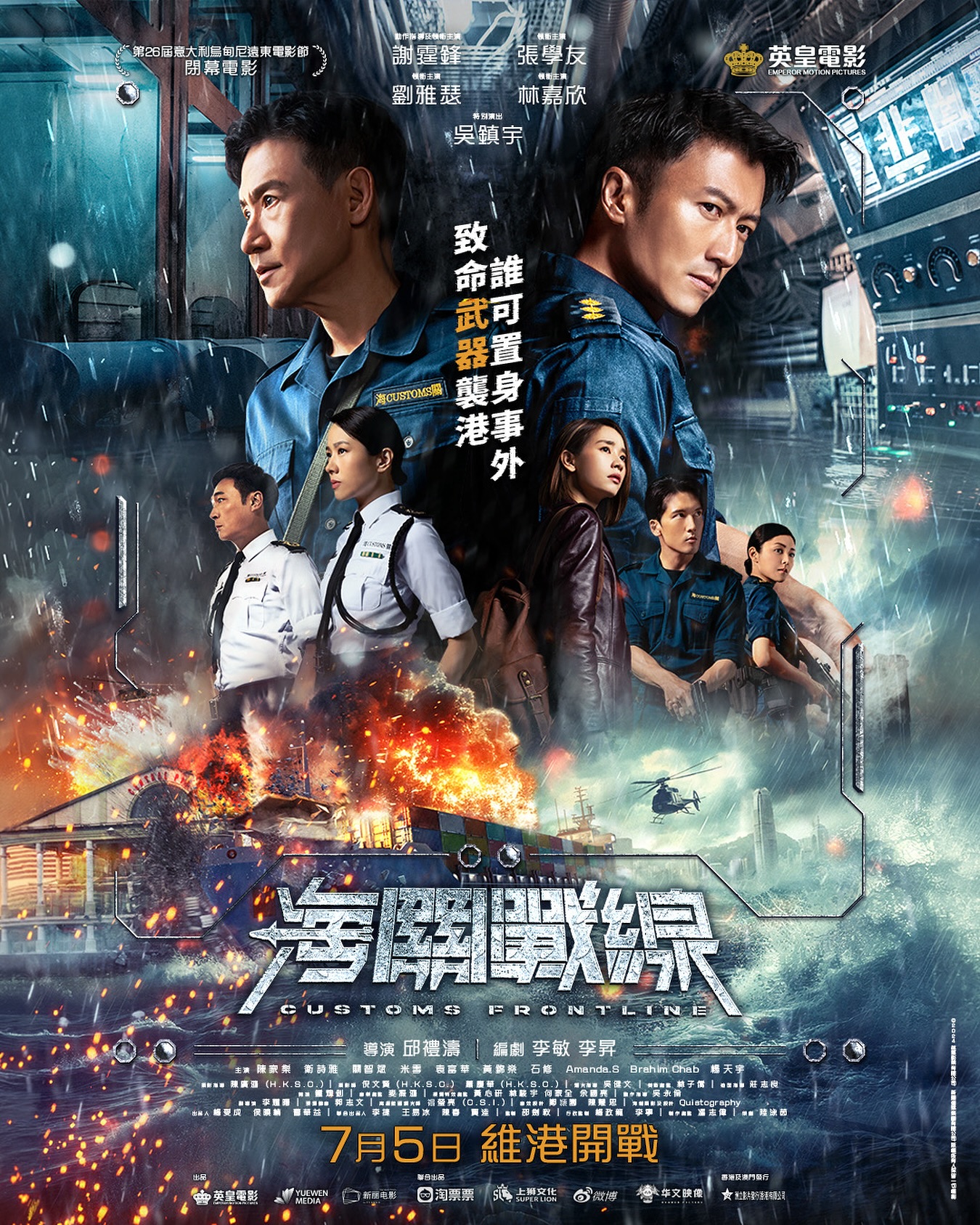
Original trailer (Traditional Chinese / English subtitles)