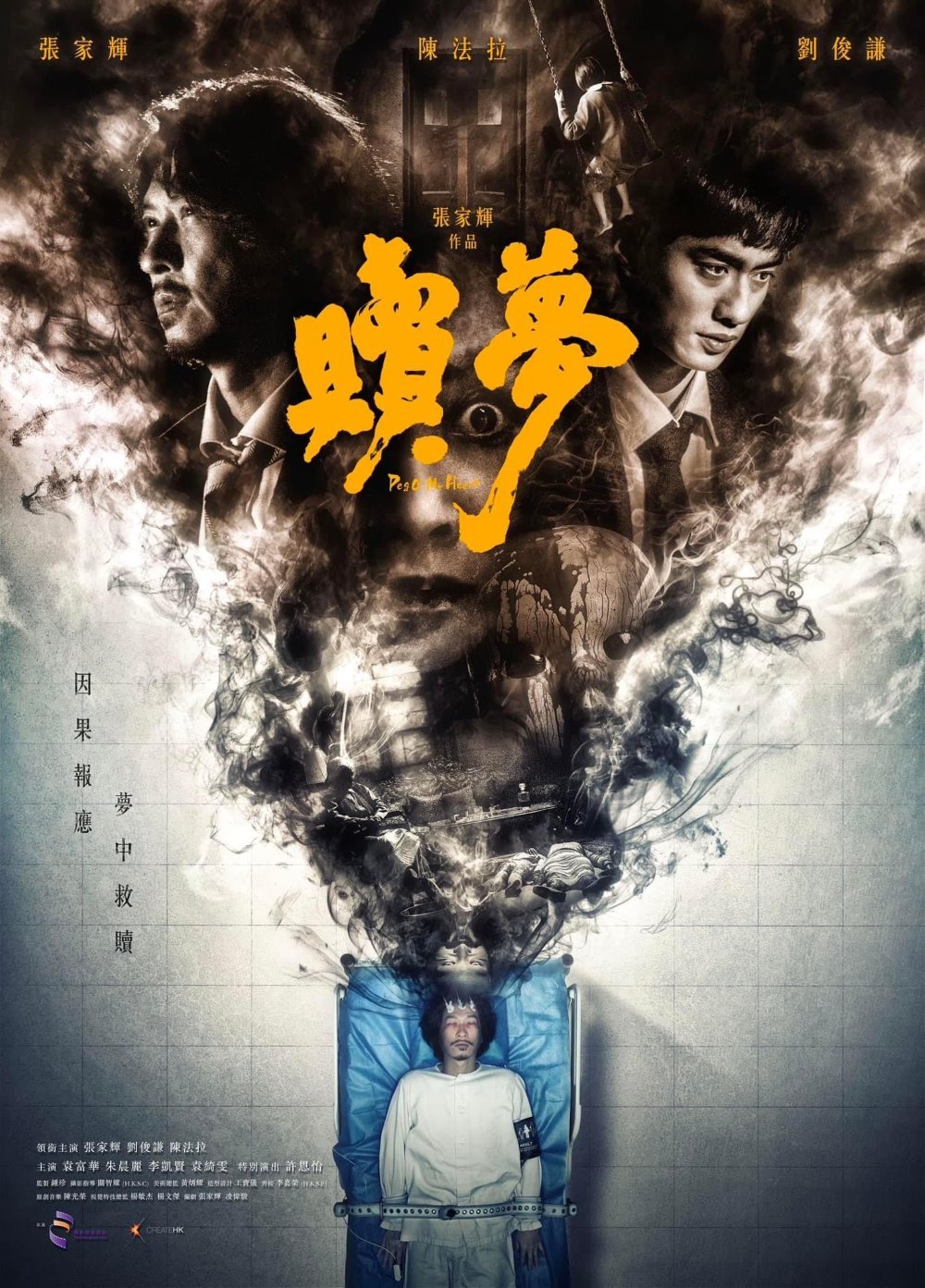
Peg O’ My Heart (贖夢, Nick Cheung Ka-Fai, 2024)

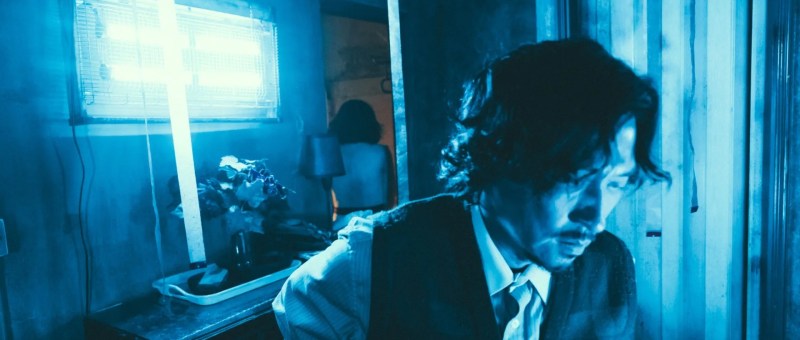
An insomniac taxi driver says he can’t sleep but he can’t wake up either. He finds himself plagued by bad dreams in an increasingly surreal Hong Kong that seems to exist more within the mind than the physical reality and populated by the orphaned ghosts of another era. Clearly inspired by the films of David Lynch with overt visual references to Lost Highway and Twin Peaks, Nick Cheung’s Peg O My Heart (贖夢) follows a maverick psychiatrist intent on actually treating his patients as he chases the taxi driver while in flight from his own trauma.

Dr. Man (Nicholas Cheung Ka-fai) is already in trouble for prying into the lives of his patients when his superiors, men in slick suits bickering in English, would rather he just get on with his job of prescribing pills. The first patient we see him treat is a teenage girl whose surreal dream sequence finds her on a swing in a room of blood while a giant baby doll looks on. Man notices an upturned doll’s head being used as a cup by one of her friends and begins to get a picture of what’s been going on. The apartment the girl lives in with her grandmother is cramped and grimy in the extreme despite the happiness banner on the door. The girl and her friends have taken to drugs to escape their own dissatisfying reality, but it led them to a dark place in which the boy abused the girl and left her with lasting trauma that blossomed into psychosis in much the same way’s Man’s own has. Nevertheless, in contrast to his bosses, he’s careful to remind her that she still has choices and it might not be the right time for her to have a child though he’ll help her whatever she decides.

In a strange way, it might be the taxi driver who’s responsible for her plight. In another life, Choi (Nicholas Cheung Ka-fai) was a high-flying financial analyst who could afford to give his wife a Mayfair flat on a whim, though you’d never guess it now. In those days, his hair was slicked back rather than long and wavy and his suit was finely buttoned rather than hanging loose. He wore glasses too, which he alarmingly no longer seems to do while driving. His eyes are red and puffy, his face pale like a ghost. On his return home, he and his wife have a number of strange rituals which make no kind of sense but hint at the extent that they have descended into a dream world, locked in by their guilt and the feeling that they are being tormented by a vengeful ghost. 

Then again, Choi’s heartless former colleagues describe him as being too sensitive for this line of work. They joke, a little misogynistically, that his wife was always the go-getter. Fiona (Fala Chen) was into stocks too, the pair of them playing a game of untold riches without any awareness of what it meant to gamble with other people’s money. His colleagues may have told him that’s exactly why it didn’t matter and it was silly to worry about it, but it seems Choi did worry, though the money distracted him from his moral quandary until the lack of it convinced him to betray an old friend with tragic and unforeseen consequences. 

Choi and Fiona are plagued by echoes of a single afternoon, one of sunlight and happiness that they unwittingly ruined with their insatiable greed. Dr. Man, meanwhile, says he has the same dream every night but can’t remember anything about it in the morning. That’s a contradictory statement in itself, though his loyal nurse Donna (Rebecca Zhu) doesn’t seem to have picked up on the holes in his story. In any case she introduces him to his previous boss, Vincent (Andy Lau Tak-wah), a former psychiatrist with an unexplained prosthetic arm, who has the power to enter other people’s dreams and seems to exist in more than one place at once, like the Mystery Man in Lost Highway. Exploring his dreamscape allows Man to reckon with his own trauma and subsequently learn to forgive and accept his father, though he may not, in fact, have faced himself fully or released his guilt even as he and Choi eventually share a similar fate. Are either of them awake, or still asleep? Did Man go through the mirror, or merely deeper inside it? The melancholy streets of contemporary Hong Kong take on a deathly hue trapping its traumatised denizens in an inescapable hell of guilt and regret from which they can never awake.


Trailer (English subtitles)
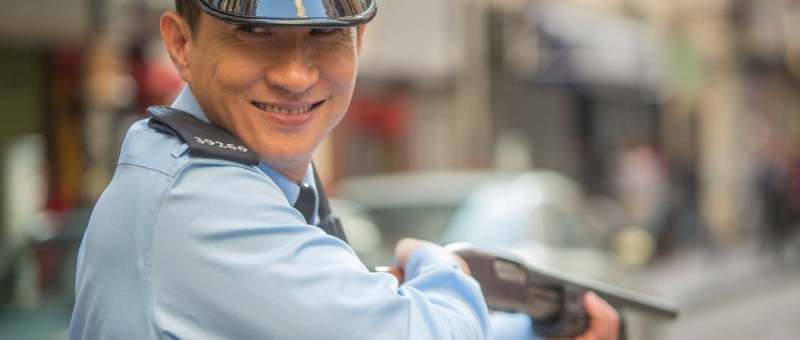
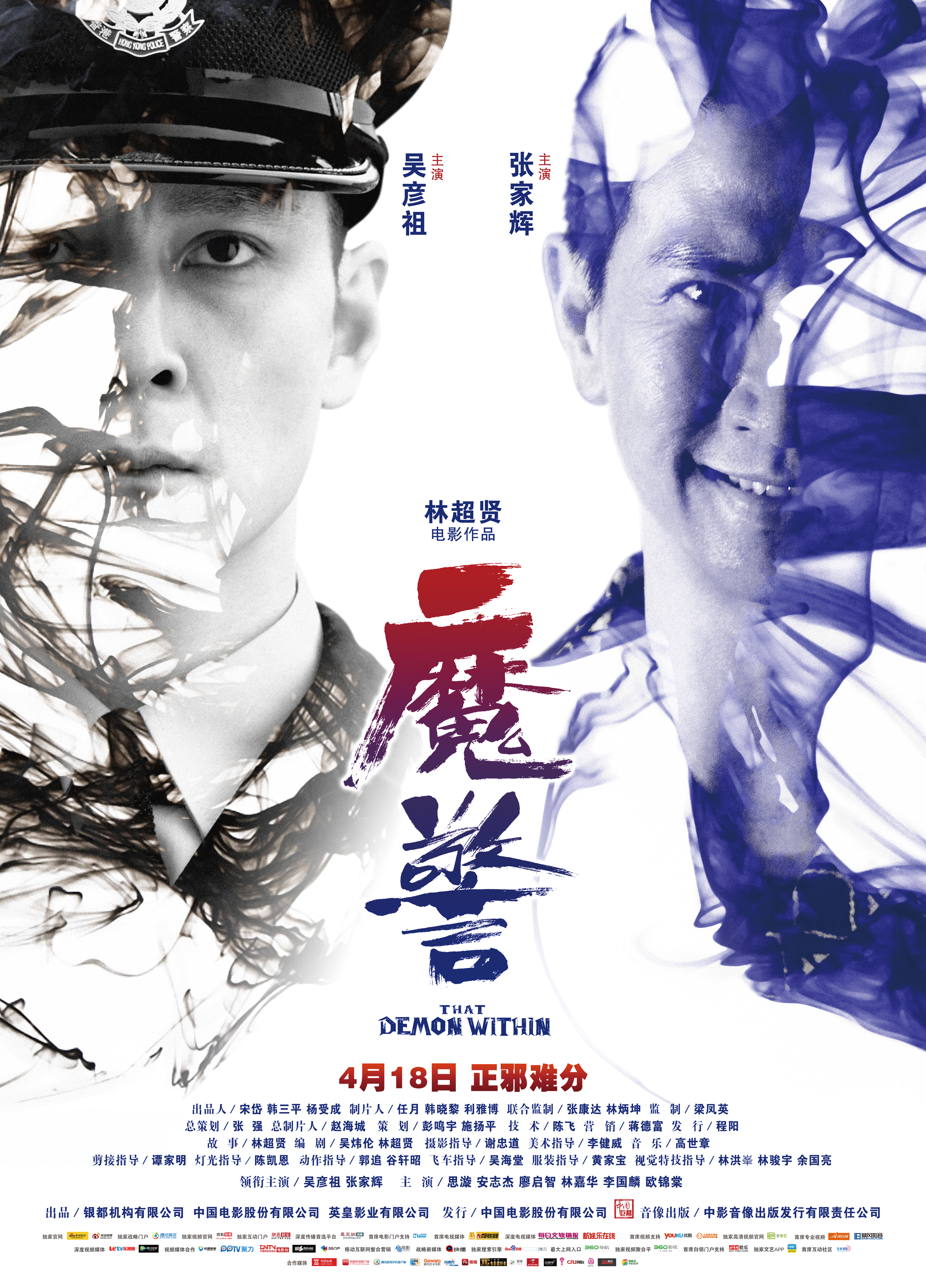
That Demon Within (魔警, Dante Lam, 2014)

“Every man has his own fear, and different ways of hiding it. But fear will never go away” according to the hero of Dante Lam’s That Demon Within (魔警), a twisty, metaphysical take on the futility of violence and inevitability of karmic justice. Hong Kong cinema has often held that cop and criminal are merely two sides of the same coin, but rarely has it taken its mistrust of authority and nihilistic cynicism to such great heights as in Lam’s B-movie-inflected psychological thriller.

The hero, Officer Wong (Daniel Wu Neh-Tsu), is a fearful man. Now 35 and a 17-year veteran of the Hong Kong police he’s still a lowly beat cop currently occupying the police box in the reception area of a less than busy hospital. He tells us, paradoxically, that he puts on the uniform because it makes him feel safe. His life begins to change, however, when he makes the selfless offer to give some of his own blood to a man who staggers in badly injured after a bike accident. What Wong didn’t know is that the man is Hon (Nick Cheung Ka-fai), a notorious local gangster known as the Demon King responsible for the deaths of two fellow officers during the escape which led to his accident. Wong gets a dressing down from the Inspector in charge, Pops (Dominic Lam Ka-wah), and is thereafter haunted by his ironic action of being a policeman who saved the life of a cop killer.

Of course, others might say Wong did the right thing so that Hon can face justice and in any case it would be wrong to deny someone lifesaving treatment because of a moral judgement, but Wong can’t see it that way and continues to punish himself (quite literally) for his “mistake”, remembering the authoritarian father who taught him that mistakes are a sin. It turns out that Wong’s career has floundered because of “personality issues”, those being that he’s a bit of a prig, overly serious and by the book when most his fellow officers are anything but. His new commanding officer is, as it turns out, an old academy classmate who perhaps remembers what those issues might be but doesn’t see why they should have disrupted his career to the extent that they have and actively wants to help him get over them with the aid of a hypnotherapy psychologist.

Wong, however, is like everyone else dealing with his own demons but his decision to face them by chasing down Hon who has escaped to presumably do even more crime proves increasingly problematic as his sense of reality begins to unravel. There is something quite ironic in the fact that Hon’s “gang” (well, bunch of guys he hired for the job) is based in a funeral home and mostly involved with the rituals of death which, whichever way you look at it, is particularly convenient for their side business. Lam’s Hong Kong is a grimy, film noir land of dread and violence, a shadowy hellscape where no one is safe from the fire of karmic retribution. Wong has been in hell all along, waiting for the flames to consume him, but is only just starting to notice that it’s beginning to get warm.

Overcome with rage, Wong’s world literally glows red around the edges while Lam shifts to a steady cam closeup on his final mental break in the face not only of tremendous grief but the sudden impossibility of redemption and the manifestation of his guilt. Becoming a policeman was to Wong a way to protect himself from himself, an ironic form of atonement for past transgression. The source of all his trauma is echoed in the present plague of low level thuggery that sees “repo men” splash grease and paint on the homes of mostly elderly poor people presumably to pressure them to move while a single act of (accidental) police brutality at a protest against forced eviction changed not only his life but those of several others forevermore, kickstarting a chain of karmic retribution that leads us right back into the flames. If Wong is “mad” it’s because the world made him that way. Treading firmly within the realms of the B-movie with its comicbook-style aesthetic, incongruous score, and pop psychology take on the legacy of trauma, Lam’s nihilistic psycho-supernatural thriller leaves no doubt that cop or criminal there’s a demon within us all looking for an excuse to raise hell in a land of fear and violence.


Currently available to stream on Netflix in the UK and possibly elsewhere.

Original trailer (English subtitles)

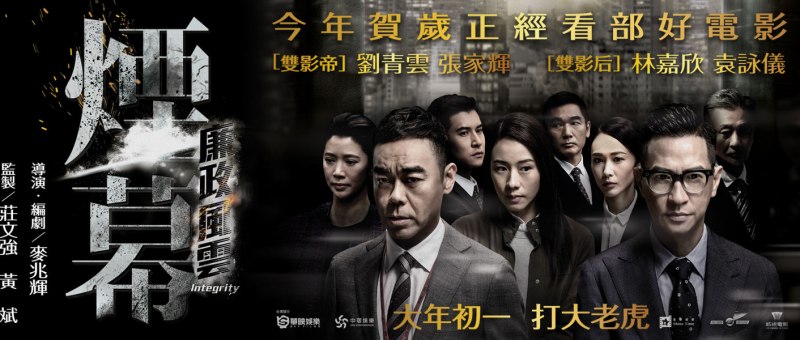
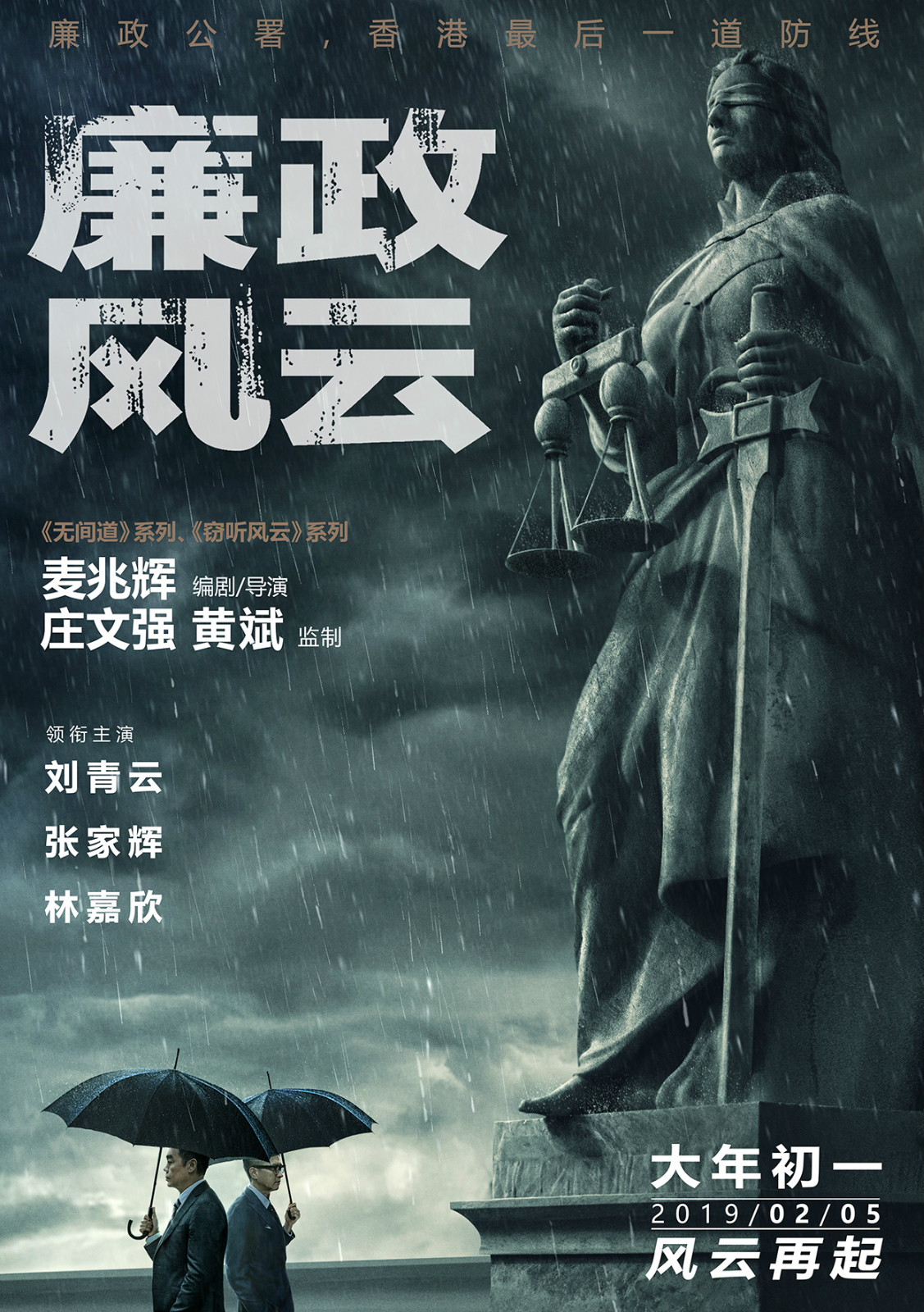
Integrity (廉政風雲 煙幕, Alan Mak, 2019)

Integrity poster 1Alan Mak made his name with the phenomenally successful Infernal Affairs (co-directing with Andrew Lau) which later blossomed into a trilogy – a pattern he repeated with the Overheard series, making time for a few standalones in between. 2019’s Integrity (廉政風雲 煙幕), released as gritty alternative to the saccharine and silly fare usually on offer for Lunar New Year, finds him in similar territory and is once again touted as the first in a projected trilogy this time revolving around the ICAC who have become a Hong Kong movie favourite as of late. Drawing inspiration from classic ‘70s thrillers and American New Cinema, Integrity has a few questions to ask about the nature of corruption and the limits of control.

The drama begins with ICAC officer King (Sean Lau Ching-wan) briefing star witness Jack Hui (Nick Cheung Ka-fai) on their upcoming court case. Shortly after Jack has handed over a USB stick containing new evidence, he slips his protective detail and disappears leaving King’s case with a giant hole in the middle, especially considering one of the two defendants has also skipped town. Given a seven day recess, King reluctantly allows his wife, fellow ICAC officer Shirley (Karena Lam), to travel to Sydney to chase Jack while pressing his available leads in the form of defendant two and the rest of the USB stick.

Eschewing action in favour of intricately plotted conspiracy, Mak keeps the tension high as he slowly reveals the ambiguities of the case, reminding us that no one is quite as innocent as we might assume. We find out the relationship between Jack and King (pregnant names indeed) may not have been as straightforward as we first assumed while we’re also made aware of the extremely lucrative trade in black market cigarettes and the backhanders to the customs bureau that make it possible. Then again we have to ask ourselves why it is a top accountant like Jack might suddenly decide to turn whistleblower when he’s been perfectly content with his complicity in corruption for the last 20 years.

King is intent on catching “The Puppet Master” by following their financial trail, convinced that taking down the middlemen in the tobacco smuggling scam will eventually flush them out. He thinks he holds all the cards but isn’t quite aware what game it is he’s playing. Desperate to catch his quarry, King is in danger of crossing the line as he convinces defendant two to tell all by (falsely) promising her immunity as a prosecution witness. She eventually spills the beans, but warns him that people will die – something that tragically comes to pass when the Puppet Master starts taking care of loose ends.

Obsessed as he is, King isn’t quite sure he cares who might get hurt in his quest for justice. Then again, King’s need to catch the bad guy, as his boss (Alex Fong) tries to point out as kindly as possible, is a kind of displacement activity designed to get his mojo back so he can patch things up with his put-upon wife. Despite talk of divorce, the pair are still wearing their wedding rings and have romantic photos as their smartphone wallpaper while they continue to bicker (somewhat) affectionately via text message. The awkward romantic subplot is most likely intended to set up a series motif though it seems wholly out of place with Mak’s more serious themes, especially when tipping into unwelcome clichés such as Shirley’s impromptu shopping trips paid for with King’s card when she gets fed up with his persistent sexism.

The central theme of King’s own fracturing “integrity” gets lost in the shuffle but is dealt a killer blow by the extremely unwise ‘90s flashback and its eventual ‘80s counterpart which undercut almost everything that’s gone before, creating a series of inconvenient plot holes in the process. Mak isn’t quite sure where he wants to go and presents us with a series of trick endings, the final of which is a step too far even if it perhaps plays into his themes of karmic justice and the costs of betrayal (not to mention making it 100% clear for the mainland censors’ board that crime never pays). Though managing to nail the the tense ‘70s conspiracy thriller vibe in its early stretches Integrity’s ridiculous third act plot twists ruin an otherwise promising tale of greed and suspicion while perhaps reinforcing the idea that no one can be trusted and all connections are, to a point at least, mercenary.


Currently on limited release in UK cinemas.

Original trailer (English subtitles)

https://www.youtube.com/watch?v=bh3W1QOA4kI