The Killers (더 킬러스, Kim Jong-kwan & Roh Deok & Chang Hang-jun & Lee Myung-se, 2024)

Led by Lee Myung-se, The Killers (더 킬러스) was originally billed as a six-part anthology film featuring different takes on the short story by Ernest Hemingway, but somewhere along the way took a kind of detour and now arrives as a four partner with a looser theme revolving around noir and crime cinema. Frequently referencing the Edward Hopper painting Nighthawks, the film hints at urban loneliness and a haunting sense of futility along with the mythic quality of noir as a tale that tells itself.

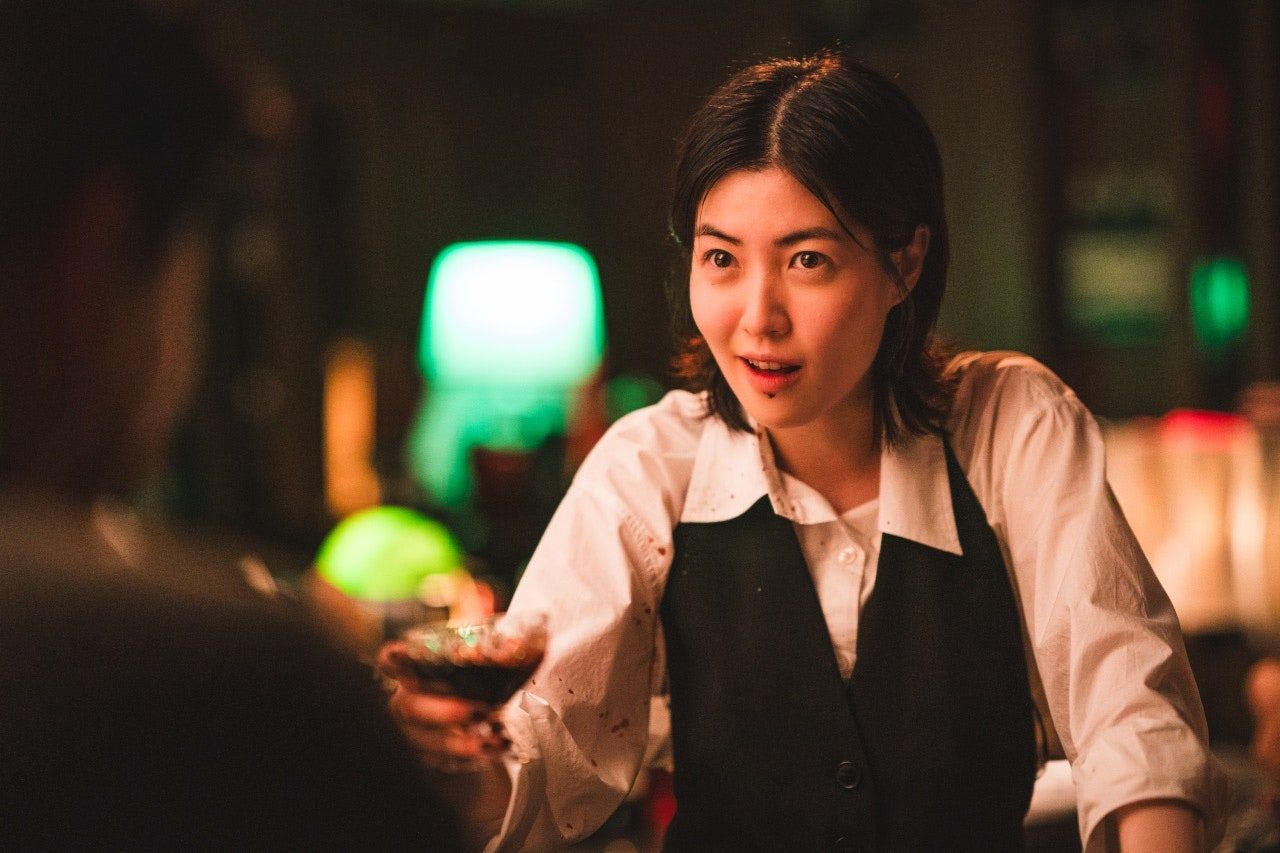
At least that’s in part how it is for unreliable the narrator of the first episode, a petty gangster who wakes up in a mysterious bar after being cornered by rival thugs. While in there he meets a similarly lost, middle-aged film director in the middle of a strange date with a fawning young woman who’ve definitely wandered into the wrong place. A sense absurdity is echoed in the fact that the man continues to sit in the bar oblivious to the knife in his back until the bar lady pulls it out for him and exposes the real reason why she lures lonely souls to this strange place out of time. Even so, thanks to her dark initiation the gangster is able to become himself and stand up against the rival thugs who were bullying him with his newfound “feistiness” having overcome something of the futility of black and white, classic noir opening sequence.

That’s something that never really happens for the heroes of part two who are a trio of youngsters trapped in Hell Joseon unable to escape their lives as cut price contract killers working below minimum wage for a chaotic company in which everything has been sub-contracted into oblivion. Ironically, one had dreams of becoming a policeman and another a nun while the third has recently had plastic surgery in the hope of landing an acting gig and claims he’s not in this for the money but to make the world a better place. Seeing their work as a public service, they tell each other that it’s wrong to grumble over their unfair pay because other people get less and are otherwise incapable of standing up for themselves until they take a leaf out of the boss’ book and try a subcontracting of their own which doesn’t quite go to plan.

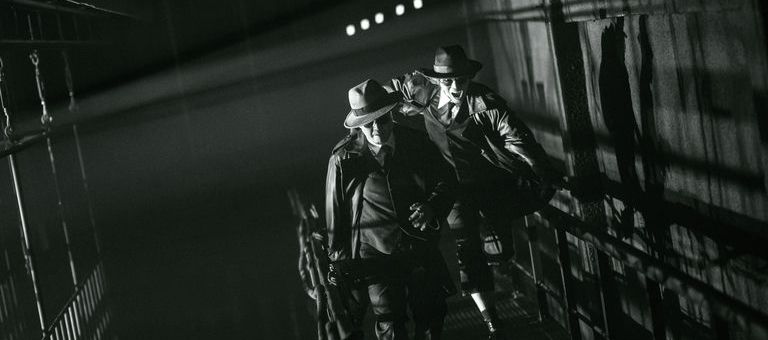
While the first two episodes had been set in the present day the second two are set during the long years of dictatorship, the first sometime in the 1960s under the rule of President Park as an undercover detective and two men who appear to be unsubtle KCIA agents descend on a noirish, rundown bar with a picture of Nighthawks on the wall waiting for a mysterious fugitive to arrive. They don’t appear to know anything about why their target needs to be caught or who he is save for a daffodil tattoo on his arm and are merely they shady figures of authoritarian power we can infer are hot on the tracks of someone hostile to the regime. In any case, they are they are about to have the tables turned on them in a demonstration of their inefficacy in their power.

It’s the fourth and final piece unmistakably directed by Lee himself, however, that brings the themes to the four as it opens with an allusion to the assassination of President Park as the narrator tells us that it is 1979 and someone sent a bullet into the heart of darkness but the darkness did not die. The two goons who later show up are KCIA thugs working for the new king Chun Doo-hwan come to threaten the denizens of the cafe which include a man called “Smile” because he can’t and a woman called “Voice” because she has none while trapped inside an authoritarian regime. Inhabitants of Diaspora City, a home to the exiled, they have only a small hole to another world which affords them the ability to dream. Relentlessly surreal the segment is marked by Lee’s characteristic visual flair and sense of noirish melancholy that extends all the way out to a world more recognisably our own though no less lonely or oppressive.


The Killers screened as part of this year’s New York Asian Film Festival.
Mother’s Place (엄마의 자리, Ryu Hee-jung, 2022) 

Outdated patriarchal social codes conspire against the emotional bonds of family in Ryu Hee-jung’s touching family drama, Mother’s Place (엄마의 자리, eomma-ui jali). While adult siblings keep secrets from each other to avoid personal embarrassment and fail to resist the demands of otherwise estranged relatives, a teenage girl is forced to mourn the loss of her parents alone feeling as if her place in the family unit was never guaranteed and that she has been abandoned by those closest to her simply because her mother’s was a second marriage. 

High school girl Yuna is called to the hospital by her oldest sister, Jungsun, who is desperately trying to hold it together but receiving little support, to be told that her parents have been involved in a car accident and are in critical condition. Jungsun rings her other sister, Jungwon, to ask her to pick up her children while waiting for her husband to get off work but Jungwon is also busy with her job as a lawyer and ignores her first few calls. Meanwhile, the oldest brother, Junghan, rudely tells her he’s too busy to talk and makes no attempt to travel to the hospital which the other siblings partly understand because they believe him to be in Japan only as it turns out that is not quite the case. After the parents sadly pass away, Jungsun and her sister organise the funeral but are immediately overruled by a grumpy and extremely conservative uncle who happens to be a prominent politician and is outraged that they are holding a joint memorial considering it was a second marriage. Apparently from a somewhat prestigious family, the other relatives intend to bury the father in the family plot and think it would be improper to inter the mother alongside him because his first wife and the mother of the eldest three children already rests there. 

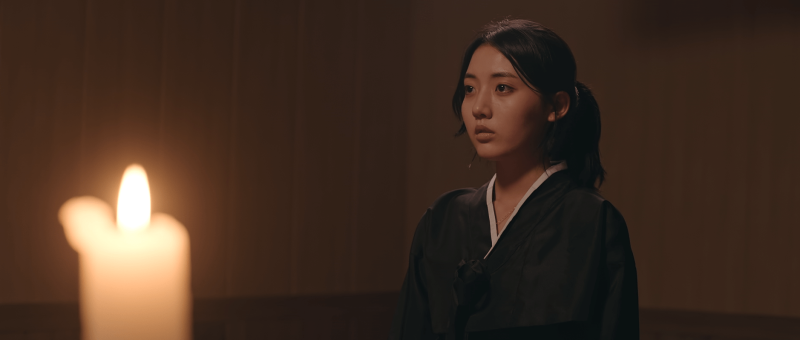
“Things won’t change even if you insist” Yuna is told by her siblings who are minded to simply go along with the uncle’s instructions even though they too were shocked and hurt by the suggestion that a joint funeral is improper, reminding the uncle that she may have been a stepmother but she was their mother too. Orphaned at such a young age, Yuna is then left to deal with her mother’s death all alone while simultaneously prevented from being able to attend her father’s funeral. Her outsider status is already signalled by her name, all of her siblings share the first syllable “Jung” while she obviously does not and while they always acted like a family now it’s like they’re disowning her while disrespecting her mother’s memory in suggesting there was something sordid about her relationship with her father that prevents her being buried next to him in her rightful place as his wife. 

She can’t understand why they would just go along with something so obviously wrong, totally unable to reject the uncle’s intrusion into what should be a matter for the immediate family. When he first arrives, the uncle immediately takes issue with the fact that Jungsun is acting as the chief mourner, insisting her husband (who might otherwise not be considered a member of her father’s family) take over until Junghan arrives because a woman occupying such a role is to him in his extremely conservative thinking inappropriate. A tearful Jungsun just lets it go if internally hurt and irritated given that she’s the one doing all the work of making these arrangements that have so casually been overturned. When Junghan finally shows up with a bruised face, the uncle immediately commandeers him and reveals that he’s invited some professors from a local university along with the intention of getting him a “proper” job though there can be few people who would otherwise think a funeral is an appropriate place for a job interview or professional networking. 

Junghan does however mimic his uncle’s conservative views in his constant digs at Jungwon for not yet being married at a comparatively late age. As will be discovered, Jungwon may have her reasons and they’re ones which she may not have felt comfortable sharing with her family members given the quality of the relationship that exists between them. They are all already holding secrets from each other because of the toxic performativity of their familial roles which leaves them embarrassed and fearful of failing to conform to a societal ideal as seen through the conservative eyes of their uncle and those like him. The older siblings only begin to realise their mistake on witnessing Yuna’s rebellion and fearing for her safety while reflecting on their own emotional bond with her mother and the various ways they are now being forced to deny their love and affection for her. 

Oddly, it’s the surprise appearance of the first wife’s ultra-glamorous sister that gives them permission to question the patriarchal norms expressed by the uncle and begin to re-establish the bonds they share as siblings brokered by an emotional connection and founded in shared memories rather than a simple blood relation. With truths aired and a little more emotional honesty in play, the family is free to remake itself along healthier lines of mutual support and compassion free of the constraints placed on them by outdated social codes. In searching for her mother’s place, Yuna begins to find her own outside of the cold and austere conservatism imposed by those like her uncle. 


Mother’s Place in Chicago on Sept. 24 as part of the 15th season of Asian Pop-Up Cinema.