Hope (호프, Na Hong-jin, 2026)

A decade on from The Wailing, Na Hong-jin returns with a piece of baffling hokum, Hope (호프), in which a small town close to the DMZ is assaulted by humanoid giants during the 1980s. Playing out like a satire of Hollywood monster movies, by the film’s abrupt cliffhanger ending we begin to get the impression that we’ve been watching from the wrong side of the screen. The “real” movie was a space fantasy revolving around the fall of an alien empire and the fate of a “chosen one”, while we’ve been seeing things from the perspective of an indigenous community witnessing the arrival of strange, new beings.

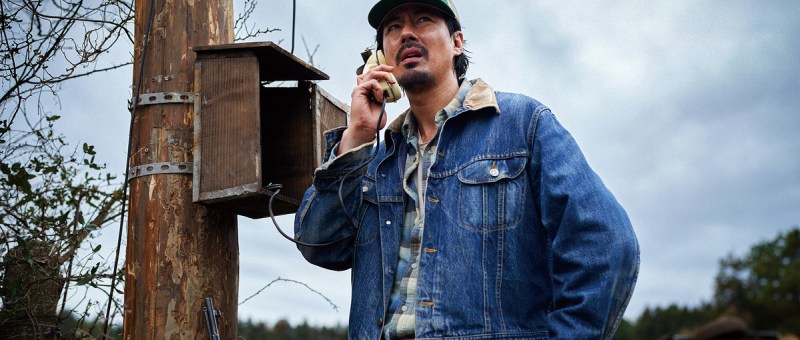
In any case, the first indication that something is “wrong” is the discovery of a mutilated cow by police chief Bum-seok’s (Hwang Jung-min) cousin Sung-ki (Zo In-sung). Sung-ki’s gang of hunters seem to think a tiger could be responsible, convincing Bum-seok that local wise man Hae-sul (Im Hyun-sik) said he saw one out in the mountains. Hae-sul did indeed see something, but according to his own reports, it was not a tiger. In any case, the hunters split off to investigate the mountains while Bum-seok returns to the town and finds it in a state of chaos. Bodies line the streets while buildings have been destroyed. Occasionally, he hears strange roars and sees cars flying overhead, thrown by some unknown force. 

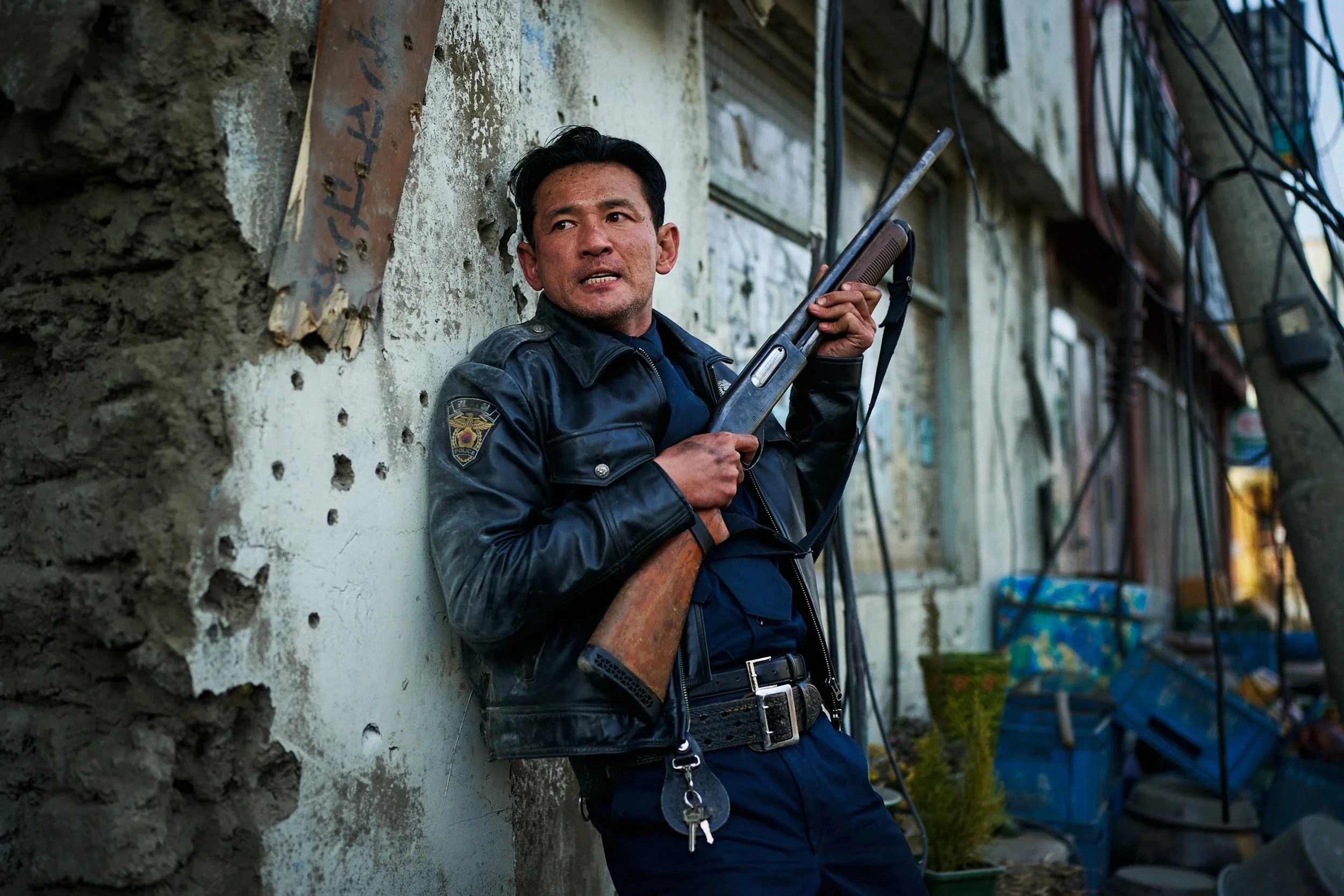
The town itself has a frontier aesthetic like something out of an American western and unlike the Korea usually seen in the movies. There are signs reminding people to report spies and frustrate infiltration, reminding us that this is a paranoid place that has been on a war footing for around 30 years. Most of the residents are elderly and were, therefore, adults during the Korean War which explains why so many of them are so familiar with military weaponry and why there’s so much of it around including things like grenade launchers which aren’t generally used by the police. This is clearly not an invasion attempt from the North, though it explains why everyone is so keen to shoot first and ask questions later after decades of fearful vigilance.

This is first the hint we have that perhaps the heroes are the bad guys after all. While the first half sees Bum-seok and gung-ho policewoman Seung-ae (Jung Ho-yeon) desperately chasing the monster in their patrol car, Bum-seok begins to feel pity for it after looking into its human-like eyes and noticing that it appears to be crying. The idea that the real monsters maybe the heroes and, by implication, we in the audience isn’t a particularly original idea and is played with such unsubtlety that Na appears to be poking fun at the trope. There’s an unpleasantness to the degree with which the hunters in the particular rejoice in the idea of killing something so unusual. They aren’t so much brave young men of the village going off to kill the monster, as bloodthirsty animals little different from their prey. 

In fact, this whole mess started because one of the village’s more unusual residents killed something he shouldn’t have. Outside of the action sequences, the film is at its best exploring the weirdness of the small-town environment. There seems to be a running gag that where the men are panicked and confused, the women are ready to meet this moment with crazed determination such as Sung-ae turning up announced with machine guns, grenade launchers, and even a missile, or the female pathologist hacking away at the body of a fallen “monster” with a chainsaw. As the film concludes, the humans are on the run and in a panic with Bum-seok admitting he has no idea what to do, while Sung-ae at least as a kind of a plan even if it might not have much chance of success. There is, then, a rather thin line between defence aggression. In some respects, they may already have crossed it in their determination to fend off this “incursion’ and expel the “foreign elements” from the town. Nevertheless, there is a small ray of hope I the residents’ sudden coming together to resolve the unknown threat, even if their initial response to it is motivated by fear and ignorance.


Trailer (English subtitles)

The Roundup (범죄도시 2, Lee Sang-yong, 2022)

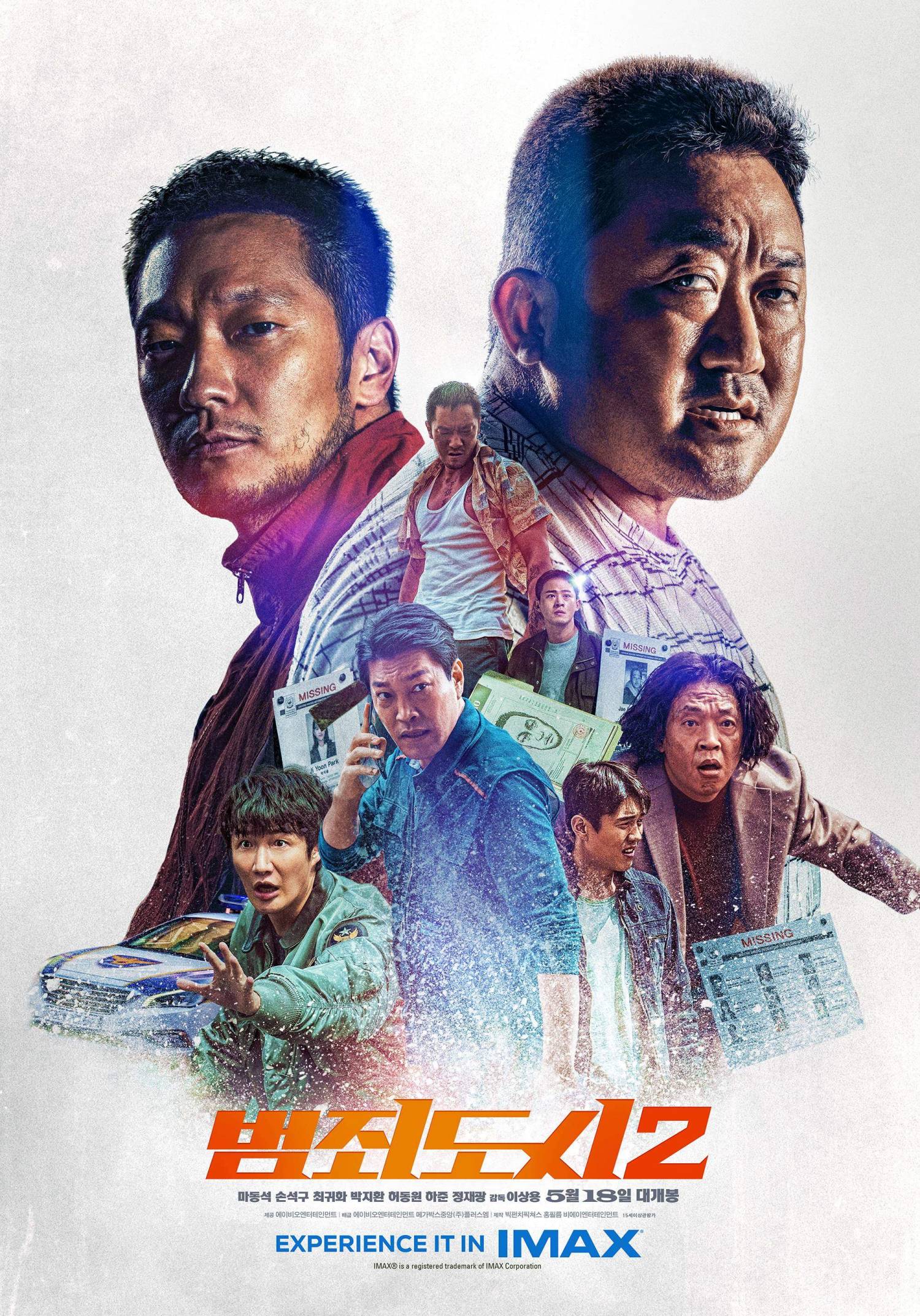
Force of justice Ma Seok-do returns five years after The Outlaws to right more wrongs in jet-setting action comedy, The Roundup (범죄도시 2, Beomjoidosi 2). By this stage in his career, actor Ma Dong-seok has succeeded in creating a persona for himself as a loveable bruiser whose violence is just a way of being and always in service of a greater good. These are qualities very much in play as Seok-do (Ma Dong-seok) finds himself defending the interests of Korean citizens abroad against crooks the cops failed to catch at home.

Seok-do is however in the dog house for being accused of using excessive force in the papers after neutralising a hostage incident in a convenience store. To keep him off the front pages, the higher ups decide to send him on a mini mission abroad bringing home a Korean fugitive who has apparently turned himself in to the Vietnamese authorities. Given that this is quite an odd thing to do and the criminal’s explanation that he was suddenly overcome with guilt and wanted to repay his debt to society doesn’t ring true, Seok-do smells a rat. As he discovers, it all points back to the kidnapping and murder of a rich man’s son by vicious gangster Hae-sang (Son Seok-koo) who preys on unsuspecting tourists. Rather than get the police involved, the boy’s father has decided to hire a bunch of mercenaries to take revenge further destabilising the local underworld in Ho Chi Min City. 

It has to be said that there is something a little uncomfortable in the quasi-nationalist posturing of the film’s central premise. Korea has effectively been exporting crime by allowing dangerous criminals to flee abroad where the law can’t touch them. Korean crooks then make trouble for Korean tourists even if not quite to the extent of Hae-sang, all of which ignores the effects on the local Vietnamese population in concentrating on Korean on Korean crime. At the end of the film it’s even suggested that Korean police officers might be dispatched to other areas of Asia to look after Korean tourists which shows a certain lack of respect for national sovereignties while more or less letting the same police officers off the hook for failing to catch criminals in Korea or address the issues which led to them entering lives of crime. A maverick cop, Seok-do does rather throw his weight around in a foreign country, caring little for protocol and threatening to spark a diplomatic incident every few seconds. 

Then again he is just particularly keen on shutting down Hae-sang and exposing him for his heinous acts, cleaning up a mess that has ended up spilling over abroad. Ironically enough, the bereaved father, Choi (Nam Moon-cheol), maybe a powerful CEO but he made his money loansharking and is pretty much a petty gangster himself so of course he wants personal vengeance once again uncomfortably hiring mercenaries from China. Meanwhile, Seok-do ends up enlisting the help of a formerly undocumented migrant when Choi ends up getting kidnapped himself by a cornered Hae-sang.

In any case, Seok-do more than holds his own against the bloodthirsty villains in a series of well choreographed action sequences culminating in a one-on-one showdown on a bus. Much of Ma’s appeal lies in his effortless ability to take down bad guys which he does a plenty, even dispatching one via escalator to his waiting teammates below. Even so, he knows not to take himself too seriously and is keen to cede screen time to the ensemble allowing a gentle camaraderie to appear among his squad members despite their separation while Seok-do and the Captain are in Vietnam trying to have a covert holiday and the rest of the team are left behind to do regular admin work in the office. Though it may present some rather uncomfortable ideas in a kind of Korean exceptionalism that implies a degree of superiority over and disregard towards other Asian nations, the film is nevertheless a charming retro action comedy and perfect showcase for the charismatic star as his no-nonsense policeman makes a point of slapping down bad guys and fighting international crime while generally living his best life hanging out with similarly justice-orientated buddies. 


The Roundup screens in Amsterdam on 27th October & 4th November as part of this year’s Imagine Fantastic Film Festival.

International trailer (English subtitles)

Mother’s Place (엄마의 자리, Ryu Hee-jung, 2022) 

Outdated patriarchal social codes conspire against the emotional bonds of family in Ryu Hee-jung’s touching family drama, Mother’s Place (엄마의 자리, eomma-ui jali). While adult siblings keep secrets from each other to avoid personal embarrassment and fail to resist the demands of otherwise estranged relatives, a teenage girl is forced to mourn the loss of her parents alone feeling as if her place in the family unit was never guaranteed and that she has been abandoned by those closest to her simply because her mother’s was a second marriage. 

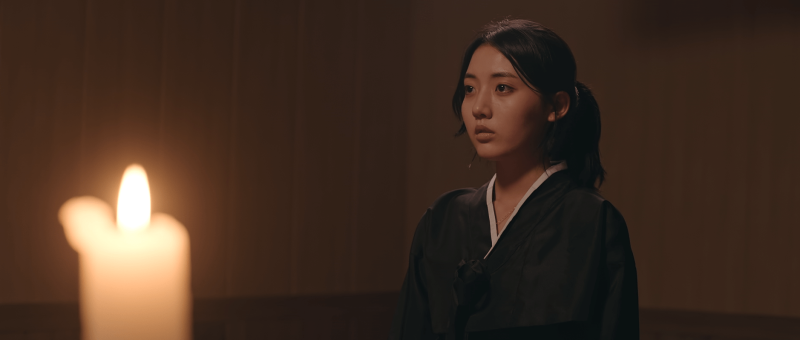
High school girl Yuna is called to the hospital by her oldest sister, Jungsun, who is desperately trying to hold it together but receiving little support, to be told that her parents have been involved in a car accident and are in critical condition. Jungsun rings her other sister, Jungwon, to ask her to pick up her children while waiting for her husband to get off work but Jungwon is also busy with her job as a lawyer and ignores her first few calls. Meanwhile, the oldest brother, Junghan, rudely tells her he’s too busy to talk and makes no attempt to travel to the hospital which the other siblings partly understand because they believe him to be in Japan only as it turns out that is not quite the case. After the parents sadly pass away, Jungsun and her sister organise the funeral but are immediately overruled by a grumpy and extremely conservative uncle who happens to be a prominent politician and is outraged that they are holding a joint memorial considering it was a second marriage. Apparently from a somewhat prestigious family, the other relatives intend to bury the father in the family plot and think it would be improper to inter the mother alongside him because his first wife and the mother of the eldest three children already rests there. 

“Things won’t change even if you insist” Yuna is told by her siblings who are minded to simply go along with the uncle’s instructions even though they too were shocked and hurt by the suggestion that a joint funeral is improper, reminding the uncle that she may have been a stepmother but she was their mother too. Orphaned at such a young age, Yuna is then left to deal with her mother’s death all alone while simultaneously prevented from being able to attend her father’s funeral. Her outsider status is already signalled by her name, all of her siblings share the first syllable “Jung” while she obviously does not and while they always acted like a family now it’s like they’re disowning her while disrespecting her mother’s memory in suggesting there was something sordid about her relationship with her father that prevents her being buried next to him in her rightful place as his wife. 

She can’t understand why they would just go along with something so obviously wrong, totally unable to reject the uncle’s intrusion into what should be a matter for the immediate family. When he first arrives, the uncle immediately takes issue with the fact that Jungsun is acting as the chief mourner, insisting her husband (who might otherwise not be considered a member of her father’s family) take over until Junghan arrives because a woman occupying such a role is to him in his extremely conservative thinking inappropriate. A tearful Jungsun just lets it go if internally hurt and irritated given that she’s the one doing all the work of making these arrangements that have so casually been overturned. When Junghan finally shows up with a bruised face, the uncle immediately commandeers him and reveals that he’s invited some professors from a local university along with the intention of getting him a “proper” job though there can be few people who would otherwise think a funeral is an appropriate place for a job interview or professional networking. 

Junghan does however mimic his uncle’s conservative views in his constant digs at Jungwon for not yet being married at a comparatively late age. As will be discovered, Jungwon may have her reasons and they’re ones which she may not have felt comfortable sharing with her family members given the quality of the relationship that exists between them. They are all already holding secrets from each other because of the toxic performativity of their familial roles which leaves them embarrassed and fearful of failing to conform to a societal ideal as seen through the conservative eyes of their uncle and those like him. The older siblings only begin to realise their mistake on witnessing Yuna’s rebellion and fearing for her safety while reflecting on their own emotional bond with her mother and the various ways they are now being forced to deny their love and affection for her. 

Oddly, it’s the surprise appearance of the first wife’s ultra-glamorous sister that gives them permission to question the patriarchal norms expressed by the uncle and begin to re-establish the bonds they share as siblings brokered by an emotional connection and founded in shared memories rather than a simple blood relation. With truths aired and a little more emotional honesty in play, the family is free to remake itself along healthier lines of mutual support and compassion free of the constraints placed on them by outdated social codes. In searching for her mother’s place, Yuna begins to find her own outside of the cold and austere conservatism imposed by those like her uncle. 


Mother’s Place in Chicago on Sept. 24 as part of the 15th season of Asian Pop-Up Cinema.