First Love (첫사랑, Lee Myung-se, 1993)

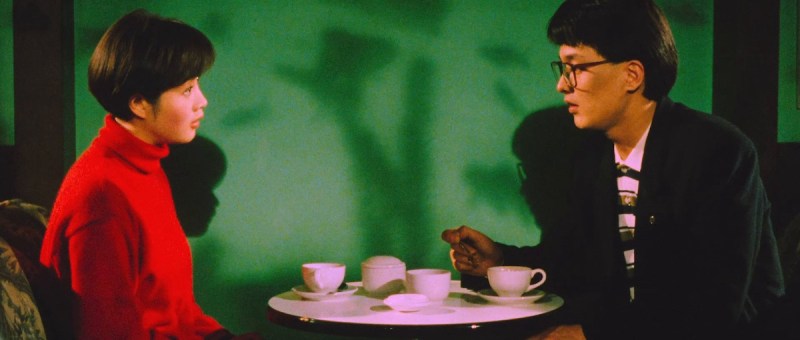
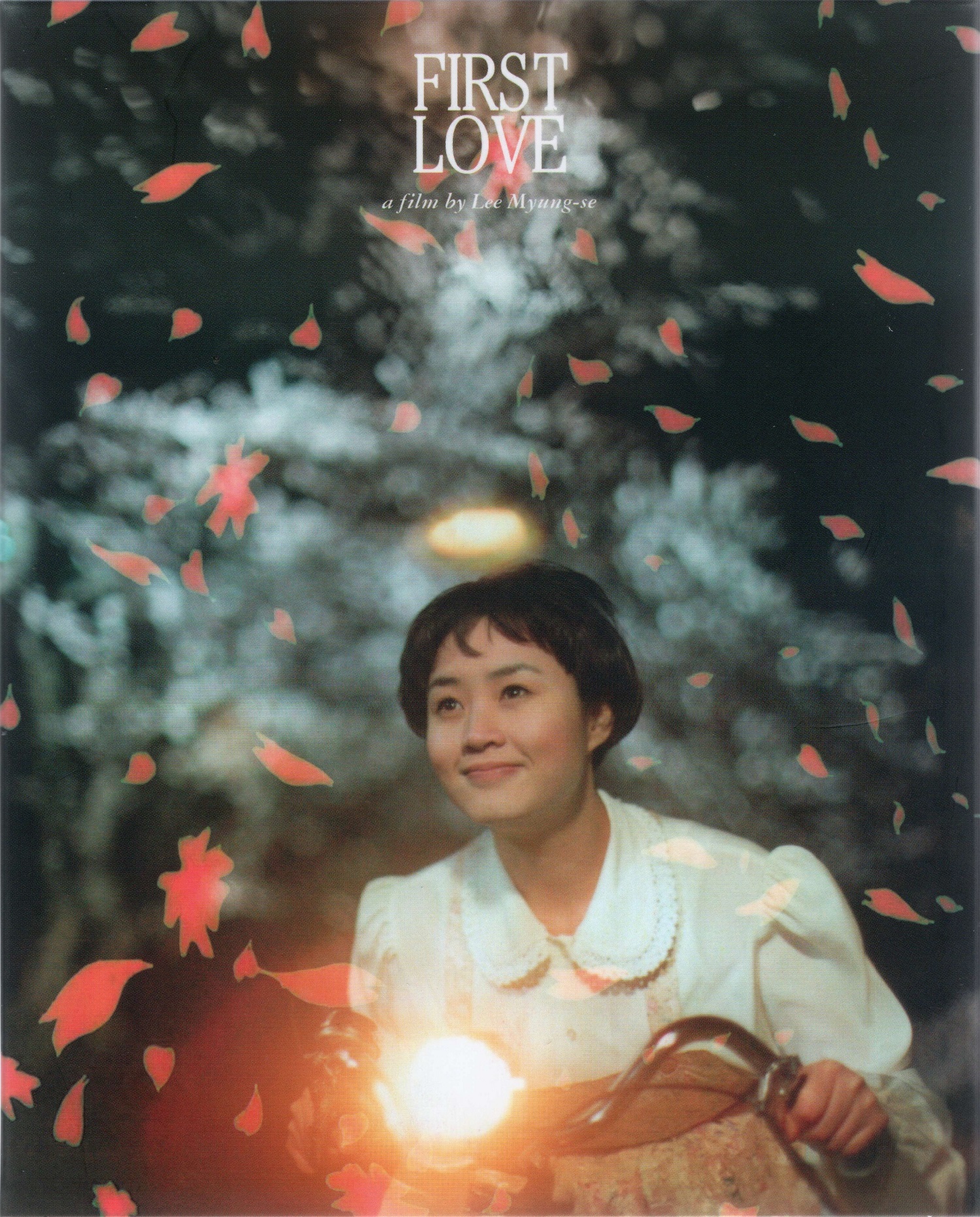
Expectations were high for Lee Myung-Se’s third film, First Love (첫사랑, Cheot Sarang), given that My Love, My Bride had been a runaway success. First Love proved to be, however, one of the worst box office disasters in Korean cinema history, selling fewer than 6000 tickets in Seoul during the Lunar New Year holiday. The film was however well received by the industry with star Kim Hye-soo picking up best actress at that year’s Blue Dragon Awards. Lee had originally intended to cast Choi Jin-sil, the female lead of My Love, My Bride, who had even turned down a TV drama series to do the film, but she apparently didn’t take to the personality of the character after reading the script and withdrew. Casting former child star Kim Hye-soo was seen as a left-field choice, but paid off in spades as Kim perfectly embodies the innocence and heartbreak of first love in charming fashion.

In some respects, the film is structured in a similar way to Thornton Wilder’s Our Town which first-year university student Young-shin’s (Kim Hye-soo) theatre club is performing. As the Stage Manager explains in the play, the first act will deal with everyday life, the second with first love, and the third with something else he assumes the audience will be able to guess, in case of the play, death. The film, however, ends with something more like continuity as the street where Young-shin lives turns from summer into autumn, winter, and then comes full circle into spring as one of the poems that pepper the screen pops up to remind us that everything begins and ends with nothing, or in other words, life goes on.

Set in the 1970s, the film opens with Young-shin taking a trip to Seoul from her rural hometown where she is a student in order to recruit a director for their play. She is immediately disappointed by Kang Chang-Wook (Song Young-chang), reflecting that she was expecting someone much more literary and poetic who in contrast to the local men wouldn’t smoke and drink excessively. Chang-wook even has an off-putting habit of rubbing his hair to shake the dandruff out which suggests poor hygiene. Nevertheless, her initial aversion to him soon transitions into attraction and an all-consuming, obsessive love, though she is only 19 and he 32. 

Much of the film takes place within her romantic fantasy and flights of fancy in which she develops superpowers such as invisibility or telekinesis while pursuing Chang-wook, her bicycle seemingly moving on its own under the vibrant cherry blossoms. She frequently addresses the camera directly to explain aspects of her life, particularly how boring it is in this rural town where the height of excitement is sending her younger sister out on an illicit late night mandu run. This thrill of romance is also, in that sense, a way of passing the time, though it’s often difficult to see what she sees in Chang-wook who is often patronising and has a bad drinking habit. When the pair go on a kind of date to a historical temple, he drinks so much that they miss the last train and Young-shin has to take him to a hotel, booking into a rent by the hour type place without realising and having to lie about her age on the register. 

But while she is experiencing her first love, so are others. Her childhood friend Moon-su (Jo Min-ki) is clearly in love with her, trying to declare his feelings by giving her a copy of Tugenev’s First Love, though this proves too obscure a clue for Young-shin who is still wrapped up in her own romantic drama. The deliberately artificial set design, mostly taking place on a studio set, evokes a strong sense of nostalgia for an idealised youth. Young-shin and her friend fancy Gregory Peck and Jean-Paul Belmondo, while there are posters for South Pacific in the background, echoing the ways in which Young-shin has also turned her life into a romantic melodrama. The saturated colour scheme also echoes the Technicolor past, golden light pouring in through the studio windows as Young-shin ponders her romantic dilemma. Only once are we reminded of the less cosy side of the ‘70s as the sirens blast to mark the start of the curfew, trapping Young-shin in the motel room with a passed-out Chang-wook waiting for the first train. Young-shin’s story may be tinged with melancholia as her romantic illusions are smashed by an unexpected discovery, but she still holds on to the memories of this magical time while knowing that there are other loves to still to come as time marches on.


Trailer (no subtitles)
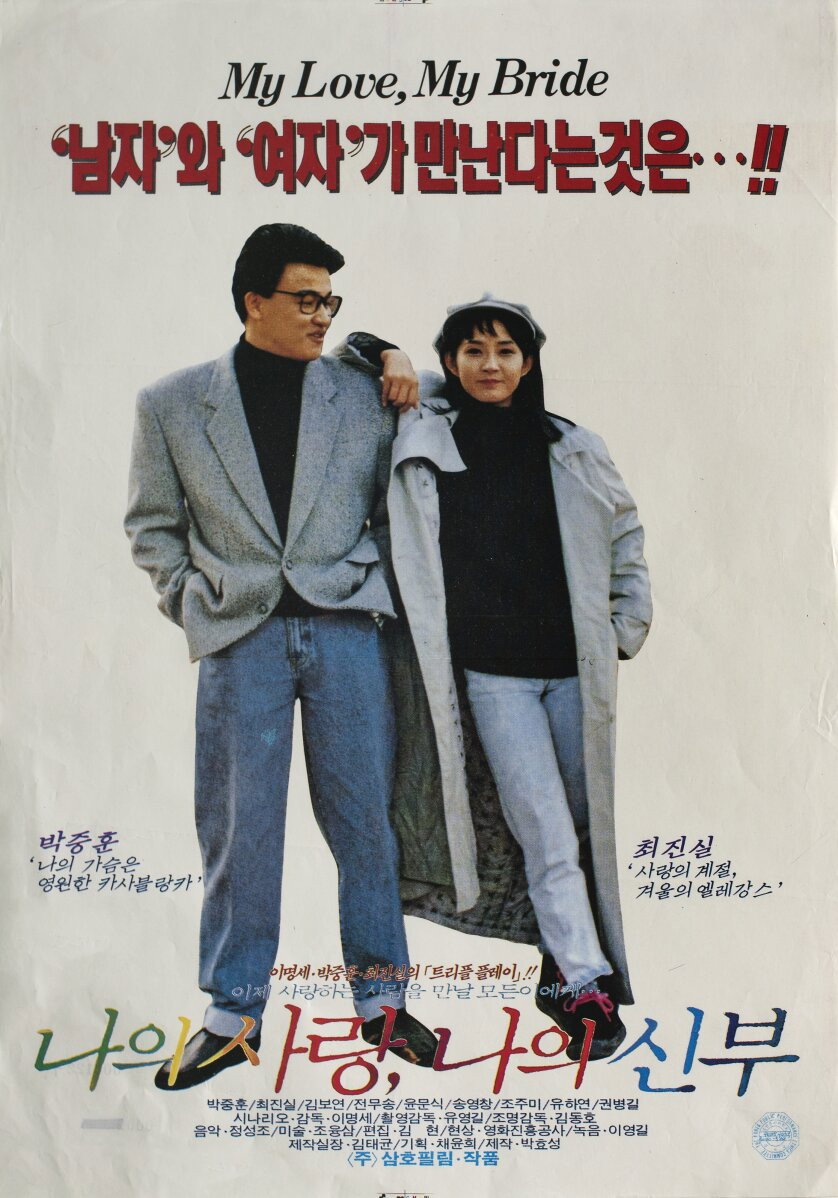
My Love, My Bride (나의 사랑 나의 신부, Lee Myung-se, 1990)

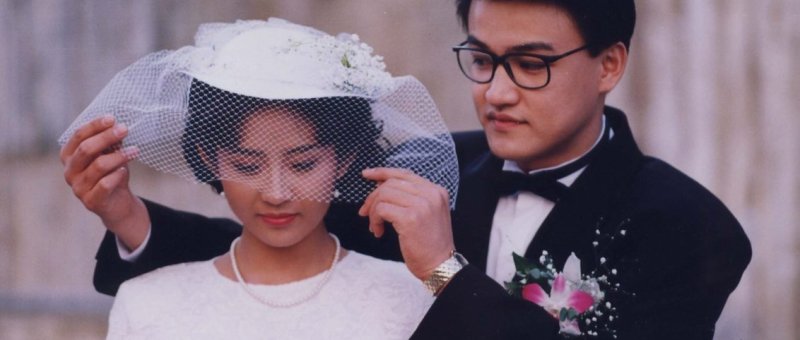
Following his anarchic debut Gagman, Lee Myung-se’s My Love, My Bride (나의 사랑 나의 신부, Naui sarang, naui sinbu), might seem like a more subdued affair recalling the technicolor rom-coms of 1960s Hollywood, yet makes use of innovative stylistic techniques to explore the lives of a newlywed couple in a newly democratising Korea. Like many similarly themed films, it is keen to poke fun at the protagonist’s chauvinistic perspective and self-involvement, but cannot completely condemn them either in expecting at least a degree of audience identification with this Korean everyman.

The film opens boldly with Young-min (Park Joong-hoon) directly addressing the camera to introduce himself and explain that this is the most important day of his life as he plans to propose to university girlfriend Mi-young (Choi Jin-sil). She, however, has got the wrong end of the stick and is convinced that he’s going to dump her. This set of mismatched expectations and miscommunication sets the tone for much of their early marriage as they struggle to settle into the rhythms of co-habitation and gendered expectations of married life.

Mi-young has given up work on her marriage, though Young-min often stays late at the office and expects Mi-young to take care of all the domestic responsibilities. When Mi-young tells him that she’s going to stay overnight after visiting her mother, his first question is what he’s supposed to do about his dinner. Mi-young has already prepared it and left it in the fridge for him to warm up later, specifically instructing him not to stay out too late drinking. Young-min, however, takes this as an opportunity to rebel against the constraints of his newly married life and fill the temporary feminine absence by pursuing a colleague, Seung-hee (Kim Bo-yeon).

Seung-hee is in many ways portrayed as the polar opposite of country girl Mi-young whom Young-min occasionally mocks and looks down on for what he sees as her lack of sophistication and poor cultural knowledge. Seung-hee is a poet who dresses in smart suits exuding confidence and power that suggest she will not be subservient to men but assert her power over them. She shows Mi-young up first when everyone at the office suddenly invites themselves over to Young-min’s apartment for a “house warming”, expecting Mi-young to conjure up a dinner party to show off her domestic skills at moment’s notice. Seung-hee is a fine singer and offers a poignant rendition of Love Me Tender, prompting Young-min’s boss to insist Mi-young entertain them with a song. She obliges with a popular love song, but her singing voice is much more ordinary and her inability to hit the high notes provokes horrified faces from Young-min’s colleagues who continue to make fun of the pair because Mi-young had spelled out “I love you” in peas in the lunchbox she made for Young-min. The older men, meanwhile, all go to lunch together reflecting that they can hardly expect the same from their own wives after so many years of marriage.

Young-min is also constantly asking himself what love is and wondering if his married life will continue to be happy. Split into a series of chapters, the film focuses a number of episodes in which the couple must confront various issues from a fairly traumatic honeymoon and wedding night to Young-min’s wandering eye and irrational jealousy. Though he tells Seung-hee that marriage should be about love rather than ownership, on spotting Mi-young in a cafe with another man he jumps to the immediate conclusion that she must have met with an old lover who is trying to win her back. In fact, it was her old boss whom she ran into by chance while waiting for Young-min, and the reason that she’s crying is that he informed her one of their former colleagues has passed away. Young-min makes no attempt to talk to Mi-young about any of this, but starts giving her the cold shoulder for no reason endangering their growing bond as newlyweds. Mi-young, meanwhile, looks back on first love after receiving a letter from an old boyfriend who moved to Canada. He is no longer the handsome young man she once knew but portly middle-aged father of two. 

To escape the boredom of her married life she takes a trip to a random rural town where she buys cigarettes, has her photo taken, and is offered an unexpected job opportunity after wandering into a cafe that is clearly a front for a delivery coffee service. Though Young-min is often quick to pride himself for his emotional intelligence as a writer, he’s often inconsiderate of Mi-young. When he wins the New Writer’s Award, he insults Mi-young’s outfit moments before they leave implying that she looks cheap and common and that people will expect a writer’s wife to look sophisticated. At the party, she’s sat sadly on her own ignored by everyone including Young-min, while he expects to trot her out for interviews as his loyal and supporting wife. Even when, she’s taken ill, his mind flashes to the scenario of her death on which his main thoughts are that he’s too busy for all this right now, and though it might be nice to live alone, who’s going to take care of his laundry?

Nevertheless, Mi-young’s temporary absence does make him realise that he misses her in ways other than the practical and seems to paper over the other cracks their relationship so that they can put all the petty disagreements to one side and love and accept each other. Lee uses a series of humorous devices including onscreen graphics and speech bubbles to reflect the protagonists’ thought processes, while the fantastic production design gives their world a sense of cosy unreality. Meanwhile, he uses the changing of the seasons to reflect the changing dynamics of couple, embracing romantic imagery such as the moon rising and snow falling as Young-min and Mi-young fall into a more settled rhythm and an older Young-min reflects that he is still in the process of finding out what love is, but is grateful for the happy life he’s been able to make for himself as a husband and father.


Trailer (no subtitles)

The Killers (더 킬러스, Kim Jong-kwan & Roh Deok & Chang Hang-jun & Lee Myung-se, 2024)

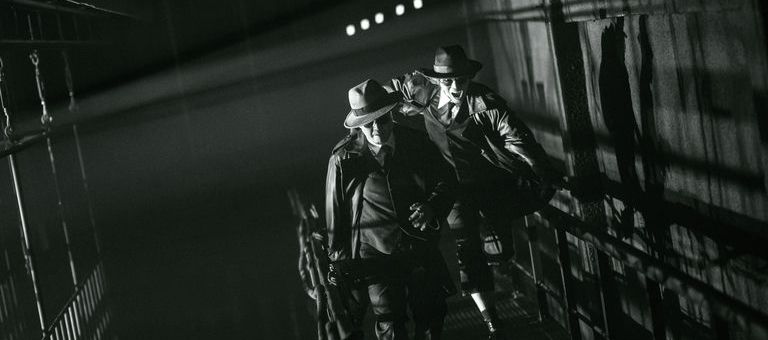
Led by Lee Myung-se, The Killers (더 킬러스) was originally billed as a six-part anthology film featuring different takes on the short story by Ernest Hemingway, but somewhere along the way took a kind of detour and now arrives as a four partner with a looser theme revolving around noir and crime cinema. Frequently referencing the Edward Hopper painting Nighthawks, the film hints at urban loneliness and a haunting sense of futility along with the mythic quality of noir as a tale that tells itself.

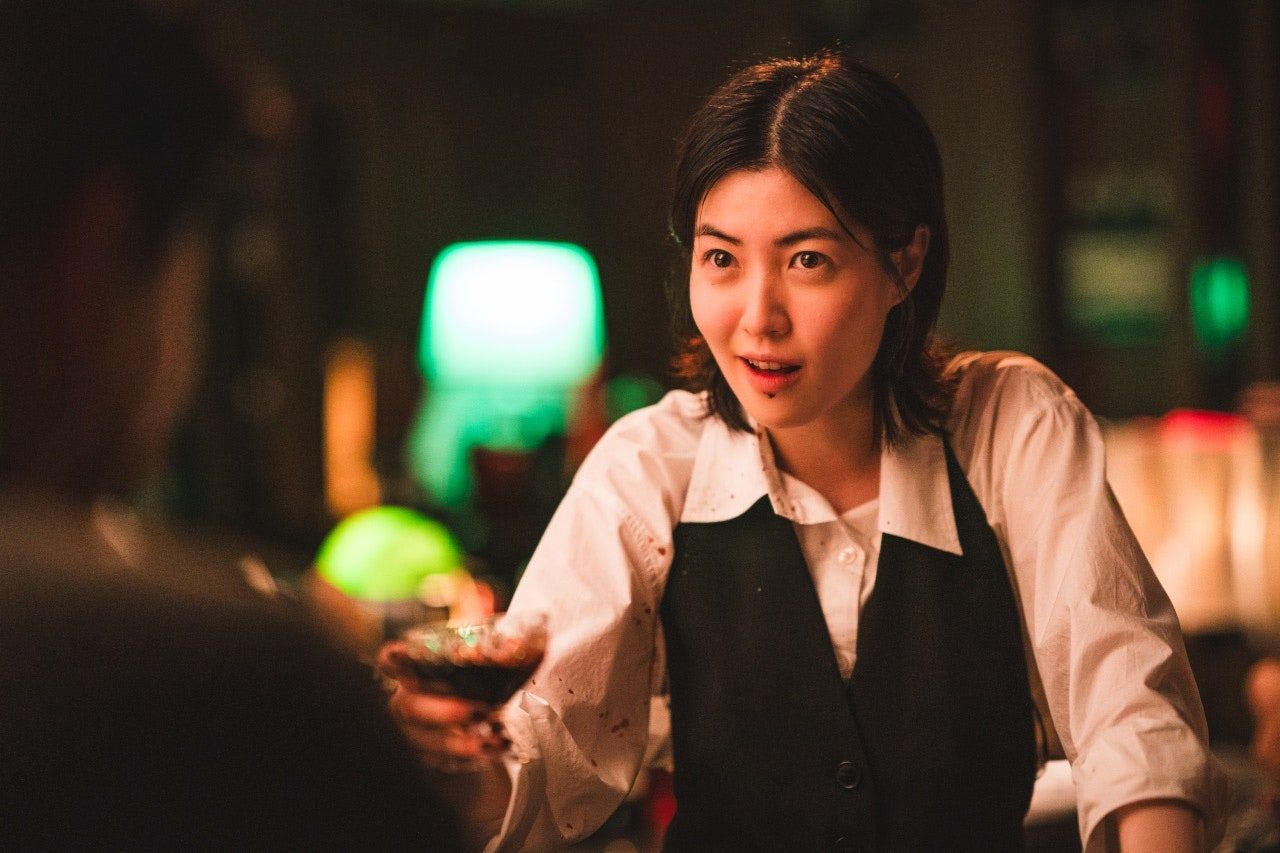
At least that’s in part how it is for unreliable the narrator of the first episode, a petty gangster who wakes up in a mysterious bar after being cornered by rival thugs. While in there he meets a similarly lost, middle-aged film director in the middle of a strange date with a fawning young woman who’ve definitely wandered into the wrong place. A sense absurdity is echoed in the fact that the man continues to sit in the bar oblivious to the knife in his back until the bar lady pulls it out for him and exposes the real reason why she lures lonely souls to this strange place out of time. Even so, thanks to her dark initiation the gangster is able to become himself and stand up against the rival thugs who were bullying him with his newfound “feistiness” having overcome something of the futility of black and white, classic noir opening sequence.

That’s something that never really happens for the heroes of part two who are a trio of youngsters trapped in Hell Joseon unable to escape their lives as cut price contract killers working below minimum wage for a chaotic company in which everything has been sub-contracted into oblivion. Ironically, one had dreams of becoming a policeman and another a nun while the third has recently had plastic surgery in the hope of landing an acting gig and claims he’s not in this for the money but to make the world a better place. Seeing their work as a public service, they tell each other that it’s wrong to grumble over their unfair pay because other people get less and are otherwise incapable of standing up for themselves until they take a leaf out of the boss’ book and try a subcontracting of their own which doesn’t quite go to plan.

While the first two episodes had been set in the present day the second two are set during the long years of dictatorship, the first sometime in the 1960s under the rule of President Park as an undercover detective and two men who appear to be unsubtle KCIA agents descend on a noirish, rundown bar with a picture of Nighthawks on the wall waiting for a mysterious fugitive to arrive. They don’t appear to know anything about why their target needs to be caught or who he is save for a daffodil tattoo on his arm and are merely they shady figures of authoritarian power we can infer are hot on the tracks of someone hostile to the regime. In any case, they are they are about to have the tables turned on them in a demonstration of their inefficacy in their power.

It’s the fourth and final piece unmistakably directed by Lee himself, however, that brings the themes to the four as it opens with an allusion to the assassination of President Park as the narrator tells us that it is 1979 and someone sent a bullet into the heart of darkness but the darkness did not die. The two goons who later show up are KCIA thugs working for the new king Chun Doo-hwan come to threaten the denizens of the cafe which include a man called “Smile” because he can’t and a woman called “Voice” because she has none while trapped inside an authoritarian regime. Inhabitants of Diaspora City, a home to the exiled, they have only a small hole to another world which affords them the ability to dream. Relentlessly surreal the segment is marked by Lee’s characteristic visual flair and sense of noirish melancholy that extends all the way out to a world more recognisably our own though no less lonely or oppressive.


The Killers screened as part of this year’s New York Asian Film Festival.

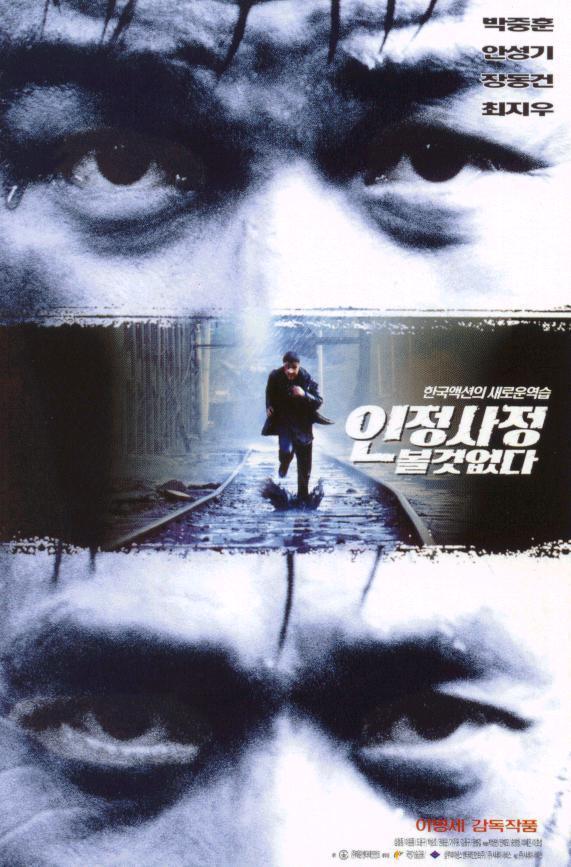
Nowhere to Hide (인정사정 볼 것 없다, Lee Myung-se, 1999)

Nowhere to hide poster

One of Korea’s foremost visual stylists, Lee Myung-se’s work has often been under appreciated at the time of its release. His desire to experiment finds fertile ground in the intensely kinetic ode to the police procedural, Nowhere to Hide (인정사정 볼 것 없다, Injeongsajeong bol Geos Eobsda). A tale of cops and robbers, Nowhere to Hide follows a cop who talks too much on the trail of a silent assassin who is, in fact, an expert at hiding in plain sight through the art of disguise. Moving quickly from one intense, beautifully choreographed set piece to the next, Lee draws inspiration from the crime-tinged tragedies of old Hollywood and beyond whilst embracing those of his home nation in the classic twin pairing of actors Ahn Sung-ki as the enigmatic assassin, and Park Joong-hoon as the bullheaded cop hot on his trail.

Lee opens in black and white with Inspector Woo (Park Joong-hoon) in full on gangster mode as he wanders through a ruined landscape, pausing only to tie his shoelace while the pulsing, punkish music continues in the background, before he walks in on an entire room of besuited gangsters and calmly sits down to introduce himself. Sometime later, Sungmin (Ahn Sung-ki), in sunshades and trench coat, patiently bides his time before committing a dramatic murder and making off with a mysterious briefcase.

What follows then is a game of cat and mouse as Woo chases the ghost of Sungmin through dingy back allies and neighbourhood dive bars, taking his more serious partner, Kim (Jang Dong-kun), whose more primary motivations include his family or more particularly his little girl, along for the ride. Woo lives only for his work, drawing more thrill from the chase than he is likely to admit. Through his pursuit of Sungmin, Woo draws closer to a side of himself he hoped to avoid, burying his natural rebelliousness in service of the law. We see him brutally interrogate suspects, even at one point trussing one up like a prize pig and suspending him between two desks in the middle of the police station. It is, in this sense, Woo who is left with “nowhere to hide”. As a young man, he had a violent streak which might well have led him into crime if his father had not pointed him towards the police, but he can no longer claim to be very much different than the quarry he pursues. His true nature has been laid bare by his opposing number.

Woo’s rage and unpredictable energy are tempered by Kim’s evenhandedness, but after a job goes wrong and Kim kills a suspect by mistake he starts to fall apart. Suddenly Woo cannot rely on Kim to save him from himself and then tragically fails to save Kim during another operation, leaving him open to serious injury. His quest is now as much one of vengeance and personal feeling as it is of justice.

Sungmin, by contrast, says not one word in the entirety of the film. A felt presence more than a seen one, he slips in and out of personas, escaping from the scene in various disguises as a figure more of legend than of reality. A close relationship with a bar hostess girlfriend is Woo’s way in to Sungmin’s world, correctly identifying a weakness and pressing it, pursuing a more concrete route to the centre of Sungmin’s existence than simply tracking him through the shady netherworld in which he lives.

The two men run from and mirror each other as pictures of action and stillness, resistance and urgency. Through a relentless pursuit of capture or escape, neither can evade the shadow of himself, each moving closer to their true selves as repressed elements surface and threaten to destroy the whole. Woo and Sungmin are each on a mutually destructive pursuit of the self as much as they are for their own, self defined goals.

Lee frames all of this within his characteristically ironic world view, painting the drama as comedy imbued with its own kind of cartoonish slapstick. Throwing in cinematic homages from a brief nod to Battleship Potemkin to an ending plucked straight out of The Third Man, Lee mixes freeze frames with an odd jump dissolve technique which lends his intensely beautiful choreography an impressionistic, fleeting quality. Two men chase the shadow of the other, engaged in a desperate game of hide and seek, but when the game is up neither may like what they see.


Screened at London Korean Film Festival 2017.

Robbery sequence (dialogue free)

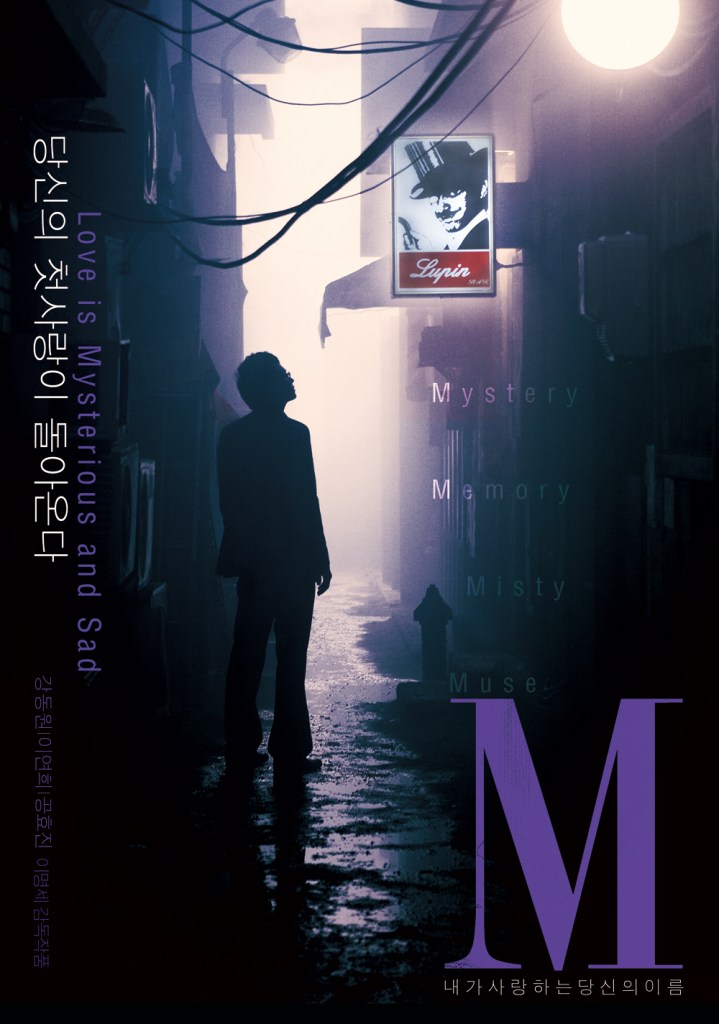
M (엠, Lee Myung-se, 2007)

“More specific, less poetic” the distressed author hero of Lee Myung-se’s M (엠) repeatedly types after a difficult conversation with his editor. Almost a meta comment on Lee’s process, it’s just as well that it’s advice he didn’t take – M is a noir poem, a metaphor for an artist’s torture, and a living ghost story in which a man shifts between worlds of memory, haunted and hunted by unidentifiable pain. Reality, dream, and madness mingle and merge as a single kernel of confusion causes widespread panic in a desperate writer’s already strained mind.
A young woman haunts the screen, pleading with us to remember her and be sad. She is a dream, a visitation into the mind of blocked writer Han Min-woo (Gang Dong-Won) whose publishers are eagerly awaiting the completion of his next manuscript. Back in the real world, the same young woman appears around Min-woo but seems to be in an entirely different plane of existence, completely invisible to the man she claims to love. Eventually Min-woo enters a mysterious back alley bar and finally engages with the girl, Mimi (Lee Yeon-Hee), before blacking out and forgetting all about the whole thing.

Reality resets once again and we realise Min-woo is about to be married to Eun-hye (Kong Hyo-Jin) – the daughter of a wealthy man who seems to approve of the marriage if not, exactly, Min-woo’s literary career. Min-woo should be happy – he’s getting married to a woman he appears to care for, has been successful in his career, and has everything pretty much set for life at only 29. Min-woo is not happy. Persistent writer’s block means he’s written almost nothing with a deadline approaching, he’s worrying about money, and somehow or other he can’t quite commit to Eun-hye – there is something nagging at his mind, but try as he might he cannot say what.

Min-woo is worried enough to visit a psychiatrist but the doctor offers little more than a bottle of prozac and an instruction to call back in the morning. His mental state is clearly fracturing but even objectively his manner is strange, suddenly shouting or issuing orders in a shocking break from his generally mild mannered exterior. As if the mounting pressure of his overdue manuscript weren’t enough, Min-woo is extremely insecure in his literary talents. He views himself as a successful hack, berating those who dare to praise his work as fans of cheap trash.

Yet his internal world seems to be defined by potboiler hardboiled with its rain drenched streets, foggy avenues, and smokey bars peopled by miserable whiskey drinking men and omniscient bartenders. Describing the process of piecing his fractured mind back together as re-editing a film in which several frames are missing, Min-woo quickly becomes lost inside his own internal landscape, trying to locate the wound to stem the bleed but finding it ever elusive. Mimi is more than a spectral figment of his imagination. A living personification of the living past, her presence haunts him with the power of mystery, like something unforgettable which has long been forgotten.

In the end, Min-woo’s creative madness is a salve for an internal scar but its final resolution may be its own undoing. A love story and a ghost story, Min-woo’s crisis is every man’s obsession with lost love. Guilt mingles with pain and regret but also with existential confusion and unresolvable loss. As he later puts it, you lose things, often the things which are most important to you – it is a part (and a privilege, in someone else’s words) of being alive. You try to bury your pain in oblivion but eventually the things you’ve lost will be returned in unclear or unexpected ways. Min-woo may have made peace with himself (or this aspect of himself), allowed a ghost to bid him goodbye, but then again, perhaps he only dreamed himself free and is forever condemned to remember and be sad.


Original trailer (no subtitles)

Gagman (개그맨, Lee Myung-se, 1988)

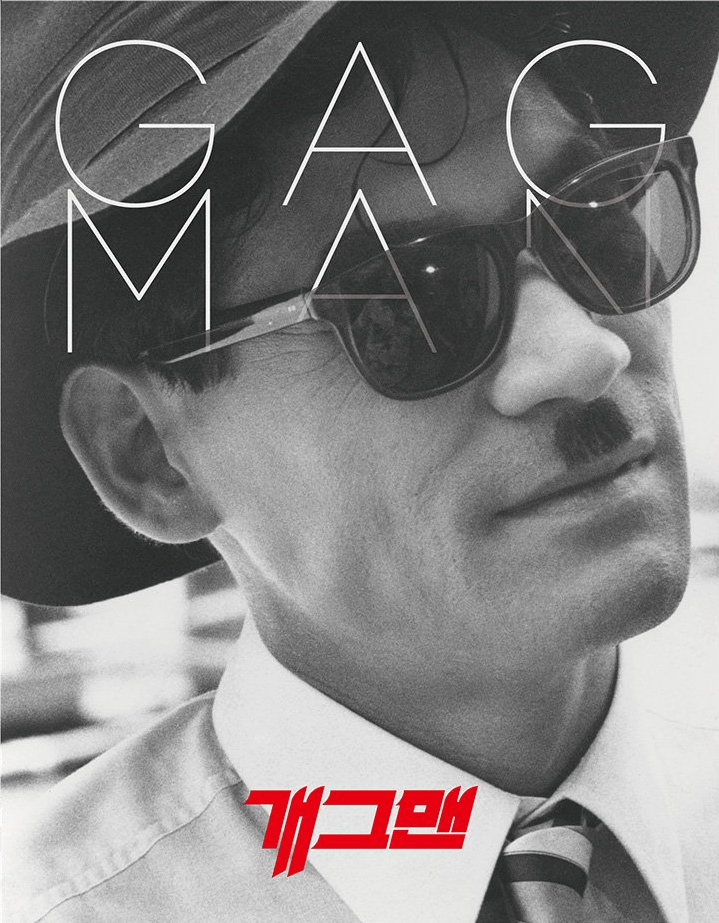
gagman cover

Is everything we see a waking dream or does it just appear that way? This question posed (or perhaps dreamed) by the protagonist of Lee Myung-se’s debut becomes a kind of key for unlocking much of what has gone before as Lee freewheels between fantasy and reality as his cast of movie obsessed dreamers attempt to inhabit their very own stretch of celluloid within the “real” world. Released in 1988, Gagman (개그맨) catches Korea in a moment of transition. Newly free of a lengthy dictatorship and back on the world stage after hosting the 1988 Olympics, the country was eager to promote itself as a modern liberal democracy. Hence, the arts were the first to feel the new freedom with young directors given the chance to create boundary pushing films and show just how far Korea could go. Lee was just one of these directors but Gagman is no political treatise (at least, not directly) preferring to experiment with form as a farcical exercise in meta comedy.

Cinema obsessed comedian Lee Jong-sae (Ahn Sung-ki) wants nothing more than to make the next great Korean movie which every one of the 40 million Koreans will fall in love with. Consequently he’s blagged his way onto the film set of a top director to whom he’s already sent his “prize-winning” script. Eventually thrown out, Jong-sae does not lose heart but promises the lead role in his movie to his equally film obsessed barber Moon Do-suk (Bae Chang-ho) whom he sends out on “research” missions walking into banks and asking about security. A fortuitous meeting with a feisty young woman in a cinema, Oh Sun-young (Hwang Cine), provides a another impetus for Jong-sae’s filmmaking dreams and so when he unexpectedly gets his hands on a gun after an encounter with a deserting soldier things just got real in a very unexpected way.

Lee signals his intent early on with a static camera shot focusing on the barber, Do-suk, as he waxes on about Kirk Douglas in the Vikings whilst simultaneously remarking on the fall in quality of his beloved dog meat. Do-suk feels that when it comes right down to it, Korean mutts are the best – not these scrawny poodles that cheap restaurant owners are substituting for the real thing. His comment might easily go for himself and Jong-sae, two scrappy working class Korean guys trying to make it in a walled off industry, but interestingly enough bar a mention of Sorrow Even Up in Heaven, Lee’s references are to European and American cinema rather than that of his homeland.

The most obvious of these lies in the central gag – that the gagman has a “funny” face. Ahn Sung-ki is saddled with a Charlie Chaplin moustache throughout the film (with the added bonus that it of course looks like a Hitler moustache to European/American viewers) and plays Jong-sae as someone who’s constantly doing a Chaplin impression with his strange walks and silent cinema plaintive looks. Ahn even begins layering his performance so that we get Charlie Chaplin impersonating Brando in the Godfather to recite the melancholy monologue which seems to open Jong-sae’s unfilmable script. For Jong-sae his existence is cinema, the life he lives is unreal or surreal always with an added dose of narrative in the ongoing story of his rise to greatness as the most famous Korean filmmaker of them all.

Fantasist as he is, Jong-sae has a way of pulling other people into his unrealisable dreams including the barber Do-suk and a young woman who unexpectedly starts canoodling with him in a cinema in an attempt to avoid some other creepy guys. Oh Sun-young is almost a mirror image of Jong-sae in her pragmatic realism though she too is looking at the stars and willing to engage in fantasy to get there. It is she who first suggests that the “research” they’ve been doing might have a more practical application and she is also the one to maintain a calm approach to their eventual need for escape but, even if she always has one foot in reality, Sun-young cannot escape the gravitational pull of Jong-sae’s strange dreamverse. Do-suk, by contrast, is a willing convert – just as obsessed with cinema and comics as Jong-sae, his desperation to be a part of the movies and unwavering faith in his friend lead him to give up everything in service of art even going so far as to get painful eye surgery to increase his box office potential (apparently a meta dig at a Korean celebrity who did something similar).

In keeping with the Chaplin theme Lee’s humorous universe is defined by slapstick and absurdity, his dialogue needlessly theatrical and mannered with a melodramatic seriousness. Nevertheless Lee makes the most of his canvas as the film goes on behind Jong-sae while he enters one of his reveries as in one particularly amusing scene in which he attempts to declare his love to Sun-young without noticing that she’s long wandered off and been replaced by Do-suk. Despite the cartoonish, comedic tone the atmosphere is a melancholy one reflecting the final destination of Jong-sae’s film project but also of his continuing inability to integrate the two distinct universes into one concrete whole which could be termed “reality”. In this Lee returns to that first question but this time he asks us as cinema lovers which world it is we live in, and which it is that is the more “real”.


Gagman is available on region free blu-ray courtesy of the Korean Film Archive but you can also watch the whole thing legally and for free via their YouTube channel!