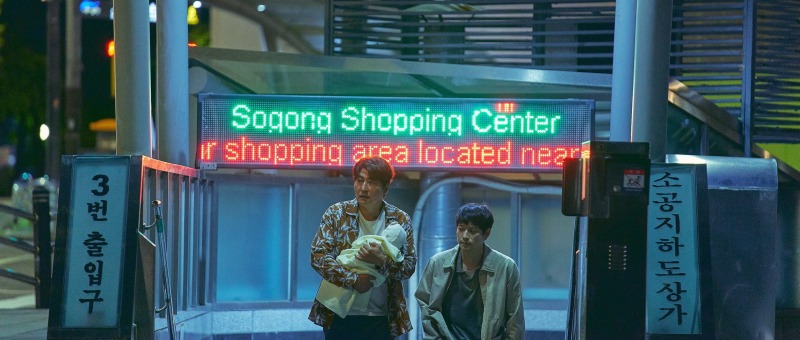
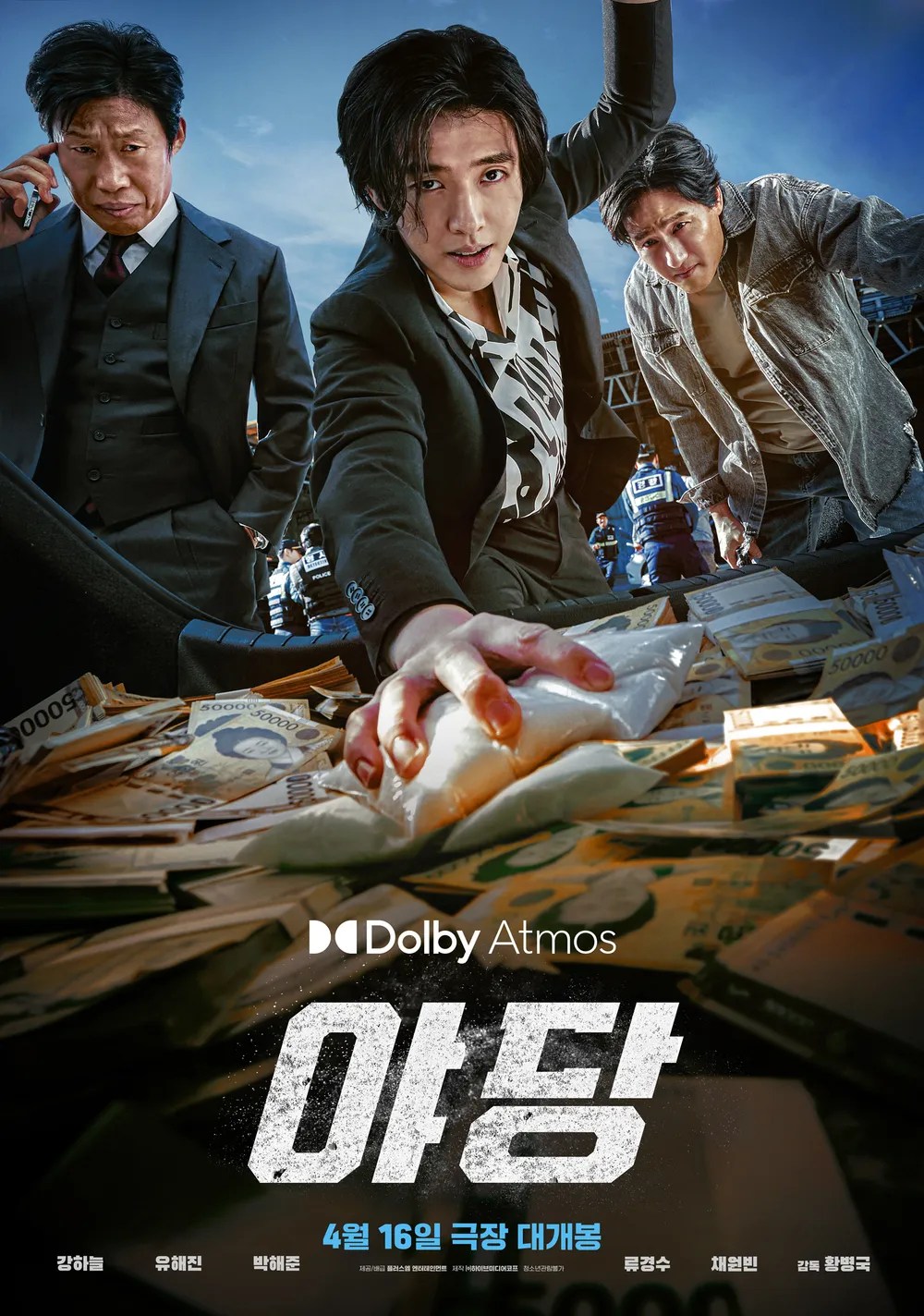
Yadang: The Snitch (야당, Hwang Byeng-gug, 2025)

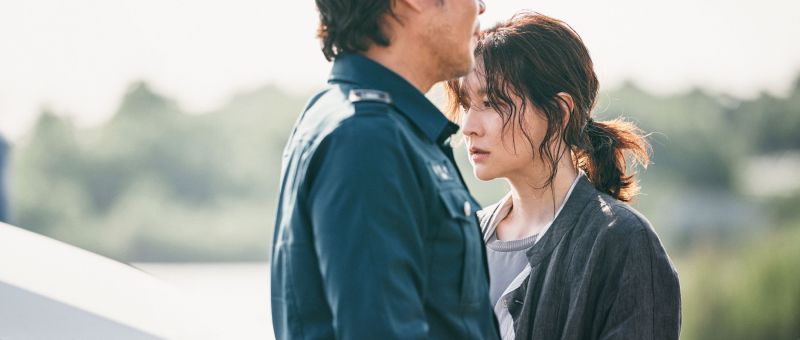
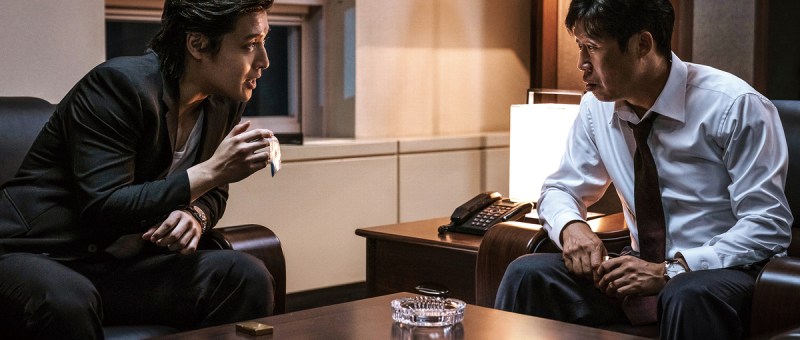
A Korean prosecutor can make or break a president, according to the ambitious Ku (Yoo Hae-jin) making a final power play to put an arrogant chaebol son in his place. But Ku isn’t trying to make a stand for the rule of law so much as bend it to his own will while securing his position, because in the world of Yadang: The Snitch (야당) justice is largely illusionary while mediated through the complex interplay between the social and political elite, crime, and law enforcement.

The hero, Kang-su (Kang Ha-neul), makes this plain in explaining that the big drug busts that get the police into the papers are largely all orchestrated through the snitchery of yadang like himself, a set up in which low-level drug users are encouraged to become police informants in return for lenient sentences allowing the detectives to take care of the dealers. Perhaps that’s all very well, as detective Sang-jae (Park Hae-joon) says, there’s no point locking up hundreds of users because the supply is endless and it makes no difference to the business. Kang-su’s likening of them cockroaches is a little problematic, even if he has a point that if you want to get rid of the infestation you have to go in for the nest.

But it turns out the nest is in an unexpected place because the nexus of corruption is in the government and political system which has been infiltrated by wealthy businessmen looking to further their own ambitions through politics while their feckless children behave like princelings knowing they can do whatever they want and then ring their fathers to make whatever consequences might occur go away. Though the film doesn’t go too deeply into it, there is something in the fact that both Ku and Kang-su come from poor, single-parent families though the direction of their ambitions might be quite different. Ku has studied hard to become a prosecutor and escape his poverty, but has only 10 years to make it into the top ranks or be forced to resign. He exploits Kang-su’s desire for wealth and agency to help him achieve his ambitions but though he describes him as a brother, is all too ready to throw him under the bus once he’s no longer useful to him. 

For his part, Kang-su relishes his role within this ironic system as someone on the fringes of crime but also facilitating law enforcement without being manipulated by the police in the same way that their informants often are. Sang-jae swears to protect a young actress after picking her up in a bust if she helps him catch the kingpins but in the end he can’t do it, partly because of Ku, but also because at the end of the day his fellow officers have the same opinion of their snitches as Ku does his and aren’t terribly invested in their safety or wellbeing. After getting caught up in Ku’s showboating raid on a hotel where chaebol son Hoon is partying with yakuza drug dealers, Su-jin’s (Chae Won-bin) career is ruined and on her release she has only the drug scene to rely on with the consequence that she becomes an addict and a dealer herself.

But it was Hoon (Ryu Kyung-soo) that made her a user in the first place by spiking a drink and then went on to use his privilege to control her and make sure that she stayed within his orbit. Ambitious men like Ku make their deals and let the chaebol sons get away with their crimes, though his late in the game attempt to remind Hoon that he could ruin his father’s chances of becoming Korea’s next president if he chose to implies his own sense of worthiness that he is actually above this illusionary elite though he may be overestimating his reach. These three branches of branches of power operate in a symbiotic system and need each other to survive. Ku is only really a kind of Yadang himself, mediating between a social and political elite while enjoying only the illusion of power and independence. Hwang ups the action stakes with some high impact set pieces including that in which Kang-su uses the brute force of his Hummer to literally bulldoze a car full of drug dealers while the police chase after them with metal poles, but seems to suggest the real violence stems from the system if ultimately opting for an ironic buddy cop conclusion in which Kang-su uses his considerable skills in a more legitimate fashion.


Trailer (English subtitles)
The 8th Night (제8일의 밤, Kim Tae-hyoung, 2021)

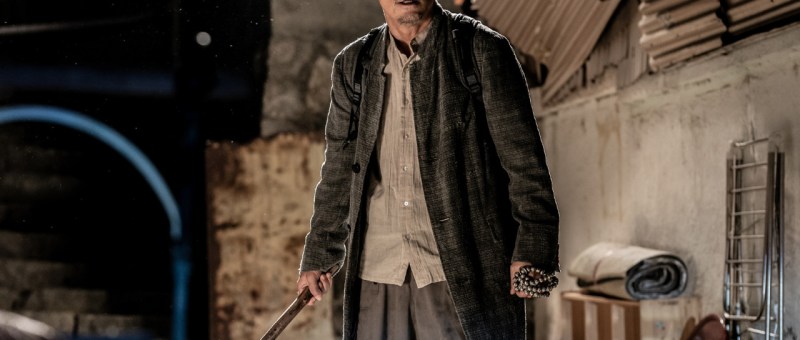
“But even the most trivial moments of our predetermined fate are meaningful as pieces of the whole” according to embittered former monk Jin-su having reached a moment of philosophical epiphany after bringing his karmic retribution full circle. Another in the recent series of Buddhist supernatural thrillers from Korea, Kim Tae-hyoung’s The 8th Night (제8일의 밤, Je8ileui Bam) once again turns apocalyptic as an ancient evil is set for accidental revival thanks, largely, to the wounded pride of a bitter old man. 

As the opening voice over explains, thousands of years ago the world was threatened by a powerful demon. Luckily, Buddha managed to vanquish him, tearing out his two eyes, one black one red, and burying them on opposite sides of the Earth in order to prevent them ever being reunited. Some people, however, just can’t resist chaos which is presumably why Professor Kim (Park Hae-joon) insists on retrieving the canister containing the Red Eye from its desert resting place, thereafter releasing its power when his discovery is rejected by both Buddhist and scholarly authorities. Sensing a disturbance in the equilibrium of the world along with the upcoming Blood Moon, priest Hajeong (Lee Eol) realises the prophecy of which he has been a guardian is about to come true. His big, somewhat unethical plan, is to kill off one of the seven pre-ordained victims of the Red Eye which he plans to possess in order to reunite with its partner in and stop it body hopping towards the apocalypse. 

You can make a case for greater good, but murdering an innocent person to put an end to a curse seems at best unfair, not to mention not very Buddhist. Hajeong sends young monk Cheong-Seok (Nam Da-reum) to track down his former pupil, Jin-su (Lee Sung-min) then known as Seonhwa to give him the instruction to assassinate the “Virgin Shaman” with a holy axe to stop Red Eye in its tracks. Jin-su is seemingly unconflicted about the murder but is carrying his own baggage, now living as a resentful construction worker. As it turns out, he and Cheong-seok are also linked by a karmic circle of guilt and trauma that the boy doesn’t remember and Jin-su has been running away from since leaving the temple. Meanwhile, he is also plagued by voices of departed spirits he for some reason refuses to help cross over to the other side. 

Meanwhile, over on the side of the rational, two policemen mirror the monks’ movements as they investigate the strange paper chain of mummified corpses turning up all over the city. Veteran cop Ho-tae (Park Hae-joon) feels responsible for his feckless associate Dong-jin, blaming himself for an accident which has left him physically impaired while resisting instructions from his boss to fire him. Yet the pair are entirely ill equipped to investigate this case of spiritual malevolence, confused by its religious connotations but perhaps filled with suspicion on realising that all of the victims belong to the same “meditation group” for people with suicidal thoughts which has been offering “free” blood tests and apparently paying for attendance. Described by one as more like a cult, the shady meditation group might be one kind of evil but what they’re currently facing is on an entirely different level. 

The irony is that it’s Jin-su who must learn to save the world by finding closure with his own traumatic past, generating a paternal bond with young monk Cheong-seok who is so excited by the world beyond the temple that he accidentally breaks his vow of silence and then can’t stop talking. Cheong-seok’s sense of wonder and confusion, unsure what to do about the meat he keeps finding in his food but also slightly bemused by Jin-su’s willingness to eat it for him, stands in direct contrast to Jin-su’s embittered cynicism as he attempts to resist his destiny only to receive a ghostly reminder that you can’t escape your fate and, in any case, his duty would simply fall on the successor, Cheong-seok. In order to save the world, he has to free not only himself but also Cheong-seok too from the cycle of karmic retribution which binds each of them in the “agony and anxiety” of the monster’s separated eyes, determining to set them to rest once again to restore a sense of balance in a destabilising world. A buddhist procedural, Kim’s supernatural horror may rediscover that hell is a place on Earth but eventually allows its heroes the possibility of escape if only in the willingness to free themselves from the shackles of the traumatic past. 


Original trailer (English subtitles)
In Our Prime (이상한 나라의 수학자, Park Dong-hun, 2022)

Education is supposed to be the great leveller, a true meritocracy in which a combination of hard work and innate ability can enable anyone to follow their chosen path as far as it will go. The reality is however far less idealistic. Park Dong-hun’s In Our Prime (이상한 나라의 수학자, Isanghan Naraeui Suhakja) is the latest in a series of Korean films taking aim at corruption within the educational system along with a persistent classism that ensures only the “right” kind of people are allowed to prosper. 

Han Ji-woo (Kim Dong-hwi) knows he’s not the “right” kind of person and feels out of place at the elite boarding school where he is bullied by teachers and students alike for being a scholarship boy amid the children of mostly wealthy families. Though he won the place though being a top student at his previous school, now his grades are merely average and he’s bottom of the class in maths. Ji-woo’s odious, elitist teacher coldly tells him that his case is hopeless and he’ll never get into a top league university with these kinds of grades at this kind of school. He pressures Ji-woo into applying to transfer out which he is reluctant to do because he knows how much his attending such a prestigious school means to his widowed single mother. In any case as we later discover, the teacher merely has it in for him openly complaining with other members of staff about having to fuss with paperwork for kids on scholarships and bursaries who in his opinion don’t really belong in a place like this which is clearly geared towards perpetuating the privilege of the children of the elite at the expense of those like Ji-woo. 

When Ji-woo is caught smuggling in pork and soju at the behest of his exploitative roommates he refuses to dob them in, making the unlikely claim that he intended to consume all four meals himself. The teacher first praises his idealistic stance but then calls him an idiot because the other boys wouldn’t do the same for him nor are they coming forward themselves to take responsibility. Perfectly happy to let the scholarship boy take the blame one of them even crassly slips Ji-woo some money afterwards, genuinely confused when Ji-woo tries to turn it down claiming such things are unnecessary between friends. Nevertheless, the incident brings him the attention of the “commie officer”, a North Korean defector (Choi Min-sik) working as the nightwatchman who easily solves Ji-woo’s impossible maths problems. The officer eventually agrees to teach him maths but only on the premise that he doesn’t care about tests or grades but solely on the art of learning. 

What he teaches Ji-woo is a valuable lesson that cuts straight to the quick of the issues within the educational system in which children are being taught to blindly answer standardised questions without developing critical thinking skills. The first problem he shows him has a deliberate error in it, but Ji-woo is so focussed on giving the correct answer he doesn’t stop to consider the question itself may be wrong and as the officer is fond of saying there can be no correct answer to an incorrect question. Yet this new philosophy of maths in particular being a purely rational science in which there is only one true answer brings Ji-woo back into conflict with his teacher who complacently teaches to test and humiliates him when he points out one of the test questions is badly formulated. The teacher tells them the correctness of their answer is irrelevant for they must answer in accordance with the textbook and willingly say that black is white if the textbook says it’s so. Meanwhile it also becomes apparent that he has been taking kickbacks from parents getting wealthy students into an elite tutoring group where he leaks the questions on upcoming exams.

This discovery prompts a minor rebellion by rich kid Bo-ram (Jo Yun-seo) who becomes disgusted with her elitist mother after being unwittingly enrolled in the cheating cabal while already resenting her for having made her give up playing the piano. For the officer, music is a mathematical language and merely an expression of the beauty of numbers which can used to explain everything there is in the world, yet as we discover he left North Korea after finding out that his research was used in weapons production only to become disillusioned with the South on realising that here people merely use it as a tool for advancement towards dull and conventional lives in the service of capitalism. When Ji-woo admits that he supposes he wants good grades to get into a good uni and then get a good job to be set for life, the officer decides to broaden his horizons encouraging the better instincts the elites at the school had rejected and showing him how to think for himself rather than blindly follow what he’s being taught. 

All that might seem quite ironic for a man from North Korea pointing out the unhelpful brainwashing of a rote learning system along with the unpleasant complacency of Ji-woo’s teacher not to mention his unethical hypocrisy. Nevertheless, the officer has his own tragic past which suddenly rears its head just as the two begin to form a paternal bond and Ji-woo finds himself at a moment of crisis once again pushed towards a transfer. Though the system is stacked against them, Ji-woo and Bo-ram eventually find their way through it in their shared resistance bolstered by the officer’s teaching as they gain the strength to fight back with honesty and integrity. It may be a slightly rosy conclusion implying the system has been corrected as if Ji-woo’s teacher were the only problem rather than the product of its corruption but does at least make the case that integrity is the one thing that pays but can’t be bought.


International trailer (English subtitles)
12.12: The Day (서울의 봄, Kim Sung-soo, 2023)

Sometimes, the bad guys win. Kim Sung-soo’s long-awaited return after superb underworld drama Asura, 12.12: The Day (서울의 봄, Seoul-ui Bom) explores one of the darkest hours of recent Korean history as all hopes for democracy and freedom are dashed by a 1979 coup by General Chun Doo-hwan whose reign turned out to be far worse than that of his predecessor, Park Chung-hee who had been assassinated by a member of his own security team some months previously.

Yet Kim is less concerned with the coup itself than why so few people tried to stop it. Though everything appears to be going very badly for Chun (Hwang Jung-min), he eventually succeeds in taking Seoul by force while opposed by a solo general who is the lone guardian of justice and righteousness. Lee Tae-shin (Jung Woo-sung) first turns down a promotion to command the Seoul garrison and accepts it only when it’s explained to him that Jeong (Lee Sung-min), the army chief of staff, hopes to use him as a bulwark against Chun whom he fears is indeed preparing for an insurrection. Sure enough, Jeong is eventually abducted by Chun’s minions, who run the security division, on a trumped up charge of being involved with Park’s murder while Chun desperately needs the duly elected president of a democratising Korea to sign his arrest warrant so his blatant power grab will be legitimised rather than branded a “coup”.

Only the president doesn’t play along. He insists on following proper protocol and getting the approval of the defence minister all of which is vexing for Chun who is left humiliatingly standing in his office while the president holds his ground. The defence minister has, as it turns out, fled to the American embassy in his pyjamas where he finds little sympathy while the film subtly implies that the Americans advise him to return and back Chun who is doubtless considered much more useful to them politically.

Though Tae-shin and another officer at HQ try to warn of a brewing coup, their orders are often overruled by superiors either because they do not take the situation seriously or are actively siding with Chun whose “Hanahoe” faction has taken over a significantly large proportion of the military. Kim zooms in on militarism as the fatal flaw in this botched defence system as it seems no one can act without first receiving an order from above nor are they equipped to make critical decisions on a personal level as to whether or not an order should be obeyed. Tae-shin calls on countless devisions for backup but finds them either actively allying with Chun or refusing to get involved believing it is a hopeless battle. Tae-shin asks what the army is for if it refuses to fight at the crucial moment and abandons its responsibility to protect the interests of its citizens in simply allowing Chun to seize power but receives no real answer. 

Chun has already aroused suspicion for his handling of the investigation into Park’s death, reportedly bringing in countless people with no obvious connection to the case and torturing them. The men who support him want to continue Park’s “glorious revolution” which was in itself a repackaging of Colonial-era Japanese militarism, and fiercely resist the idea of “democracy” advocating totalitarian views that the ordinary person longs for a strong hand at the wheel and to be absolved of the responsibility of choice which ironically fits perfectly with hierarchal structure of the Army. The film paints Chun, slight, small, and bald, as a man with a chip on his shoulder apparently resentful of military elites and the wealthy. He craves power because of his own insecurity and a desire to get one over on righteous men like Tae-shin which might be why his line about Chun being unworthy of the uniform of a Korean solider seems to get to him. 

Using the film language of the 1970s such as heavy grain and split screens, Kim keeps the tension on a knife edge even though the conclusion is all too inevitable. Tae-shin cuts a heroic figure, standing alone on a bridge and forcing back the advancing tanks solely with his imperious righteousness but in the end it’s not enough, there are too few like him and too many like Chun whose maniacal laughter is intercut with scenes of Tae-shin in the torture facility which lies beneath the facade of government. Bleak, but also angry, Kim’s extraordinarily controlled political thriller is damning in its condemnations of a militarising culture and the ever present threat which accompanies it.


International trailer (English subtitles)

Broker (브로커, Hirokazu Koreeda, 2022)

Perhaps more than any other contemporary director in Japan, Hirokazu Koreeda has persistently interrogated the concept of the modern family asking what exactly the word has come to mean and how it is or should be defined. In Nobody Knows he showed us a case of parental neglect as abandoned siblings attempted to get by on their own in the absence of maternal care, while the separated brothers of I Wish struggle to define the nature of their relationships in the wake of their parents’ divorce. In Like Father, Like Son, Koreeda asks whether it’s blood relation that defines a family tie or whether it is forged more by mutual affection and shared memories, and in festival hit Shoplifters, he showed us a family who were not related by blood but had found in each other a home and a place to belong. 

Billed as a kind of companion piece, Broker (브로커) once again features a found family “brokered” by criminal activity but goes a step further, asking once again what the rights and responsibilities are when it comes parenthood and if the choice to abandon a child can ever be justified. Set in Korea where Christian morality has a greater influence, the film opens with a young woman leaving her infant child in front of a church yet abandoning him on the floor rather than placing him inside the “baby box” in the church’s wall. A policewoman staking out the church in the belief that someone is using the baby box to traffic children gently places the infant inside with what looks like maternal care but then we start to wonder, perhaps she only does so in order to see what happens when someone picks up him from the other side. 

Indeed, the policewoman will later concede that perhaps she herself was the one who most wanted the baby, Woo-Sung, to be sold so that she could catch the traffickers redhanded. We might feel a degree of revulsion towards the idea that a baby could be exchanged for money, but then perhaps we don’t stop to wonder who might buy and for what purpose. Sang-hyun (Song Kang-ho), a dry cleaner with gambling debts, and his partner Dong-soo (Gang Dong-won) who himself grew up in an orphanage, later recount selling a baby to two gay men who would otherwise be unable to adopt in the still conservative country suggesting in part that it’s a repressive society that forces people into this morally questionable underground trade in human children. It’s also societal conservatism that necessitates the existence of something like the baby box in that often very young women who bear children but cannot keep them either out of shame or simple economic impossibility have few other options than to abandon their child in the hope that someone will take it in. 

Detective Lee (Bae Doona) nevertheless brands these women as “irresponsible” and blames the baby box for tacitly encouraging their behaviour. An abandoned child himself, Dong-soo also struggles with his attitude towards the mother, So-young (Lee Ji-eun), who against all the odds does come back to reclaim her son after changing her mind. He and Sang-hyun justify their actions that they’re “saving” Woo-sung from being placed into the care system by finding him a loving home with parents who can give him a comfortable life. After taking to the road, the trio arrive at the orphanage where Dong-soo was raised which is less a home for him than a painful reminder of all he’ll never have and will never achieve as someone without a clear idea of a place to belong.

The man running the orphanage even concedes he’s not doing so well after the losing the subsidies for a few of the kids who have left, though few people adopt kids over six and the law makes it more difficult at eight which is a particular problem for football enthusiast Hae-jin (Im Seung-soo) who ends up climbing into Sang-hyun’s van and demanding they take him in. “Blood is thicker than water” the man sighs, explaining that kids are often sent back when it doesn’t work out or even end up suffering abuse despite the supposedly rigorous processes for vetting potential parents which causes some to simply buy a child on the black market instead. 

Despite the image of Dong-soo and Sang-hyun as heartless child traffickers they nevertheless take good care of Woo-sung and are up to a point careful that they should give him to someone responsible, mindful of those who might want a baby for untoward purposes or are intent on selling him on. A visual motif of tangling threads from the cotton on Sang-hyun’s sewing machine to the rope that pulls the busted back door of the van closed hints at the various ways these five dispossessed people are slowly bound together, becoming an accidental family forged through a process of mutual understanding in which Dong-soo is able to re-evaluate his feelings towards his mother through bonding with So-young and realising that in abandoning her child she may only have been trying to protect him and give him the better life that she never had. 

So-young tells Dong-soo that she sometimes has a dream in which the rain washes away her life until now, but on waking she realises it’s raining and nothing’s changed. He tells her perhaps all she needs is an umbrella that’s big enough for two, a metaphor for the protective quality of family he could perhaps have given her. Even she later concedes that had she met them earlier, none of this would have been necessary while Detective Lee’s more sympathetic partner (Baek Hyun-jin) likewise asks why they couldn’t have intervened earlier and done something to help this struggling young woman whose only problem was her aloneness before it came to this. What emerges is an unexpected compassion and the extension of an umbrella from an unexpected source in the acknowledgement that nothing’s ever quite as simple as it might seem. Koreeda leaves us with an outcome that is possibly as happy as it could be in an imperfect world, which might in itself be a little unrealistic but nevertheless in its own way hopeful in having reclaimed a notion of “family” brokered by selflessness and mutual compassion if not quite love for the orphans of an indifferent society.


Broker opens in UK & Irish cinemas on February 24th. For more information head to http://broker.film/

UK release trailer (English subtitles)
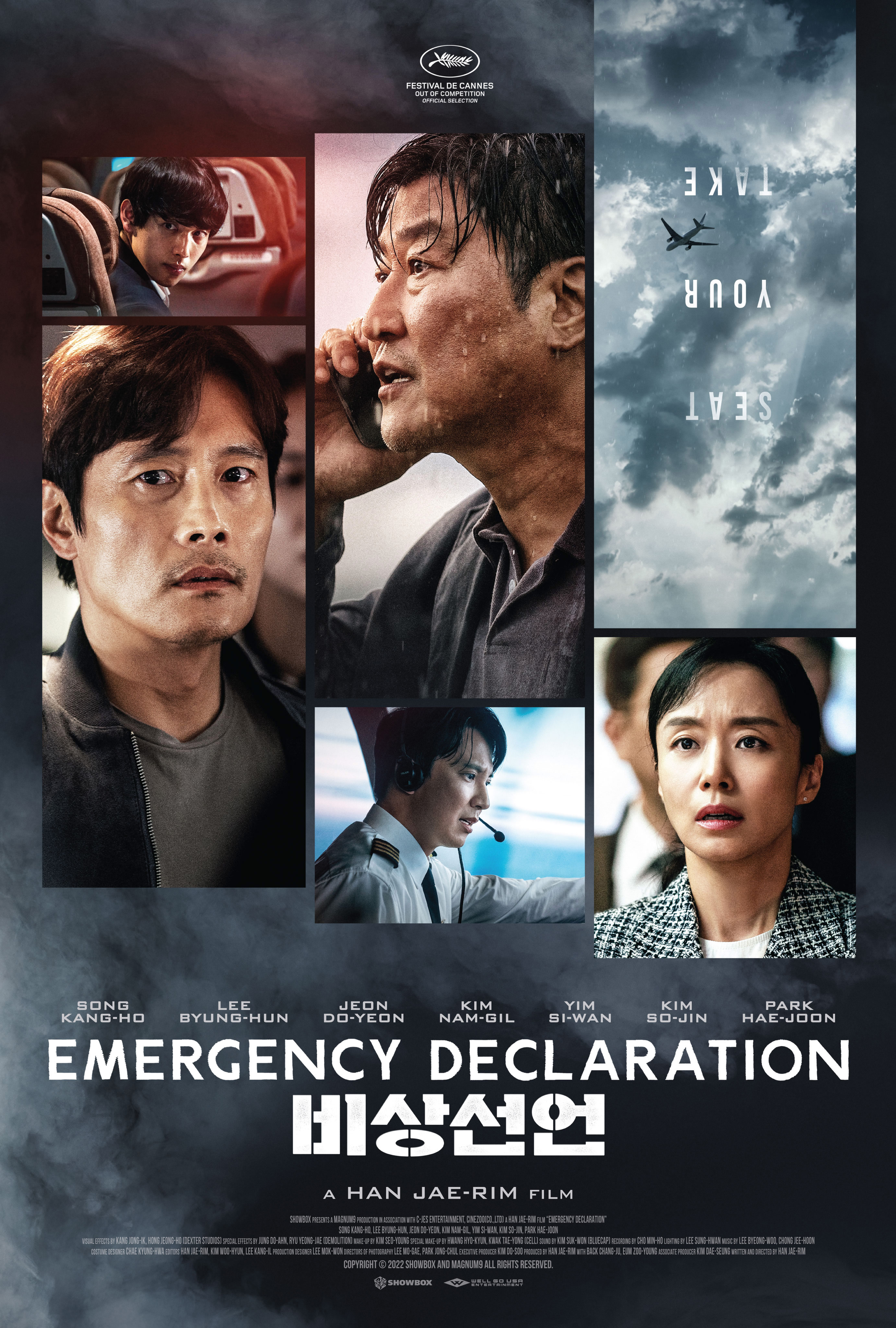
Emergency Declaration (비상선언, Han Jae-rim, 2021)

“Disasters are arbitrary” admits a pundit commenting on a potential air disaster, “people became victims for being in a certain place at a certain time”. “We were caught in a disaster that none of us wanted” the pilot later echoes while explaining that they have chosen to exercise what little control is left to them in making their own decision as to how they intend to deal with the hand that fate has dealt them. Han Jae-rim’s Emergency Declaration (비상선언, Bisang Seoneon) harks back to classic disaster pictures of the 1970s such as genre archetype Airport but also meditates on Korea’s place in the contemporary global order along with the rights and wrongs of exercising one’s own judgement when it goes against all practical advice. 

The disaster in this case begins with a mad scientist, Ryu (Im Si-wan), who decides to kill as many people as possible along with himself by releasing a deadly virus he tweaked to make even more lethal aboard a commercial airliner. Later it’s suggested that Ryu had some kind of breakdown after the death of his mother, also a microbiologist, who had a domineering influence on his life which does seem to play into an uncomfortable trope of blaming the mother for everything that goes wrong with a child though Ryu’s resentment is in part towards the pharmaceuticals company he claims fired him unfairly. As in many recent Korean films, a strong undercurrent of anti-Americanism runs throughout, the international pharmaceuticals company with an American CEO refusing to assist the Korean police’s inquires not wishing to admit that they illegally procured a deadly virus from the Middle East and then allowed Ryu to get hold of it illicitly. This also of course means that they are slow to grant access to a potential antidote/vaccine despite carrying both. Meanwhile, the plane is later turned back from Honolulu and prohibited from landing anywhere on US territory because of the uncertainty surrounding the infected on board. 

The plane in effect becomes a kind of plague ship that takes on additional significance during an era of pandemic. Having been rejected by the US, the plane tries to land in Japan but is also refused permission and later threatened by the Japanese Self Defence Forces who even open fire on it and threaten to shoot the plane down if it does not leave Japanese airspace. The official response is more nuanced than it had been with the Americans, a politician expressing his regret and sympathy with the people of Korea but also emphasising that their responsibility is towards the people of Japan and that as they cannot be sure the treatment will work on Ryu’s mutated variant, they cannot allow the plane to land. As the opening titles explain, an Emergency Declaration is a sacred aviation rule that means no one should be refusing them help, yet they do begging the question of what it really means if in the end the authorities can just choose to ignore it. 

But then again, it seems that not even Korea is fully onboard with accepting the plane back onto Korean soil. With news quickly spreading via social media, mass protests erupt from those who brand it a “biochemical missile” and would rather it be shot down than risk contaminating the wider population while counterprotests insist that there are many Korean people onboard and it’s only right that they be allowed to return home and be cared for by the authorities. The authorities are however torn, unwilling to admit they’re considering simply allowing 150 people to die for the greater good leaving only the Transport Minister (Jeon Do-yeon) to exercise her own judgement in arguing for the plane landing with quarantine procedures in place. 

Former pilot Jae-hyuk (Lee Byung-hun), a passenger on the flight with his little girl who suffers from eczema, is later tasked with exercising his own judgement in deciding whether to land the plane at a closer airport he feels is safer or try to hold out until the destination recommended by the authorities despite dwindling fuel supplies. The plane disaster is Jae-hyuk’s redemption arc allowing him to overcome past trauma in having made a similar decision before which led to the deaths of two cabin crew thanks to the selfishness of passengers who blocked exits trying to retrieve their luggage before escaping. One thing that wasn’t so much of an issue in the ’70s is that passengers are now able to receive information in real time via their phones thanks to onboard wireless, meaning that they learn all about the virus, the cure, and that the cure might not work independently giving rise to even more chaos and confusion and presenting a serious threat to traditional disaster management techniques. Nevertheless, they too eventually exercise their own judgement in coming to the conclusion that perhaps it is better if they choose not to land rather than risk infecting their friends and family.

The passengers on the plane do not blame those on the ground accepting that they are simply afraid. “You can’t just save yourselves” a particularly paranoid passenger is fond of saying completely oblivious to the fact that’s what he’s been trying to do with a pointless insistence in segregating the infected aboard a plane that exclusively uses recycled air only to completely reverse his thinking on hearing the plane may make an emergency landing in which case the rear of the plane, where the infected are, is safer. It is in the end a radical act of self-sacrifice by a policeman on the ground (Song Kang-ho) that paves the way to a happier solution for all but could just as easily have turned out differently. Disasters are arbitrary after all, at least as long as you aren’t the one causing them. Counterintuitively, the message may be that your government might not help you and others certainly won’t, but if you’re making your own emergency declaration you have the right to exercise your own judgement in the knowledge that either way you’ll have to answer for your decision.  


Emergency Declaration is released in the US on Digital, Blu-ray, and DVD on Nov. 29 courtesy of Well Go USA.

Clip (English subtitles)

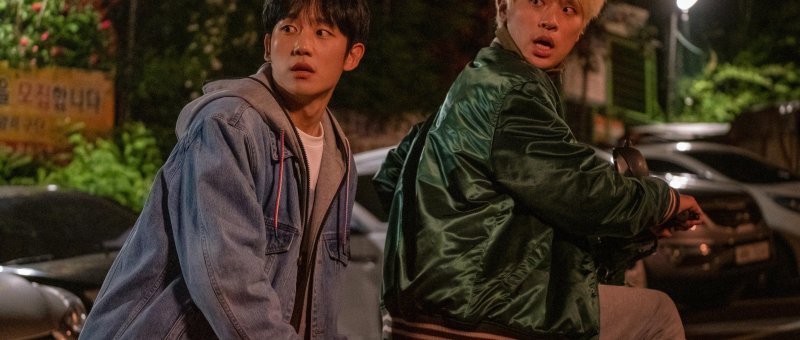
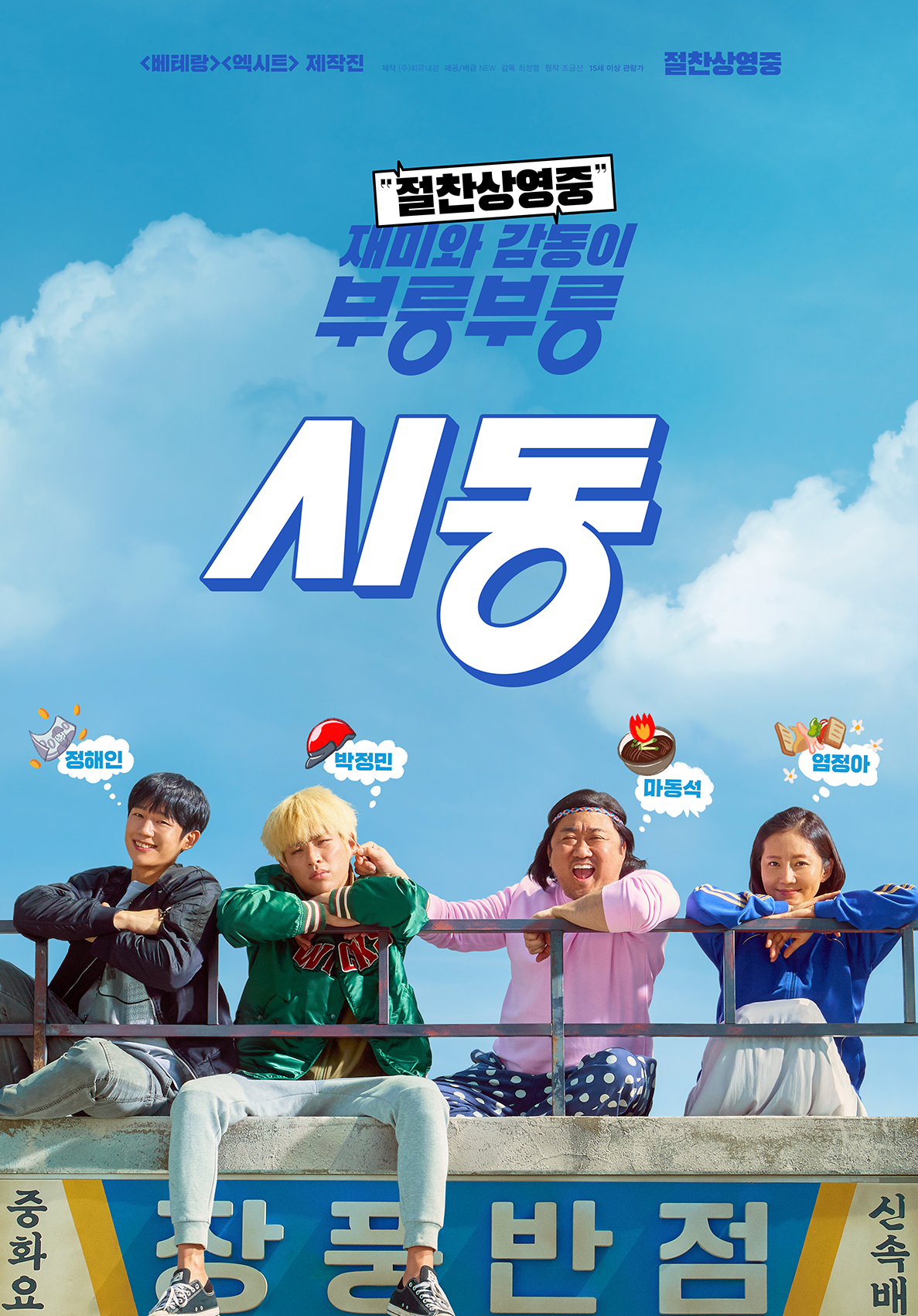
Start-Up (시동, Choi Jung-yol, 2019)

Two young men experience a failure to launch in Choi Jung-yol’s Start-Up (시동, Sidong), a much gentler coming of age tale than his 2016 feature debut One Way Trip. Like the earlier film, however, Start-Up finds its two heroes pulled in different directions while experiencing the same dilemmas, these being in the main a kind of toxic masculinity that sees them in part reject their respective maternal figures in internalised shame as sons who feel they should be but are fundamentally incapable of taking of care of them and perhaps concluding that their only familial connection must be disappointed and resentful.

We can see the boys’ sense of futility in the opening sequence in which they literally fail to kickstart a scooter that 18-year-old Taek-il (Park Jung-min), the hero, has somehow managed to buy on the internet but seems to be a dud. Eventually they wind up having an accident and being taken to the police station where Taek-il’s mother Jeong-hye (Yum Jung-ah) has to bail them out leaving even the desk officers looking quite embarrassed as she takes Taek-il to task for his irresponsibility, disappointed to learn he spent money intended for lessons to help him (belatedly) get his high school diploma on the useless scooter. He tells her he’s dropped out of school and has no interest uni, fiercely resenting her refusal to accept his decision while unwisely cutting in that she doesn’t have the money to send him anyway which earns him one of her trademark volleyball slaps. 

Taek-il’s unwise words perhaps hint at part of the reason he’s rejecting the life his mother wants for him in that he knows how much she’s suffered and sacrificed on his behalf and doesn’t want to add to her burden by encouraging her to overwork herself to pay for college when he doesn’t think he’s worth it anyway. Of course, he can’t say any of this to her, and she can’t tell him she only wants the best for him, so they alternate between silence and blazing rows with Taek-il retreating into peaceful visions of life on a desert island when everything gets too hard. Wanting to prove himself independent, he ends up running away but doesn’t have money to get very far so ends up working in a Chinese noodle restaurant in provincial Gun-san. 

His friend Sang-pil (Jung Hae-in), meanwhile, is an orphan living with his elderly grandmother (Go Doo-shim) who appears to be suffering from dementia and has been supporting the pair of them by peeling chestnuts. Like Taek-il, Sang-Pil desperately wants to be able to take care of his grandmother and make her life as easy as possible but is largely out of options which might be why he lets a shady friend, Dong-hwa (Yoon Kyung-ho), introduce him to his “company” which turns out to be a local loansharking gang for which Dong-hwa is an enforcer and debt collector. Sang-pil tells Taek-il that he’s got a job “in finance”, and though he’s conflicted enjoys the sense of self worth he gains as a working man earning money to look after grandma. He is too naive to realise that the first family they visit is aggressively nice to Dong-hwa because he’s probably been less than nice to them in the past, coming away with the mistaken idea that the job’s not so bad and people are grateful for the “service” they’re providing. 

A repeated gag sees both boys getting repeatedly beaten up, literally struck down every time they attempt to move forward. Taek-il finds himself punched in the stomach by an amateur boxer with problems of her own and thereafter knocked around by the eccentric chef at the Chinese restaurant (Ma Dong-seok), while Sang-pil is finally awakened to the dark side of his new job when he’s thrown through a glass doorway by a drunken client very clearly at the end of his tether. The answer is less fighting back than it is standing together and up for oneself as the boys begin to make mutual decisions about the future directions of their lives and the kind of men they’d like to be even if they still don’t quite know where they’re going. 

Start-Up’s genesis as an online webmanga might help to explain its myriad unresolved plot strands including the backstory of the mysterious boxing high school girl (Choi Sung-eun) who appears to have lost or become estranged from her family but ends up becoming the surrogate daughter of the kindly man who owns the Chinese restaurant (Kim Jong-Soo) which seems to be a haven for lost people of all ages looking for a place to call home, while Jeong-hye’s past success as a volleyball star is resolved as little more than an awkward punchline and her desire to start her own business which she is then swindled out of presented as something done solely for her son rather than for herself. The difficult economic circumstances of contemporary South Korea are certainly a factor in the boys’ malaise and general sense of hopelessness but it’s less Hell Joseon that’s trapping them than a complex web of familial love and resentment coupled with their desire as a young men to feel in control of their own lives rather than being constrained by parental expectation. “You should decide where to go first” Taek-il is repeatedly told, but when it comes right down to it the most important thing is figuring out how to start the engine, everything else you can figure out later.


International trailer (English subtitles)
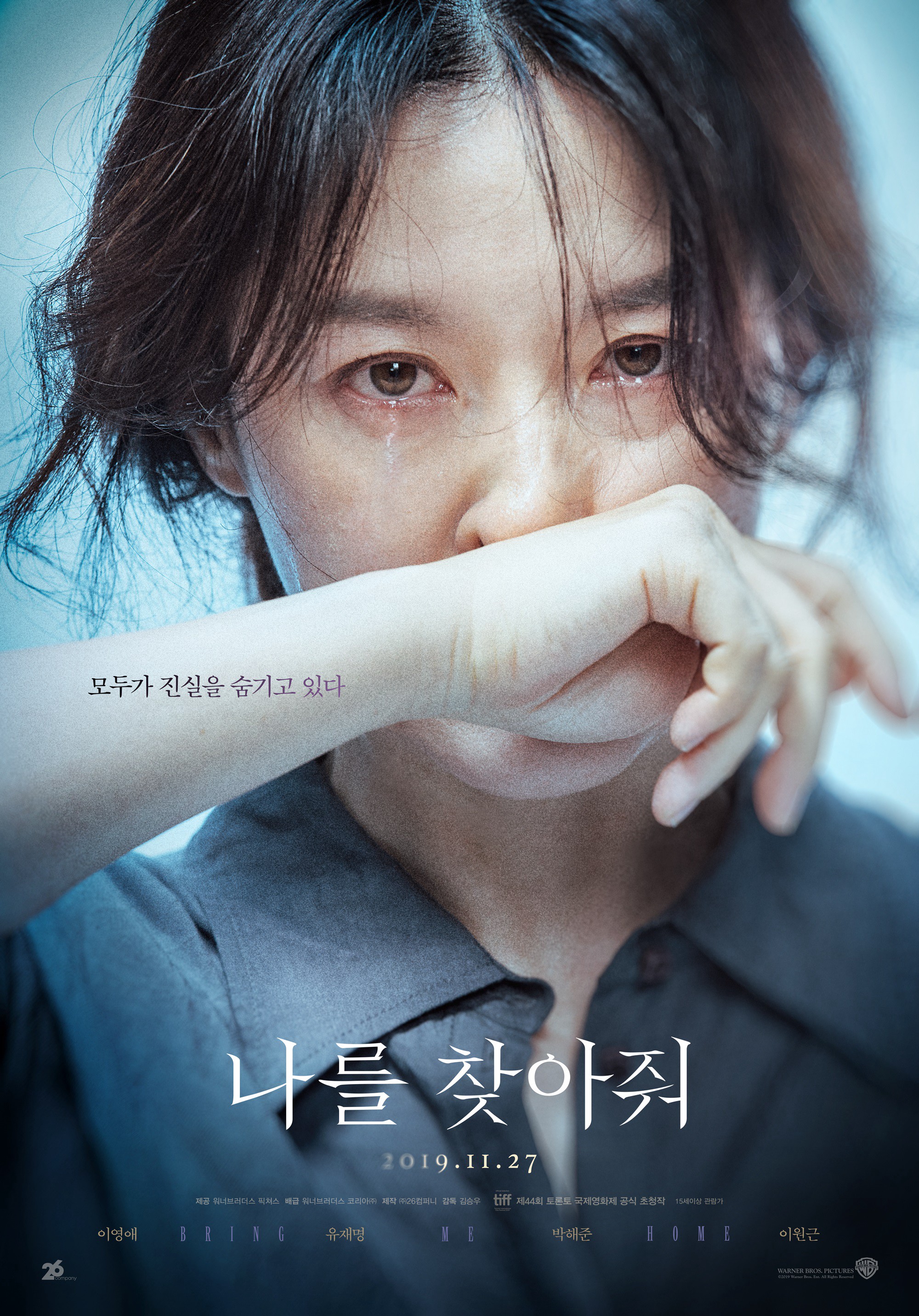
Bring Me Home (나를 찾아줘, Kim Seung-woo, 2019) [Fantasia 2020]

“They were all like me” a drowning man exclaims, trying to justify his inhumanity but gaining only poetic retribution as he finds himself shackled, quite literally, to his crimes. Kim Seung-woo’s debut feature Bring Me Home (나를 찾아줘, Nareul Chajajwo) stars Lady Vengeance herself, Lee Young-ae, in her first big screen leading role since Park Chan-wook’s seminal thriller once again cast as a figure of wounded maternity coming for systemic societal corruption and the savagery born of hopeless desperation in her singleminded determination to retrieve her son and take him with her even if with a dark destination in mind. 

Six years previously, Jung-yeon’s (Lee Young-ae) son Yoon-su vanished from a playground at six years old. Since then, her husband (Park Hae-joon), formerly a teacher, has spent every waking moment looking for him while she works as a hospital nurse where her colleagues describe her as a cool, infinitely professional presence. She continually berates herself for a vague memory of wanting a break from her child, exhausted by the act of caring for him as if she somehow brought this on herself or at any rate gave the universe her permission to take him away. Just when the conditions of her life seemed as if they were about to improve with her husband agreeing to return to work, he is killed in a car accident while pursuing a lead which turned out to be useless anyway, a cruel prank played by insensitive children. Left so totally alone, Jung-yeon begins to consider suicide only to receive another promising lead. A boy who looks like Yoon-su and has a burn on his back and a birthmark behind his ear, is working at a fishing pool in a rural town.

The sad truth is Yoon-su or not, the “family” running the fishing pool have “adopted” two displaced children which they use for slave labour, cruelly abusing them both physically and sexually. It’s this essential act of inhumanity which alerts the corrupted community to the danger presented by Jung-yeon. They could give the boy back, claim the reward, and hope she asks no more questions, but the likelihood is all their dirty dealings would be exposed and then they’d have to replace him. Corrupt policeman Sgt. Hong (Yoo Jae-myung) who for some reason seems to be in charge of the fishing pool is confident he can make all of this go away, pretending to be sympathetic to Jung-yeon’s search but insisting that there is no such boy while introducing her to the landlady’s “son” , keeping “Minsu” chained up in the shed. 

Sgt. Hong is fond of reminding people that he works for the government, a symbol of corrupt and oppressive authority obsessed with maintaining his own status as the man in charge apparently insecure in his sense of control. He claims that he was only able to do the things that he has done because no one really cared. Hundreds of people came through and saw Minsu, none of them said anything until another officer noticed that he looked quite like the boy on the news and was struck by the large reward on offer. The same officer accepted a pay off not to say anything, but apparently took the money and talked anyway. Even Jung-yeon’s brother-in-law tries to get money out of her and then comes up with an elaborate ruse to get his hands on the reward after accidentally being given the tip-off. The only one of the gang to treat Minsu with any sort of compassion eventually turns against Jung-yeon out of fear, citing the economic precariousness of the town. He’s worried that their business will be ruined, more shops will close, and as an ex-con he’ll never find another job which is a problem because he wants money to make sure his son goes to university so he doesn’t end up like him. 

“The living must go on living” another of the gang agrees, indifferent to the costs or the consequences of their actions through it’s difficult to see how their desire to save the town could ever justify their treatment of these displaced children, dehumanising Minsu because of his learning difficulties. Jung-yeon finds one of her fliers pasted on a pillar partially covered by another one for missing dog while the gang’s most deranged member keeps his own wanted poster listing rape and murder on the wall of his shack as if it were some kind of commendation. Hinting at a dark history of missing children as evidenced in one young man’s (Lee Won-geun) recollections of being adopted abroad mistakenly believing that his parents had abandoned him, Bring Me Home eventually descends into archetypal pulp for its misty finale, returning to the mythic vistas of desolation in which it began with the dishevelled Jung-yeon walking the shore of life and death consumed by futility in the depths of her maternal guilt, but does perhaps offer a glimmer of hope in the crushing irony of its final revelations. 


Bring Me Home streamed as part of this year’s online edition of Fantasia International Film Festival.

International trailer (English subtitles)

Tune in for Love (유열의 음악앨범, Jung Ji-woo, 2019)

Tune in for love poster 2The course of true love never did run smooth. Another in the recent series of nostalgic ‘90s romances, Tune in for Love (유열의 음악앨범, Yooyeolui Eumakaelbum) takes a pair of nervous youngsters and charts the course of their love story over a decade which, though not quite turbulent, saw its share of difficulties and a host of technological changes. “Miracles are nothing special” the heroine tells us, but when it comes to love miracles are all there is and in the end you’ll just have to learn to trust them.

On Oct. 1, 1994 Hyeon-u (Jung Hae-in) walks into Mi-su’s (Kim Go-eun) bakery looking for something with tofu in it. While inside, he hears the first broadcast of Yoo Yeol’s Music Album, a new morning program which seems to signal the beginning of a new era. Though Mi-su is quick to realise that the only reason someone would be desperately looking for plain tofu early in the morning is because they’ve just been released from prison, she decides to offer him a part-time job in the bakery where he becomes a member of the family alongside her “aunt” Eun-ja (Kim Guk-Hee) who’s taken care of her since her mother died. His past, however, refuses to let him go however much he tries to move away from it. Tracked down by his delinquent friends, Hyeon-u is unable to return to the bakery and will spend the next decade trying to do just that.

Fate parts the youngsters repeatedly, but always brings them back together again seemingly by chance. Military service, changes of address, miscommunication and changing technology all conspire to keep them apart but like any good rom-com the problems aren’t so much circumstantial as personal. A deeply wounded young man, Hyeon-u is taken with the familial atmosphere at the bakery because he feels a sense of acceptance he hasn’t anywhere else, but deep down he still doubts he deserves the “normal life” he so deeply craves. His friends doubt it too, always turning up unexpectedly to remind him of their shared trauma and the debt of guilt he can’t repay. His insecurity prevents him from sharing the source of his pain with Mi-su, keeping her somehow outside the bubble of his shame as the only one capable of knowing the “real” him. She meanwhile is frustrated in realising that he’s holding something back, hurt he doesn’t trust her enough to let him in, and worrying he’ll never truly be ready for full commitment. 

Nevertheless, though often apart they remain painfully in sync, until that is fate brings them back together. As young man with a checkered past and no safety net, Hyeon-u has to fight twice as hard to get ahead, eventually graduating high school and getting into college while supporting himself with part-time jobs. Mi-su, meanwhile, is burdened by the knowledge that she’s lost her mother’s bakery and is desperate to get it back. Dreaming of being a writer, she turns down an internship at the all important radio show to go for a steady job she’s told is at a publisher’s but is actually somewhere more like a print shop where she’s stuck doing incredibly boring admin work. Hyeon-u is unable to get back in touch with her after miraculously reappearing because he’s ashamed to admit that he ended up getting in trouble again thanks to his awful friends even though it really wasn’t his fault. She meanwhile confesses that a part of her was relieved not to hear from him because she too is unhappy in herself, feeling lost and confused, disappointed not to be living the kind of life she could be proud of. 

Times change, but their one constant is the radio show broadcasting every morning and providing additional though indirect methods of communication when they are otherwise unable to make contact. Pay phones give way to email and then to mobiles all the way into the early days of the smartphone era, but face to face conversation remains the most difficult. Mi-su gives up on Hyeon-u while he, ironically, probably does sort something out by having a good old fashioned punch up with his generally unhelpful friend. She wonders if she’s better off to make the “smart” choice rather than waiting on love. Hyeon-u is hurt that in the end she didn’t trust him, but is eventually made realise that the problem was that he didn’t trust himself. Then again, you can’t fight the power of true connection or the pain of its absence, all you need to do is a little fine tuning to make sure the signal comes through loud and clear.


Currently available to stream online via Netflix in the UK (and possibly other territories)

Netflix trailer (English subtitles)

Jo Pil-ho: The Dawning Rage (악질경찰, Lee Jeong-beom, 2019)

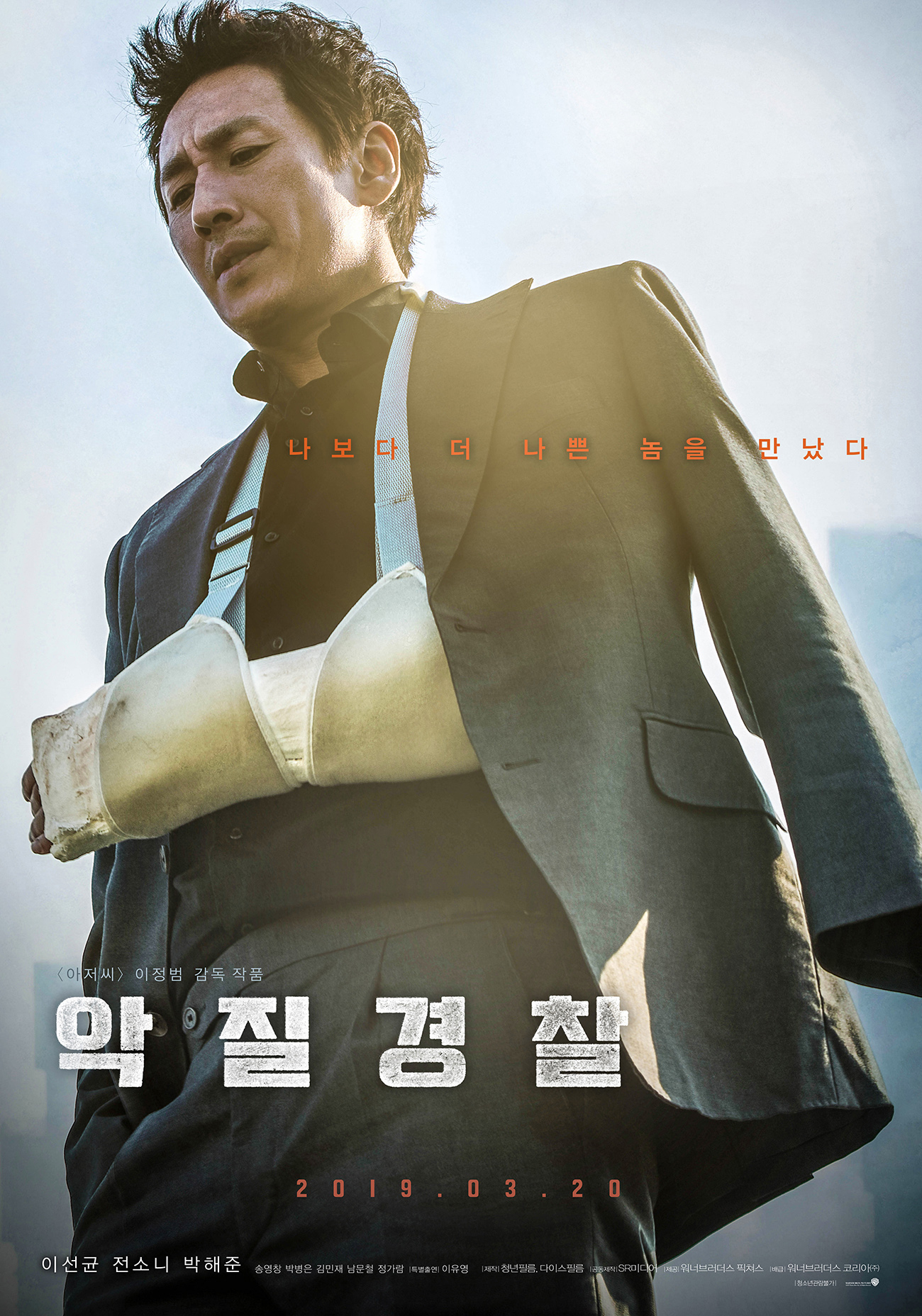
Jo Pil-ho- The Dawning Rage posterThe Man From Nowhere’s Lee Jeong-beom returns five years after No Tears for the Dead with another retro crime thriller, though this time one with additional bite as he digs into a nation quite clearly failing its young. Another of the recent films set in the post-Sewol world, Jo Pil-ho: The Dawning Rage (악질경찰, Akjilkyungchal) is a noirish voyage through an intensely corrupt society in which Chaebols act with impunity while goodhearted schoolgirls are branded delinquents and left to fend for themselves by the “adults” who seem to have abandoned all sense of social responsibility.

Our hero and the titular “bad cop” of the Korean title, is Jo Pil-ho (Lee Sun-kyun) – a corrupt police officer who abuses his position to force criminals to commit crime on his behalf. Recently, he’s teamed up with a teenage safecracker, Gi-chul (Jung Ga-ram), and is also involved in an ill-advised business relationship with a petty gangster. IA are all over him, but they don’t have anything yet. Everything is about to change, however, when an angry Pil-ho decides it would be a good idea to rob the police warehouse. The gangster’s minion makes a mistake and the place blows up with Gi-chul trapped inside. Suddenly it’s not looking so rosy for Pil-ho who is now implicated in a series of crimes only to discover that there is far more going on than he could have anticipated. The warehouse fire appears to be connected to an ongoing corruption case involving one of Korea’s biggest conglomerates and Pil-ho may have just destroyed key evidence without realising in an attempt to save his own skin.

Despite himself, Pil-ho is not such a bad guy. He’s corrupt and greedy, but he has a moral compass and probably sees himself as kicking back against the system rather than abusing it seeing as he only seems to take money from sources he feels could stand to lose. This is perhaps why he finds himself increasingly shaken by his investigations, eventually forced to pick a side – surrender to Chaebol influence as a willing underling or expose the corruption possibly at the cost of his own life.

In true noir fashion his own past comes back to haunt him as he re-encounters the father of a young woman (Im Hyeong-gook), Song Ji-won (Park So-eun), who died in the ferry tragedy and had wanted to become a policewoman when she grew up. Pil-ho was the officer charged with the empty gesture of presenting him with a police uniform with his daughter’s name on it. In an unlikely coincidence, the girl Pil-ho needs to find, Mina (Jeon So-nee), was Ji-won’s best friend. Alone and without family, Mina has been living by her wits on the streets but as Mr. Song points out she’s not a bad kid at heart and goes to great lengths to protect those close to her.

Despite their original mutual distrust, a kind of camaraderie eventually builds up between the cynical cop and the jaded teen who views the so-called “adults” around her with nothing more than contempt. Her admiration for Pil-ho begins when he beats up a sleazy backstreet doctor who tries to swap treatment for sexual favours and then continues as Pil-ho, against the odds, begins to look out for her in ways no one else ever has. Mina, like many kids, is simply trying to survive in a world which is often actively hostile to her existence, but unlike Pil-ho she has avoided becoming cynical and remains committed to protecting those weaker than herself even if others may write her off as a lost cause delinquent.

Set in Ansan which, as an ironic sign tells us before falling to the ground, is the “city of happiness”, Dawning Rage locates itself in a haunted land in which the lingering effects of the ferry tragedy are impossible to ignore. Pil-ho begins catching sight of teenagers everywhere but their presence only seems to highlight absence while providing a kind of chorus watching and observing the adults around them in order to learn how to live. The corrupt Chaebol cites his provision of scholarships as evidence of his commitment to building a fairer society, all while knowing that by doing so he is really buying influence and loyalty. He spins a yarn about his humble origins and makes a show of inspiring the next generation, but thinks nothing of silencing those who stand in the way of his selfish aims.

The corruption rains down from above – the Chaebols make their money and they cut corners, leaving ordinary people squeezed. Fear and deference are the primary contributors to the societal decline which placed innocent young people directly, if unwittingly, in harm’s way. This is Pil-ho’s “dawning rage” as he awakens himself to the depths of injustice within his own society with which he had blindly gone along thinking only of himself. With a distinctly 1970s aesthetic, Dawning Rage is a dark conspiracy thriller in which the system is so hopelessly corrupt as to be beyond saving. Pil-ho is a “bad cop” who turns out to be acting for the public good after all but finds himself pushed towards the dark side by the intransigence of his society and forced into an act of violent revenge both personal and social.


Currently available to stream online via Netflix in the UK and possibly other territories.

Original trailer (English subtitles)